5 Reasons to Trust Carseldine Commercial Cleaning with Your Office Safety
If you manage an office in Carseldine, you probably ask: can I trust commercial cleaners to keep our workspace safe? This guide answers that with five practical reasons — clear safety protocols, thorough staff checks, eco-friendly products, tailored cleaning plans and verifiable proof. You’ll learn what standards to expect, how non-toxic cleaning protects health, why vetted and insured teams reduce liability, how customised schedules limit disruption, and what evidence to request. Use these points as a checklist when evaluating providers so you can hire with confidence.
What safety protocols do Carseldine commercial cleaners follow?
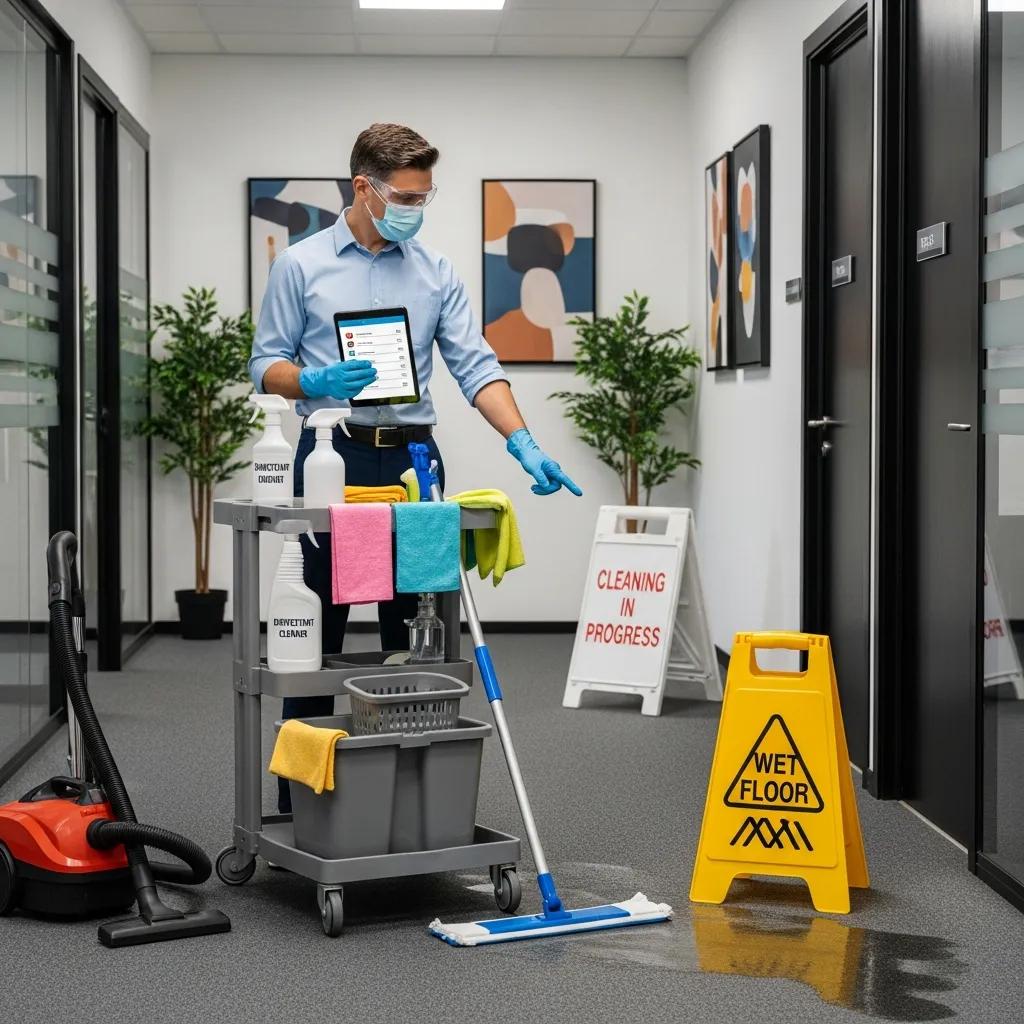
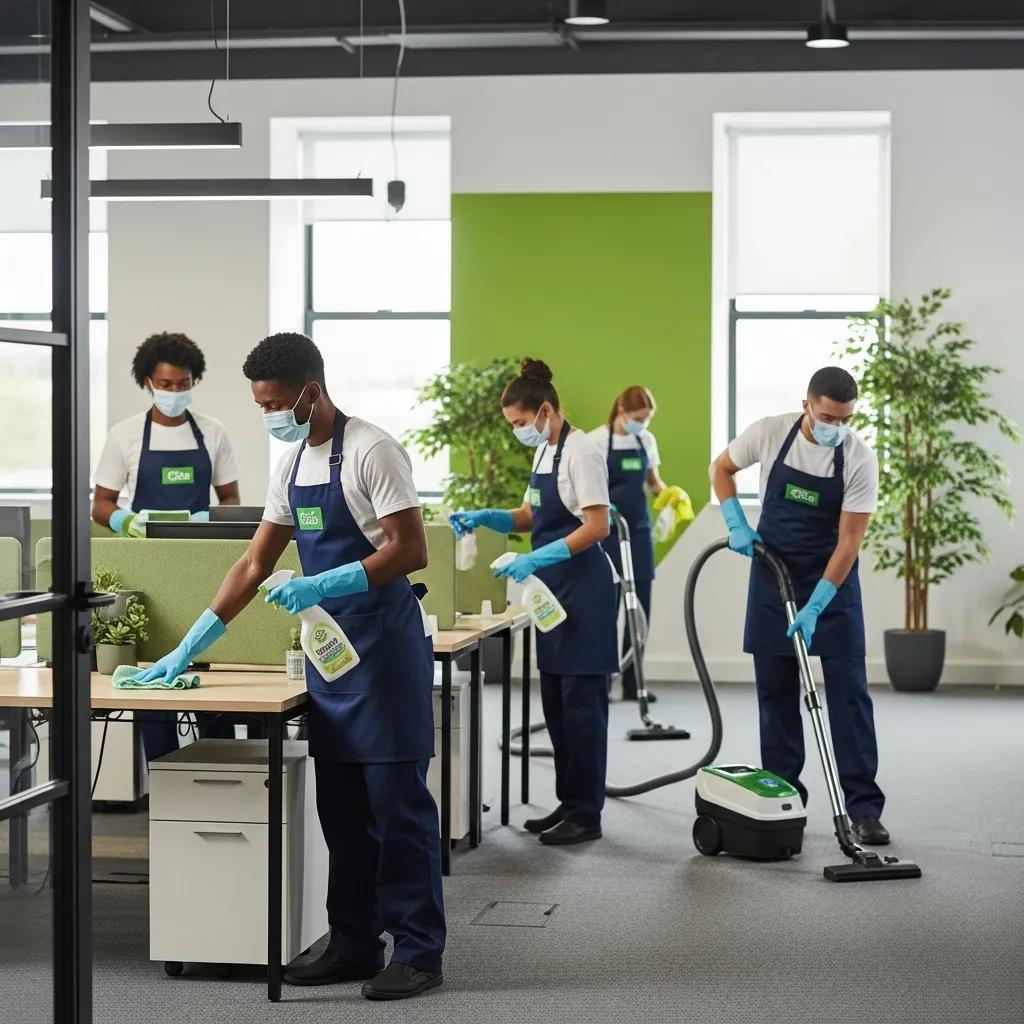
Effective office-cleaning protocols combine clear procedures, personal protective equipment and verification steps to lower infection risk, chemical exposure and physical hazards. In practice this means standardised disinfection of high-touch areas, enforced PPE use, routine risk assessments and strict control of chemical dilution and dwell times. The result is a safer workplace, fewer staff sick days and less liability for managers. Knowing these basics helps you compare providers and ask the right verification questions.
Key protocols to expect from a professional office-cleaning team:
- Routine risk assessments to locate hazards and high-touch zones.
- Trained staff using labelled products with dilution control and appropriate PPE.
- Planned disinfection of high-touch surfaces with recorded dwell times and checks.
- Clear incident reporting and secure access procedures to protect people and property.
The list above highlights practical items to include in a service scope; the table below shows how each safety element translates into client benefits and simple verification steps.
This table maps core safety elements to how they’re implemented and the client outcomes you should expect.
| Safety Element | Implementation | Client Benefit |
|---|---|---|
| Staff training | Induction, refresher modules, practical checks | Fewer mistakes, consistent results |
| Police checks | Background screening for staff | Lower personnel risk |
| PPE & protocols | Gloves, masks, dilution controls | Reduced infection and chemical exposure |
| Disinfection standards | High-touch schedules, documented dwell times | Reliable pathogen control |
The table makes it easier to verify claims during procurement and leads into a closer look at training and disinfection practices.
How does staff training and certification protect office safety?
Training sets the standard for safe work. A strong program includes an induction, regular refresher training and practical checks so staff handle chemicals correctly, control infection risks and use equipment safely. Well-trained teams follow signage, use microfibre systems and adhere to dilution controls to avoid overuse of chemicals — which improves air quality and reduces incidents. Ask providers for a summary of their training curriculum or a competency checklist to confirm training is current and being applied on site.
Which disinfection and hygiene standards are followed?
Disinfection standards spell out suitable products, concentrations and dwell times needed to deactivate pathogens on common office surfaces and generally align with recognised Australian guidance. Practical focus is on high-touch items like doorknobs, shared devices and kitchen areas, using appropriate disinfectants and following manufacturer directions for dilution and dwell time. Routine verification — for example, surface ATP checks or signed cleaning checklists — gives measurable assurance that cleaning is effective. Request evidence of these practices before you sign a contract.
Research consistently shows proper disinfection techniques and staff training are key to reducing transmission in non-healthcare workplaces.
Workplace Cleaning & Disinfection for Safety
This paper reviews accepted practice for cleaning and disinfecting high-touch surfaces to lower surface COVID-19 transmission in non-healthcare workplaces, and it outlines a worker training program aligned with those best practices.
High Touch Surface COVID-19
Cleaning and Disinfecting: Workforce Health and Safety Preparation, R Skiba, 2020
Why choose eco-friendly, health-conscious cleaning for Carseldine offices?
Eco-friendly cleaning reduces staff and visitor exposure to harsh chemicals while still delivering infection control when needed. Non-toxic formulations and microfibre systems cut VOC emissions, improve indoor air quality and lower long-term health risks. The principle is simple: use gentler products for routine cleaning and reserve stronger disinfectants for high-risk spots. Choosing green cleaning supports employee wellbeing and broader sustainability goals without compromising safety.
Top health and environmental benefits of greener cleaning:
- Better indoor air quality from fewer VOCs and irritants.
- Less exposure to corrosive or sensitising chemicals for staff and visitors.
- Lower environmental impact from biodegradable products and reduced waste.
What non-toxic cleaning products help workplace health?
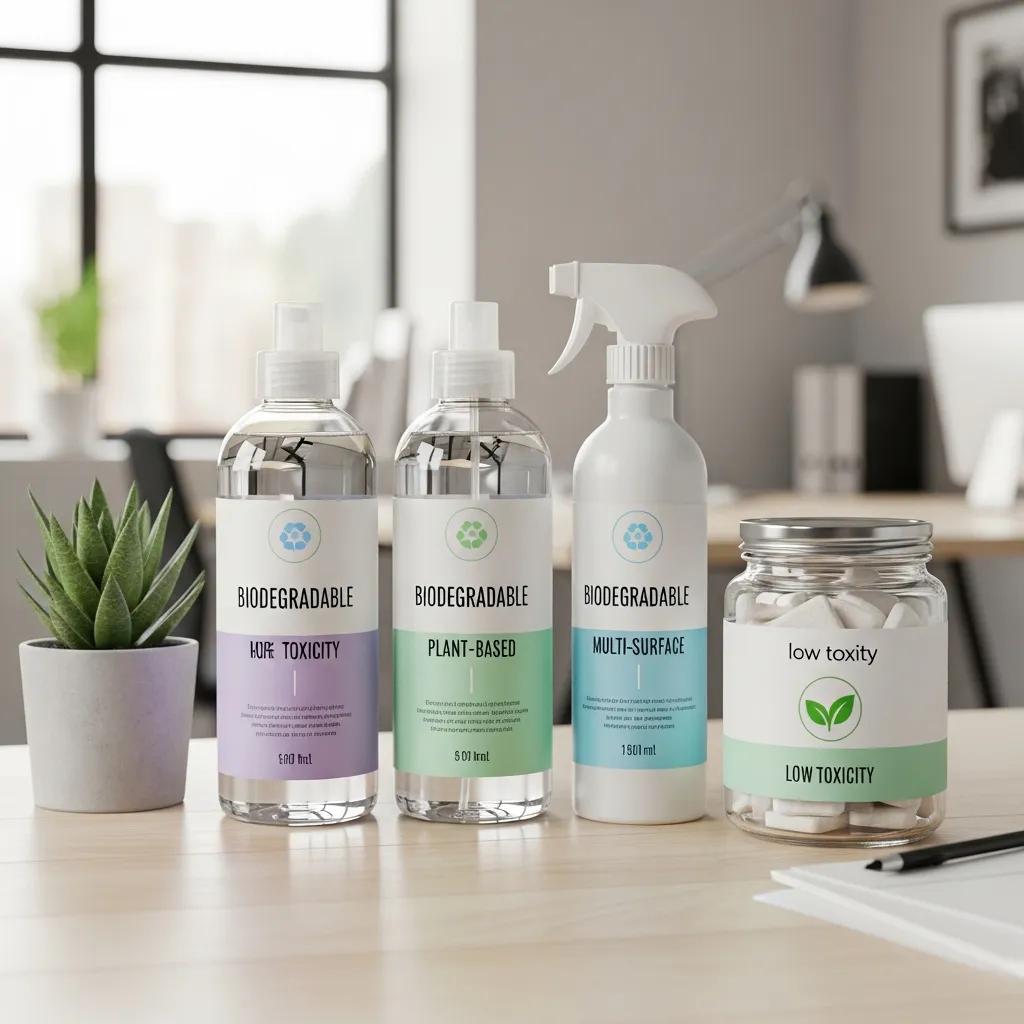
Useful non-toxic options include biodegradable detergents, low-toxicity hospital-grade disinfectants for targeted use, and plant-based surface cleaners that balance safety and effectiveness. Always ask for MSDS sheets, low-VOC labelling and evidence the product works against target organisms. Microfibre cloths also improve soil removal mechanically, letting teams rely less on strong chemicals for everyday cleaning. Requesting a product list and MSDS files during procurement gives you confidence the materials chosen protect health while doing the job.
How do sustainable cleaning practices improve office safety?
Sustainable methods — think dilution-control systems, microfibre technology and waste-reduction — limit staff contact with concentrated chemicals and create consistent results. Dilution control prevents overuse, microfibre traps particles more effectively than cotton, and reusable systems with proper laundering reduce single-use plastic. These approaches lower the chance of spills, chemical burns and airborne irritants, while also cutting facility maintenance costs. Including sustainable protocols in your safety plan brings both environmental and occupational health benefits to Carseldine workplaces.
Next we cover how provider policies on vetting and insurance further build trust.
How do vetted, insured professionals create trust in commercial cleaning?
Vetting and insurance reduce risk by ensuring staff are screened and trained, and by backing work with financial protection for accidents or damage. Vetting — such as police checks and credential verification — lowers theft and liability risk, while insurance (public liability and workers’ compensation) shifts financial exposure away from your organisation. Together, these form a practical trust framework: background-checked staff operating under insured contracts deliver auditable, accountable services. Knowing what proofs to request helps procurement teams confirm provider reliability.
Steps to verify a provider’s vetting and insurance:
- Ask for a police-check policy and confirmation staff undergo background screening.
- Request current public liability and workers’ compensation certificates.
- Obtain training records and any service-level guarantees for extra reassurance.
The steps above show whether vetting and insurance claims are documented and accessible; the short table below lists common proofs and how to verify them in practice.
Compact proof table with practical verification actions.
| Credential | Proof Type | How to Verify |
|---|---|---|
| Police checks | Policy statement | Request a written policy or summary |
| Insurance | Certificate of currency | Ask to view the certificate details |
| Training | Records / logbook | Request a sample training matrix |
| Guarantee | Service terms | Ask for written guarantee conditions |
What role do police checks play in staff vetting?
Police checks are a key safeguard: they reveal an individual’s recorded history and reduce the risk of hiring staff with convictions relevant to property or safety. Regular checks at onboarding and at set intervals provide transparency and let clients assess any residual risk. In higher-security settings — like medical centres or schools — frequent checks and spot audits should be written into the service agreement. Requesting the provider’s police-check policy tells you how often checks happen and what they cover.
How does insurance protect clients and promote professionalism?
Insurance shifts financial responsibility for incidents such as accidental damage or injury from your business to the insurer, protecting you from unexpected costs. Important policies to confirm include public liability (for third-party claims) and workers’ compensation (for staff injuries). Certificates of currency should be current and specific to the services provided. Asking to see incident-response procedures and insurance limits helps you assess the practical level of protection and confirms the provider operates professionally.
How are cleaning plans tailored to Carseldine business needs?
Custom cleaning plans start with a scoping process that records building layout, foot traffic, compliance needs and priority zones, then matches frequency and methods to those requirements. The process usually includes a needs assessment, a trial clean if needed, and an agreed checklist that lists tasks, frequencies and verification measures. The result is a focused program that directs resources where risk is highest — saving cost while keeping areas safe. Plans should include performance indicators and regular reviews so services can adapt as operations change.
Scheduling and delivery models that reduce disruption:
- After-hours cleans to avoid contact with occupants and keep daytime operations uninterrupted.
- Staggered or phased shifts to maintain coverage without closing areas.
- Weekend or low-traffic window deep cleans for more intensive disinfection.
Each option suits different business rhythms and feeds into the plan design for various office types.
What flexible scheduling options minimise disruption?
Flexible schedules adapt cleaning timing and frequency to your business cycle — using after-hours, split-shift or weekend work as needed. After-hours cleans suit corporate offices that need quiet daytime work; split shifts work well for reception or retail areas that must stay open; weekend deep cleans allow thorough disinfection with minimal weekday impact. Agreeing scheduling preferences during scoping also ensures secure access and sign-in procedures are in place, preserving both safety and continuity.
How are custom cleaning plans built for different office types?
Plans differ by setting: medical centres require clinical-grade disinfection and strict waste handling; schools need focus on shared spaces and play areas; corporate offices benefit from daily attention to high-touch surfaces and ergonomic equipment cleaning. Design elements include task frequency, product choices, access controls and verification methods tailored to traffic and compliance needs. A simple checklist — risk zones, product types, scheduling windows and reporting cadence — creates a repeatable, auditable model that meets both safety standards and daily operations.
What evidence demonstrates a provider’s track record and trustworthiness?
Look for verifiable items: current insurance certificates, a documented police-check policy, training records, service guarantees and case studies or references that show outcomes. These proofs show operational reliability, financial protection and client satisfaction — the core elements of a sound procurement decision.
For local validation, review a provider’s public business profile and ask for case studies or references that back their claims. If the provider offers guarantees (for example, a money-back promise), ask for the written terms so expectations are clear.
Evidence to request from a prospective supplier:
- Current insurance certificates and incident-response procedures.
- A police-check policy and a sample training matrix showing staff competency.
- Case-study summaries or references that describe problem → action → result outcomes.
Requesting these items makes it easier to compare vendors objectively and ensures their promises are backed by documentation. The next sections explain how to review testimonials and case studies without relying on unverified quotes.
Which client testimonials highlight safety and satisfaction?
Rather than one-off praise, ask for testimonials or reference contacts that specifically mention safety, responsiveness and reliability in office settings. Useful testimonials focus on measurable improvements — fewer incidents, smoother audits or dependable night-time access — rather than vague compliment. Because this guide doesn’t reproduce third-party quotes, ask providers to point you to safety-focused references or on-site materials you can review during procurement. The specificity in references reveals whether a supplier consistently delivers on safety promises.
How do case studies show workplace health improvements?
Strong case studies follow a problem → action → result structure: identify a hotspot (problem), apply targeted cleaning and scheduling (action), then show reduced contamination or better audit results (result). When reviewing case studies, look for metrics like lower absenteeism, improved hygiene scores or documented compliance improvements. Ask for full documentation or a site visit to validate claims and ensure similar interventions will work in your office.
After reviewing evidence, confirm provider assurances and verification steps during supplier selection so documented commitments align with your safety goals.
Local, family-owned operators often pair regional knowledge with flexible terms. In the Sunshine Coast and Brisbane areas, trusted local providers typically offer experienced cleaners, tailored plans without long lock-in contracts and a clear satisfaction policy — alongside up-to-date insurance and staff background checks. Common services include general office cleaning, carpet care and specialised work for medical centres and schools. Ask for written guarantees, insurance certificates and the provider’s background-check policy to complete your due diligence.
Frequently Asked Questions
What should I look for in a commercial cleaning service contract?
Check for a clear scope of work, cleaning frequency and defined safety protocols. Look for clauses on product use (including eco-friendly options), staff vetting and insurance coverage. Also confirm performance measures and any satisfaction or money-back guarantees. A well-drafted contract protects your interests and makes it straightforward to resolve issues if they arise.
How can I assess the effectiveness of a cleaning service?
Use regular inspections and audits to check cleanliness and adherence to procedures. Gather staff feedback about perceived cleanliness and any health changes. Track simple metrics like absenteeism or hygiene audit scores, and ask for documented before-and-after reports where possible. These steps give you both qualitative and quantitative evidence of effectiveness.
What are the benefits of using eco-friendly cleaning products?
Eco-friendly products improve indoor air quality, reduce exposure to harsh chemicals and lower the chance of allergic or respiratory reactions. They also reduce environmental impact through biodegradable formulas and less plastic waste. Choosing greener cleaning helps protect staff health and supports your organisation’s sustainability goals.
How often should office cleaning be scheduled for optimal hygiene?
Frequency depends on your workplace: high-traffic areas and shared spaces usually need daily cleaning, while low-use areas can be weekly or bi-weekly. High-touch surfaces should be cleaned more often. Consider employee numbers, seasonal factors and industry requirements when setting a schedule for optimal hygiene.
What role does staff training play in maintaining cleaning standards?
Training is vital. It ensures staff know safe cleaning techniques, how to use equipment and how to handle chemicals correctly. Regular refresher courses keep teams up to date on new protocols or products. A trained workforce delivers consistent results, reduces accidents and helps you meet health and safety regulations.
How can I ensure that my cleaning service is compliant with health regulations?
Request documentation showing adherence to industry standards and local rules, such as product certifications, training records and current insurance. Conduct regular audits and keep open communication with your provider about practices and any regulatory changes. That way you maintain compliance and a safer workplace.
What should I do if I am not satisfied with the cleaning service?
Start by raising specific concerns with the provider and give them a chance to resolve the issue. Review the contract for complaint-resolution or guarantee clauses. If problems persist, document the issues and consider requesting a different team, renegotiating terms or, if necessary, ending the contract following the agreed process.
Choosing the right Carseldine commercial cleaner comes down to safety protocols, vetted staff, eco-conscious products and clear proof of performance. Prioritising these elements protects your team, reduces liability and keeps your workplace running smoothly. If you’re ready to improve office hygiene with a tailored plan, explore our cleaning solutions and let us help you create a safer, healthier workspace.

Dianne, originally from Rockhampton, hails from a business-oriented family, with her father owning electrical stores and her uncle serving as Mayor. Moving to the Sunshine Coast at 13, she later pursued a rewarding real estate career and raised three children. As a single mom, she balanced university studies with domestic cleaning work. Armed with a Bachelor’s Degree in Business, majoring in Supply Chain Management, Dianne founded and grew Divine Commercial Cleaning into a thriving company. Her success is rooted in strong family mentorship, a positive attitude, and a solution-oriented approach, offering tailored cleaning services with integrity and strategic insight.