5 Questions to Help You Decide If Everton Hills Commercial Cleaning Is Right for Your Business
Choosing the right commercial cleaning partner for your Everton Hills site is easier if you ask the right questions and check the evidence. This guide is written for local managers, practice owners, facilities teams and strata committees who want a clear framework to save time, reduce risk and meet health and safety expectations. Read on for five practical questions to evaluate providers, checklists for common business types, and the documents and contract terms you should request. We also cover quality checks, insurance and vetting, flexible agreements and transparent pricing, plus eco-friendly cleaning approaches that protect staff and customers. For a site visit and a tailored quote, Divine Commercial Cleaning offers on-site assessments and customised proposals—email info@divinecleaning.com.au or call 0459 949 969 after you review these questions.
How will a Everton Hills cleaning service learn your specific business needs?
A good provider starts with a site-level scope and factors in your operating hours, foot traffic and any industry regulations. That assessment determines the right scope, frequency and products so work is effective without disrupting operations. The outcome should be a practical plan that protects high-risk areas and sets measurable expectations. Use the checklist below when talking to prospective suppliers to confirm they understand your site and priorities.
Quick checklist to evaluate an initial provider assessment:
- Ask if they conduct an on-site walk-through and record findings for scope and risks.
- Check that they use a needs questionnaire capturing business hours, peak periods and high-touch zones.
- Confirm they consider regulatory requirements (health, childcare, imaging) and adjust chemicals and frequencies accordingly.
This simple checklist helps you compare quotes consistently and leads into how needs vary by business type.
What special cleaning requirements do different business types in Everton Hills have?
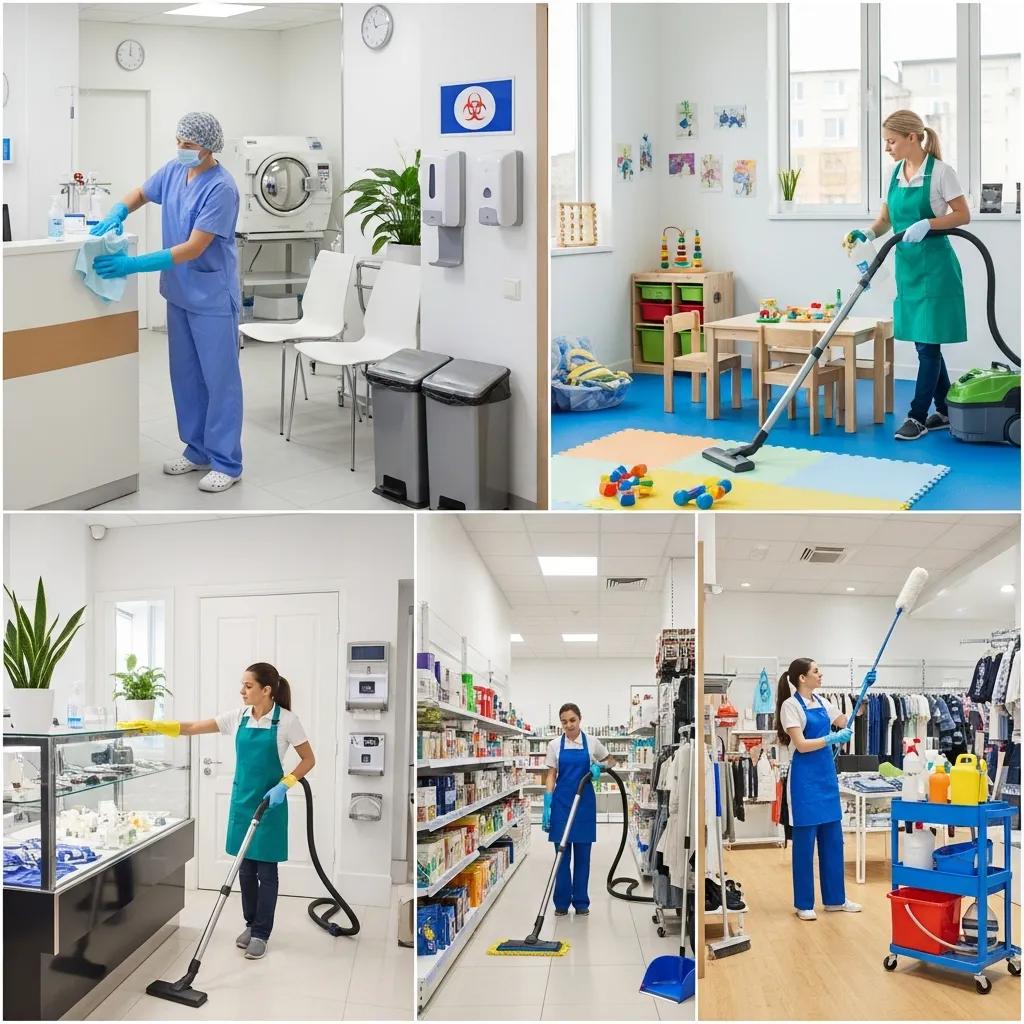
Different businesses have different priorities. Medical and imaging centres need validated disinfection methods, compatible chemicals and staff trained in blood-borne pathogen controls. Childcare services prioritise toy sanitation and safe-product use. Retail and shopping centres require regular floor care, window and display cleaning, and fast spill response to protect customers and reduce liability. These service variations—medical centre cleaning, office cleaning, retail cleaning, strata cleaning—fall under commercial cleaning but change the task list and product choices you should expect in a quote.
Given the strict needs of medical facilities, it helps to understand the wider regulatory context around health and safety.
Federal regulations and blood‑borne pathogen guidance
Policy statements and federal rules around blood‑borne pathogens emerged in response to past public health challenges. Professional associations, sporting bodies and government documents address different concerns—eligibility, workplace protections and testing—though gaps remain in how some responsibilities are handled. These documents nevertheless provide a framework for protecting employees exposed to body fluids and outline employer obligations for testing and follow-up.
A review of selected blood-borne pathogen position statements and federal regulations, BL Arnold, 1995
To illustrate: a medical clinic may need daily targeted disinfection of exam rooms with documented SDS sheets; an office might prefer after-hours cleaning to avoid disruption and focus on shared touchpoints; a gym will require equipment surface disinfection alongside regular floor hygiene. Knowing these differences lets you ask for precise task lists and frequency options when you request a quote.
How do customised cleaning plans meet Everton Hills office needs?
A well-designed office cleaning plan clearly defines scope, frequency, KPIs and reporting so results are measurable and support workplace productivity. Scope lists included tasks—emptying bins, sanitising touchpoints, bathroom servicing, floor care—and notes exclusions such as internal IT equipment unless agreed. Frequency can range from nightly cleaning to weekly deep cleans and should reflect occupancy and foot traffic. Typical KPIs include inspection pass rates, complaint response times and scheduled quality reviews to keep services transparent and improvement-focused.
Example mini-plan: a dedicated cleaner for your site, nightly general cleaning Monday–Friday, weekly carpet vacuuming, monthly high-level dusting, with a monthly inspection report and a 90‑day quality review. This approach builds continuity—often using the same cleaner—and gives you clear expectations for delivery and performance.
What quality assurance and reliability measures should Everton Hills cleaning services provide?
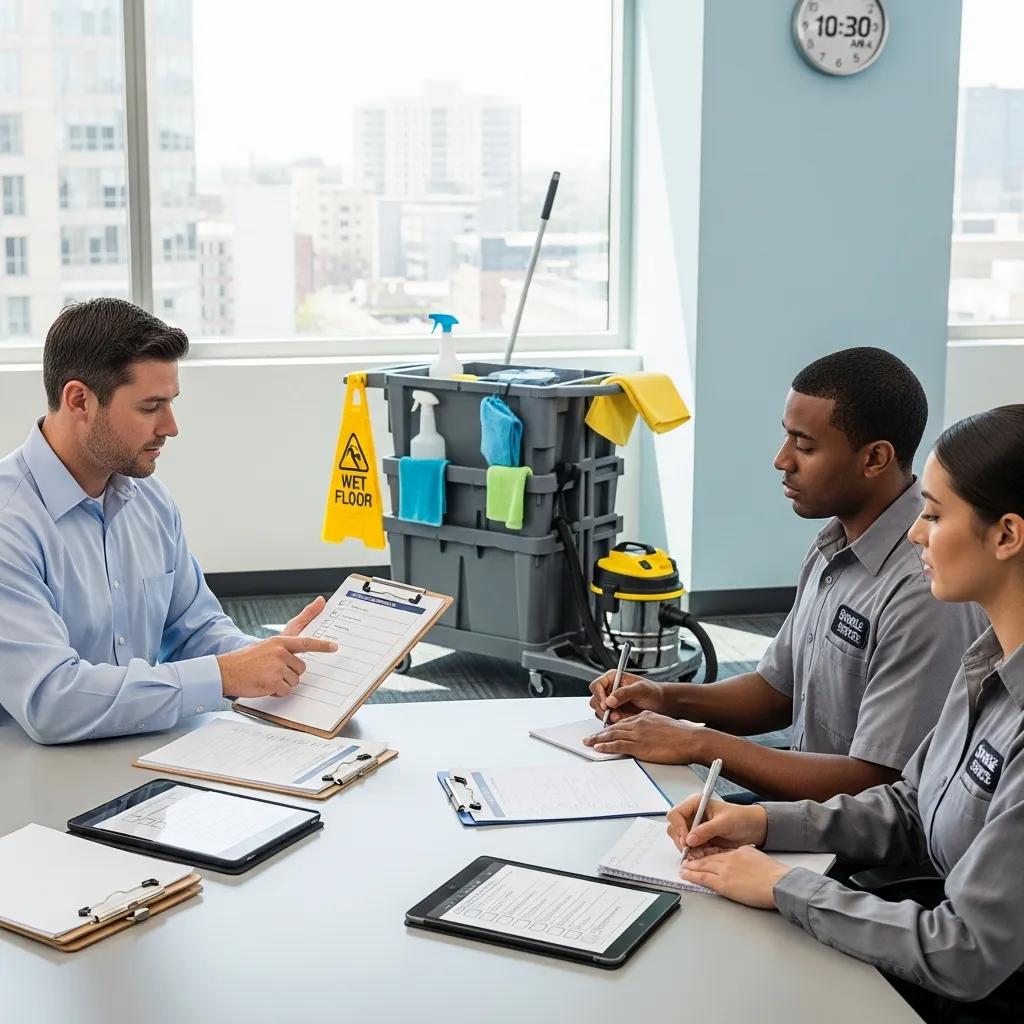
Quality assurance blends staff training, supervisory inspections and contract guarantees so outcomes are consistent and issues are fixed quickly. Common QA tools include structured onboarding and refresher courses, inspection checklists, photo evidence of completed tasks and a clear claims or re‑clean guarantee with response timelines. These measures reduce operational risk and give you transparent proof that the provider meets agreed standards. The table below lists common QA items and how providers typically verify them.
| Quality measure | Attribute | How it’s verified |
|---|---|---|
| Staff training | Topics & cadence (onboarding, refreshers) | Training records and competency checklists signed off |
| Inspections | Frequency and checklist items | Inspection reports with timestamps and photos |
| Guarantees | Re‑clean or money‑back terms | Contract clauses and a documented claims process |
How are staff training and supervision managed to keep standards consistent?
Consistent service starts with practical onboarding, regular refreshers and supervisory checks tied to measurable standards. Training covers safe task procedures, chemical handling, infection control and any client‑specific protocols. Supervision combines scheduled inspections with random spot checks, usually recorded with checklists and photos so feedback closes the loop. Performance management then uses inspection outcomes to direct coaching, retraining or reassignment so issues are corrected quickly and improvements stick.
Training and supervision are parts of a wider QA system that protect your operations by ensuring staff competence and accountability. Clear guarantees and transparent review systems are the next step in building trust with a provider.
What guarantees and reviews show a cleaning company is reliable in Everton Hills?
Service guarantees and published reviews are practical signs of a company’s confidence and track record. Common guarantees include timely re‑cleans for missed tasks or limited money‑back terms. When checking reviews, look for timestamps, a mix of client types and local references or case studies that match your business. Guarantees should spell out scope, response times and exclusions so there’s no ambiguity. Recent client feedback plus a formal claims process shows a provider both monitors quality and responds when standards slip.
Providers that combine clear guarantees, documented inspections and verifiable reviews reduce your decision risk and give you a defensible selection rationale. The next critical checks are insurance, bonding and staff vetting.
| QA item | Attribute | How it’s verified |
|---|---|---|
| Guarantees | Type and coverage | Contract clause and example claim responses |
| Client reviews | Source & recency | Public review timestamps and client references |
| Quality inspections | Frequency & scope | Inspection logs with corrective action notes |
Are Everton Hills commercial cleaning services insured, licensed and background‑checked?
Insurance, licences and staff vetting protect your business from liability, financial loss and security incidents; they should be non‑negotiable checks before you sign a contract. Key insurance to request includes public liability and workers’ compensation, and bonding can cover employee dishonesty where relevant. Vetting should include identity checks, police clearances and reference checks for staff who access secure areas. Below are practical questions to ask and the documents you should request.
Essential questions to ask providers about insurance and vetting:
- Can you provide a current certificate of currency for public liability and workers’ compensation?
- Do you perform police checks and reference checks for staff assigned to our site?
- What bonding or fidelity cover do you carry for onsite employee theft or dishonesty?
Requesting and verifying these items reduces exposure to common risks and leads into the documentation checklist below.
| Coverage type | Purpose | Typical documentation / proof |
|---|---|---|
| Public liability | Protects against claims for third‑party injury or property damage | Certificate of currency and policy number |
| Workers’ compensation | Covers employee injury costs while on duty | Policy certificate and insurer contact details |
| Bonding / fidelity | Protects against employee dishonesty or theft | Bond certificate or contract clause |
Why insurance and bonding matter for your Everton Hills site
Insurance and bonding shift financial risk away from your business when accidents, injuries or theft occur during cleaning operations. Public liability covers visitor injuries or property damage, while workers’ compensation handles staff injuries without exposing your business to claims. Bonding addresses losses from dishonest conduct, which is especially important for retail, strata and medical facilities. Always check certificates for current dates and policy limits that match your site’s scale and risk profile.
Asking for these proofs before signing prevents costly surprises and shows the provider treats risk management as a core service feature. Next, look at vetting practices that protect trust.
How do police checks and staff vetting protect your business?
Police checks and thorough vetting stop unsuitable people from accessing your premises, protecting staff, clients and sensitive information. Typical vetting includes identity verification, police checks with issue dates, employment and reference checks, and role‑appropriate clearances for medical or childcare settings. Warning signs include providers who cannot show dated police checks, inconsistent references or no documented vetting policy. Require vetting records on request and ensure staff with key access are screened appropriately.
Robust vetting alongside strong insurance shows a provider’s operational maturity and commitment to security. With verification covered, next assess contract flexibility and pricing transparency.
Do Everton Hills cleaning companies offer flexible, transparent service agreements?
Agreements can be month‑to‑month (no lock‑in), fixed‑term or KPI‑based with review windows. Flexible contracts suit businesses that scale or have seasonal needs, while fixed terms can lock in price and service levels. Clear pricing—per visit, per hour, per square metre or itemised task rates—lets you compare proposals and spot hidden costs. The table below summarises common contract types and what they mean for operational flexibility.
Good contract management helps maintain cleaning service performance and protects customer relationships in a competitive market.
Contract management and cleaning performance
Studies of the cleaning sector highlight strong competition and the importance of contract planning, monitoring and evaluation for performance. Effective contract management—clear scopes, regular reviews and performance monitoring—supports better outcomes for both clients and providers.
Contract Management Drivers on the Performance of Cleaning Companies in Nairobi City County, Kenya, 2023
| Contract type | Notice period | Scheduling flexibility |
|---|---|---|
| No lock‑in (month‑to‑month) | 14–30 days | High; easy to scale or cancel |
| Fixed‑term (12 months) | Term‑specific | Moderate; early breaks may incur fees |
| KPI‑based agreement | 30 days with review windows | High; tied to performance metrics |
What are the benefits of no lock‑in contracts and customised scheduling?
No lock‑in contracts reduce switching costs and let you pause, scale or end services quickly if needs change. Custom schedules—after‑hours, weekends or staggered shifts—minimise disruption and support productivity, especially in clinics, offices and retail. Trial periods and short review windows give you a low‑risk way to validate service quality before committing long term. When negotiating, ask for clear exit terms, a 90‑day quality review and defined remediation clauses to protect your interests.
Flexibility ensures services match real operational needs and gives you leverage to enforce quality. Next, consider how pricing is usually structured.
How is pricing structured for commercial cleaning in Everton Hills?
Pricing models include flat per‑visit rates, per‑hour billing or per‑square‑metre charges, with add‑ons (carpet cleaning, window cleaning, pressure washing) priced separately. A transparent quote lists included tasks, frequency, supplied consumables and exclusions so you can compare like‑for‑like. Ask for sample invoices, clarify overtime or emergency call‑out fees and consider fixed prices for recurring scheduled work to avoid surprises. Clear pricing reduces disputes and helps you budget.
When comparing quotes, ensure scope, frequency and proof‑of‑service expectations align so the comparison is meaningful. The next section looks at environmental and safety practices that affect cost and workplace health.
| Contract element | Attribute | Value |
|---|---|---|
| Notice period | Typical range | 14–30 days for flexible plans |
| Included tasks | Example | Daily touchpoint sanitising, weekly floor care |
| Pricing transparency | Best practice | Itemised inclusions and exclusions |
What environmental and health‑safety practices do Everton Hills cleaning services follow?
Responsible cleaning combines eco‑friendly products, documented disinfection protocols and methods that protect indoor air quality and occupant health. Look for low‑VOC detergents, biodegradable cleaners and neutral‑pH floor agents; methods such as microfibre systems reduce chemical use and water‑efficient floor care saves resources. Health protocols should include frequent cleaning of high‑touch surfaces, accessible SDS for chemicals and careful use of odour control or disinfectant systems to limit airborne exposure. These practices lower environmental impact and support staff and client wellbeing.
The products you use can influence indoor air quality and the health of cleaners and building occupants.
Cleaning products, indoor air quality and health
Use of cleaning and disinfecting products rose during the COVID‑19 period. Many of these products contain surfactants, acids/bases and, in some cases, compounds linked to health concerns such as endocrine disruption. Evidence highlights the need to choose lower‑toxicity options, control exposures and follow recommended practices to reduce risks for professional cleaners and building occupants.
Cleaning products: Their chemistry, effects on indoor air quality, and implications for human health, T Salthammer, 2024
Below are common eco and health practices to request in proposals.
- Use of microfibre cloths to cut chemical use and improve particle removal.
- Preference for biodegradable, low‑VOC cleaning agents with SDS available.
- Documented high‑touch disinfection cycles and records for shared areas and equipment.
These practices reduce harmful exposures, can lower absenteeism and deliver measurable sustainability benefits. Ask for verification and documentation to back up any claims.
Which eco‑friendly products and sustainable methods are used locally in Everton Hills?
Providers using sustainable methods choose products with recognised low‑toxicity profiles, microfibre systems and dilution‑control equipment to minimise waste. Certifications and product data sheets (request SDS and product details) help you check biodegradability and VOC content. Operational techniques—high‑efficiency vacuums, targeted spot cleaning to avoid unnecessary full‑surface chemical use, and water‑conscious floor care—reduce environmental impact and can lower service costs, which is useful in busy retail and strata sites.
Asking for product data sheets and method descriptions during quoting ensures sustainability claims are practical and auditable on site. Next, see how health‑focused protocols improve workplace safety.
How do health‑focused cleaning protocols improve workplace safety?
Targeted disinfection of high‑touch surfaces, consistent documentation of cleaning cycles and easy access to SDS create a defensible cleaning regime that lowers infection risk and supports compliance. High‑touch checklists should cover door handles, lifts, reception counters and shared kitchens, with frequency matched to occupancy and risk. Air‑quality measures include avoiding unscheduled fogging in occupied areas and preferring low‑VOC products. Documentation—SDS, protocol sheets and inspection logs—provides proof during audits or incident reviews.
Frequently Asked Questions
For local help with documented, tailored cleaning plans that match your operational and sustainability goals, request a site assessment and quote from Divine Commercial Cleaning via info@divinecleaning.com.au or 0459 949 969; proposals can include insurance certificates, police‑check confirmations and a 90‑day quality review as part of onboarding.
What should I consider when evaluating the experience of a commercial cleaning provider?
Look at years in business, the types of sites they service and their track record with sector‑specific protocols—healthcare, childcare, retail or strata. Request testimonials or case studies that show how they handled similar challenges and ask about their staff training and quality management processes to ensure consistent service over time.
How can I ensure that the cleaning service uses safe and effective products?
Ask for a list of products they use along with safety data sheets (SDS). Look for eco or low‑VOC certifications and ask about specific protocols for high‑touch areas. A reputable provider will be transparent and able to accommodate requests for particular product standards.
What are the typical response times for cleaning service issues or complaints?
Response times vary, but reliable companies typically respond within 24 hours for non‑urgent issues and offer immediate attention for urgent matters. Ask potential providers about their complaint process, how they track issues and whether their guarantees include remediation timeframes.
How do I assess the environmental impact of a cleaning service?
Ask about product choices, waste and recycling practices, and staff training on sustainable methods. Request product data sheets and evidence of operational techniques—microfibre use, dilution control, water‑saving floor care—that reduce environmental footprint. A genuine commitment to sustainability will be visible in day‑to‑day operations and reporting.
What are the benefits of having a dedicated cleaning team for my business?
A dedicated team brings consistency, site familiarity and accountability. They learn your priorities and can follow a tailored plan that matches your schedule and high‑traffic areas. That continuity often improves quality and reduces issues over time.
How can I verify the insurance and bonding of a cleaning service?
Request current insurance certificates for public liability and workers’ compensation and check policy limits and expiry dates. Ask for bonding or fidelity cover details if theft risk is a concern. A reputable provider will supply these documents and answer questions about coverage.
Selecting the right commercial cleaner in Everton Hills improves operational efficiency and helps you meet health and safety expectations. By clarifying your needs, checking QA processes, validating insurance and vetting, and insisting on transparent pricing and sustainable methods, you can choose a partner that protects staff and customers.
For a personalised quote and site assessment, contact Divine Commercial Cleaning today to discuss how we can support your business.

Dianne, originally from Rockhampton, hails from a business-oriented family, with her father owning electrical stores and her uncle serving as Mayor. Moving to the Sunshine Coast at 13, she later pursued a rewarding real estate career and raised three children. As a single mom, she balanced university studies with domestic cleaning work. Armed with a Bachelor’s Degree in Business, majoring in Supply Chain Management, Dianne founded and grew Divine Commercial Cleaning into a thriving company. Her success is rooted in strong family mentorship, a positive attitude, and a solution-oriented approach, offering tailored cleaning services with integrity and strategic insight.