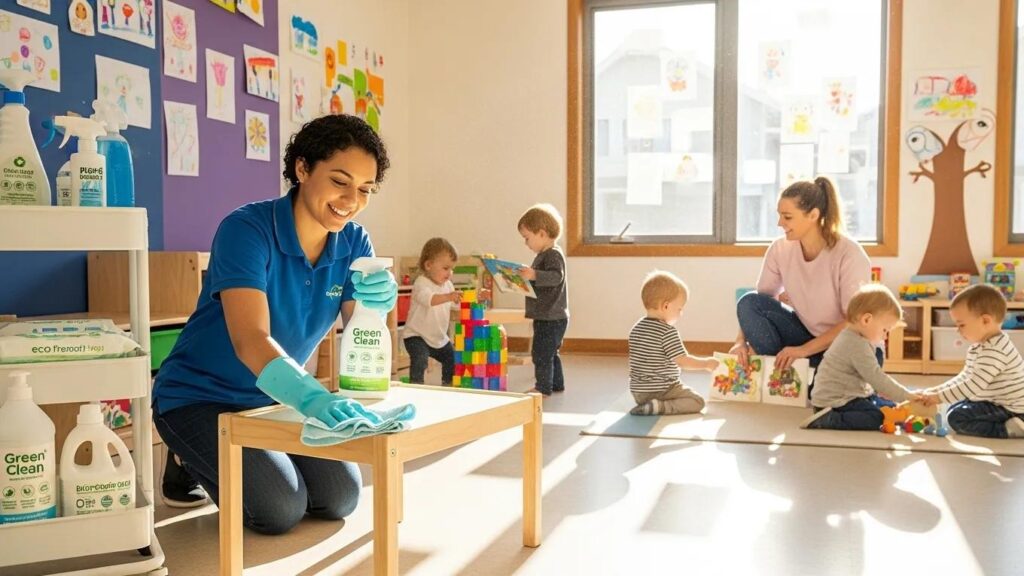
Childcare centers require daily cleaning and disinfecting routines that prioritise high-touch surfaces like doorknobs, toys, and tabletops using EPA-approved disinfectants. Divine Commercial Cleaning recommends sanitising bathrooms and food preparation areas at least twice daily. Floors, mats, and soft furnishings need thorough weekly deep cleaning to eliminate harmful pathogens effectively.
Childcare center cleaning and disinfecting best practices require a consistent three-step routine — cleaning, sanitising. Disinfecting — applied regularly to high-touch surfaces, toys, diapering stations, and feeding areas. Staff should clean with soap and water first to remove dirt. Germs, then sanitise or disinfect surfaces after activities involving diapering, feeding. Contact with body fluids.
Effective childcare center cleaning requires three distinct steps: cleaning with soap. Water to remove dirt, sanitising to reduce germs on surfaces like toys and high chairs. Disinfecting to destroy remaining pathogens on inanimate objects. Staff address high-contact surfaces after diapering, feeding, and body-fluid contact. Divine Commercial Cleaning delivers structured childcare facility cleaning across the Sunshine Coast.
Key Takeaways
- Cleaning with soap and water physically removes dirt and exposes germs to sanitisers or disinfectants.
- Early care and education settings require 3 distinct processes: cleaning, sanitising, and disinfecting surfaces.
- Staff follow a Cleaning, Sanitising, and Disinfection Frequency Table to schedule regular surface maintenance.
- Sanitising reduces germs on inanimate surfaces to levels deemed safe by public health codes.
What Do You Need Before Starting?
Childcare cleaning services require three foundational prerequisites before any clean begins: a clear understanding of cleaning versus sanitising versus disinfecting, verified personnel credentials, and a site-specific task plan. Skipping any of these prerequisites exposes children to preventable health risks and undermines the entire cleaning program.
Young children in group settings face elevated germ exposure compared to adults. Without a structured approach to cleaning, sanitising, and disinfecting, illnesses spread rapidly through shared surfaces, toys. High-touch areas — disrupting operations and eroding parent confidence.
What Is the Difference Between Cleaning, Sanitising, and Disinfecting?
Each process serves a distinct purpose in a childcare environment. Cleaning uses soap, water, and scrubbing to physically remove dirt and germs from surfaces. Sanitising reduces remaining germs to safe levels, while disinfecting destroys or inactivates most germs on inanimate objects. Applying the wrong method to the wrong surface leaves hazards behind.
What Credentials Must Childcare Cleaners Hold?
Childcare cleaners entering a facility must meet strict safety standards before work begins. Divine Commercial Cleaning assigns fully insured and police-checked personnel to every childcare site, ensuring each staff member satisfies rigorous vetting requirements. Facilities that accept unverified cleaning personnel risk compliance failures and duty-of-care breaches.
Before commencing service, confirm the following prerequisites are in place:
- Written distinction between cleaning, sanitising, and disinfecting tasks per zone
- Verified insurance and police-check documentation for all assigned personnel
- A site-specific checklist aligned to the facility’s operating hours and high-risk areas
How Do You Clean Surfaces Correctly First?
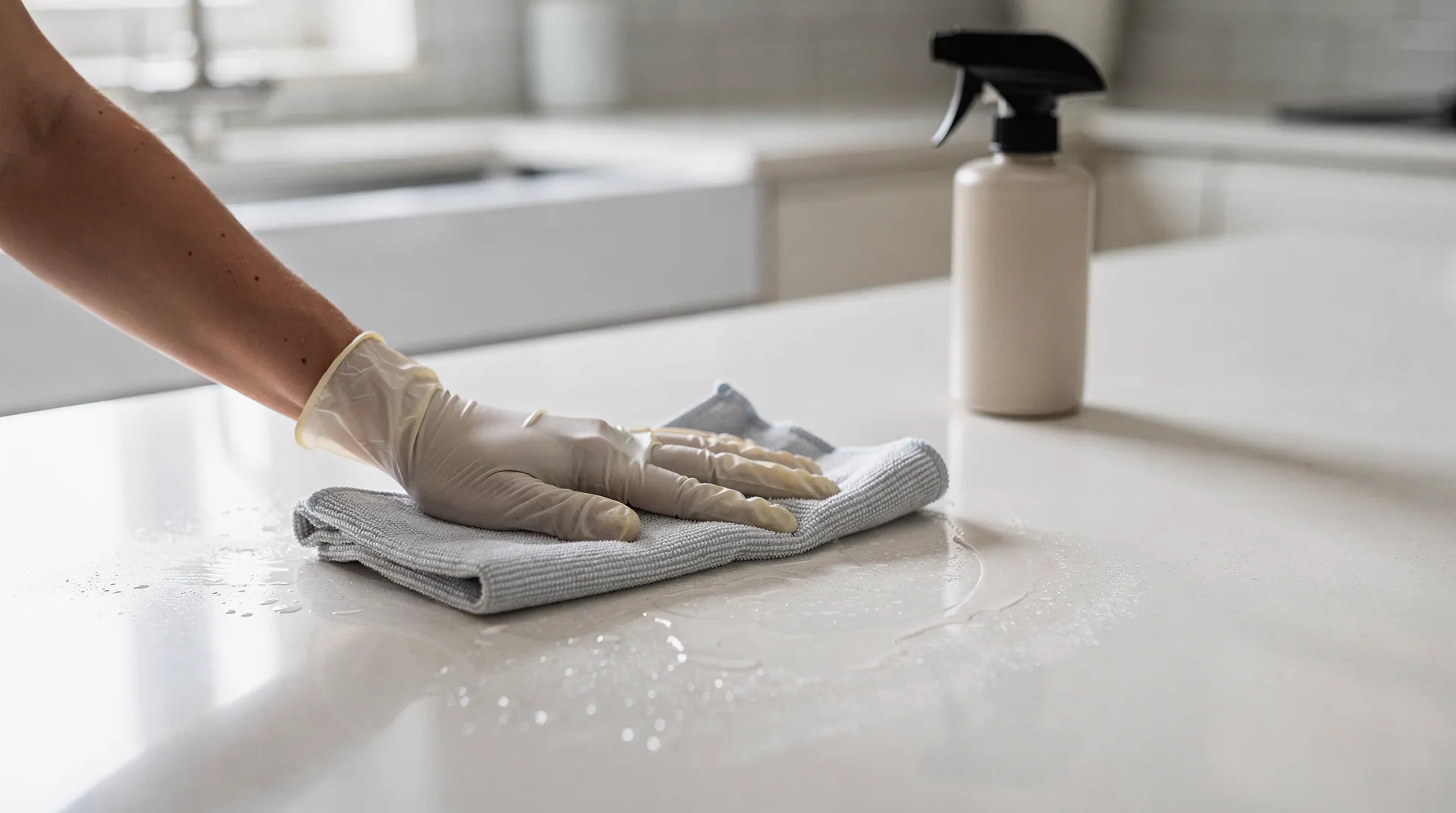
Cleaning surfaces correctly always begins with physical removal of dirt and contamination before any sanitising or disinfecting step. Skipping this sequence leaves germs shielded beneath surface debris, reducing the effectiveness of any product applied afterward.
The friction generated during cleaning removes most germs outright. Surfaces that are not cleaned first retain a layer of organic matter that blocks sanitisers. Disinfectants from reaching the pathogens underneath. Meaning the entire hygiene process fails before it starts.
What Does Correct Surface Cleaning Actually Involve?
Correct surface cleaning uses soap, water. Deliberate scrubbing to physically dislodge and remove harmful germs, including viruses, bacteria, parasites, and fungi. This mechanical action alone eliminates most microbial threats on a surface. Sanitising or disinfecting afterward addresses any remaining germs that survived the initial cleaning step.
Follow these steps in order for correct surface cleaning:
- Remove loose debris — clear any visible dirt, food residue, or waste from the surface before applying any product.
- Apply soap and water — use an appropriate cleaning solution suited to the surface material.
- Scrub with friction — apply deliberate mechanical pressure to dislodge embedded contamination.
- Rinse thoroughly — remove all soap residue and loosened debris completely.
- Allow the surface to dry — proceed to sanitising or disinfecting only after the surface is clean and dry.
Why Is Correct Cleaning Especially Critical in Childcare Settings?
Childcare cleaners working in early care and education environments must clean surfaces regularly and follow structured procedures after activities such as diapering, feeding, and any contact with body fluids. Childcare cleaning services provided by Divine Commercial Cleaning are built around meticulous, thorough processes that ensure every surface is sanitised and safe for children. Consistent adherence to the correct cleaning sequence protects the most vulnerable occupants of any facility.
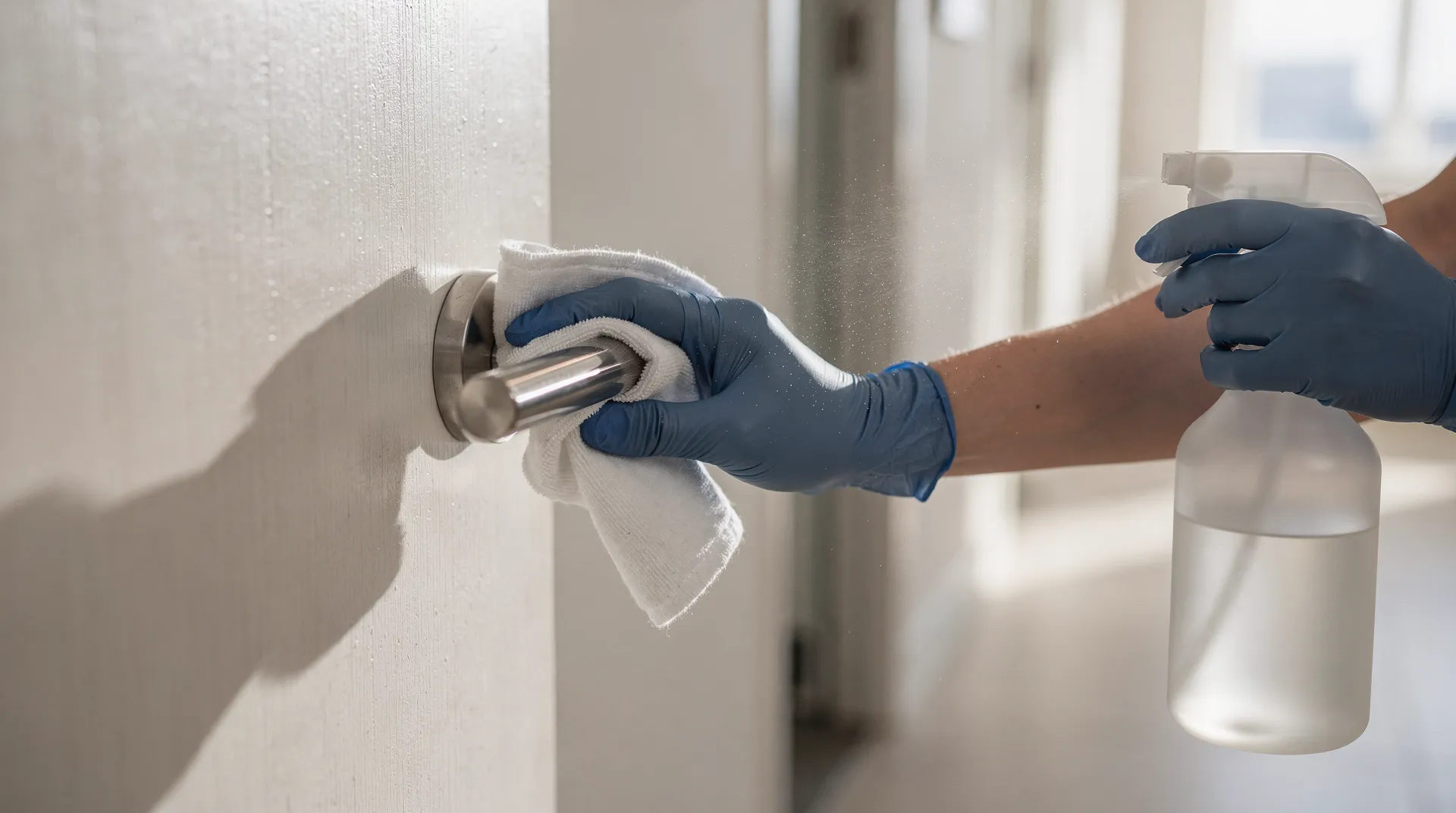
How Do You Sanitise and Disinfect High-Touch Areas?
Sanitising reduces germs on inanimate surfaces to levels considered safe by public health codes. Disinfecting destroys or inactivates most germs on those same surfaces. Skipping either step leaves high-touch areas as active transmission points. A risk no facility can afford, particularly where children or patients are present.
Childcare cleaning services must distinguish between these two processes and apply each to the correct surface type. Applying a sanitiser where a disinfectant is required — or ignoring dwell time — renders the entire procedure ineffective.
What Surfaces Require Sanitising vs. Disinfecting?
The correct method depends on the surface’s infection risk level. Use the table below as a reference:
| Surface Type | Appropriate Method |
|---|---|
| Food service tables, high chairs | Sanitising |
| Toys and pacifiers | Sanitising |
| Diaper tables | Disinfecting |
| Door and cabinet handles | Disinfecting |
| Toilets and bathroom surfaces | Disinfecting |
Sanitising is appropriate where surfaces contact food or mouthed items. Disinfecting is required wherever bodily fluids, waste, or high cross-contamination risk is present.
How Do Childcare Cleaners Apply Disinfectants Correctly?
Childcare cleaners follow a strict sequence to ensure disinfectants perform as intended. Prerequisites: surfaces must be visibly clean before any sanitiser or disinfectant is applied — residual dirt blocks chemical contact with germs.
- Remove visible soil using soap, water, and friction.
- Rinse the surface thoroughly and allow it to dry.
- Apply the appropriate sanitiser or disinfectant product evenly across the entire surface.
- Observe the product’s specified dwell time — the duration the product must remain wet on the surface — without wiping prematurely.
- Wipe or allow to air-dry according to product instructions.
Maintaining a hygienic facility is critical for the safety and wellbeing of every occupant. A spotless environment actively prevents infections from taking hold. A lesson reinforced by the heightened hygiene standards that emerged following the COVID-19 pandemic.
What Cleaning Frequency Schedule Should You Follow?
Childcare cleaning services require a structured, tiered schedule built around three distinct actions: cleaning, sanitising, and disinfecting. Skipping or inconsistently applying any one of these tiers leaves children exposed to harmful germs on shared surfaces — a risk that compounds quickly in high-contact environments.
Young children are especially vulnerable to infection because they frequently touch shared surfaces and then touch their faces. A rigorous schedule targeting toys, high-touch areas, and diapering stations is essential to preventing the spread of illness. Without that structure, even a visually tidy facility harbors pathogens that routine tidying alone cannot eliminate.
Childcare cleaners follow a consistent routine that removes germs, dirt, and impurities through the combined effect of cleaning, sanitising, and disinfecting — each step building on the last to create a genuinely safe environment for children.
How Often Should Different Areas Be Cleaned?
Frequency varies by surface type and how often children contact it. A practical framework looks like this:
| Area / Surface | Recommended Frequency |
|---|---|
| Diapering stations | After every use |
| High-touch surfaces (door handles, light switches) | Multiple times daily |
| Toys and shared equipment | Daily or after each group use |
| Floors and general surfaces | Daily |
| Deep carpet cleaning | Periodically, per operational needs |
How Does a Professional Service Adapt the Schedule to Each Facility?
Divine Commercial Cleaning tailors cleaning frequency, scheduling. Task lists to each facility’s operational needs, minimising disruption to staff and children while maintaining rigorous hygiene standards. No two childcare centers operate identically, so a one-size schedule fails both compliance and practicality.
After every clean, clients receive a detailed checklist. Can submit feedback through a dedicated portal, supporting accountability and consistent standards across every visit.
How Do You Maintain Standards and Avoid Common Mistakes?
Maintaining standards in commercial cleaning requires a structured, repeatable process — not guesswork. Facilities that skip documented procedures risk harmful germs spreading among occupants, a consequence that is especially serious in childcare environments where young children are highly vulnerable to infection.
Childcare cleaning services must treat compliance with cleaning procedures as non-negotiable. Gaps in routine disinfection of high-touch surfaces, diapering stations, and shared toys directly increase the risk of illness outbreaks among children and staff.
What Steps Help Facilities Avoid Cleaning Gaps?
Divine Commercial Cleaning addresses this risk through a disciplined onboarding and review process. Engagement begins with a free quote and an on-site visit to understand each facility’s specific requirements and access points. A formal walkthrough at commencement ensures no area or task is overlooked from day one.
Follow these steps to establish and protect cleaning standards:
- Schedule an on-site assessment before service begins to document all areas, surfaces, and access requirements.
- Complete a commencement walkthrough with the assigned cleaner to confirm task scope and priorities.
- Use post-clean checklists after every service to create an auditable record of completed tasks.
- Participate in 90-day quality reviews conducted by Divine’s quality manager to identify and correct any performance gaps.
Why Does Trusting Professional Childcare Cleaners Matter?
Entrusting a facility’s hygiene to qualified childcare cleaners delivers measurable peace of mind. Knowing that the health and safety of children is protected by trained, accountable professionals removes a significant operational burden from facility managers and educators alike.
Maintaining a clean, disinfected childcare center is not simply a matter of appearances. It is a direct investment in the health, safety. Confidence of every child, parent, and staff member who walks through the door. By following structured cleaning protocols, prioritising high-touch surfaces, selecting child-safe products. Partnering with a professional commercial cleaning provider, childcare operators build environments where children thrive and families feel genuinely reassured. A disciplined, consistent approach to hygiene remains the foundation of every well-run early childhood facility.
FAQ
What is the difference between cleaning, sanitising, and disinfecting?
Cleaning uses soap and water to physically remove dirt and germs, sanitising reduces germs to safe levels. Disinfecting destroys or inactivates most germs on inanimate objects.
Which surfaces require cleaning after activities in a childcare center?
Staff address high-contact surfaces after diapering, feeding, and any contact with body fluids, following a Cleaning, Sanitising. Disinfection Frequency Table to schedule regular maintenance.
What credentials must childcare cleaners hold before entering a facility?
Divine Commercial Cleaning assigns fully insured. Police-checked personnel to every childcare site, ensuring each staff member satisfies rigorous vetting requirements before work begins.

Dianne, originally from Rockhampton, hails from a business-oriented family, with her father owning electrical stores and her uncle serving as Mayor. Moving to the Sunshine Coast at 13, she later pursued a rewarding real estate career and raised three children. As a single mom, she balanced university studies with domestic cleaning work. Armed with a Bachelor’s Degree in Business, majoring in Supply Chain Management, Dianne founded and grew Divine Commercial Cleaning into a thriving company. Her success is rooted in strong family mentorship, a positive attitude, and a solution-oriented approach, offering tailored cleaning services with integrity and strategic insight.