
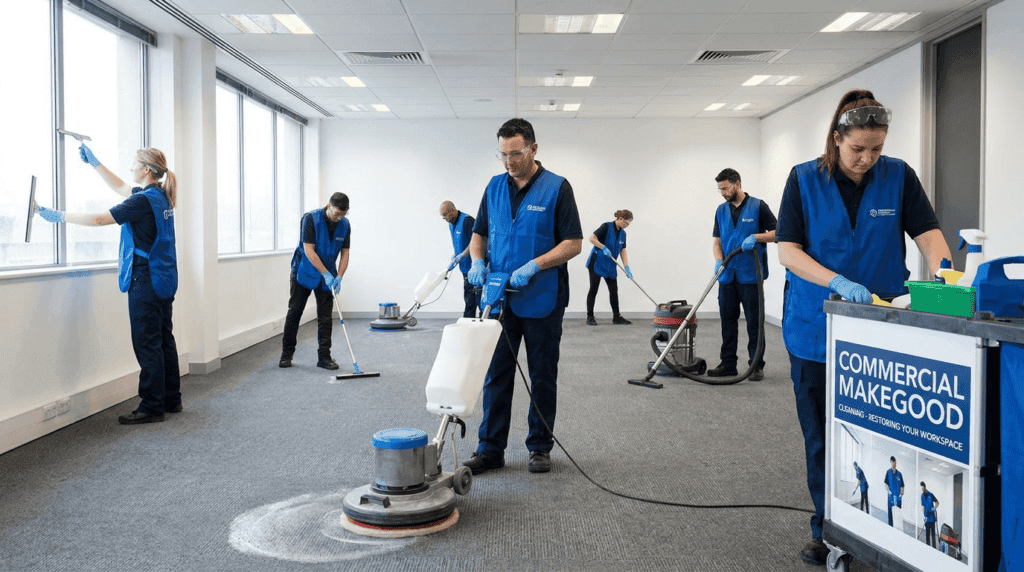
Commercial makegood cleaning is the work required to return a leased tenancy to the condition your lease specifies at the end of the term — and the cleaning component is usually the cheapest part of a makegood obligation and the part most likely to trigger a dispute if it is done badly. The condition standard comes from your lease, not from what feels reasonable, so the first step is always reading the makegood clause.
Commercial makegood is very different from a residential bond clean. There is no standardised checklist, no tribunal-published condition report format, and the amounts at stake are far larger. A tenant who assumes ‘we’ll get the cleaners in at the end’ often discovers the obligation extends to removing a fitout, patching and repainting, reinstating ceiling tiles and carpet, and returning services to their original configuration.
Start with the lease, not the cleaning quote
Makegood clauses vary enormously. Read yours and identify which of these applies:
- Full makegood / reinstatement. Remove the fitout entirely and return the premises to base building or ‘cold shell’ condition. The most onerous, and common in older leases.
- Return to condition at commencement, fair wear and tear excepted. Requires evidence of the condition at commencement — which is why the ingoing condition report matters enormously.
- Return in good and clean repair. Softer, and largely about cleaning and repair rather than removal.
- Landlord’s election. The landlord chooses whether you remove the fitout or leave it. Often the best outcome, because an incoming tenant may want the fitout.
- Agreed cash settlement. Increasingly common: the parties agree a sum in lieu of physical works.
Also check what is specifically named — carpet, painting, ceiling tiles, floor coverings, partitioning, data cabling, signage, air conditioning modifications and any tenant-installed services. Data and communications cabling is frequently overlooked and is expressly a tenant obligation in many leases.
Start twelve weeks out, not two
The single most expensive mistake in a makegood is leaving it too late. A realistic timeline:
| When | Action |
|---|---|
| 12 weeks before | Read the lease; locate the ingoing condition report and any fitout approval documents |
| 10 weeks | Write to the landlord seeking agreement on the scope of makegood and whether the fitout is to be removed |
| 8 weeks | Obtain quotes: strip-out, building works, painting, flooring, and cleaning |
| 6 weeks | Confirm the agreed scope in writing; book contractors; arrange after-hours access if needed |
| 3–4 weeks | Begin decommissioning: IT, records, furniture removal, signage |
| 1–2 weeks | Strip-out and building works |
| Final week | Post-works clean, then final detail clean |
| Handover day | Joint inspection with the landlord or agent; photograph everything |
Landlords rarely agree scope quickly, and disagreements about scope consume weeks. Starting the conversation early is worth more than any negotiating tactic.
What a commercial makegood clean actually covers
Throughout
- Full removal of all rubbish, abandoned furniture, stock and consumables
- Ceiling tiles cleaned or replaced where stained or damaged
- Air-conditioning grilles, diffusers and exhaust registers cleaned
- Light fittings and diffusers cleaned; failed tubes and lamps replaced
- All walls washed; scuffs, adhesive residue and hook marks removed
- Skirtings, architraves, door frames and doors detailed both faces
- Internal glazing, partitions and glazed doors cleaned both faces
- Window internals, external glass where accessible, sills, tracks and blinds
- Power points, switches, data outlets and their surrounds cleaned
Floors
- Carpet: full hot water extraction, spot treatment of stains, or replacement where the lease specifies. See commercial carpet cleaning.
- Vinyl and resilient floors: strip and seal to restore the finish, which is frequently a specified requirement
- Tiled areas: deep clean and grout restoration
- Adhesive residue removal where flooring or matting has been lifted
Kitchen and breakout
- All joinery cleaned inside and out, including the tops of overhead cupboards
- Appliances cleaned internally and externally, and moved to clean behind
- Rangehood, filter and splashback degreased
- Sink, tapware and waste descaled
- Fridges emptied, defrosted, cleaned and left with the door ajar
Washrooms
- Full descale of pans, urinals and tapware
- Grout restoration and mould treatment
- Mirrors, dispensers, partitions and extraction grilles
- See commercial washroom cleaning for the detail these need
Back of house and external
- Store rooms, comms rooms and cleaner’s cupboards emptied and cleaned
- Signage removed and any mounting damage made good
- Allocated car bays, entry and any external hardstand — often pressure washed
Where deposits and disputes are actually lost
- Carpet condition. The biggest single item. Traffic lanes that have never been steam cleaned will not recover with one extraction at the end — a maintained carpet cleans up; a neglected one gets replaced at your cost.
- Wall damage behind fitout. Removing partitions, whiteboards and screens reveals damage that must be patched and repainted, often the whole wall to avoid a visible patch.
- Ceiling tiles. Water-stained, cut for services, or missing after a strip-out. Replacement is cheap; forgetting it holds up handover.
- Data cabling. Frequently a specified tenant obligation and frequently forgotten. Removal above ceilings can be a substantial cost.
- Signage residue. Adhesive shadow and fixing holes in facades, glazing and lift lobbies.
- Kitchen grease. Behind and under appliances, in rangehood filters, on the ceiling above the cooktop.
- Missing base building items. Ceiling tiles, door closers, blinds, keys, access cards, fire extinguisher signage.
- External areas. Bike racks, courtyards, allocated bays and bin areas are part of the tenancy in many leases.
Protecting yourself on the day
- Photograph and video everything after the final clean and before handover. Date-stamped, wide shots plus detail shots.
- Do a joint inspection with the landlord or agent, in person, and get any defects listed in writing on the day.
- Compare against the ingoing condition report. If none exists, that generally works in the tenant’s favour, because the landlord must otherwise prove the original condition.
- Keep every invoice and certificate. Cleaning, carpet extraction, painting, electrical decommissioning, waste disposal dockets.
- Get written confirmation of acceptance before returning the keys, and hand keys and access cards over against a signed receipt.
If you are the incoming tenant instead
The reciprocal advice is short and valuable: complete a detailed ingoing condition report with photographs before you move a single item in. Note every mark, every carpet stain, every damaged ceiling tile. Five years later it is the only thing standing between you and paying for damage you did not cause.
And through the term, keep carpets and hard floors on a periodic maintenance program. Regular carpet steam cleaning and hard floor restoration cost a fraction of replacement at makegood, and they are the two items landlords most often insist on. Good entrance matting through the term is the cheapest protection of all.
Frequently asked questions
What is makegood in a commercial lease?
Makegood is the tenant’s obligation at the end of the lease to return the premises to the condition specified in the lease — which may mean removing the fitout entirely, returning it to the condition at commencement, or simply leaving it in good and clean repair. The lease wording determines which.
How is commercial makegood different from a residential bond clean?
A bond clean is a standardised cleaning task against a published checklist. Commercial makegood can extend to demolition, building works, painting, flooring replacement and services reinstatement, with no standard checklist and far higher sums involved.
Do we have to replace the carpet at the end of a commercial lease?
Only if the lease requires it, or if the carpet’s condition is beyond fair wear and tear. Professional hot water extraction will often restore a maintained carpet to an acceptable standard. Carpet that has never been cleaned through a five-year term frequently cannot be recovered, and replacement then falls to the tenant.
Can we negotiate the makegood obligation?
Frequently, yes. Landlords sometimes prefer to retain a fitout for the next tenant, or accept a cash settlement in lieu of works. Start that conversation months out. Once you are two weeks from expiry you have no leverage.
What happens if we do not complete the makegood?
The landlord can generally undertake the works and recover the cost, often from a bank guarantee or security deposit, and may also claim for rent lost while the works are done. The cost recovered is usually higher than doing it yourself, because it is done at the landlord’s convenience and to their contractor’s rates.
How much does a commercial makegood clean cost?
It varies with area, condition and what the lease requires. The cleaning component is usually modest relative to strip-out, painting and flooring. Get it quoted against a defined scope with the periodic works — carpet extraction, strip and seal, grout restoration — itemised separately.
Planning an office move?
Divine Commercial Cleaning provides makegood and end-of-lease cleaning for commercial tenancies across the Sunshine Coast, including carpet extraction, hard floor restoration, grout renovation and full detail cleaning. Get in touch early — we can inspect the premises against your makegood clause and tell you what the landlord is likely to require before you commit to a date.

Dianne, originally from Rockhampton, hails from a business-oriented family, with her father owning electrical stores and her uncle serving as Mayor. Moving to the Sunshine Coast at 13, she later pursued a rewarding real estate career and raised three children. As a single mom, she balanced university studies with domestic cleaning work. Armed with a Bachelor’s Degree in Business, majoring in Supply Chain Management, Dianne founded and grew Divine Commercial Cleaning into a thriving company. Her success is rooted in strong family mentorship, a positive attitude, and a solution-oriented approach, offering tailored cleaning services with integrity and strategic insight.