Bells Creek Medical Centre Cleaning: A Practical Guide to Clinic Hygiene and Safety
Medical centre cleaning in Bells Creek means cleaning built specifically for clinical spaces: surface decontamination, correct waste segregation and protocol-driven workflows that reduce infection risk and keep clinics audit-ready. This guide explains how medical-grade cleaning differs from standard commercial cleaning, why infection control is critical to patient safety, and what Sunshine Coast clinics should expect from a professional provider. You’ll find clear explanations of dwell times, zone-based cleaning and record-keeping, plus service examples for GP, dental and imaging clinics. We also cover the regulatory context (including AS/NZS 4187 and Queensland Health guidance) and offer a checklist to help you choose a reliable medical cleaning contractor. Later, we show how local providers — including Divine Commercial Cleaning’s trained, police-checked staff, no lock-in contracts and tailored plans — fit into ongoing clinic hygiene programs.
Why Is Specialized Medical Cleaning Essential for Bells Creek Clinics?
Specialised medical cleaning is clinical-grade hygiene carried out to remove pathogens, stop transmission and protect sterile or sensitive areas in healthcare settings. It starts with removing organic soil, then uses hospital-grade disinfectants applied for validated contact times to inactivate microbes on high-touch surfaces. This practical approach reduces infection risk and reassures patients and staff. In Bells Creek clinics, where patient turnover and close-contact procedures are common, these practices are essential. Recognising the difference between routine cleaning and medical cleaning helps clinics set the right staffing, training and compliance expectations to protect everyone who uses the facility.
With that foundation in place, the next section breaks down the practical steps — surface disinfection, cleaning frequency and zone management — that keep patients safe.
How Does Medical Cleaning Protect Patients and Control Infection?
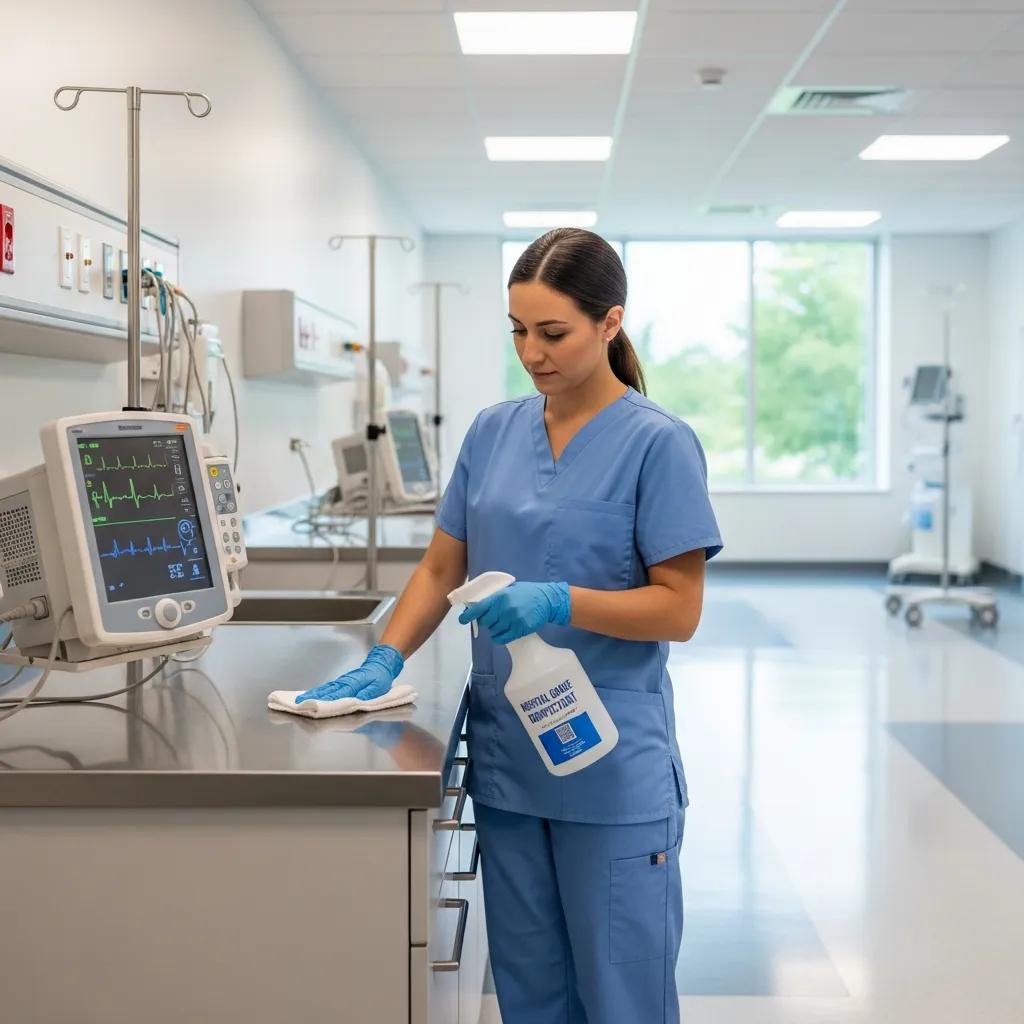
Medical cleaning protects patients by combining mechanical soil removal with chemical disinfection to inactivate pathogens, while adhering to validated contact (dwell) times. Cleaners work in a sequence-based approach (clean-to-dirty) and focus on high-touch areas like door handles, reception counters and clinical work surfaces — where the biggest transmission risk exists. Typical steps are pre-cleaning to reduce organic load, applying a hospital-grade disinfectant at the correct wet contact time, and recording completion with checklists or audit logs. These routine actions translate into reliable reductions in environmental contamination and lower infection risk for patients and staff.
Those high-touch protocols only work when staff are properly trained and competency is regularly assessed — an area that evidence shows matters for real-world outcomes.
High-Touch Cleaning Training for Healthcare Hygiene
In one hospital setting, twice-daily high-touch cleaning (HTC) was standard, yet an outbreak and elevated ATP readings after cleaning showed the process was not effective. Although staff received on-the-job training, many found it hard to understand the purpose and sequence of tasks. To fix this, a new training and competency framework was introduced (from May 2023) covering three domains: standardised education, competency assessment and feedback mechanisms. Early evaluation showed improved compliance with HTC where the framework was used.
Guidelines for environmental infection control in health-care facilities, MJ Arduino, 2003
Those operational realities lead directly to regulatory expectations; the next subsection summarises the local standards and records clinics must maintain.
Which Regulations and Standards Apply to Medical Cleaning in Bells Creek?
Australian and Queensland guidance set the expectations for medical cleaning. AS/NZS 4187 is the key industry standard for cleaning reusable medical devices and related environmental controls, while Queensland Health provides local context and audit guidance. Clinics translate these standards into practical documents: cleaning schedules, staff training records, product safety data sheets and routine checklists that create traceability during inspections. Practically, this means keeping logs of daily high-touch disinfection, maintaining evidence of staff competency, and following state rules for waste segregation and disposal. Meeting these requirements helps clinics stay compliant and protect patients.
Next we outline the specific services available to meet those obligations.
Divine Commercial Cleaning’s Medical Centre Services in Bells Creek
Divine Commercial Cleaning provides medical-centre services that align with clinical protocols: targeted disinfection, high-touch cleaning, specialist floor care and compliant waste handling for clinics across Bells Creek and the Sunshine Coast. Our teams are trained and police-checked, follow documented checklists and use hospital-grade products suitable for clinical zones — helping clinics stay consistent and audit-ready. Typical delivery includes daily cleans for waiting and consult rooms, between-patient turnarounds where needed, periodic terminal cleans and strip-and-seal floor programs to protect fixtures. We favour tailored plans over one-size-fits-all contracts — no lock-in agreements, insured service and a money-back guarantee to give clinics confidence in reliability and accountability.
Below is a quick comparison of common service types, what they cover and how often they’re normally done to help clinic managers match needs to packages.
The table above clarifies how service types differ by task and cadence, helping clinics choose appropriate packages based on facility type and patient throughput.
| Service Type | Key Tasks | Typical Frequency |
|---|---|---|
| GP Clinic Cleaning | Reception, consult rooms, high-touch surface disinfection, bathroom sanitation | Daily + between-patient touch-ups |
| Dental Clinic Cleaning | Operatories, chair rails, suction housings, instrument surface cleaning | Between patients + weekly terminal clean |
| Imaging Centre Cleaning | Equipment-safe wiping, zone separation, floor care | Daily + scheduled equipment-safe deep cleans |
| Floor Strip & Seal | Deep strip, reseal, buffing to restore protective finish | Quarterly to biannually (depending on wear) |
Our operational strengths — consistent on-site staff where possible, family-owned responsiveness and eco-conscious choices — deliver practical benefits for clinics that value both infection control and reliable service. The next section explains which facility types benefit most from tailored cleaning plans.
Which Medical Facilities Benefit Most from Tailored Cleaning Plans?
Different clinics have different risks. GP clinics need frequent disinfection of shared areas and consult rooms; dental practices require strict operatory routines because of bioaerosols; imaging centres need equipment-safe products and clear zone separation to protect expensive devices. Custom plans specify between-patient procedures, colour-coded tools to prevent cross-contamination and schedules that reflect patient flow. Where flooring is sensitive or foot traffic is high, a strip-and-seal program protects assets and keeps surfaces hygienic. Matching the scope to facility type helps clinics meet infection-control goals while keeping daily operations smooth.
This facility-level approach ties directly to workforce standards and product choices, covered next.
How Do Trained Staff and Hospital-Grade Products Improve Outcomes?
Trained staff bring technique, sequencing and judgement — correct dilution, proper dwell time and safe product selection — turning cleaning science into dependable practice. Police checks add an extra layer of trust. Hospital-grade disinfectants chosen for surface compatibility, applied with validated contact times, give predictable reductions in microbes; staff training also covers PPE, spill response and gentle wiping for sensitive equipment. Quality assurance comes from checklists, supervisory inspections and consistency measures like assigning the same cleaner to a site. Together, trained teams and the right products produce verifiable disinfection outcomes that clinics can show during audits.
Those workforce standards feed into the infection-control protocols that guide every clean.
How Infection-Control Protocols Protect Bells Creek Medical Spaces
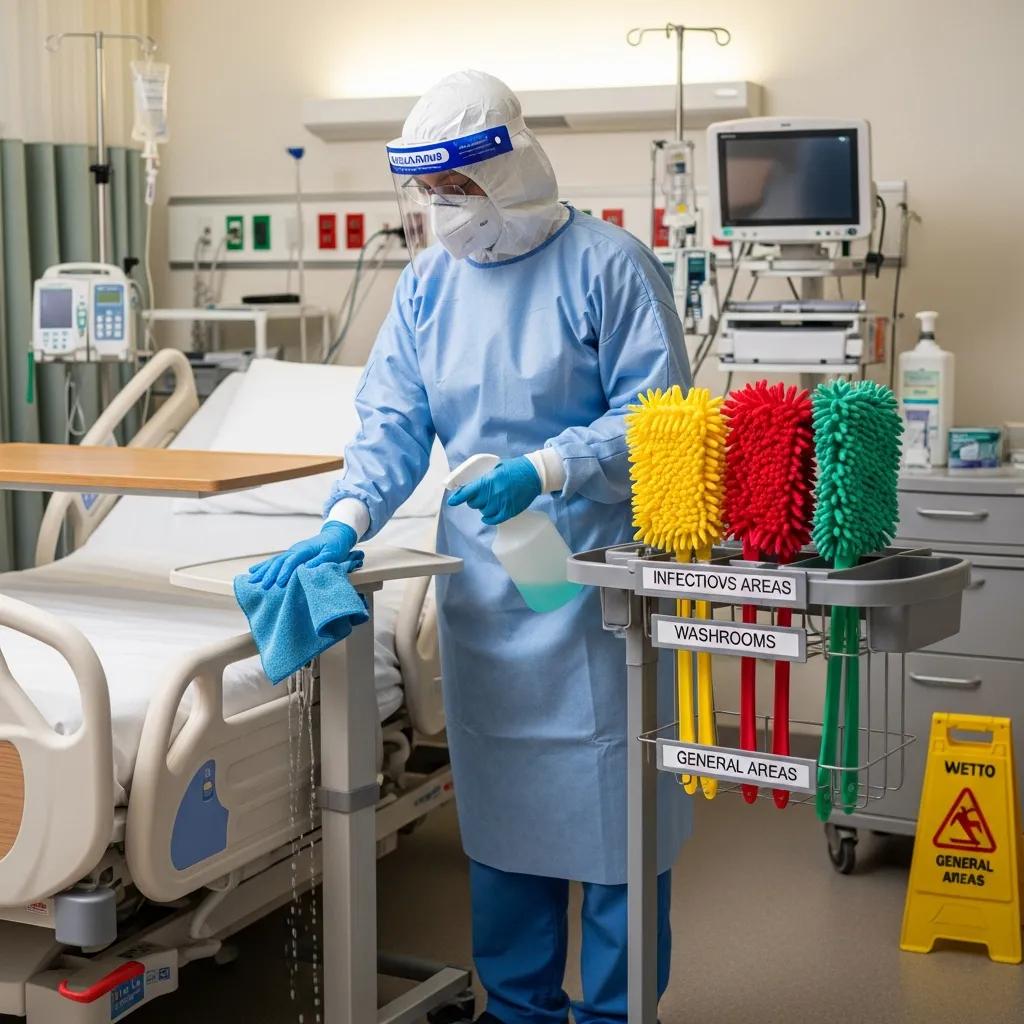
Infection-control protocols are step-by-step sequences — pre-clean, clean, disinfect, verify — designed to lower pathogen levels, stop cross-contamination and protect vulnerable patients and staff. Protocols combine engineering controls (zoning, ventilation awareness) with administrative controls (schedules, documentation) and PPE practices to create a layered defence. Common measures include colour-coded tools for different zones, clean-to-dirty sequencing, and routine verification such as ATP testing or supervisory audits. When these protocols are followed, clinics see less environmental contamination, clearer audit trails and more confidence from clinical teams that hygiene controls are working as intended.
These local protocols reflect international guidance that stresses comprehensive environmental infection control to prevent harm.
CDC Guidance on Environmental Infection Control
The healthcare environment is only occasionally the source of disease transmission, but immunocompromised patients are at higher risk. Environmental exposures — for example to Aspergillus or Legionella, or airborne pathogens such as Mycobacterium tuberculosis — can cause harm to patients and staff. Effective strategies include: correct use of cleaners and disinfectants; proper maintenance of medical equipment; adherence to water-quality and ventilation standards in specialised areas; and quick response to water intrusion events. Together, these engineering and administrative controls reduce healthcare-associated infections and pseudo-outbreaks.
Guidelines for environmental infection control in health-care facilities, MJ Arduino, 2003
Below is a practical mapping of standard protocols to the steps they require and the outcomes clinics can expect when protocols are followed.
The table above provides a concise protocol-to-outcome mapping that managers can use to prioritise interventions and assign responsibilities.
| Protocol | Action/Steps | Outcome (infection risk reduction) |
|---|---|---|
| Terminal Cleaning | Remove movable items, deep clean and disinfect all surfaces, replace consumables | Significant reduction in environmental bioburden |
| Contact Precautions | Dedicated PPE, clear signage, single-use consumables, isolated cleaning tools | Prevents spread from known infectious patients |
| PPE & Hand Hygiene | Correct donning/doffing, hand sanitiser placement, glove changes between tasks | Interrupts hand-mediated pathogen transfer |
Those core protocols are implemented through cross-contamination prevention steps outlined next.
How Do You Prevent Cross-Contamination in Medical Cleaning?
Preventing cross-contamination depends on clear systems: establish zones, use dedicated or colour-coded tools for each zone, follow a clean-to-dirty workflow and enforce hand hygiene and PPE changes between tasks. Colour-coding for mops, cloths and buckets removes ambiguity about where equipment belongs, while working from low-risk to high-risk areas reduces the chance of moving contaminants into sterile spaces. Ongoing training helps staff understand the rationale for sequence and tool segregation, turning policies into consistent, verifiable practice. These measures cut transmission pathways and improve environmental hygiene, which supervisors can confirm through regular checks.
Next we cover specialist equipment and techniques commonly used in clinical cleaning.
Which Equipment and Techniques Support Healthcare Hygiene?
Healthcare cleaning uses purpose-built tools: microfibre systems that lift and trap soils, HEPA-filtered vacuums to limit airborne particulates during floor care, and electrostatic sprayers for fast, even disinfectant coverage in larger areas. Microfibre improves physical soil removal before disinfection; HEPA vacuums reduce particle resuspension; and electrostatic sprayers help reach complex surfaces while using equipment-safe products. Each tool must be matched to the environment and used by trained staff to avoid damage or ineffective application; equipment performs best when paired with clear protocols and competent users.
These choices underline why many clinics prefer to outsource cleaning to experienced, trained providers.
Benefits of Professional Medical Cleaning for Bells Creek Clinics

Professional medical cleaning delivers practical and perceptual benefits: lower environmental pathogen levels, better audit readiness, higher patient confidence and longer asset life through proactive maintenance. Systematic disinfection and consistent record-keeping reduce the chance of healthcare-associated infections, while visible cleanliness and predictable schedules boost patient trust and staff morale. Outsourcing also creates operational efficiencies — clinical teams can focus on care while cleaning specialists manage supplies, training and documentation — resulting in fewer disruptions and clearer, predictable costs. Providers who deliver validated protocols and consistent staffing help clinics evidence compliance and reduce the internal burden of running a cleaning program.
Key benefits clinics typically see when they move from ad-hoc cleaning to a protocol-driven service include:
- Reduced infection risk: Regular, documented disinfection lowers environmental pathogen levels.
- Regulatory readiness: Training records and schedules simplify audits.
- Operational efficiency: Outsourcing frees clinical staff to focus on patient care.
Those benefits translate into measurable outcomes; next we explain how expert cleaning affects trust and workplace wellbeing.
How Does Expert Cleaning Build Patient Trust and Staff Well‑being?
Expert cleaning builds trust through visible, routine hygiene practices — tidy reception areas, regularly disinfected consult rooms and clear signage — that reassure patients and visitors. For staff, fewer environmental pathogens mean fewer illnesses and fewer unplanned absences, helping maintain continuity of care. Predictable cleaning windows reduce last-minute disruptions and allow teams to plan patient flow around consistent service times. Documented cleaning activities and feedback loops also help clinics demonstrate to regulators and patients the work being done to keep the environment safe.
These operational and perceptual benefits also support asset longevity and day-to-day efficiency, described next.
How Does Compliance Protect Assets and Improve Efficiency?
Compliance improves efficiency by standardising maintenance actions — regular floor care, scheduled terminal cleans and planned equipment-safe treatments — that prevent premature wear and reduce emergency repairs. For example, routine strip-and-seal floor maintenance keeps protective coatings intact, reducing surface porosity and making daily cleaning more effective, which lowers replacement costs over time. Audit-ready records reduce time spent responding to regulatory queries, freeing managers to focus on patient care. Together, preventative maintenance and clear documentation save money and keep operations running smoothly.
With those benefits in mind, the next section offers a practical checklist to help you choose a medical cleaning partner.
How to Choose the Right Medical Cleaning Service in Bells Creek and the Sunshine Coast
Choosing a provider comes down to five essentials: documented staff training and police checks, hospital-grade products and validated protocols, insurance and references, local knowledge of Sunshine Coast regulations, and flexible contracts without punitive lock-in clauses. Ask providers for cleaning schedules, sample checklists, evidence of police checks, and clear waste-handling procedures that match Queensland rules. Helpful selection steps include a site walk-through to check layout compatibility, a trial period to evaluate consistency, and verification of insurance to ensure proper risk cover. Using these criteria reduces the chance of service gaps and helps clinics keep both safety and operational flexibility.
Here’s a short checklist you can use in procurement conversations:
- Training and police checks: Confirms staff competence and trustworthiness in clinical areas.
- Hospital-grade products and protocols: Ensures efficacy and surface compatibility.
- Insurance and references: Protects clinic assets and validates past performance.
- Local regulatory knowledge: Aligns practice with AS/NZS 4187 and Queensland Health guidance.
- Flexible contracts and consistency: Keeps operations agile and, where possible, provides the same cleaner for continuity.
Applying this checklist helps clinics identify providers who meet both technical and practical needs; the next subsection explains how Divine Commercial Cleaning aligns with these criteria.
What to Ask When Vetting Medical Cleaning Providers
When vetting suppliers, request documented training programs, sample clinical cleaning checklists, proof of police checks, insurance certificates and references from similar Sunshine Coast facilities. Confirm the provider’s approach to product selection and dwell-time validation, and whether they offer flexible terms such as no lock-in contracts and the option of the same cleaner for site familiarity. These questions make comparisons straightforward and reduce procurement risk, helping you choose a partner aligned with clinical safety goals.
Below we’d like to point out how Divine Commercial Cleaning meets those expectations using verifiable attributes.
How Divine Commercial Cleaning Compares Locally
Divine Commercial Cleaning stands out locally through family-owned responsiveness, trained and police-checked teams, insured services and flexible engagement terms without lock-in contracts — attributes that build trust and accountability for Bells Creek clinics. Where possible we assign the same cleaner to a site to improve consistency and reduce onboarding time. We also promote environmentally conscious practices and back our work with a money-back guarantee. These factual features align with common selection criteria and provide clinics with practical reasons to shortlist us during procurement.
Next we answer common operational questions clinics often raise and offer a local call to action.
Common Questions About Medical Centre Cleaning in Bells Creek
Clinics often ask about cleaning frequency, recommended disinfectants and correct medical-waste handling. Short, practical answers are: high-touch areas require daily disinfection; clinical rooms require between-patient cleaning; terminal cleans are scheduled based on throughput and risk. Use hospital-grade disinfectants registered for healthcare surfaces, and always follow the manufacturer’s contact times. Medical waste should be segregated at source, stored securely and handed to licensed disposal contractors with appropriate documentation to meet state rules.
The table below offers quick FAQ-style answers and next steps so clinics can turn guidance into action.
| Question | Short Answer | Where to find more details/CTA |
|---|---|---|
| What cleaning frequency is recommended? | Daily high-touch disinfection; between-patient cleaning in clinical rooms; periodic terminal cleans | Request a site-specific schedule when you get a quote |
| Which disinfectants should be used? | Hospital-grade disinfectants compatible with clinic surfaces and applied with correct dwell times | Ask providers for SDS and product labels for verification |
| How is medical waste managed? | Segregate by category, store securely, handover to licensed waste contractors with documentation | Confirm provider procedures and documentation protocols |
Here are a few practical actions clinics can adopt immediately:
- Daily actions: Disinfect reception touchpoints, waiting-area seating and restrooms using documented checklists.
- Between-patient actions: Wipe clinical surfaces, replace consumables and apply disinfectant with validated dwell time.
- Periodic deep clean: Schedule terminal or weekend deep cleans to reach hidden areas and reset the environmental baseline.
These simple steps prepare clinics for procurement conversations. If you’re looking for a local partner, Divine Commercial Cleaning offers tailored medical-centre services across Bells Creek and the Sunshine Coast — call us on 0459 949 969, email info@divinecleaning.com.au, or check our Google Business Profile for local listing details.
Recommended Frequencies and Disinfectants for Medical Facilities
Recommended frequencies depend on risk: high-touch communal zones (reception, door handles) need daily disinfection, consult and treatment rooms should be cleaned between patients, and lower-risk non-clinical areas can follow daily or weekly schedules. Choose disinfectants for proven efficacy, correct contact time and surface compatibility — hospital-grade, healthcare-registered products are best. Keep product labels and SDS on file and include dwell-time checks on cleaning checklists to make sure applications are effective. These routines help clinics maintain a consistent baseline of hygiene and reduce the risk of transmission.
Next we cover medical-waste handling and disposal.
How Medical Waste Management Works in Healthcare Settings
Medical waste management starts with segregation at source (sharps, clinical, infectious, general), secure containment and documented storage before transfer to licensed waste contractors for final disposal. Clinics must label and store waste according to state regulations, keep handover records and train staff in safe handling and spill response. Regular audits of waste logs and storage areas reduce regulatory risk and show compliance during inspections. A simple checklist covering daily handling, secure interim storage and scheduled contractor pickups will help keep your clinic compliant and safe.
These controls complete the practical guidance clinics need to maintain safe, audit-ready environments.
Frequently Asked Questions
What training do cleaning staff receive to ensure effective medical cleaning?
Cleaning staff receive focused training on infection-control principles, correct use of hospital-grade disinfectants and effective surface-disinfection techniques. Training usually combines on-the-job practice with competency assessments so staff can apply procedures reliably. We also teach clean-to-dirty sequencing and the use of colour-coded tools to avoid cross-contamination. Regular refresher sessions and feedback loops keep standards high and help teams stay audit-ready.
How can clinics verify the effectiveness of their cleaning protocols?
Clinics can check cleaning effectiveness with routine audits, ATP (adenosine triphosphate) testing and documented checklists. ATP tests give immediate feedback on organic residue on surfaces. Supervisory inspections and compliance checks ensure staff follow protocols, and feedback from clinical teams supports ongoing improvements. Together, these methods provide both real-time and documented evidence of cleaning performance.
What types of disinfectants are recommended for medical cleaning?
Use hospital-grade disinfectants that are registered for healthcare use and compatible with your surfaces. These products should be effective against a broad spectrum of pathogens. Always follow manufacturer instructions for dilution, application and contact time, and keep SDS and product labels on file for audits and safety reviews.
How often should terminal cleaning be performed in medical facilities?
Terminal cleaning frequency depends on patient throughput and clinical risk. It’s typically done at the end of the day or after significant patient turnover or high-risk procedures. Terminal cleaning is a deep clean and disinfection of all surfaces, removal of movable items and replacement of consumables. Establishing a regular schedule helps maintain a consistently safe environment.
What are the consequences of inadequate medical cleaning practices?
Poor cleaning increases the risk of healthcare-associated infections (HAIs), undermines patient safety and can lead to regulatory non-compliance — potentially resulting in fines or sanctions. It also damages patient trust and can hurt a clinic’s reputation. Beyond that, increased infection rates and legal exposure can carry significant financial and operational costs.
How can clinics ensure compliance with local cleaning regulations?
Clinics ensure compliance by following relevant standards such as AS/NZS 4187 and Queensland Health guidance, documenting cleaning protocols, maintaining training records and conducting routine audits. Working with professional cleaning providers who understand local rules can add an extra layer of assurance that practices meet regulatory expectations.
Specialised medical cleaning in Bells Creek helps protect patients, supports regulatory compliance and keeps clinics running smoothly. Partnering with a professional provider like Divine Commercial Cleaning gives you tailored protocols, trained staff and consistent service delivery — so your team can concentrate on patient care. If you want dependable, audit-ready cleaning that fits your clinic, contact Divine Commercial Cleaning today.

Dianne, originally from Rockhampton, hails from a business-oriented family, with her father owning electrical stores and her uncle serving as Mayor. Moving to the Sunshine Coast at 13, she later pursued a rewarding real estate career and raised three children. As a single mom, she balanced university studies with domestic cleaning work. Armed with a Bachelor’s Degree in Business, majoring in Supply Chain Management, Dianne founded and grew Divine Commercial Cleaning into a thriving company. Her success is rooted in strong family mentorship, a positive attitude, and a solution-oriented approach, offering tailored cleaning services with integrity and strategic insight.