Infection Control in Medical Offices and Dental Practices: Expert Cleaning Services for Safe Healthcare Environments
Infection control in clinical settings refers to the coordinated set of cleaning, disinfection and sterilization practices designed to prevent transmission of pathogens between patients, staff and the environment. These measures work by removing organic soil, inactivating microorganisms and interrupting transmission routes such as droplets, aerosols and contaminated surfaces, which together protect patient safety and preserve workforce health. This article explains practical infection-prevention mechanisms used in medical offices and dental practices, describes how cleaning workflows and products support sterile environments, and outlines how facilities can verify compliance with current healthcare cleaning standards. Readers will learn the principal risks and high-touch vectors in clinics, the disinfectants and PPE that form a compliant program, how technology and audits support pathogen elimination, and criteria for selecting a specialist clinical cleaning provider. The guidance integrates practical checklists, comparison tables of protocols and products, and examples of buyer verification steps tailored to Australian medical and dental settings.
Why Is Infection Control Critical in Medical and Dental Facilities?
Infection control is the systematic prevention of healthcare-associated infections (HAIs) through cleaning, disinfection and procedural controls that reduce pathogen transmission. Effective infection control breaks chains of transmission by combining engineering controls, administrative protocols and targeted surface/air hygiene to reduce exposure risk for patients and staff. The primary value is patient safety: reducing post-visit infections, protecting immunocompromised patients, and maintaining clinical continuity by keeping staff healthy. This section outlines core transmission routes and regulatory drivers that make robust cleaning programs non-negotiable for clinics and dental surgeries.
Healthcare settings face multiple pathways for pathogen spread, so targeted interventions must address each vector to be effective. Pathogens → colonize → high-touch surfaces such as reception desks, door handles and treatment chairs, creating reservoirs for indirect transmission. Waiting areas, operatory surfaces and instrument zones are common risk points and require clearly defined cleaning frequency and disinfection steps. Understanding these transmission dynamics leads naturally into how local health frameworks set expectations for cleaning, documentation and audit readiness for clinics.
High-level reasons infection control matters include the following:
- Patient safety: Preventing cross-infection between patients and reducing post-treatment complications.
- Staff protection: Minimizing occupational exposure and sick leave that disrupt service delivery.
- Regulatory compliance: Meeting state and national infection prevention and control expectations.
- Reputation and trust: Demonstrating hygienic practice supports patient confidence and clinic viability.
These priorities make consistent cleaning protocols an operational necessity and set the stage for choosing appropriate local cleaning partners that understand clinical risk and audit requirements.
What Are the Main Risks of Infection in Healthcare Settings?
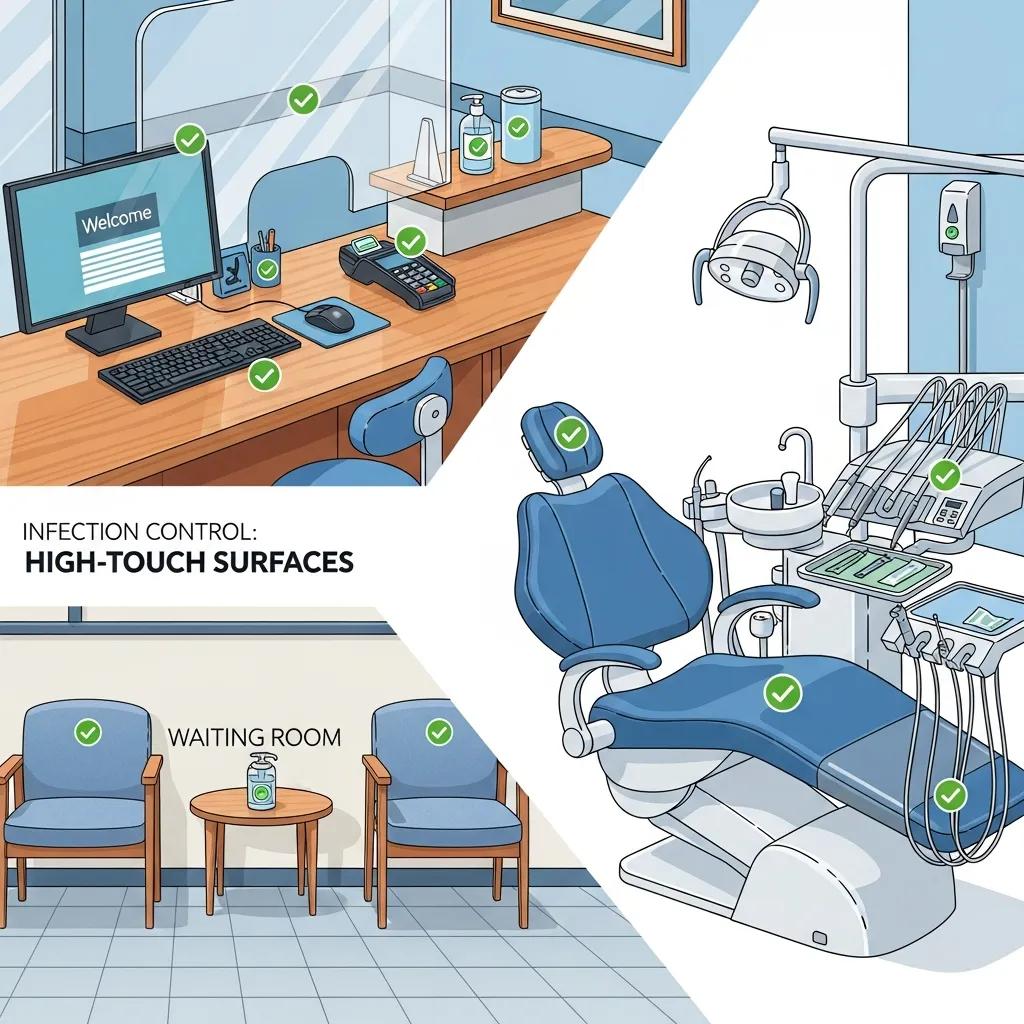
The main infection risks in clinics and dental practices arise from airborne aerosols, droplets and surface contamination that provide direct or indirect transmission routes. Aerosol-generating procedures in dental operatories increase exposure risk by dispersing fine particles, while droplets from coughs or sneezes can contaminate nearby surfaces and equipment. High-touch surfaces—reception counters, waiting room chairs, dental chair controls, instrument trays and mobile devices—act as fomites that transfer pathogens between hands and mucous membranes. Identifying these high-risk zones enables prioritized cleaning, targeted disinfection frequency and use of appropriate disinfectants to reduce viable pathogen loads between patient contacts.
Surface contamination often follows clinical workflows, so cleaning plans should be mapped to patient flow to ensure timely decontamination. This mapping leads into regulatory expectations that require documentation and auditable regimes to show cleaning occurred at required intervals and with validated products and methods.
How Do Australian Health Regulations Guide Infection Prevention?
Australian infection prevention guidance combines national best-practice principles with state-level requirements that shape cleaning and IPC (infection prevention and control) expectations for clinics. Regulatory frameworks emphasise documented cleaning schedules, safe handling and disposal of clinical waste, use of approved disinfectants and evidence of staff training and competency. Facility operators must maintain records that demonstrate routine cleaning, terminal decontamination after procedures and outbreak-response actions, which supports public health tracing and inspection readiness. Queensland Health and professional dental associations provide advisory material that clinics commonly use to align local cleaning practices with recognised IPC principles.
Meeting these expectations requires both procedural rigor and traceable records—cleaning logs, SDS references and audit trails—to demonstrate compliance during inspections. Clear documentation practices make it straightforward to translate regulatory guidance into routine operational tasks and measurable quality assurance.
How Does Divine Commercial Cleaning Support Infection Control?
Divine Commercial Cleaning cleans medical centres, clinics and allied health practices across the Sunshine Coast, working to each practice’s own infection-control policy. Every cleaner is police-checked, separate mops and cloths are kept for bathrooms, and clinical and sharps waste stays with the practice’s licensed waste contractor. The cleaner’s checklist for every visit sits in the practice’s portal and can be downloaded as a PDF. The table below shows how cleaning protocols generally vary by task and area in clinical settings.
This table clarifies how cleaning tasks are matched to clinical zones and why procedural detail matters for pathogen control.
| Protocol Type | Typical Frequency | Key Attributes |
|---|---|---|
| Routine operatory cleaning | Between patients and daily deep clean | Two-step clean then disinfect; hospital-grade disinfectant; short contact times for high-touch items |
| Terminal cleaning (treatment rooms) | After procedures and at shift end | Comprehensive surface coverage, attention to equipment interfaces, validated disinfectant dwell time |
| Outbreak-response deep clean | As needed during events | Enhanced PPE, higher-level disinfectants, extended contact times and recorded verification |
This comparison demonstrates that a one-size-fits-all approach is inadequate; protocols are task-specific and require trained execution and monitoring. The practice’s own policy sets which of these apply to its cleaner.
What Specialized Cleaning Protocols Are Used for Medical Offices?
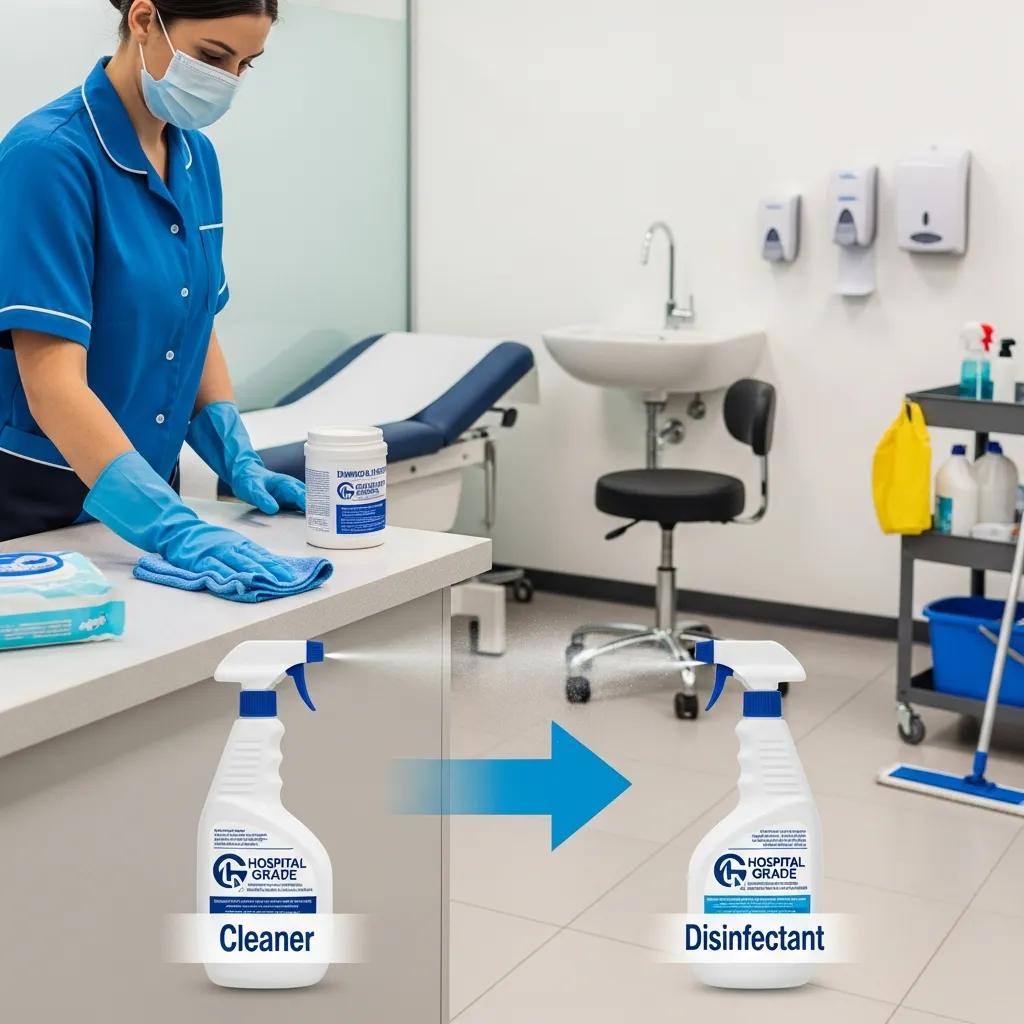
Medical offices rely on a set of standard protocols—including routine cleaning, terminal cleaning and outbreak response—that are tailored by risk area and patient throughput. A typical sequence is two-step cleaning: first, remove visible soil and biofilm using detergent and microfiber systems; second, apply an appropriate hospital-grade disinfectant with the manufacturer’s specified contact time to inactivate pathogens. Frequency is determined by risk: high-touch surfaces require disinfection between patient contacts while low-touch areas follow scheduled daily or weekly regimes. Monitoring is conducted through cleaning logs, supervisor spot checks and periodic audit reports to ensure consistent application of procedures.
The specific selection of disinfectant and documentation method will affect both efficacy and audit readiness, so protocols are designed to balance infection prevention with material compatibility and environmental considerations. These practical workflows are the basis for operationally effective clinic cleaning and link to supplier selection and staff competency measures described later.
How Are Dental Practices Cleaned to Address Aerosol and Cross-Contamination Risks?
Dental practices require targeted strategies to manage aerosols and cross-contamination around operatories and instrument zones that generate higher exposure risks. Pre- and post-procedure operatory cleaning focuses on decontaminating high-touch control surfaces, instrument trays and chair interfaces, followed by appropriate dwell time for selected disinfectants to ensure virucidal and bactericidal activity. Air-management measures—such as recommended room downtime after aerosol-generating procedures, use of HEPA filtration units or air exchange optimisation—are deployed where clinically appropriate to reduce suspended particle load. Instrument area controls include strict segregation of clean and dirty zones, clear handling pathways for reprocessable items and single-use disposables where indicated.
These dental-specific controls are integrated into appointment scheduling, operatory turnover protocols and staff PPE practices to minimise cross-contamination risks while maintaining efficient patient flow and clinical throughput.
What Are the Key Components of Healthcare Facility Disinfection and Sterile Environment Cleaning?
Key components of a healthcare-grade disinfection program include correct disinfectant selection, validated application methods, appropriate PPE for staff, specialised cleaning equipment and compliant waste management. Disinfectant selection is based on target organisms and surface compatibility, while application best-practices cover required contact time, coverage technique (wipes vs sprays) and sequence to avoid recontamination. PPE selection and donning/doffing procedures protect cleaning staff and prevent spread during the cleaning process. Finally, equipment such as microfiber systems, HEPA filtration adjuncts and single-use consumables support consistent outcomes while responsible waste handling prevents environmental contamination.
Understanding these components helps facilities design an effective program that balances efficacy, safety and environmental impact. The following table compares common hospital-grade disinfectants and practical considerations for their use in clinics.
| Disinfectant Class | Target Organisms | Typical Contact Time |
|---|---|---|
| Quaternary ammonium compounds | Gram-positive/negative bacteria, some enveloped viruses | Short to moderate (30s–10min) |
| Chlorine-based products | Broad spectrum including non-enveloped viruses | Short but corrosive; surface compatibility needed |
| Hydrogen peroxide systems | Bacteria, viruses, spores (varies by formulation) | Moderate; forms include wipes and vapour systems |
Which Hospital-Grade Disinfectants and Cleaning Methods Are Employed?
Commonly employed disinfectants include quaternary ammonium compounds for routine surface disinfection, chlorine-based formulations for high-level decontamination where non-enveloped viruses or heavy contamination are a concern, and hydrogen peroxide-based systems for both surface wipes and validated adjunct processes. Application methods prioritise two-step cleaning, use of single-use or launderable microfiber materials to avoid cross-contamination, and adherence to indicated contact times to ensure microbicidal efficacy. Selection also weighs environmental impact and material compatibility so that frequent use does not degrade clinical assets. Proper product choice and methodical application produce the reliable reductions in surface bioburden that reduce transmission risk.
Correct application is tied to training and supervision, which ensures staff understand contact time, dilution and safe handling—key elements described in training and audit practices later in the article.
How Is Personal Protective Equipment Utilized by Cleaning Staff?
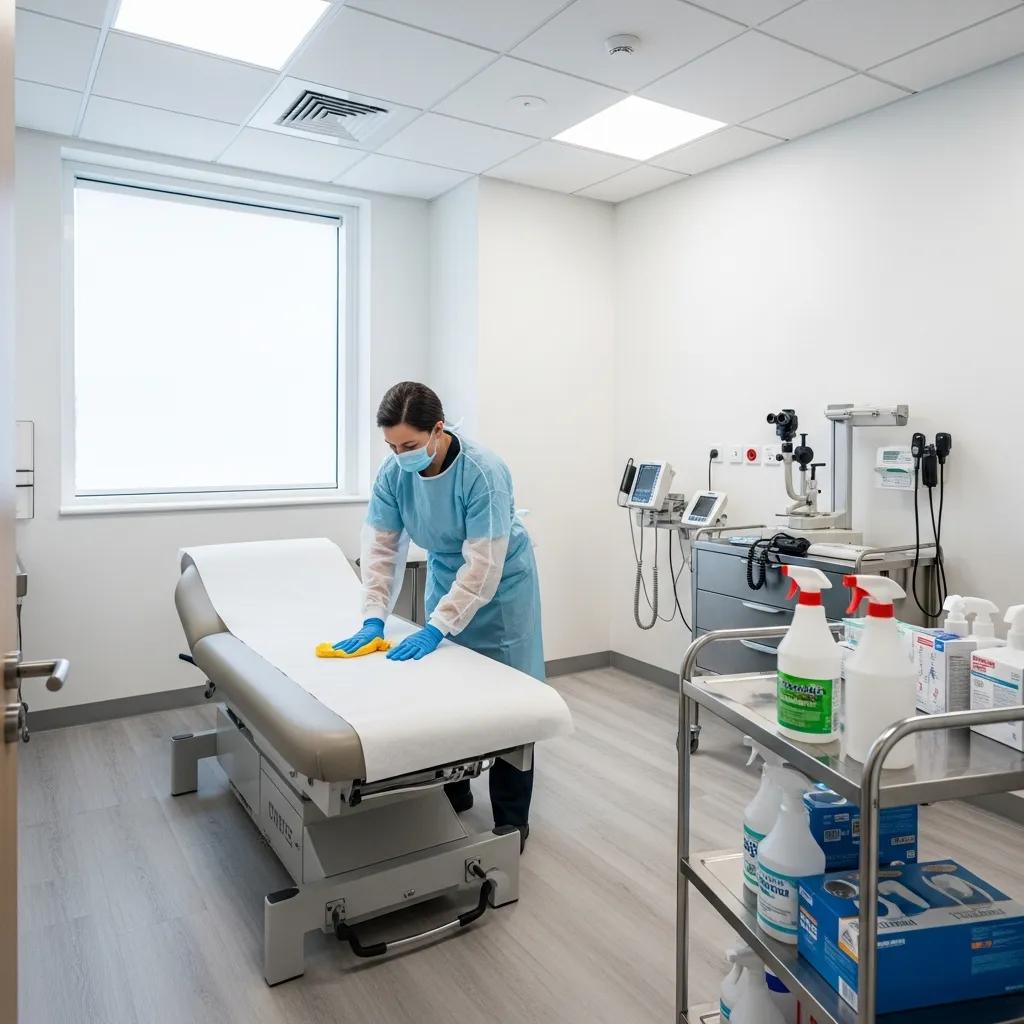
PPE use for cleaning staff is matched to the risk level of the task and typically includes gloves, surgical masks or respirators for aerosol-risk situations, eye protection, and gowns or aprons when exposure to body fluids is possible. Proper donning and doffing sequences, secured fit for respiratory protection and safe disposal of single-use PPE prevent secondary contamination during cleaning. Training in PPE selection and competency checks are essential to ensure staff apply the correct level of protection for routine versus enhanced cleaning tasks. Documentation of PPE protocols and supply management supports operational continuity and auditability by facility managers.
When combined with environmental controls, PPE forms a last line of defence that protects cleaning teams and prevents onward transmission as staff move between clinical zones.
How Does Infection Control Cleaning Comply with Australian and International Standards?
Compliance is achieved by mapping local cleaning practices to national guidance and recognised international references, then implementing documented training, certification and audit processes that demonstrate adherence. Australian state health departments and professional associations provide the regulatory context; international authorities serve as reference for product selection and frequency where local guidance is silent. Operationalising guidance requires written protocols, SDS documentation for disinfectants, scheduled competency refreshers and maintainable audit trails. These elements together provide evidence of due diligence and support inspection readiness.
Embedding standards into everyday practice reduces variability and makes quality improvement measurable through audits and corrective action. The next subsections describe the training and guidelines that typically underpin compliant programs.
What Certifications and Staff Training Support Compliance?
Staff training modules for clinical cleaning commonly cover bloodborne pathogen awareness, infection prevention and control (IPC) principles, PPE competency, safe chemical handling and documented refresher cycles. Verification includes supervised practical assessments, records in training logs and periodic competency re-evaluations to maintain audit readiness. While formal government-issued certifications vary by jurisdiction, industry-standard training and documented competency are the practical tools clinics use to show compliance. Maintaining these records and scheduling refreshers helps facilities demonstrate continuous improvement and readiness for external review.
These training practices ensure that staff can consistently execute cleaning protocols, which in turn supports the documented cleaning regimes required by regulators and professional advisors.
How Are CDC, ADA, and ADS Guidelines Integrated into Cleaning Practices?
International and professional guidelines—such as those produced by CDC, ADA and ADS—are used as technical references to define disinfectant efficacy, operational frequency and procedural controls, then adapted to meet state-level Australian requirements and clinical realities. Facilities use these guidelines to choose validated products, determine instrument reprocessing steps and set standards for air and surface management. Adapting international recommendations locally involves reconciling product approvals, permissible practices and documentation expectations with state public health guidance. This pragmatic integration helps clinics adopt evidence-based practice while remaining compliant with local regulation.
Using established guidance as a template ensures cleaning programs reflect contemporary science and remain defensible during audits and inspections.
What Are the Latest Trends and Innovations in Infection Control for Medical and Dental Facilities?
Recent trends in infection control emphasise technology-enabled verification, eco-friendlier disinfectant chemistries and adjunct sterilization tools that complement, but do not replace, manual cleaning. Smart sterilization systems incorporate sensors and cloud reporting to validate cycles and provide traceable records, while digital cleaning logs and sensor verification improve compliance and simplify audits. The market is also seeing wider adoption of lower-impact disinfectants where efficacy is proven, balancing environmental sustainability with pathogen control. These innovations enhance traceability and efficiency while still relying on trained staff and validated protocols.
Awareness of these trends helps clinics plan upgrades that align with both environmental objectives and clinical efficacy. The following list summarises key innovations to consider.
- Sensor-driven validation: Real-time confirmation that cleaning or sterilization cycles met parameters.
- Eco-friendlier chemistries: Lower-environmental-impact disinfectants validated for clinical efficacy.
- Adjunct technologies: UV or vapor systems used as supplementary measures to manual cleaning.
These innovations should be evaluated for fit and validated performance before integration into existing clinical cleaning programs.
How Are Smart Sterilization Systems and Eco-Friendly Products Shaping Cleaning Services?
Smart sterilization and cloud-connected sterilizers enable traceable cycle logs and automatic alerts that improve accountability and reduce manual record-keeping. Eco-friendly products are being selected where they meet target organism kill claims while providing lower aquatic toxicity or improved biodegradability, offering clinics the ability to align IPC with sustainability goals. However, trade-offs must be considered: some greener chemistries may have longer contact times or different material compatibility, so selection should be evidence-driven and matched to the clinical task. Combining validated eco-products with sensor-backed verification produces programmes that are both effective and environmentally responsible.
Integration decisions should prioritise efficacy first and environmental profile second, ensuring patient and staff safety remain primary.
What Role Does Technology Play in Compliance and Pathogen Elimination?
Technology provides documentation, verification and adjunct pathogen-reduction tools that support, but do not replace, manual cleaning. Digital logs, sensor confirmations and audit dashboards reduce human error and offer clear evidence during inspections. Adjunct devices—UV-C units or validated vapour hydrogen peroxide systems—can reduce residual bioburden in hard-to-reach areas when used per manufacturer guidance and after manual cleaning. Technology amplifies human performance and creates traceable records that satisfy modern compliance expectations while reinforcing routine cleaning protocols.
Effective adoption balances validated technical performance with staff training so that technology augments established cleaning workflows rather than creating false assurance.
How Can Healthcare Providers Choose the Right Infection Control Cleaning Service?
Choosing a clinical cleaning provider requires objective criteria mapped to buyer benefits and verifiable steps that reduce selection risk and align with facility obligations. Key selection criteria include documented training and competency, insurance and police checks for staff, explicit clinical cleaning protocols with SDS and product details, client references and audit sample reports, local service coverage and flexible contract terms. Verification steps include requesting SDS for disinfectants, asking for sample audit reports or cleaning logs, checking evidence of police checks and insurance, and reviewing guarantees or service-level commitments. Making these checks before engagement reduces compliance risk and ensures the provider can support clinical audit needs.
A decision checklist helps standardise procurement conversations and ensures facilities prioritise both technical capability and operational reliability when selecting a partner.
| Provider Attribute | Buyer Benefit | Verification Step |
|---|---|---|
| Training & competency | Consistent, compliant cleaning | Request training logs and refresher schedules |
| Insured & police-checked staff | Reduced liability and trust | Ask for proof of insurance and police-check policy |
| Documented protocols & SDS | Audit-ready and safe product use | Review SDS and sample cleaning protocols |
| No lock-in contracts & guarantees | Flexibility and performance assurance | Request contract terms and guarantee details |
What Unique Value Does Divine Commercial Cleaning Offer for Medical and Dental Practices?
Divine Commercial Cleaning is a family-owned business based in Birtinya, cleaning medical centres, clinics and allied health practices across the Sunshine Coast. Its cleaners are police-checked, the schedule is set with each practice, and every visit’s checklist is available in the practice’s portal as a downloadable PDF. If a clean is missed or falls short, Divine aims to have someone back on site within 24 hours.
Ask any provider you are considering to show you how each item on the checklist above works in practice.
How Do Testimonials and Case Studies Demonstrate Cleaning Effectiveness?
Well-structured testimonials and case studies present measurable outcomes such as improved audit scores, reduced surface contamination metrics or process improvements in operatory turnover times while maintaining confidentiality. A concise case study format—challenge, interventions (cleaning protocols and products), and measurable outcomes—allows facilities to assess real-world effectiveness without revealing sensitive client details. Requesting anonymised metrics or sample audit summaries helps prospective buyers validate claims. Presenting outcomes in this standardised way makes it straightforward to compare providers on objective performance measures rather than on marketing language alone.
Using these evidence-based presentations enables clinics to make data-driven procurement decisions and ensures cleaning arrangements deliver demonstrable infection-control improvements.

Dianne, originally from Rockhampton, hails from a business-oriented family, with her father owning electrical stores and her uncle serving as Mayor. Moving to the Sunshine Coast at 13, she later pursued a rewarding real estate career and raised three children. As a single mom, she balanced university studies with domestic cleaning work. Armed with a Bachelor’s Degree in Business, majoring in Supply Chain Management, Dianne founded and grew Divine Commercial Cleaning into a thriving company. Her success is rooted in strong family mentorship, a positive attitude, and a solution-oriented approach, offering tailored cleaning services with integrity and strategic insight.