
Specialised Medical Equipment Disinfection and Sterilisation Services for Healthcare Facilities: Ensuring Patient Safety and Compliance
Specialised medical equipment disinfection and sterilization focus on removing pathogens and ensuring reusable devices meet regulatory safety standards, which directly protects patients and reduces healthcare-associated infections (HAIs). This article explains how instrument reprocessing workflows, validated sterilization technologies, and targeted high-level disinfection strategies combine to deliver reliable infection prevention for clinics and hospitals. Readers will learn the stepwise reprocessing sequence, differences between cleaning, disinfection, and sterilization, practical selection criteria for steam versus chemical methods, and how facility-level controls prevent cross-contamination. We also map applicable Australian and international standards and describe the documentation and monitoring practices that prove compliance during audits. Finally, the guide outlines how healthcare facilities can request tailored equipment disinfection services and highlights local provider capabilities for practices on the Sunshine Coast and in Brisbane. Throughout, keywords such as medical equipment sterilization, equipment disinfection procedures, and clinic disinfection protocols Sunshine Coast are integrated to support discoverability and practical implementation.
What Are the Key Steps in Medical Instrument Reprocessing?
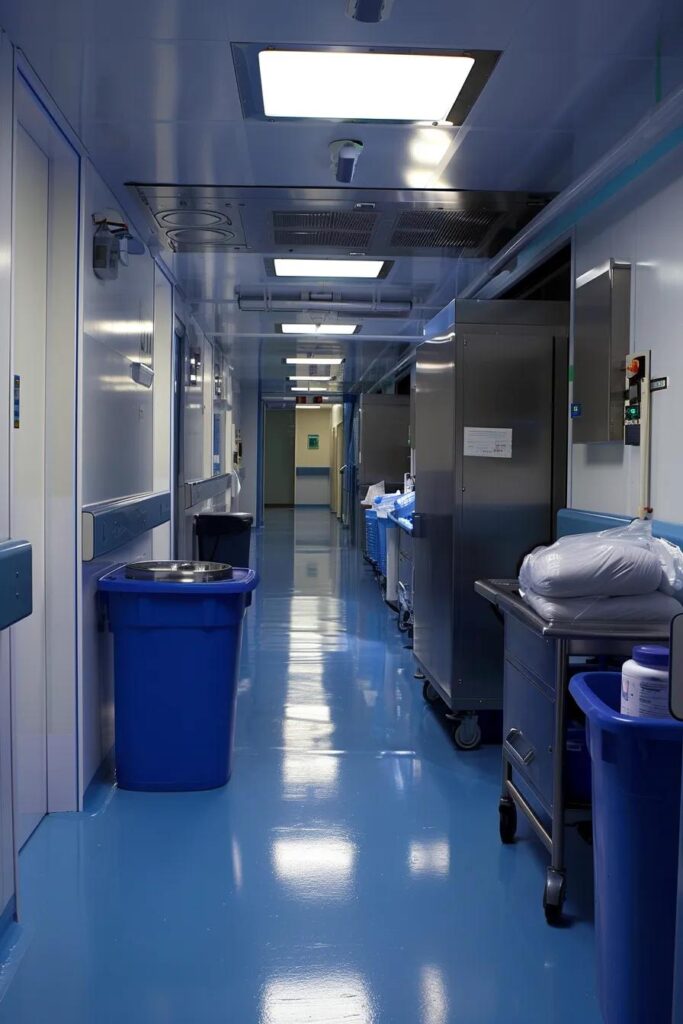
Medical instrument reprocessing is a controlled sequence of actions that converts used devices into safe, patient-ready instruments by removing organic soil, killing or removing microbes, and preventing recontamination. The mechanism combines mechanical and chemical cleaning to reduce bioburden, inspection and functional testing to detect damage, followed by packaging and validated sterilization or high-level disinfection to achieve microbiological safety; the benefit is measurable reduction in HAI risk and audit readiness. Effective reprocessing uses equipment such as ultrasonic cleaners and washer-disinfectors, and relies on monitoring tools like chemical indicator strips and biological indicators to validate cycles. Proper workflow design—separating dirty and clean zones—protects sterile loads during handling and storage. The next sections break the process into practical steps and compare the core modalities so facilities can implement appropriate instrument reprocessing protocols.
- Pre-clean and transport contaminated instruments to the reprocessing area using leak-proof, labelled containers.
- Thorough cleaning (manual or automated) to remove gross soil, followed by inspection and functional testing of instruments.
- Packaging and labeling for sterilization or placement in high-level disinfection processes appropriate to device classification.
- Sterilization or high-level disinfection with cycle monitoring (chemical and biological indicators) and documented records.
- Sterile storage in a controlled area with stock rotation until point of use.
These steps support reproducible outcomes and form the basis for compliant reprocessing programs that feed into instrument traceability and audit trails.
How Do Cleaning, Disinfection, and Sterilization Differ?
Cleaning, disinfection, and sterilization are distinct processes with escalating levels of microbial control: cleaning removes visible soil, disinfection reduces microbial load to safe levels for some items, and sterilization destroys all forms of microbial life. Cleaning uses detergents, enzymatic formulations, and mechanical action to reduce bioburden that would otherwise shield microbes from subsequent disinfection or sterilization; its benefit is enabling the core microbiocidal step to be effective. Disinfection is categorised by level (low, intermediate, high) and uses chemical agents to inactivate pathogens on surfaces or semi-critical items; sterilization uses validated physical or chemical processes such as steam or vaporised hydrogen peroxide to achieve sterility assurance. Items are classified as critical (enter sterile tissue—sterilise), semi-critical (contact mucous membranes—high-level disinfection or sterilise), and non-critical (contact intact skin—low/intermediate disinfection). Understanding these differences guides correct processing choices and prevents inadequate reprocessing that might cause HAIs.
- Cleaning: removes organic and inorganic soil to lower bioburden and prepare instruments for further processing.
- Disinfection: uses chemicals to inactivate many pathogens on semi-critical and non-critical items; high-level disinfectants approach sterilization efficacy for some devices.
- Sterilization: validated processes that eliminate all viable microorganisms, required for critical surgical instruments.
Proper sequencing—clean then disinfect/sterilise—ensures the chosen microbiocidal method achieves its intended efficacy.
Why Is Proper Cleaning Essential Before Sterilization?
Proper cleaning is essential because residual bioburden such as blood, tissue, or biofilm can shield microbes from sterilizing agents, decreasing cycle effectiveness and creating a risk of surviving pathogens. Mechanistically, soil can create microenvironments where steam, gas, or chemical penetrants cannot reach, so removing these barriers is a prerequisite for predictable sterilization outcomes and valid biological indicator results. For example, organic debris left on a surgical instrument may prevent steam contact on crevices during an autoclave cycle, leading to sterilization failure and potential patient exposure; regular use of ultrasonic cleaners and validated detergents mitigates this risk. Cleaning also allows proper inspection to detect damage that could compromise device integrity and subsequent sterilisation. Ensuring consistent pre-cleaning practices therefore directly supports both patient safety and regulatory compliance, and sets the stage for validated sterilization monitoring.
Which Sterilization Methods Are Used for Medical Devices?
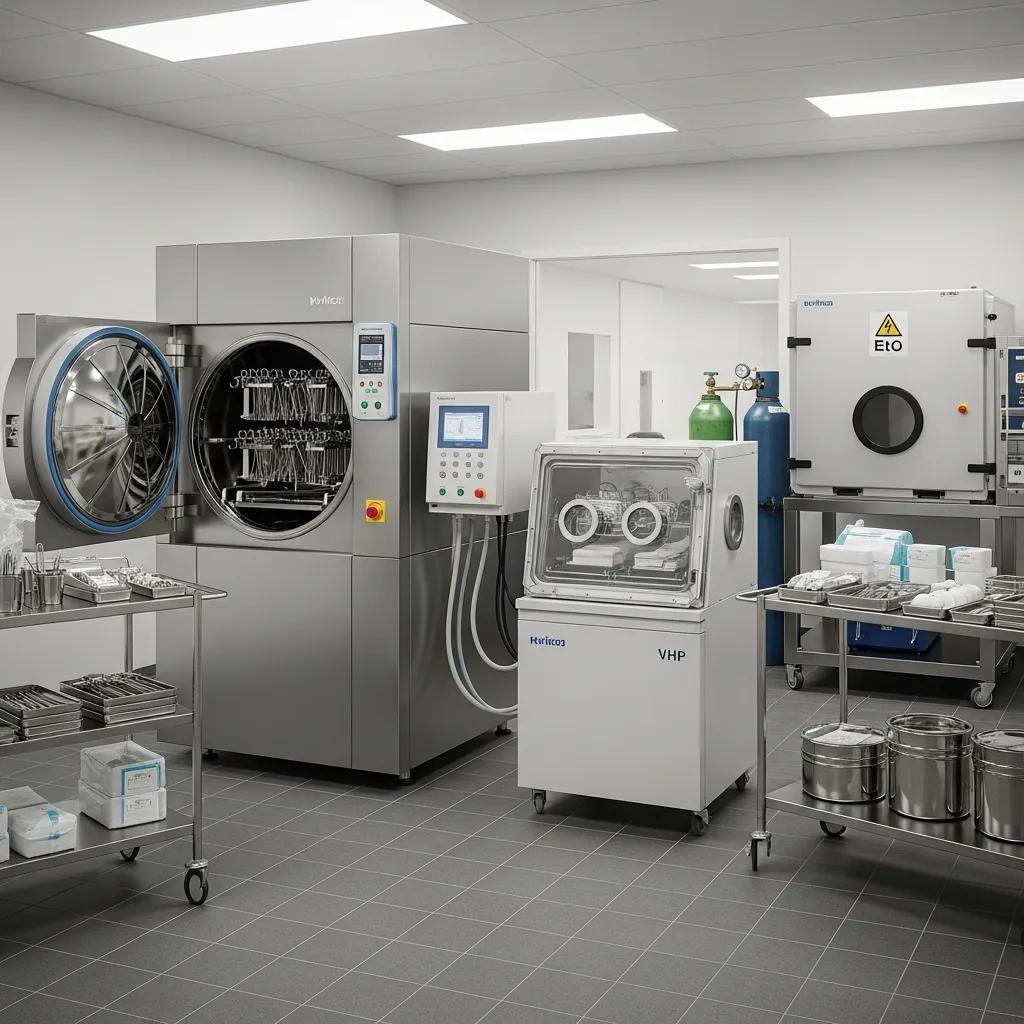
Sterilization methods for medical devices include steam (autoclave), vaporised hydrogen peroxide (VHP), ethylene oxide (EtO), plasma (low-temperature), and radiation, each chosen based on device material, heat sensitivity, and throughput needs. The mechanism varies: steam uses moist heat to denature proteins, VHP uses oxidising vapour to inactivate microorganisms, EtO alkylates cellular components, plasma generates reactive species, and radiation damages DNA; the benefit is selection flexibility to sterilise both heat-tolerant and heat-sensitive devices safely. Clinics typically rely on steam for reusable metal surgical instruments, VHP or EtO for complex or heat-sensitive devices like electronics or some plastics, and plasma for compatible low-temperature sterilization. Validation and monitoring—using chemical and biological indicators and cycle records—are required regardless of technology to demonstrate steriliser performance. The following table compares common methods to help clinics choose appropriate options.
Below is a comparative EAV table showing practical guidance for clinic selection of sterilization methods.
| Sterilization Method | Key Attributes | Practical Guidance for Clinics |
|---|---|---|
| Steam (Autoclave) | Temperature/pressure cycles (e.g., 121°C–134°C), effective for metals and heat-tolerant instruments | Best for surgical sets and durable instruments; requires strict drying and packaging protocols |
| Vaporised Hydrogen Peroxide (VHP) | Low-temperature oxidizing vapour, short cycles, compatible with many plastics/electronics | Suitable for heat-sensitive devices; consider material compatibility and room aeration controls |
| Ethylene Oxide (EtO) | Gas-phase alkylation, long cycle and aeration times, broad material compatibility | Used for complex or temperature-sensitive devices; requires aeration and ventilation for safety |
| Low-Temperature Plasma | Reactive species at low temperatures, limited penetration for porous loads | Good for small, non-porous device loads; follow manufacturer load restrictions |
| Radiation (Gamma/Electron) | High-energy ionizing radiation, industrial process for disposables | Typically used by manufacturers for single-use items; not practical for in-clinic reprocessing |
What Are Steam and Autoclave Sterilisation Techniques?
Steam sterilization (autoclaving) uses pressurised saturated steam to denature microbial proteins and reliably achieve sterility when validated cycles are followed; this is a cornerstone method for heat-tolerant surgical instruments. Typical parameters include 121°C for 15–30 minutes or 134°C for shorter cycles for wrapped loads, with the critical mechanism being sustained high temperature and steam penetration; benefit arises from speed, cost-effectiveness, and broad applicability to metals and many textiles. Autoclave operation requires routine maintenance, load configuration protocols, and cycle monitoring using chemical indicator strips and biological indicators (e.g., spore tests) to confirm efficacy. Limitations include incompatibility with heat-sensitive plastics, electronics, and certain composite materials, which must be processed using alternative sterilization methods. Proper training and validated loading procedures optimise steriliser performance and reduce the risk of failed cycles.
How Are Chemical Sterilization Methods Applied to Heat-Sensitive Devices?
Chemical sterilisation methods such as vaporised hydrogen peroxide (VHP) and ethylene oxide (EtO) sterilization are applied for heat-sensitive devices by exposing items to reactive chemical agents under controlled conditions that inactivate microorganisms without high temperatures. VHP achieves sterilization through oxidative damage to cellular components in short cycle times and is well suited for many plastics and electronics, though material compatibility and residue considerations must be reviewed; EtO uses alkylation chemistry and requires long aeration to remove toxic residues before safe clinical use.
Clinics considering on-site chemical sterilization should evaluate ventilation, aeration capacity for EtO, and manufacturer compatibility for VHP, and must implement cycle validation with biological indicators and gas monitoring. For many smaller practices, outsourcing to certified sterilization services may be the safer operational choice due to infrastructure and regulatory requirements. Selecting the appropriate chemical sterilant balances device compatibility, turnaround times, and occupational safety.
How Does Specialised Disinfection Prevent Healthcare-Associated Infections?
Specialised disinfection prevents healthcare-associated infections by reducing or eliminating pathogens on instruments and environmental surfaces, breaking transmission chains between patients and staff through targeted agent selection, correct contact times, and validated application procedures. The mechanism relies on using high-level disinfectants on semi-critical items and applying environmental disinfectants for surfaces; the measurable benefit is lower infection incidence and improved patient safety metrics when combined with staff training and workflow controls. Operational controls include specifying which agents to use for particular devices, enforcing contact time and concentration, and implementing zoning to avoid cross-contamination; monitoring and auditing of disinfectant use ensures consistent practice. Recent studies and infection control guidance emphasise that disinfectant efficacy is contingent on proper cleaning, compatible materials, and staff competency, so an integrated approach that pairs cleaning with evidence-based disinfection protocols is most effective. The next table summarises common high-level disinfectants, target organisms, and recommended use-cases.
Introduction to the disinfectant table: this EAV table maps common high-level disinfectant agents to their target organisms, contact times, and practical use-cases so clinics can match agents to devices safely.
| Disinfectant Agent | Target Organisms / Contact Time | Recommended Use-Cases |
|---|---|---|
| Hydrogen Peroxide (including VHP) | Broad spectrum; short contact times for VHP | Endoscopes, heat-sensitive instruments when compatible |
| Peracetic Acid | Broad spectrum including spores at higher concentrations | Automated endoscope reprocessors and immersion sterilisation |
| Glutaraldehyde | Bactericidal, virucidal, tuberculocidal; typical immersion times 20–45 minutes | High-level disinfection of flexible endoscopes and semicritical items |
| Accelerated Hydrogen Peroxide formulations | Bactericidal and virucidal with moderate contact times | Surface disinfection and some instrument immersion applications |
This mapping clarifies agent selection based on the clinical objective, material compatibility, and operational constraints, guiding safer disinfection choices.
- Zoning and clear dirty→clean flow separate contaminated processing from sterile storage.
- Personal protective equipment and dedicated instrument containers limit handling-related spread.
- Routine surface disinfection and instrument transport protocols reduce environmental reservoirs of pathogens.
Integration: Divine Commercial Cleaning provides high-level disinfection capabilities aligned with the controls described above, offering tailored protocols for medical and health centre environments across the Sunshine Coast and Brisbane. Their service model emphasises experienced professional cleaners working to clinic-specific procedures, police-checked staff, environmentally conscious products, full insurance coverage, and a money-back guarantee to support local facilities seeking reliable HAI prevention partners. Facilities interested in bespoke high-level disinfection plans, surface decontamination protocols, or strip and seal flooring options for practice environments can request a customised quote and local service assessment to align operational controls with compliance requirements.
What Compliance Standards Govern Medical Equipment Sterilisation?
Compliance standards governing medical equipment sterilisation provide the framework and measurable requirements clinics must meet to demonstrate safe reprocessing, including validated procedures, record keeping, and staff competency. Mechanistically, standards such as AS/NZS 4187 and relevant TGA guidance specify responsibilities for reprocessing, equipment selection, monitoring, and documentation; the clear benefit is audit readiness and reduced regulatory risk when standards are followed. Facilities must maintain steriliser logs, biological indicator results, and cleaning checklists while ensuring staff training and competency records are current. The table below maps standards to scope and clinic implications, helping practices prioritise actions that satisfy auditors and protect patients.
Intro to standards table: this EAV table links standards and guidelines to their scope and the specific compliance actions clinics must undertake.
| Standard / Guideline | Scope | Clinic-Level Compliance Actions |
|---|---|---|
| AS/NZS 4187 | Reprocessing of reusable medical devices in health service organisations (Australia/New Zealand) | Implement validated processes, maintain records, staff training, steriliser validation |
| TGA (Therapeutic Goods Admin.) guidance | Regulatory oversight for medical devices and device reprocessing expectations | Ensure device compatibility, adhere to manufacturer instructions, maintain traceability and reporting |
| ISO 22441 | Guidance on sterilisation of health care products and process validation | Use for technical validation and international best practice benchmarking |
| WHO/CDC guidance | Global infection control practices and recommended disinfection/sterilisation approaches | Implement evidence-based IPC practices, outbreak response procedures, and environmental cleaning protocols |
Which Australian and International Guidelines Must Be Followed?
Australian clinics must prioritise AS/NZS 4187 and relevant TGA guidance for device reprocessing, while international standards such as ISO 22441 and WHO/CDC documents provide complementary best practice and technical guidance. Each guideline defines scope and prescriptive elements: AS/NZS 4187 focuses on operational reprocessing requirements in health services, TGA oversight connects device safety and traceability, and ISO offers technical validation frameworks; together these resources shape clinic policies. The practical implication for clinics is to document steriliser cycles, run biological indicator tests, maintain staff competency records, and align device processing with manufacturer instructions. Reviewing these guidelines regularly and integrating them into training, audit schedules, and supplier contracts keeps facilities aligned with current expectations and prepares them for regulatory inspections.
How Does Documentation and Auditing Support Regulatory Compliance?
Documentation and auditing support compliance by creating an auditable trail that proves sterilisation and disinfection activities were performed correctly, consistently, and under validated conditions; the mechanism is record retention that links processes to outcomes, and the benefit is demonstrable regulatory readiness. Essential records include steriliser logbooks, biological indicator results, chemical indicator records, cleaning checklists, maintenance logs, and staff training certificates; these artifacts enable internal reviews and external audits to verify adherence to standards. Scheduled internal audits identify gaps and corrective actions, while external audits validate program robustness; both rely on easily retrievable documentation and clear process ownership. Implementing electronic or paper systems with defined retention policies and audit cycles makes compliance manageable and reduces organizational risk during inspections.
Why Choose Divine Commercial Cleaning for Specialised Medical Equipment Sterilisation?
Divine Commercial Cleaning combines locally focused service delivery with specialised capabilities for medical and health centre cleaning, providing practices on the Sunshine Coast and in Brisbane with partner-level support that complements in-house reprocessing programs. Their family-owned and operated model emphasises consistent teams—offering the same cleaner every time—customised cleaning solutions, and a no lock-in contracts policy that provides flexibility for clinical clients; the benefit is dependable service that aligns with clinic schedules and local compliance needs. Additional value propositions include fully-insured operations, police checks for staff, environmentally conscious product choices, and a money-back guarantee that underscores accountability.
For clinics requiring specialised treatments such as strip and seal flooring for dental or medical practices, or targeted instrument surface decontamination, partnering with a provider that understands local facility logistics and regulatory expectations supports both infection prevention and practice presentation.
The following list highlights Divine Commercial Cleaning’s relevant service characteristics and how they map to clinic priorities:
- Family-owned, locally operated teams providing continuity of service and rapid local response.
- Customised cleaning protocols for medical/health centres, including specialised strip and seal flooring.
- Trusted assurances: police checks, full insurance coverage, environmentally conscious practices, and a money-back guarantee.
What Expertise and Customised Solutions Do We Offer?
Divine Commercial Cleaning offers trained professional cleaners who work under clinic-specific protocols tailored for different practice types, including medical clinics, dental practices, and diagnostic facilities; the mechanism is customised SOPs and staff training that ensure consistent execution, and the benefit is reproducible disinfection outcomes aligned to device and surface needs. Staff training emphasises correct PPE use, zoning and workflow separation, and adherence to contact times and agent compatibility for high-level disinfectants. Example customised solutions include endoscope-friendly cleaning workflows, scheduled high-level disinfection cycles aligned with patient throughput, and strip and seal flooring services that simplify surface cleaning in practice areas. By integrating these practical measures into a structured service plan, clinics gain operational support that complements their internal reprocessing responsibilities and regulatory obligations.
How Do Our Services Support Local Healthcare Facilities in Sunshine Coast and Brisbane?
Services are designed to support local healthcare facilities through area-aware responsiveness, knowledge of regional compliance expectations, and logistics that reduce downtime for practices on the Sunshine Coast and in Brisbane; the mechanism includes tailored scheduling, site assessments, and local supply management, and the benefit is minimal disruption combined with consistent hygiene outcomes. Local expertise allows the team to recommend practical environmental controls, material selections, and frequency of high-level disinfection based on practice type and patient volume. Strip and seal flooring offerings help practices improve surface integrity and ease of maintenance while supporting infection control. Facilities that partner with local providers gain a collaborative resource for audit preparation, routine cleaning, and incident response, reinforcing the clinic’s overall infection prevention strategy.
How Can Healthcare Facilities Request Specialised Medical Equipment Disinfection Services?
Requesting specialised equipment disinfection services begins with a structured inquiry and site assessment to determine device inventories, processing capacity, and required service levels; this process delivers a customised scope of work that aligns with clinical workflows and compliance needs. The mechanism involves an initial consultation, optional on-site survey, and a written proposal detailing schedules, products, and performance assurances; the benefit is a clear, actionable plan with defined responsibilities and outcomes. Facilities should prepare basic information such as device types, typical patient throughput, and any current reprocessing challenges to expedite accurate proposals. The following numbered steps explain the typical path from inquiry to onboarding so clinics understand timelines and expectations.
- Submit an initial service inquiry with basic facility and device information.
- Schedule an on-site assessment to review workflows, device types, and high-risk areas.
- Receive a tailored proposal outlining scope, frequency, and any specialised treatments.
- Agree on start dates, training needs, and documentation formats for ongoing audits.
This structured process shortens onboarding time and ensures the proposed services address the clinic’s infection prevention priorities; for practices on the Sunshine Coast and in Brisbane, requesting a quote begins the partnership toward consistent, compliant cleaning outcomes.
What Is the Process to Obtain a Customised Cleaning Quote?
To obtain a customised quote, facilities provide an initial summary of clinical services and device inventories, follow with a scheduled site assessment where reprocessing workflows and environmental constraints are observed, and then receive a proposal that specifies scope, frequency, and any specialized services recommended; this structured approach ensures the quote reflects the clinic’s operational realities. Typical timelines include initial response within several business days, assessment scheduling based on clinic availability, and proposal delivery shortly after the site visit; the result is a clear scope of work and transparent expectations. The proposal may include options for routine high-level disinfection, supplemental deep cleans, and strip and seal flooring treatments tailored to the practice. Clear documentation at each step supports audit readiness and helps clinics decide on the optimal service package for patient safety.
What Are the Benefits of Partnering with a Trusted Medical Cleaning Provider?
Partnering with a trusted medical cleaning provider delivers practical benefits such as reduced HAI risk through consistent high-level disinfection, improved audit readiness via documented cleaning and sterilisation support, and operational reliability through consistent staffing and flexible contracts. The mechanism for these benefits includes standardised procedures, staff vetting (police checks), and environmental product selection that aligns with clinical safety, while the business advantages include no lock-in contracts and responsive local support. Additional outcomes include peace of mind for clinic managers, support during inspections, and the ability to scale services as patient volume or device complexity changes. Choosing a partner that emphasises both infection control expertise and practical service delivery helps clinics maintain safe environments and focus on patient care.

Dianne, originally from Rockhampton, hails from a business-oriented family, with her father owning electrical stores and her uncle serving as Mayor. Moving to the Sunshine Coast at 13, she later pursued a rewarding real estate career and raised three children. As a single mom, she balanced university studies with domestic cleaning work. Armed with a Bachelor’s Degree in Business, majoring in Supply Chain Management, Dianne founded and grew Divine Commercial Cleaning into a thriving company. Her success is rooted in strong family mentorship, a positive attitude, and a solution-oriented approach, offering tailored cleaning services with integrity and strategic insight.