Medical Centre Cleaning in Birtinya — Clinical-Grade Infection Control That Patients Notice
Specialised medical centre cleaning combines clinical protocols, approved products and trained staff to lower infection risk and protect patients. This page outlines how medical cleaning in Birtinya differs from standard commercial cleaning, how focused infection‑control measures work in practice, and what facility managers should expect from an accredited provider. You’ll find clear, practical guidance on local contamination risks, room‑by‑room cleaning strategies, regulatory alignment and quality assurance — plus how Divine Commercial Cleaning builds customised plans and delivers reliable service. Our aim is simple: actionable infection‑control advice that helps Birtinya clinics improve hygiene, patient confidence and audit readiness.
Why Is Specialised Medical Cleaning Essential for Birtinya Healthcare Facilities?
Medical cleaning is a specialist field: it uses hospital‑grade disinfectants, sequenced workflows and trained teams to interrupt transmission pathways in clinical settings. The focus is on removing bioburden from high‑touch points, applying disinfectants for the correct contact times, and preventing cross‑contamination through zoning and colour‑coded tools. Clinics that invest in specialised cleaning also gain clearer audit trails and higher patient confidence compared with sites using ordinary commercial cleaning alone. Below are the main reasons Birtinya medical centres need a clinical approach.
- Lower infection risk: targeted disinfection of high‑touch surfaces reduces cross‑transmission between patients and staff.
- Audit and regulatory readiness: documented procedures and records support inspections and compliance requirements.
- Stronger patient trust: visible, consistent clinical hygiene improves perception and retention.
- Protection for equipment: appropriate products and methods preserve sensitive medical devices.
These points explain why routine commercial cleaning is not enough for medical settings and lead into the specific challenges local clinics face.
What Unique Infection Control Challenges Do Birtinya Medical Centres Face?
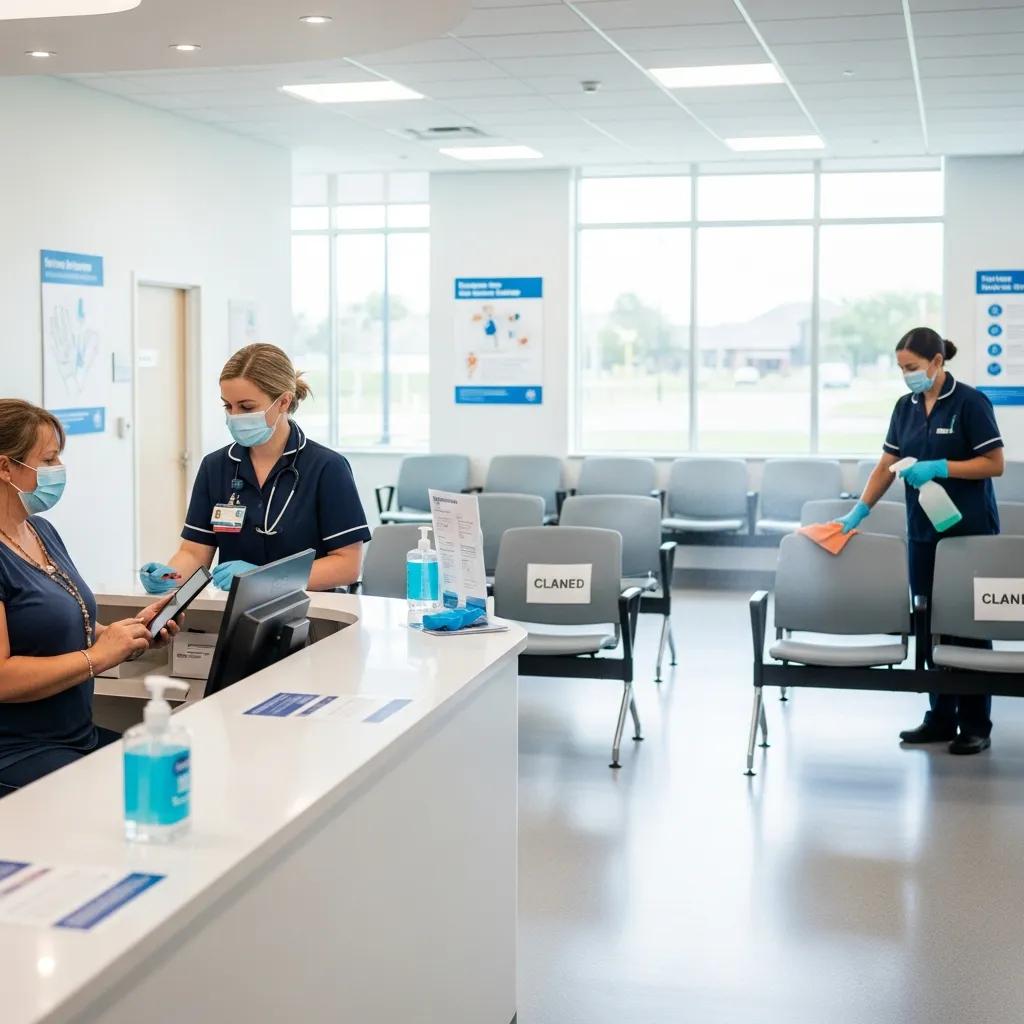
Birtinya clinics typically handle high patient throughput, a mix of ambulatory services and specialist equipment — all of which create multiple transmission points. Reception counters, waiting seats and exam couches are high‑touch zones that need frequent targeted cleaning between patients. Shared waiting areas and multi‑use consulting rooms increase cross‑contamination risk unless bookings and cleaning are tightly coordinated. Imaging and dental suites include delicate surfaces and consoles that need equipment‑compatible products and adjusted contact‑time procedures. Recognising these patterns lets clinics design frequency‑based cleaning plans that reduce infection risk while keeping services running smoothly.
Evidence consistently shows that improved cleaning and disinfection of shared medical equipment plays a key role in preventing healthcare‑associated infections, highlighting the need for rigorous protocols.
Reducing HAIs: Enhanced Cleaning of Medical Equipment
Healthcare‑associated infections (HAIs) are common and costly but largely preventable. Better routine cleaning and disinfection of clinical environments reduces HAI risk. Shared medical equipment is a recognised transmission route but is often under‑studied. The CLEEN study will evaluate whether enhanced cleaning and disinfection of shared equipment reduces HAI rates in a tertiary hospital. The approach combines staff training, auditing and feedback to environmental services teams to improve cleaning practice.
… the effect of improving the cleaning and disinfection of shared medical equipment on healthcare-associated infections: the CLEaning and Enhanced disiNfection …, K Browne, 2023
Recognising these local risks explains why professional teams and documented procedures matter for patient safety and reputation.
How Does Professional Cleaning Enhance Patient Safety and Trust in Birtinya Clinics?
Professional medical cleaning lowers risk by using trained staff who follow clinical sequences, apply disinfectants correctly and prevent cross‑contamination. Documented processes and digital checklists create an audit‑ready trail that supports accreditation and gives clinicians confidence. Visible cues — uniformed, consistent teams and spotless patient areas — also shape perception and increase trust. Regular quality reviews and corrective actions keep standards steady over time, rather than depending on occasional deep cleans. Together, these practices improve safety, ease compliance and strengthen a clinic’s reputation, which is why clinics choose providers that can deliver consistent, documented care.
The next section explains how a specialist provider puts these protocols into practice and maintains compliance for Birtinya clinics.
How Does Divine Commercial Cleaning Ensure Hygiene and Compliance in Birtinya Medical Centres?
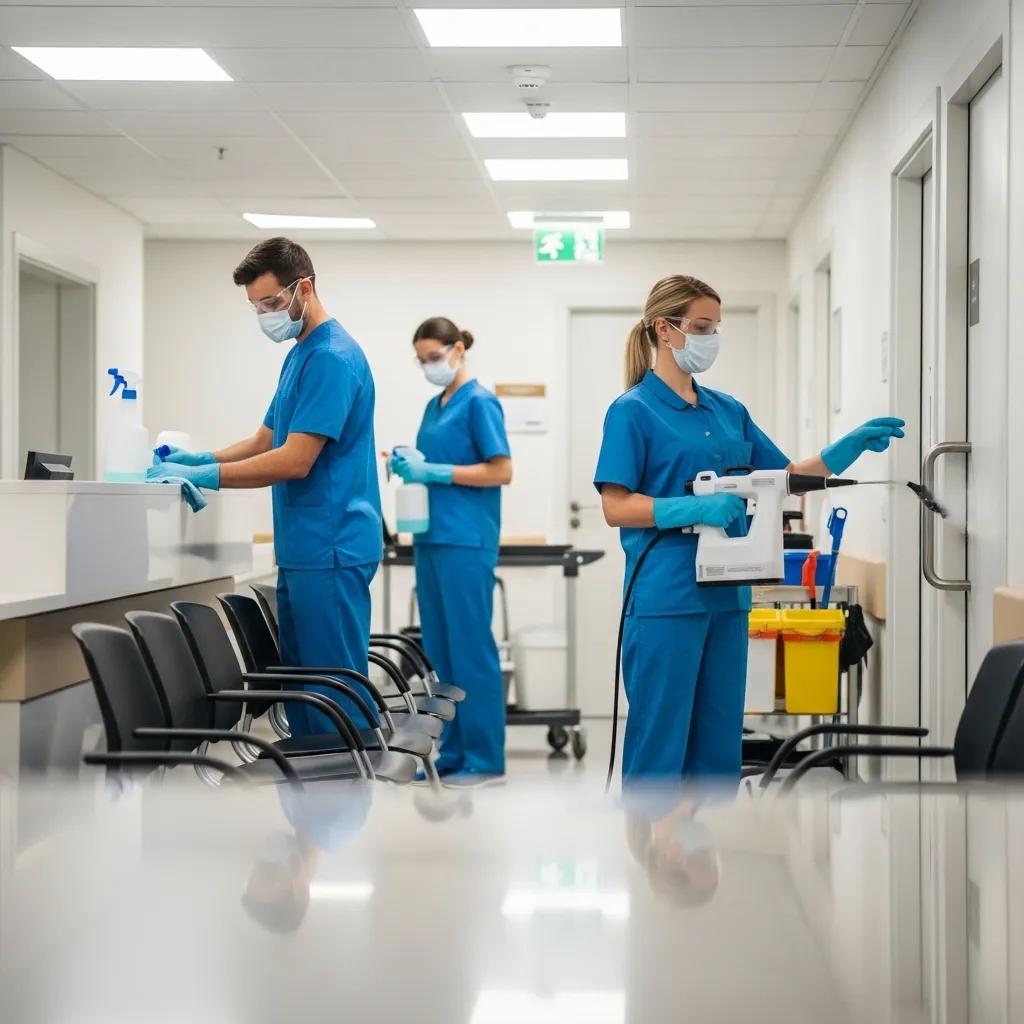
Divine delivers clinical cleaning with trained, police‑checked staff, documented SOPs and scheduled quality reviews to meet the needs of Birtinya healthcare sites. Key elements include consistent rosters so the same cleaner services each site, colour‑coded tools to avoid cross‑contamination, and hospital‑grade disinfectants applied with the correct contact times and PPE. Quality assurance uses digital checklists and a regular review cadence to catch and correct issues early and to keep records audit‑ready. Together these steps provide a clear compliance pathway that aligns with facility manager and auditor expectations.
Our service model includes practical guarantees and features built for medical clients:
- Consistent staffing: the same assigned cleaner for continuity and accountability.
- No lock‑in contracts: flexible agreements so clinics can adapt service levels as needs change.
- Money‑back guarantee and full insurance: commercial protections that reinforce service confidence.
Those features connect directly to clinical expectations and the records auditors will expect to see.
| Protocol / Practice | Guiding Standard or Expectation | How Compliance Is Demonstrated |
|---|---|---|
| Staff screening and training | Suitability and competency for healthcare environments | Police checks, training logs and role‑specific competency records |
| Disinfectant selection and use | Approved hospital‑grade products and correct dwell times | Product data sheets, application records and contact‑time logs |
| Colour‑coded tools and sequencing | Best practice for cross‑contamination prevention | Photographs, tool inventories and SOPs |
| Digital QA and reporting | Audit‑readiness and traceable cleaning records | Time‑stamped digital checklists, reports and review notes |
This mapping shows how operational protocols become demonstrable compliance and prepares clinics for the records auditors will request.
What Are Divine's Unique Value Propositions for Medical Cleaning in Birtinya?
Divine Commercial Cleaning offers value propositions designed for medical centres that prioritise reliability, safety and flexibility. Consistent staffing reduces variability in technique and strengthens accountability, while police‑checked teams add reassurance when clinics handle sensitive patient areas. We build customised cleaning plans rather than one‑size‑fits‑all packages, so schedules and tasks suit clinic flow and specialist equipment needs. Commercial protections such as a money‑back guarantee and full insurance give facility managers extra peace of mind. These propositions simplify operations and support safer, more consistent outcomes that align with clinical governance expectations.
They form the basis for how we scope work during initial assessments and ongoing service delivery.
Which Australian Healthcare Regulations and Standards Guide Our Cleaning Protocols?
Cleaning protocols for medical centres are aligned with national and state infection‑prevention guidance, expectations for approved disinfectants, and documentation practices that support audit‑readiness. Guidance typically covers risk‑based frequencies, high‑touch surface protocols and product efficacy requirements; suppliers should align operations with those frameworks. Divine maps internal procedures to these expectations by keeping disinfectant labels and usage records, maintaining staff training logs and using digital reporting to demonstrate compliance. While statutory references vary by facility, the consistent practical requirement is the same: documented, evidence‑based cleaning processes that can be produced at inspection and that reduce infection risk.
What Comprehensive Medical Cleaning Services Are Offered for Birtinya Clinics?
Medical cleaning is organised by area and frequency, combining routine cleans, between‑patient disinfection and scheduled deep cleans to manage bioburden across clinical spaces. Services prioritise high‑touch surface disinfection, instrument‑area segregation, equipment‑safe cleaning for imaging suites and sanitary servicing for staff zones. Tailored schedules reflect clinic hours and patient throughput so cleaning is effective without disrupting care. The table below summarises common clinical areas, their protocols and typical responsibilities to help facility managers specify scopes of work.
This table compares service areas, key attributes and typical frequency or product types.
| Service Area | Protocol / Attribute | Frequency / Product Type / Responsibility |
|---|---|---|
| Waiting room | High‑touch wipe‑downs, upholstery care | Between shifts and periodic deep clean; low‑residue disinfectants |
| Examination rooms | Surface disinfection between patients, linen handling | After each patient; hospital‑grade disinfectants and PPE |
| X‑ray / Imaging | Equipment‑safe cleaning, restricted access sequencing | After patient series; non‑abrasive, equipment‑compatible disinfectants |
| Staff‑only zones | Waste handling, staffroom hygiene | Daily cleaning; biodegradable cleaners for non‑clinical surfaces |
The table clarifies who typically performs tasks and which areas need more frequent attention. Clinics should expect the following service elements as standard.
- Area‑specific cleaning: tasks and frequencies tailored to each space and patient flow.
- Deep cleans: scheduled intensive cleans that address hard‑to‑reach areas and upholstery.
- After‑hours service: optional overnight or between‑session cleaning to minimise disruption.
These components balance infection control with operational efficiency and lead into how infection control is implemented on the floor.
How Are Infection Control and Disinfection Protocols Implemented in Medical Spaces?
Implementation follows a repeatable sequence: assess risk, zone the environment, apply the correct product with verified contact time, and document completion with digital checklists. Staff wear appropriate PPE and use colour‑coded tools to prevent cross‑contamination between clinical and non‑clinical zones. Training emphasises cleaning from cleaner to dirtier areas. Product use must respect manufacturer contact times to effectively reduce pathogens while protecting equipment surfaces. Records for each clean — including product batch, staff ID and time‑stamped checklists — are kept to support audits and continuous improvement.
This approach delivers consistent protocol application and lets facilities verify that cleaning reduces bioburden according to accepted practice.
How Is Cleaning Tailored for Different Areas: Waiting Rooms, Examination Rooms, and X-ray Facilities?
Cleaning is adapted by area to balance effectiveness with material safety and workflow. Waiting rooms need frequent attention to seating and shared surfaces using non‑fragranced, low‑residue disinfectants that are fabric‑safe. Examination rooms require between‑patient disinfection following a strict sequence — remove disposables, disinfect surfaces with hospital‑grade products, change linens and confirm readiness. X‑ray and imaging suites demand non‑corrosive cleaners and close coordination with radiology staff to avoid equipment interference and maintain safety protocols.
Research into infection prevention in medical imaging highlights the unique work‑system factors that influence IPC practice and helps inform safe cleaning strategies for imaging environments.
IPC Practices in Medical Imaging for Patient Safety
Infection prevention and control (IPC) is essential in medical imaging departments. This scoping review synthesises research on IPC in imaging and applies the SEIPS model to identify system factors — such as people, organisation, tools and environment — that shape IPC practice. Understanding these factors helps identify challenges and facilitators for effective infection control in imaging settings.
Infection prevention and control in the medical imaging environment: a scoping review, YA Jimenez, 2023
Choosing the right product and sequence for each area preserves equipment integrity while maintaining infection control and operational continuity.
How Does Divine Commercial Cleaning Incorporate Eco-Friendly Practices in Birtinya Medical Cleaning?
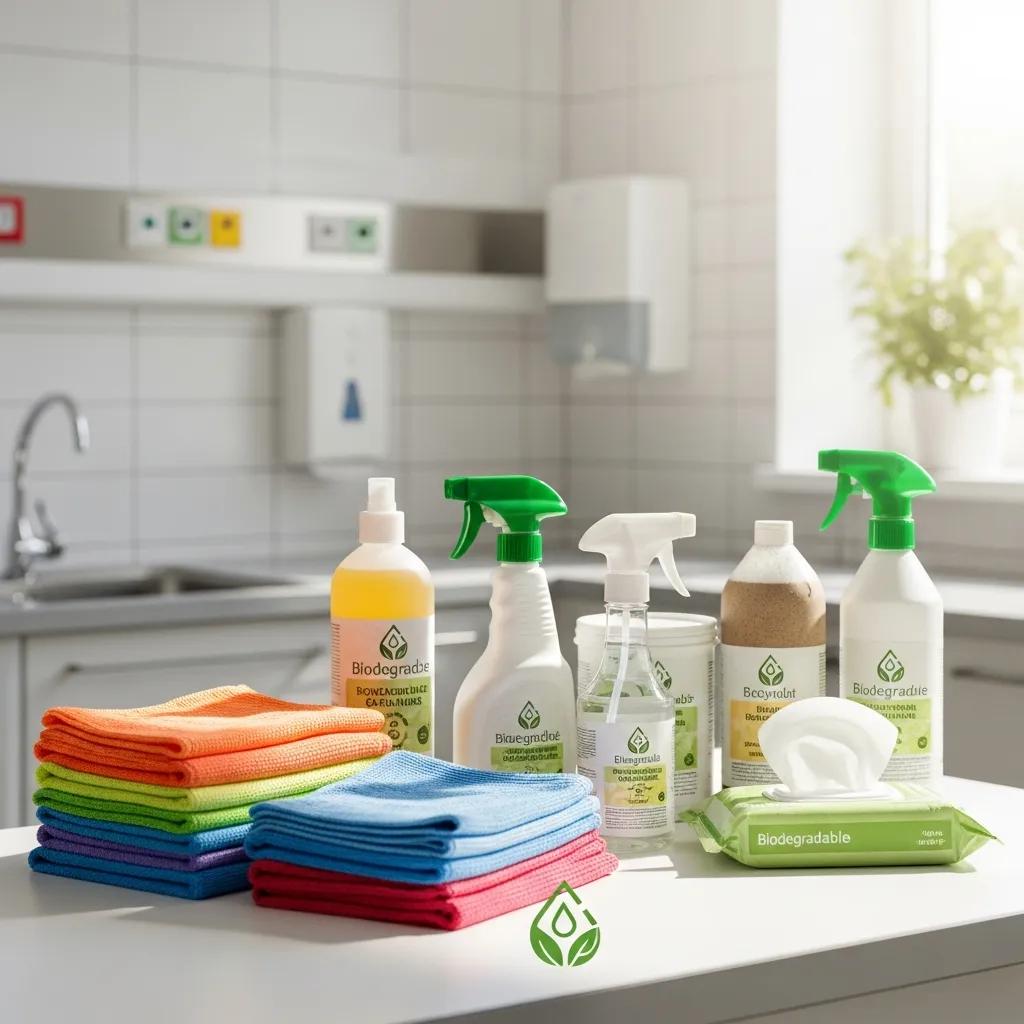
Eco‑friendly medical cleaning balances sustainability with clinical efficacy. We select low‑toxicity, biodegradable products only where they meet medical safety criteria. Microfibre systems reduce chemical use and water‑efficient techniques help maintain hygiene while lowering environmental impact. Product choices are compatibility‑first: greener options are used in non‑critical areas or where they demonstrate antimicrobial performance. We document substitution decisions and safety notes so clinic managers understand where greener products apply and where hospital‑grade disinfectants remain necessary. This approach supports sustainability without compromising patient safety or compliance.
Below is a simple comparison of environmental attributes and medical safety notes to guide product selection.
| Product Category | Environmental Attribute | Medical Safety Note |
|---|---|---|
| Biodegradable all‑purpose cleaners | Low environmental persistence | Appropriate for staffrooms and non‑clinical zones only |
| Microfibre systems | Reduced chemical reliance | Effective for mechanical soil removal; complements disinfectants |
| Low‑toxicity disinfectants | Lower VOCs and irritants | Must have documented efficacy for target organisms before clinical use |
| Non‑fragranced formulations | Reduced sensory irritation | Preferred in patient‑facing areas to lower allergic reactions |
This comparison helps clinics choose products that meet sustainability goals while preserving clinical standards.
What Non-Toxic and Sustainable Products Are Used for Medical Facility Cleaning?
We select eco‑friendly products based on documented efficacy, low‑toxicity profiles and compatibility with medical equipment. Sustainable choices often include biodegradable, non‑fragranced surface cleaners for non‑clinical areas, microfibre cloths to reduce chemical volumes and low‑VOC options where sensitivity is a concern. Where hospital‑grade disinfection is required, the default is a proven antimicrobial that meets efficacy standards. We document the rationale for product choices — including efficacy data and equipment compatibility — so facilities retain safety and transparency during audits while practising responsible chemical stewardship.
These rules let clinics pursue greener practices without compromising infection control in critical areas.
How Do Eco-Friendly Methods Support Health and Environmental Safety in Birtinya Clinics?
Eco‑friendly methods can lower staff and patient exposure to harsh chemicals, reduce environmental discharge of persistent agents and decrease handling risks linked to concentrated disinfectants. For clinic teams, lower‑toxicity products often mean fewer respiratory or skin irritations, improving wellbeing. Environmentally, biodegradable formulations reduce downstream impact when used appropriately. Operationally, microfibre systems and targeted chemical use can also cut overall product consumption and waste. Crucially, these benefits are realised only when greener methods are integrated with evidence‑based disinfection to keep infection control uncompromised.
What Makes Divine Commercial Cleaning the Trusted Choice for Birtinya Medical Centres?
Trust in a medical cleaning partner comes from demonstrable QA systems, consistent staffing and clear client protections that reduce operational risk. Divine signals reliability through police‑checked teams, consistent rosters so the same cleaner services each site, and a money‑back guarantee that reflects our confidence in delivery. Regular 90‑day reviews and digital reporting provide ongoing verification and let us adjust services quickly. These trust signals reduce variability, support audit readiness and give clinic managers the operational clarity to focus on patient care instead of cleaning oversight.
- Consistent rosters build site knowledge and reduce variability.
- Police checks and insurance reassure clinics about staff suitability.
- Money‑back guarantee demonstrates our accountability and commitment.
Together, these elements create a predictable, auditable cleaning relationship for medical centres that prioritise safety and reliability.
How Does Consistent Staffing and a Money-Back Guarantee Build Client Confidence?
Assigning the same trained cleaner to a site improves familiarity with clinic layout, equipment and preferences, which reduces errors and increases accountability. Continuity helps spot recurring issues sooner and speeds corrective action. Our money‑back guarantee aligns our incentives with client satisfaction and quality delivery. Paired with police checks and insurance, these features form a layered reassurance package that addresses operational, safety and commercial concerns for facility managers evaluating cleaning partners.
These staffing and guarantee practices support a consistent service experience and encourage long‑term collaboration between clinics and their cleaning provider.
What Do Satisfied Medical Clients in the Sunshine Coast Say About Our Services?
Clinics often rely on anonymised case summaries and verified local reviews when assessing cleaning partners. Divine encourages prospective clients to check third‑party channels for service consistency and outcomes. Where we share client feedback, it’s presented as anonymised case summaries that highlight measurable improvements — for example, better audit readiness or fewer complaints — without inventing testimonials. Look for evidence of regular QA reviews, consistent rosters and documented corrective actions when evaluating a provider’s track record. Verifiable results give practical insight into how services perform across the Sunshine Coast, including Birtinya.
Reviewing verified feedback and operational records helps facility managers make a confident choice when selecting a partner focused on clinical outcomes.
How Can Birtinya Medical Centres Get a Customised Cleaning Quote from Divine Commercial Cleaning?
Requesting a customised quote is straightforward and built to capture clinic‑specific needs. We start with basic clinic details, follow with an on‑site or virtual scoping assessment, and deliver a detailed proposal that outlines tasks, frequencies and QA steps. Divine’s process emphasises tailored plans and a documented QA schedule to ensure the service fits clinical workflows. The typical engagement pathway is below for clinics seeking a no‑obligation proposal.
- Provide clinic details: size, hours, clinical focus and any special equipment or constraints.
- Choose an assessment: on‑site walkthrough or virtual scoping session to clarify access and risk areas.
- Receive a tailored proposal: customised scope, schedule and QA plan for review and adjustment.
- Agree service commencement: finalise the plan and schedule regular 90‑day quality reviews as part of ongoing service.
These steps make it easy for facility managers to get a clear, customised quote that reflects their operational realities and infection‑control priorities.
What Is the Simple Process to Request a Free, Tailored Medical Cleaning Quote?
To request a free tailored quote, have basic details ready to help accurate scoping and pricing: clinic square metres or room counts, operating hours, average patient throughput and any specialised rooms such as imaging or dental operatories. After you provide these details, an on‑site assessment or virtual scoping session clarifies access, storage and scheduling needs so we can prepare a precise proposal. The outcome is a no‑obligation quote that sets out recommended frequencies, specific tasks and a QA cadence — with no lock‑in contract required.
This intake process ensures proposals match clinical risk areas and day‑to‑day needs, so clinics can compare options with confidence.
How Does Divine Ensure Ongoing Quality Through Regular Reviews and Client Feedback?
We manage quality through a documented review cycle and digital checklists that capture performance metrics and client feedback continuously. Formal reviews every 90 days assess outcomes, record corrective actions and align service levels with changing clinic needs. Digital reporting gives time‑stamped proof of completed tasks and a log of follow‑ups, supporting continuous improvement and audit readiness. Client feedback feeds directly into corrective action workflows so issues are tracked, assigned and resolved promptly to maintain consistent standards.
This QA framework closes the loop between delivery and improvement, keeping cleaning performance aligned with clinical safety goals and client expectations.
Frequently Asked Questions
What types of training do cleaning staff undergo for medical cleaning?
Our cleaning staff complete targeted training for medical environments. This covers infection‑control principles, correct use of hospital‑grade disinfectants, PPE protocols and techniques to avoid cross‑contamination. Staff learn area‑specific sequences for waiting rooms, exam rooms and imaging suites and undertake regular refresher training to stay current with best practice.
How often should medical facilities schedule deep cleaning services?
Deep‑clean frequency depends on patient turnover, service types and local risk. A quarterly deep clean is a common baseline, but high‑traffic areas or higher‑risk clinics may need more frequent deep cleans. Deep cleans are also recommended after outbreaks, renovations or other events that increase contamination risk. Regular assessments help set the right cadence.
What are the benefits of using eco-friendly cleaning products in medical facilities?
Eco‑friendly products can reduce staff and patient exposure to harsh chemicals, lower environmental impact and support workplace wellbeing. They also help facilities meet sustainability goals and appeal to environmentally conscious patients. Crucially, any greener product used in clinical areas must have documented antimicrobial efficacy; where it doesn’t, hospital‑grade disinfectants remain the correct choice.
How can medical centres ensure compliance with cleaning regulations?
Compliance starts with documented cleaning protocols aligned to national and state guidance, along with records of schedules, staff training and approved products. Regular audits and QA reviews identify gaps and maintain standards. Working with a specialist medical cleaning provider helps ensure procedures, products and documentation meet regulatory expectations.
What role does technology play in modern medical cleaning practices?
Technology improves efficiency and accountability. Digital checklists and reporting tools provide a time‑stamped audit trail of completed tasks. Online training modules and tracking keep staff skills up to date. Some clinics also use advanced equipment such as electrostatic sprayers to improve coverage and support infection control, where appropriate.
How can clinics measure the effectiveness of their cleaning protocols?
Effectiveness is measured through audits, patient and staff feedback, and monitoring infection rates. Digital checklists provide consistent documentation for review. Surface testing for pathogens can give quantitative evidence of cleaning outcomes. Regular QA reviews and training ensure continuous improvement and identify areas needing attention.
Specialised medical cleaning in Birtinya is essential to protect patients and reduce infection risk. Choosing a reliable partner like Divine Commercial Cleaning helps clinics lift hygiene standards, build patient confidence and remain inspection‑ready. Our tailored solutions address clinical challenges while supporting efficient operations. Contact us to discuss a customised cleaning plan for your facility.

Dianne, originally from Rockhampton, hails from a business-oriented family, with her father owning electrical stores and her uncle serving as Mayor. Moving to the Sunshine Coast at 13, she later pursued a rewarding real estate career and raised three children. As a single mom, she balanced university studies with domestic cleaning work. Armed with a Bachelor’s Degree in Business, majoring in Supply Chain Management, Dianne founded and grew Divine Commercial Cleaning into a thriving company. Her success is rooted in strong family mentorship, a positive attitude, and a solution-oriented approach, offering tailored cleaning services with integrity and strategic insight.