Eco-Friendly Commercial Cleaning in Maroochydore — Practical, Sustainable Solutions for Local Businesses
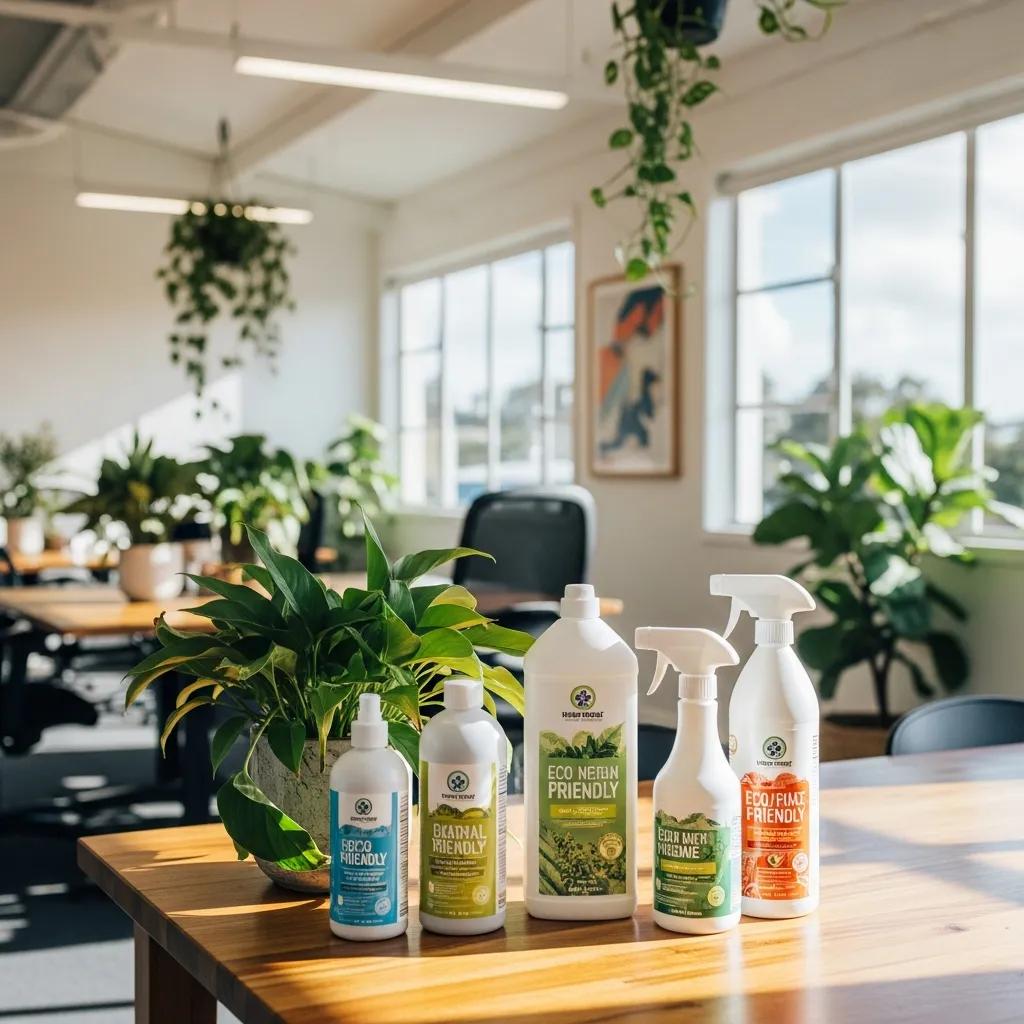
Eco-friendly commercial cleaning in Maroochydore means choosing products, methods and equipment that protect the environment while keeping workplaces clean and welcoming. Businesses across the Sunshine Coast are leaning into greener solutions to improve indoor air quality, meet workplace health obligations and reflect responsible values to customers and staff. This guide explains what sustainable cleaning looks like for offices, retail stores, medical centres and shopping centres in Maroochydore, and how those practices deliver clear benefits for operations and reputation. You’ll get practical advice on product groups — from biodegradable agents to low‑VOC options — industry-specific protocols that keep you compliant, and a simple pathway to request a tailored quote. The sections below cover benefits, product types and comparisons, sector adaptations, pricing and quotes, client evidence and common questions — all aimed at helping facility managers and business owners pick green cleaning solutions that actually work on the ground.
What Are the Benefits of Eco-Friendly Commercial Cleaning in Maroochydore?
Green commercial cleaning cuts chemical emissions and waste while preserving hygiene through targeted products and smarter practices. Lower VOCs and biodegradable formulations reduce airborne contaminants and limit harmful runoff, protecting local waterways and supporting Sunshine Coast environmental priorities. For staff, the health payoff includes better indoor air quality, fewer allergy triggers and potentially less sick leave from reduced exposure to irritants and residues. Operationally, businesses benefit from clearer documentation for audits, more reliable supply choices for green products and stronger customer perception that supports corporate social responsibility goals.
How those benefits show up in measurable ways depends on the product mix and service protocols used; the next section explains how biodegradable cleaners deliver environmental gains in practical terms.
The tangible benefits of green cleaning typically fall into four clear categories:
- Reduced environmental impact: Less chemical runoff and faster biodegradation cut contamination of soil and waterways.
- Health and wellbeing: Lower VOC exposure improves indoor air quality and reduces respiratory irritation for staff.
- Compliance and risk management: Green‑friendly protocols support OH&S record‑keeping and healthcare‑adjacent standards.
- Brand and customer trust: Visible sustainability measures strengthen reputational value for customer‑facing businesses.
Use these categories as a framework to evaluate sustainable cleaning options and decide which measures bring the most value to your site.
How Do Biodegradable Cleaning Products Reduce Environmental Impact?
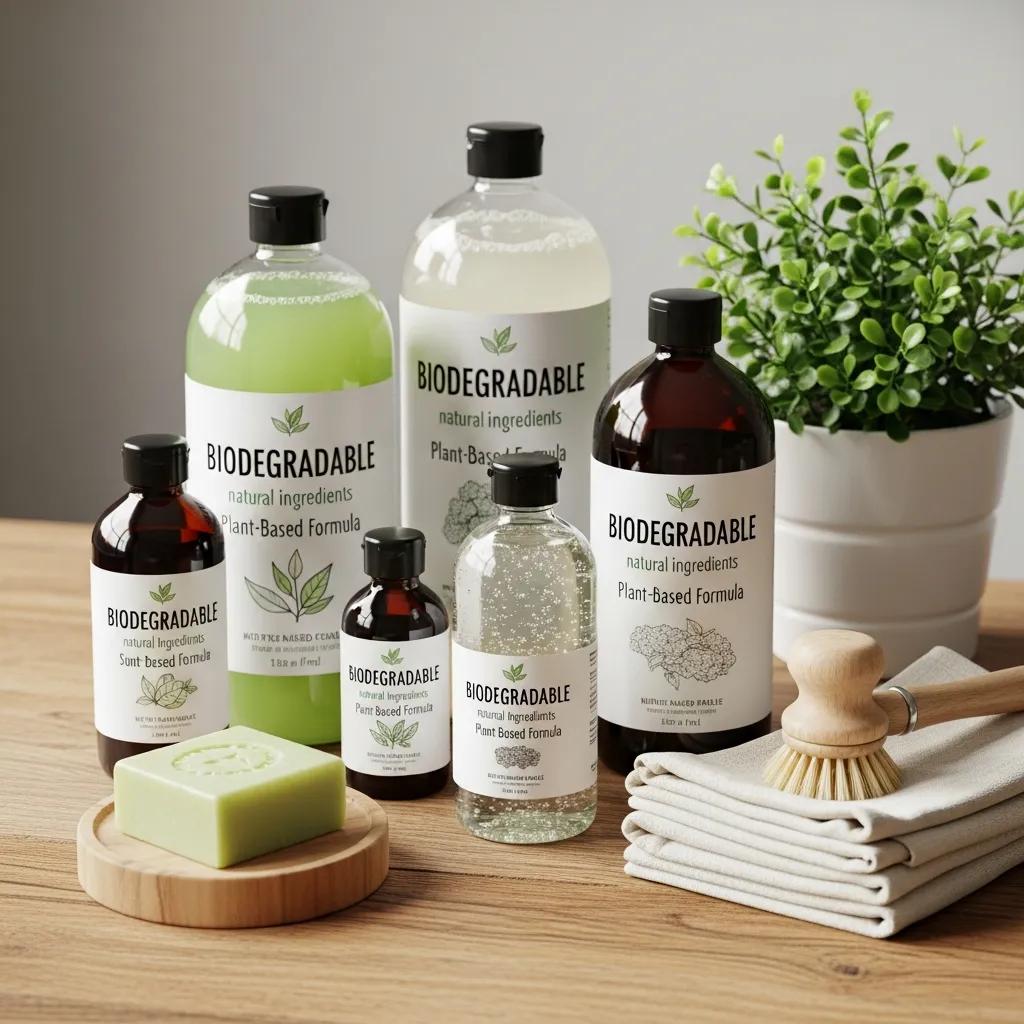
Biodegradable cleaners use surfactants and solvents that break down naturally through microbial action, leaving fewer persistent residues in wastewater. That reduces long‑term accumulation of harmful compounds in soil and water and eases the load on municipal treatment systems. Biodegradability is usually backed by standard test results and manufacturer data sheets that show degradation rates and aquatic toxicity classes. Choosing products with documented biodegradability and lower aquatic toxicity helps businesses demonstrate environmental stewardship and reduce regulatory or community concern about chemical runoff.
Understanding biodegradability is useful when comparing product performance and safety, so procurement teams can balance environmental aims with on‑site effectiveness.
| Product Type | Key Attribute | Typical Use / Environmental Value |
|---|---|---|
| Biodegradable all-purpose cleaner | Rapid microbial breakdown | Everyday surface cleaning with minimal aquatic impact |
| Enzymatic degreaser | Enzyme-based soil removal | Food‑service and grease‑prone areas with reduced solvent load |
| Low-foam floor finish | Low-residue formulation | Floor care that lowers stripper use and wastewater burden |
Why Choose Sustainable Office Cleaning for Health and Safety Compliance?
Sustainable office cleaning pairs low‑VOC products, microfibre systems and measured dosing to remove contaminants while limiting staff exposure to irritants and allergens. This approach supports occupational health by lowering airborne chemical levels and contact contamination, which aligns with workplace wellbeing priorities. From a compliance perspective, sustainable cleaning can be folded into OH&S documentation via standard checklists, retained SDSs and scheduled reporting that show due diligence. These practices also reduce the risk of breaches related to hazardous chemical management and help operations teams make procurement choices that reflect company health policies.
Putting these compliance‑friendly practices in place makes it easier to adapt procedures for regulated settings such as medical centres.
| Benefit | Measurable Outcome | Practical Indicator |
|---|---|---|
| Lower VOCs | Improved indoor air quality | Fewer scent complaints and irritant incidents |
| Reduced chemical residue | Less surface irritation | Fewer reports of skin or respiratory sensitivity |
| Better documentation | Smoother audits | Complete SDS library and customised cleaning logs |
Which Types of Eco-Friendly Cleaning Products Are Used in Commercial Services?
Eco‑friendly commercial cleaning covers several product categories, each suited to particular soils, surfaces and compliance needs. Common types include low‑VOC cleaners, biodegradable detergents, enzymatic products for organic soils, eco floor‑care systems and accessories like microfibre cloths and HEPA‑filter vacuums that reduce chemical dependence. Knowing attributes such as VOC level, biodegradability rating and residue profile helps facilities pick products that balance safety, performance and environmental impact. Technical procurement teams typically request SDSs and manufacturer biodegradability data to verify claims before contracting.
Providers on the Sunshine Coast and in Maroochydore usually supply product specifications and can tailor a product mix to your site; technical teams should request SDS and performance data before finalising contracts to ensure fit‑for‑purpose choices.
Common eco‑friendly product categories and quick notes:
- Low‑VOC cleaners: Cut airborne emissions and improve indoor air quality in enclosed spaces.
- Enzymatic cleaners: Target organic soils without harsh solvents — ideal for kitchens and food prep areas.
- Microfibre systems: Lift soil mechanically so you can use less chemistry while keeping surfaces clean.
These categories form the core toolkit for sustainable cleaning and lead into the specific benefits of low‑VOC solutions and how biodegradable agents stack up against traditional chemicals.
What Are Low VOC Commercial Cleaning Solutions and Their Advantages?
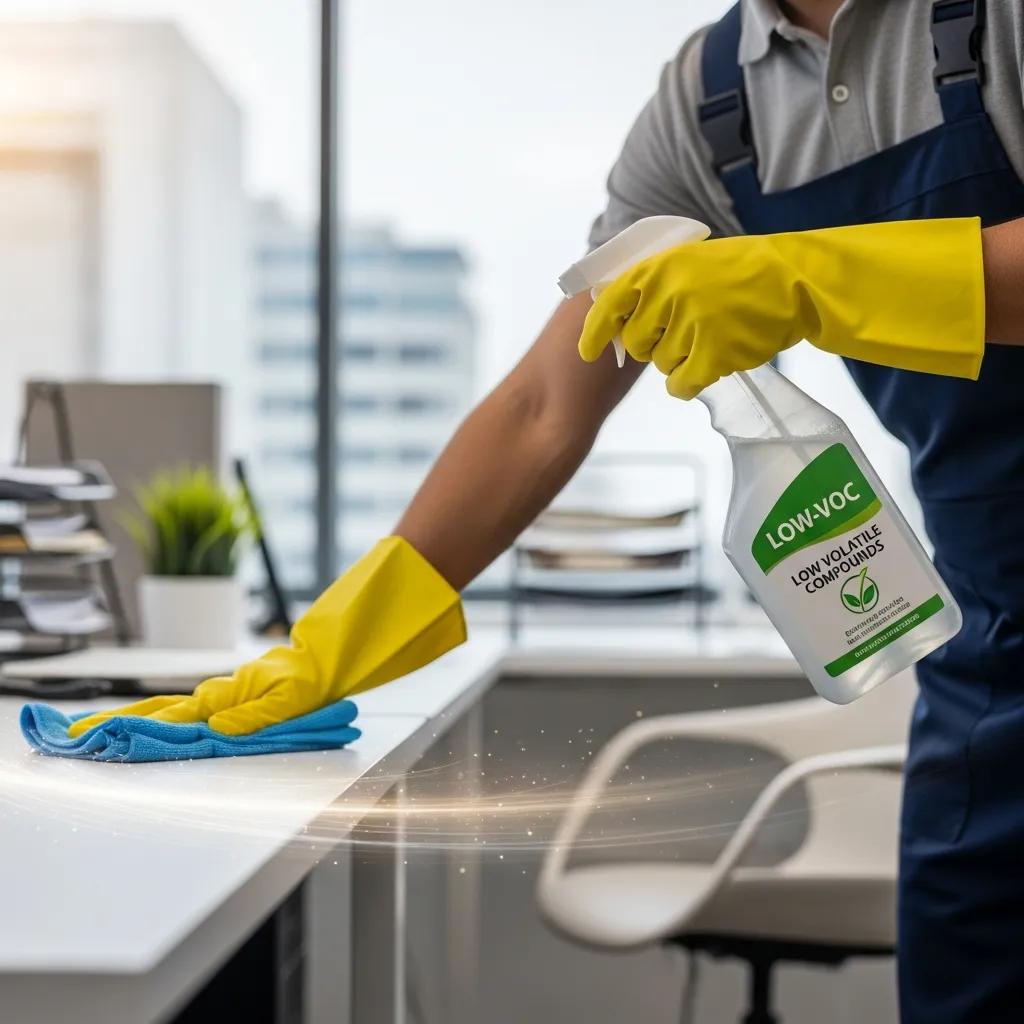
Low‑VOC cleaning solutions are formulated with solvents and surfactants that release fewer volatile organic compounds, cutting airborne contaminants and odour. Benefits include better indoor air quality, reduced irritation for workers and a lower chance of triggering chemical sensitivities among occupants. Procurement teams often choose low‑VOC products for areas with limited ventilation or high occupant density, such as schools, offices and retail spaces. Paired with good ventilation and microfibre protocols, low‑VOC options meet cleanliness goals while supporting staff wellbeing and regulatory preferences for healthier indoor environments.
Selecting low‑VOC products also affects operational routines — for example, ventilation scheduling and dosing training — which help you get the full health and performance advantages.
| Product | VOC Level (qualitative) | Best Use Case |
|---|---|---|
| Low-VOC all-purpose cleaner | Low | Daily touchpoint cleaning in offices |
| Enzymatic degreaser | Minimal VOCs | Kitchen and food‑service areas |
| Low-residue floor cleaner | Very low | High‑traffic floor maintenance |
How Do Biodegradable Cleaning Agents Compare to Traditional Products?
Modern biodegradable agents often match traditional cleaners for routine soil removal while leaving a smaller environmental footprint in terms of persistence and aquatic toxicity. Performance varies by formulation: enzyme blends and newer surfactants can equal conventional products, though heavy soils may call for longer dwell times or more mechanical action. When comparing costs, consider lifecycle factors — product price, reduced waste disposal, and potential savings from fewer staff health issues. Disposal impact is a clear win for biodegradable agents, which break down more fully and pose less risk to downstream ecosystems.
Procurement decisions should balance immediate cleaning efficacy with longer‑term environmental and health outcomes, using trials and SDS reviews to guide final choices.
How Are Eco-Friendly Commercial Cleaning Services Tailored for Different Industries?
Sustainable cleaning services adjust schedules, product selections and checklists to meet industry‑specific needs while keeping sustainability and compliance front of mind. Offices and retail spaces prioritise comfort and appearance, using low‑VOC cleaners and microfibre touchpoint routines. Medical centres need validated disinfectant protocols that balance pathogen control with greener product options. Shopping centres and large retail complexes focus on efficient floor care, waste handling and odour control to reduce chemical loads while managing heavy foot traffic. Custom reports, documented checklists and audit‑ready records are standard elements that help clients show compliance and measure sustainability performance.
These sector differences shape product choice and operational planning; the following subsections give practical advice for offices/retail and a focused look at medical‑centre suitability.
| Industry | Protocol Element | Sustainable Adaptation |
|---|---|---|
| Offices / Retail | Touchpoint cleaning | Microfibre plus low‑VOC sprays for frequent contact points |
| Medical Centre | Disinfection & sterilisation | Green‑compatible disinfectants with validated efficacy |
| Shopping Centre | Floor & waste management | Low‑residue floor systems and recycling‑focused waste handling |
What Sustainable Cleaning Practices Are Used in Offices and Retail Spaces?
Offices and retail venues commonly use microfibre cloths, targeted low‑VOC sprays, scheduled touchpoint rotations and waste‑reduction measures to balance hygiene with sustainability. Microfibre captures more soil with less chemical, enabling lower dosing and fewer product changes, while scheduled protocols keep high‑contact areas consistently clean. Waste‑reduction tactics include consolidated chemical containers and recycling programmes for consumables, which reduce packaging waste. These practices preserve customer‑facing standards without excessive chemical use and can be recorded in service reports for facility managers and auditors.
Putting these practices into action usually requires staff training and simple operational tweaks; ongoing monitoring of product use and occupant feedback then helps refine routines.
- Microfibre deployment: Remove soils mechanically to cut chemical reliance.
- Touchpoint schedules: Focus frequent cleaning where it matters most.
- Waste minimisation: Consolidate supplies and recycle consumables to reduce packaging.
Can Green Cleaning Meet Medical Centre Hygiene Standards in Maroochydore?
Yes — green cleaning can meet medical‑centre hygiene requirements when providers choose validated disinfectants and follow evidence‑based protocols that prioritise pathogen control alongside environmental safety. Clinical hygiene depends on products with documented efficacy against relevant organisms, correct contact times and staff trained in aseptic technique; some green‑compatible disinfectants meet these standards when backed by manufacturer validation and SDS documentation. For high‑risk procedures or outbreaks, providers may use stronger agents in targeted, controlled applications while limiting environmental impact elsewhere. Thoughtful protocol design and regular auditing ensure sustainable methods do not compromise patient safety.
When hiring a provider for medical‑centre cleaning, ask for validated disinfectant data and documented procedures to confirm both safety and sustainability.
What Is the Pricing and Quote Process for Sustainable Commercial Cleaning in Maroochydore?
Pricing for sustainable commercial cleaning is site‑specific rather than fixed, so a customised quote is the normal starting point. Key cost drivers include premises size and layout, service frequency, product choices for green items, industry compliance needs and reporting or auditing requirements. Sustainable options can affect price through higher‑spec products or extra training, but those costs are often offset over time by lower product use, smaller waste disposal bills and improved staff wellbeing. A clear quoting process helps clients compare value beyond headline price, looking at total cost of ownership and measurable outcomes.
Below is a typical, step‑by‑step workflow to request a customised sustainable cleaning quote.
- Initial contact and scoping: Share site details and high‑level objectives.
- Site assessment: On‑site or virtual survey to map layout, risk areas and required frequency.
- Proposal delivery: Detailed quote with product specs, schedules and reporting.
- Review and adjustments: Refine scope, products or frequency based on feedback.
- Agreement and onboarding: Finalise contract and complete induction and training.
How Does Pricing for Green Commercial Cleaning Services Compare Locally?
Local pricing on the Sunshine Coast and in Maroochydore reflects travel time, product availability, service frequency and compliance complexity rather than a simple “green premium.” Some eco products cost more per unit, but lifecycle economics often improve thanks to lower consumption, reduced waste handling and fewer staff‑health related interruptions. Sites with difficult access or complex floor plans may face higher mobilisation costs, while regular contracts usually gain efficiencies through optimised routes and standard product kits. Ask for line‑item quotes that separate product costs from labour so you can compare total cost of ownership.
| Cost Driver | Description | Local Impact |
|---|---|---|
| Frequency | Number of visits per week | Higher frequency raises labour but spreads product use |
| Product specification | Low‑VOC / biodegradable choices | Can increase unit cost but reduce disposal and health impacts |
| Access & layout | Multi‑floor or extended hours | Influences labour and travel time on the Sunshine Coast |
What Steps Are Involved in Requesting a Customised Eco-Friendly Cleaning Quote?
Requesting a tailored eco‑friendly quote is straightforward and designed to ensure fit‑for‑purpose solutions with transparent pricing. Start by providing a site brief and key objectives so providers can scope the work correctly. Next, arrange an on‑site or virtual survey where the provider documents surface types, traffic patterns and compliance needs. After assessment, you’ll receive a proposal itemising products, frequencies, reporting and training so you can compare options. Final steps include negotiation, contract sign‑off and staged onboarding with staff induction and initial performance checks to confirm the agreed environmental and hygiene outcomes.
What Do Clients Say About Eco-Friendly Commercial Cleaning Services in Maroochydore?
Clients who prioritise sustainability commonly report better indoor comfort, clearer audit documentation and positive customer feedback about visible green practices. Case summaries and testimonials often highlight fewer odour complaints, improved staff wellbeing and a responsive service from providers who understand local operational realities. Prospective clients should request references and case details to verify claims and see real outcomes in similar settings. Social proof and documented results help make sustainable cleaning an easy procurement decision.
For businesses after a reliable local partner, providers that share case studies and references reduce procurement friction and build confidence during selection.
Which Case Studies Highlight Successful Sustainable Cleaning Projects?
One example involves a retail outlet coping with odour complaints and accelerated floor wear; the solution combined low‑residue floor systems, scheduled microfibre touchpoint cleaning and improved waste handling, which cut complaints and extended floor life. Another case from a multi‑tenanted office switched to low‑VOC cleaners and microfibre systems, reducing staff irritation reports and improving occupant satisfaction scores. Both examples follow the same pattern: identify the issue, apply targeted green interventions and measure outcomes such as fewer service complaints and steadier maintenance costs.
These case studies show how tailored green cleaning programmes turn sustainability into an operational advantage rather than a cost centre.
How Do Client Testimonials Reflect the Effectiveness of Environmentally Safe Cleaning?
Testimonials commonly point to reliability, clear communication, improved indoor environments and quick responsiveness when green methods are applied correctly. Health‑focused testimonials mention fewer allergy or irritation incidents, while operational feedback highlights consistent reporting and transparent product specifications. Asking for references and case documentation lets procurement teams validate claims and understand the typical results providers achieve in comparable settings. Solid social proof helps convert sustainability commitments into accepted procurement choices by showing repeatable benefits.
Divine Commercial Cleaning, which serves the Sunshine Coast and Brisbane regions including Maroochydore, offers tailored eco‑friendly commercial cleaning options aligned with the outcomes described here. Our approach focuses on biodegradable and low‑toxicity agents, customised schedules and clear reporting — and we encourage businesses to request a customised quote to confirm the right solution for their site.
What Are Common Questions About Green Commercial Cleaning Practices?
Facility managers often ask what truly defines eco‑friendly cleaning, whether green products work against pathogens and how sustainable cleaning supports business health and environmental aims. Eco‑friendly cleaning combines product standards (biodegradability, low‑VOC), process choices (microfibre, measured dosing), equipment selection (HEPA vacuums) and waste‑reduction practices (recycling, bulk dispensing). Answering these questions requires evidence such as SDS documentation, validated disinfectant data and measurable service reporting that proves both efficacy and environmental outcomes.
Below are concise answers to common procurement concerns to help managers prepare for vendor conversations.
- What makes cleaning ‘eco-friendly’? It’s a mix of biodegradable or low‑VOC products, efficient equipment, waste minimisation and staff training to reduce environmental and health impacts.
- Are green products effective? Many green products match traditional cleaners for routine soils; validated disinfectants and correct protocols are used where clinical hygiene is required.
- How does green cleaning benefit businesses? It improves indoor air quality, supports CSR goals and can lower lifecycle costs through reduced product use and fewer health‑related disruptions.
What Makes Commercial Cleaning Eco-Friendly and Sustainable?
Commercial cleaning is sustainable when it combines clear product criteria (biodegradability, low‑VOC), process controls (measured dosing, microfibre systems), equipment choices (HEPA vacuums, energy‑efficient machines) and waste strategies (bulk dispensing, recycling). Verification comes from SDSs, manufacturer biodegradability data and on‑site usage records that show reduced environmental load. Operational practices that support sustainability include scheduled touchpoint cleaning, documented checklists for auditing and service reports that track product consumption and waste diversion. Together, these elements create a measurable programme rather than a set of marketing claims.
Routine measurement and transparent records let businesses track environmental performance alongside hygiene outcomes, which is vital for continuous improvement.
How Do Eco-Friendly Products Benefit Business Health and Environmental Goals?
Eco‑friendly products lower staff exposure to irritants through reduced VOC emissions and fewer surface residues, improving workplace comfort and potentially reducing health‑related absences. Environmentally, biodegradable agents and low‑residue formulations shrink the wastewater footprint and lessen the need for harsh disposal measures. These benefits support corporate sustainability targets and can be included in reporting frameworks to show progress to stakeholders. For procurement managers, prioritising products with documented efficacy and environmental credentials delivers both health gains and credible sustainability claims.
| Product Category | Attribute | Business Benefit |
|---|---|---|
| Low-VOC cleaners | Lower emissions | Better indoor air quality and improved staff comfort |
| Biodegradable agents | Rapid breakdown | Reduced environmental persistence and better local impact |
| Microfibre systems | Mechanical soil removal | Lower chemical use and faster cleaning cycles |
Divine Commercial Cleaning provides eco‑friendly commercial cleaning services across the Sunshine Coast and Brisbane, including Maroochydore, and can supply product specifications and customised proposals on request. Prospective clients are encouraged to request a tailored quote so sustainability objectives align with operational needs.
Frequently Asked Questions
1. How can businesses ensure they are choosing truly eco-friendly cleaning services?
To choose genuinely eco‑friendly services, look for providers that use certified biodegradable products and low‑VOC cleaners, and that follow sustainable practices. Ask for SDSs and product specifications to verify claims, and request details about cleaning protocols, equipment and waste‑management strategies. A reputable provider will be transparent and supply the documentation you need.
2. What should businesses consider when transitioning to eco-friendly cleaning products?
When transitioning, consider your site’s cleaning needs, the products’ effectiveness against typical soils and any regulatory requirements. Factor in cost implications — including potential savings from reduced absenteeism and waste disposal — and invest in staff training so new products and methods are used correctly and standards are maintained.
3. Are there specific certifications to look for in eco-friendly cleaning products?
Yes. Look for recognised certifications such as Green Seal, EcoLogo or the EPA’s Safer Choice label, which indicate products meet strong environmental and health standards. Third‑party testing and validation add further assurance that a product is safe and effective.
4. How can eco-friendly cleaning practices improve employee productivity?
Eco‑friendly practices can boost productivity by improving indoor air quality and reducing exposure to harmful chemicals, which lowers health issues and absenteeism. A healthier, fresher workplace also improves morale and engagement, which supports overall business performance.
5. What role does staff training play in the effectiveness of eco-friendly cleaning?
Staff training is critical. Proper instruction ensures team members use eco‑friendly products correctly, follow protocols and maintain equipment — all of which maximise the benefits of sustainable methods while meeting health and safety standards. Regular refreshers keep staff up to date with new products and techniques.
6. Can eco-friendly cleaning solutions be used in high-traffic areas effectively?
Yes. Many low‑VOC and biodegradable products are formulated for strong cleaning performance with a smaller environmental footprint. Tools such as microfibre cloths and HEPA vacuums improve efficiency and reduce the need for harsh chemicals. With regular maintenance schedules and targeted protocols, high‑traffic areas can stay hygienic and presentable without compromising sustainability goals.
7. How can businesses measure the impact of their eco-friendly cleaning practices?
Measure impact by tracking KPIs like indoor air quality, staff health and absenteeism, and customer feedback on cleanliness. Regular audits and service reports reveal product usage and waste reduction. Comparing costs before and after implementation helps quantify savings and demonstrate the effectiveness of your sustainability initiatives.
Adopting eco‑friendly commercial cleaning in Maroochydore improves indoor air quality and supports sustainable business practices that matter to customers and staff. By choosing biodegradable and low‑VOC products, businesses can cut their environmental impact while maintaining a healthier workspace. These benefits go beyond compliance — they strengthen brand perception and can deliver operational efficiencies. Find out how our tailored eco‑friendly cleaning solutions can meet your needs by requesting a customised quote today.

Dianne, originally from Rockhampton, hails from a business-oriented family, with her father owning electrical stores and her uncle serving as Mayor. Moving to the Sunshine Coast at 13, she later pursued a rewarding real estate career and raised three children. As a single mom, she balanced university studies with domestic cleaning work. Armed with a Bachelor’s Degree in Business, majoring in Supply Chain Management, Dianne founded and grew Divine Commercial Cleaning into a thriving company. Her success is rooted in strong family mentorship, a positive attitude, and a solution-oriented approach, offering tailored cleaning services with integrity and strategic insight.