Mons Commercial Cleaning vs Local Providers: A practical guide for choosing commercial cleaners on the Sunshine Coast and in Brisbane
Picking the right commercial cleaner in the Sunshine Coast and Brisbane is about more than price. It’s about matching scope, specialist skills and reliable local support to your site’s needs. This guide shows how to compare Mons Commercial Cleaning with nearby providers by looking at service models, pricing transparency, specialist work for medical centres and shopping centres, common reviewer feedback, environmental practices and technology use. You’ll see how commercial cleaning services differ across offices, retail, medical centres and shopping centres — and how those differences affect vendor selection and operational risk. Our aim is simple: give procurement and facilities teams practical criteria and comparison tools so you can shortlist suppliers and confidently request tailored quotes. The sections that follow break down what separates providers, typical pricing approaches in the Sunshine Coast and Brisbane markets, specialised service expectations, review signals, green and tech trends, and a straightforward checklist for choosing the right office cleaning partner.
What makes Divine Commercial Cleaning different from Mons and other local options?
Providers stand apart through a combination of local knowledge, bespoke service design, clear communication and dependable operations. Local experience cuts mobilisation time and improves understanding of common site types, while customised packages let you match frequency and scope to daily operations. Clear escalation paths and open communication reduce interruptions and build confidence, and a visible local presence gives buyers a way to validate reliability. Below we summarise the practical differentiators across provider types so decision-makers can compare attributes quickly and move from evaluation to requesting proposals.
Divine Commercial Cleaning emphasises regional presence, tailored packages and transparent communication as core strengths — factors that repeatedly influence buyer decisions. We specialise in cleaning for offices, retail, medical centres and shopping centres across the Sunshine Coast and Brisbane, which supports faster response and greater scheduling flexibility. If you’re ready to take the next step, request a customised quote or a site visit to confirm fit and agree service levels.
Below is a concise comparison that highlights where different provider types typically invest operational focus; it’s designed to map attributes that matter most in local procurement decisions without overstating competitor specifics.
| Provider Type | Key Differentiator | Typical Value |
|---|---|---|
| Local specialist (e.g., Divine Commercial Cleaning) | Deep local knowledge and tailored packages | Quicker mobilisation, bespoke scopes for offices, retail, medical and shopping centres |
| Standard local provider | Competitive rates with straightforward packages | Lower-cost options for routine daily or periodic cleaning |
| Large chain / franchise | Operational scale and standardised procedures | Consistent national processes but less local customisation |
Use this comparison to prioritise the attributes that matter most for your site: responsiveness and tailored scope versus scale or price competitiveness. From there, pricing models and contractual transparency explain how total cost and performance play out in practice.
How our local knowledge improves service quality
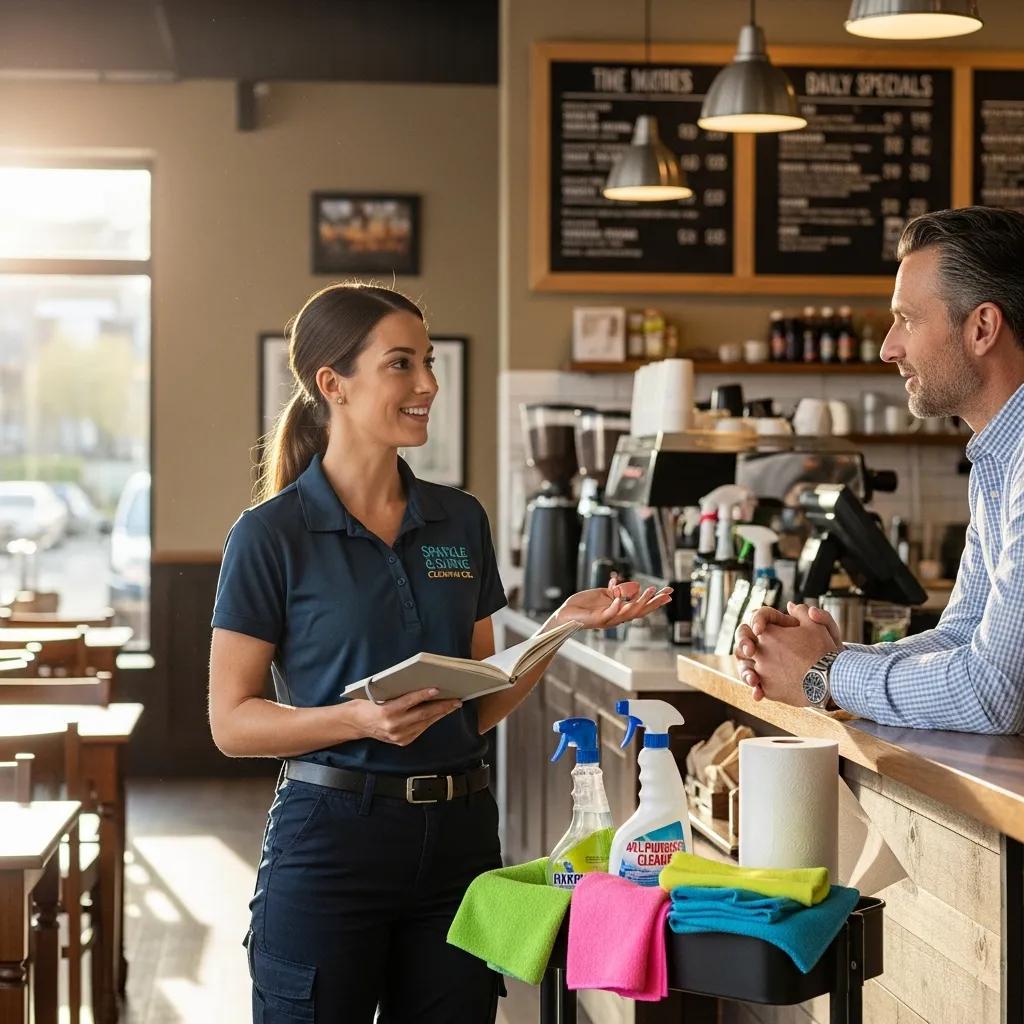
Local expertise is more than proximity — it delivers faster response, familiarity with common site types and practical knowledge of regional rhythms. At Divine Commercial Cleaning we tune staff training, supply choices and scheduling to typical business peaks on the Sunshine Coast and in Brisbane. That familiarity reduces onboarding time, shortens mobilisation, and helps ensure site-specific compliance for offices, retail stores and larger public areas. Prioritise providers who can demonstrate quick, practical responsiveness and the ability to adapt cleaning scope to site constraints.
Being local also improves communication and escalation: teams that understand local logistics maintain more consistent staffing and resolve issues faster. That operational closeness is especially valuable for businesses with irregular hours, weekend events or rapidly changing occupancy. Next, we explain the personalised packages that turn local knowledge into measurable outcomes.
What personalised cleaning solutions does Divine offer for businesses?
Our personalised solutions are built around service frequency, defined scope items and optional add-ons that match your workflows and risk profile. For offices we commonly offer daily touchpoint cleaning, scheduled deep cleans and periodic floor care; for retail, packages emphasise high-touch areas and front-of-house presentation. Medical centre cleaning focuses on infection control, documented disinfection routines and trained staff, while shopping centre contracts cover public area upkeep and waste coordination. Divine provides custom scheduling, optional specialist disinfection and the flexibility to trial service levels before committing to long-term agreements.
Clear scope definitions and itemised options make it easier to compare like-for-like quotes and judge value beyond the headline rate. Tailored packaging reduces the risk of hidden charges and helps match cleaning intensity to your operational needs — which we’ll look at next when we examine pricing models and contract transparency.
How do commercial cleaning prices compare across the Sunshine Coast and Brisbane?
Pricing in these markets usually follows a few common models. Understanding them helps you read quotes and negotiate fair terms. Typical approaches include hourly rates, fixed per-visit fees and per-square-metre pricing for larger sites — each has trade-offs in predictability, incentives and scalability. Routine tasks such as daily cleaning, rubbish removal and basic floor care are usually included, while deep cleans, specialist disinfection and window cleaning are commonly itemised. Clear pricing and contract terms reduce procurement risk and make budgeting more reliable.
Transparent providers list inclusions, minimum terms and notice periods in their bids; that level of detail is a strong signal of reliability and lowers the chance of surprise charges. The table below summarises common pricing models, what they’re based on and where they typically fit best.
| Pricing Model | Typical Rate Basis | Common Inclusions |
|---|---|---|
| Hourly billing | Hourly rate per cleaner | Routine touchpoint cleaning and rubbish removal |
| Fixed per-visit | Flat fee per visit | Defined scope list for each scheduled visit |
| Per-square-metre | Price per m² per clean or month | Scalable coverage for large retail or warehouse spaces |
Use this snapshot to compare quotes by model and scope rather than price alone. Below are quick pros and cons to guide which model suits your facility.
- Hourly billing: flexible when tasks vary or scope is uncertain.
- Fixed per-visit: predictable budgeting for repeatable scopes.
- Per-square-metre: efficient for large, high-volume areas.
Each model has trade-offs that influence how you structure incentives and manage costs. Next we explain how to spot transparency issues in contract terms.
Typical pricing approaches for office and retail cleaning
Office and retail contracts often use hourly billing or fixed per-visit fees; larger retail footprints may be quoted per-square-metre to capture scale efficiencies. Hourly billing suits smaller offices or variable tasks, while fixed fees work where the scope and hours are predictable. Per-square-metre pricing is cost-efficient for shopping centres and large stores. When comparing quotes, ask providers to map every line item to specific inclusions — that turns a number into an operational promise and makes apples-to-apples comparisons straightforward.
How transparent are pricing and contract terms across competitors?
Transparency shows up as clear inclusions, itemised optional services, defined notice periods and explicit exit clauses. Opaque proposals can hide extras or long minimum terms. Watch for common hidden costs such as equipment hire, disposal fees and after-hours call-out charges; unclear staffing arrangements can also cause quality variation. Require contract clauses for service-level agreements (SLAs), incident response times and replacement staffing. The short checklist below highlights contract items procurement should verify.
- Service inclusions: Confirm every routine task covered by the base price.
- Optional add-ons: Check how deep cleaning, disinfection and other specialists are priced.
- Notice and exit terms: Verify minimum terms, notice periods and grounds for termination.
These checks reduce ambiguity and protect continuity. Divine Commercial Cleaning treats transparency as a core practice and encourages clients to request detailed quotes and scope lists during procurement.
Which specialised services exist for medical centres and shopping centres?
Specialised cleaning addresses operational and regulatory needs in healthcare and large retail environments where infection control, public safety and frequent maintenance are priorities. Medical centre cleaning requires documented disinfection protocols, PPE-trained staff and traceable records, while shopping centre work focuses on high-frequency floor and restroom care, waste coordination and event surge capacity. Providers differentiate through certifications, documented procedures and scalable staffing models. The table below maps services to typical requirements and shows how a local specialist might meet them.
| Service Type | Requirement / Standard | How Divine Addresses It / Typical Approach |
|---|---|---|
| Medical centre cleaning | Infection control, PPE, audit records | Documented disinfection protocols and trained staff for clinical-risk areas |
| Shopping centre cleaning | High-frequency floor and restroom maintenance | Scheduled high-touch rounds, event surge plans and coordinated waste handling |
| Office high-touch cleaning | Regular disinfection of common areas | Routine touchpoint sanitation with optional deep cleans on demand |
Use this as a checklist of operational elements to verify in proposals for sensitive sites. Knowing these standards helps you ask targeted questions during vendor assessment.
What unique cleaning requirements do medical centres have?
Medical centres need strict infection-prevention measures: frequent disinfection of clinical zones, correct PPE use and traceable cleaning logs for audits. Staff must follow cleaning sequences, segregate waste properly and use disinfectants compatible with each surface. Clinical areas often require higher cleaning frequency and specialist equipment for particular surfaces or instruments. Request evidence of staff training and sample cleaning logs when evaluating providers — documented protocols and demonstrated competence reduce clinical risk and support patient safety.
Providers that supply clear documentation and training records make procurement decisions easier; these practices lead naturally into how large public spaces are managed.
How do competitors handle shopping centre cleaning?
Shopping centres demand continuous public-area maintenance, strong waste management and flexible staffing for peak times and events. Common tactics include scheduled floor-care rounds, concentrated restroom cycles and coordination with centre management for extra resources during promotions or holidays. Effective SLAs for response times and surge staffing plans are essential to keep presentation and safety on point. Evaluate proposals for explicit event surge plans, waste protocols and KPIs tied to visible cleanliness metrics.
A provider’s ability to coordinate with centre management and scale teams during busy periods is a key differentiator — prioritise proven experience and documented SLAs for shopping centre contracts.
What do customer reviews tell you about local commercial cleaners?
Customer feedback commonly highlights reliability, communication, perceived value and responsiveness. Positive reviews praise consistent staffing, clear communication and scope adherence; negative feedback usually points to inconsistency, hidden fees or slow issue resolution. Looking at review patterns — not isolated comments — helps procurement teams identify real strengths or systemic problems. The list below summarises common review themes to guide reference checks.
- Reliability and punctuality are the most common positive signals.
- Communication and pricing transparency often separate highly rated providers from the rest.
- Frequent issues include inconsistent staff, unclear scope boundaries and unexpected charges.
Use these themes to request references and sample performance metrics. The subsection that follows explains how Divine’s review signals align with buyer priorities.
How do clients rate Divine Commercial Cleaning for reliability and trust?
For local providers, client feedback commonly highlights on-time service, consistent teams and direct communication as reliability indicators — and Divine focuses on those aspects in daily delivery. Reviews and local listings provide quick ways to validate punctuality and responsiveness claims. Procurement teams should request references and case studies to corroborate performance, and Divine encourages prospective clients to ask for customised quotes and references as part of the evaluation.
Verifying reliability with references, SLAs and sample performance dashboards turns positive impressions into enforceable expectations. The next section outlines broader client-satisfaction themes across competitors.
What common customer satisfaction themes appear across competitors?
Across local markets, satisfaction often comes down to perceived value, staff consistency and responsiveness. Red flags include unclear billing, high staff turnover and missing escalation channels. Focus on patterns: repeated reports of the same problem point to systemic issues, while one-off complaints may be isolated. Prefer providers who offer trial periods, regular quality checks and accountability measures such as site audits.
Spotting red flags early — for example, repeated billing disputes or unresolved service complaints — saves procurement time and reduces disruption. Next we cover eco-friendly and tech trends that are shaping vendor capabilities.
How are eco-friendly practices and technology changing commercial cleaning?
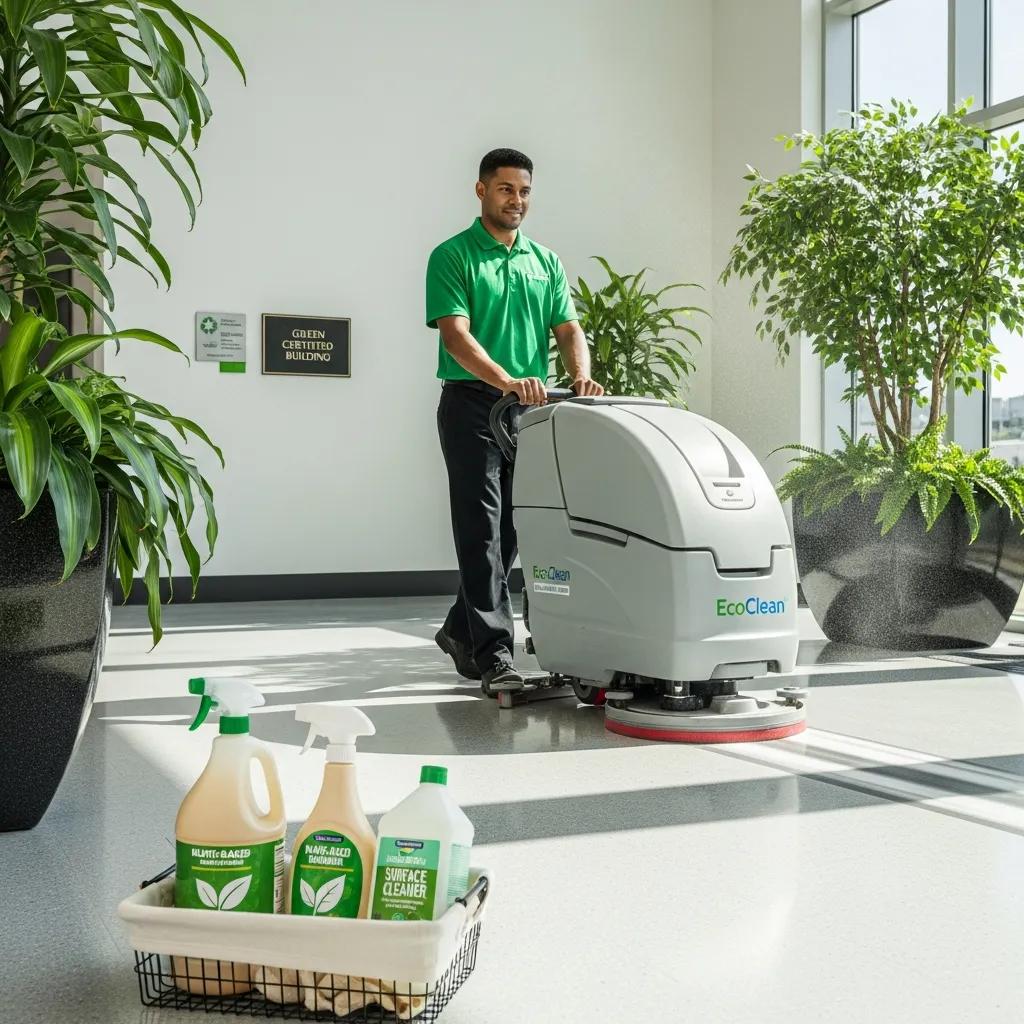
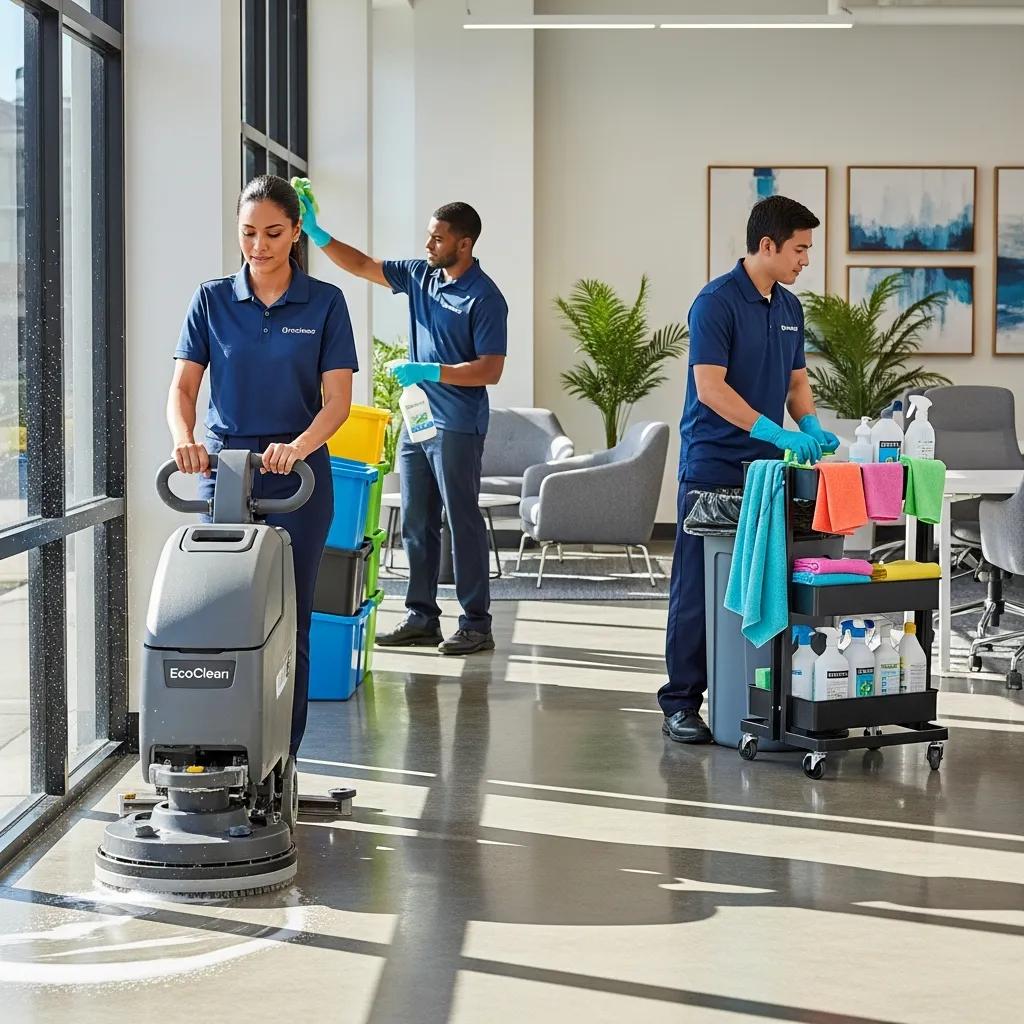
Green cleaning and technology are raising expectations by improving indoor air quality, lowering chemical exposure and boosting efficiency. Common green practices include low-VOC products, microfibre systems to cut chemical use and waste-reduction routines. Technology — from electrostatic sprayers and automated scrubbers to digital scheduling and reporting — improves accountability and consistency and can deliver long-term cost benefits. Evaluating both environmental credentials and tech capability helps buyers balance health, sustainability and total cost of ownership.
- Low‑VOC and biodegradable cleaning agents to protect indoor air quality.
- Electrostatic or targeted disinfection tools for high-touch areas.
- Scheduling and reporting platforms that generate time‑stamped cleaning logs for traceability.
Ask vendors to demonstrate how these features appear in proposals so you can prioritise health outcomes alongside efficiency. The next subsection shows how a local specialist might put eco-practices into action compared with typical competitors.
What eco-friendly practices does Divine use compared to competitors?
Eco-friendly cleaning focuses on product choices, waste reduction and process design to lower environmental impact without sacrificing quality. Divine Commercial Cleaning is transparent about product selections and offers low‑VOC or biodegradable alternatives where they suit client sites. Ask for product lists, disposal procedures and staff training records to validate green claims — those details separate meaningful sustainability from marketing language.
Comparing supplier statements requires targeted questions about specifications, substitution policies and measurable outcomes such as reduced chemical use. Technology often supports this verification with reporting and usage metrics.
How is technology used in local cleaning processes?
Technology ranges from automated scrubbers and HEPA-capable vacuums to management tools like scheduling apps and digital inspection reports that create traceable records. These tools improve cleaning thoroughness, reduce repetitive manual work and generate data for continuous improvement. When evaluating providers, ask how they use monitoring tools, reporting dashboards and equipment choices to deliver consistent quality. Technology maturity often indicates a provider’s readiness to scale and adapt to changing site demands.
Probing technology use in proposals gives insight into capability maturity and helps predict how a provider will perform as your needs evolve. That leads into our practical selection checklist.
How to choose the best office cleaning company in Brisbane and the Sunshine Coast
Selecting the right office cleaner starts with a simple decision framework that balances pricing transparency, local experience, specialisation, references and contract clarity. Define the scope and performance metrics you need, then shortlist providers who can show local strength and clear pricing. Request on-site quotes, trial periods and SLAs with escalation paths. The checklist below is a compact procurement roadmap for facility managers comparing commercial cleaning services.
- Define scope and measurable KPIs: List tasks, frequency and cleanliness standards so you can compare bids fairly.
- Prioritise pricing transparency: Choose providers that itemise inclusions and optional services to avoid hidden costs.
- Verify local experience and references: Ask for client contacts for similar sites in the Sunshine Coast and Brisbane.
- Assess specialisation and training: Confirm staff training and documented protocols for medical or high-traffic retail environments.
- Require SLAs and reporting: Ensure contracts include response times, quality checks and regular reporting.
Following this checklist turns selection criteria into actionable steps and helps procurement teams compare vendors consistently. The final subsection explains how Divine addresses common client concerns and invites you to request a tailored quote.
Which factors should drive your commercial cleaning selection?
Decide on providers using five core factors: clear pricing, verifiable local expertise, industry specialisation, transparent references and enforceable SLAs. Clear pricing keeps budgets accurate; local expertise speeds mobilisation and improves site understanding. Specialisation matters for medical centres and shopping centres where compliance and peak planning are essential. References and documented metrics validate claims, and contract clauses for notice and remediation protect both parties. These criteria create a defensible procurement choice and guide site-specific negotiations.
Structured vendor interviews and staged pilots reduce risk and provide evidence before committing to a new supplier — especially helpful when transitioning between providers.
How Divine Commercial Cleaning addresses common client concerns
We tackle typical procurement concerns with transparent communication, customisable packages and a focus on local responsiveness. Practical safeguards include clearly defined scopes to avoid hidden fees, trial arrangements to validate performance and explicit escalation channels for rapid issue resolution. For specialised sites like medical centres or shopping centres, we provide documented protocols and can show how scheduling and staffing scale for peak events. Prospective clients are invited to request a customised quote and discuss site needs directly to confirm fit and timing.
By prioritising clarity, local responsiveness and documented procedures, procurement teams can minimise transition risk and keep operations running smoothly when bringing in a new commercial cleaning partner.
Frequently Asked Questions
What should I look for in a commercial cleaning contract?
Focus on the essentials: a clear list of included tasks, frequency, and pricing for optional services. Check notice periods, minimum terms and exit clauses so you know your rights. A transparent contract reduces the risk of unexpected charges and sets shared expectations for service delivery.
How can I assess the reliability of a commercial cleaning service?
Look at reviews, ask for references and check examples of similar work. Reliable providers show consistent staffing, clear communication processes and documented incident-handling procedures. Request sample performance reports or SLAs to confirm how they measure and meet reliability targets.
What eco-friendly practices should I expect from a commercial cleaning service?
Expect use of low‑VOC or biodegradable products where appropriate, microfibre systems to cut chemical use and waste‑reduction processes. Ask for product lists, disposal methods and staff training records to validate sustainability claims. Meaningful eco-practices should be operationally documented, not just marketing statements.
How do I determine if a cleaning service is specialised for my industry?
Ask about staff training, certifications and documented procedures specific to your sector. For medical sites, request infection-control protocols and traceable cleaning logs; for retail, ask about high‑footfall plans and event surge capacity. Request past project details and client references in your industry to verify experience.
What are the benefits of using technology in commercial cleaning services?
Technology improves efficiency and transparency: automated equipment enhances consistency, while scheduling and reporting tools provide time‑stamped logs and performance data. These systems support better accountability, quicker responses and continuous quality improvement.
How can I ensure I’m getting value for money from a cleaning service?
Compare detailed quotes that map services to costs rather than choosing by price alone. Check references, performance metrics and SLAs to confirm delivery. Trial periods or pilot programs are useful ways to validate value before committing to a long-term agreement.
Choosing the right commercial cleaning partner on the Sunshine Coast or in Brisbane will improve operational efficiency and keep your premises looking professional. Prioritise local expertise, transparent pricing and tailored service packages to make sure you get the right fit. When you’re ready, request a customised quote from Divine Commercial Cleaning — we’ll work with you to design a scope that meets your needs and timelines.

Dianne, originally from Rockhampton, hails from a business-oriented family, with her father owning electrical stores and her uncle serving as Mayor. Moving to the Sunshine Coast at 13, she later pursued a rewarding real estate career and raised three children. As a single mom, she balanced university studies with domestic cleaning work. Armed with a Bachelor’s Degree in Business, majoring in Supply Chain Management, Dianne founded and grew Divine Commercial Cleaning into a thriving company. Her success is rooted in strong family mentorship, a positive attitude, and a solution-oriented approach, offering tailored cleaning services with integrity and strategic insight.