

Why Kunda Park Commercial Cleaning Pricing Stands Out on the Sunshine Coast: Clear, Value-First Solutions
Finding straightforward, value-driven commercial cleaning pricing on the Sunshine Coast can feel like a minefield for facility managers and business owners who need steady budgets and measurable results. This article breaks down why pricing varies across Kunda Park and the wider Sunshine Coast, what actually drives those costs, and how clear quotes, flexible contracts and tailored service mixes deliver better value. You’ll get a concise look at the main cost factors—property size, service type, frequency and add-ons—plus practical examples and common rate structures to set realistic expectations. We also explain how a locally focused provider uses transparent pricing, consistent teams and eco-friendly choices to cut hidden costs and reduce operational risk. We’ll compare typical rates for offices, medical centres and industrial sites, walk through quote calculations, and link specific supplier features to business outcomes so you can judge true value beyond the headline price.
What Factors Influence Commercial Cleaning Prices in Kunda Park and Sunshine Coast?
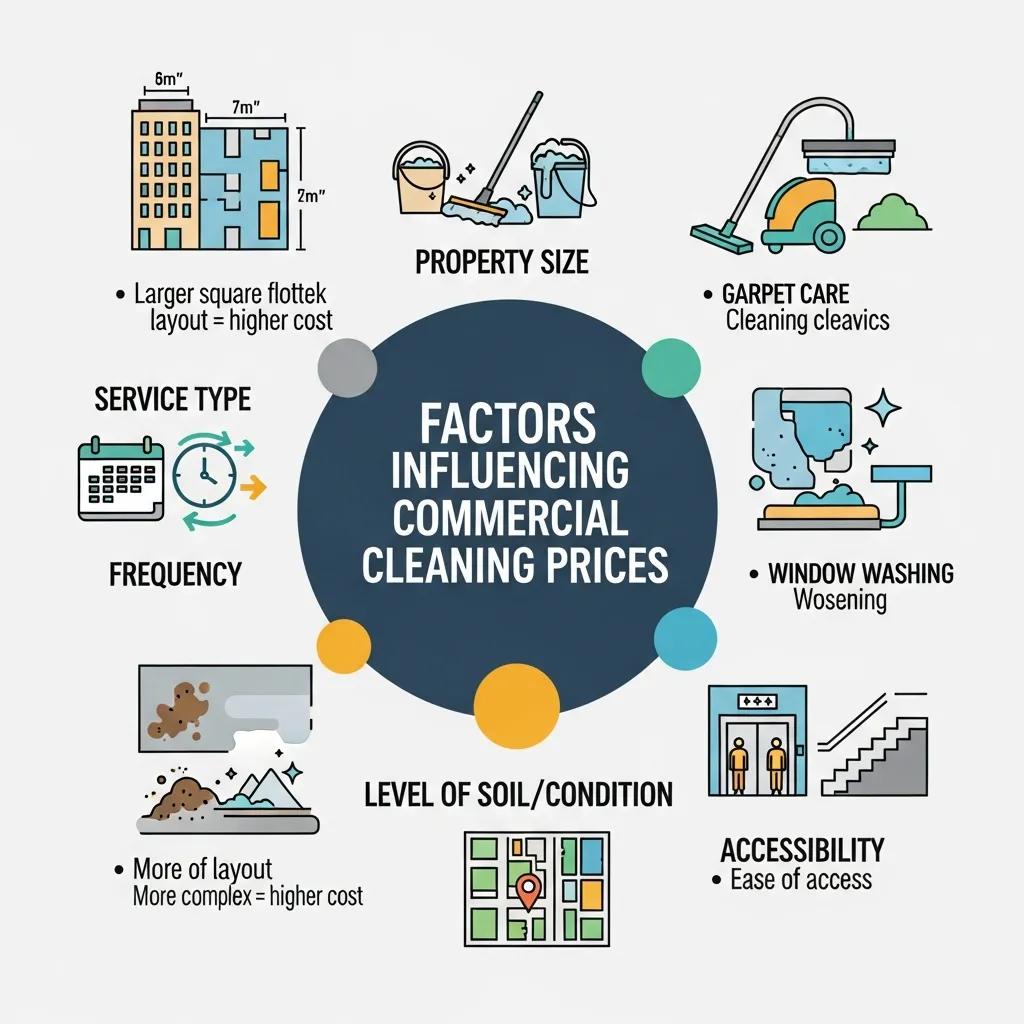
Commercial cleaning prices in Kunda Park and across the Sunshine Coast come down to measurable inputs that translate into labour, materials and scheduling costs. The main drivers are usable square metres, layout complexity and specialised surfaces, the kind of cleaning required (routine, deep or specialised), how often visits occur, and timing or access constraints such as after-hours work. These factors interact—more area means more time, specialised surfaces need extra materials and training, and higher visit frequency usually lowers the per-visit price while raising the monthly total. Knowing these variables helps procurement teams compare quotes properly and avoid surprises from hidden fees or vague contract wording.
- Property size and layout: determines labour hours and equipment requirements.
- Service type and frequency: routine, deep or specialised services change scope and cost.
- Add-ons, timing and access: after-hours, weekends and restricted access increase rates.
Short takeaway: base costs come from size, scope and schedule; specialised tasks and access constraints add incremental charges. The next section shows how size and layout translate into time and cost for typical Kunda Park sites.
| Factor | How It’s Measured | Typical Cost Impact |
|---|---|---|
| Property size | Square metres of usable workspace | Direct proportional increase in labour hours and base cost |
| Layout complexity | Number of rooms, levels, specialised zones | +10–40% depending on obstacles and surface types |
| Service type | Routine vs deep vs specialised cleaning | Deep/specialised typically 25–75% higher per visit |
| Frequency | Visits per week or month | Higher frequency reduces per-visit cost but increases total spend |
| Timing/access | After-hours, weekends, parking/time to site | +10–30% for restricted access or premium hours |
How Do Property Size and Layout Affect Cleaning Costs?
Size and layout map directly to estimated cleaning hours and therefore labour cost. Bigger square metres mean more time for routine work like vacuuming, sanitising and waste removal. Open-plan areas are generally faster per square metre than many small rooms because less transit and setup is needed. Layout quirks—stairs, mezzanines, separate loading zones—add time, require different kit or extra staff and raise the hourly or per-job rate. Site-specific issues in Kunda Park such as restricted deliveries or limited parking also increase labour loadings since teams need extra time for mobilisation and site inductions.
Estimators often use simple rules of thumb (e.g., X sqm ≈ Y labour-hours) then adjust for layout and service level. Converting layout into time prevents underquoting and helps clients evaluate proposals by expected hours rather than a single headline price. The next subsection explains how service type and frequency interact with these size-driven costs.
What Role Do Service Type and Frequency Play in Pricing?
The service type—routine, deep or specialised—sets the scope, skill level and product mix, which changes per-visit pricing. Routine cleans target surface maintenance and are the most cost-efficient per square metre. Deep cleans and specialised work (for example, medical imaging areas) take extra time, training and consumables. Frequency affects per-visit cost: regular daily or weekly schedules spread setup time and create economies of scale, lowering per-visit prices versus infrequent deep cleans. In busy sites, higher frequency also reduces microbial build-up and can prevent costly reactive deep cleans over time.
- Routine schedules suit offices with steady foot traffic.
- Deep cleans are scheduled periodically for hygiene resets or heavy dirt build-up.
- Specialised services (for example, X-ray room protocols) require certified processes and higher rates.
Pairing regular routine cleaning with scheduled deep cleans usually gives the best balance of cost and hygiene for most businesses; next we show how a transparent pricing model turns these choices into clear value.
How Does Divine Commercial Cleaning's Pricing Model Deliver Value and Transparency?
Transparent pricing converts the factors above into an itemised, predictable quote that links tasks to time and materials so you can see what you’re paying for and why. Divine Commercial Cleaning focuses on clear, itemised quotes, customised plans by business type, and contract terms that favour flexibility—these reduce hidden costs and admin headaches. Presenting a scope-of-work with task-level pricing and optional add-ons lets clients weigh trade-offs (for example, adding visits versus scheduling a monthly deep clean) and forecast monthly budgets. That clarity improves procurement decisions and supports measurable outcomes like better hygiene, fewer reactive cleans and higher occupant satisfaction.
| Feature | What It Is | Business Impact (Value) |
|---|---|---|
| Itemised quotes | Task-by-task pricing breakdown | Reduces surprises and makes budget comparisons easy |
| Customized plans | Scope built from an onsite assessment | Matches service to actual needs and avoids over-servicing |
| No lock-in contracts | Flexible terms without long commitments | Reduces risk and makes it easier to adjust services |
| Consistent cleaners | Same cleaner or small team assigned | Improves quality and shortens onboarding time |
| Eco-friendly products | Low‑VOC, biodegradable supplies | Reduces environmental impact and supports workplace health |
This feature-to-value view shows how transparent pricing features translate into operational and financial benefits. Combined with local knowledge and service guarantees, Divine Commercial Cleaning makes it simple for prospective clients to request a tailored quote and judge fit.
If you want an indicative price, Divine Commercial Cleaning offers onsite assessments and tailored proposals that itemise tasks, frequency and optional add-ons so you can see the exact cost drivers. The company highlights flexible contract terms, consistent staffing, eco-friendly options and a money‑back guarantee to protect your investment while keeping standards high. For an accurate estimate, request an onsite assessment and receive a written quote tied to a defined scope and schedule.
What Makes Divine's Customised Cleaning Plans Unique?
Customised plans begin with a site assessment where room types, traffic patterns and hygiene‑critical areas are identified and measured to create a scope that fits the facility’s daily rhythm. That ensures services aren’t under- or over-specified: offices get efficient routine care, medical centres receive compliant disinfection, and retail sites get focused floor and glass attention. Tailoring schedules and cleaning mixes also improves resourcing—consistent assignments and predictable runs reduce travel and setup time, which can be reflected in the quote. Clients often see savings from less overtime, fewer reactive deep cleans, and a smarter balance of frequency versus depth.
Designing plans this way aligns labour, materials and scheduling so pricing reflects measurable inputs, not vague “per clean” figures. The next subsection explains how no lock‑in contracts and consistent teams reinforce that value.
How Do No Lock-In Contracts and Consistent Cleaners Enhance Value?
No lock‑in contracts give businesses flexibility: you can scale frequency, add special cleans or pause services without penalty when needs change—limiting long-term financial exposure and supporting agile budgets. Consistent cleaners—where the same person or small team services a site—build accountability and reduce quality variance because staff learn client preferences and risk areas. Consistency also cuts onboarding time and training costs, and makes quality controls like weekly inspections more effective. Together, flexible terms and stable staffing lower indirect costs (coordination, rework) and make the quoted price a more accurate reflection of delivered value.
These features are most effective when paired with clear reporting and inspections; the following section translates these models into typical rate ranges for common facility types in Kunda Park.
What Are Typical Commercial Cleaning Rates and Pricing Comparisons in Kunda Park?
In Kunda Park you’ll see hourly rates, per‑square‑metre charges and flat contract pricing depending on property type and service complexity. Offices commonly use per‑hour or per‑visit pricing for routine cleans; medical and imaging centres usually need customised quotes that include compliance steps and consumables; industrial sites often prefer contract pricing tied to square metres and shift patterns. To compare suppliers fairly, align the pricing basis—hourly, sqm or fixed contract—with the same scope of work, since an hourly quote without a task list can hide inefficiencies or missing services. Below are typical model comparisons to guide expectations.
- Hourly pricing for routine office cleaning: straightforward for small teams but varies with complexity.
- Per-square-metre pricing for large open-plan sites: scales predictably with area.
- Flat/contract pricing for industrial or specialist sites: includes set deliverables and inspections.
These models show how suppliers package services—next is a table comparing model types with typical ranges so you can benchmark quotes.
| Cleaning Model | Typical Use Case | Typical Range (AUD) |
|---|---|---|
| Hourly rate | Small offices, ad-hoc tasks | $35–$65 per hour |
| Per square metre | Large open-plan offices, warehouses | $0.80–$2.50 per sqm |
| Flat contract | Industrial or specialist sites with regular schedule | $500–$5,000+ per month depending on scope |
Use this comparison to convert proposals into comparable metrics so procurement teams can judge cost per unit of service rather than just headline numbers. The next subsection outlines how office, medical and industrial costs differ.
How Do Office, Medical, and Industrial Cleaning Costs Differ?
Office cleaning focuses on communal surfaces, floorcare and washrooms with a predictable scope that benefits from regular schedules and consistent teams—this stability usually lowers per‑sqm costs. Medical and imaging centres require specialised disinfection protocols, traceability and specific consumables—these needs raise labour skill requirements and materials costs, increasing per‑visit pricing. Industrial sites vary widely: light industrial warehouses often need high-volume floorcare and waste handling, while heavy industrial environments require specialised equipment and safety training that increase rates. Regulatory and hygiene standards in each setting also affect frequency and staff competencies, so quotes should itemise compliance-driven tasks.
Knowing these differences helps buyers spot when higher prices are justified—specialised training, consumables and protocol compliance are valid cost drivers that protect patients and staff. The next subsection looks at how Divine’s pricing compares with general local market practice.
How Does Divine's Pricing Compare to Other Sunshine Coast Competitors?
Divine Commercial Cleaning competes by pairing itemised quotes with local knowledge of Sunshine Coast site conditions, creating tailored plans that avoid paying for unnecessary tasks. As a family‑owned, locally operated business, Divine offers flexible scheduling and relationship-led service, which often reduces admin friction and better aligns delivery with client expectations. While headline rates vary across the market, transparent quotes, consistent teams and eco-friendly options usually give clients clearer lifetime cost projections compared with suppliers that use opaque or bundled pricing. The practical test for buyers is whether a quote ties tasks to hours and materials—more granular quotes make it easier to benchmark value rather than chasing the cheapest headline price.
The next section explains how eco-friendly practices fit into pricing and overall value.
How Does Divine Commercial Cleaning Incorporate Eco-Friendly Practices into Its Pricing?
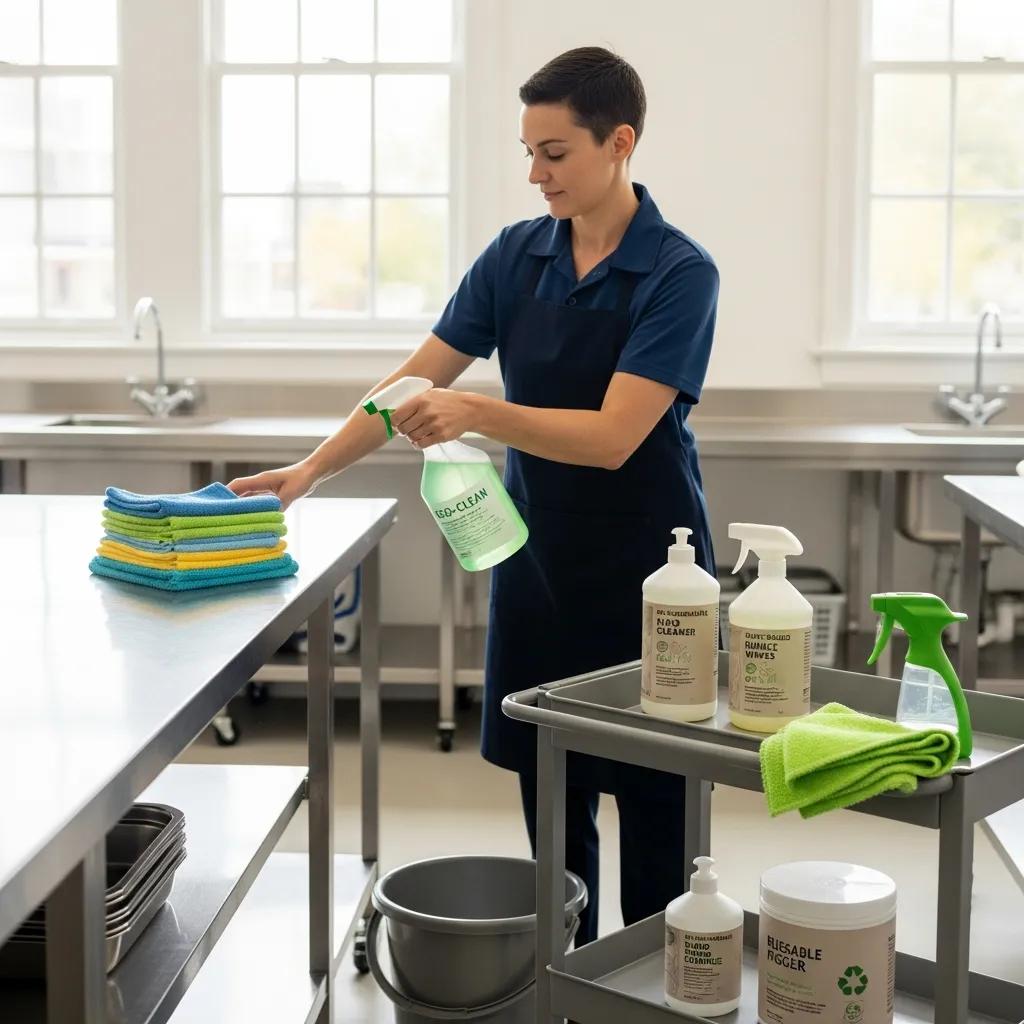
Eco-friendly cleaning means using low‑VOC, biodegradable products, water-efficient methods and select consumables to reduce environmental impact and improve indoor air quality. These choices can slightly increase per‑visit material costs but often lower long‑term health and maintenance expenses by reducing irritants and surface damage. Businesses that prioritise sustainability typically accept a modest premium for better workplace air quality and a smaller environmental footprint. Crucially, transparency about which items are eco-friendly and their cost impact lets clients weigh the trade-off rather than face bundled “green” surcharges.
- Improved indoor air quality reduces absenteeism and comfort complaints.
- Lower environmental footprint supports corporate sustainability targets.
- Less harsh chemicals reduce wear on surfaces and HVAC systems.
In short: sustainable products can affect line-item costs, but operational and reputational benefits often justify a small premium. The table below links eco-friendly choices to outcomes and relative cost effects.
| Eco-Friendly Practice | Implementation | Cost Effect |
|---|---|---|
| Low-VOC cleaning agents | Replace traditional chemicals | Small increase in consumables cost |
| Microfibre and water-efficient techniques | Reduce water and chemical use | Neutral to small savings over time |
| Biodegradable consumables | Improve waste stream outcomes | Slight per-item premium |
What Are the Benefits of Eco-Friendly Cleaning for Businesses?
Eco-friendly cleaning improves occupant health, reduces complaints and supports corporate sustainability commitments that matter to staff and customers. Healthier indoor environments can cut irritant-related absenteeism and lower long-term maintenance costs caused by harsh chemicals. From a reputation standpoint, visible sustainability efforts help win and retain clients who value environmental responsibility. When comparing quotes, ask for a line-item breakdown showing which items are eco-friendly and why they cost more so you can weigh upfront expense against longer-term savings and brand value.
Does Using Sustainable Products Affect Service Costs?
Typically, sustainable products raise consumable costs modestly, but those increases are sometimes offset by long-term savings from reduced surface damage and improved staff health. For example, microfibre systems and water-efficient methods cut chemical and water use, which can produce neutral or positive net savings over time. Transparent pricing should show item-level costs and potential savings so clients can make informed choices. If eco-friendly features are bundled without itemisation, buyers lose the ability to assess ROI—clear line items preserve control.
This transparency supports the larger theme: itemised, evidence-based quotes help match sustainability goals to budget realities. The next major section answers common questions about quote calculations and contract flexibility.
What Are Common Questions About Kunda Park Commercial Cleaning Pricing?
Procurement teams often ask how quotes are calculated, whether pricing is flexible, and what contract terms mean for budget predictability. The standard process is: site assessment, scope definition, selecting frequency and special services, then an itemised quote that ties each task to time and consumables. Expect quotes to list assumptions (for example, number of washrooms or floor types) and note that changing those assumptions changes the price. Below is a straightforward, step‑by‑step process that explains how a typical commercial cleaning quote is prepared.
- Site assessment: measure usable area, inspect layout and identify hygiene‑critical zones.
- Scope definition: list routine tasks, deep or specialised requirements and consumables.
- Frequency and scheduling: decide visits per week and timing (day/evening/weekend).
- Itemised pricing: convert labour hours and materials into a written quote with optional add‑ons.
- Review and adjust: client and supplier refine scope to match budget and standards.
This clear process helps set expectations and supports apples‑to‑apples comparisons. After the steps, suppliers should provide a written quote that references these assumptions and outlines renewal or termination options.
When you request a quote from Divine Commercial Cleaning, the process follows this assessment-to-quote flow and the company encourages onsite reviews so the proposal reflects real site conditions. A tailored quote typically starts with an assessment and ends with an itemised proposal linking each task to cost drivers and optional upgrades.
How Are Commercial Cleaning Quotes Calculated?
Quotes are calculated by converting measurable site inputs—square metres, room counts, floor types, washroom numbers—into estimated labour hours, adding materials and consumables, then applying scheduling and access loadings where needed. The process begins with a site visit to confirm assumptions, continues with a task-level scope that separates routine from specialised work, and finishes with an itemised quote including optional add‑ons and recommended frequencies. For example, a 500 sqm open-plan office with one kitchen and two washrooms will need fewer labour-hours per sqm than a 500 sqm space split into many small offices, so quotes differ even with the same floor area. Clear quotes attach these calculations so procurement can see the source of each cost.
Using a standard calculation approach reduces disputes and enables direct benchmarking because the same inputs yield comparable outputs. The next subsection discusses flexible pricing options and contract terms.
Are There Flexible Pricing Options and Contract Terms?
Yes—flexible options commonly include no lock‑in contracts, adjustable frequencies and service bundles that let clients match cost to changing needs. Flexibility helps businesses scale services seasonally, add special cleans for events or audits, and pause services without long penalties. Suppliers that offer both monthly retainer-style pricing and ad‑hoc per‑job options let buyers match financial risk to service criticality. Always check termination terms, renewal mechanics and any minimum notice requirements to avoid surprise charges.
- No lock-in contracts reduce long-term risk when operations change.
- Bundled options (routine + periodic deep clean) often deliver better value.
- Adjustable frequency clauses allow seasonal scaling without penalty.
This flexibility supports modern operations where occupancy and maintenance needs change quickly; the final section ties quality controls and guarantees to pricing value.
Why Choose Divine Commercial Cleaning Beyond Just Competitive Pricing?
Price is only one factor—experienced staff, solid quality control and customer-focused guarantees turn spending into real cleanliness, lower risk and better workplace impressions. Divine Commercial Cleaning focuses on consistent staffing, regular inspections and documented quality control so quoted services become reliable outcomes. These operational investments reduce rework, lower complaint rates and maintain high hygiene standards that matter for staff health and customer-facing areas. Buyers should prioritise predictable outcomes tied to measurable KPIs—cleanliness scores, inspection cadence and fast remediation—rather than simply choosing the lowest bid.
- Consistent, experienced staff assigned to sites to reduce variability and onboarding time.
- Quality-control inspections with corrective actions to maintain standards.
- Clear guarantees and remediation policies that protect client investment.
After reading this, prospective clients are encouraged to request a written proposal that maps tasks to pricing and inspection outcomes.
How Do Experienced Staff and Quality Control Ensure Satisfaction?
Experienced staff bring efficiency, better judgement about problem areas and fewer incidents, which translates to fewer corrective visits and higher contract value. Quality control systems—regular inspections, client feedback loops and documented corrective actions—keep service levels consistent and allow measurable KPIs to be tracked. Together, these measures reduce operational risk and improve occupant satisfaction because issues are caught and fixed before they escalate. Spending a little more for trained staff and robust QC often lowers total cost of ownership through less rework and longer facility life.
What Guarantees and Customer Testimonials Support Divine's Value?
Divine Commercial Cleaning backs its services with clear quality measures and a money‑back guarantee that shows confidence in delivery and client satisfaction. While we can’t publish testimonials here, guarantees and defined remediation steps reduce client risk and make dispute resolution straightforward. For procurement, guarantees and documented service-level remedies become part of contract evaluation since they turn subjective satisfaction into enforceable expectations. Paired with consistent staffing and inspection reporting, these elements form a pricing proposition focused on measurable value rather than simply being the cheapest option.
If you’d like a tailored quote that itemises tasks, frequency and optional eco-friendly choices, request an onsite assessment from Divine Commercial Cleaning and receive a transparent proposal tied to a clearly defined scope and flexible contract terms.
Frequently Asked Questions
What types of businesses benefit most from commercial cleaning services?
Commercial cleaning services suit many businesses—offices, medical facilities, retail stores and industrial sites. Each type has different priorities: medical facilities need specialist disinfection protocols, offices focus on routine maintenance, retail relies on appearance to enhance customer experience, and industrial sites often require heavy-duty cleaning for high-traffic areas. Understanding these needs helps you choose the right service for the best results.
How can businesses ensure they are getting a fair price for cleaning services?
Ask for itemised quotes that break down costs by task, frequency and materials. Compare proposals from several providers and check the assumptions behind each quote (square metres, number of washrooms, floor types). Discuss pricing models and any potential hidden costs with providers so you can judge value, not just the lowest headline number.
What are the advantages of using eco-friendly cleaning products?
Eco-friendly products improve indoor air quality, reduce health risks for staff and lower environmental impact. They’re often gentler than traditional chemicals, which can mean fewer irritants and allergic reactions. Businesses that prioritise sustainability can also strengthen brand reputation and meet corporate responsibility goals. While there may be a small upfront cost, the longer-term benefits—healthier staff and lower maintenance—often outweigh it.
How often should businesses schedule deep cleaning services?
Deep cleaning frequency depends on the business and its traffic. High-traffic offices and retail spaces may benefit from monthly deep cleans to prevent buildup. Medical facilities often need more frequent deep cleaning to meet regulations. Lower-traffic sites might schedule deep cleans quarterly or biannually. Work with your cleaning provider to set a schedule that matches your site’s needs.
What should businesses look for in a commercial cleaning contract?
Look for clarity in the scope of work, including detailed service descriptions, frequency and any extra costs for add-ons. Flexible terms—such as no lock‑in clauses and options to adjust services—are important. Also check for quality control measures like regular inspections and a clear process for resolving issues. Transparent pricing and service expectations are key to a reliable partnership.
Can businesses customise their cleaning plans based on specific needs?
Yes. Many providers offer customised plans you can tailor to your needs—adjusting frequency, specifying services (deep cleans, specialised sanitisation) and using eco-friendly products. A thorough site assessment helps identify your unique requirements so providers can create a plan that balances cost and effectiveness. Custom plans prevent paying for unnecessary tasks while ensuring adequate coverage.
Understanding how commercial cleaning prices are built in Kunda Park helps businesses make informed decisions that match operational needs and budgets. By focusing on core factors—property size, service type and frequency—you can achieve reliable cleanliness without unexpected costs. Choosing eco-friendly options enhances workplace health and supports sustainability, adding long-term value. For a clear, itemised quote tailored to your site, contact Divine Commercial Cleaning today.

Dianne, originally from Rockhampton, hails from a business-oriented family, with her father owning electrical stores and her uncle serving as Mayor. Moving to the Sunshine Coast at 13, she later pursued a rewarding real estate career and raised three children. As a single mom, she balanced university studies with domestic cleaning work. Armed with a Bachelor’s Degree in Business, majoring in Supply Chain Management, Dianne founded and grew Divine Commercial Cleaning into a thriving company. Her success is rooted in strong family mentorship, a positive attitude, and a solution-oriented approach, offering tailored cleaning services with integrity and strategic insight.