
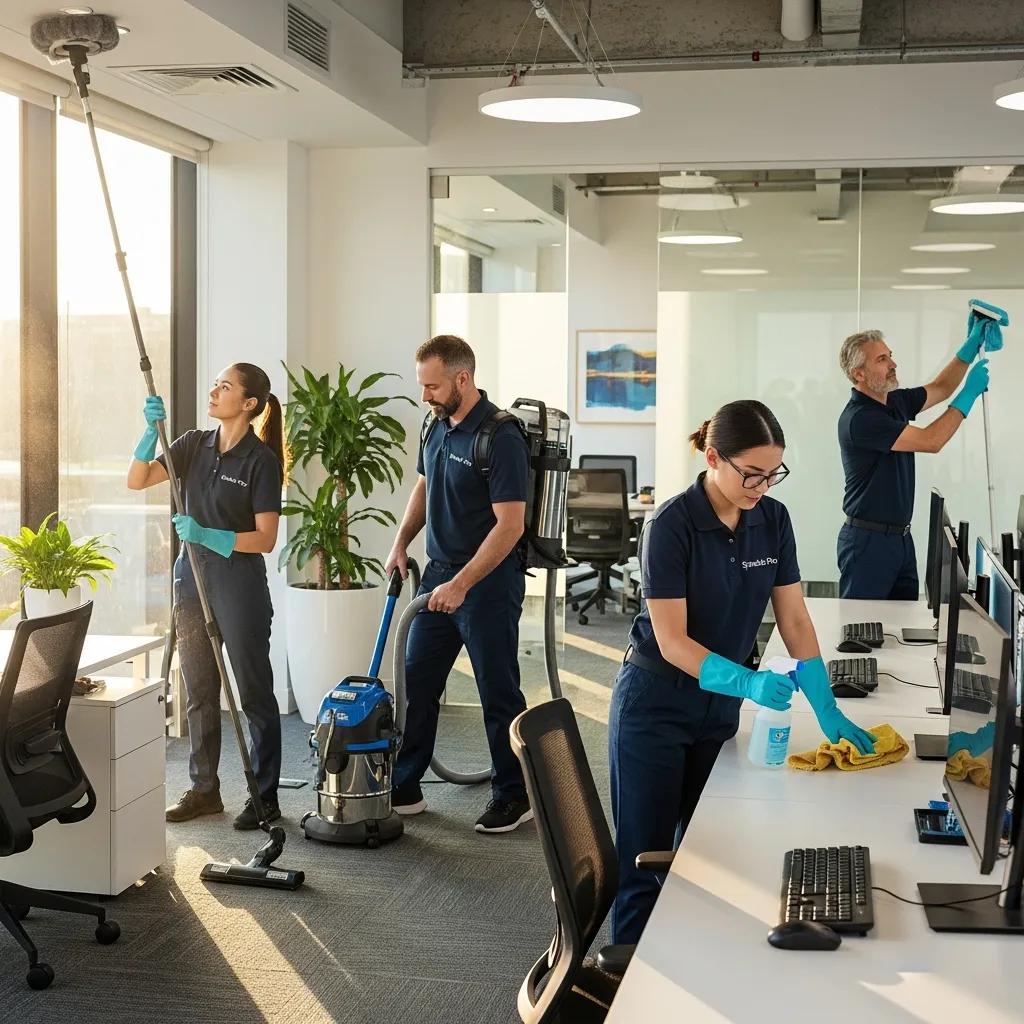
Flexible commercial cleaning contracts in Kuluin — pricing that adapts as your business changes
Flexible commercial cleaning contracts let you control cost, frequency and scope so cleaning grows or shrinks with your needs — not the other way around. This page explains what flexible contracts look like, why Kuluin businesses benefit, how local providers structure adaptable pricing, and the simple steps to get an accurate, no‑obligation quote. Many Kuluin offices, shops and medical centres deal with changing occupancy, seasonal peaks and event-driven cleaning. Flexible agreements give predictable standards and scalable cost control to meet those realities. You’ll find practical examples, cost-comparison frameworks and a checklist for facility managers, plus the usual industry steps—site inspection, scope, schedule and quality checks—shown in the context of local Sunshine Coast providers.
Why Kuluin businesses gain from flexible cleaning contracts
Flexible cleaning contracts let you change scope, frequency and pricing as operations evolve, so you only pay for what you actually need. Providers break services into modules — labour, materials, travel and common add‑ons — so each part can be scaled without rewriting the whole agreement. For Kuluin businesses that face seasonal trading, one‑off events or fluctuating occupancy, that means no more overpaying for idle hours or dealing with understaffed cleans. The adaptability also helps with budgeting and staying compliant with hygiene requirements across busy and quiet periods. Below we explain the main ways flexible contracts save money and deliver day‑to‑day advantages.
Designing services as modular components is a practical way to increase responsiveness and make contracts easier to adjust.
Modular service design for flexible business contracts
The paper explores how service businesses can build offerings from a core set of standardised modules organised through a service architecture. That approach supports faster adaptation and greater strategic flexibility in fast-changing markets.
Towards a framework for modular service design synthesis, NH Mortensen, 2016
Flexible contracts typically cut costs through adjusted frequencies, bundled discounts and precise scopes that remove surprise charges. Moving from a flat blanket rate to measured pricing — hourly or per‑area fees that match actual need — reduces wasted cleaning hours and avoids paying for services during quiet stretches. Savings multiply when providers offer loyalty pricing or combine routine tasks with scheduled deep cleans at a lower marginal rate. We’ll show examples below to illustrate how those savings add up.
Kuluin businesses also get operational benefits from ongoing agreements: consistent crews, recorded KPIs and scheduling priority during busy seasons. A regular team familiar with your site, access rules and equipment reduces onboarding time and mistakes, while formal QA checks keep standards measurable. Emergency cover and priority clauses give resilience during peak trading or unexpected incidents. Next, we outline the common pricing models local providers use to deliver this flexibility.
How flexible contracts save money for Kuluin businesses
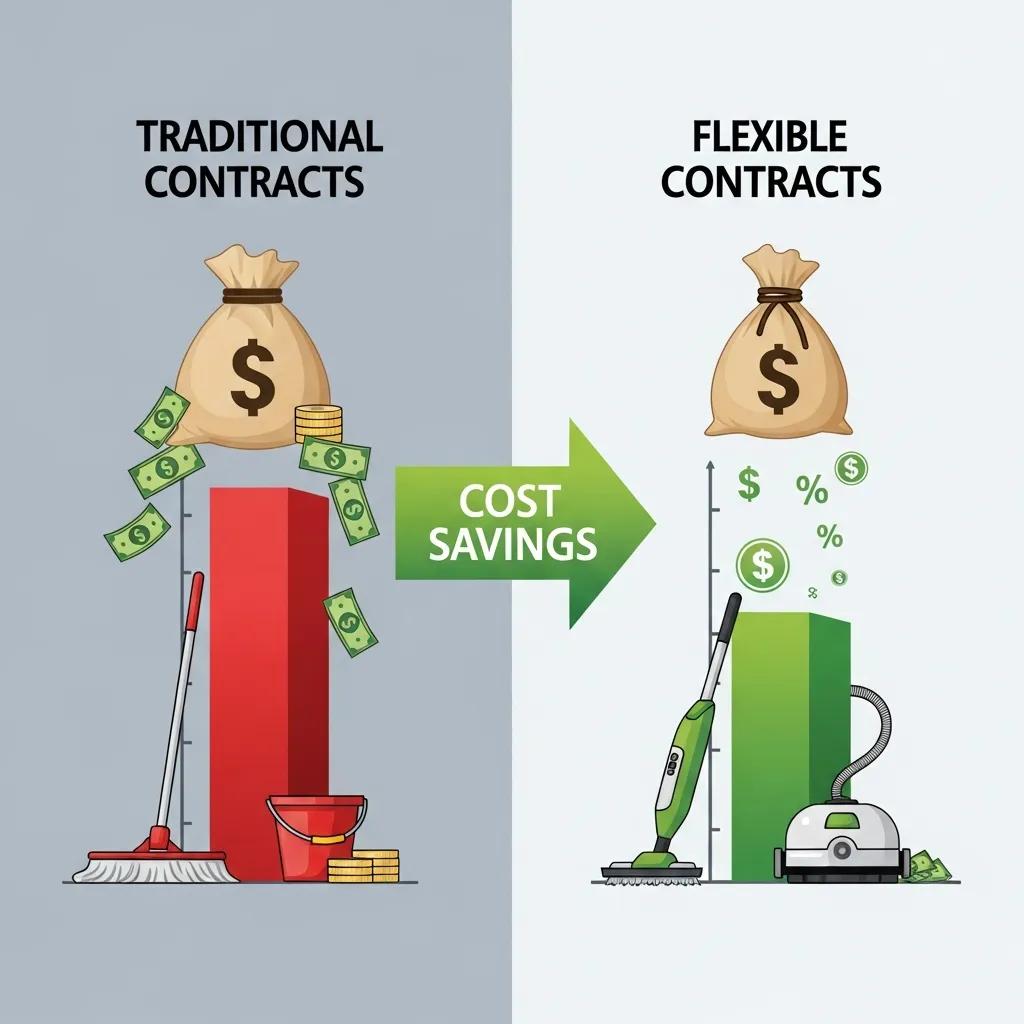
Flexible contracts align service to real usage, cut fixed overheads and create chances for bundled savings or seasonal downscaling. For example, a small Kuluin office of 120 m² might drop routine cleans from five to three times per week during quieter months, reducing labour costs while keeping essential hygiene. Providers can pair that with a monthly deep clean to maintain standards. Net annual savings of around 10–25% versus rigid fixed‑rate contracts are common when scope is clearly defined. Clear inclusions and exclusions prevent unexpected charges and make budgeting straightforward across small, medium and multi‑site operations on the Sunshine Coast.
Matching costs to actual use is a basic principle of sound service budgeting.
Pay‑per‑use models for flexible service contracts
Pay‑per‑use approaches meet the demand for flexibility and transparency by aligning charges with actual consumption — a helpful model for businesses that need tight financial control and adaptable service terms.
Understanding the financial control and management of advanced service contracts, S West, 2024
Key advantages of ongoing cleaning agreements
Ongoing agreements bring reliability, accountability and simpler operations compared with one‑off jobs — all of which improve hygiene outcomes and reduce your management time. Regular visits build familiarity between cleaners and site staff, streamline access and lower the risk of missed tasks. Logged inspections and client feedback create a loop for continuous improvement. Long‑term contracts often include KPIs and supervisor audits that maintain standards and support regulatory inspections. Continuity also lets providers suggest efficiency gains — adjusted frequencies or more eco‑efficient consumables — that further improve value. When operational stability matters, a flexible ongoing partner is usually the best choice.
Which flexible pricing models does Divine Commercial Cleaning offer for ongoing contracts?
We offer a few common approaches so you can pick what fits your operation: hourly rates for ad‑hoc or variable sites, per‑square‑metre pricing for predictable facilities, and tiered service packages for clearly defined service levels. Each has trade‑offs: hourly rates give transparency for irregular jobs, per‑m² simplifies budgeting for steady sites, and tiered packages bundle tasks to reduce admin. Pricing is built from core parts — labour, materials and travel — so adjustments apply only where needed. Below is a quick comparison and an example to help you decide.
Common pricing models, summarised for quick comparison.
| Model | Typical Use‑case | Example Cost Range |
|---|---|---|
| Hourly rate cleaning | Irregular schedules, small or event‑driven sites | Indicative hourly bands used for estimating labour cost |
| Per‑square‑metre pricing | Stable occupancy sites like regular offices | Area‑based budgets that scale with size |
| Tiered service packages | Organisations wanting defined service levels (basic/standard/premium) | Bundled tasks with clear inclusions and a predictable monthly fee |
This table helps facility managers map model choice to operational needs and balance transparency against predictability. The next sections explain when hourly rates, per‑area pricing or tiered packages are the better fit.
How hourly rate pricing works for Kuluin commercial cleaning
Hourly pricing charges only for actual staff time on site, making it ideal where demand varies or tasks are bespoke — think event clean‑ups or irregular deep cleans. Hourly quotes usually include direct labour, basic consumables and travel; specialist materials or equipment are quoted separately so the base rate stays simple. For Kuluin businesses with after‑hours work or unpredictable needs, hourly pricing avoids paying for idle standing capacity and gives tight control over overtime and emergency call‑outs. When comparing hourly proposals, check included tasks and supervision so you’re comparing like for like.
Per square metre and tiered service package options
Per‑m² pricing sets a unit cost for cleaned area, which makes budgeting easy for stable layouts and hours. Tiered packages group services into levels so you choose the coverage that suits you. Typically a tiered plan includes: a basic package with essential tasks, a standard package adding sanitisation and consumables restocking, and a premium package with periodic deep cleans and priority response. Per‑m² suits offices and retail with predictable use; tiers suit organisations that want simple, bundled options. The table below shows a common mapping of tiers to frequency and tasks.
| Tier | Frequency | Included Tasks |
|---|---|---|
| Basic | 3× week | General cleaning, waste removal, toilets and kitchens |
| Standard | 5× week | Basic plus sanitisation, spot carpet care, restocking consumables |
| Premium | Daily + periodic | Standard plus scheduled deep cleans and priority scheduling |
That mapping shows how tiers convert into operational coverage and helps you decide between per‑m² pricing or packaged bundles. For a site‑specific recommendation, Divine Commercial Cleaning offers site assessments and tailored estimates to identify the most cost‑effective approach.
How cleaning services are customised for different Kuluin business types
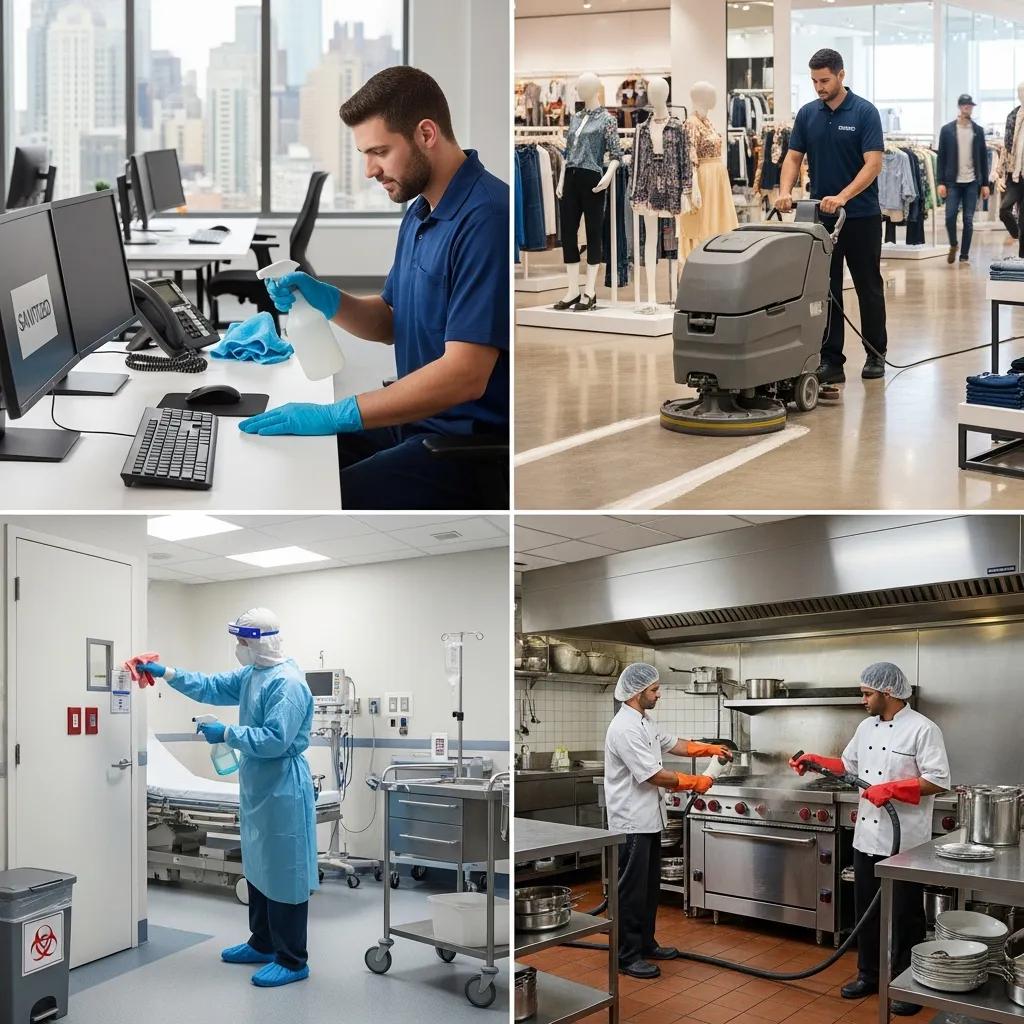
Customisation means aligning tasks, frequency and compliance to each sector’s day‑to‑day reality. Offices need regular attention to shared areas, retail needs flexible hours for busy trading, and medical centres require strict disinfection and documentation. We define scope from a site inspection, regulatory needs and your operating hours so work happens with minimal disruption. Custom plans mix daily maintenance, periodic deep cleans and specialised disinfection so each business gets the right combination. The table below summarises typical tailoring by business type for Kuluin sites.
| Business Type | Typical Tasks Included | Frequency Options |
|---|---|---|
| Office | Desks, kitchens, bathrooms, shared areas, sanitisation | Daily, 3–5× weekly, periodic deep clean |
| Retail | Floors, display cleaning, high‑touch sanitisation, after‑hours work | Nightly, trading‑peak scaling, event cover |
| Medical centre | Infection control, PPE use, specialist disinfection, waste handling | Daily + protocol‑driven deep cleans, ad hoc post‑exposure |
The examples show why a site visit is essential for an accurate quote. Next we outline typical office solutions and the specific requirements for retail and medical settings so you can brief providers clearly.
Tailored solutions for offices and corporate spaces
Office packages focus on shared‑area cleanliness, consumable management and minimal disruption by scheduling after hours where possible. Typical inclusions are kitchen and bathroom cleans, waste management, high‑touch sanitising and periodic carpet/upholstery care; monthly supervisor checks and simplified reporting support QA. Security and access needs affect scheduling, and key or pass protocols can be included in the agreement. These measures help corporate sites stay productive while meeting workplace health expectations.
How retail and medical facilities benefit from scalable contracts
Retail sites use scalable contracts to match staff to trading peaks, cover events and schedule deep cleans overnight so store presentation stays sharp without disrupting customers. Medical facilities need rigorous infection control, trained staff, PPE and documented procedures; scalable agreements let them increase disinfection during outbreaks without reworking the whole contract. Both sectors benefit from add‑on clauses for rapid response to incidents and seasonal adjustments tied to footfall. These provisions keep hygiene outcomes strong while keeping contracts practical.
Long‑term benefits of partnering with Divine Commercial Cleaning in Kuluin
A local ongoing partner brings stability, measurable quality improvements and faster responses that add up over time — turning cleaning from a cost item into a managed facility outcome. Long‑term clients let us gather performance data, optimise schedules for efficiency and suggest preventive steps that lower lifecycle cleaning costs. You also gain loyalty incentives and priority scheduling during busy local periods. The table below compares common long‑term benefits, the features that deliver them and the outcomes Kuluin businesses can expect.
| Benefit | Attribute | Expected Outcome |
|---|---|---|
| Discounted rates | Loyalty pricing for ongoing agreements | Lower monthly cleaning cost |
| Priority scheduling | Operational responsiveness in peak times | Reduced service disruption |
| Dedicated team | Familiar staff and documented procedures | Higher consistency and fewer errors |
This comparison helps managers weigh the operational gains from continuity and shows why ongoing collaboration usually improves hygiene metrics and lowers net cost. Below we describe QA measures and typical loyalty incentives that come with long‑term contracts.
How an ongoing partnership keeps cleaning quality consistent
Consistent quality comes from scheduled supervisory audits, client feedback loops and written SOPs that define inspection cadences and acceptable standards. Regular checks and digital reporting let both parties track KPIs — completion rates, defect logs and corrective actions — so performance is measurable and improvable. Training continuity for a dedicated team reduces skill variance and preserves site knowledge, cutting rework and improving compliance. These QA systems make sure scaling up or down doesn’t compromise standards.
Discounts and priority services for long‑term clients
Long‑term clients typically receive loyalty discounts, bundled pricing for multiple services and priority scheduling in busy periods. Common structures include percentage reductions for 12‑month commitments, multi‑site bundles and preferential deployment of local teams during high demand. These incentives deliver predictable cost benefits while keeping the option to scale services as conditions change. Pairing discounts with documented response‑time SLAs preserves value without sacrificing flexibility.
How Kuluin businesses request a flexible cleaning quote
Getting a flexible quote is a simple three‑step process: enquiry, site inspection and written proposal. This keeps turnaround predictable and the quote tailored to your needs. The enquiry captures basic site metrics and objectives, the inspection verifies scope and access, and the proposal lays out pricing options, task lists and add‑ons so you can compare scenarios. Quotes should clearly state what’s included, exclusions and how frequency or scope adjustments are handled. Below is a straightforward path for busy facility managers to obtain a no‑obligation estimate.
- Submit initial enquiry: Tell us the basics about the site and a good contact time so we can arrange a visit.
- Site inspection: We’ll measure the area, note access points and flag any compliance requirements.
- Receive written proposal: You’ll get a detailed quote with pricing model options, inclusions, exclusions and timelines.
A clear, documented three‑step process reduces friction and sets expectations; follow‑up questions and small adjustments after the proposal are normal. Divine Commercial Cleaning carries out site inspections across Kuluin and the Sunshine Coast to produce quotes that compare hourly, per‑area and tiered options and recommend the most cost‑effective approach.
The simple process to get a no‑obligation quote
A no‑obligation quote starts with the enquiry and ends with a written estimate that compares at least two pricing models and recommends a service plan. During inspection we assess square metres, operating hours, high‑touch zones and any regulatory or medical compliance needs; those observations inform accurate labour and materials estimates. After the visit you’ll receive a proposal with task lists, scheduling choices and a clear change‑management clause so scaling is straightforward. Expect transparent timelines — usually a few business days for a detailed written quote — so you can compare bids quickly.
What information to provide for accurate pricing
To get precise pricing, share these metrics: total cleaned area in square metres, regular business hours, staff or visitor numbers, special requirements (medical compliance, after‑hours access) and desired frequency. Helpful extras are a site plan, notes on high‑traffic zones, current cleaning pain points and any preferred consumables or sustainability preferences. Supplying this up front reduces back‑and‑forth and produces quotes that are realistic and directly comparable. With these details we can model per‑m² estimates or package costs so decision‑makers can evaluate total cost and service fit.
Common questions about flexible commercial cleaning contracts in Kuluin
Clients often ask whether flexibility reduces hygiene, what must be in contracts, and how price changes are handled. Flexible contracts remain reliable when they include documented QA processes, trained staff and compliance‑focused procedures that apply no matter the frequency. A solid contract includes a clear scope of work, pricing rules, KPIs, termination clauses and insurance details so both parties share expectations. The list below covers the essentials every commercial cleaning contract should spell out to avoid disputes.
- Scope of work: Define tasks, exclusions and any special services required.
- Pricing and invoicing: State the pricing model, adjustment rules and billing cycle.
- KPIs and QA: Specify inspection cadence, reporting and remediation steps.
Making these items explicit keeps flexible arrangements enforceable, measurable and simple to change. The sections that follow expand on reliability under flexible terms and offer a checklist of must‑have contract elements.
Are flexible cleaning contracts reliable for maintaining hygiene standards?
Yes — when the contract embeds QA measures such as routine inspections, supervisor sign‑offs and documented corrective actions that operate independently of visit frequency. Reliability comes from trained staff, standardised cleaning protocols and clear escalation paths for incidents. Providers who use performance data to optimise schedules can deliver outcomes equal to or better than rigid contracts, because resources are focused where they’re needed. Writing these safeguards into the agreement keeps hygiene consistent even as service levels change.
What to include in a commercial cleaning contract
A robust contract should list the scope of work, a frequency schedule, the chosen pricing model with adjustment rules, KPIs and reporting requirements, termination and change‑management clauses, and proof of insurance and staff compliance. Clarifying inclusions and proactive exclusions avoids billing disputes, while KPIs and reporting create measurable accountability. Notice periods and modification procedures should be clear so both parties can scale the relationship without gaps. Including these elements ensures the arrangement works sustainably and transparently.
Frequently Asked Questions
What types of businesses benefit most from flexible cleaning contracts?
Flexible contracts suit businesses with variable occupancy or seasonal demand — retail stores, offices and medical facilities are common examples. Retailers can scale cleaning with foot traffic, offices can increase services during busy periods, and medical centres can raise disinfection levels during outbreaks. Flexibility lets each business keep hygiene standards without paying for unnecessary services during quieter times.
How can businesses ensure they receive quality service under flexible contracts?
Make quality explicit: set clear KPIs and schedule regular quality checks. That includes routine inspections, a documented feedback process and periodic performance reviews. Keep open communication with your provider and agree expectations up front so you can hold them accountable and maintain consistent hygiene, even if visit frequency changes.
Are there any hidden costs associated with flexible cleaning contracts?
Flexible contracts aim for transparency, but extra charges can appear for services outside the agreed scope — specialised cleaning, emergency call‑outs or unusual materials, for example. To avoid surprises, insist on a detailed scope and clear pricing rules in the contract, and keep regular communication with your provider about potential additional costs.
How do flexible contracts compare to traditional fixed‑rate contracts?
Flexible contracts let you adjust frequency and scope to actual needs rather than being locked into a fixed schedule. That can deliver real cost savings because you only pay for required services. Fixed‑rate contracts may lead to overpayment during quiet periods or insufficient service when demand spikes. Flexible contracts give a tailored approach that better matches operational realities.
What should businesses consider when negotiating a flexible cleaning contract?
When negotiating, focus on scope, pricing models and how frequency changes will be handled. Discuss seasonal adjustments and event cover, and require QA measures like KPIs and reporting. Also confirm how easily services can be scaled up or down so the contract supports operational efficiency without administrative friction.
Can businesses change their cleaning frequency during the contract term?
Yes. Most flexible contracts allow frequency changes without a full renegotiation, which is one of their main benefits. Always document any adjustments and agree how they affect pricing and scheduling so both parties remain clear about expectations.
What are the long‑term benefits of establishing a partnership with a cleaning service provider?
Long‑term partnerships bring consistent service quality, loyalty discounts and priority scheduling. Over time a provider learns your site and can work more efficiently, improving hygiene outcomes and reducing total cleaning costs. Better communication and responsiveness also make it easier to adapt when your operational needs change.
Flexible commercial cleaning contracts give Kuluin businesses the control to match cleaning to real demand while keeping standards high and costs sensible. By choosing the right pricing model and a trusted local partner, you can protect hygiene, simplify budgeting and respond quickly to changing needs. Contact Divine Commercial Cleaning to discuss a tailored solution for your site and get a no‑obligation quote that compares hourly, per‑m² and package options.

Dianne, originally from Rockhampton, hails from a business-oriented family, with her father owning electrical stores and her uncle serving as Mayor. Moving to the Sunshine Coast at 13, she later pursued a rewarding real estate career and raised three children. As a single mom, she balanced university studies with domestic cleaning work. Armed with a Bachelor’s Degree in Business, majoring in Supply Chain Management, Dianne founded and grew Divine Commercial Cleaning into a thriving company. Her success is rooted in strong family mentorship, a positive attitude, and a solution-oriented approach, offering tailored cleaning services with integrity and strategic insight.