Behind the scenes — Marcoola commercial cleaning that sets a higher standard
Exceptional cleaning starts with clear systems, trained people, the right tools and measurable checks — together they create healthier, safer and more professional commercial spaces. This article shows what “exceptional” looks like for Marcoola commercial cleaning, explains why consistent quality assurance matters for offices, medical centres, daycares and retail, and outlines how solid procedures reduce infection risk, boost occupant wellbeing and protect your reputation. You’ll find the core QA pillars, practical Sunshine Coast adaptations for local climate and foot traffic, industry-specific hygiene steps, and how technology and continuous improvement keep standards high. Along the way we point to how a local team like Divine Commercial Cleaning puts tailored plans, staff training and eco-friendly equipment into practice so facility managers and business owners can benchmark their programs against practical, proven criteria.
How Divine Commercial Cleaning ensures reliable quality in Marcoola
Quality standards in commercial cleaning are repeatable processes and controls that deliver consistent outcomes by assigning responsibilities, setting inspection cadences and defining remediation steps. Here we outline the pillars that support dependable service — staff training, customised cleaning plans, approved equipment and supplies, and regular quality inspections with clear reporting — and explain how those pieces work together to reduce variation and lift performance. Formal checklists and transparent reports create accountability and speed corrective action when issues appear, which is especially important for high-traffic Sunshine Coast sites where weather and footfall change cleaning needs. Below are the core QA pillars Marcoola teams should adopt to produce measurable, repeatable results.
Divine Commercial Cleaning implements these pillars locally through customised plans, a seasoned professional team and a focus on eco-friendly products and energy-smart equipment — practical examples that support the QA framework described here and lead into the operational steps that follow.
That quality framework flows into the day-to-day mechanics: onboarding, scheduled inspections, reporting and remediation that make standards enforceable on-site.
- Standardised cleaning protocols — written checklists that define scope and frequency.
- Staff training and competency assessments — documented modules and practical evaluations.
- Equipment and product standards — approved choices for performance and sustainability.
- Regular inspections and client reporting — audits with documented corrective actions.
What is Divine Commercial Cleaning’s quality assurance process?
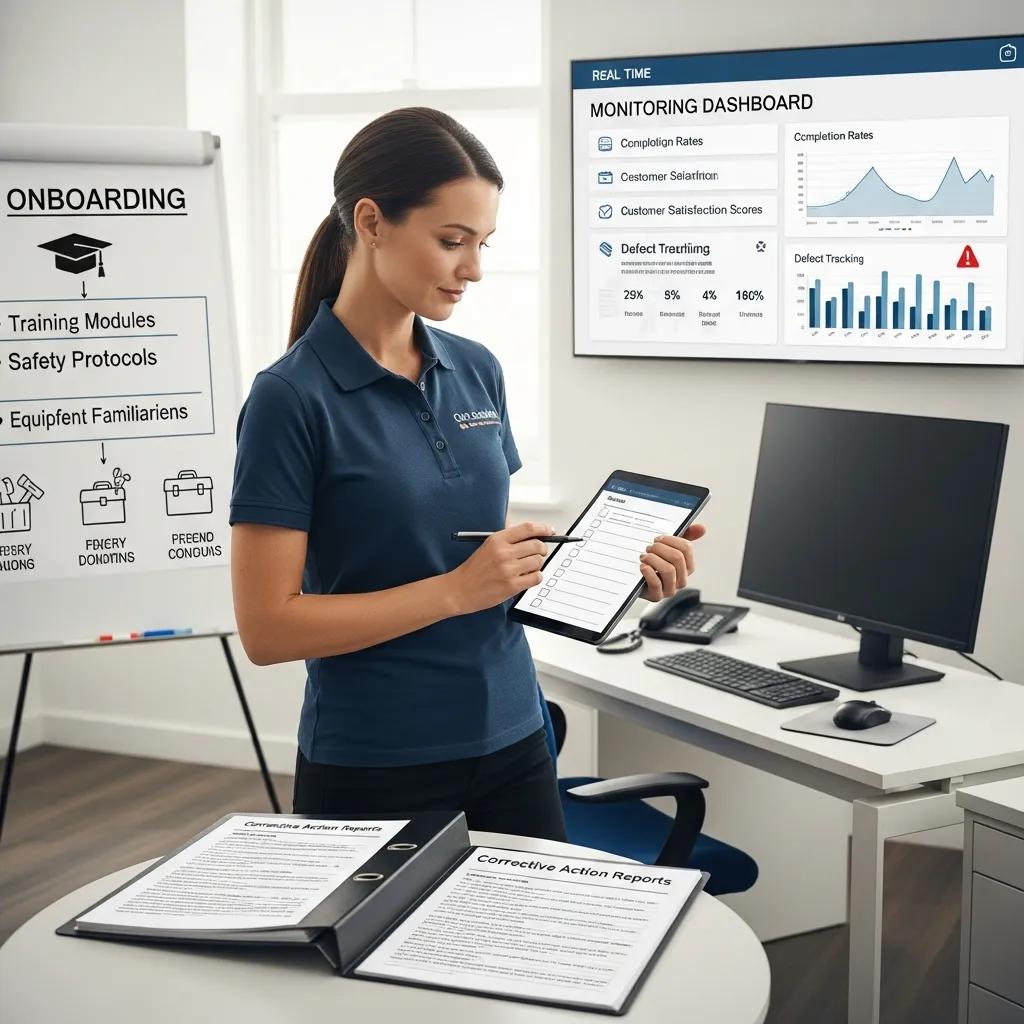
A clear quality assurance (QA) process turns policy into consistent, on-site action by sequencing onboarding, monitoring and corrective steps. It usually starts with a formal site assessment that maps zones, high-touch areas and any special requirements, then moves to documented SOPs and an agreed schedule that’s measurable and auditable. Regular inspections — both scheduled and spot checks — verify checklist adherence and highlight corrective tasks, while client reporting keeps stakeholders informed and creates a traceable record. The table below makes these steps easy to scan for facility managers.
| Process Step | Responsible Party | Frequency | Outcome |
|---|---|---|---|
| Site onboarding & assessment | Senior supervisor | One-off at contract start | Tailored cleaning scope and risk map |
| Scheduled inspections | Quality auditor / site lead | Weekly or monthly (site-specific) | Compliance scorecard and actions |
| Corrective action & retraining | Operations manager | As required after inspection | Issue resolution and documented closure |
| Client sign-off & reporting | Account manager | Monthly / on-request | Transparent performance record |
This mapping shows how each QA stage assigns accountability and produces a measurable outcome. The next section explains how staff training connects directly to these process steps and to the metrics used in inspections.
How rigorous staff training supports our high standards
Robust staff training makes sure procedural knowledge and on-the-job skills match written QA protocols, cutting variability and raising quality. Training covers technique (surface-appropriate methods), safety (chemical handling and PPE), customer care (access and communication) and role-specific duties for sectors like medical or childcare. Regular assessments and refreshers confirm competence and feed the performance metrics used during inspections; supervisors use observation checklists and short competency checks to validate proficiency. By linking training outcomes to inspection results, teams create a feedback loop where gaps trigger targeted coaching and documented retraining.
Training also boosts staff engagement and ownership, which reduces mistakes and builds client trust. Next, we outline how those trained teams apply Sunshine Coast–specific best practices adapted to local conditions.
Key commercial cleaning best practices for the Sunshine Coast
Best practices on the Sunshine Coast combine universal standards with local tweaks for climate, seasonality and usage patterns so premises and occupants stay protected. Put simply: best practices are proven operating methods that deliver safe, hygienic and presentable commercial environments. They work by defining scope, frequency, materials and verification so teams respond to foot traffic and coastal humidity that affect soil load and microbial growth. Applied consistently, these practices reduce complaints, extend asset life and improve occupant comfort. Below are the most impactful actions facility managers should prioritise for Marcoola sites.
- Standardised checklists matched to scheduled frequencies based on occupancy and zone risk.
- Tailoring scope by business type and footfall so resources target the highest-risk areas.
- Using non-toxic products and water-saving techniques to balance cleanliness with sustainability.
- Routine deep-clean cycles scheduled for low-traffic times to minimise disruption and boost effectiveness.
When these practices are in place, providers like Divine Commercial Cleaning apply customised plans and eco-friendly products to match local needs, turning general guidance into effective service delivery on the Sunshine Coast.
How customised cleaning plans are developed for Marcoola businesses
Customised plans start with a structured needs assessment that captures facility type, occupancy patterns, hours and any regulatory requirements. The process is consultative: site walkthroughs and client interviews define scope, high-risk zones and acceptable service windows. The outcome is a draft schedule with clear task assignments and a trial period to fine-tune frequencies. For example, an office plan prioritises daily high-touch surface cleaning and carpet care, while a medical centre plan increases disinfection frequency and adds traceable documentation. The tailored approach balances resource use with risk reduction and keeps the client involved through scheduled reviews and adjustments.
This bespoke planning step naturally leads into sustainable choices, which are important for Sunshine Coast operations and reduce long-term environmental impact.
Eco-friendly solutions that support sustainable cleaning
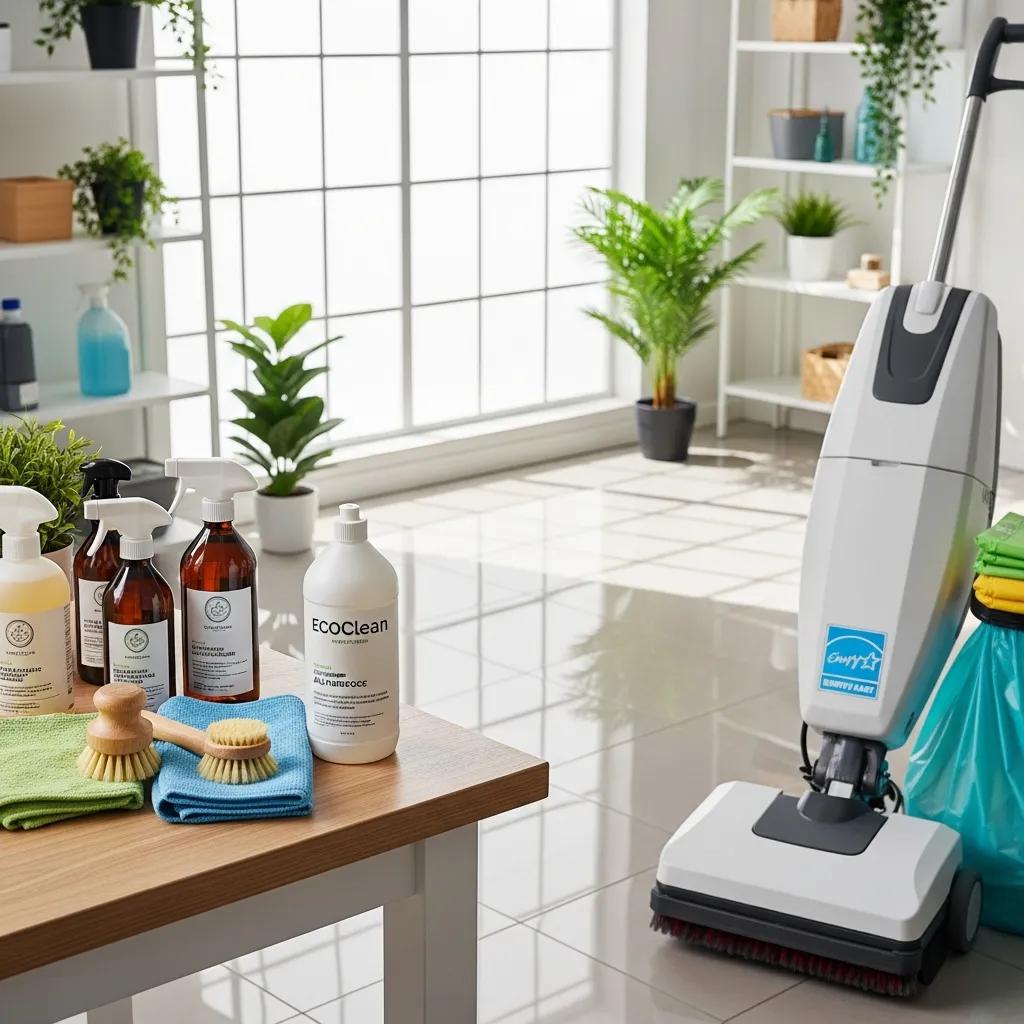
Eco-friendly cleaning lowers chemical exposure, saves water and cuts energy use while keeping spaces hygienic — a must for health-conscious occupants and local expectations. Key approaches include biodegradable, non-toxic detergents, low-water carpet extraction and energy-efficient machines that reduce power without compromising results. These choices improve health outcomes (fewer respiratory irritants), offer lifetime cost benefits and align with community sustainability values on the Sunshine Coast. When selecting products and methods, prioritise validated efficacy and measurable reductions in water or energy per cleaning cycle.
Applying sustainable solutions also requires training on dilution control, microfibre technique and water-conservation methods, which ties back into QA checks to verify both environmental and cleanliness targets.
How Divine Commercial Cleaning meets industry-specific hygiene protocols in Marcoola
Meeting industry-specific protocols means turning general cleaning standards into targeted procedures that address the unique risks of medical centres, daycares, gyms and offices. Industry protocols are prescriptive practices — zoning, disinfection contact times and documentation — tailored to regulatory expectations and health risks. These protocols rely on zoning maps, validated disinfectants with known contact times and traceable records so compliance is demonstrable. The targeted approach reduces cross-contamination, supports client safety obligations and lowers liability. The table below maps industry types to the protocols and controls we implement.
| Industry Type | Required Protocol | Implemented Control |
|---|---|---|
| Medical centre | Zoning, disinfection & record-keeping | High-frequency disinfection, single-use wiping materials, documented audits |
| Daycare | Child-safe products & play-area sanitisation | Non-toxic disinfectants, frequent toy rotation and surface logs |
| Office | High-touch surface focus & air-quality measures | Daily disinfection of shared spaces, scheduled deep cleaning for carpets |
| Retail/Shopping | Footfall-adapted frequency & visible cleanliness | Hourly touchpoint checks, floor maintenance during peak hours |
Mapping industry to controls clarifies expectations for clients and auditors. The following subsections outline medical-centre standards and the differences between daycare and office protocols.
Hygiene standards for medical centres in Marcoola
Hygiene for medical centres prioritises infection control through zoning, validated disinfectants used with correct contact times, and strict record-keeping to support traceability and compliance. Zoning separates clinical and non-clinical areas so cleaning intensity is focused where patient care occurs, while disinfectant choice is based on proven efficacy and manufacturer contact-time requirements to ensure microbial kill. Documented cleaning rounds, batch records and staff verification create an auditable trail for clinics and regulators. Controls also include single-use or clearly labelled cloths for high-risk areas and scheduled deep cleans to reduce bio-burden in treatment rooms.
The need for strong infection prevention and control in healthcare settings is reinforced by external reviews that point to resource and expertise gaps.
Improving hygiene and infection control in under-resourced health facilities
Assessments found IPC activities fragmented and under-resourced in several facilities. Strengthening infection prevention requires adequate resources, targeted expertise and committed leadership to deliver safe health services. Building that capacity supports broader health system goals and patient safety.
Evaluation of the implementation of hospital hygiene components in 30 health-care facilities in the autonomous district of Abidjan (Cote d’Ivoire) with the WHO…, 2023
These measures reduce cross-contamination risk and feed into staff training and QA checks to keep standards consistent across shifts.
Beyond surface cleaning, consistent hand hygiene among healthcare staff is a critical line of defence against healthcare-associated infections.
Physician hand hygiene and infection prevention
Healthcare-associated infections affect a notable share of patients in acute-care settings and are largely preventable. Hand hygiene is one of the simplest, most effective measures, yet compliance — particularly among some clinician groups — often falls short. Improving behaviour and compliance remains central to lowering infection rates.
Improving physician hand hygiene compliance using behavioural theories: a study protocol, S Linklater, 2013
How daycare and office cleaning protocols are tailored for safety and professionalism
Daycare protocols focus on child-safe products, more frequent sanitisation of play areas and toys, and schedules that minimise exposure during operating hours to protect children. Office protocols emphasise presentation, employee wellbeing and high-touch surface management — keyboards, door handles and kitchen areas — plus attention to indoor air quality through dust control and source cleaning. Tailoring starts with assessing occupant vulnerability and usage patterns, then specifying product types, cleaning frequency and verification steps to balance safety with business continuity. Clear communication with clients about timing and methods keeps cleaning activity supportive, not disruptive.
These tailored protocols tie back into QA systems that track compliance and trigger corrective actions when inspections note deviations.
Advanced equipment and technology that raise cleaning quality in Marcoola
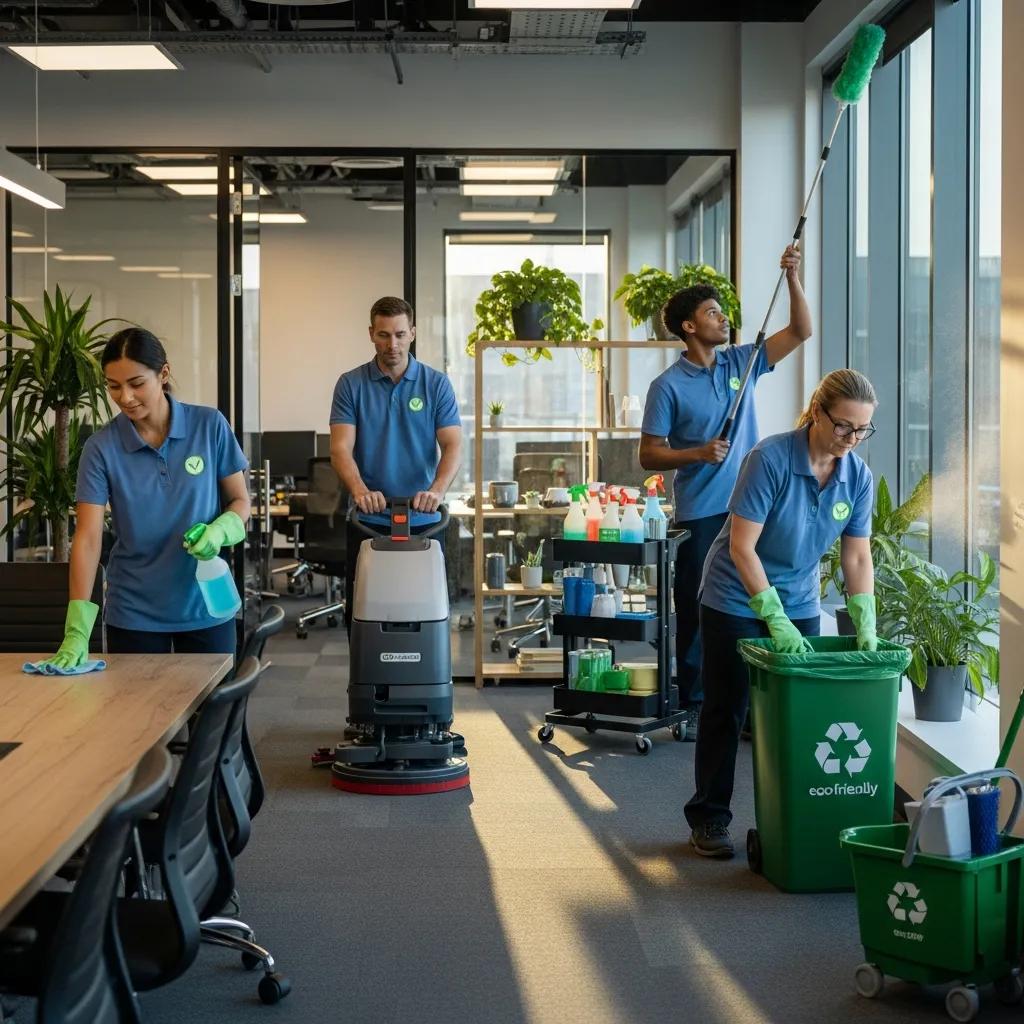
Modern equipment and technology improve efficiency, consistency and sustainability by automating repetitive tasks, delivering better soil removal and providing data for quality checks. Technology here includes mechanical equipment (automatic scrubbers, HEPA-filter vacuums) and digital tools (inspection apps, photo verification, scheduling software) that quantify performance. These tools reduce manual variability, speed up workflows and create measurable outputs for QA dashboards. The benefits include better cleanliness, lower environmental impact and clearer client reporting. The list below highlights the main technology categories worth considering.
Marcoola providers that invest in energy-efficient scrubbers and HEPA filtration realise operational and environmental gains. The EAV table below compares tool categories by eco/energy attributes and business benefits.
- Automated floor scrubbers: increase productivity and cut water use per square metre.
- HEPA-rated vacuums: improve indoor air quality by removing fine particulates.
- Electrostatic sprayers: deliver more even disinfectant coverage with less chemical waste.
- Digital QA apps: capture checklists, time-stamped photos and audit trails for reliable reporting.
Research highlights how electrostatic sprayers can improve disinfectant coverage, especially in complex or high-touch environments.
Electrostatic sprayers to improve disinfectant coverage
While airborne transmission was a primary concern during the COVID-19 pandemic, surface disinfection remained recommended in many settings. Electrostatic sprayers and foggers emerged as tools to quickly apply disinfectants across large areas and complex surfaces; ESS devices charge droplets to improve deposition and make disinfectant use more efficient.
Evaluation of electrostatic sprayers and foggers for the application of disinfectants in the era of SARS-CoV-2, JP Wood, 2021
Eco-friendly and energy-efficient tools we use
Comparing tools by sustainability attributes clarifies trade-offs between performance and environmental impact. The table below summarises common categories, their eco/energy features and the primary business benefits for Marcoola sites. This comparison helps decision-makers prioritise investments that meet both quality and sustainability goals.
| Tool Category | Eco / Energy Attribute | Primary Business Benefit |
|---|---|---|
| Automatic scrubbers | Low-water modes / energy-efficient motors | Reduced water use and faster floor cycles |
| HEPA vacuums | Filtration reduces airborne particulates | Improved air quality and employee comfort |
| Microfibre systems | Lower chemical demand | Effective soil removal with less detergent |
| Electrostatic sprayers | Even coverage reduces chemical volume | Faster room turnover with consistent disinfection |
Choosing the right tool means balancing upfront cost, training needs and lifecycle benefits; the next section explains how technology supports QA and efficiency in daily operations.
How technology supports quality control and efficiency
Technology strengthens QA by producing verifiable data — digital checklists, time-stamped photos and audit logs that demonstrate task completion and quality for each shift. Scheduling and route-optimisation reduce travel time between sites and make sure resources match measured demand, improving productivity and lowering emissions. Data from QA apps feed continuous improvement by highlighting recurring defects and guiding targeted retraining or process tweaks, while analytics reveal patterns such as peak soil times for adaptive scheduling. Tracking completion rates, inspection scores and rework frequency turns quality into measurable improvements and supports transparent client reporting.
These digital workflows connect back to training and SOPs so teams use tools correctly and QA outcomes steadily improve.
What Marcoola clients say about Divine Commercial Cleaning’s service
Social proof comes from concise case summaries and client feedback that tie directly to the QA pillars — fewer complaints, higher inspection pass rates and visibly improved cleanliness. Client feedback is a structured capture of satisfaction, reliability and outcome metrics that validate service claims. Case studies follow a problem → action → result format to show how interventions solved client issues. Below are short, anonymised examples from Marcoola engagements that illustrate measurable outcomes.
- Case: Retail outlet with recurring floor issues → Action: introduced scheduled scrub cycles and microfibre protocols → Result: fewer complaints and improved floor appearance.
- Case: Small medical clinic needing traceability → Action: implemented zone mapping and digital logs → Result: audit-ready documentation and smoother inspections.
- Case: Office with inconsistent standards across shifts → Action: standardised checklists and refresher training → Result: consistent inspection scores across all teams.
Case studies that demonstrate consistent, high standards
Case studies turn QA principles into concrete results by describing the client issue, the targeted operational change and measurable outcomes where available. One Marcoola example involved a retail centre struggling during peak season; the response combined a revised frequency matrix, automated scrubber use and daily touchpoint checks, resulting in steadier cleanliness and fewer incident reports. Another clinic used zoning, single-use materials and digital logs to pass external audits with documented evidence. These problem → action → result stories show how protocol-driven changes and technology-enabled verification deliver the results described earlier.
Case-based evidence supports the idea that systematic QA and tailored implementation produce sustained, measurable improvement.
How client testimonials reflect trust and satisfaction
Testimonials commonly highlight reliability, thoroughness and clear communication — three themes that reflect a strong QA program and trained staff. Praise for punctuality and consistent standards ties back to structured scheduling and inspections; comments about thoroughness reflect competency-based training and checklist use. Testimonials that note responsiveness and clear reporting show the value of transparent client channels and digital QA tools. Together, these themes reinforce the practical benefits facility managers can expect from a disciplined, locally focused provider.
The next section describes how the organisation sustains and improves these outcomes through continuous improvement and feedback loops.
How Divine Commercial Cleaning commits to continuous improvement in Marcoola
Continuous improvement is a structured program of feedback capture, internal audits, training updates and trend adoption that gradually raises standards and adapts services to new needs. In practice this means regular evaluation and iterative change based on measured results and client input. Feedback loops channel client reports and inspection data into corrective actions and training refreshes, while scheduled reviews benchmark performance against targets. The result: fewer repeat issues, up-to-date staff skills and services that stay aligned with industry practice. The list below summarises the main mechanisms used to sustain and raise cleaning quality over time.
Divine Commercial Cleaning applies these principles locally by combining client feedback, audit findings and trend monitoring to refine SOPs and training — a practical approach to continuous improvement for Marcoola businesses.
- Capture feedback through surveys, site reports and account manager reviews.
- Use inspection data to prioritise corrective actions and training focus areas.
- Pilot new products and technologies before wider rollout to validate effectiveness.
- Schedule periodic SOP reviews to incorporate best practice and regulatory updates.
What role feedback plays in enhancing cleaning services
Feedback is the trigger for corrective action, training changes and service refinement — it turns client experience into operational priorities. The loop begins with capture — surveys, site reports or account manager notes — then moves to analysis where trends and root causes are identified. Corrective actions follow (retraining, process changes or equipment swaps), and closure is confirmed through re-inspection and client sign-off. Timely, documented responses preserve client confidence and feed the quarterly or annual review cycles that institutionalise improvements. Effective feedback systems convert single complaints into system-level learning and better overall performance.
Understanding feedback’s value leads naturally into how organisations monitor industry trends and adopt innovations without disrupting service quality.
How industry trends are integrated into service evolution
Integrating trends requires a disciplined evaluation process: monitor new products and technologies, pilot in controlled settings, train staff on proven gains and update SOPs only after measurable benefits are shown. Current trends relevant to Marcoola include deeper sustainability measures, automation for repetitive tasks and digital QA tools that increase transparency. Adoption should weigh efficacy, safety, training burden and lifecycle impact; pilots quantify benefits and surface unintended consequences before scaling. Clear communication to clients with the rationale for change ensures buy-in and smooth transitions while protecting day-to-day service continuity.
This staged approach makes service evolution deliberate, evidence-based and aligned with local client needs.
For facility managers ready to compare their cleaning programme against these standards or to request a tailored quote for Marcoola premises, contact Divine Commercial Cleaning to arrange a site assessment and a proposal aligned with your industry needs and sustainability goals. That request starts the onboarding, assessment and QA steps described above and creates a clear pathway to measurable cleaning improvements.
Frequently Asked Questions
What types of businesses benefit most from commercial cleaning services in Marcoola?
Medical centres, daycares, offices and retail stores are among the businesses that benefit most from commercial cleaning in Marcoola. Each sector has distinct needs driven by foot traffic, regulatory requirements and hygiene risks: clinics need strict disinfection protocols, daycares require child-safe products, retail spaces need regular upkeep to stay welcoming and offices benefit from consistent cleaning to support staff wellbeing and productivity.
How often should commercial cleaning services be scheduled for optimal results?
Cleaning frequency should be tailored to each business. High-traffic areas like retail outlets and medical facilities may need daily attention, while offices often combine daily tasks with weekly deep cleans. Seasonal peaks, such as holidays, also affect scheduling. Regular site assessments help determine the optimal cadence to maintain hygiene and appearance with minimal disruption.
What eco-friendly practices are commonly adopted in commercial cleaning?
Common eco-friendly practices include biodegradable detergents, water-saving methods and energy-efficient equipment. For example, microfibre systems use less detergent and water, and automated scrubbers can reduce overall water consumption. Training staff on correct dilution and the use of non-toxic products also reduces environmental impact while keeping cleaning effective. These practices improve indoor air quality and support sustainability goals.
How can clients ensure their cleaning service meets industry-specific hygiene standards?
Clients can ensure compliance by clearly communicating requirements during onboarding, including regulatory needs, high-touch cleaning and documentation expectations. Include regular audits and inspections in the service agreement to verify adherence, and request training records and cleaning logs to confirm staff competency and protocol consistency.
What role does technology play in enhancing cleaning services?
Technology improves efficiency, consistency and accountability. Digital tools — inspection apps, scheduling software and automated equipment — streamline operations and provide verifiable records. Time-stamped photos and digital checklists document task completion, while analytics identify trends and improvement opportunities. A data-driven approach supports QA and helps services adapt to changing client needs.
How can businesses measure the effectiveness of their cleaning service?
Measure effectiveness with regular inspections, client feedback and defined performance metrics. Set KPIs such as cleanliness scores, inspection pass rates and response times. Surveys provide customer insight, and analysing inspection data reveals trends and problem areas. Together, these inputs help businesses make informed decisions about their cleaning service and ensure it meets expectations.
Raising cleaning standards in Marcoola improves health and safety, and it strengthens client trust and satisfaction. By using tailored cleaning plans, focused staff training and eco-friendly practices, businesses can achieve measurable gains in hygiene and operational efficiency. If you’re a facility manager looking to lift your cleaning program, Divine Commercial Cleaning can help — contact us to schedule a site assessment and see how we can meet your specific cleaning and sustainability goals.

Dianne, originally from Rockhampton, hails from a business-oriented family, with her father owning electrical stores and her uncle serving as Mayor. Moving to the Sunshine Coast at 13, she later pursued a rewarding real estate career and raised three children. As a single mom, she balanced university studies with domestic cleaning work. Armed with a Bachelor’s Degree in Business, majoring in Supply Chain Management, Dianne founded and grew Divine Commercial Cleaning into a thriving company. Her success is rooted in strong family mentorship, a positive attitude, and a solution-oriented approach, offering tailored cleaning services with integrity and strategic insight.