Mooloolaba vs Brisbane Commercial Cleaning — a practical guide to choosing the right provider
Your choice of commercial cleaner in Mooloolaba or Brisbane affects operational risk, customer impressions and staff health. This guide lays out the types of commercial cleaning available across the Sunshine Coast and Brisbane, compares service quality and pricing models, and gives a clear, step‑by‑step framework to help you appoint the right provider. Many businesses find quotes confusing and struggle to verify compliance for specialist sites like medical centres and shopping centres — here we unpack service categories, pricing structures, compliance checkpoints and vendor evaluation criteria to make that easy. You’ll also find quick comparison tables, practical procurement lists and clear guidance on requesting accurate quotes. Where helpful, local examples from Divine Commercial Cleaning are shown as regional operational models.
What Commercial Cleaning Services Are Available in Mooloolaba and Brisbane?
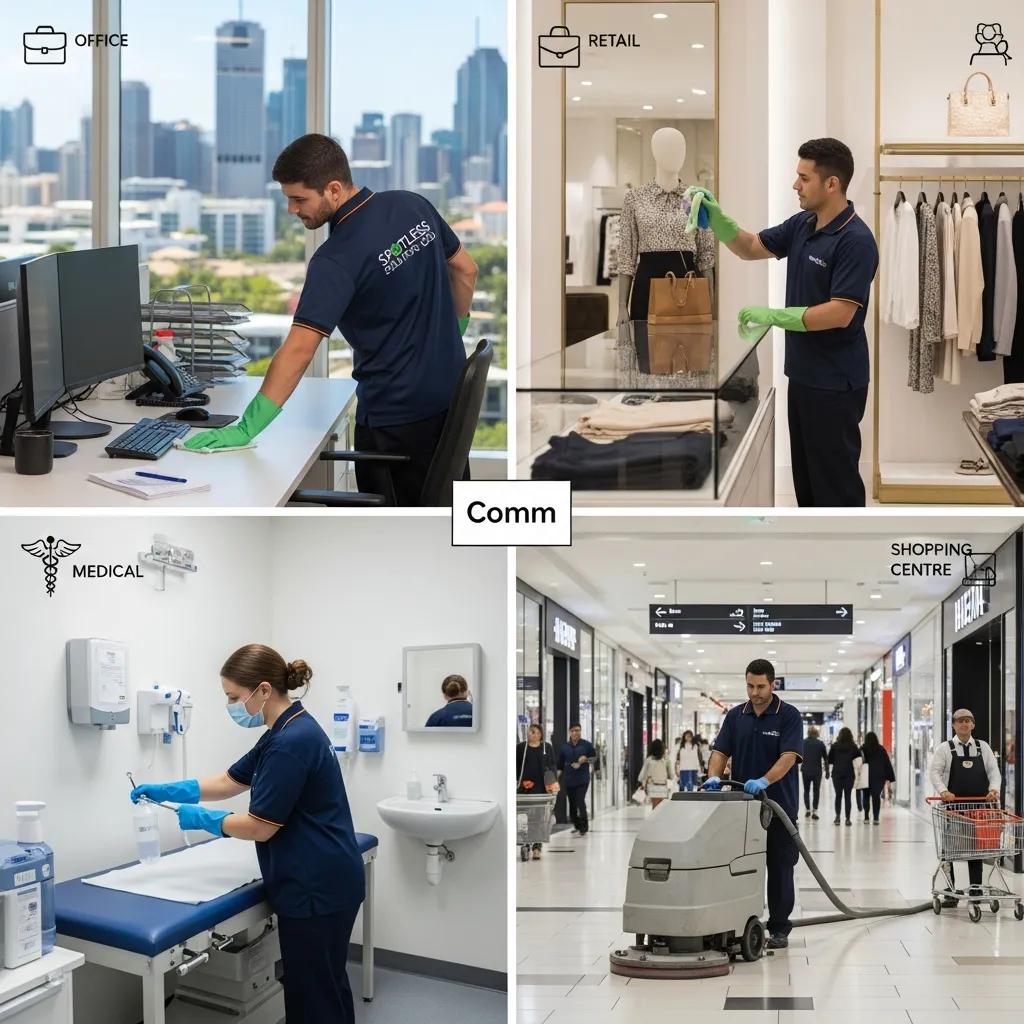
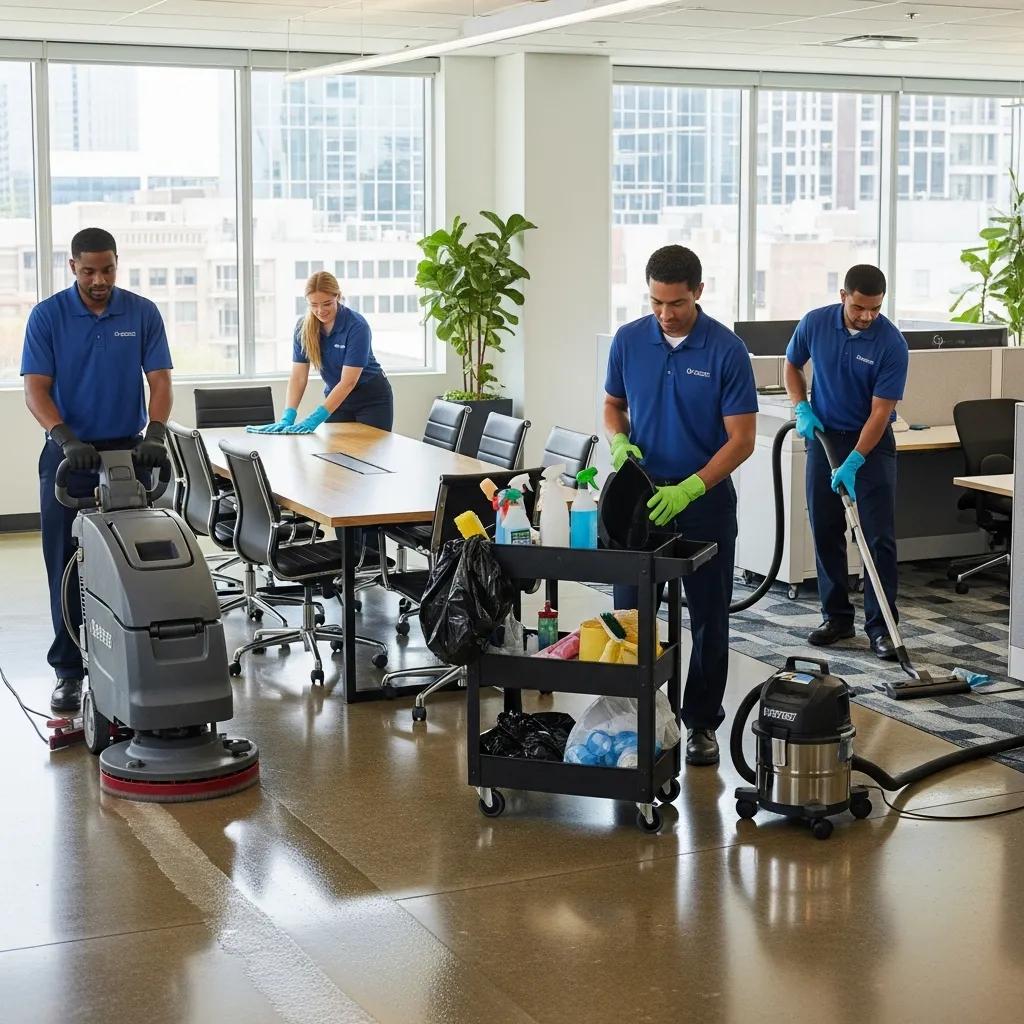
Across Mooloolaba and Brisbane you’ll find sector‑specific commercial cleaning designed to meet different operational needs and regulatory requirements. Typical offerings include scheduled facility cleans, specialised medical disinfection, retail floor care and shopping‑centre scope management — each requiring different equipment, supplies and staff skills to deliver consistent results. The categories below help you match scope, risk and budget when comparing providers.
Common commercial cleaning service types regionally include:
- Office cleaning: daily or weekly general cleaning, work‑station sanitation and shared‑area maintenance.
- Retail cleaning: intensive floor care, display cleaning and after‑hours turnarounds for high footfall stores.
- Medical centre cleaning: compliance‑driven infection control with documented procedures and specialist training.
- Shopping centre cleaning: coordinated cleaning across tenancies, public‑area sanitation and waste management.
Each service type needs specific equipment and staffing arrangements, which affects scheduling and price. The next subsection outlines the typical tasks and recommended visit cadences you should expect.
Office, Retail, Medical, and Shopping Center Cleaning Options
Office, retail, medical and shopping‑centre cleaning are distinct parts of commercial services and each needs a tailored task list and frequency. Office cleaning focuses on work‑station hygiene, rubbish removal, floor vacuuming and glass cleaning, typically daily or several times a week to keep productivity and presentation high. Retail cleaning prioritises floor care, display dusting and fast post‑trade turnarounds to protect presentation and reduce slip risks. Medical centre cleaning demands higher compliance — documented procedures, MSDS awareness and more frequent touch‑point disinfection — to reduce infection risk in clinical settings. Shopping centres require tenant coordination, public‑area waste handling and escalator/elevator cleaning, usually managed via coordinated rosters to maintain large footprints consistently.
Understanding these operational differences helps you ask targeted questions when you compare quotes and set clear expectations in the contract.
Eco-Friendly and Compliance-Focused Cleaning Services
Eco‑friendly and compliance‑focused cleaning overlap where sustainability meets safety. Eco‑friendly services use certified green products and low‑impact methods to lower VOC exposure and improve indoor air quality — a tangible benefit for staff wellbeing and brand reputation. Compliance‑focused services emphasise documented workflows, staff training and audit‑ready reporting for health or food‑facing environments; they often include equipment segregation to avoid cross‑contamination. Ask for product certifications and training records to verify green claims and compliance credentials.
Choosing conventional versus eco‑friendly approaches usually trades short‑term cost for longer‑term health, regulatory and reputational benefits. The next section compares how providers stack up on quality, flexibility and local logistics.
How Do Commercial Cleaning Companies in Mooloolaba and Brisbane Compare?
Companies in Mooloolaba and Brisbane differ most on three axes: service quality, pricing model and local logistics — each affects reliability and total cost of ownership. Quality comes from staff training, supervised QA and regular inspections; pricing varies between hourly, per‑square‑metre and fixed contracts; and local logistics determine response times and travel charges. Looking at these criteria together shows which providers deliver predictable outcomes versus those competing on headline price alone.
Key comparison criteria to evaluate suppliers include:
- Quality controls: documented inspections, KPIs and supervisor visits that keep standards steady.
- Pricing transparency: clear line items for labour, supplies and travel to avoid hidden fees.
- Local responsiveness: proximity and regional knowledge that reduce response times and scheduling friction.
The short comparison below highlights core provider attributes to make vendor selection more objective.
Introductory comparison table: provider attributes for quality assessment.
| Provider Attribute | What to Check | Why it Matters |
|---|---|---|
| Response time | Average time to attend urgent requests | Faster issue resolution limits operational downtime |
| Staff training | Formal induction and ongoing upskilling | Trained teams reduce errors and compliance risk |
| Equipment & supplies | Use of commercial‑grade or eco‑certified materials | Directly affects cleaning effectiveness and health outcomes |
This table clarifies the quality indicators to prioritise when requesting quotes. The next table expands the comparison into measurable vendor attributes common in the region.
| Attribute Category | Attribute | Typical Value Range |
|---|---|---|
| Operational readiness | Response time | 24–72 hours for routine, same‑day for urgent |
| Workforce quality | Staff training level | Basic induction up to certified specialist training |
| Risk mitigation | Insurance & compliance documents | Public liability and industry‑specific evidence expected |
Use these attributes to make apples‑to‑apples comparisons and to inform SLA and penalty discussions. Below we examine service‑quality signals and customer satisfaction in more detail.
Service Quality and Customer Satisfaction Differences

Service quality shows up in a provider’s QA routines, supervision frequency and how exceptions are handled — and these directly affect customer satisfaction metrics like repeat business and fewer corrective visits. Look for scheduled inspections, documented KPIs, client checklists and clear escalation paths for failures. Reviews and testimonials help, but verify them against operational evidence such as inspection logs and response records. Reliable providers will share examples of their QA approach when asked, which moves the decision from opinion to verifiable performance.
Knowing what drives satisfaction helps you request the right proof points from vendors — the next section covers flexible plans and local expertise.
Flexible Service Plans and Local Expertise
Flexible service plans and local knowledge are the backbone of a responsive cleaning solution. Modular plans let you scale frequency, add specialist cleans or change schedules without long renegotiations. Local teams who know Sunshine Coast and Brisbane traffic patterns, waste rules and peak trading times can optimise rosters and reduce hidden costs. Common plan types include ad‑hoc call‑outs, recurring schedules and managed service agreements that bundle tasks into a single monthly price. When comparing suppliers, ask whether plans are modular and request examples of local accounts to confirm regional capability.
Assessing flexibility and local presence helps you align the service agreement with operational realities and cost drivers; next, we look at pricing models and regional rate factors.
What Are the Typical Commercial Cleaning Rates on the Sunshine Coast and Brisbane?
Cleaning rates on the Sunshine Coast (including Mooloolaba) and in Brisbane depend on pricing model, contract scope and regional cost drivers like labour and travel. Common formulas are hourly rates for labour‑led jobs, per‑square‑metre pricing for larger areas and fixed monthly contracts for ongoing managed services — each spreads costs differently between predictable and variable items. Understanding these models helps you read quotes properly and calculate a true cost per clean or per month.
Common pricing models include:
- Hourly rates: suitable for irregular or small jobs — transparent but variable.
- Per‑m2 pricing: typical for large floor areas; scales predictably with space.
- Fixed contract pricing: bundles scope and frequency into a single, predictable monthly fee.
Interpreting regional rate ranges requires unpacking travel allowances, compliance premiums for medical sites and minimum‑call charges. The table below organises typical pricing elements for apples‑to‑apples evaluation.
| Pricing Element | Attribute | Typical Regional Value |
|---|---|---|
| Hourly model | Rate per cleaner | Varies by role and area — typically AUD 35–60 per hour |
| Area model | Cost per m2 | Typically AUD 0.10–0.30 per m2 depending on frequency and scope |
| Contract terms | Minimum term / notice period | 1–3 month minimums are common |
This pricing snapshot helps you compare quotes consistently. The sections that follow explain contract terms and how costs can differ between Mooloolaba and Brisbane.
Pricing Structures and Contract Terms Explained
Pricing structures and contract clauses set financial risk and operational flexibility for both parties. Key items to check are minimum term length, notice periods, SLA definitions and liability clauses that cover damage or missed services. Negotiation levers include trial periods, capped travel fees and whether consumables are included or client‑supplied. Ask for a clear line‑item breakdown (labour, supplies, travel) so you can model total cost under your expected service cadence.
Clear contract language and transparent pricing reduce ambiguity and provide a foundation for enforceable SLAs, which supports better long‑term supplier relationships.
Comparing Costs Between Mooloolaba and Brisbane Providers
Costs between Mooloolaba (Sunshine Coast) and Brisbane differ because of labour markets, travel time and local overheads. Brisbane providers may benefit from larger teams and economies of scale, while Sunshine Coast suppliers sometimes add travel surcharges for dispersed jobs. Example rate ranges will reflect these factors: hourly or per‑clean rates can be higher where travel or satellite logistics are significant, and medical‑compliant services typically cost more due to extra training and documentation. To compare accurately, ask each provider to quote the same scope and include travel or minimum‑call fees in writing.
These distinctions show why apples‑to‑apples quotations are essential. The next section explains how a regional supplier like Divine Commercial Cleaning presents its value when bidding for local accounts.
Why Choose Divine Commercial Cleaning Over Other Brisbane and Sunshine Coast Companies?
Divine Commercial Cleaning serves the Sunshine Coast and Brisbane and demonstrates how a local provider can align services to regional needs without sacrificing transparency or flexibility. Core offerings include commercial cleaning for offices, retail, medical centres and shopping centres. Divine’s regional teams are often cited for fast response and practical knowledge of local scheduling constraints. The table below maps Divine’s attributes to the client benefits they deliver.
Introductory EAV table mapping Divine’s value propositions to client benefits:
| Attribute | What Divine Offers | Client Benefit |
|---|---|---|
| Local presence | Regional teams across Sunshine Coast and Brisbane | Faster response and smoother scheduling |
| Flexible plans | Modular schedules and custom packages | Easy scaling and clearer budgeting |
| Transparent communication | Client reporting and direct contact channels | Greater trust and simpler issue resolution |
This mapping shows how supplier attributes translate into operational value. Below we outline Divine’s differentiators and how they provide evidence of outcomes without overstating results.
Unique Value Propositions and Transparent Communication
Divine Commercial Cleaning focuses on local knowledge, adaptable service plans and clear communication to keep clients informed. Transparent communication typically includes regular reporting, a single escalation contact and shared job completion checks. These practices reduce ambiguity and create measurable accountability — for example, consistent reporting supports trend analysis and helps refine frequency or scope. Rather than selling the lowest headline rate, Divine emphasises predictable outcomes through clear scope definition and responsive client service.
That focus on transparency and flexibility sets the scene for how recent client engagements are summarised and validated.
Client Testimonials and Case Studies from 2023–2024
Divine Commercial Cleaning publishes case summaries from recent projects that show improved cleaning consistency and better operational coordination for local office and retail clients during 2023–2024. Summaries describe the initial challenge, the customised plan implemented and measurable outcomes like fewer corrective visits and clearer reporting cycles. These are presented as process improvements rather than individual endorsements; prospective clients can request project outlines or references to verify results. Ask for those high‑level summaries and supporting documents before signing a contract.
Evidence‑focused summaries like these help you compare projected outcomes and pick the operational model that matches your risk and quality tolerance.
How to Select the Best Commercial Cleaning Service for Your Business Needs?
Picking the right commercial cleaner starts with a structured evaluation that balances scope, compliance, price and supplier capability. A clear decision framework reduces bias and ensures you capture key risks. Begin by defining scope precisely (areas, frequency, special requirements), then compare providers on QA, insurance and regulatory compliance for your sector. Use the checklist below to guide procurement conversations and to make sure each vendor supplies verifiable evidence for their claims.
Checklist for selecting a commercial cleaning provider:
- Define scope and frequency: list spaces, visit cadence and any specialised tasks.
- Verify compliance: request insurance, MSDS for chemicals and training outlines.
- Compare quotes: require line‑item pricing for labour, supplies and travel.
- Assess QA and reporting: check for documented inspections and KPI tracking.
After you run this checklist, use references and trial periods to confirm operational fit before committing to long‑term agreements. The following subsections expand on evaluating offers and eco/tech considerations.
Evaluating Service Offerings and Compliance Standards
Move beyond marketing claims and ask for verifiable documents and sample procedures that match your risk profile. Request standard operating procedures, training outlines, MSDS for cleaning agents and insurance certificates; for medical or food‑adjacent sites, require infection‑control protocols and staff competency evidence. Ask to see sample inspection reports and corrective action logs so you can confirm the provider’s QA loop works in practice. These checks reduce legal and operational risk and make the cost of compliance clear.
This detailed vetting supports sound contracting and informs SLA and penalty negotiations.Considering Eco-Friendly Practices and Technology Integration
Evaluating eco‑friendly practices and technology integration means checking product certifications, equipment efficiency and software tools that improve scheduling and reporting. Eco practices include low‑VOC products and methods that lift indoor air quality; tech features include digital inspections, scheduling platforms and asset tracking that increase transparency and reduce admin. Model the long‑term benefits — lower absenteeism, reduced consumable use and more efficient rosters — against any premium for green options or advanced tech. Providers that combine sensible eco‑practices with practical technology often deliver measurable ROI over time.
Considering these elements ensures your selection fits both operational priorities and sustainability goals.
Where Can You Request Quotes and Contact Professional Commercial Cleaners in Mooloolaba and Brisbane?
Requesting quotes efficiently depends on preparation and clarity. A standard briefing packet speeds responses and reduces back‑and‑forth. Include floor plans or square‑metre estimates, preferred service days/times, special requirements (for example medical compliance or after‑hours access) and your target start date. Follow the stepwise process below to solicit and evaluate comparable quotes.
How to request a quote—step-by-step process:
- Prepare a site brief: include m2, room types and required service frequency.
- Request standardised quotes: ask for line items for labour, consumables and travel.
- Schedule site visits: let providers verify access, hazards and scope assumptions.
Providing standardised information up front reduces variability in responses and helps you get apples‑to‑apples comparisons. The next sections explain contact channels and regional page strategies.
Direct Contact Options and Online Quote Requests
Most professional cleaners accept enquiry forms, email briefs and scheduled site visits for quote requests, with typical turnaround of 24–72 hours for standard scopes and longer for complex medical jobs. When you request quotes, include clear scope, access instructions and any compliance documents to avoid repeated clarifications. Expect initial proposals to be followed by site visits for final pricing on larger or compliance‑heavy contracts. Providers using digital checklists and response tracking often deliver faster, more consistent quotes because they standardise assumptions.
Preparing this information streamlines procurement and reduces the chance of hidden fees appearing later in the contract.
Location-Specific Service Pages and Regional Coverage
Location‑specific service pages and regional coverage notes help you identify which suppliers regularly operate in Mooloolaba, the Sunshine Coast and Brisbane — and that, in turn, affects scheduling and travel allowances. Prioritise providers that clearly list the regions they serve or show regional account examples, since local coverage usually means better responsiveness and fewer travel surcharges. Consistent name, address and profile details across listings also boost confidence during procurement and quote validation.
Regional clarity ensures quoted prices reflect realistic travel and logistics assumptions and supports smoother onboarding.
- Prepare documents: floor plans, site access and compliance needs.
- Standardise requests: ask all vendors for identical scopes and line‑item pricing.
- Compare outcomes: evaluate QA processes, compliance evidence and total cost of ownership.
This preparation helps you get accurate quotes and move quickly from evaluation to implementation when engaging a commercial cleaning provider in Mooloolaba or Brisbane.
| Evaluation Item | Example Evidence | Why It Matters |
|---|---|---|
| Site scope | Floor plans / m2 estimates | Ensures consistent quoting |
| Compliance proof | Insurance / MSDS / training outlines | Reduces regulatory and liability risk |
| Pricing breakdown | Labour, consumables, travel | Enables true apples‑to‑apples comparison |
These final tables and checklists turn procurement into verifiable steps decision‑makers can follow to secure reliable regional cleaning services.
Frequently Asked Questions
What should I consider when choosing a commercial cleaning service?
Define your scope first (areas, frequency, special needs) then check compliance, pricing transparency and reputation. Look for clear QA processes, evidence of staff training and regional experience so the provider can meet your operational demands. A structured comparison reduces guesswork and helps you choose a supplier that fits your risk and quality expectations.
How can I ensure the cleaning service is eco-friendly?
Ask for product certifications and a sustainability policy. Request details on low‑VOC products, waste‑reduction practices and how eco‑options are integrated into daily work. A reputable provider will show certificates and explain how green methods affect cleaning performance and cost.
What are the common compliance standards for medical cleaning services?
Medical cleaning must follow strict infection‑control protocols, keep proper documentation and ensure staff are trained to handle hazardous materials. Providers should supply MSDS for chemicals, training records and inspection reports. Request these documents to confirm they meet the relevant health authority expectations.
How do I evaluate the quality of a cleaning service?
Check the provider’s QA routines: inspection schedules, KPIs, client checklists and escalation paths. Ask for sample inspection reports, corrective action logs and references. Testimonials help, but operational evidence shows whether standards are consistently met.
What are the benefits of flexible cleaning service plans?
Flexible plans let you scale services, add specialist cleans and adjust schedules without long‑term renegotiation. This is useful for businesses with seasonal peaks or changing occupancy and helps control costs by matching service to current needs.
How can I prepare for requesting quotes from cleaning services?
Prepare a briefing packet with floor plans, square‑metre estimates, preferred days/times and any special requirements like medical compliance. Ask all vendors for line‑item pricing for labour, consumables and travel, and schedule site visits for larger or complex scopes to ensure accurate quotes.
What should I look for in a cleaning service contract?
Review minimum terms, notice periods, SLAs and liability clauses. Make sure scope, pricing and any extra fees are clearly spelled out. Transparent contracts reduce disputes and set a clear expectation for both parties.
Choosing the right commercial cleaning service in Mooloolaba or Brisbane improves operational efficiency, staff wellbeing and customer perception. By understanding service types, pricing models and quality indicators, you can make a confident, evidence‑based choice. Reach out for standardised quotes, check compliance and trial prospective suppliers where possible — and start moving towards a cleaner, healthier workspace today.

Dianne, originally from Rockhampton, hails from a business-oriented family, with her father owning electrical stores and her uncle serving as Mayor. Moving to the Sunshine Coast at 13, she later pursued a rewarding real estate career and raised three children. As a single mom, she balanced university studies with domestic cleaning work. Armed with a Bachelor’s Degree in Business, majoring in Supply Chain Management, Dianne founded and grew Divine Commercial Cleaning into a thriving company. Her success is rooted in strong family mentorship, a positive attitude, and a solution-oriented approach, offering tailored cleaning services with integrity and strategic insight.