Event Venue Cleaning Services and Post-Event Restoration Solutions in Australia
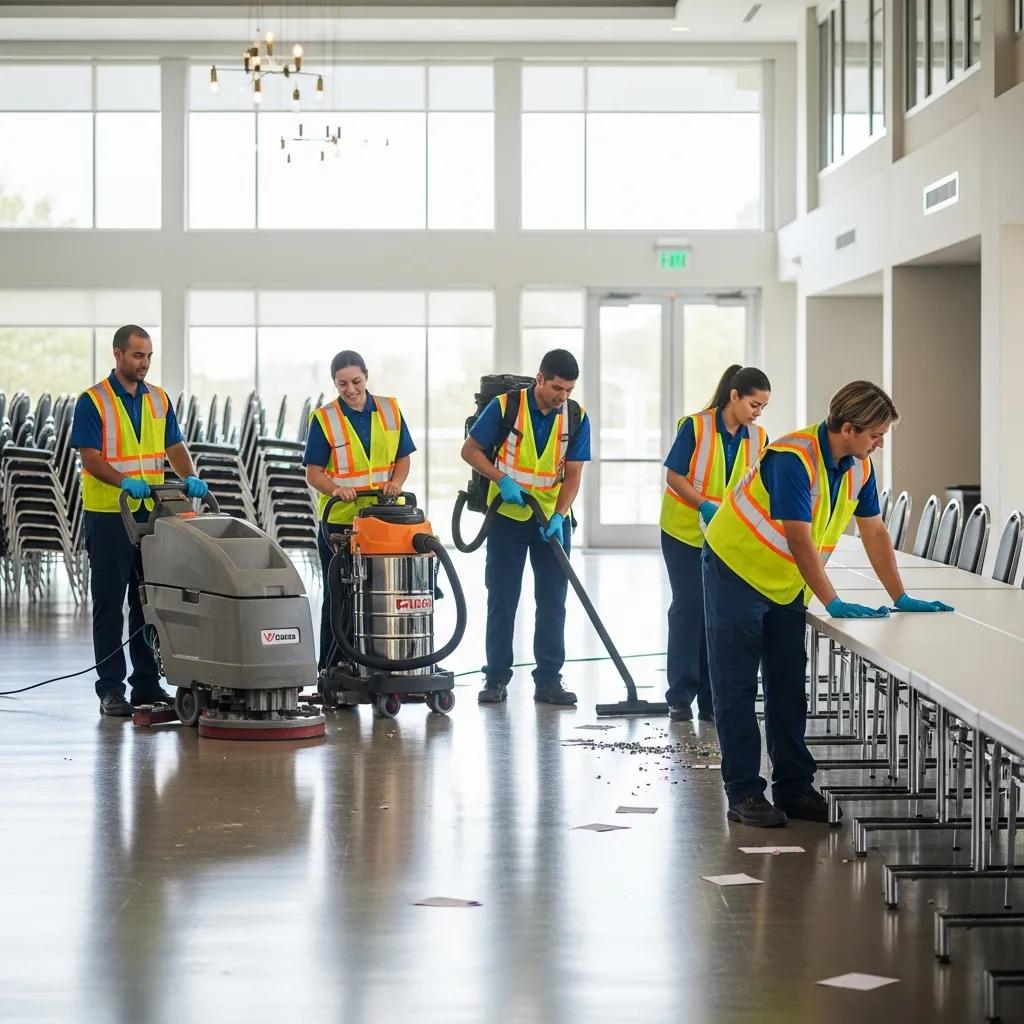
Event venue cleaning and post-event restoration encompass the full lifecycle of hygiene and recovery needed before, during and after gatherings to ensure safety, rapid reopening and protection of venue reputation. This article explains what professional event venue cleaning involves, why organisers and facility managers rely on specialist teams, and how restoration solutions extend beyond routine cleaning to address damage and emergencies. Readers will learn core services such as pre-event preparation, during-event maintenance, post-event deep cleaning, floor care and emergency flood restoration, plus sustainable waste management approaches suitable for large venues. Practical checklists, staffing and SLA guidance, EAV comparison tables, and operational process steps will show how to specify cleaning scope and evaluate providers. Where relevant, local options and trust signals are noted for organisations operating on the Sunshine Coast and in Brisbane, with guidance on requesting a quote from a family-owned, fully insured provider without lock-in contracts. Next we define event venue cleaning and highlight the most essential components organisers must plan for.
What Are Event Venue Cleaning Services and Why Are They Essential?
Event venue cleaning services are professional commercial cleaning and restoration activities tailored to events; they combine hygiene, waste control and surface care to reduce infection risk, enable quick turnover and preserve venue assets. By applying targeted sanitisation, waste logistics and floor protection, these services prevent health hazards and protect a venue’s reputation while meeting regulatory and client expectations. Proper event cleaning reduces downtime between bookings and minimises restoration costs after heavy use or accidental damage. The next subsection breaks down the typical tasks that form a complete event cleaning scope and explains when specialised restoration is required.
Defining Event Venue Cleaning and Its Key Components
Event venue cleaning covers surface cleaning, waste removal, sanitisation/disinfection, floor care and restroom servicing, plus emergency response for incidents during an event. Typical tasks include wiping and disinfecting high-touch areas, emptying bins and hauling trade waste, steam or extraction cleaning of textile surfaces, and targeted floor protection for high-traffic zones. Specialised services such as deep upholstery extraction, odour remediation and hazardous spill handling are engaged when events generate biohazardous waste or large volumes of organic material. These components work together to deliver safe reopening timelines and measurable outcomes such as reduced microbial counts and faster turnaround, and the following list summarises the core inclusions for quick reference.
- Surface cleaning and disinfection of high-touch points before and after events.
- Waste collection, segregation and removal aligned to recycling and landfill streams.
- Floor care including sweeping, mopping, steaming, extraction and polishing.
- Restroom servicing with replenishment and sanitisation to maintain hygiene standards.
These core components prepare organisers to anticipate cleaning needs and budget for appropriate restoration levels depending on event scale.
How Does Divine Commercial Cleaning Deliver Comprehensive Event Cleaning?
Event cleaning delivery follows a predictable lifecycle—pre-event setup, active during-event maintenance, and post-event recovery—to minimise risk and ensure consistent quality through planning, staffing and accountability. Effective delivery relies on checklists, SLAs for rapid response, and continuity measures such as consistent crews and documented quality checks that protect venues and attendees. Below is a practical, stepwise summary of the operational phases and how staffing and response scale are planned to maintain hygiene and rapid turnaround. The following subsections provide detailed actions taken before and during events and include a concise operational SLA table to clarify response expectations.
- Pre-event tasks: readiness checks, protective measures, supply staging and baseline cleaning.
- During-event tasks: on-floor maintenance, spill response and restocking hygiene stations.
- Post-event tasks: deep cleaning, waste removal, floor restoration and damage assessment.
These phases form a process map organisers can use to align contracts and expectations with cleaning providers.
Pre-Event Preparation: Ensuring Venue Readiness and Hygiene
Pre-event preparation primes the site by removing dust, sanitising public touchpoints, protecting vulnerable surfaces and coordinating access and timing with venue managers. Typical actions include deep dusting of communal areas, intensive restroom sanitation, placement of waste and recycling stations, protective floor coverings for staging areas and clear signage for cleaning zones. Coordination includes walk-throughs with venue operations teams, inventorying consumables and scheduling staggered access to reduce interference with setup crews. This planning reduces the likelihood of during-event interruptions and shortens post-event restoration time, which is described in the following section.
| Task | Typical Activity | Benefit |
|---|---|---|
| Baseline sanitisation | Full wipe-down of high-touch surfaces prior to opening | Lowers infection risk at start of event |
| Protective measures | Floor covers, matting and signage in heavy-traffic zones | Prevents surface damage and reduces cleaning load |
| Waste station setup | Placement of labelled bins and recycling points | Increases diversion and simplifies post-event hauling |
This SLA-style table clarifies pre-event deliverables and the operational advantages they provide to venue teams.
During-Event Maintenance: Managing Spills, Waste, and Sanitation
During-event maintenance concentrates on rapid spill response, continuous waste management and maintaining restroom hygiene to sustain a safe environment throughout the booking. Crews perform scheduled restroom inspections, periodic bin emptying, refilling of dispensers and immediate spill containment according to health and safety protocols. Rapid-response SLAs and staffing ratios are scaled to attendance: higher-capacity events require dedicated on-floor teams, while smaller functions may use roving attendants. Clear communication protocols and documented handover procedures ensure seamless transitions between cleaning shifts and minimise service gaps; the next section addresses post-event restoration and longer-term recovery tasks.
| Service | Typical SLA | Scale/Notes |
|---|---|---|
| Spill response | 15–60 minutes on-site depending on contract | Faster response for VIP/food areas |
| Restroom checks | Every 30–90 minutes based on crowd size | Increased cadence for high-traffic events |
| Waste removal | Hourly or as-needed for bins; full haul at event end | Logistics planned by waste stream and venue access |
This table demonstrates how response times and staffing scale to event needs, helping organisers match service levels to risk and attendance.
What Does Post-Event Restoration Include for Large-Scale Venues?
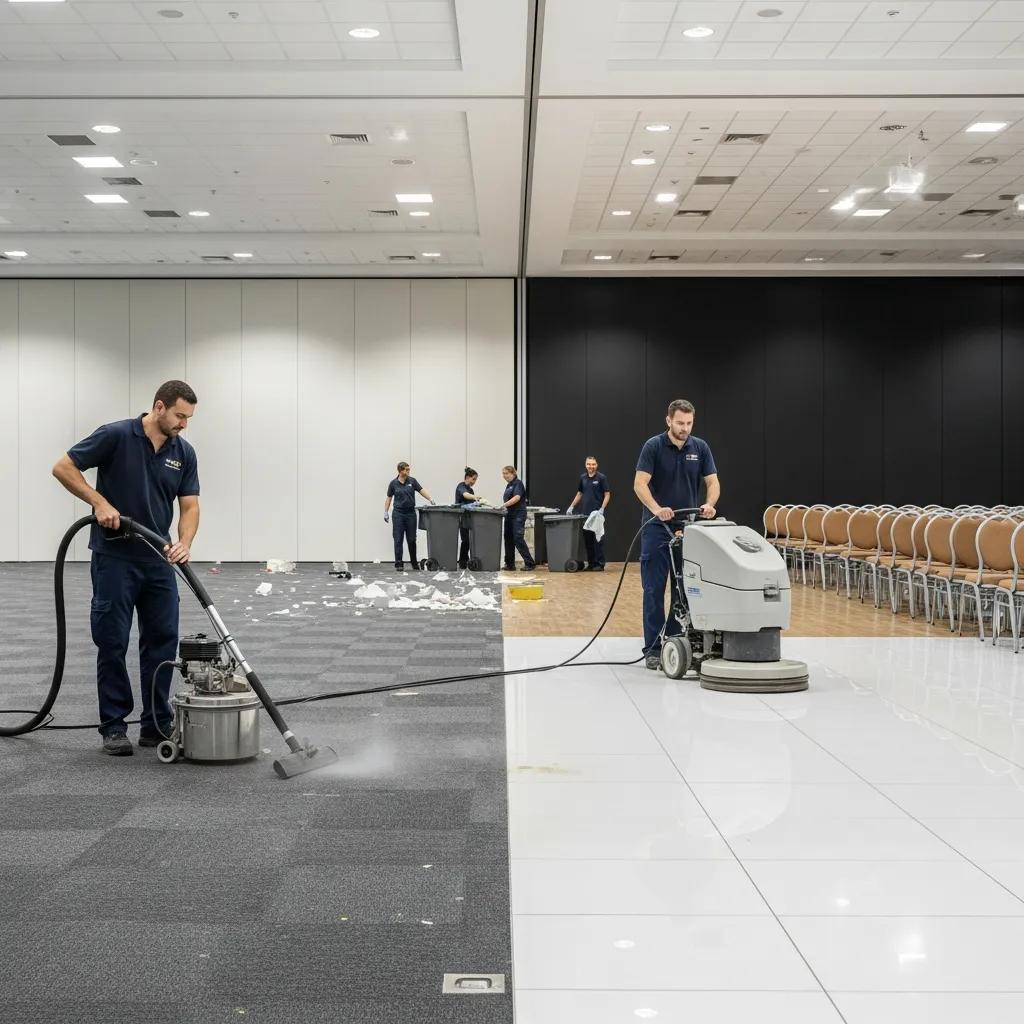
Post-event restoration combines deep cleaning, organised waste removal, specialised floor care and, when necessary, emergency restoration such as flood or major spill recovery to return a venue to pre-event condition and prevent long-term damage. The process typically begins with a damage and waste assessment, followed by staged interventions that prioritise health risks and asset protection. Restoration outcomes include restored floor finish, deodorised and sanitised back-of-house areas, and consolidated waste streams ready for processing or recycling. The H3 subsections below detail standard deep-clean techniques and explain how flood restoration integrates into event recovery efforts.
Deep Cleaning, Waste Removal, and Floor Care Services
Deep cleaning for large venues involves mechanical and chemical methods such as steam cleaning, hot-water extraction, dry compound cleaning and polishing to remove ingrained soils and restore surfaces. Waste removal workflows coordinate on-site sorting into organics, recyclables and general waste with scheduled hauling to licensed facilities; bulky waste is palletised or containerised for efficient transport. Floor care may include stripping and resealing vinyl or polishing and buffing of hard floors, with turnaround expectations dependent on surface type and level of soiling. These methods deliver measurable results—clean appearance, reduced slip hazards and extended floor life—while preparing venues for timely rebooking.
Different floor types require different methods:
- Carpeted areas: Hot-water extraction or dry cleaning to remove embedded debris and stains.
- Hard floors: Scrub-and-seal, polishing and spot repair for scuffs and abrasions.
- Textile and upholstery: Targeted steam extraction and odour remediation for guest-facing furnishings.
These targeted approaches inform realistic timelines for reopening, and in some cases a restoration specialist is required when moisture or structural damage is present.
| Restoration Task | Methods | Expected Outcome |
|---|---|---|
| Floor care | Steam cleaning, polishing, sealing | Restored finish and improved slip resistance |
| Upholstery cleaning | Hot-water extraction, odour neutralisation | Clean, sanitary seating and reduced allergens |
| Waste processing | Sorting, palletising, scheduled haul | Efficient disposal and higher recycling diversion |
Integrating Flood Restoration and Emergency Cleanup Solutions
When events involve severe spills, burst plumbing or stormwater ingress, flood restoration principles are applied to prevent structural damage and mould growth, starting with rapid water extraction, dehumidification and environmental drying. Coordination between cleaning crews and certified restoration teams ensures moisture mapping, targeted sanitisation of affected materials and replacement of compromised finishes where necessary. A generic case example: a rain-driven ingress during an outdoor festival required staged pumping, drying and focused floor repairs before the indoor spaces could be reopened safely. Rapid mitigation limits secondary damage and accelerates return-to-service, and the next section explains which venues most often need specialised services like these.
| Restoration Phase | Immediate Action | Purpose |
|---|---|---|
| Water extraction | Pumping and wet-vacuuming | Remove standing water to prevent saturation |
| Drying | Industrial dehumidifiers and air movers | Lower humidity to avoid mould growth |
| Remediation | Sanitisation and material replacement | Restore hygiene and structural integrity |
This EAV-style table identifies the emergency workflow, clarifying roles and expected outcomes during flood or major liquid incidents.
Which Types of Venues and Events Benefit from Specialised Cleaning Services?
Specialised cleaning services are essential across a spectrum of venues—conference centres, stadiums, exhibition halls, festivals, corporate events and private functions—because each setting presents unique surface types, waste streams and traffic patterns that impact cleaning strategy. Understanding the venue category helps determine staffing, equipment and waste-management needs to maintain hygiene and regulatory compliance. The subsections that follow describe high-capacity fixed venues and temporary-event formats and outline the distinct operational considerations for each type.
Conference Centers, Stadiums, and Exhibition Halls
Large fixed venues such as conference centres, stadiums and exhibition halls demand high-frequency surface care, back-of-house cleaning and complex logistics for large waste volumes and multiple concurrent events. Tasks unique to these sites include large-scale restroom servicing, thorough cleaning of catering zones, and movement coordination for stages and booths to avoid service interruptions. Checklist items often include staged cleaning windows, access plans for heavy equipment and dedicated crews for audience ingress/egress times. Planning at this scale reduces turnaround times and prevents service overlap with subsequent bookings.
- High-traffic surface maintenance and scheduled deep cleans.
- Large-scale waste logistics and dedicated haulage plans.
- Coordination with venue operations and event production teams.
These operational elements set expectations for service levels and inform contractual SLAs that ensure predictable outcomes.
Festivals, Corporate Events, and Private Functions
Temporary events such as festivals, corporate gatherings and private functions differ from fixed venues because they often use temporary infrastructure—tents, portable toilets and staging—requiring mobile cleaning solutions and rapid set-down capabilities. Outdoor festivals need robust waste sorting and litter sweeps across dispersed footprint areas, while corporate events typically require fast turnaround, discreet service and focused attention to guest-facing areas. Waste streams at festivals can include organic food waste requiring composting strategies, whereas private functions may prioritise delicate surface protection and immediate stain removal. These distinctions shape the resource mix and scheduling for cleaning providers.
- Outdoor events: extensive litter management and temporary toilet servicing.
- Corporate events: rapid turnaround and discreet, high-quality presentation cleaning.
- Private functions: tailored stain removal and surface protection measures.
Matching cleaning tactics to event type improves efficiency and reduces post-event restoration costs.
How Does Divine Commercial Cleaning Ensure Sustainable and Eco-Friendly Event Cleaning?
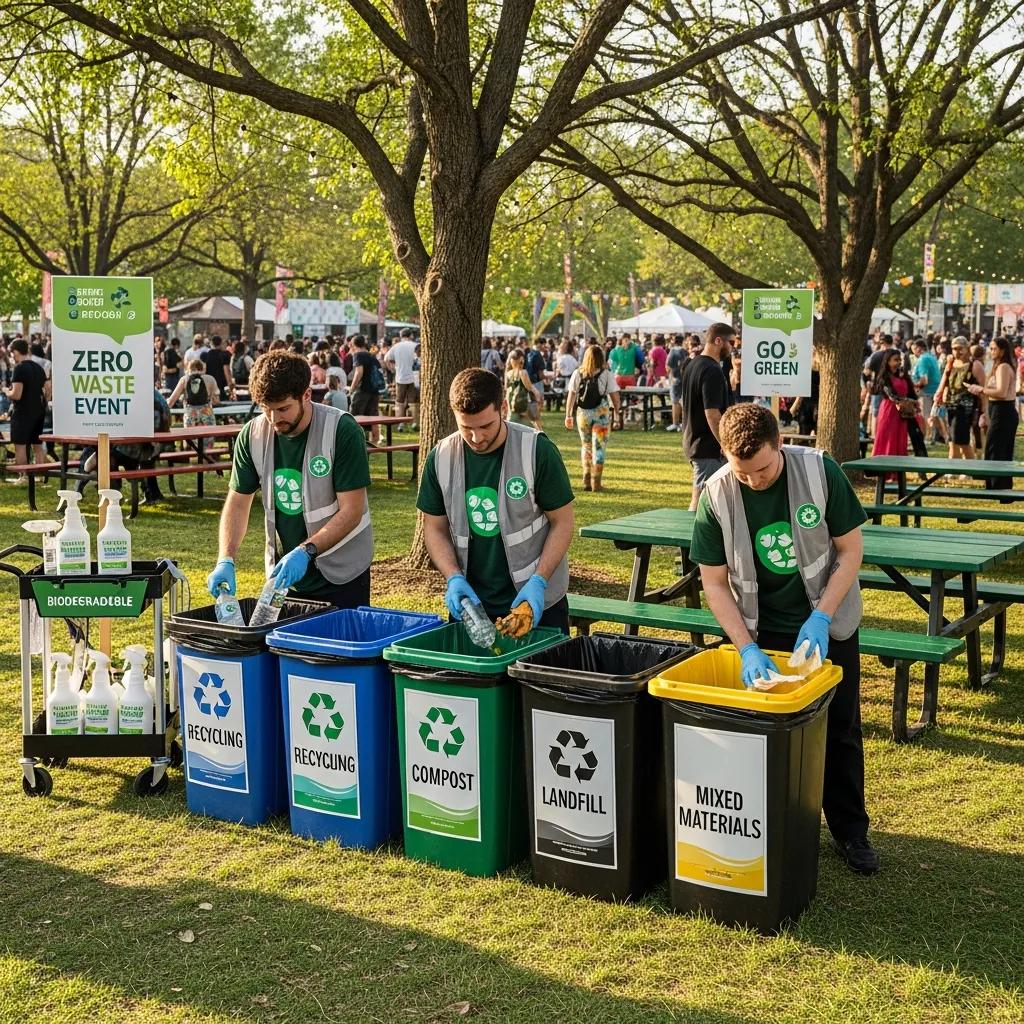
Sustainable event cleaning reduces environmental impact by using low-impact products, maximising recycling diversion and applying operational practices that lower waste and chemical usage while maintaining hygiene standards. Eco-conscious cleaning balances effective sanitisation with biodegradable formulations and waste-sorting protocols that divert materials from landfill. The subsections below explain product choices, on-site waste sorting processes and scalable recycling solutions that provide measurable sustainability benefits for organisers seeking greener events.
Eco-Friendly Products and Waste Sorting Practices
Eco-friendly cleaning uses biodegradable detergents, low-VOC disinfectants and concentrated formulations to reduce packaging waste and chemical load, combined with operational steps like source-separated bins and clear signage to improve recycling capture. On-site staff are briefed on separation rules and provided with collection kits for organics, recyclables and general waste to ensure correct sorting during and after events. These measures reduce landfill volume and lower the carbon footprint associated with waste transport and processing. The following table summarises product types, attributes and sustainability impact to assist procurement decisions.
| Product Type | Attribute | Sustainability Impact |
|---|---|---|
| Biodegradable cleaner | Plant-based surfactants | Reduced aquatic toxicity and compostable packaging |
| Concentrated disinfectant | Lower packaging per use | Fewer deliveries and lower transport emissions |
| Recyclable bin liners | Recyclable materials | Reduced single-use plastic waste |
Sustainable Waste Management and Recycling Solutions
Practical recycling solutions for events include clearly labelled station layouts, timed collection schedules to avoid contamination, partnerships with local composting facilities for organic waste and palletised removal for bulky recyclables. Implementing diversion-friendly logistics can achieve meaningful recovery rates when combined with attendee-facing education and strategically placed signage. Event organisers benefit from simple reporting metrics—tonnes diverted, contamination rate and number of recycling stations—that demonstrate environmental performance to stakeholders. These operational steps provide a direct link between on-the-ground waste handling and venue sustainability targets.
- Implement source-separated stations for organics, recyclables and landfill.
- Use timed collections and containment to reduce contamination.
- Provide post-event diversion reporting to inform continual improvement.
These practices reduce disposal costs and advance event sustainability goals while maintaining the hygiene standards required by organisers.
What Makes Divine Commercial Cleaning the Trusted Choice for Event Venue Hygiene?
Divine Commercial Cleaning positions itself as a family-owned, locally focused provider serving the Sunshine Coast and Brisbane region with customised commercial cleaning and restoration services tailored to events. Trust is built through consistent crews, police checks, comprehensive insurance coverage and a money-back guarantee that offers organisers reassurance when selecting a partner for sensitive or high-profile events. Below are two core trust pillars explained in practical terms and a final business-focused block with contact orientation for quote requests.
Family-Owned Expertise and Customised Cleaning Plans
Being family-owned informs a personalised service model where cleaning plans are customised to event scale, surface types and client preferences to deliver predictable outcomes. Custom plans typically specify crew size, equipment lists, frequency of during-event checks and post-event restoration steps tailored to venue constraints. This approach fosters accountability and local knowledge—particularly useful for Sunshine Coast and Brisbane venues where logistics and local waste-processing options influence operational choices. Organisers gain a single point of coordination and clearer communication through a consistent crew assignment policy.
Reliable Service, Police Checks, and Money-Back Guarantee
- Family-owned accountability and local operational knowledge.
- Consistent crews and police-checked staff for secure access.
- Money-back guarantee and fully insured services for client reassurance.
For a tailored quote covering event cleaning, post-event restoration or emergency flood response in the Sunshine Coast and Brisbane areas, provide venue details and event timing to receive a clear, customised proposal and scope of work.

Dianne, originally from Rockhampton, hails from a business-oriented family, with her father owning electrical stores and her uncle serving as Mayor. Moving to the Sunshine Coast at 13, she later pursued a rewarding real estate career and raised three children. As a single mom, she balanced university studies with domestic cleaning work. Armed with a Bachelor’s Degree in Business, majoring in Supply Chain Management, Dianne founded and grew Divine Commercial Cleaning into a thriving company. Her success is rooted in strong family mentorship, a positive attitude, and a solution-oriented approach, offering tailored cleaning services with integrity and strategic insight.