
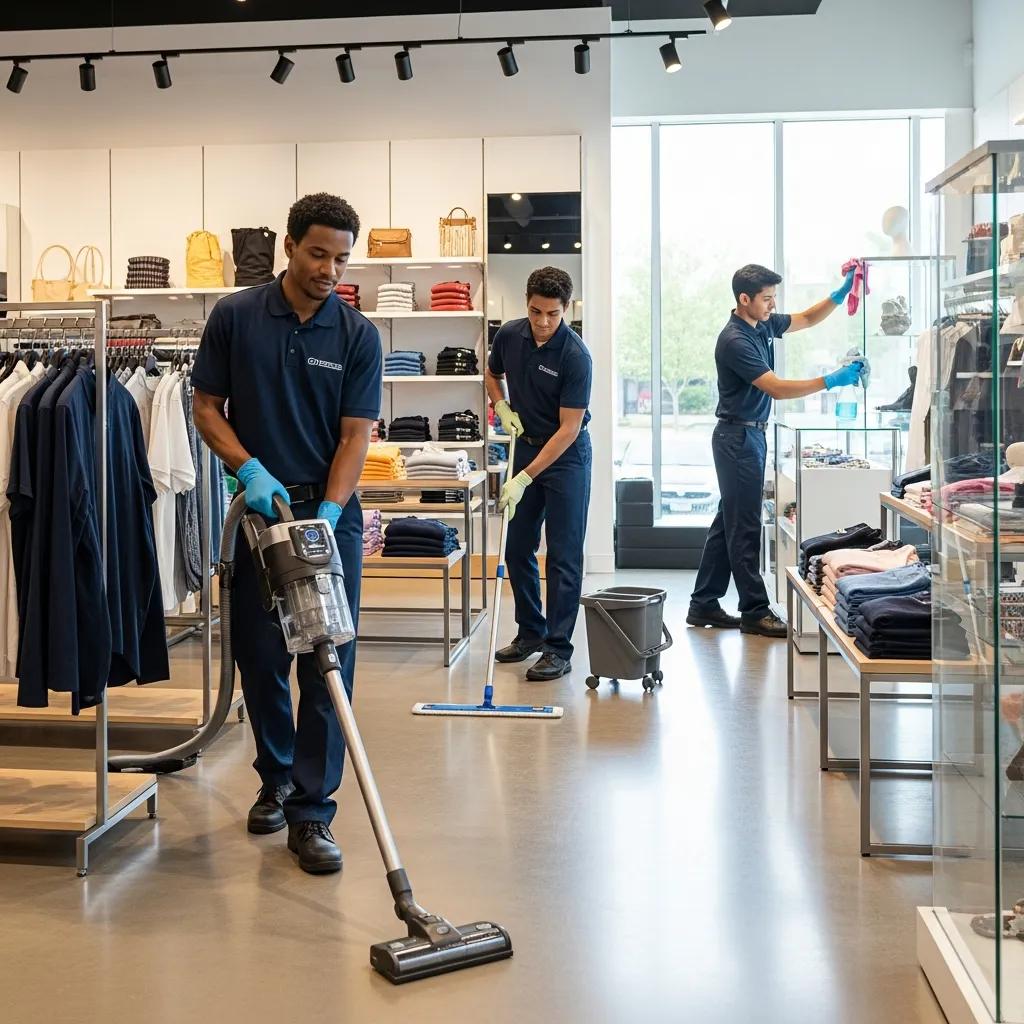
Retail Store and Shopping Centre Cleaning Solutions: Expert Services for Pristine Commercial Spaces
Retail store and shopping centre cleaning covers the full range of facility maintenance required to keep commercial retail environments hygienic, safe and attractive for customers and staff. This article explains how professional retail cleaning improves customer experience, ensures compliance with hygiene expectations, and extends the life of floors, fixtures and equipment across Sunshine Coast and Brisbane locations.
You will read practical recommendations for shopping centre cleaning, a breakdown of cost drivers and pricing considerations for Queensland businesses, plus sustainable methods that reduce environmental impact while maintaining high standards. The guide also outlines a proven six-step operational process used by experienced providers and explains how to request a free tailored quote with the exact information assessors need.
Throughout, the focus is on actionable guidance for managers and facility teams seeking reliable retail cleaning services, including specialised tasks like floor care, window cleaning, and high-touch disinfection for high-traffic retail environments.
Why Choose Professional Retail Store Cleaning in Sunshine Coast?
Professional retail store cleaning is a specialised commercial service that combines facility maintenance techniques with retail-focused standards to protect brand image and customer health. By using trained teams, appropriate equipment and repeatable quality checks, professional cleaning reduces slip hazards, restores product presentation and supports hygiene compliance for public-facing areas. The mechanism that produces value is predictable, scheduled maintenance that targets high-touch points, flooring, and restrooms so stores stay welcoming during trading hours and resilient between busy periods. Choosing a local professional provider also brings operational advantages for Sunshine Coast retailers through regional knowledge of foot-traffic patterns and environmental considerations.
Professional cleaning delivers measurable business benefits that include improved customer perception and lower incident rates. These benefits translate into operational outcomes like longer asset life for flooring and lower emergency cleaning spend. For retailers seeking reliable delivery, consider providers that emphasise local relationships and transparent communication to align cleaning schedules with trading patterns.
For added confidence, Divine Commercial Cleaning offers several trust signals relevant to Sunshine Coast businesses: family owned and operated teams, experienced professional cleaners, fully-insured staff, police checks for staff, and environmentally conscious practices. These attributes support consistent service delivery and can be requested when seeking a tailored quote from the provider.
How Does Retail Cleaning Enhance Customer Experience and Store Image?

Retail cleaning enhances customer experience primarily by maintaining visual appeal and a sense of safety, which influences dwell time and purchasing behaviour. Clean floors, clear glass storefronts and spotless displays allow merchandise to stand out and reduce barriers to engagement, while well-maintained restrooms and waste management reduce negative impressions that can quickly erode brand trust. The mechanism is straightforward: cleanliness signals professionalism and care, which increases shopper confidence and the likelihood of return visits. This effect is amplified in high-touch categories such as apparel and food retail where perceptions of hygiene directly affect purchase decisions.
Operational outcomes include fewer slip-and-fall incidents due to proactive floor care and quicker recovery from spills because of immediate-response protocols. Retail managers should prioritise visible touchpoints and customer pathways when allocating cleaning frequency to deliver the maximum perceptual benefit per cleaning hour. Understanding these customer-facing mechanics leads naturally into knowing the regulatory and practical standards that apply to retail settings in Australia.
What Are the Key Retail Store Cleanliness Standards in Australia?
Retail stores in Australia are expected to meet general public-hygiene expectations and specific safety guidelines from authorities such as Safe Work Australia and local public health directives; these demands cover safe cleaning practices, waste handling and slip-prevention measures. Key components are routine disinfection of high-touch surfaces, appropriate management of food-preparation zones where applicable, and documented procedures for cleaning chemicals and equipment storage to meet occupational safety requirements. The reason these standards matter is they reduce risk to customers and staff while protecting businesses from liability and reputational harm. Retailers should use cleaners who understand these national and local expectations and who can document compliance through checklists and service records.
Practical steps to meet standards include scheduled deep cleans for restrooms and food court adjacent areas, daily sanitisation of tills and customer-facing counters, and routine floor maintenance matched to floor type. Knowing these standards guides procurement decisions and informs dialogues with cleaning providers when drafting tailored service proposals.
Comprehensive Shopping Center Cleaning Services in Brisbane
Shopping centre cleaning in Brisbane requires scalable solutions that manage large common areas, multiple retail tenancies and specialised facilities such as food courts, escalators and restrooms. At its core, comprehensive shopping centre maintenance combines daily cleaning operations with periodic deep-cleaning cycles, incident response capability and equipment suited for broad high-traffic surfaces. The mechanism that ensures cleanliness at scale is coordinated scheduling, zoned resource allocation and clear communication with centre management to minimise disruption during peak trading times. Effective mall cleaning emphasises both aesthetic presentation and hygiene control across circulation spaces and communal amenities.
Managing the complexity of a shopping centre also involves vendor coordination for waste streams, event cleaning plans for promotions and robust protocols for grease and odour control in food areas. These operational practices protect tenant satisfaction and public perception, which in turn supports occupancy rates and a positive customer environment.
What Specialised Cleaning Solutions Are Essential for Shopping Centres?
Specialised shopping centre tasks include escalator and elevator cleaning, intensive grout and tile restoration in food courts, large-area floor maintenance and event-driven deep cleans; these jobs require specific equipment and trained operators to execute safely and effectively. Escalator cleaning focuses on debris removal from steps and combs, degreasing moving parts and cleaning handrails to reduce mechanical wear and customer complaints, while elevator work involves tight-space sanitation and control of trip hazards. Grout and tile work often requires rotary scrubbing and sealing to restore appearance, whereas large-area floor care uses autoscrubbers and burnishers calibrated to surface type. The reason these tasks are specialised is they demand methods that balance performance with non-disruptive scheduling to avoid mall access issues.
Choosing the right cadence for each specialised task depends on foot traffic and tenancy mix, and providers commonly deploy weekly, monthly and quarterly plans tailored to zones of the centre. Understanding these options helps centre managers prioritise interventions that deliver visible improvements without interrupting trade.
How Often Should Shopping Centres Be Cleaned for Optimal Hygiene?
Shopping centres require a layered cleaning cadence that combines continuous daily attention with nightly deep cleans and periodic intensive tasks to maintain hygiene and appearance. Daily activities include litter pick-up, restroom sanitation, high-touch surface disinfection and waste collection, which keep the centre functional through trading hours. Nightly or after-hours cleaning performs more disruptive tasks such as floor polishing, escalator deep cleaning and food court degreasing to avoid impacting customers and tenants. Periodic tasks—monthly grout restoration, quarterly high-pressure external cleaning and annual full-surface sealing—address cumulative wear and stains that routine cleaning cannot remove.
Recommended frequency at a glance:
- Daily: litter removal, high-touch disinfection, restrooms, and waste management.
- Nightly (after-hours): floor polishing, machine scrub of high-traffic zones, and escalator deep clean.
- Weekly to monthly: window polishing for atriums, grout maintenance, and targeted upholstery or seating cleaning.
- Quarterly to annual: high-pressure external cleaning, major restorative floor treatments, and large-scale carpet extraction.
These cadences align hygiene needs with operational constraints to ensure customer safety while preserving the centre’s aesthetic value.
Understanding Commercial Cleaning Costs for Retail Businesses in Queensland
Understanding pricing for retail cleaning in Queensland begins with recognizing the main cost drivers and how they interact: size of area, foot traffic intensity, service frequency, and specialised equipment needs. Pricing mechanisms typically bundle labour, consumables and equipment amortisation into a per-visit or monthly contract figure; the reason this matters is transparency in drivers helps retailers plan budgets and evaluate ROI. Cost management strategies include optimising frequency for high-impact zones, using zoned scheduling to concentrate resources where needed, and choosing eco-efficient products that reduce consumable spend over time. Knowing these structures empowers retail managers to compare quotes on an apples-to-apples basis.
Below is a comparison table that clarifies typical cost drivers and their impact on pricing to help retailers understand what influences quotes without relying on fixed price lists.
This table clarifies drivers to consider when reviewing proposals.
| Service Type | Cost Driver | Typical Impact on Price |
|---|---|---|
| Daily General Cleaning | Square metres and staff hours | Higher area increases labour and time costs linearly |
| High-Traffic Floor Care | Foot traffic and floor material | Heavy traffic and difficult floors raise frequency and equipment needs |
| Specialised Services | Equipment and chemical requirements | Escalator, pressure washing and grout work increase per-job cost |
| Incident Response | Response time and resource mobilisation | After-hours or emergency calls typically cost more due to urgency |
For retailers comparing providers, Divine Commercial Cleaning emphasises transparent proposals and customised solutions that avoid lock-in contracts and offer consistent personnel where possible. Those features—no lock-in contracts, customised solutions, same cleaner every time, reliable service and a money-back guarantee—are designed to deliver value through predictability and accountability while keeping procurement flexible.
What Factors Influence Retail Cleaning Service Pricing in Australia?
Several variables determine retail cleaning costs in Australia: the total floor area measured in square metres, the nature of floor finishes (e.g., carpet, vinyl, stone), average daily foot traffic and the frequency of service visits. Each factor changes how much labour, equipment and consumables are required, so a large supermarket with heavy traffic will incur higher ongoing costs than a small boutique with lower turnover. Specialised tasks such as high-pressure external cleaning, escalator maintenance or tile and grout restoration introduce additional equipment and skilled operator costs. Understanding these drivers allows retailers to optimise contracts by focusing resources on critical zones and by choosing service frequencies that balance cost against perceived cleanliness.
Retail businesses should request itemised quotes that separate routine cleaning from specialised and occasional services to make budgeting transparent and to identify opportunities for cost savings through scheduling adjustments.
How Does Divine Commercial Cleaning Provide Value Through Customised Solutions?
Divine Commercial Cleaning provides value by tailoring schedules and service mixes to a client’s unique requirements while emphasising trust and accountability attributes supplied by the company. Customised solutions reduce unnecessary visits and focus resources where they produce the highest impact, which lowers wasteful spending and better matches cleaning to trading patterns. Practical benefits include assignment of the same cleaner where feasible to build institutional knowledge, fully-insured operations that reduce client risk, and police-checked staff for added security in public spaces. These service attributes, combined with transparent communication and a money-back guarantee, help clients assess performance and ensure the plan meets operational goals without being locked into inflexible contracts.
This value proposition supports long-term relationships by aligning cleaning outcomes with business priorities and by enabling measurable quality expectations.
Eco-Friendly and Sustainable Retail Cleaning Practices
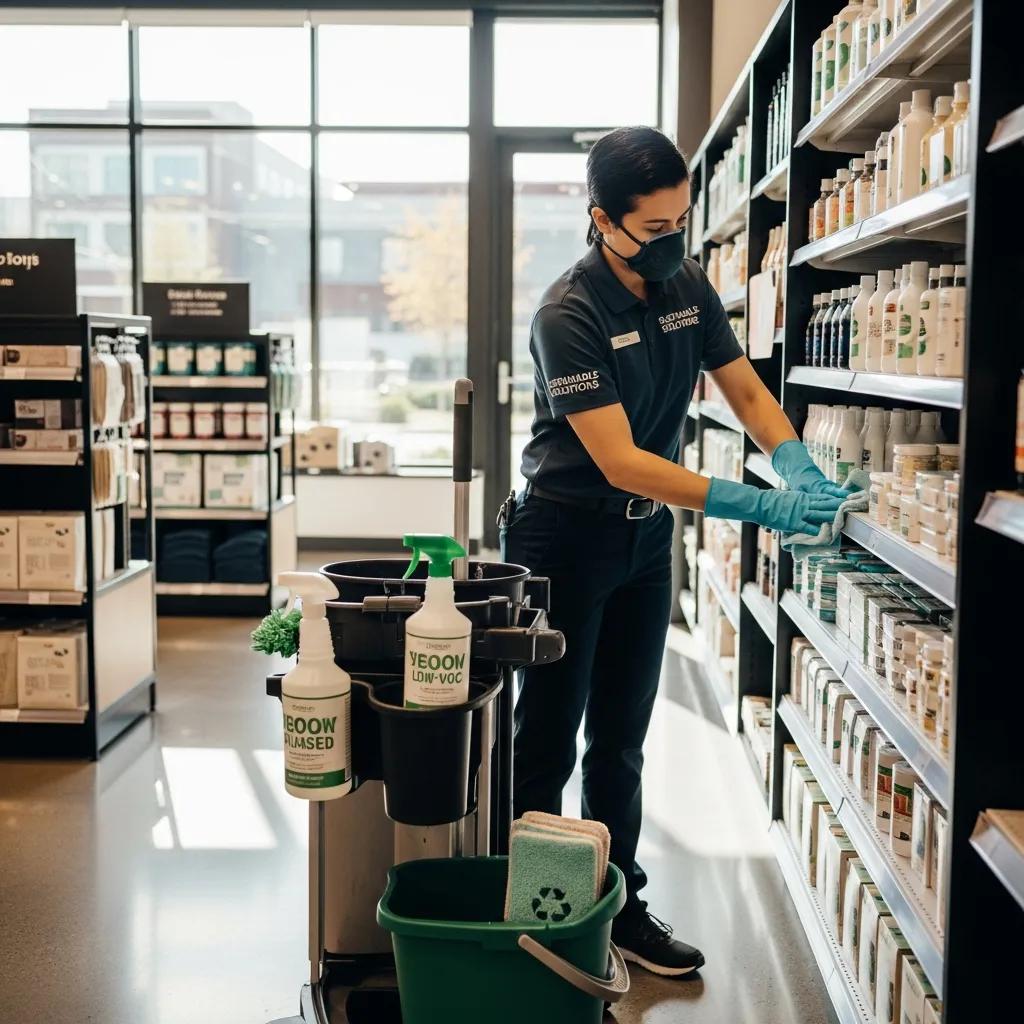
Sustainable retail cleaning uses low-VOC products, efficient dosing systems, microfibre technology and water-saving equipment to reduce environmental impact while maintaining hygiene and appearance. The mechanism behind sustainable benefits is reducing chemical and water consumption without compromising efficacy, which improves indoor air quality and lowers ongoing consumable costs. Retailers adopting sustainable practices often see fewer customer complaints related to odour and irritation, and can communicate environmental stewardship to their customer base. Implementing these practices involves selecting proven methods, training staff in concentrated dosing and employing equipment that balances throughput with conservation.
Below is a table summarising common eco-friendly products and methods, their environmental benefits and operational impacts to help facility managers choose practical options.
The following table outlines sustainable cleaning methods and their operational effects.
| Product / Method | Environmental Benefit | Operational Impact |
|---|---|---|
| Microfibre systems | Reduced chemical use | Better soil pickup, lower chemical reliance |
| Low-VOC disinfectants | Improved indoor air quality | Safer for staff and customers, fewer complaints |
| Concentrated dosing systems | Less packaging waste | Lower storage needs and reduced waste |
| Water-efficient machines | Reduced water consumption | Lower utility costs and faster drying times |
What Eco-Friendly Products and Methods Are Used in Retail Cleaning?
Common eco-friendly options include microfibre cloths that trap dirt without heavy chemical usage, low-VOC and biodegradable cleaning solutions that reduce airborne irritants, and concentrated dosing systems that minimise packaging waste and ensure consistent mixes. Equipment choices such as water-efficient scrubbers and controlled-dosage dispensers reduce resource use while maintaining effective cleaning performance. The practical reason to adopt these methods is they lower long-term consumable costs and improve indoor air quality, which benefits customers and staff alike. Implementing these products requires training and procurement adjustments but yields measurable reductions in chemical volumes and waste streams over time.
Transitioning to sustainable methods also supports brand positioning and can be communicated to shoppers as part of wider environmental initiatives.
How Do Sustainable Practices Benefit Retail Businesses and Customers?
Sustainable cleaning practices benefit retailers by lowering utility and consumable expenses, improving indoor air quality and reducing complaints linked to harsh chemical smells. Customers perceive environmentally aware retailers more positively, which can enhance brand preference among increasingly eco-conscious shoppers. Operationally, better-trained staff and consistent dosing reduce variability in outcomes, which maintains service quality and reduces rework. These benefits combine to provide both short-term improvements in shopper comfort and longer-term cost savings and reputational benefits.
The next section explains a structured operational process that applies both standard and sustainable practices to deliver consistent, auditable results.
Our Proven 6-Step Process for Retail and Shopping Centre Cleaning Excellence
A structured six-step process ensures predictable outcomes from initial consultation through to ongoing review, creating a repeatable framework for quality in retail cleaning. The steps—consultation, customised scheduling, execution, quality control, client feedback and periodic review—work together to translate client needs into measurable service delivery. This mechanism reduces risk by standardising procedures, assigning responsibilities and documenting results so clients can track performance over time. Clear process steps also enable providers to scale operations across multiple retail sites and shopping centre zones while maintaining consistent standards.
Below is an EAV-style table that maps the six steps to typical tasks and the value they deliver for retail clients, clarifying execution expectations.
The following table shows each process step, sample tasks and the client value delivered.
| Process Step | Typical Tasks | Value Delivered |
|---|---|---|
| Consultation | Site walk, requirement capture | Tailored plan aligned to trading hours |
| Scheduling | Zone-based roster planning | Minimal disruption, optimal coverage |
| Execution | Daily cleaning tasks and specialised jobs | Consistent appearance and hygiene |
| Quality Control | Checklists, site reports | Documented performance and accountability |
| Client Feedback | Regular review meetings | Continuous improvement and responsiveness |
| Periodic Review | Adjust schedules, implement upgrades | Long-term cost optimisation and standards upkeep |
At the end of this operational description, Divine Commercial Cleaning’s operational attributes—same cleaner every time, police-checked staff, fully-insured teams and a focus on transparency and open communication—support the process by creating trust and consistency in execution. Interested businesses can request a tailored proposal referencing these operational assurances.
How Does Tailored Scheduling and Quality Control Ensure Consistent Results?
Tailored scheduling assigns cleaning resources to match shop trading patterns and peak customer flows, minimising disruption while focusing effort where it most improves perception and safety. Quality control uses standardised checklists, photographic records and supervisory spot checks to ensure tasks are completed to agreed standards and to create a traceable service history. The mechanism that links scheduling and QC is feedback-driven refinement: data from checklists informs scheduling adjustments to close performance gaps. Together, these practices reduce variability, improve predictability and allow centre managers to verify outcomes against service-level expectations.
Documented QC and tailored schedules also make it straightforward to scale or alter services as tenant mixes and seasonal demand change.
What Role Does Client Feedback Play in Continuous Service Improvement?
Client feedback creates a closed loop where observed issues, tenant requests and management priorities are captured and translated into service adjustments during scheduled reviews. Regular feedback—collected through simple structured forms or review meetings—helps identify recurring problems and informs training, scheduling or equipment changes that address root causes. The reason feedback matters is it drives measurable improvement and increases client satisfaction, which supports retention and long-term value. Providers that incorporate client input into regular review cycles demonstrate responsiveness and an evidence-based approach to service refinement.
This feedback mechanism reinforces operational transparency and ensures cleaning plans evolve as site needs change.
How to Get a Free, Tailored Quote for Retail and Shopping Centre Cleaning
Requesting a free tailored quote begins with providing basic site and operational details so assessors can prepare a relevant proposal and, if needed, arrange an onsite assessment. The process usually starts with a brief overview of the facility, followed by a scoping conversation and proposed schedule options; the value of this approach is a proposal that reflects real needs rather than a generic price. When preparing to request a quote, collect the essential information below to streamline the assessment and improve the accuracy of the proposal. After submission, expect a follow-up to clarify access, special requirements and preferred scheduling windows before a finalised tailored quote is issued.
Below is a practical checklist of information to gather before requesting a customised cleaning proposal.
What Information Is Needed to Request a Customised Cleaning Proposal?
Prepare the following details to help providers produce an accurate tailored quote: site size and layout, high-traffic zones and peak trading hours, current cleaning frequency and known problem areas, floor types and any specialised equipment access requirements. Also include any compliance needs (for food handling or specific health requirements), preferred access times for cleaners and whether consistent staff assignment is a priority. Including photos or schematics of the premises speeds assessment and reduces the need for multiple clarifying calls. These data points allow assessors to recommend an appropriate mix of routine and specialised services tailored to operational realities.
Having this information available accelerates the quoting process and improves alignment between proposed services and budget expectations.
How Can Businesses Contact Divine Commercial Cleaning for Expert Services?
Businesses can request a tailored quote or general information by contacting Divine Commercial Cleaning using the provided phone number, email address or by visiting the company’s local presence in Queensland; include the checklist details above to expedite the assessment. Provide site size, traffic patterns and special requirements in your initial message so the assessor can prepare an accurate proposal and, if necessary, schedule an onsite visit.
Divine Commercial Cleaning’s published contact points for quote requests are:
- Phone: 0459 949 969
- Email: info@divinecleaning.com.au
- Business Address: 5 Bluff St, Birtinya, QLD 4575
After initial contact, expect a follow-up to confirm access arrangements and any compliance needs before a tailored proposal is returned.
This direct contact path supports the company’s lead-generation objective while ensuring proposals are grounded in the client’s operational context.

Dianne, originally from Rockhampton, hails from a business-oriented family, with her father owning electrical stores and her uncle serving as Mayor. Moving to the Sunshine Coast at 13, she later pursued a rewarding real estate career and raised three children. As a single mom, she balanced university studies with domestic cleaning work. Armed with a Bachelor’s Degree in Business, majoring in Supply Chain Management, Dianne founded and grew Divine Commercial Cleaning into a thriving company. Her success is rooted in strong family mentorship, a positive attitude, and a solution-oriented approach, offering tailored cleaning services with integrity and strategic insight.