Professional Commercial Vinyl and Laminate Flooring Cleaning and Protection Services for Businesses
Professional commercial vinyl and laminate floor cleaning combines specialist equipment and floor-safe solutions to restore appearance, improve hygiene and extend flooring lifespan for businesses. This article explains how targeted cleaning and protection preserves the wear layer, reduces infection risk in hygiene-sensitive environments, and lowers total lifecycle costs for commercial flooring. Facility managers and business owners will learn practical maintenance routines, evidence-based cleaning techniques, and recommended schedules for different traffic levels, with a focus on vinyl floor cleaning, laminate floor care, resilient flooring maintenance and commercial LVT cleaning solutions.
We cover step-by-step processes, eco-friendly product choices, and protective treatments such as strip and seal flooring for high-wear or medical settings. Each section provides actionable checklists, comparison tables, and clear signals for when to escalate to professional deep cleaning. Read on to compare methods, understand frequency guidelines, and see how targeted maintenance protects flooring investment while maintaining a safe, attractive workplace.
Why Choose Professional Commercial Vinyl Floor Cleaning?
Professional commercial vinyl floor cleaning uses purpose-built equipment and pH-neutral, low-moisture products to remove embedded soil and preserve the wear layer, improving safety and aesthetic appeal. The process reduces slip hazards by extracting grit and residues that abrade vinyl, it restores visual sheen to support brand impression, and it delays premature replacement by preserving protective finishes.
Businesses benefit from scheduled professional service because cleaning is faster, more consistent, and less disruptive than ad hoc in-house attempts, which often use inappropriate cleaners or abrasive tools. Choosing professionals also ensures compliance with manufacturer recommendations, protecting warranties while delivering measurable cost savings over time.
Vinyl floor cleaning provides several quantifiable outcomes that matter to commercial operators. Regular professional maintenance can reduce replacement cycles, lower liability from slips, and strengthen first impressions for customers and patients through consistent appearance. These benefits lead naturally to a focus on trusted providers and verified safety practices, which is why many businesses prefer vetted contractors for ongoing programs.
For organisations evaluating providers, Divine Commercial Cleaning offers customised solutions and environmentally conscious practices, with police-checked staff and a money-back guarantee to build trust. Their family-owned approach serving the Sunshine Coast and Brisbane emphasises reliable service and no lock-in contracts; businesses seeking a quote can request a tailored maintenance plan to match traffic patterns and hygiene requirements. Understanding the practical benefits of professional service leads to the next consideration: the specific advantages vinyl cleaning delivers day-to-day.
Vinyl floor cleaning yields distinct operational improvements, and the following list highlights the core business outcomes that facility managers track when they switch to professional care.
Vinyl floor cleaning delivers three primary business benefits:
- Improved Hygiene and Safety: Professional extraction of contaminants reduces bacteria reservoirs and slip risk.
- Appearance and Brand Impact: Restored sheen supports positive customer and patient impressions.
- Cost Efficiency: Preserving finishes reduces frequency of costly replacement and repair.
These advantages explain why commercial operators prioritise scheduled professional cleaning, and they lead directly into specific benefits that businesses experience when cleaning is performed to industry best practices.
What Are the Key Benefits of Vinyl Floor Cleaning for Businesses?
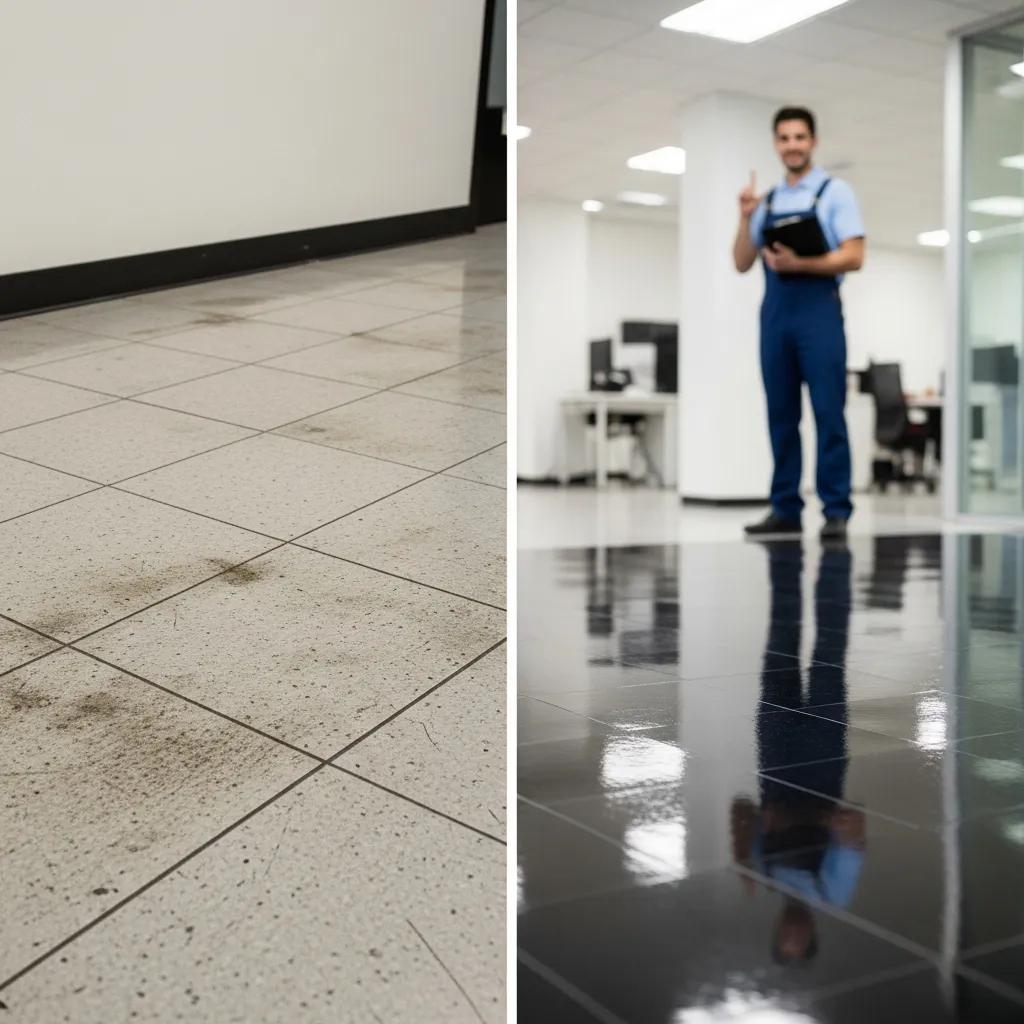
Professional vinyl floor cleaning reduces slip-and-fall risk by removing fine abrasive particles and residues that decrease traction and damage the wear layer. This mechanism directly lowers liability exposure and improves workplace safety metrics, which is critical for retail, healthcare and hospitality settings where foot traffic is constant. A restored surface also enhances lighting reflectance and perceived cleanliness, contributing to customer satisfaction and employee morale. Furthermore, by maintaining the finish and preventing accelerated wear, businesses realise lower capital expenditure on flooring replacement over time. These outcomes combine to make regular professional vinyl floor cleaning an economically sensible component of facility maintenance.
Operationally, businesses see fewer reactive repairs and simpler daily upkeep following a deep professional clean. This predictable maintenance reduces downtime and makes budgeting more straightforward for facility managers. The next section explains how targeted cleaning works to improve both hygiene and appearance in practical terms.
How Does Vinyl Floor Cleaning Improve Hygiene and Appearance?
Vinyl floor cleaning improves hygiene and appearance through sequential removal of surface soils, deep extraction of embedded contaminants, and application or maintenance of protective finishes that resist staining. The first step is routine dry and damp cleaning to remove loose grit and spills; the second step uses low-moisture, pH-neutral deep-cleaning techniques to lift residues without damaging vinyl or adhesives. When necessary, protective top-coats or buffing restore sheen and create a surface that repels soils, making daily maintenance more effective. This combination reduces bacterial load, prevents scuffing, and restores uniform appearance across high-traffic zones.
By preserving the finish and slowing wear-layer abrasion, these methods sustain the floor’s original aesthetic and functionality. Controlled cleaning techniques minimise moisture exposure—particularly important where vinyl interfaces with other materials—so that flooring warranties and manufacturer guidance remain intact. Understanding these mechanisms clarifies why specific laminate and LVT protocols differ, which we explore next in the context of laminate floor maintenance.
How Does Divine Commercial Cleaning Perform Expert Laminate Floor Maintenance?
Laminate floor care focuses on low-moisture cleaning, targeted stain removal and preventive measures to protect the underlayment and interlocking joints. The core sequence involves inspection and spot testing, followed by careful dry-cleaning to remove grit, a low-moisture deep clean with pH-neutral solutions, and protective recommendations such as entrance matting and furniture pads. These steps maintain the integrity of the laminate surface and underlayment, limit swelling risk from moisture, and support long-term appearance retention in commercial environments. For hygiene-sensitive sites such as medical and dental practices, Divine Commercial Cleaning can include a strip and seal flooring add-on to renew protective surface layers where appropriate.
To compare typical laminate maintenance steps, products, and outcomes, the following table summarises common approaches and their expected benefits.
| Maintenance Step | Product/Tool | Primary Outcome |
|---|---|---|
| Inspection & Spot Testing | Visual inspection, pH-neutral wipe | Identifies sensitive areas and prevents damage |
| Low-Moisture Deep Clean | pH-neutral cleaner, microfiber pads | Removes embedded dirt without swelling joints |
| Protective Measures | Entrance matting, furniture pads | Reduces grit abrasion and concentrated wear |
What follows is the operational procedure used during a laminate floor deep clean for businesses.
What Are the Steps in Our Laminate Floor Deep Cleaning and Protection?
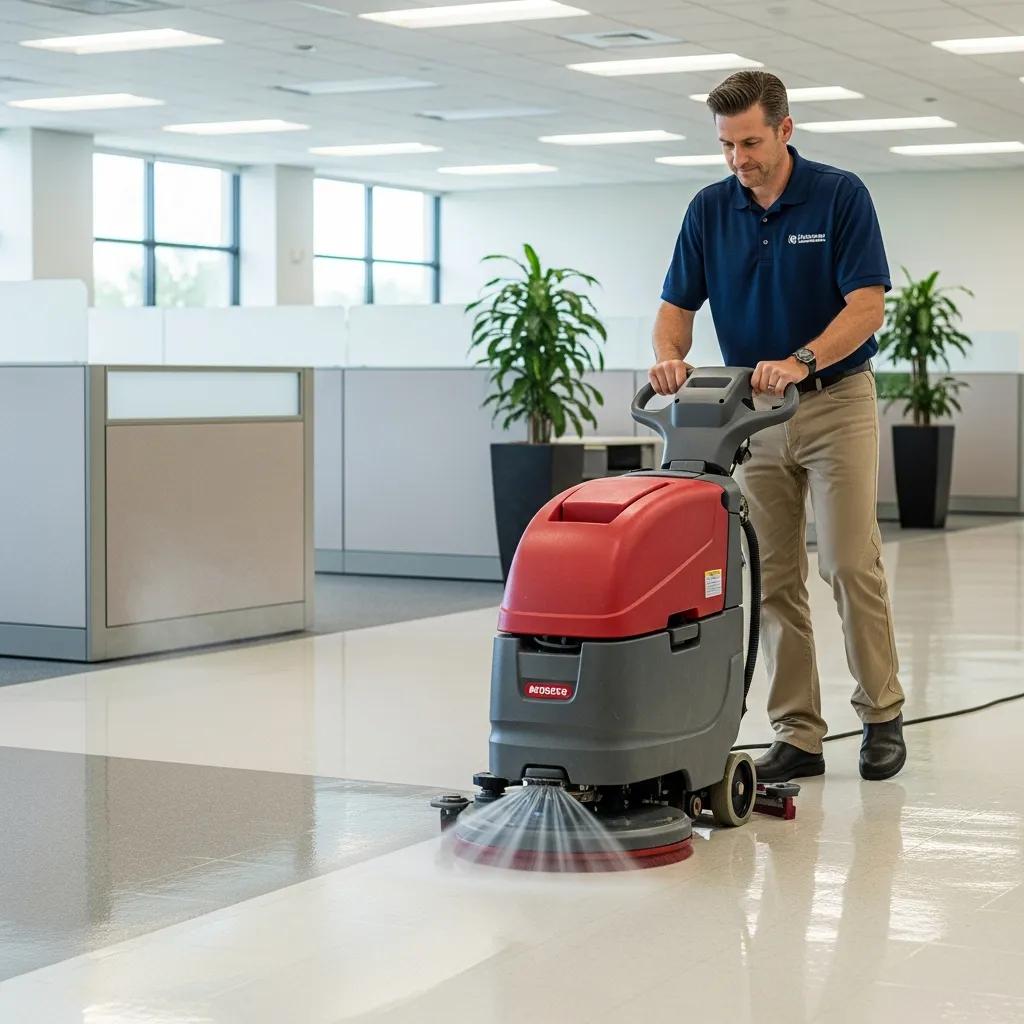
Professional laminate deep cleaning begins with a thorough assessment and sample patch testing to confirm compatibility with cleaners, preventing finish degradation. The next step is dry soil removal using microfiber sweepers and automatic scrubbers with controlled settings to avoid over-wetting; this is followed by low-moisture spot cleaning with pH-neutral formulas to lift stubborn grime. After cleaning, technicians apply recommended preventative measures—such as protective mats at entrances and felt pads under furniture—to reduce future abrasion and localised damage. For floors showing extensive wear or finish failure, a strip-and-seal add-on restores protection by removing old coatings and applying low-VOC, compatible sealants suited to laminate or adjacent resilient surfaces. Expected downtime is typically limited to a few hours for most commercial areas, with scheduling tailored to minimise operational disruption.
These steps are designed to protect warranties and maintain visual uniformity, which naturally leads to a discussion of the green product choices used in laminate maintenance.
Which Eco-Friendly Products Are Used for Laminate Floor Care?
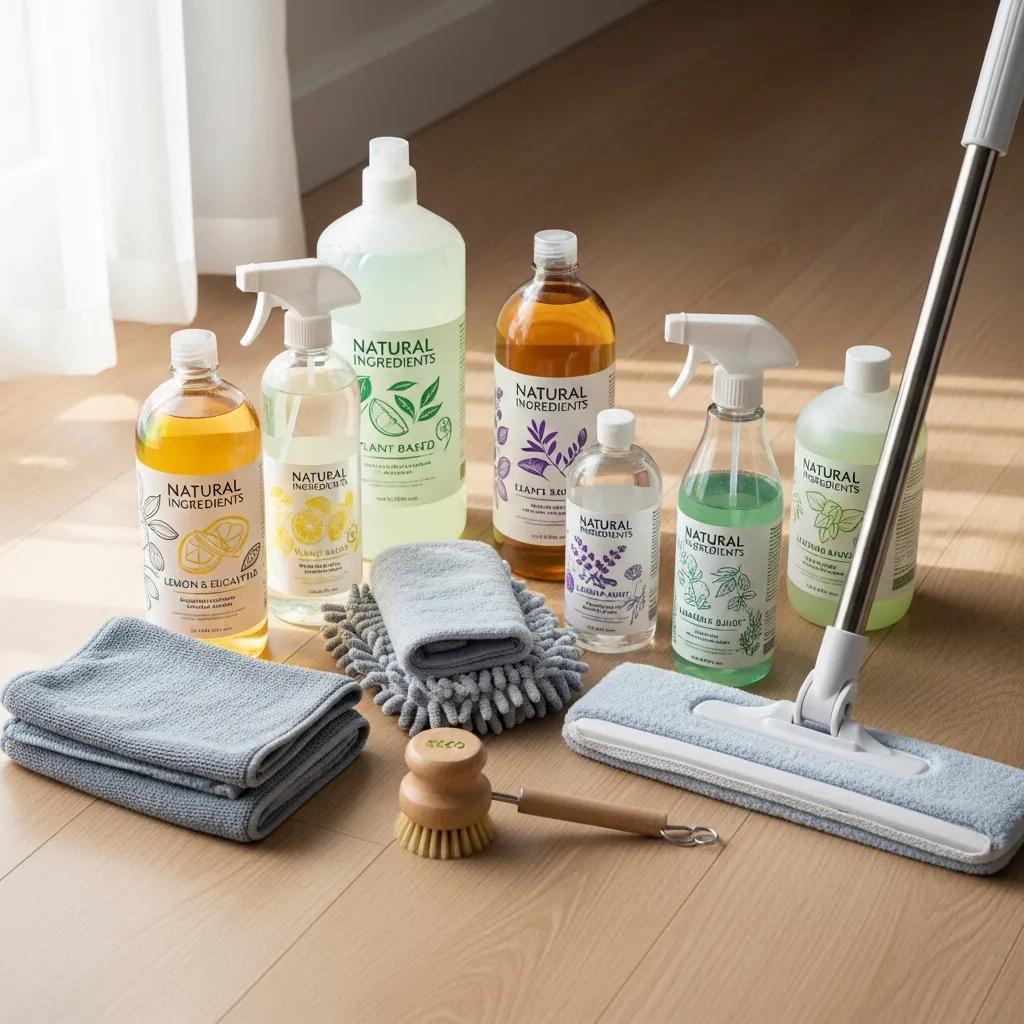
Eco-friendly laminate floor care prioritises pH-neutral, low-VOC cleaners and buffered microfiber tools that clean effectively with minimal chemical load. Preferred product categories include water-based cleaners formulated for resilient and laminate surfaces, biodegradable detergents that rinse clean, and sealants with certified low-VOC content when protective coatings are required. Harsh solvents, abrasive powders and steam cleaners are explicitly avoided because they can delaminate the wear layer or damage seams. Using these gentler product classes reduces indoor air emissions, supports allergy-sensitive environments, and aligns with modern procurement policies focused on environmental responsibility.
Choosing compatible, green products also reduces the risk of long-term chemical damage to flooring materials, which keeps floors looking better between professional maintenance cycles. The explanation above prepares us to consider cleaning approaches across other resilient floor types commonly found in commercial spaces.
What Are Effective Resilient Flooring Cleaning Services for Commercial Spaces?
Resilient flooring covers multiple materials—rubber, linoleum, vinyl composition tile (VCT) and luxury vinyl tile (LVT)—each requiring tailored methods to preserve surface quality and slip resistance. Effective service programs begin with material identification and manufacturer guidance, then select appropriate equipment such as automatic scrubbers for robust resilient tiles or manual microfiber systems for delicate linoleum. Preventative maintenance plans combine daily housekeeping with scheduled professional deep cleans and, where applicable, periodic strip-and-seal operations to renew protective finishes. These combined measures reduce staining, maintain traction, and extend service life across high-traffic zones.
Because resilient floors face varied challenges—from oil deposits in industrial zones to scuffing in retail aisles—service frequency and technique adapt to the environment. The next subsection maps specific methods to resilient flooring types so facility managers can match cleaning resources to material needs.
Before that, here is a short checklist summarising the services appropriate for resilient floors.
- Material assessment and manufacturer alignment: Confirm recommended cleaners and restrictions.
- Daily maintenance: Regular sweeping and damp mopping to prevent grit buildup.
- Scheduled deep cleaning: Controlled scrubbing and reapplication of protectant as needed.
How Do We Maintain Different Types of Resilient Flooring?
Maintenance varies by resilient type: rubber and linoleum benefit from gentle low-pH cleaners and soft buffing, while VCT often requires stripping, sealing and heavy-duty scrubbing to remove embedded soils. LVT typically needs microfiber mopping and low-abrasion buffing to protect printed surfaces and the wear layer. Equipment choices reflect material sensitivity: automatic scrubbers with appropriate pad selection for VCT, and manual microfiber systems for delicate linoleum or decorative LVT. Specialist strip-and-seal services are reserved for VCT or heavily soiled areas where the finish has failed; these services restore protective coatings and improve long-term durability. Matching method to material minimises damage and maximises cost-effectiveness.
Selecting the right approach prevents common mistakes such as overuse of abrasive pads on LVT or excessive moisture on linoleum, ensuring each material retains its designed lifespan. The next subsection highlights preventative maintenance techniques that support these targeted approaches.
What Preventative Maintenance Extends Floor Longevity?
Preventative measures that extend resilient floor longevity include entrance matting to capture grit, furniture protectors to prevent point loads, and routine cleaning that avoids abrasive or high-alkaline cleaners. Scheduled inspections to identify high-wear zones enable focused interventions before damage spreads, and clear spill-response procedures minimise staining and permanent surface change. Rotating high-traffic routes, implementing proper footwear policies, and aligning cleaning frequency with traffic intensity help distribute wear evenly across floor areas. Together, these strategies reduce the need for frequent strip-and-seal cycles and lower total lifecycle costs for facility owners.
These preventive actions preserve both appearance and performance, and they naturally connect to specific practices used for LVT and LVP, discussed in the next section.
How Does Commercial LVT Cleaning Enhance Business Flooring Durability?
Commercial LVT cleaning focuses on protecting the printed design and wear layer through low-abrasion techniques, routine grit removal and selective use of protective coatings where manufacturer guidance permits. By preserving the wear layer, regular cleaning prevents micro-abrasion from trapped particles that quickly degrade LVT, which otherwise leads to dullness and visible wear patterns. Properly executed LVT maintenance reduces visible scuffs, resists staining, and maintains consistent slip resistance—critical outcomes for retail and healthcare settings. Frequency should be linked to foot traffic: higher-traffic zones need more frequent professional attention to protect the floor’s appearance and value.
To clarify treatment differences and expected durability benefits, the following table compares common LVT/LVP treatments and their trade-offs for commercial settings.
| Treatment | Frequency | Durability Benefit |
|---|---|---|
| Low-abrasion microfiber cleaning | Daily–weekly | Removes grit; preserves wear layer |
| Spot stain treatments | As needed | Keeps appearance without full buffing |
| Protective coating (manufacturer-approved) | 6–24 months | Adds sacrificial layer; improves stain resistance |
Specialised techniques for LVT and LVP emphasise non-abrasive actions: microfiber mopping to lift fine particles, low-abrasion buffing pads for light restoration, and targeted chemical spot treatments for oils and dyes that avoid prolonged dwell times. Technicians use automatic scrubbers only with soft pad selections and controlled pressure to prevent sanding the printed layer. For stubborn scuffs, gentle polymer-based removers applied sparingly and immediately neutralised protect the integrity of the wear layer. These tools and techniques are selected to match the manufacturer’s recommendations, ensuring that cleaning enhances durability rather than inadvertently accelerating wear.
What Specialised Techniques Are Used for LVT and LVP Cleaning?
When protective coatings are advisable and compatible, selective application of approved sealants can provide a sacrificial barrier that simplifies daily maintenance and resists staining. Understanding how routine actions protect the wear layer leads into the mechanics of wear prevention below.
How Does Regular LVT Cleaning Protect Against Wear and Stains?
Regular LVT cleaning protects against wear and stains primarily by removing abrasive particles that abrade the wear layer and by maintaining a surface that resists liquid penetration and staining. Frequent dry removal of grit prevents micro-scratches that accumulate into visible dulling, while scheduled low-abrasion cleans maintain finish and reduce the need for aggressive interventions. Outcomes include extended visual life, consistent slip resistance, and reduced frequency of replacement or refinishing. Recommended professional frequency is traffic-dependent: high-traffic retail or medical areas typically require professional maintenance every 3–6 months, while lower-traffic offices may need attention every 6–12 months.
This frequency guidance ties directly to best practices for vinyl plank care in business environments, where similar principles apply.
What Are Best Practices for Vinyl Plank Floor Care in Business Environments?
Best practices for vinyl plank care combine daily housekeeping with scheduled professional maintenance and preventive design choices to avoid scratches, moisture damage and finish deterioration. Daily tasks include dry sweeping or vacuuming to remove grit and damp mopping with pH-neutral solutions to manage surface soils. Weekly or monthly maintenance should address scuffs, spot treatments and inspection of seams and transitions. Businesses should also install entrance matting, use protective furniture pads, and implement spill-response protocols to minimise moisture exposure and staining. When professional intervention is required, technicians choose low-moisture deep-clean methods and, where appropriate, recoat or apply protective treatments that comply with manufacturer guidance.
A practical step-by-step routine for staff and service providers helps capture these practices in an actionable format for featured snippet capture.
Daily-to-monthly maintenance routine for vinyl plank floors:
- Daily: Sweep or vacuum to remove grit and loose debris using soft attachments.
- Weekly: Damp mop with a pH-neutral cleaner and microfiber mop heads to lift soil without over-wetting.
- Monthly: Inspect seams and high-traffic areas; treat scuffs and apply spot protection as needed.
These steps give facility teams a predictable rhythm that reduces reactive maintenance and supports longer-term floor performance. Implementing this routine naturally leads to contract-level decisions about professional scheduling and preventive plans.
To support business continuity, Divine Commercial Cleaning can design tailored preventative maintenance plans and contract-free service options that match traffic and hygiene demands. Their family-owned teams in the Sunshine Coast and Brisbane regions offer police-checked staff, environmentally conscious cleaning choices, and a money-back guarantee to reassure clients. Businesses seeking a maintenance schedule can request a customised plan to balance daily housekeeping with periodic professional deep cleans.
How to Prevent Damage and Maintain Vinyl Plank Floors?
Preventing damage begins with controlling abrasive ingress and point loads: use robust entrance matting, place felt pads under furniture, and enforce protective wheel policies for trolleys and chairs. Avoid steam mops, harsh solvents or abrasive scrubbers, which can warp planks or strip finishes; instead, choose pH-neutral cleaners and soft microfiber tools. Respond quickly to spills—remove standing liquids and dry seams to prevent swelling or adhesive failure. For visible scuffs, use manufacturer-approved spot removers and test in an inconspicuous area before broader application to avoid finish alteration.
Consistent preventive behaviour by staff and routine inspections reduce the likelihood of expensive repairs and maintain visual uniformity across the space. The next subsection maps recommended professional frequencies by traffic level to help determine when to schedule deep cleaning.
When Should Businesses Schedule Professional Vinyl Plank Cleaning?
Professional scheduling should align with foot traffic and business type: low-traffic offices generally benefit from a professional deep clean every 12 months, medium-traffic retail or mixed-use spaces every 6–9 months, and high-traffic or medical environments every 3–6 months. These intervals balance cost against the increased risk of wear and hygiene concerns in busier settings. Signs that trigger earlier intervention include persistent dullness, embedded grime in seams, recurring scuffs and any visible finish failure. Predictable scheduling reduces emergency cleanings and helps facility managers budget for maintenance rather than unexpected replacements.
Matching frequency to use-case protects warranty conditions and ensures consistent aesthetic performance, which naturally leads to common business questions about floor cleaning frequency and product compatibility.
What Common Questions Do Businesses Have About Vinyl and Laminate Floor Cleaning?
Commercial clients commonly ask about cleaning frequency, product compatibility, and how professional services handle warranties and hygiene-sensitive sites. Clear, concise answers help decision-makers choose the right program and avoid practices that void warranties or damage floors. This section supplies short, targeted answers ideal for quick PAA reference and decision support. It also includes a brief business-focused Q&A to highlight service coverage and the strip-and-seal add-on for clients needing deeper restoration.
The following short Q&A items address the most frequent operational questions in a direct format.
- How often should commercial vinyl and laminate floors be deep cleaned? Regular schedule depends on traffic, from every 3 months in high-traffic areas to annually in low-traffic offices.
- Which products should be avoided on vinyl and laminate floors? Avoid harsh solvents, abrasive pads, oil-based polishes and steam cleaners to prevent damage and delamination.
- Can professional cleaning be scheduled without long-term contracts? Many providers offer contract-free options and customised plans that match business needs.
How Often Should Commercial Vinyl and Laminate Floors Be Deep Cleaned?
Deep-clean frequency depends on foot traffic and industry standards: high-traffic retail and healthcare facilities should plan professional deep cleans every 3–6 months; medium-traffic environments benefit from a 6–9 month cadence; low-traffic offices can generally schedule annual deep cleans. Signs prompting earlier attention include visible soil accumulation in seam lines, persistent dullness despite regular maintenance, and recurring scuff patterns. Aligning cleaning frequency with observed wear reduces long-term costs and maintains safe, attractive flooring surfaces. This guidance helps businesses budget maintenance cycles and supports decisions about protective upgrades such as strip-and-seal services.
Scheduling proactively avoids reactive, disruptive cleanups and preserves the floor’s finish in the long run. The final subsection addresses specific cleaning products to avoid and recommended alternatives.
What Cleaning Products Should Be Avoided on Vinyl and Laminate Floors?
Avoid products that contain harsh solvents, oil-based polishes, abrasive powders, and steam cleaners because they can strip protective coatings, dull printed surfaces, and cause delamination or warping. Abrasive pads and high-alkaline cleaners abrade wear layers, while excessive moisture from steam or immersion cleaning risks seam swelling in laminate. Instead, use pH-neutral cleaners, microfiber tools, and low-VOC, manufacturer-approved maintenance products that clean effectively without damaging finishes. For commercial settings, choose cleaning programs that prioritise minimal dwell time, immediate neutralisation and proven compatibility with the specific resilient or laminate product installed.
Using the right product classes preserves warranties and reduces long-term repair costs, completing our practical guidance and leaving businesses with clear next steps for protective maintenance and professional engagement.
For businesses seeking a partner, Divine Commercial Cleaning provides customised, no lock-in maintenance plans, police-checked staff, environmentally conscious product choices and a money-back guarantee to support reliable, locally focused service across the Sunshine Coast and Brisbane regions. Their strip-and-seal flooring add-on is available for hygiene-sensitive or high-wear sites where surface renewal is needed, and they can prepare a tailored quote to match traffic patterns and hygiene standards.

Dianne, originally from Rockhampton, hails from a business-oriented family, with her father owning electrical stores and her uncle serving as Mayor. Moving to the Sunshine Coast at 13, she later pursued a rewarding real estate career and raised three children. As a single mom, she balanced university studies with domestic cleaning work. Armed with a Bachelor’s Degree in Business, majoring in Supply Chain Management, Dianne founded and grew Divine Commercial Cleaning into a thriving company. Her success is rooted in strong family mentorship, a positive attitude, and a solution-oriented approach, offering tailored cleaning services with integrity and strategic insight.