Medical Waste Management and Hazardous Material Disposal Services in Australia: Ensuring Safe, Compliant, and Sustainable Solutions
Medical waste management is the coordinated system of collection, segregation, transport, treatment and final disposal of wastes generated by healthcare activities, designed to protect people and the environment while meeting regulatory obligations. This article explains how proper medical waste handling prevents infection and contamination, clarifies common waste types such as clinical, pathological, sharps and pharmaceutical waste, and outlines practical steps facilities must follow to remain EPA compliant. Readers will learn identification protocols, containment and transport mechanisms, and treatment options that minimise environmental impact and legal risk. The guide also describes how certified service providers support on-site controls, chain-of-custody documentation and sustainable disposal choices tailored for Australian medical and imaging facilities in Sunshine Coast and Brisbane. Finally, this resource previews specialised services, compliance practices, and commonly asked questions so clinical managers and facility operators can implement safer, more effective hazardous material disposal programs.
What is Medical Waste Management and Why is it Crucial for Australian Healthcare Facilities?
Medical waste management refers to the end-to-end systems that identify, segregate, package, transport and treat waste from healthcare settings to prevent disease transmission and environmental contamination. Proper systems work by isolating infectious or hazardous materials at source, using secure containers and manifesting transport to licensed treatment facilities, which reduces exposure risks and ensures legal compliance. Effective management improves occupational health for staff, lowers community exposure to pathogens and chemicals, and protects waterways and soil from leachate and contamination. The following table defines the main waste categories and highlights typical sources and risk levels to aid facility-level classification and handling.
This table summarises common medical waste categories and practical risk notes for triage and handling.
| Waste Category | Typical Sources | Examples & Risk Level |
|---|---|---|
| Clinical waste | Patient care activities | Soiled dressings, blood-soaked materials — High infectious risk |
| Pathological waste | Surgical and pathology labs | Tissue specimens, anatomical waste — High infectious and ethical handling needs |
| Sharps waste | Procedures and labs | Needles, scalpels, glass vials — High puncture and bloodborne pathogen risk |
| Pharmaceutical waste | Pharmacies and clinical wards | Expired cytotoxics, controlled drugs — Chemical toxicity and environmental hazard |
Defining Medical Waste and Its Types: Clinical, Pathological, Sharps, and Pharmaceutical Waste
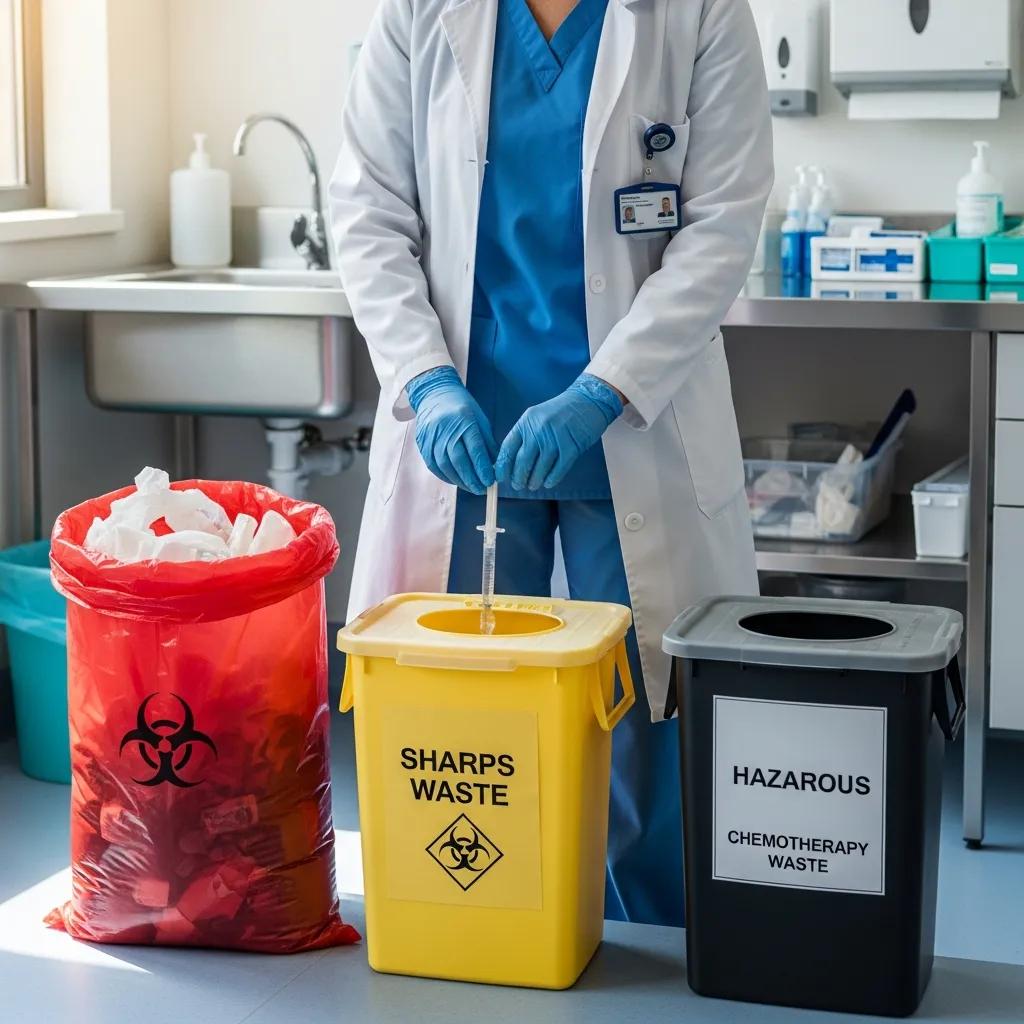
Clinical waste covers materials contaminated during diagnosis, treatment or immunisation activities and typically includes dressings, gloves and other disposables that carry infectious agents. Clinical waste is treated as an infectious subset of broader hazardous waste and requires sealed, labelled containers and documented transfer to authorised handlers to prevent transmission. Pathological waste—another subset—includes human tissues and specimens that pose both infection and ethical disposal considerations and often demands incineration or specialised high-temperature treatment. Sharps are a component of procedural equipment and require puncture-resistant containers with tamper-evident seals; sharps management reduces needlestick injuries and bloodborne pathogen exposures.
Understanding these categories leads directly into why rigorous disposal protocols protect health systems and the environment by eliminating points of cross-contamination.
Understanding the Importance of Proper Medical Waste Disposal for Health and Environment
Improper disposal of medical waste creates direct public health hazards through disease transmission, environmental contamination and the potential for chemical exposure from pharmaceuticals and reagents. Recent studies and regulatory reviews emphasise that untreated infectious waste can contaminate water supplies and soil, and that pharmaceuticals entering the environment may disrupt ecosystems and human health via bioaccumulation. Facilities that fail to follow classification and manifesting requirements face regulatory fines and reputational damage, while workers and patients face elevated infection risk. Investing in robust medical waste management reduces downstream treatment costs, supports infection control goals and aligns with sustainability objectives by diverting non-hazardous materials from high-temperature treatment where appropriate.
These environmental and health risks frame the next discussion on how proper hazardous material disposal mechanisms operate in Queensland to limit harm.
How Does Hazardous Material Disposal Protect Queensland's Environment and Public Health?
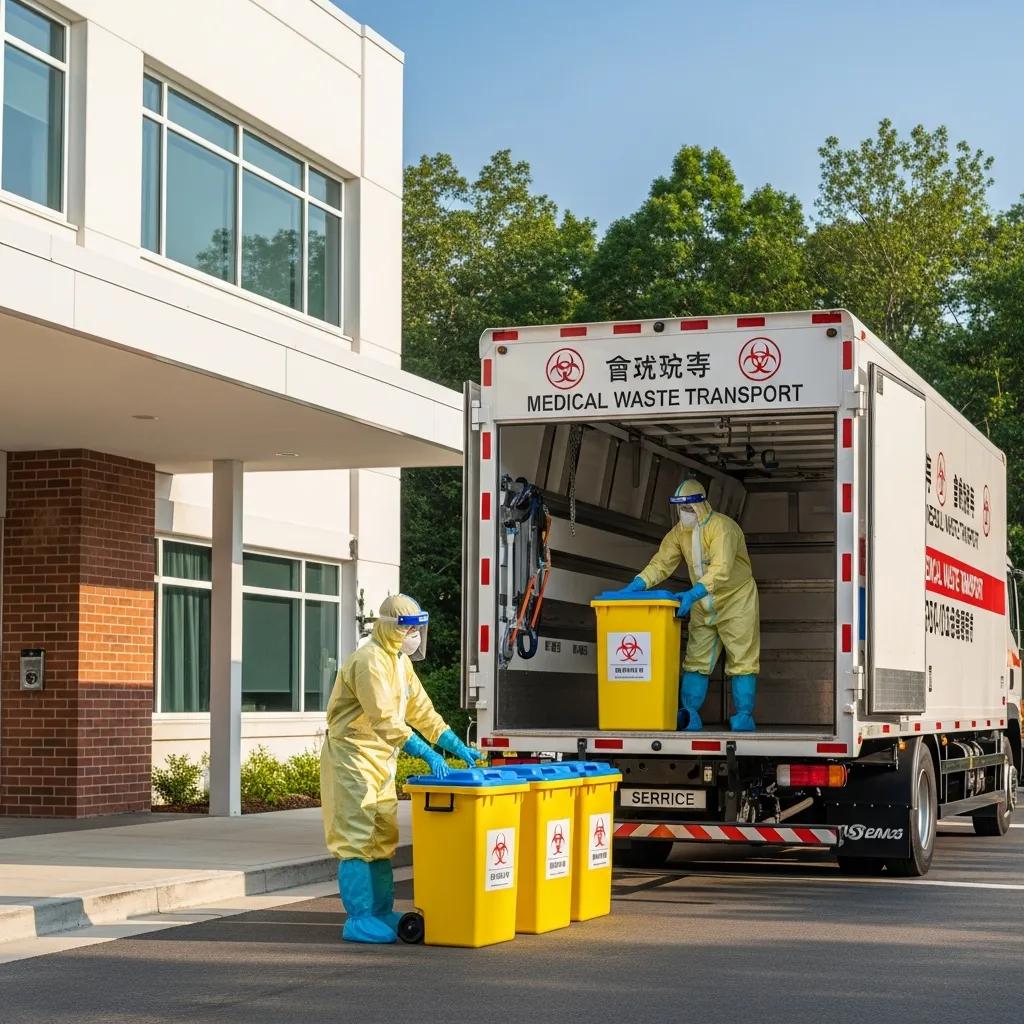
Hazardous material disposal protects public health and Queensland’s environment by containing hazardous streams, ensuring secure transport and applying appropriate treatment and final disposal methods that neutralise or isolate risks. Containment stops cross-contamination at the source, licensed transport prevents spillage in transit, and treatment processes like autoclaving or high-temperature destruction deactivate pathogens and chemically stabilise wastes. Together, these mechanisms break the pathways by which contaminants reach people, wildlife or ecosystems. The next section identifies specific hazardous materials commonly encountered in medical settings and explains classification and immediate precautions.
- Containment: Segregation and sealed containers prevent exposure at source.
- Secure transport: Licensed carriers maintain chain-of-custody and prevent spillage.
- Treatment and disposal: Autoclave, incineration or accredited chemical treatment neutralise hazards.
These three mechanisms illustrate how the system interrupts contamination vectors and preserves public safety while meeting regulatory obligations.
Identifying Hazardous Materials: Chemical, Biohazard, and Regulated Waste in Medical Settings
Medical settings generate a range of hazardous materials including chemical reagents from laboratories, cytotoxic pharmaceuticals used in chemotherapy, disinfectant concentrates and biohazardous fluids from patient care. Chemical hazards require hazard communication, safety data sheets and specific containment; biohazards require infectious controls and PPE; regulated wastes such as radioactive or cytotoxic materials need specialised manifests and licensed treatment routes. Immediate handling precautions include isolating spills, donning appropriate PPE, and notifying trained hazardous materials personnel to avoid cross-contamination. Recognising these categories helps staff choose the correct containers, labels and transport documentation so the waste stream is treated by appropriate disposal pathways.
Clear classification of materials guides selection of treatment technology and informs documentation required under Queensland rules.
Key Queensland EPA Regulations Governing Hazardous Waste Disposal
Queensland regulatory requirements centre on obligations for waste generators to classify, store, manifest and transfer hazardous wastes to licensed facilities in accordance with the Environmental Protection Act 1994 and subordinate guidelines. Generators must maintain records, manifests and transfer documentation that demonstrate chain-of-custody and adherence to segregation rules, and they are expected to follow local EPA guidance for specific streams such as cytotoxics or clinical waste. Licensed handlers and transporters must meet vehicle and packaging standards, and facilities must adhere to emissions and treatment method limits where applicable. Practical compliance steps include routine audits, staff training, clear labelling, and documented disposal contracts with accredited partners.
These legal frameworks underpin the internal controls and processes that certified providers use to deliver compliant hazardous waste services.
What Specialised Services Does Divine Commercial Cleaning Offer for Medical and Hazardous Waste?
Family-owned and operated business; offers commercial cleaning across the Sunshine Coast and Brisbane; primary goal to attract businesses seeking commercial cleaning, provide information, build trust, and generate leads through quote requests and direct contact; emphasizes reliability, professionalism, customised solutions, environmentally conscious approach; serves Medical/Health Centres, Daycare/Schools, Professional Offices, Strata/Body Corporate, Gym/Dance, Shopping Centres, and X-ray and Imaging Centres; UVPs listed in SERP report: family owned and operated, experienced professional cleaners, no lock-in contracts, customised solutions, same cleaner every time, reliable service, fully-insured, environmentally conscious, police checks for staff, and a money-back guarantee.
| Service | Included Actions | Frequency / Outcome |
|---|---|---|
| Clinical waste collection | Segregation, sealed containers, manifesting, licensed transport | Scheduled pickups; reduces on-site storage risk |
| Sharps container management | Supply of puncture-resistant containers, collection & replacement | Regular cadence reduces needlestick incidents |
| Biohazard cleanup | Rapid response, containment, decontamination, disposal | Incident remediation and documented chain-of-custody |
Clinical Waste Disposal and Sharps Container Management on the Sunshine Coast
Clinical waste disposal services include point-of-generation segregation, colour-coded containers, sealed transport packaging and manifesting to licensed treatment partners, which together prevent cross-contamination and preserve evidentiary chain-of-custody. Sharps container management provides puncture-resistant receptacles sized to facility needs, secure storage protocols and scheduled replacements to reduce the risk of needlestick injuries among staff. Documentation accompanies every collection, and staff receive guidance on container placement and labelling so operational compliance is maintained across shifts. These practices align with waste management and hazardous waste services and support local facilities in meeting regional EPA expectations.
Clear operational roles and container standards make daily clinical operations safer and simplify compliance audits for facility managers.
Biohazard Cleanup and Trauma Scene Remediation Services in Brisbane
Biohazard cleanup services address bloodborne pathogen incidents, trauma scenes and other events requiring rapid-response containment, decontamination and documented disposal of contaminated materials. Response teams use appropriate PPE kits, establish exclusion zones, perform surface sanitisation using validated disinfectants and package wastes for transport under chain-of-custody procedures. Rapid triage and methodical decontamination protect staff and occupants while preserving traces needed for regulatory or legal review. These biohazard remediation workflows are essential components of a broader hazardous waste services program that combines emergency response with long-term infection control.
Timely, documented remediation minimises facility downtime and reduces the risk of secondary contamination.
How Does Divine Ensure Compliance and Safety in Medical Waste and Hazardous Material Handling?
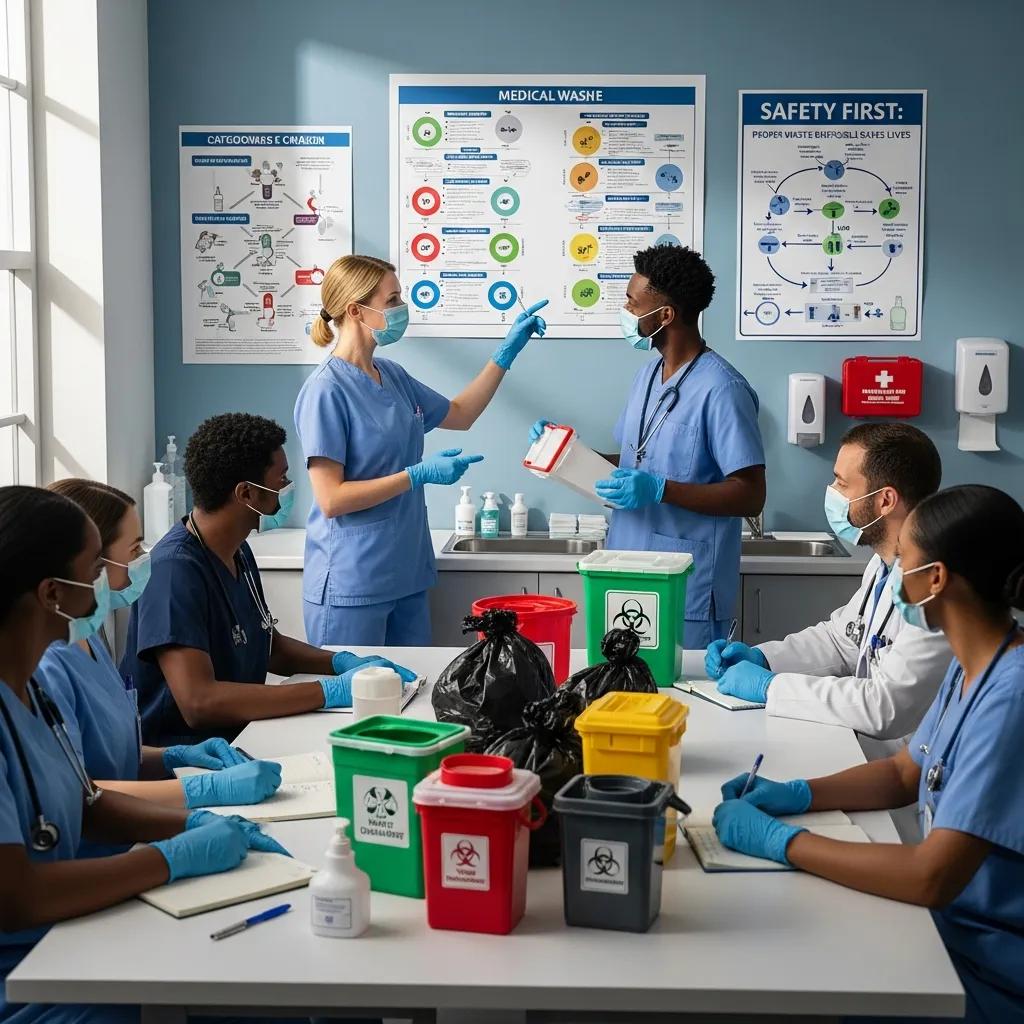
Yes — compliance and safety form the core of practical hazardous waste handling, achieved through structured staff training, enforced PPE protocols, certified equipment and rigorous documentation that align with Queensland EPA requirements. A layered approach begins with training and risk assessments, proceeds through standard operating procedures and certified containment, and finishes with manifesting and audit-ready records. Certified transport partners and validated treatment methods complete the compliance chain, ensuring that each shipment is accounted for and treated by accredited facilities. The following compliance mapping table links regulatory elements to concrete practices implemented by service providers.
| Compliance Element | Requirement | Divine Practice |
|---|---|---|
| Queensland EPA manifests | Maintain transfer records | Documented manifests for each collection |
| Staff competence | Mandatory training & refresher | Regular training modules and competency logs |
| Equipment standards | Sealed containers & certified transport | Use of certified containers and vetted carriers |
Staff Training, PPE Usage, and Adherence to Queensland EPA Guidelines
Staff training covers waste classification, correct segregation, container handling, spill response and required documentation so personnel apply consistent practices across shifts and sites. PPE usage protocols specify glove types, face protection and impermeable garments for high-risk tasks and are enforced through checklists, supervision and refresher sessions to maintain compliance. Adherence to Queensland EPA guidelines is evidenced by maintained manifests, photographic records where appropriate and periodic internal audits that feed continuous improvement. Training ensures employees can identify hazardous streams such as pharmaceutical or pathological waste and take immediate protective measures without ambiguity.
Ongoing competency development reduces procedural errors and strengthens compliance posture for the entire waste-handling lifecycle.
Use of Certified Equipment and Sustainable Disposal Methods
Certified equipment includes puncture-resistant sharps containers, sealed transport bins and purpose-built vehicles that reduce leakage and contamination risk during transit, and these items are maintained and validated on scheduled cycles. Sustainable disposal methods seek to minimise high-energy treatment where safe alternatives exist, using autoclave decontamination for certain infectious wastes and high-temperature treatment only where required for pathological or pharmaceutical streams. Trade-offs between sustainability and safety are managed through rigorous risk assessment and selection of accredited downstream partners who document treatment outcomes. Routine equipment maintenance and validation records form part of the auditable trail demonstrating compliance.
Selecting certified equipment and validated disposal methods balances environmental goals with the mandatory safety and legal requirements of hazardous waste services.
Why Choose Divine Commercial Cleaning for Your Medical Waste and Hazardous Material Disposal Needs?
Choosing a local, experienced provider reduces operational friction and improves responsiveness by combining tailored scheduling, continuity of staff and targeted environmental practices that match facility requirements. Divine Commercial Cleaning’s family-owned model emphasises personalised service plans, same-cleaner continuity where feasible and customised pickup cadences to align with clinical waste volumes and staffing patterns. Insurance coverage and staff police checks offer additional assurance for medical and imaging sites that require trusted access and documented personnel standards. The bullet points below highlight the core UVPs and client benefits to help procurement teams evaluate provider fit.
- Family-owned and personalised service: Builds accountability and continuity for site teams.
- Customised solutions and no lock-in contracts: Allows scaling and schedule changes as needs evolve.
- Environmentally conscious and fully insured: Aligns with facility sustainability goals and risk management.
These advantages translate into practical benefits such as faster response times, predictable documentation and simplified vendor management that support clinical operations.
Family-Owned Reliability with Customised, Environmentally Conscious Solutions
Family ownership often results in closer oversight and a stronger emphasis on client relationships, which supports consistent staffing and quicker issue resolution when unusual waste events occur. Customised service plans match container sizes, pickup frequency and documentation formats to each facility’s volumes and regulatory posture, reducing unnecessary costs and on-site clutter. An environmentally conscious approach promotes diversion of non-hazardous materials from high-temperature treatment and selection of accredited treatment partners who can demonstrate appropriate environmental controls. This combination of personalised attention and sustainability aligns operational efficiency with corporate responsibility for healthcare institutions.
These attributes help facilities meet both regulatory expectations and internal sustainability targets while preserving service reliability.
Local Expertise Serving Brisbane and Sunshine Coast Medical Facilities
Local operators bring practical knowledge of regional disposal partners, transport routes and Queensland EPA contacts, enabling optimised pickup schedules and faster emergency response when incidents occur. Familiarity with local health networks and imaging centre requirements ensures that provider practices are compatible with on-site policies and infection control procedures. Proximity reduces transport time and supports coordinated incident response for trauma or spill events, while local references and community presence build trust with facility managers. This regional expertise underpins reliable day-to-day waste operations and supports compliance during audits or regulatory reviews.
Local knowledge shortens response windows and simplifies coordination between facilities and accredited disposal sites.
What Are Common Questions About Medical Waste Management and Hazardous Material Disposal in Australia?
This final section addresses practical questions facility managers frequently ask about sharps handling, regulatory updates and immediate compliance actions to keep operations safe and audit-ready. Each Q&A pairs a concise directive with actionable next steps so staff can implement improvements quickly and reduce regulatory exposure.
How Should Sharps Waste Be Safely Disposed of in Commercial Settings?
Sharps waste must be contained immediately in puncture-resistant, clearly labelled containers that meet regulatory specifications, with containers positioned close to point-of-use to avoid carrying exposed sharps across clinical areas. Containers should be sealed when they reach the fill line, stored in a secure area pending scheduled collection, and transferred only to licensed collectors with appropriate manifests to maintain chain-of-custody. Staff must follow a simple numbered routine for sharps handling and reporting to reduce incidents and ensure documentation.
- Place sharps directly into a certified puncture-resistant container at point-of-use.
- Seal and label the container at the approved fill level, then store securely.
- Schedule collection with a licensed handler and ensure manifests accompany the transfer.
Following these steps reduces needlestick risk and preserves traceability for compliance reviews.
What Are the Latest Regulatory Updates for Medical Waste Disposal in Queensland?
Current guidance from Queensland regulatory authorities continues to emphasise accurate waste classification, manifesting of hazardous shipments and the use of licensed treatment facilities for regulated streams; facilities are advised to monitor official Queensland EPA notices for updates and to implement routine internal audits. Immediate compliance actions include reviewing on-site segregation practices, updating waste handling SOPs, ensuring manifest templates meet current requirements and confirming downstream partners maintain accreditation. Facilities should maintain evidence of staff training and equipment validation as part of ongoing compliance readiness.
Staying current with official guidance and documenting internal controls protects facilities from regulatory action and supports continuous operational improvement.
Family-owned and operated business; offers commercial cleaning across the Sunshine Coast and Brisbane; primary goal to attract businesses seeking commercial cleaning, provide information, build trust, and generate leads through quote requests and direct contact; emphasizes reliability, professionalism, customised solutions, environmentally conscious approach; serves Medical/Health Centres, Daycare/Schools, Professional Offices, Strata/Body Corporate, Gym/Dance, Shopping Centres, and X-ray and Imaging Centres; UVPs listed in SERP report: family owned and operated, experienced professional cleaners, no lock-in contracts, customised solutions, same cleaner every time, reliable service, fully-insured, environmentally conscious, police checks for staff, and a money-back guarantee.

Dianne, originally from Rockhampton, hails from a business-oriented family, with her father owning electrical stores and her uncle serving as Mayor. Moving to the Sunshine Coast at 13, she later pursued a rewarding real estate career and raised three children. As a single mom, she balanced university studies with domestic cleaning work. Armed with a Bachelor’s Degree in Business, majoring in Supply Chain Management, Dianne founded and grew Divine Commercial Cleaning into a thriving company. Her success is rooted in strong family mentorship, a positive attitude, and a solution-oriented approach, offering tailored cleaning services with integrity and strategic insight.