
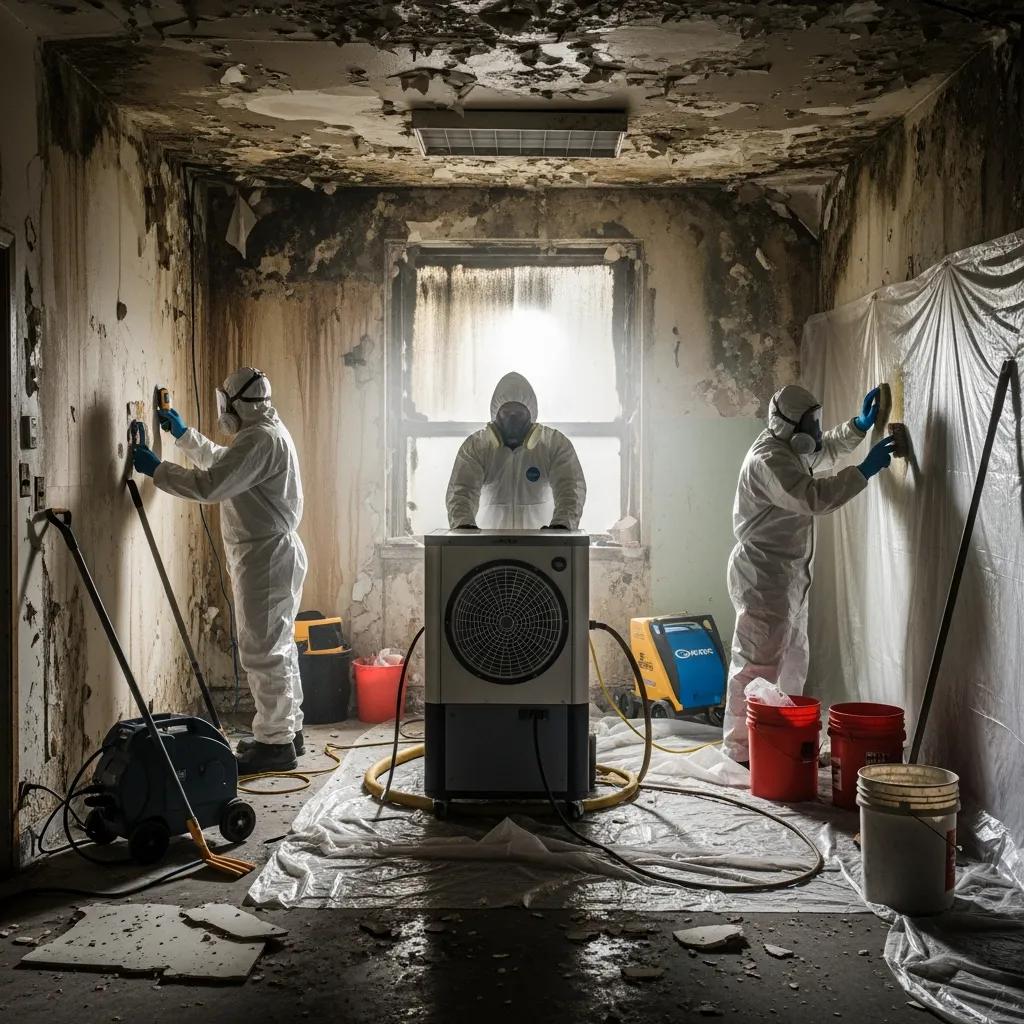
Commercial Mold Remediation and Moisture Control Services in Australia: Protecting Your Commercial Building
Mould in commercial buildings arises where moisture and organic materials intersect, creating a persistent threat to occupant health and asset value if left unchecked. This article explains how moisture drives fungal growth in offices, retail spaces and industrial properties, and outlines inspection, remediation and long-term moisture-control strategies that protect indoor air quality and business continuity. Facility managers will learn to recognise common causes and signs of infestation, follow an industry-aligned step-by-step removal workflow, and compare practical moisture-control technologies such as desiccant and refrigerated dehumidification and HVAC optimisation.
We also cover inspection techniques, verification standards including IICRC guidance and the relevance of AS/NZS-IICRC S520:2025, and explain how ongoing monitoring and maintenance reduce recurrence. Practical lists, three EAV comparison tables, and actionable checklists are provided to help decision-makers prioritise interventions and engage qualified service providers in Sunshine Coast and Brisbane when remediation or flood restoration is required.
What Are the Common Causes and Signs of Mold in Commercial Buildings?
Mould typically appears in commercial buildings because of persistent moisture sources, compromised building fabric, or elevated indoor relative humidity that allows airborne spores to germinate on porous surfaces. Understanding these causal pathways helps teams prioritise interventions and reduce restoration costs. Early recognition preserves indoor air quality and limits structural damage, while delayed response increases remediation scope and disrupts operations. The following lists summarise common causes and the visible and hidden indicators facility managers should monitor.
Common causes of mould in commercial settings include:
- Water leaks from plumbing, roofs, or appliances that create prolonged wetting of surfaces.
- Condensation driven by poor insulation, thermal bridging, or high indoor humidity during operation.
- Flooding and stormwater ingress that saturate materials and accelerate fungal colonisation.
- HVAC issues such as clogged drain pans, poor drainage, or inadequate ventilation that trap moisture.
These causes make moisture control central to prevention; the next subsection explains the moisture-to-mould mechanism in commercial interiors.
How Does Moisture Lead to Fungal Growth in Offices and Retail Spaces?
Moisture enables fungal spores to germinate by providing the liquid water necessary for metabolic activation and hyphal expansion, with relative humidity above about 60% markedly increasing risk on susceptible materials. Building materials such as carpet, ceiling tiles, gypsum board and insulation act as nutrient and moisture reservoirs, so repeated wetting or prolonged dampness leads to visible colonies. Thermal differentials cause condensation on cold surfaces—pipework, glazing frames, or poorly insulated walls—creating microclimates where spores thrive. Monitoring with moisture meters, hygrometers and thermal imaging helps identify at-risk zones before widespread colonisation, which is essential for targeted drying and material salvage decisions.
What Are the Visible and Hidden Indicators of Mold Infestation?
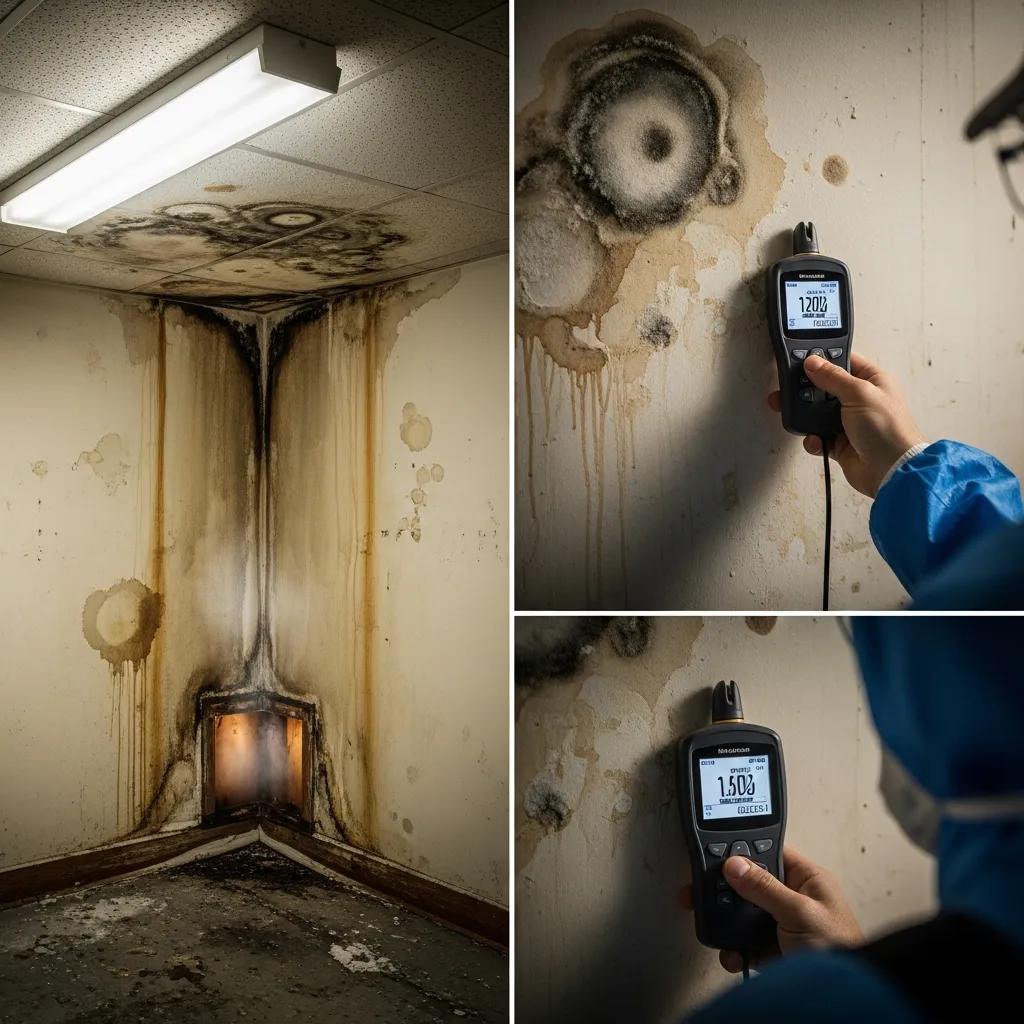
Visible indicators include discolouration, fuzzy or spotty growth, water stains on ceilings or walls, and peeling finishes where fungal enzymes degrade substrates. Hidden signs are equally important: persistent musty odours, unexplained employee respiratory complaints, or localised rises in indoor relative humidity without an obvious cause. Diagnostic tools such as moisture meters, borescopes and thermal cameras reveal wet layers behind cladding or ceiling systems that are not yet colonised on the surface. When these instruments indicate moisture anomalies, prompt mapping and targeted drying reduce the likelihood that hidden contamination will expand into visible, costly outbreaks.
How Does Divine Commercial Cleaning Conduct Professional Mold Inspection and Assessment?
Professional commercial mold inspection defines scope by combining visual assessment, operational history and instrumental measurements to locate moisture sources and suspect contamination. Inspectors document building history—recent flooding, plumbing incidents or chronic condensation—then use moisture meters, hygrometers and thermal imaging to map wet and dry zones. The assessment produces a prioritised remediation plan specifying containment, material removal, drying targets and clearance criteria that align with industry practices.
In Sunshine Coast and Brisbane, Divine Commercial Cleaning offers inspection services that connect findings to practical restoration options when required. If inspection uncovers significant water intrusion, the team can recommend Flood Restoration and Drying & Dehumidification add-on services to remove water, deploy dehumidifiers and apply anti-microbial treatments. Divine’s police-checked staff and insured operations support trust and safety, and customers receive a clear remediation scope and next-step estimate tailored to commercial needs. This local service model ensures inspection results convert quickly into actionable recovery.
What Techniques Are Used for Early Mold Detection in Brisbane and Sunshine Coast?
Early detection combines trained visual inspection with targeted instrumentation to catch problems while they are small and salvageable. Inspectors perform baseline humidity logging to detect persistent elevated RH, use moisture meters to quantify material moisture content, and employ thermal imaging to reveal concealed damp pockets across ceilings and wall cavities. Environmental sampling—when indicated—helps determine species and contamination levels to inform risk prioritisation. These combined techniques are particularly important in subtropical coastal climates where seasonal humidity and storm events raise moisture-management demands.
How Is Moisture and Water Damage Evaluated in Commercial Properties?
Evaluation begins by mapping the building envelope and interior systems to distinguish structural water ingress from internal sources such as plumbing or HVAC faults. Assessors determine which materials are salvageable through drying and which require controlled removal, using moisture content thresholds and material porosity as decision criteria. Rapid drying and dehumidification limit fungal amplification and often preserve floor coverings or suspended ceiling systems; when removal is required, the scope is defined to minimise operational disruption. A well-documented evaluation leads into a remediation scope with measurable drying targets and verification steps.
What Is the Step-by-Step Commercial Mold Removal Process?
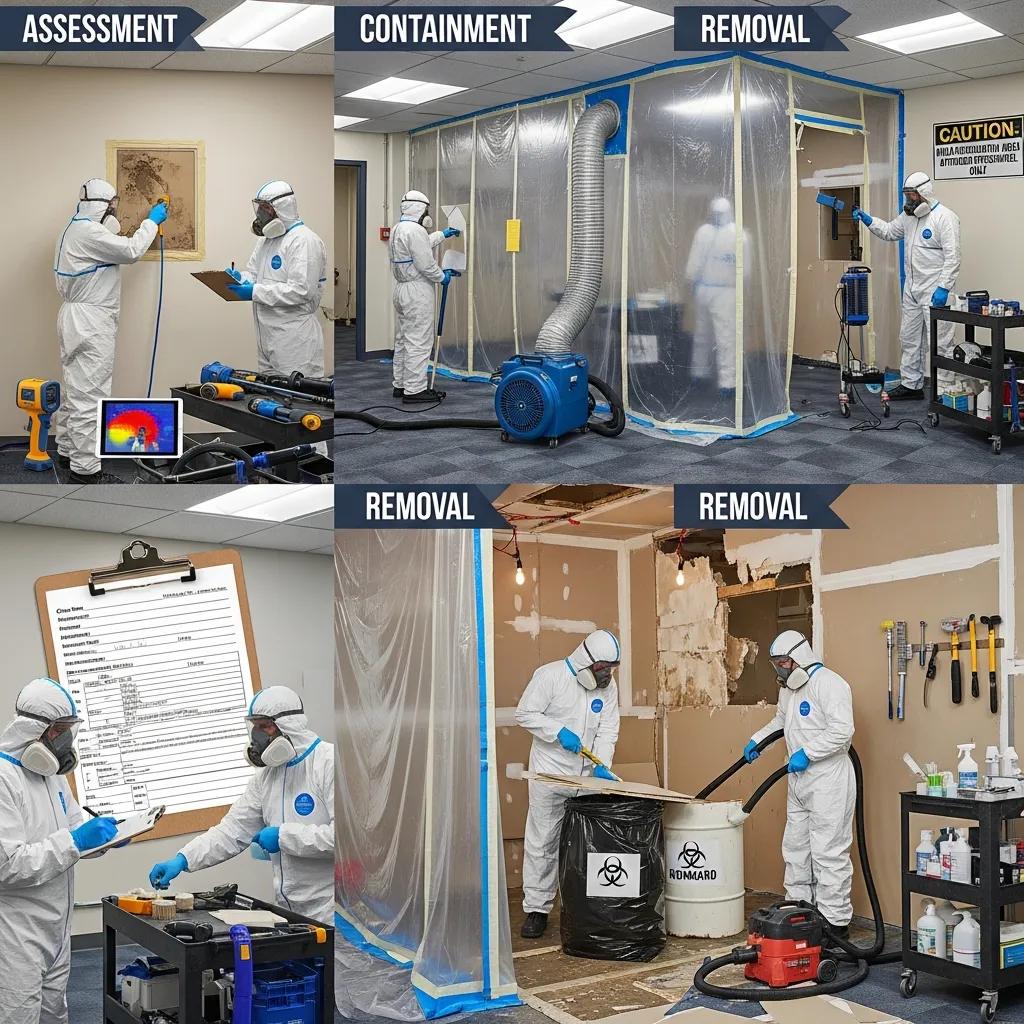
A standard commercial mold removal workflow follows a clear, numbered progression that limits spread and restores safe occupancy conditions. The process combines assessment, containment, removal, cleaning, anti-microbial application and verification based on moisture control outcomes. The numbered steps below summarise industry-aligned actions that facility managers should expect from competent remediation providers.
- Assessment & Scope Definition: Inspect, document moisture sources and define the remediation boundary and clearance criteria.
- Containment & Source Control: Erect barriers, negative pressure systems and HVAC isolation to prevent spore migration to unaffected areas.
- Removal & Cleaning: Remove non-salvageable materials and clean salvageable surfaces using HEPA-filtered equipment and approved cleaning agents.
- Anti-microbial Application & Drying: Apply anti-microbial treatments where appropriate and deploy dehumidification equipment to meet dry-backing targets.
- Post-remediation Verification: Conduct visual inspection, moisture readings and air quality checks to confirm clearance before reoccupation.
This step sequence maps directly to quality assurance activities and provides a framework for documentation that demonstrates due diligence to stakeholders.
Before the summary table below, note that Divine Commercial Cleaning follows an industry-standard workflow—inspection, containment, removal, anti-microbial application and verification—and incorporates drying and dehumidification equipment as integral parts of remediation. When required, the company’s Flood Restoration and Drying & Dehumidification capabilities are used to accelerate drying and reduce the risk of recurrence. These operational choices reflect best-practice sequencing and help ensure timely project handover.
| Phase | Purpose | Typical Methods & Equipment |
|---|---|---|
| Assessment | Define scope and risks | Visual survey, moisture meters, thermal imaging |
| Containment | Prevent cross-contamination | Poly barriers, negative air machines, HEPA filtration |
| Removal/Cleaning | Eliminate colonised materials | Controlled demolition, HEPA vacuums, wet/dry cleaning |
| Drying & Treatment | Reduce residual moisture and bioburden | Desiccant/refrigerated dehumidifiers, anti-microbial application |
| Verification | Confirm safe reoccupation | Moisture readings, visual checks, air sampling when required |
This EAV-style summary clarifies how each phase contributes to a successful remediation and sets expectations for verification.
How Does IICRC Certification Ensure Safe and Effective Mold Remediation?
IICRC certification indicates that technicians and supervisors have trained in standardised protocols, hygiene controls and documented processes that reduce risk and improve consistency of outcomes. Certified practitioners use industry methods for containment, equipment sizing and documentation, and understand safe use of anti-microbial agents and PPE. The presence of IICRC-aligned procedures increases confidence that remediation follows recognised best practice and that verification criteria are measurable and repeatable. Facility managers should request documentation of qualifications and procedural adherence as part of project acceptance criteria.
What Role Do Anti-microbial Applications and Containment Play in Mold Removal?
Containment prevents airborne spores from spreading during removal, using physical barriers and negative pressure to isolate the remediation zone, while HEPA filtration cleans exhaust air before it is released. Anti-microbial applications reduce surface-level re-growth risk and are selected based on substrate compatibility and environmental safety. Proper PPE and ventilation protocols protect occupants and technicians during application. Combined, containment and targeted anti-microbial treatment limit cross-contamination, support safe cleaning, and complement drying strategies that remove the moisture foundation for future growth.
Which Moisture Control Solutions Prevent Mold Growth in Commercial Buildings?
Effective moisture control integrates mechanical dehumidification, HVAC optimisation, building envelope repairs and routine maintenance to maintain indoor relative humidity within mould-resistant ranges. Selecting the right combination depends on building type, occupancy patterns and climate; commercial solutions range from portable dehumidifiers for localised problems to whole-building HVAC balancing and insulation upgrades for chronic condensation.
The table below compares common dehumidification systems to help decision-makers match technology to need.
| System | Characteristic | Best-for & Limitations |
|---|---|---|
| Desiccant dehumidifier | Low dew-point capability, effective at low temperatures | Best for cold or high-load environments; higher energy use |
| Refrigerated dehumidifier | Energy-efficient at typical indoor temps | Suited to general commercial spaces; less effective in low-temp conditions |
| Portable dehumidifiers | Flexible deployment | Good for targeted drying; requires maintenance and monitoring |
This table highlights trade-offs that inform equipment selection and integration with building management systems.
How Do Dehumidification and HVAC Optimisation Manage Indoor Humidity Levels?
Dehumidification removes excess moisture from air, lowering relative humidity and preventing surface condensation and spore germination; desiccant systems are chosen when low dew point or continuous high loads demand robust moisture removal, while refrigerated units are efficient for standard interior environments. HVAC optimisation—balancing supply/exhaust, ensuring adequate airflow, and maintaining clean coils and drain pans—reduces internal moisture accumulation and improves IAQ. Integration with building management systems enables humidity setpoints, alarms and automated responses that maintain a target RH range, typically between 30–50% for mould prevention.
What Strategies Address Water Ingress and Condensation in Commercial Properties?
Mitigation of water ingress begins with building envelope inspections—roofing, façade seals, flashings and drainage—to eliminate points of entry, followed by rapid repair of plumbing and drainage faults. Condensation control uses insulation on cold surfaces, thermal breaks to reduce bridging, and ventilation to remove humid air before it contacts cooler surfaces. Seasonal preparedness, such as pre-storm inspections and proactive gutter maintenance, reduces flood and water-entry risk. These structural and operational strategies, combined with active dehumidification, form a layered defence against recurrence.
At the end of this section, businesses seeking practical moisture-control services can procure drying, dehumidification and HVAC check options from qualified commercial providers. Divine Commercial Cleaning lists drying and dehumidification among its add-on services and can recommend appropriate equipment choices during an on-site assessment; businesses are encouraged to request a moisture-control assessment to align equipment selection with building needs.
How Can Businesses Implement Long-Term Fungal Growth Prevention and Maintenance?
Long-term prevention relies on monitoring, scheduled maintenance and staff awareness to catch moisture anomalies before they escalate. A formal program includes routine inspections, humidity logging, HVAC preventive maintenance and documented leak-response procedures that prioritise rapid drying. These operational controls reduce the frequency and severity of outbreaks while maintaining occupant safety and regulatory compliance.
Use the checklist below to structure a prevention program and ensure consistent application across sites.
- Routine Inspections: Scheduled walkthroughs focusing on high-risk areas like plant rooms, bathrooms and storerooms.
- Humidity Monitoring: Continuous RH logging in representative zones with alarm thresholds for rapid response.
- HVAC & Drain Maintenance: Regular coil cleaning, condensate-line checks and drain pan inspections.
- Staff Training & Reporting: Clear protocols for reporting leaks and indoor air concerns to facilities teams.
This checklist establishes operational clarity and helps teams move quickly from detection to remediation, reducing business disruption and restoration costs.
What Are Best Practices for Ongoing Mold Prevention and Indoor Air Quality Management?
Best practices combine engineering controls and administrative measures: maintain indoor RH between 30–50%, perform seasonal HVAC servicing, keep roofing and external drainage in good repair, and use HEPA filtration for spaces with vulnerable occupants. Documentation—inspection logs, moisture readings and remediation reports—creates a traceable history that supports decision-making and compliance. Periodic review of control limits and calibration of sensors ensures monitoring remains accurate and actionable, which is critical for long-term IAQ management and prevention.
How Does Regular HVAC Inspection Support Mold Control in Commercial Settings?
HVAC inspections target common moisture sources: clogged condensate lines, dirty coils that reduce heat exchange, and malfunctioning drain pans that allow standing water. Regular checks reduce the chance of internal humidity spikes and biofilm build-up on components that seed spores. Integrating HVAC inspection with remediation plans ensures that system faults identified during mold assessments are rectified to prevent re-infestation. Effective HVAC maintenance therefore supports both immediate moisture control and sustained IAQ performance.
What Are the Health Risks and Regulatory Standards Related to Mold in Commercial Workplaces?
Mould exposure in commercial settings can exacerbate respiratory conditions, trigger allergic reactions, and reduce overall indoor air quality, particularly affecting vulnerable employees such as those with asthma or compromised immunity. Recognising health risks helps employers prioritise remedial action and occupational health measures. Standards and consensus guides—such as IICRC protocols and the Australian adoption reflected in AS/NZS-IICRC S520:2025—provide frameworks for remediation practice, documentation and verification that facilities managers should reference when commissioning work.
| Standard/Concept | Scope | Compliance Action for Facilities Managers |
|---|---|---|
| AS/NZS-IICRC S520:2025 | Commercial remediation guidance and protocols | Require documented procedures, verification criteria and contractor adherence |
| IICRC Guidance | Technician training and best practices | Request certified personnel and method-based documentation |
| Occupational Health Risks | Respiratory, allergic and productivity impacts | Implement monitoring, accommodation protocols and remediation priorities |
This mapping clarifies how recognised standards relate to practical compliance activities and risk reduction.
How Does Mold Exposure Affect Employee Health and Indoor Air Quality?
Typical exposure symptoms include nasal and sinus congestion, coughing, throat irritation, eye irritation and exacerbation of asthma or allergy symptoms for susceptible individuals. Chronic exposure in poorly ventilated premises can reduce worker comfort and productivity, and increase absenteeism. Indoor air quality metrics—volatile organic compounds, particulate counts and relative humidity—help quantify the environment and guide interventions. Employers should prioritise rapid investigation of reported health complaints and link findings to remediation or preventive maintenance actions.
What Is the Importance of AS/NZS-IICRC S520:2025 and Compliance for Commercial Buildings?
AS/NZS-IICRC S520:2025 provides a consensus-based framework that informs scope development, containment level selection, remediation methods and clearance criteria for commercial mould projects. For facilities managers, compliance means requiring documented plans, measurable drying targets, validated verification and records of technician qualifications. Demonstrating adherence to these standards shows due diligence to regulators, insurers and occupants and helps ensure that remediation reduces legal and operational risk.
After understanding regulatory expectations, businesses ready to act can request inspection and remediation services from local providers that offer flood restoration, drying and dehumidification as part of recovery workflows. Divine Commercial Cleaning positions these add-on services as practical options following inspection findings and can provide tailored assessments in Sunshine Coast and Brisbane to align remediation with compliance-focused verification.
- Request an inspection or moisture-control assessment to establish scope and drying targets.
- Require documentation of methods and verification aligned with IICRC and AS/NZS-IICRC S520:2025 guidance.
- Engage qualified remediation and drying services to limit downtime and support occupant health.
| Standard | Scope | Recommended Facility Action |
|---|---|---|
| AS/NZS-IICRC S520:2025 | Guidance on remediation for commercial properties | Obtain remediation plans with measurable verification and qualified technicians |
| IICRC | Training and procedural best practice | Verify technician certifications and documented protocols |
| Occupational Health Guidance | Protect employee health and productivity | Implement monitoring, remediation timelines and communication plans |

Dianne, originally from Rockhampton, hails from a business-oriented family, with her father owning electrical stores and her uncle serving as Mayor. Moving to the Sunshine Coast at 13, she later pursued a rewarding real estate career and raised three children. As a single mom, she balanced university studies with domestic cleaning work. Armed with a Bachelor’s Degree in Business, majoring in Supply Chain Management, Dianne founded and grew Divine Commercial Cleaning into a thriving company. Her success is rooted in strong family mentorship, a positive attitude, and a solution-oriented approach, offering tailored cleaning services with integrity and strategic insight.