
High-Security Facility Cleaning and Background-Checked Staff: Trusted Secure Commercial Cleaning Services
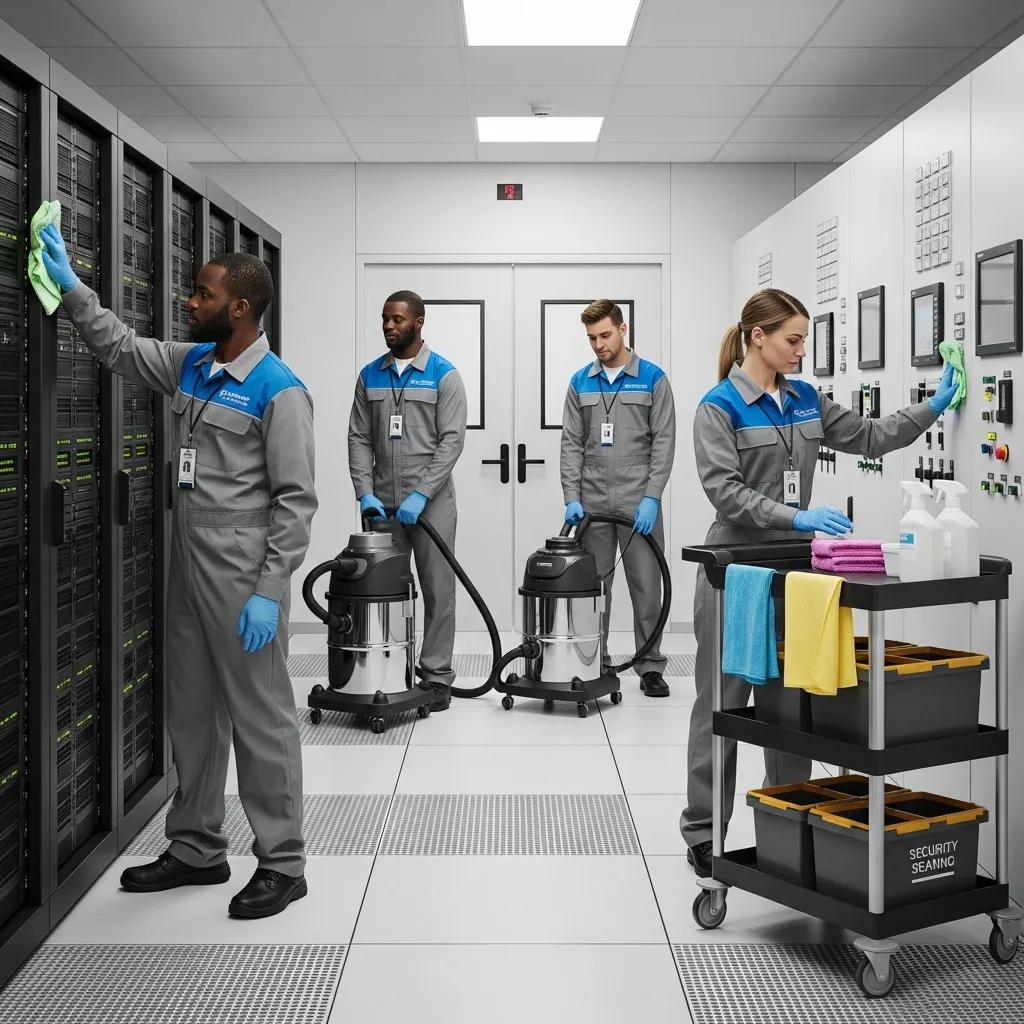
High-security facility cleaning refers to specialised commercial cleaning and facility maintenance designed for sensitive sites where access, confidentiality, and asset protection are paramount. This discipline combines controlled access procedures, staff vetting, and protocol-driven cleaning methods to mitigate risks such as data breaches, equipment damage, and regulatory non-compliance. Readers will learn why secure commercial cleaning matters for organisations in finance, legal, health, data centres and government-adjacent operations, which protocols protect assets, and how vetted staff and ongoing monitoring preserve confidentiality and continuity.
The article explains practical vetting stages, specialised protocols per facility type, confidentiality measures including NDAs and training, and compliance mappings to Australian workplace safety expectations. We also describe how businesses on the Sunshine Coast and in Brisbane can engage a vetted cleaning partner while keeping enquiries confidential. Throughout, target terms such as high-security cleaning, police-checked cleaners, secure facility maintenance, and background-checked cleaning staff are used to map the semantic space and show actionable steps organisations can take to secure their facilities.
Why Is High-Security Commercial Cleaning Essential for Sensitive Facilities?
High-security commercial cleaning is essential because it reduces exposure of sensitive information and physical assets by combining restricted access, trained personnel, and protocolised cleaning methods. By design, these services control who enters secure zones, how equipment and documents are handled during cleaning, and when cleaning activities occur to avoid operational disruption and data exposure. The outcome is a measurable reduction in insider risk, lower probability of accidental data loss, and improved alignment with organisational compliance obligations. Organisations in the Sunshine Coast and Brisbane region that require discrete, reliable services benefit from vetted staff and consistent procedures that limit opportunities for unauthorised access and protect reputation and continuity.
Unvetted cleaners can introduce significant threats through inadvertent access to confidential data or deliberate misuse, so choosing providers with police-checked cleaners and strict protocols is a key preventative measure. The next section breaks down specific risks unvetted staff can present and illustrates how targeted cleaning practices neutralise those threats.
What Risks Do Unvetted Cleaning Staff Pose to Secure Facilities?
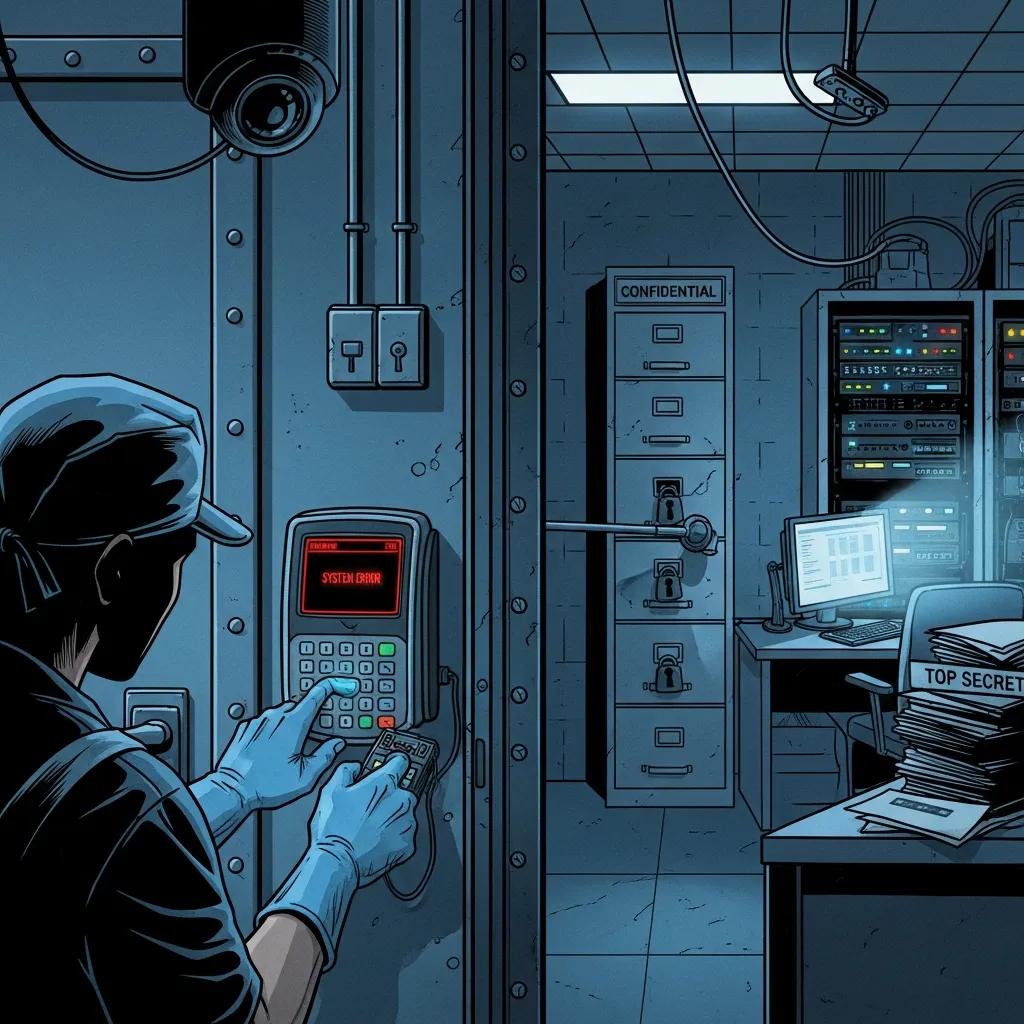
Unvetted cleaning staff can create insider-risk scenarios where individuals gain unsupervised proximity to sensitive documents, IT equipment, or restricted areas, increasing the risk of theft, data exfiltration, or sabotage. Such risks include accidental exposure—where a cleaner inadvertently moves or photographs sensitive material—and malicious behaviour, where access is exploited for theft or information leaks. Regulatory consequences can follow if client data or controlled records are exposed, resulting in fines, remediation costs, and reputational harm for the affected organisation. Recent guidance and industry experience emphasise that controlling personnel access and verifying identity through police checks materially lowers these risks and supports an audit-ready environment.
This risk profile leads naturally to a discussion of how secure cleaning practices actively protect sensitive data and assets during routine maintenance.
How Does Secure Facility Cleaning Protect Sensitive Data and Assets?
Secure facility cleaning protects sensitive data and assets through a combination of access controls, supervised workflows, and non-invasive cleaning techniques that avoid disturbance of devices and documents. Controlled access means cleaners work under escort or during designated windows, and keys or access badges are handled under strict chain-of-custody procedures to prevent unauthorised use. Cleaning teams are trained to avoid moving or opening devices, to report anomalies immediately, and to document completed tasks for traceability and accountability. These measures produce audit trails and incident reports that help organisations demonstrate due diligence and compliance when required.
Understanding how staff are vetted and monitored is the next crucial element; the following section details vetting stages and ongoing reliability checks that underpin secure services.
How Does Divine Commercial Cleaning Vet and Background-Check Its Cleaning Staff?
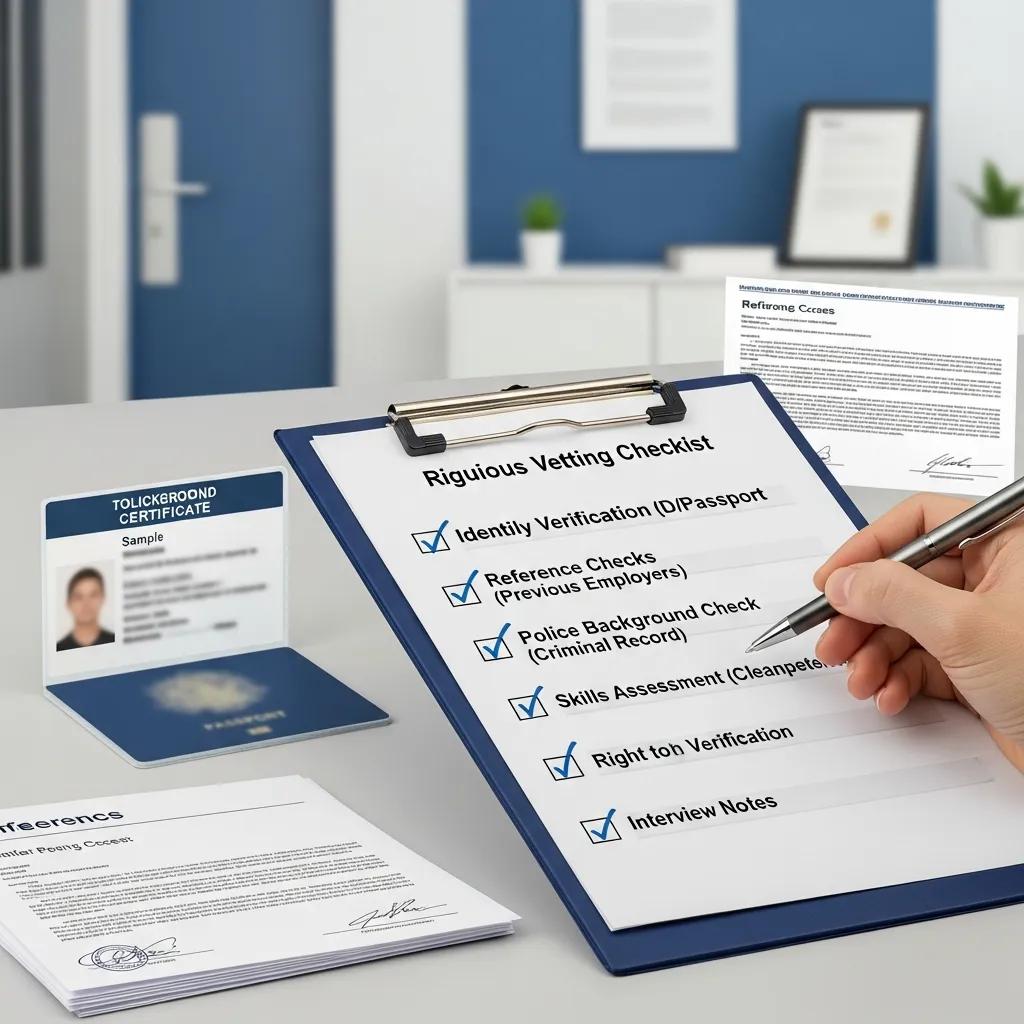
When organisations seek assurance that cleaning staff are trustworthy, the vetting process must be transparent, thorough, and continuously enforced to maintain trust and security. Divine Commercial Cleaning uses a multi-stage approach to staff vetting that includes identity verification, police checks, reference validation, and role-specific training to ensure candidates meet suitability standards for secure environments. These combined steps reduce the probability of insider risk, increase continuity through consistent staffing assignments, and provide clients with documented evidence of staff screening. Organisations in the Sunshine Coast and Brisbane area can request a confidential engagement to discuss site-specific requirements and how vetted staff are assigned to secure contracts.
Below is an ordered summary of the vetting lifecycle and how each stage benefits client security; businesses that want to proceed are encouraged to request a confidential quote or discuss site assessment options after reviewing these steps.
- Application and Identity Verification: Confirm legal identity and right to work to prevent impersonation.
- Police Check: Screen for relevant criminal history to assess suitability for secure access.
- Reference Checks: Validate past performance and integrity through previous employers.
- Role-Specific Training: Ensure understanding of confidentiality, equipment handling, and access protocols.
- Onboarding Controls: Issue supervised access with documented permissions and site-specific briefings.
This staged approach reduces hiring risks and provides clarity for clients; the following table maps core vetting elements to what they verify and the security benefit.
The table below summarises primary vetting stages, what each verifies, and the security benefit they deliver for secure-site operations.
| Vetting Phase | What It Verifies | Security Benefit |
|---|---|---|
| Identity Verification | Legal identity and photo ID match | Prevents impersonation and unauthorised hiring |
| Police Check | Recorded criminal history relevant to role | Filters candidates with disqualifying histories |
| Reference Checks | Employment history, conduct, reliability | Confirms past behaviour and performance patterns |
| Training & Induction | Knowledge of confidentiality and site rules | Ensures staff understand secure procedures |
| Onboarding Access Controls | Badge/key issuance, supervised entry | Limits initial privileges and creates audit trail |
This vetting matrix clarifies how each phase contributes to overall site protection and prepares clients for the next topic: ongoing monitoring to sustain trust and performance.
What Are the Stages of Our Rigorous Police Check and Vetting Process?
A rigorous police check and vetting workflow begins before hire and continues as part of ongoing personnel management, establishing a baseline of trust and recurrent verification. The police check stage specifically verifies criminal history records relevant to workplace suitability and is combined with reference validation and identity confirmation to create a comprehensive candidate profile. Following initial checks, role-specific training emphasises confidentiality, device handling and the expectations of working in secure areas. Onboarding includes issuing limited access credentials and ensuring each cleaner understands audit and reporting procedures to maintain accountability.
This phased design sets up the need for ongoing monitoring, which is the subject of the next subsection describing supervision, audits, and feedback mechanisms.
How Does Ongoing Monitoring Ensure Staff Reliability and Trustworthiness?
Ongoing monitoring preserves staff reliability through scheduled performance audits, client feedback loops, and refresher training that reinforce security expectations and correct deviations. Supervisors conduct periodic spot-checks and review incident reports to detect patterns that require intervention, while client feedback contributes to service quality assessments and the remediation of issues. Retraining and formal disciplinary measures are used when concerns arise, creating a clear escalation pathway that protects clients and maintains service standards. Together, these mechanisms sustain a trustworthy team that aligns with secure facility requirements and offers consistent presence, often including the same cleaner assignment to maintain continuity.
Maintaining strict confidentiality in operations is the next pillar; the following section outlines how discretion is embedded in staff behaviour and contractual safeguards.
What Specialised Cleaning Protocols Are Used for Different High-Security Environments?
Specialised cleaning protocols vary according to facility type because each environment carries unique asset sensitivity, regulatory constraints, and operational risks. For example, medical facilities require infection control and hazard containment, data centres demand anti-static and low-particle methods, while financial and legal offices prioritise document integrity and after-hours access. Protocols are selected based on risk assessment and typically include restricted access scheduling, ESD-safe equipment, HEPA/low-particulate cleaning solutions, and strict documentation of tasks performed. Tailoring these protocols ensures the right balance between cleanliness, safety, and equipment protection.
The table below maps facility types to typical protocols and explains the rationale or benefit that each protocol provides for secure maintenance.
| Facility Type | Protocol | Rationale / Benefit |
|---|---|---|
| Data Centre / IT | Anti-static tools, low-particulate methods | Protects sensitive hardware from ESD and dust-related failures |
| Medical / Health Centres | Infection-control cleaning, waste segregation | Reduces transmission risk and complies with clinical hygiene needs |
| Financial / Legal Offices | After-hours cleaning, supervised access | Preserves confidentiality of documents and reduces exposure |
| Government / Secure Offices | Access logging, escorted entry | Ensures traceability and restricts unauthorised movement |
| Educational / Childcare | Schedules outside operational hours, safe chemical use | Protects vulnerable populations and minimises disruption |
This comparison clarifies why protocol selection is not one-size-fits-all and how those choices protect organisational assets. Next, we examine specific adaptations for office and data-centre settings.
How Is High-Security Office Cleaning Tailored for Financial and Legal Facilities?
High-security office cleaning for finance and legal settings emphasises document protection, controlled schedules, and personnel supervision to avoid exposing client records or legal files. Cleaners follow strict rules: no handling of open files, no photographing of materials, and work scheduled after business hours or within tightly supervised windows to reduce incidental exposure. Access to restricted areas is often by escort, and cleaners document tasks performed to create an audit trail that supports compliance and internal review. These measures combine practical task controls with behavioural expectations to protect privileged information and preserve client trust.
These office-oriented controls naturally contrast with the technical requirements found in data centres, which are the focus of the next subsection.
What Are the Cleaning Standards for Data Centres and IT Facilities?
Data centre cleaning standards prioritise electrostatic discharge (ESD) prevention, particulate control, and coordination with IT personnel to avoid downtime and hardware damage. Cleaning teams use ESD-safe tools, low-lint microfibre materials, and HEPA filtration where necessary to capture ultra-fine dust without introducing conductive materials. Work is scheduled during maintenance windows or when systems are quiescent, and strict access controls ensure only authorised personnel enter high-risk zones, often under escort by facility engineers. Coordination with site engineers and documented sign-offs guarantee cleaning activity does not interrupt operations or compromise hardware warranties.
Having covered protocols, the next area explains how confidentiality and discretion are embedded into staff training and contractual measures.
How Does Divine Commercial Cleaning Ensure Confidentiality and Discretion?
Confidentiality and discretion are ensured through a combination of staff training, contractual non-disclosure mechanisms, operational behaviours, and documentation practices that limit exposure to client information. Staff training covers privacy principles, device and document handling rules, and reporting obligations for any irregular findings. Non-disclosure agreements and clear behavioural guidelines reinforce legal and professional boundaries, while operational measures—such as scheduled after-hours work and supervised access—reduce the chance of accidental exposure. These combined practices create a defensive posture that protects client privacy during all cleaning activities.
To illustrate, the next subsection summarises typical training modules and how NDAs are applied in practice for secure cleaning engagements.
What Staff Training and Non-Disclosure Agreements Are in Place?
Training for secure cleaning staff focuses on confidentiality obligations, correct handling of sensitive materials, and recognising and reporting security anomalies, with refresher sessions to maintain standards. Non-disclosure agreements are used to formalise staff obligations around information protection and outline consequences for breaches, reinforcing the legal expectations tied to secure work. Practical training scenarios include mock audits and device-handling simulations so cleaners understand boundaries and escalation procedures. The combination of contractual NDAs and ongoing training establishes both legal and behavioural controls that clients can rely on for discretion.
This training and contractual framework supports operational practices that maintain client privacy, which are described in the next subsection.
How Is Client Privacy Maintained During Secure Cleaning Services?
Client privacy is maintained through careful scheduling, access minimisation, and strict communication protocols that limit the information shared during service delivery. Cleaning is often performed outside standard hours or within pre-authorised time windows, and staff enter restricted areas only under escort or with temporary, auditable credentials. Communication with client contacts is limited to necessary operational details, and incident reporting procedures ensure that any deviations from expected behaviour are recorded and addressed promptly. These practices create minimal surface area for privacy exposure while providing traceability for compliance and audit purposes.
Ensuring these practices align with external standards is the next critical topic, which maps compliance to company procedures.
What Compliance and Security Standards Does Divine Commercial Cleaning Follow?
Compliance and security for high-security cleaning combine workplace safety, infection-control expectations, and procedural rigor that align with recognised Australian frameworks and industry best practices. The company aligns internal safety training and operational controls with guidance from bodies such as Safe Work Australia, integrates infection-control principles where applicable, and applies documented procedures for PPE, safe chemical handling, and incident reporting. These practical measures not only protect workers and clients but also help organisations demonstrate due diligence when regulators or auditors review site practices. The table below maps relevant standards and how operational procedures align with them.
This table maps Australian standards and common security/safety expectations to practical company alignments and evidence of compliance.
| Standard / Requirement | Applicable Area | How Alignment Is Demonstrated |
|---|---|---|
| Safe Work Australia guidance | Workplace safety & training | Staff receive safety training and PPE protocols aligned to guidance |
| Infection-control best practices | Medical/health facility cleaning | Use of clinical-grade cleaning methods and segregation of waste |
| Workplace incident reporting | Health & safety procedures | Documented reporting and escalation pathways for incidents |
| Access control & auditability | Secure access management | Supervised entry, documented sign-offs and audit trails |
| Environmental practice expectations | Sustainable cleaning operations | Use of environmentally conscious cleaning methods where feasible |
This mapping indicates pragmatic alignment with Australian operational expectations and helps clients request appropriate evidence during procurement. The following subsection describes typical certifications and practical items that organisations can ask to verify.
Which Industry Certifications and Safety Protocols Are Adhered To?
Practical safety protocols include PPE usage, safe chemical handling, documented training records, and incident reporting systems that ensure consistent performance and compliance with workplace safety expectations. Where clients require evidence, providers maintain training logs, audit results, and process documentation that outline how staff are trained and supervised. While specific certifications vary by contract and client need, the presence of documented safety procedures and the ability to demonstrate training completion and incident management provide practical assurance. Organisations should request relevant evidence during procurement to validate alignment with their internal compliance needs.
How Do Our Security Measures Align with Australian Regulatory Requirements?
Security measures align with Australian regulatory requirements by mapping operational procedures—such as training, incident reporting, and safe chemical use—to the guidance and expectations set out by national workplace safety frameworks. Providers implement documented procedures that reflect these frameworks, and clients can request copies of training records, risk assessments, and incident-reporting templates to confirm alignment. In regulated environments, coordination with client compliance teams ensures cleaning activities do not conflict with statutory obligations and that any required evidence is supplied for audits. Asking for tangible documentation during the procurement process helps clients confirm that security measures meet regulatory scrutiny.
How Can Businesses Partner with Divine Commercial Cleaning for Secure Facility Maintenance?
Partnering for secure facility maintenance typically follows a clear onboarding path: initial confidential enquiry, site assessment, customised cleaning plan, vetting and assignment of staff, and scheduled delivery with ongoing review. Organisations begin by sharing high-level needs and constraints in a confidential enquiry, followed by an on-site or remote assessment to shape protocols and access requirements. A bespoke plan documents scheduling, access controls, staff vetting evidence, and reporting formats, and is followed by agreed service levels and a trial or pilot phase if desired. This structured approach helps clients maintain control over information shared and ensures alignment with operational and security expectations.
Below is a brief list summarising the typical partnership steps and a short guide to requesting a confidential quote for high-security cleaning services.
- Submit a confidential enquiry: Provide facility type, general size, and sensitivity level without sharing detailed floorplans publicly.
- Schedule a site assessment: Arrange an in-person or controlled remote review to define scope and protocols.
- Receive a customised proposal: Get a secure proposal outlining staffing, vetting evidence, schedule, and service guarantees.
- Agree onboarding and trial: Accept a pilot or scheduled start with documented reporting and review cadence.
Choosing vetted commercial cleaners delivers measurable operational benefits; the following list summarises those advantages for decision-makers.
- Risk Mitigation: Reduces insider threats through police-checked cleaners and documented protocols.
- Continuity of Service: Same cleaner assignments and supervised onboarding maintain consistency.
- Accountability & Documentation: Audit trails, incident reporting, and training records support compliance.
- Customer-Focused Guarantees: Options such as no lock-in contracts and money-back guarantees can reduce procurement friction for secure services.
For organisations ready to proceed, inquiries can reference local service availability on the Sunshine Coast and Brisbane and request confidential contact through the provider’s official business listing or contact page for a tailored, private quote. This step leads into operational onboarding and the long-term maintenance cadence that preserves security and facility integrity.
What Are the Benefits of Choosing Vetted Commercial Cleaners?
Choosing vetted commercial cleaners returns tangible value in operational risk reduction, regulatory readiness, and predictable service delivery that preserves sensitive assets. Vetted teams bring continuity through consistent staff assignments, which builds familiarity with site rules and reduces mistakes. Insurance coverage, money-back guarantees, and environmental practice commitments further lower the business risk associated with outsourced cleaning. These combined benefits translate into a lower total cost of ownership for secure facility maintenance and improved confidence in day-to-day operations.
How to Request a Confidential Quote for High-Security Cleaning Services?
Requesting a confidential quote should start with limited disclosure: provide facility type, approximate square metres or scope, desired service windows, and the sensitivity level of cleaned areas; avoid sharing detailed schematics in the initial enquiry. Emphasise confidentiality needs and request a non-disclosure agreement before providing sensitive site details; this protects both parties during scoping. Next steps typically include a secure site assessment and a written proposal that details vetting evidence, staffing, scheduling, and reporting. Prospective clients in the Sunshine Coast and Brisbane region can reference the provider’s public business profile or contact page to begin a confidential conversation and arrange a private site assessment.

Dianne, originally from Rockhampton, hails from a business-oriented family, with her father owning electrical stores and her uncle serving as Mayor. Moving to the Sunshine Coast at 13, she later pursued a rewarding real estate career and raised three children. As a single mom, she balanced university studies with domestic cleaning work. Armed with a Bachelor’s Degree in Business, majoring in Supply Chain Management, Dianne founded and grew Divine Commercial Cleaning into a thriving company. Her success is rooted in strong family mentorship, a positive attitude, and a solution-oriented approach, offering tailored cleaning services with integrity and strategic insight.