Specialised Commercial Cleaning Services for Gyms, Schools, Events, and More: Comprehensive Solutions for Businesses in Sunshine Coast and Brisbane
Specialised cleaning services focus on tailored hygiene protocols for distinct facility types, applying specific products, frequencies, and trained techniques to control infection, protect assets, and preserve user confidence. This article explains how targeted approaches for gym cleaning, school cleaning, event cleaning, medical clinics and professional offices differ from routine commercial janitorial work, and why facility managers in Sunshine Coast and Brisbane should adopt sector-specific standards. Readers will learn practical cleaning steps, compliance-minded disinfectant use, waste-management workflows for events, and strategies to limit cross-contamination in child-focused and healthcare settings. The guide also shows how service providers operationalise these practices while maintaining environmental responsibility and staff vetting, before mapping to sector-specific checklists and tables. Each H2 section covers definitions, step-by-step practices, and real-world task breakdowns so facility operators can apply or evaluate cleaning programs effectively. We use current best-practice language — including hospital-grade disinfection, equipment sanitisation, and waste segregation — to make the guidance directly actionable for gyms, schools, event venues and medical facilities.
What Are Specialised Cleaning Services and Why Are They Essential for Gyms, Schools, and Events?
Specialised cleaning services are commercial cleaning programs tailored to the unique risks and usage patterns of specific facility types, using targeted disinfectants, scheduled deep-cleans and trained personnel to reduce infection and maintain operational continuity. These services differ from general janitorial work by prioritising high-touch sanitisation, equipment compatibility, and compliance with sector regulations; as a result they reduce disease transmission, extend asset life and enhance user confidence. For gyms and fitness facilities, focused sanitisation of equipment and locker rooms prevents bacterial and viral spread; in schools, child-safe products and secure staffing lower exposure risks; for events, staged pre/during/post workflows contain waste and restore venues. The next subsection compares specialized protocols with general commercial cleaning to clarify where resource and procedural shifts are required.
How specialised approaches contrast with routine cleaning is important because understanding the difference guides procurement decisions and operational planning.
How Do Specialised Cleaning Services Differ from General Commercial Cleaning?
Specialised cleaning differs from general commercial cleaning by matching tasks, product strength, and staff training to facility hazards and materials, rather than using one-size-for-all routines. Providers use stronger disinfectants or hospital-grade chemistries where required, together with precise contact times and dilution control, while general cleaning often focuses on appearance rather than microbiological control. Staff operating in specialised programs undergo role-specific training — for example, equipment sanitisation techniques for gyms or food-safety adjacency protocols for canteens — and are frequently police-checked when working in schools or health settings. These technical and verification differences ensure that cleaning reduces pathogens effectively while protecting surfaces and people, and this distinction leads naturally to measurable business benefits explained next.
Understanding these distinctions highlights the tangible advantages that specialised cleaning delivers to operators of high-use facilities.
What Benefits Do Businesses Gain from Professional Gym, School, and Event Cleaning?
Professional specialised cleaning delivers measurable outcomes including fewer infection outbreaks, reduced equipment downtime, and improved customer or parent confidence that supports retention and reputation. Facility managers can track KPIs such as decreased sick days among staff, higher member attendance for gyms, and faster venue turnaround times after events, with routine reporting that supports audits and compliance tasks. Economic benefits also accrue through longer asset lifespans and lowered emergency remediation costs, while intangible gains include stronger brand perception and safer user experiences. These benefits motivate investment in scheduled deep cleans and documented protocols, which naturally lead into how gym-specific programs should be structured for maximum effect.
With the business case established, the following section outlines a practical gym cleaning regimen and operational details.
How Does Divine Commercial Cleaning Deliver Expert Gym Cleaning Services in Sunshine Coast?
Specialist gym cleaning combines daily sanitisation of high-touch equipment, weekly deep-cleaning cycles, and targeted interventions for changing rooms and studios to control pathogens and maintain a fresh environment. Divine Commercial Cleaning (also referred to as Divine Cleaning), based in Maroochydore, QLD, provides tailored gym cleaning across the Sunshine Coast and Brisbane using police-checked staff, environmentally conscious methods, consistent allocation of the same cleaner to a site, and no lock-in contracts to support operational flexibility. Their approach emphasises equipment-safe disinfectants, scheduled ventilation checks and routine documentation so operators can demonstrate diligence to members and auditors. Read on for a zone-by-zone task breakdown and the operational checklist that facilities should adopt or require from contractors.
This operational overview leads into a detailed look at the key areas and sanitisation techniques used in gyms.
What Are the Key Areas Covered in Gym Cleaning and Equipment Sanitisation?
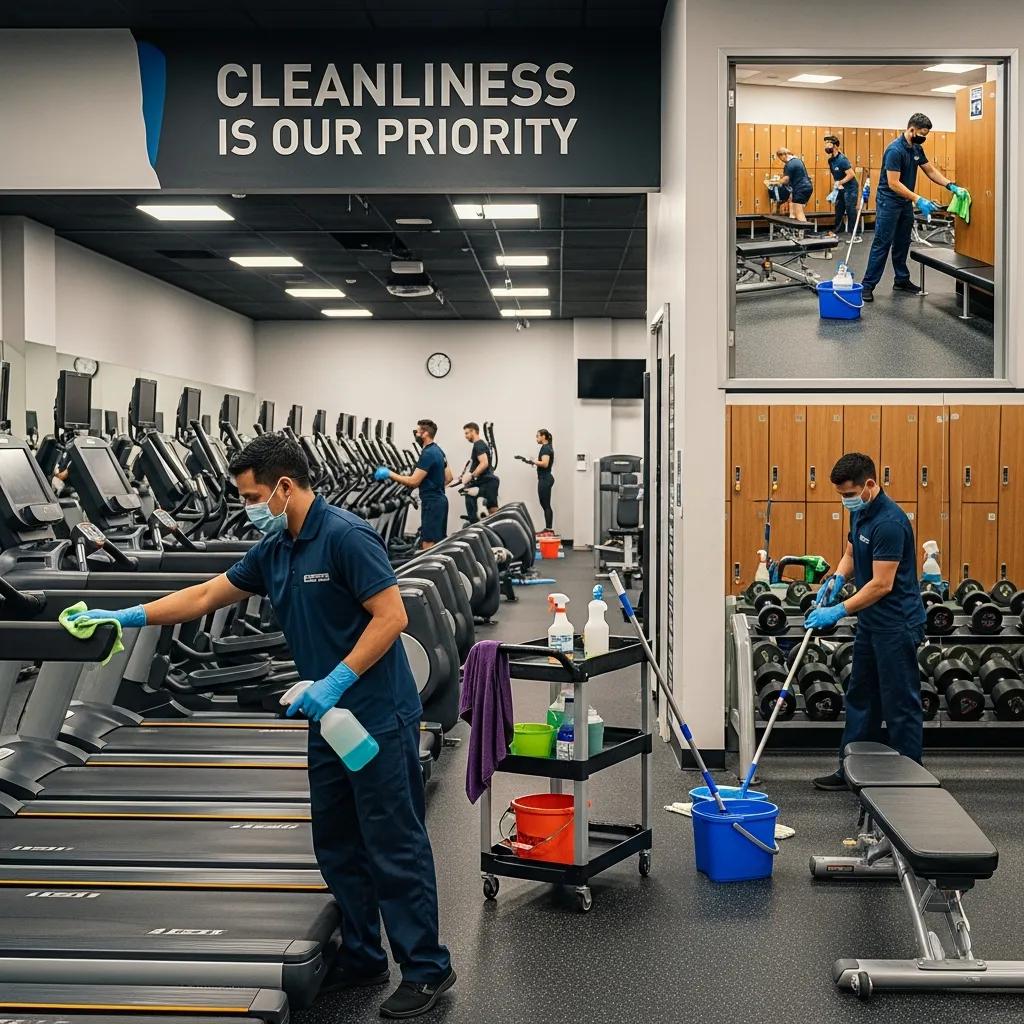
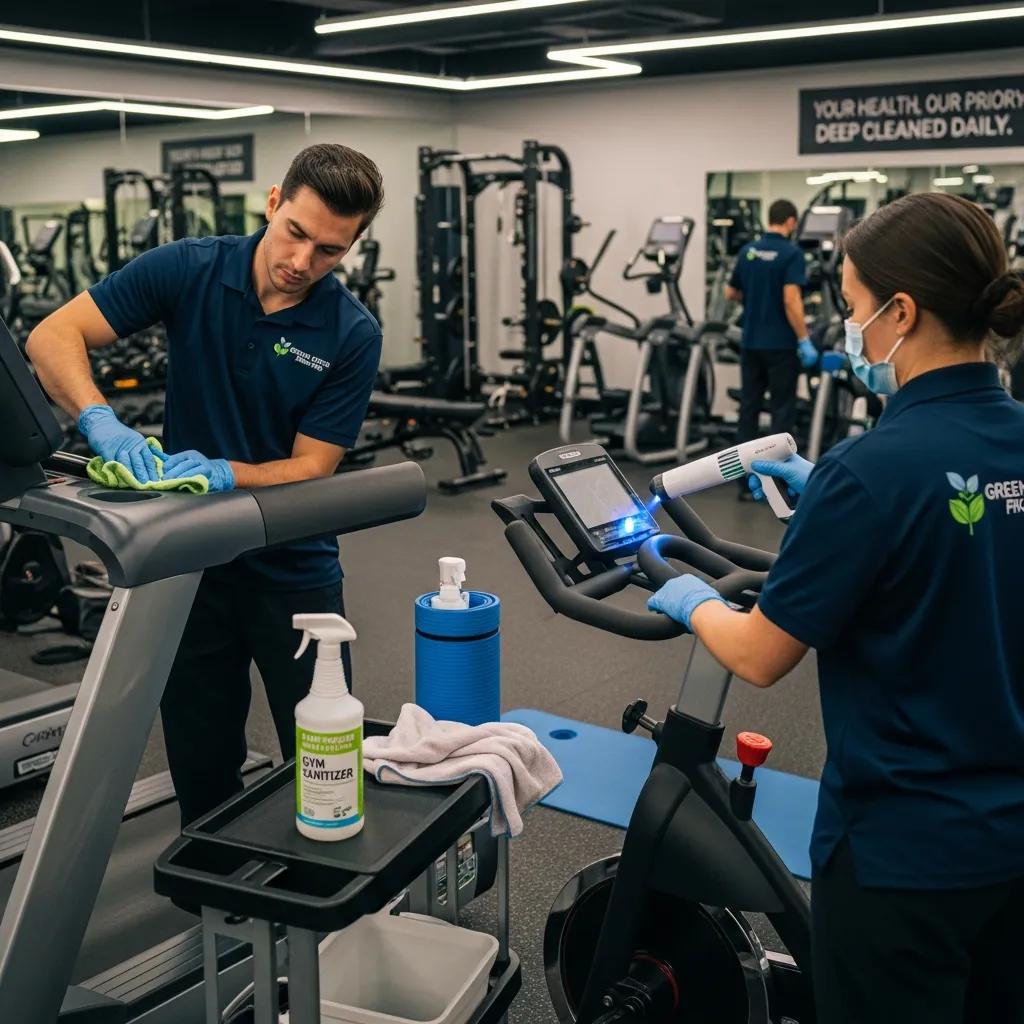
Gym cleaning targets cardio and strength equipment, mats and studios, reception areas and communal surfaces such as door handles and water stations, with tasks prioritised by contact frequency and contamination risk. Daily routines include wipe-downs of machine touchpoints with EPA-equivalent disinfectants, sanitising of free-weight grips and mats, floor sweeping and disinfection of entry zones; weekly deep-cleans cover upholstery, vents and behind-equipment areas using appropriate detergents and controlled dwell times. Safety considerations mandate avoiding excess moisture near electronics and verifying product compatibility to prevent corrosion or finish damage. Consistent inspection and documented checklists help maintain standards and prepare decision-makers for regulatory or membership inquiries.
To clarify frequency and protocol expectations, the following table maps standard gym zones to recommended tasks and frequency.
Introductory EAV table describing gym tasks, frequency and typical protocol choices.
| Zone | Typical Task | Frequency / Protocol |
|---|---|---|
| Cardio equipment | Touchpoint wipe & sanitise | Daily with appropriate contact time disinfectant; electronics wiped dry |
| Strength equipment | Grip and bench sanitisation | Daily; weekly deep-clean for upholstery with approved solutions |
| Locker rooms/showers | Surface disinfection & drain checks | Multiple daily checks; heavy-duty disinfectant and ventilation focus |
| Studios & mats | Mat sanitisation and floor care | After each class; weekly deep-clean and floor strip/seal as needed |
This table clarifies practical expectations so facility managers can compare provider scope and compliance performance.
How Does Divine Ensure Odor Control and Locker Room Disinfection?
Locker room odour control begins with identifying sources — drains, wet fabrics, and poor ventilation — and then applying targeted interventions such as drain maintenance, quick-dry floor procedures and odor-neutralising, low-toxicity products. Divine prioritises frequent high-grade disinfection of showers, benches and locker surfaces combined with routine ventilation checks and recommendations for improved airflow where needed. Follow-up measures include monitoring and documenting improvements, and scheduling focused deep-cleans if persistent odours or microbial hotspots reappear. These steps tie into broader hygiene programs that support member satisfaction and reduce complaints, and they inform best practices for school and childcare environments discussed next.
The next section examines child-safety priorities and cleaning best practices for schools and daycares.
What Are the Best Practices for School Cleaning Services in Brisbane to Ensure Child Safety and Hygiene?
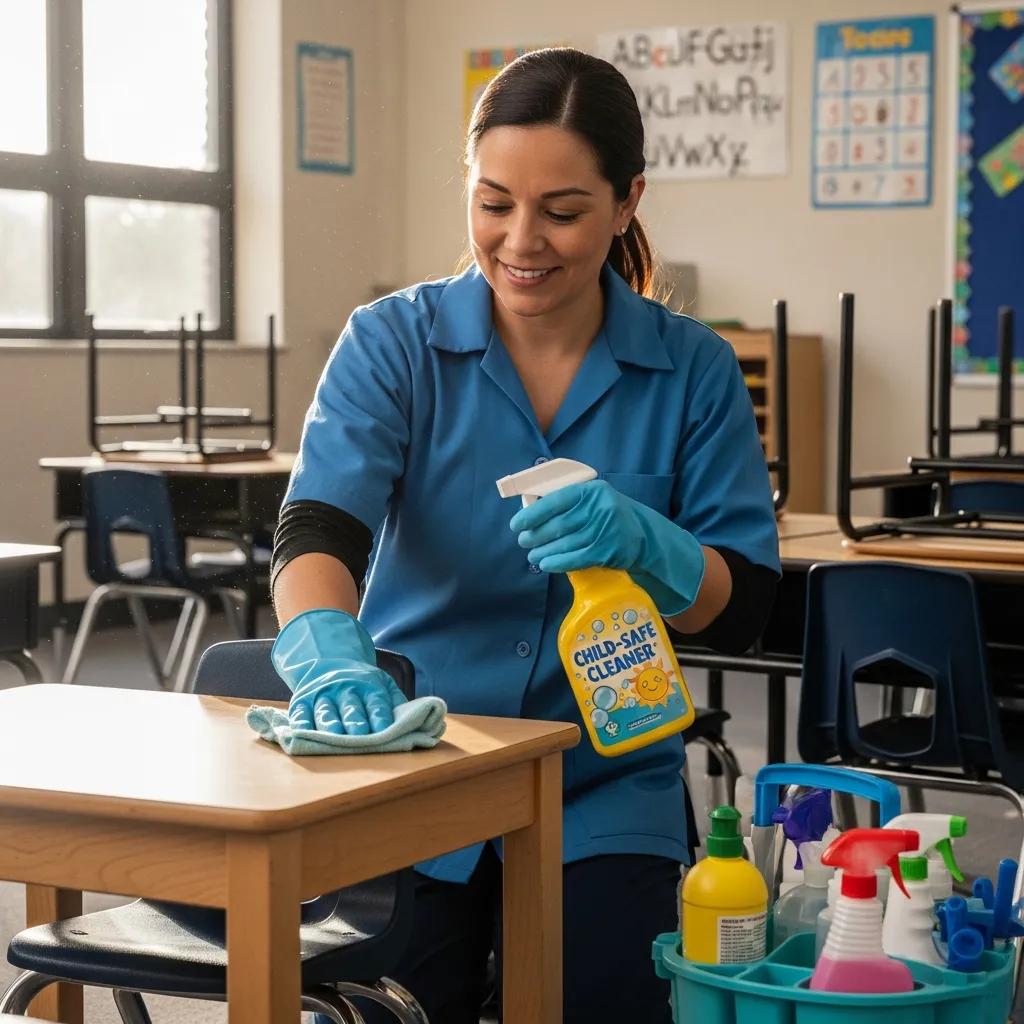
Best-practice school cleaning balances stringent hygiene with child-safe product selection, secure staffing, and careful scheduling to minimise exposure during learning hours while preserving a healthy environment. Schools and daycares require low-toxicity, eco-friendly cleaning agents for classrooms and canteens, frequent disinfection of high-touch surfaces, and scheduled deep-cleans for carpets and soft furnishings to control allergens and pathogens. Staffing protocols that include police checks and clear access procedures reduce child-safety risks, while documented cleaning logs and communication with administrative staff support transparency and regulatory compliance. The following subsections describe routine zone maintenance and the role of verified staff and eco-products in school settings.
These operational elements lead into specific zone-based routines and scheduling guidance.
How Are Classrooms, Playgrounds, and Canteens Maintained for Optimal Cleanliness?
Classroom routines typically include daily surface sanitisation of desks, door handles and shared learning tools, weekly thorough cleaning of floors and storerooms, and periodic deep-cleans for carpets and upholstery to control dust and allergens. Playground cleaning focuses on safe surface maintenance, removing debris and using appropriate wash methods for synthetic surfaces while avoiding hazardous chemicals near play areas. Canteens require stringent food-safety adjacency cleaning: sanitising food-contact surfaces, scheduled equipment deep-cleans, and waste management that prevents pest attraction. Sample schedules with daily, weekly and monthly tasks, plus clear handover procedures, help schools reduce cross-contamination and maintain healthy learning environments.
Clear scheduling and sample workflows guide procurement of cleaning services and match providers to school requirements.
What Role Do Police-Checked Staff and Eco-Friendly Products Play in School Cleaning?
Police-checked staff provide a critical trust signal for schools and daycare operators by ensuring that personnel working in child-accessible spaces have been vetted, reducing risk and reassuring parents and administrators. Eco-friendly products lower the risk of irritation and allergic reactions among children and staff while still allowing effective microbial control when selected for appropriate contact times and formulations. Staff training on safe chemical handling, dilution control and occupant-safe scheduling complements vetting processes, producing a protective layer of operational accountability. Together, verified personnel and low-toxicity chemistries form the backbone of a child-focused cleaning program that blends safety, effectiveness and environmental responsibility.
The next section explains event cleaning workflows and the logistical requirements for multi-phase service delivery.
How Does Divine Commercial Cleaning Manage Comprehensive Event Cleaning Services Across Australia?
Event cleaning requires scalable, phase-based services that cover venue preparation, in-event maintenance, and efficient post-event restoration to meet tight turnaround schedules and high public expectations. Divine Commercial Cleaning operates with capabilities to staff pre/during/post phases, coordinate waste management plans and liaise with organisers to protect assets and public safety, offering nationwide reach for larger-scale events while maintaining local presence in Sunshine Coast and Brisbane. Their event teams are trained for rapid-response spill control, restroom servicing, litter management and staged breakdown cleaning, supported by logistics planning to ensure waste segregation and compliant disposal. Below are the detailed phase checklists and responsibilities followed by an EAV table clarifying who does what during each phase.
This overview sets up the detailed pre/during/post checklist that event organisers can use to brief providers.
What Is Included in Pre-Event, During-Event, and Post-Event Cleaning?
Pre-event tasks include venue deep-clean, protective coverings for AV and flooring, and staged placement of waste and recycling stations, typically completed within agreed setup timelines to avoid interfering with vendors. During-event services concentrate on restroom servicing, litter control, quick spill response teams, and ongoing touchpoint sanitisation in high-traffic areas to preserve attendee safety. Post-event responsibilities feature waste segregation and removal, deep-cleaning of floors and upholstery, and restoring the venue to contractual handover conditions within turnaround windows. Sample staffing levels depend on venue size and expected attendance, and documented timelines enable organisers to track service completion and readiness for subsequent events.
Organisers can use this phased approach to align venue responsibilities and cleaning provider scope, explained further in the table below.
Introductory EAV table mapping event phases to responsibilities and typical tasks.
| Phase | Responsibility | Typical Tasks / Notes |
|---|---|---|
| Pre-Event | Provider & Client coordination | Venue prep, floor protection, restroom readiness |
| During-Event | Provider operations | Restroom servicing, litter patrols, rapid spill response |
| Post-Event | Provider lead with venue handover | Waste segregation, deep-clean, final inspection |
This responsibilities table clarifies handover points and helps event planners align staff and venue obligations for seamless operations.
How Is Waste Management and Venue Preparation Handled Professionally?
Professional waste management for events begins with segregation plans for general waste, recyclables and hazardous materials, using appropriately labelled containers and scheduled collections to avoid contamination and fines. Divine’s event teams coordinate with venue staff to position receptacles, implement recycling streams and follow hazardous waste segregation protocols where applicable, ensuring compliant handling and documentation for large-scale disposals. Venue preparation also includes protective measures for sensitive flooring and equipment, coordinated timing to reduce disruption, and final inspection checklists to confirm readiness for subsequent bookings. These processes reduce environmental impact, support recycling targets, and ensure venues are returned to agreed standards promptly.
Having reviewed event workflows, the next section focuses on clinical and professional office cleaning standards and hospital-grade protocols.
Why Choose Divine Commercial Cleaning for Medical Center and Professional Office Cleaning in Brisbane and Sunshine Coast?
Medical and office cleaning requires strict protocol adherence, hospital-grade disinfection where indicated, and bespoke plans that respect clinic workflows and strata governance, ensuring safety and continuity of service. Divine Commercial Cleaning offers tailored solutions for medical centres, X-ray and imaging centres, and professional offices with documented disinfection protocols, PPE usage, and trained staff capable of meeting audit requirements while using environmentally conscious methods. Their service model supports strata and body corporate needs by providing consistent crews, optional add-on services like carpet and window cleaning, and flexible scheduling to minimise business disruption. The following subsections outline disinfection protocol components and how customised cleaning plans are developed and implemented.
A clear protocol description helps healthcare operators assess compliance readiness and select a provider aligned to their standards.
What Are the Hospital-Grade Disinfection Protocols Used in Medical Facility Cleaning?
Hospital-grade disinfection protocols follow a methodical sequence: assess the area and risk, isolate it where necessary, clean visible soil, apply disinfectant with specified contact time, allow dwell, and perform any required rinsing or neutralisation to ensure surface compatibility. Product selection emphasises disinfectants compatible with medical equipment and surfaces, with certified contact times and documented dilution and application processes to meet audit standards. Staff wear appropriate PPE, follow contamination control procedures, and keep records of cleaning cycles for regulatory review and traceability. This protocol flow supports infection prevention objectives and provides the documentation healthcare administrators need during inspections.
These protocol details support tailored plans which are described in the next subsection for offices and strata properties.
Introductory EAV table outlining disinfection protocol components and rationale.
| Protocol Component | Specification | Rationale |
|---|---|---|
| Product selection | Hospital-grade disinfectant; surface-compatible | Ensures efficacy and prevents surface damage |
| Contact time | Manufacturer-specified dwell time | Achieves pathogen inactivation |
| PPE & documentation | Gloves, masks; cleaning logs retained | Protects staff and supports audits |
This table shows how protocol components interlock to deliver compliant and traceable clinic cleaning.
How Are Customised Cleaning Solutions Tailored for Offices and Strata Properties?
Customised plans start with a site assessment to map high-traffic areas, shared amenities and access points, which informs frequency, crew size and optional add-ons like carpet or tile & grout cleaning and window maintenance. Scheduling flexibility is offered through shift-based cleaning, after-hours services, and emergency response arrangements to suit office hours and strata meetings while keeping the same cleaner assigned where consistent coverage is preferred. Add-on services such as carpet cleaning, high-pressure exterior washing and strip-and-seal flooring are scheduled on agreed cadences to minimise disruption and extend asset life. Clear reporting and point-of-contact arrangements support strata committees and facility managers in monitoring performance and adjusting scope as needs evolve.
These tailored approaches link directly to reliability and trust factors detailed in the next major section.
How Does Divine Commercial Cleaning Ensure Reliability, Trust, and Environmental Responsibility?
Reliability and trust are built through transparent contract terms, consistent staffing, insurance cover, police-checked personnel and eco-focused methods that demonstrate social and environmental responsibility. Divine Commercial Cleaning emphasises no lock-in contracts and a money-back guarantee, allowing clients to trial services without lengthy commitments while keeping the same cleaner assigned to foster familiarity and accountability. The company’s family-owned and operated background supports local service delivery across the Sunshine Coast and Brisbane, and fully insured operations plus police-checks provide risk mitigation for sensitive sites like schools and medical centres. Below are the practical benefits of these commercial terms and the operationalisation of eco-friendly and verification practices.
The next subsections break down contractual and environmental practices to explain their day-to-day advantages.
What Are the Benefits of No Lock-In Contracts and Consistent Cleaning Staff?
No lock-in contracts reduce administrative friction and allow businesses to adjust service levels without penalty, which is especially useful during seasonal fluctuations or event-heavy periods. Consistent allocation of the same cleaning staff improves site knowledge, speeds response to recurring issues and increases accountability because personnel become familiar with unique site needs and equipment. This continuity often results in faster problem resolution and stronger relationships between the cleaning team and facility managers, which supports long-term service quality. For organisations seeking predictable outcomes, combining flexible contract terms with assigned crews provides both adaptability and performance stability.
These contractual benefits pair with operational trust measures such as police checks and environmental protocols explained next.
How Are Eco-Friendly Methods and Police-Checked Staff Integrated into Services?
Eco-friendly cleaning uses low-toxicity products, microfibre systems, reduced water techniques and responsible chemical dilution to lower environmental impact while maintaining efficacy, and these methods are documented to demonstrate sustainability commitments to clients. Police-checked staff are verified at onboarding, and businesses retain records that can be presented to clients as part of a trust and safety package; coupled with insurance coverage and a money-back guarantee, these measures create a layered risk-control framework. Communication of these practices to clients is done through service proposals and routine reporting, establishing transparency on both environmental and safety credentials. By integrating these practices operationally, providers can meet both compliance and corporate responsibility objectives for commercial clients.
This completes the sector-by-sector guidance and operational signals for selecting and evaluating specialised cleaning services.

Dianne, originally from Rockhampton, hails from a business-oriented family, with her father owning electrical stores and her uncle serving as Mayor. Moving to the Sunshine Coast at 13, she later pursued a rewarding real estate career and raised three children. As a single mom, she balanced university studies with domestic cleaning work. Armed with a Bachelor’s Degree in Business, majoring in Supply Chain Management, Dianne founded and grew Divine Commercial Cleaning into a thriving company. Her success is rooted in strong family mentorship, a positive attitude, and a solution-oriented approach, offering tailored cleaning services with integrity and strategic insight.