
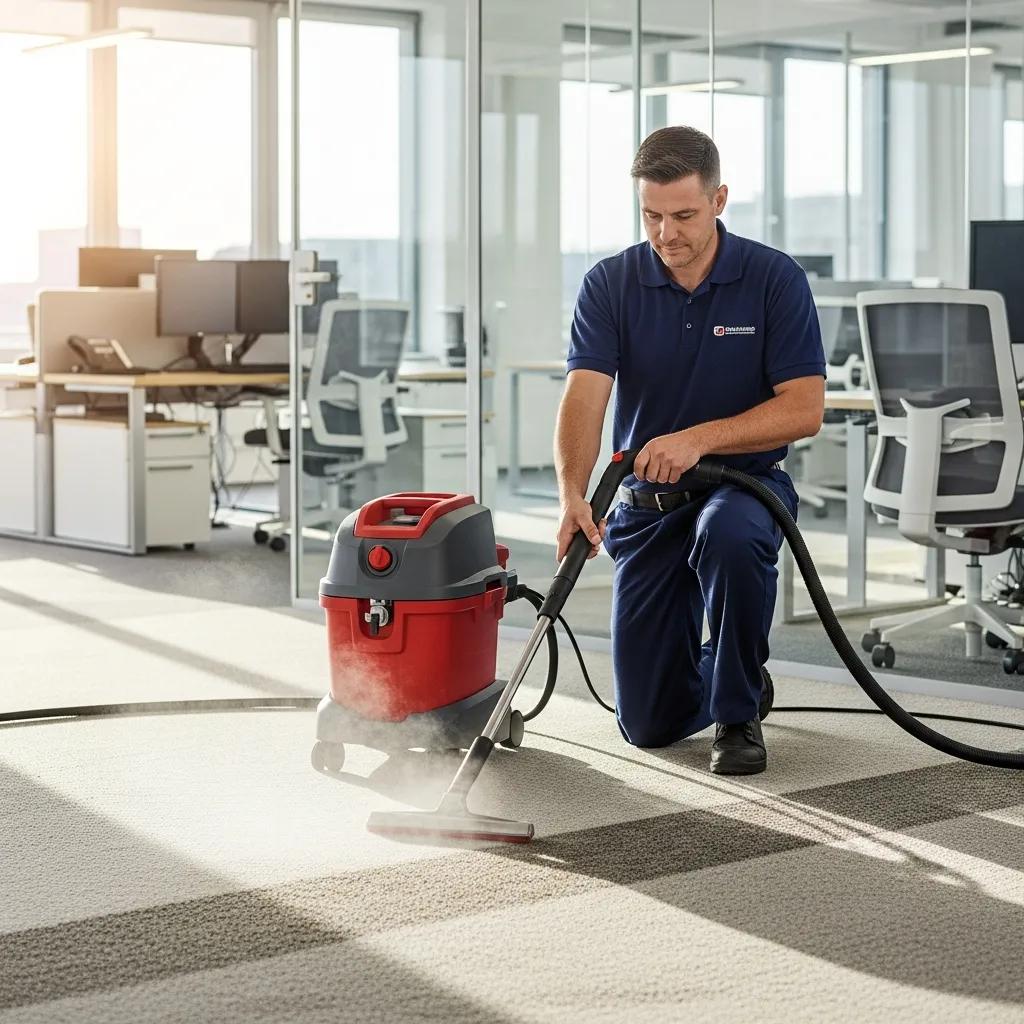
Extending Commercial Carpet Life Through Proper Maintenance and Care: The Ultimate Guide for Businesses
Commercial carpet longevity refers to the practical lifespan of carpet installations in business environments and the maintenance strategies that preserve appearance, hygiene, and performance. Extending carpet life matters because durable floorcoverings reduce replacement costs, minimise operational downtime, and support a healthier indoor environment for staff and visitors. This guide explains how routine care, targeted professional interventions, and environmentally conscious choices work together to prolong carpet lifespan while protecting indoor air quality and your brand image. Readers will learn the primary factors that shorten carpet life, daily and weekly maintenance checklists, recommended professional cleaning schedules and methods, eco-friendly options, and how an experienced local provider can support long-term results. Early on, Divine Commercial Cleaning is noted as a local Sunshine Coast and Brisbane specialist that provides customised commercial carpet cleaning and flood restoration services to help businesses protect carpet investment. The following sections provide practical, evidence-informed steps businesses can implement immediately and how to align those steps with professional services when needed.
Why Is Extending Commercial Carpet Life Important for Your Business?
Extending commercial carpet life is the deliberate combination of routine maintenance and periodic professional care to delay replacement and maintain performance. The mechanism is straightforward: removing dry soils, treating spills promptly, and addressing embedded contaminants prevents fibre abrasion, staining and structural breakdown, which keeps carpets functional and attractive for longer. The specific benefit to businesses is twofold: measurable cost avoidance from delayed capital expenditure and intangible gains in hygiene and brand perception that influence clients and staff. Maintaining carpets also reduces airborne particulate load, which supports workplace health and can lower absenteeism over time. Understanding these outcomes clarifies why a maintenance-first approach is an essential part of facility management for any commercial premise.
What Are the Benefits of Prolonged Carpet Longevity?
Prolonged carpet longevity delivers direct financial benefits through fewer replacements and lower lifecycle costs. By preventing premature wear and stains, organisations avoid capital outlays and the operational disruption that accompanies large-scale carpet replacement projects. A well-maintained carpet also preserves professional appearance, reinforcing brand confidence among visitors and clients while supporting employee morale. Health benefits follow because cleaner carpets trap fewer allergens and microbial buildup, lowering the risk of respiratory irritants circulating indoors. These cumulative advantages create a predictable return on investment for businesses that prioritise systematic carpet care and scheduled professional cleaning.
How Does Carpet Maintenance Impact Indoor Air Quality and Hygiene?
Carpet maintenance directly affects indoor air quality because carpets act as sinks for dust, allergens, and microscopic contaminants that otherwise remain airborne. Regular vacuuming and periodic deep cleaning remove those reservoirs, reducing resuspension of particles and lowering overall airborne contaminant concentrations. The mechanism is that surface and subsurface soils are progressively extracted rather than left to abrade fibres and become airborne, which improves perceived cleanliness and reduces health risks. For facilities with sensitive populations—such as medical centres, daycare settings, and imaging suites—this hygiene effect is especially important and should inform maintenance frequency and cleaning method selection. Improving indoor air quality through maintenance also creates operational benefits by reducing sick days and maintaining a professional environment.
What Factors Affect the Lifespan of Commercial Carpets?
The lifespan of commercial carpets depends on a combination of material properties, usage patterns, environmental events and maintenance intensity. Carpet fibres, pile construction and backing determine baseline durability, while foot traffic patterns and the concentration of abrasive soils drive mechanical wear. Spills, stains and delayed cleaning accelerate chemical and biological degradation, and extreme events such as flooding introduce contaminants that require specialised remediation to prevent permanent damage. Installation quality and underlay selection also influence how quickly issues appear, since poor installation can concentrate stress and wear. Recognising these factor groups helps facility managers prioritise interventions that yield the biggest longevity gains.
- Primary factors that influence carpet lifespan include fibre type, traffic volume, maintenance frequency, spill management and environmental incidents.
- Material characteristics such as fibre resilience and construction determine how well a carpet resists crushing and matting.
- Operational practices—entrance control, cleaning schedules and staff training—mediate how quickly normal use translates into irreversible wear.
These factor categories point directly to practical choices—selecting durable fibres for heavy-traffic zones, mapping traffic lanes for protection, and adopting robust cleaning protocols—that reduce long-term replacement needs.
How Do Foot Traffic and Carpet Fiber Types Influence Durability?
Foot traffic concentrates wear into lanes and access points, causing pile crush, soil embedding and accelerated colour loss in those areas. Fibre type influences resilience: nylon often offers excellent abrasion resistance and recovery, wool provides natural resilience and stain resistance but can be higher maintenance, while polypropylene resists staining but may crush under heavy loads. Mapping traffic patterns and using entrance mats, runners or zoned carpets reduces abrasive load in critical areas and extends life. In practice, replace-or-reinforce decisions should be based on visible wear patterns and cost-to-replace calculations that consider disruption; in many cases enhanced maintenance and targeted replacement of high-wear tiles or runners is more economical than full replacement.
What Role Do Spills, Stains, and Cleaning Frequency Play?
Spills and staining events create chemical changes that can set into fibres and backing, making removal progressively more difficult the longer they remain. Immediate containment and correct spot treatment prevent set-in stains and reduce fibre degradation from acidic or coloured substances. Regular cleaning frequency—both daily surface maintenance and scheduled deep cleaning—preve`nts soil buildup that abrades fibres and causes matting. Without consistent cleaning, embedded grit acts like sandpaper and greatly shortens expected service life; by contrast, an established schedule of prompt spot response and professional extraction restores appearance and performance and delays replacement.
What Are the Best Practices for Daily and Weekly Commercial Carpet Maintenance?
Effective daily and weekly routines combine preventive measures, surface cleaning, and scheduled inspections to stop damage before it becomes structural. On a daily basis, entrance matting and targeted high-traffic vacuuming remove incoming soils, while spot checks catch spills early and allow immediate treatment. Weekly tasks should include more thorough vacuuming with commercial-grade equipment, systematic spot treatments for persistent marks, and documentation of wear patterns to guide professional interventions. Training cleaning staff in correct vacuum settings, spot-cleaner selection and escalation triggers ensures consistency and reduces risky DIY remedies. Implementing these practices keeps carpets performing well between professional cleanings and makes deep-clean cycles more effective.
Commercial routine comparison: tasks, recommended frequency, responsible party and expected outcome are summarised in the table below.
| Routine Task | Frequency | Responsible | Expected Outcome |
|---|---|---|---|
| Vacuuming (high-traffic lanes) | Daily | In-house staff or contract cleaners | Removes loose soils and reduces abrasion |
| Entrance matting maintenance | Daily | Facilities staff | Reduces soil ingress and protects interior carpet |
| Spot cleaning and spill response | Immediate | On-site staff trained in protocol | Prevents stain set-in and fibre damage |
| Thorough vacuum and inspection | Weekly | Cleaning team | Identifies wear, schedules spot treatments |
- Daily actions include entrance control, immediate spill response and targeted vacuuming that focus resources where they reduce abrasion most.
- Weekly actions expand cleaning to whole zones, treat spots with appropriate agents, and record observations that inform professional scheduling.
Maintaining a simple checklist and assigning responsibilities reduces ambiguity and strengthens the chain-of-custody for carpet care, ensuring routine tasks support long-term performance.
How to Effectively Vacuum and Manage High-Traffic Areas?
Effective vacuuming is a technical process: commercial upright or backpack vacuums with HEPA or fine-particle filtration and adjustable height settings remove surface and near-surface soils without damaging pile. Best practice is to vacuum high-traffic lanes daily using slower, overlapping passes to maximise soil removal, and to set vacuum height correctly to avoid excessive pile distortion. Traffic lane identification—mapping entry points, pathways to service areas and reception zones—allows targeted treatment; use of mats and runners further reduces soil ingress. When high-traffic zones show persistent matting or discolouration, escalate to professional maintenance sooner rather than later to restore pile and remove embedded grit.
What Are Immediate Spill Response and Spot Cleaning Techniques?
A reliable three-step spot response prevents most stains from setting: contain the spill to stop spread, blot gently to remove excess without rubbing that damages fibres, and apply the manufacturer-recommended spot cleaner or neutral detergent sparingly before professional follow-up. Avoid abrasive scrubbing, heated drying or indiscriminate home remedies that can fix stains or strip dye. Escalate to professional cleaning when spills involve oils, dyes, chemical residues or when stains persist after initial treatment. Effective on-site protocols reduce long-term restoration needs and maintain the carpet’s protective role in indoor air quality.
How Often Should Professional Commercial Carpet Cleaning Be Scheduled?
Professional commercial carpet cleaning should be scheduled based on business type, traffic level, and risk profile, with intervals ranging from quarterly for heavy-traffic facilities to annually for low-traffic offices. The mechanism is that deep-cleaning methods extract embedded contaminants, neutralise odours, and remove soils that routine vacuuming cannot reach, which restores pile resilience and appearance. The result is measurable extension of carpet life and improved indoor hygiene. Below is a practical schedule by business type that facilities managers can use as a baseline for planning professional services.
| Business Type | Recommended Frequency | Rationale |
|---|---|---|
| High-traffic retail or shopping centres | Quarterly | Heavy footfall and soil load require frequent deep cleaning to prevent rapid wear |
| Gyms and dance studios | Quarterly | Sweat and high abrasion demand regular extraction and sanitisation |
| Medical/health centres, X-ray centres | Every 3–6 months | Hygiene and infection-control priorities justify shorter intervals |
| Professional offices and strata properties | Every 6–12 months | Lower soil load but periodic deep cleaning maintains appearance and extends life |
Businesses can customise schedules using assessment of traffic mapping, stain frequency, and functional risk; for example, a reception area in a high-use office may need quarterly attention while back-office zones remain on an annual cycle. Divine Commercial Cleaning recommends flexible scheduling options that align professional visits with business needs, offering customised plans for offices, medical centres, retail sites and gyms, and encourages clients to request a site-specific quote to match cleaning frequency to operational realities.
What Are the Recommended Cleaning Methods for Carpet Longevity?
Hot water extraction, encapsulation, and low-moisture dry cleaning are three commonly recommended professional methods, each with specific trade-offs for carpet longevity. Hot water extraction penetrates deep into backing to remove embedded soils and allergens but typically requires longer drying times, making it ideal for scheduled deep cleans. Encapsulation uses polymers to bind soil into dry residues that vacuum away quickly, offering fast turnaround and good results for routine maintenance. Dry cleaning methods use minimal moisture and fast-drying agents for time-sensitive environments but may be less effective at removing heavy, embedded contaminants. Selecting the right method depends on fibre type, traffic, and downtime constraints.
| Cleaning Method | Downtime | Drying Time | Soil Removal Efficacy | Suitability |
|---|---|---|---|---|
| Hot water extraction | Moderate | 6–12 hours | High | Deep-clean cycles, medical and high-soil areas |
| Encapsulation | Low | 1–2 hours | Medium-High | Regular maintenance, offices, retail |
| Dry cleaning (low moisture) | Very low | <1 hour | Medium | Time-sensitive areas and quick turnaround needs |
Comparing methods shows how to balance soil removal efficacy against operational constraints; blending methods across zones often produces optimal lifespan outcomes.
How to Customise Cleaning Schedules for Different Business Environments?
Custom schedules begin with an assessment that considers traffic maps, surface soils, stain history, and functional risks like infection control or public perception. For example, medical centres often require three- to six-month deep-cleans combined with weekly sanitisation of high-contact zones, while corporate offices may be well-served by annual extraction and quarterly encapsulation for reception areas. Gyms and dance studios benefit from quarterly hot water extraction plus ongoing daily vacuuming to manage sweat and particulate loads. Adjust schedules after seasonal peaks, events or flood incidents to ensure carpets receive timely restoration when needed.
- Sample schedules: offices (annual extraction + quarterly spot maintenance), retail (quarterly extraction + monthly encapsulation), medical (3–6 months extraction + weekly touch-ups), gyms (quarterly extraction + weekly vacuuming).
- Triggers for ad-hoc intervention include visible odour, persistent staining, post-event soil, or water intrusion.
Tailoring frequency and method to actual conditions reduces unnecessary downtime and concentrates resources where they most effectively prolong carpet life.
How Can Eco-Friendly Carpet Cleaning Benefit Your Business?
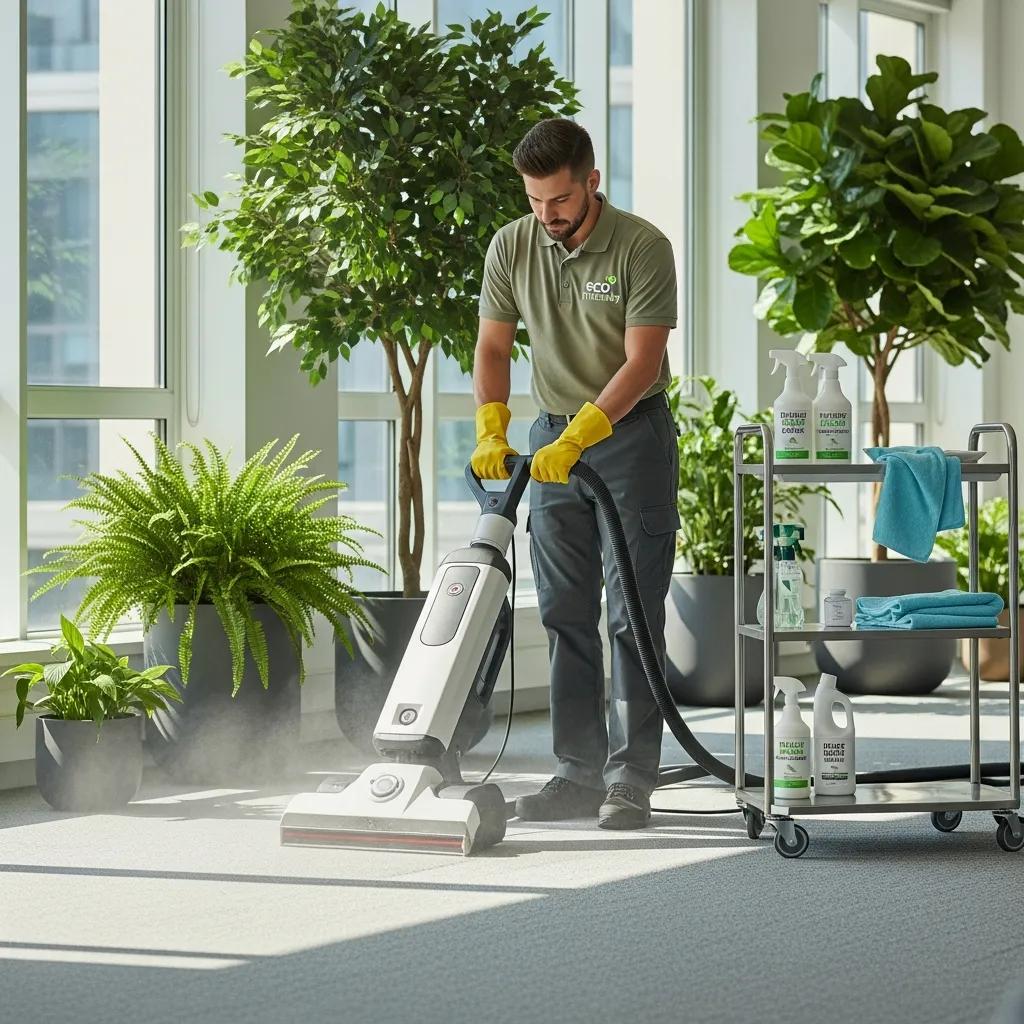
Eco-friendly carpet cleaning reduces volatile organic compounds (VOCs) and chemical residues while delivering equivalent cleaning performance when applied correctly, producing better indoor air quality and aligning with corporate sustainability goals. Environmentally conscious products and methods minimise worker and occupant exposure to harsh chemistries and lower the facility’s ecological footprint through reduced chemical loads and wastewater impact. The business advantage includes compliance with procurement policies, improved staff wellbeing and a demonstrable CSR outcome that resonates with customers. Selecting certified low-VOC products and practices such as encapsulation or measured hot water extraction with biodegradable detergents provides both environmental and operational benefits.
- Lower VOC Exposure: Safer indoor air supports staff health and reduces odour complaints.
- Reduced Chemical Residue: Biodegradable formulations leave fewer residues that attract rapid resoiling.
- Procurement and CSR Alignment: Eco-friendly choices support sustainability reporting and stakeholder expectations.
These advantages make environmentally conscious cleaning a practical investment: businesses gain health and reputational benefits while achieving the core goal of extending carpet life through gentler, effective methods.
What Are the Advantages of Using Sustainable Cleaning Products and Methods?
Sustainable cleaning products typically offer reduced toxicity, rapid biodegradation and lower odour, all of which contribute to a more comfortable indoor environment. Choosing certified or third-party-verified products signals procurement compliance and reduces the risk of adverse reactions among occupants. Operationally, some green methods enable quicker re-occupation thanks to faster drying and lower residuals, which benefits businesses with tight turnaround windows. From a risk perspective, reduced chemical loads simplify wastewater management and may align with local environmental regulations. Overall, sustainable choices are compatible with longevity objectives because they remove soils effectively while preserving fibre integrity.
How Does Divine Commercial Cleaning Implement Environmentally Conscious Solutions?
Divine Commercial Cleaning integrates environmentally conscious practices into commercial carpet maintenance by selecting low-VOC cleaning agents and measured application techniques that limit chemical usage while preserving cleaning efficacy. The company’s operational approach emphasises containment, correct dosing, and efficient extraction to reduce residues and drying times, which benefits indoor air quality and reduces re-soiling rates. These practices align with procurement preferences for sustainable vendors and provide tangible benefits for clients looking to meet CSR goals without compromising carpet performance. Businesses seeking a green-focused cleaning partner can discuss eco-options as part of a customised maintenance plan.
How Does Divine Commercial Cleaning Support Commercial Carpet Longevity?
Divine Commercial Cleaning supports commercial carpet longevity through a suite of services that combine routine maintenance, professional deep cleaning, and flood restoration capabilities tailored to commercial settings. Service offerings include commercial cleaning with add-on carpet cleaning using advanced products and equipment to deep clean, remove stains, revitalise fibres and extend carpet life, plus flood restoration services that address water removal, antimicrobial application, drying and final steam cleaning to remove odours and condition carpets after an incident. The operational model emphasises customised solutions with no lock-in contracts and a money-back guarantee, providing flexibility and confidence for facility managers. These capabilities help businesses maintain carpet performance and reduce lifecycle costs by combining preventive care with timely professional interventions.
What Customised Solutions and Guarantees Does Divine Offer?
Divine Commercial Cleaning provides tailored service plans that match cleaning frequency and methods to specific business needs, whether the client is a medical centre, daycare, office, gym, strata complex or retail centre. Their approach includes add-on carpet cleaning using advanced products to address deep stains and revitalise fibres, and flood restoration services that combine water removal, antimicrobial application, drying/dehumidifying and final steam cleaning to restore carpets after water events. The company emphasises flexible arrangements—no lock-in contracts—and offers a money-back guarantee alongside fully insured operations and police-checked staff. For facility managers seeking predictable outcomes, these service elements reduce operational risk and support carpet longevity through targeted, accountable interventions.
What Do Client Testimonials Reveal About Carpet Care Success Stories?
Client feedback commonly highlights improved appearance, reduced staining, and extended service intervals following coordinated routine maintenance and professional cleaning cycles. Businesses frequently report that combining daily vacuum protocols with scheduled deep extraction or encapsulation reduced visible wear and delayed replacement projects. Testimonials often reflect satisfaction with communication, responsiveness during incidents like floods, and appreciation for environmentally conscious cleaning options that minimise disruption. These consistent outcome themes indicate that a maintenance-led strategy—executed with professional support—produces measurable benefits in carpet longevity and overall facility presentation.
For tailored advice or a site-specific quote to protect your carpet investment, contact Divine Commercial Cleaning by phone or email to discuss customised schedules and eco-friendly options that align with your facility’s needs and risk profile.

Dianne, originally from Rockhampton, hails from a business-oriented family, with her father owning electrical stores and her uncle serving as Mayor. Moving to the Sunshine Coast at 13, she later pursued a rewarding real estate career and raised three children. As a single mom, she balanced university studies with domestic cleaning work. Armed with a Bachelor’s Degree in Business, majoring in Supply Chain Management, Dianne founded and grew Divine Commercial Cleaning into a thriving company. Her success is rooted in strong family mentorship, a positive attitude, and a solution-oriented approach, offering tailored cleaning services with integrity and strategic insight.