
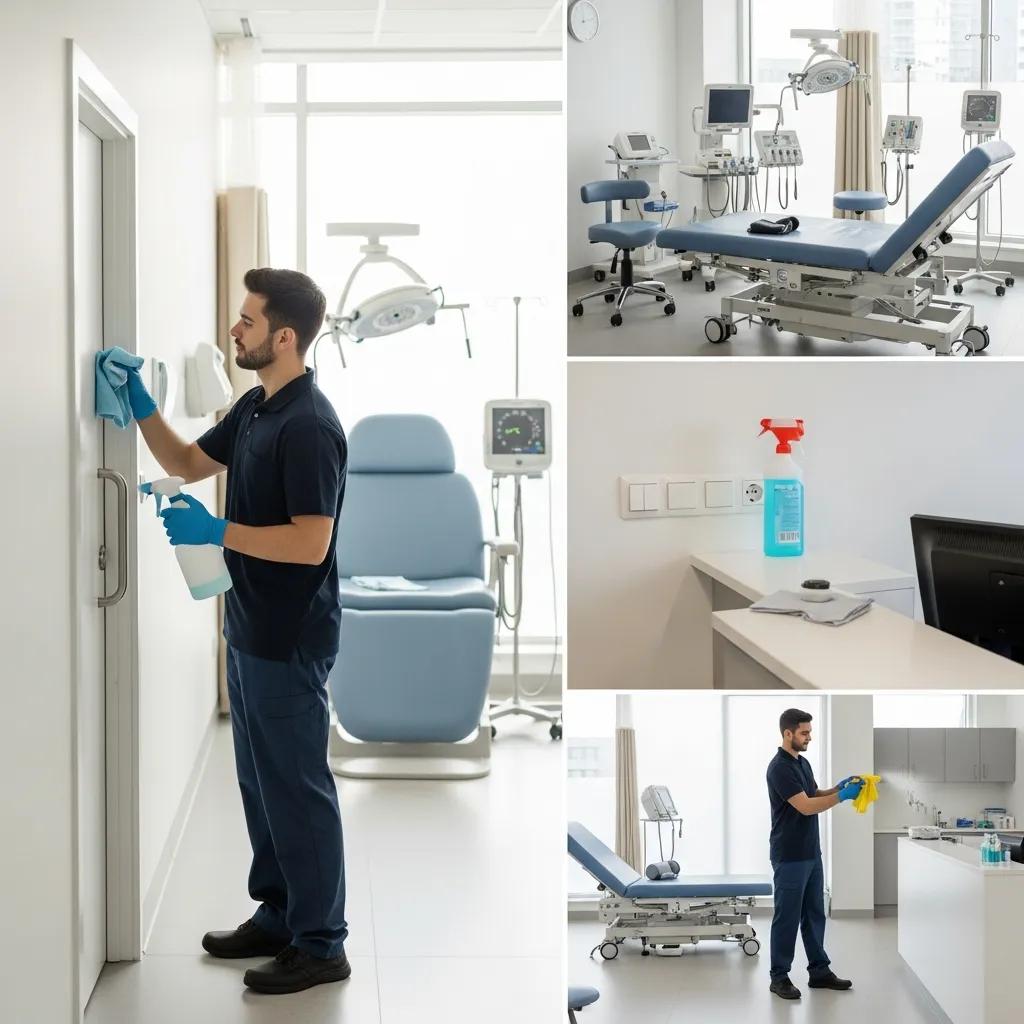
Chermside Medical Centre Cleaning Solutions for Health and Safety — Expert Medical Clinic Cleaning
Clean clinical spaces are the first line of defence for patient safety. Professional medical centre cleaning lowers infection risk, protects staff and patients, and keeps clinic operations running smoothly across Chermside. On this page we outline what a comprehensive medical-clinic clean looks like, why disinfection matters, and how tailored protocols for dental practices, GP surgeries, pathology labs and medical offices reduce healthcare-associated infections. You’ll find practical service descriptions, specialised procedures such as terminal cleans and biohazard handling, and how Australian standards translate into everyday cleaning practice. We also cover how to choose a cleaning provider, the role of hospital-grade and eco-friendlier products, and the steps to request a customised quote. Our focus is practical: clear hygiene steps, sequencing to avoid cross-contamination, and schedules that fit clinic workflows.
What are the essential medical clinic cleaning services in Chermside?
Essential medical-clinic cleaning covers the core tasks that keep patient areas safe, control microbial load and meet regulatory expectations. Core services include daily routine cleaning to remove soils and organic matter; frequent disinfection of high-touch surfaces to interrupt transmission; periodic deep or terminal cleans for procedure rooms; safe handling and segregation of clinical waste; linen and textile management to prevent cross-contamination; and fast biohazard response for spills or exposure incidents. Each service targets a specific infection-control point and is scheduled by risk: high-touch points need daily — often multiple times per day — attention, while terminal cleans happen between high-risk procedures or on planned cycles. Knowing these essentials helps clinics plan resources and set cleaning frequencies that match patient volumes and clinical risk.
Australian research supports the value of these routine services, showing that consistent daily cleaning can reduce healthcare-associated infections.
Daily cleaning standards reduce healthcare-associated infections
Evidence from Australian studies indicates that ensuring at least a minimum standard of daily cleaning — including attention to shared equipment — can influence rates of healthcare-associated infections.
Investigating the effect of enhanced cleaning and disinfection of shared medical equipment on health-care-associated infections in Australia (CLEEN): a stepped …, K Browne, 2024
| Service | Typical frequency | Primary purpose |
|---|---|---|
| High-touch surface disinfection | Daily / multiple times per day | Break the chain of transmission on frequently touched items |
| Routine floor and surface cleaning | Daily | Remove soils and visible contamination before disinfection |
| Terminal / deep cleaning | On-demand / between procedures | Return procedure areas to a clinical-ready state |
| Clinical waste handling | Per incident / daily pickup | Safe segregation and removal of infectious waste |
| Linen and textile management | Per use / daily | Prevent fabric-based cross-contamination |
This table summarises each core service and suggested scheduling. The sections that follow explain specialised services and the science behind disinfection so clinics can match protocols to risk.
Which specialised cleaning services ensure optimal facility hygiene?
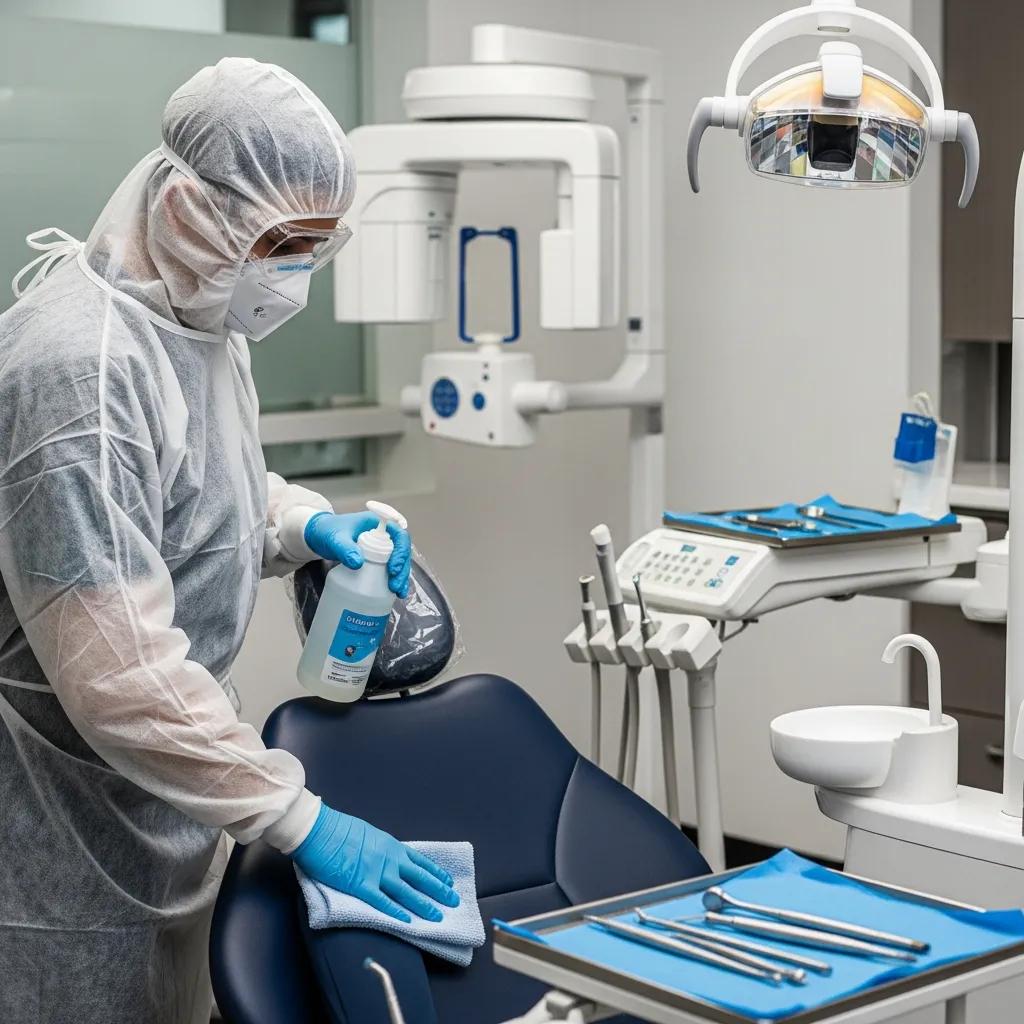
Specialised cleaning targets high-risk zones and equipment that routine cleaning alone can’t fully protect. Typical examples are terminal cleans performed with systematic sequencing and validated disinfectants after invasive procedures; instrument-zone cleaning focused on dental operatories, steriliser surrounds and benches; and formal biohazard disposal that follows containment, labelling and secure transport rules. These jobs usually need trained technicians, hospital-grade disinfectants and colour-coded systems to prevent cross-contamination between clinical areas. For sensitive medical devices and lab equipment, technicians follow manufacturer instructions and choose compatible disinfectants to protect both the device and microbial control. Knowing when to deploy specialised services helps clinics prioritise audits and higher-frequency interventions where they matter most.
Proper sequencing for specialised cleans also highlights the difference between cleaning, sanitising and disinfecting — a key factor in product choice and contact time during clinical practice.
How do disinfection and sanitisation protect Chermside medical centres?
Cleaning, sanitising and disinfecting are different but complementary steps that reduce infection risk: cleaning removes dirt and organic matter; sanitising lowers microbial counts on lower-risk surfaces; and disinfecting inactivates specific pathogens on clinical surfaces. Effective disinfection depends on the right product (hospital-grade agents with registered claims), correct dilution, and the required contact time to reach the claimed log reduction — plus proper technique such as adequate dwell time and mechanical action. In high-touch clinical zones, disinfecting multiple times each day lowers surface bioburden and helps reduce healthcare-associated infections. Industry guidance emphasises strict adherence to contact times. Pairing cleaning with verification — visual audits or ATP testing — lets facilities measure outcomes and adjust schedules. Clear definitions of these steps guide training, procurement and daily protocols that protect patients and staff.
Research into contaminated clinical environments further highlights why disinfection is essential to prevent healthcare-associated infections.
Hospital environment and HAI transmission risks
Contaminated clinical environments contribute significantly to transmission of healthcare-associated infections. Studies estimate millions of HAI cases annually and show that a substantial portion of transmission occurs via hands and contaminated surfaces, underlining the importance of environmental cleaning and effective disinfectants.
Comparative efficacy of hospital disinfectants against nosocomial infection pathogens, R Nabizadeh, 2020
How does Divine Commercial Cleaning meet Australian health and safety standards?
At Divine Commercial Cleaning we follow practices that align with Australian health guidance and regulatory expectations, while keeping our service local and audit-ready. Compliance means following relevant procedural guidance, documenting cleaning schedules and results, and keeping records that demonstrate infection-prevention activity. We train staff in infection control, use colour-coded cleaning systems to prevent cross-contamination, and blend eco-friendlier choices with hospital-grade disinfectants where required. These steps help Chermside healthcare providers achieve consistent cleaning outcomes and maintain the documentation needed for inspections.
| Standard / guideline | Practical requirement | How practice meets requirement |
|---|---|---|
| National infection-prevention guidance | Risk-based cleaning schedules and documentation | Managed with documented schedules, checklists and audit logs |
| Equipment decontamination guidance | Manufacturer-compatible cleaning & validated disinfectants | Staff follow device-specific steps and use compatible disinfectants |
| Waste management regulations | Segregation, containment and secure disposal | Colour-coded bags, labelled containers and documented handling procedures |
This compliance mapping links everyday cleaning actions to regulatory expectations. The following sections list specific standards and explain operational infection-control measures such as PPE and sequencing.
What Australian standards and TGA guidance govern medical cleaning?
Australian health facilities typically combine national infection-prevention guidance with therapeutic-goods considerations when selecting products and setting procedures. These guidelines stress evidence-based disinfectants with specified contact times, equipment compatibility and clear documentation for high-risk areas. Practical implementation means choosing disinfectants with appropriate registered claims, keeping manufacturer cleaning instructions on file, and training cleaning staff in product use and record-keeping. Translating these requirements into routine operations helps Chermside clinics meet inspection expectations, reduce liability and maintain verifiable cleaning outcomes that support patient safety.
How are infection control and cross-contamination prevention implemented?
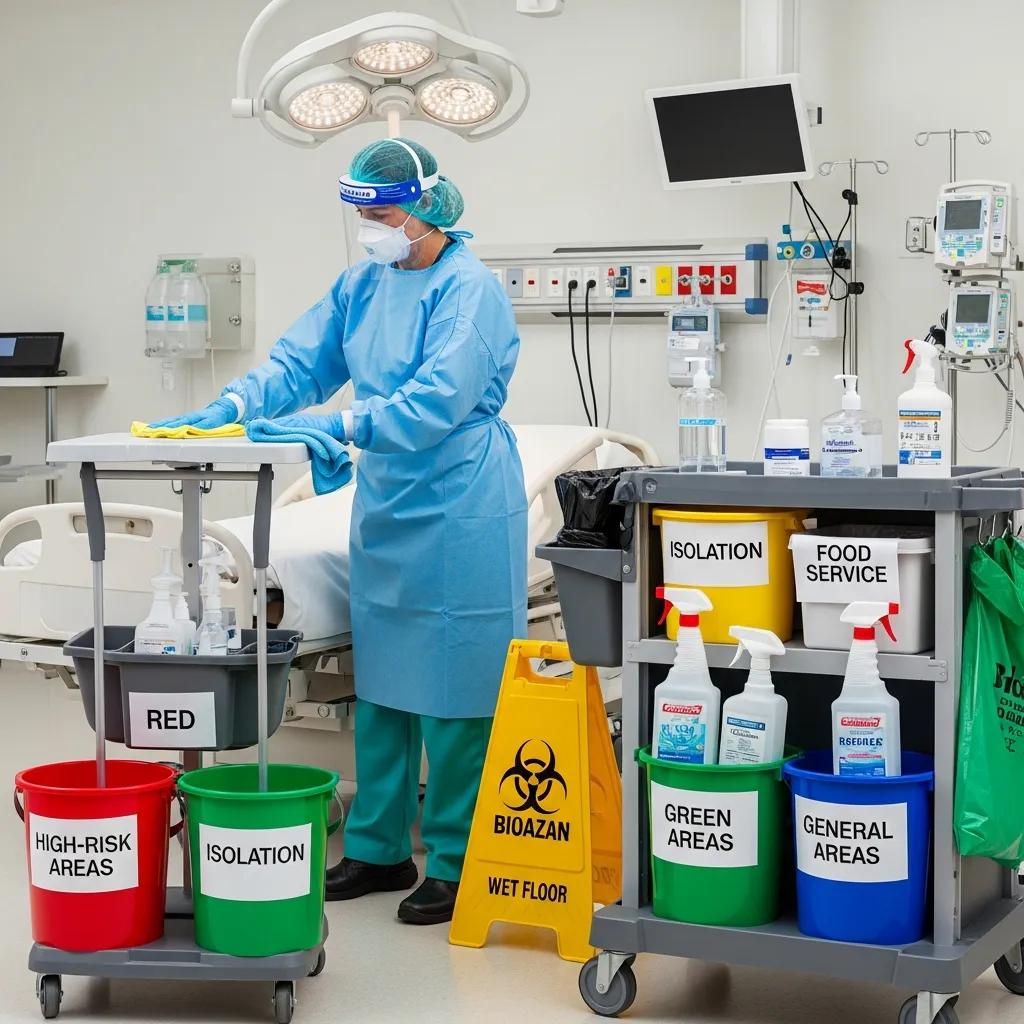
Infection control in cleaning relies on workflow sequencing, colour-coded systems, appropriate PPE and containment protocols to minimise pathogen transfer between zones. Colour-coding assigns specific cloths, mops and containers to defined areas (for example, procedure rooms versus general areas) to prevent cross-use. Sequencing means cleaning cleaner areas before higher-risk zones. PPE selection matches the task risk and potential exposure.
Spill response includes cordoning the area, using absorbent barriers, applying the correct disinfectant for the required contact time, and disposing of contaminated materials into the right clinical-waste stream. Regular training and competency checks reinforce these steps, and documented checklists provide traceability that supports continuous improvement and compliance.
Which cleaning protocols are tailored for different Chermside medical facilities?
Different facility types need tailored cleaning protocols that focus on their specific risk points, equipment and patient flow. Dental clinics prioritise operatories, suction systems, dental chairs and instrument storage. GP surgeries focus on consultation rooms, waiting areas and shared devices. Pathology labs require strict sample-area containment, spill response and secure waste segregation. Medical offices concentrate on electronics-safe sanitisation for desks and shared devices. Tailoring protocols means choosing suitable disinfectants, setting frequencies based on patient throughput and procedures, and training staff about the unique hazards in each setting. The table below summarises facility types, focus areas and key control measures to guide protocol selection.
| Facility type | Focus areas | Key control measures |
|---|---|---|
| Dental clinic | Operatories, suction, instrument zones | Instrument-zone cleaning, aerosol mitigation, terminal cleans |
| GP surgery | Consultation rooms, waiting area, reception | High-touch disinfection, frequent surface cleaning, patient-flow management |
| Pathology lab | Containment, secure waste handling, validated disinfectants | Sample-area cleaning, bench hygiene, spill response |
| Medical office | Desks, computers, shared devices | Electronics-safe disinfectants, scheduled sanitisation, staff-hygiene support |
This comparison helps Chermside providers prioritise interventions by facility risk profile. The next sections cover dental/GP specifics and lab/office sanitisation in more detail.
What are the specific cleaning needs of dental clinics and GP surgeries?
Dental clinics require protocols that address aerosol generation, instrument-processing zones and patient-chair surfaces. Key tasks include pre-procedure preparation of surfaces, immediate post-procedure terminal cleans, and cleaning around suction and high-volume evacuation systems. GP surgeries need fast turnover of consultation rooms, regular disinfection of waiting-room touchpoints, and sanitising shared medical devices between uses. Both settings benefit from scheduled audits, clear contact times for disinfectants, and disposable barriers where appropriate. In dental settings aerosol mitigation includes allowing settling time before terminal cleaning; in GP settings the focus is on frequent disinfection of high-touch areas to protect mixed patient groups. These practices reduce cross-infection risk and support safe patient flow.
How are pathology labs and medical offices sanitised for safety?
Pathology labs need stringent cleaning for sample areas, with protocols that prioritise containment, secure sharps handling and regulated waste, plus immediate spill response to protect staff and specimens. Labs use validated disinfectants that are compatible with surfaces and sample integrity, and maintain clear separation of clean and dirty zones to prevent sample contamination. Medical offices require electronics-safe sanitisation for computers and shared devices using suitable wipes or sprays and correct drying times to avoid damage. Both settings require documented waste rules, staff training for handling potentially infectious materials, and routine verification checks to ensure protocols are followed. These measures keep specimens secure and office equipment safe.
Why choose Divine Commercial Cleaning for Chermside medical-centre hygiene?
Divine Commercial Cleaning offers services designed for Chermside medical centres, delivered from our Maroochydore base. We provide customised cleaning plans, balance eco-friendlier choices with hospital-grade disinfectants where needed, and offer flexible scheduling without lock-in contracts. Our services emphasise reliability, a satisfaction-focused approach and ongoing quality improvement for healthcare clients. Staff training, colour-coded systems and documented checklists form the backbone of our delivery to keep infection-control consistent across facility types. Choosing a local provider that combines responsiveness, clear procedures and environmental care helps clinics balance safety, compliance and sustainability.
The practical benefits of using a specialist medical cleaning provider are summarised below — these are the outcomes clinics should expect.
These differentiators help clinics maintain safer environments without sacrificing operational flexibility. Below we look closer at product selection and quality assurance.
- Documented cleaning programs: Clear schedules and audit logs that demonstrate compliance and consistency.
- Trained staff with an infection-control focus: Ongoing training ensures correct technique and safe product use.
- Eco-friendlier choices balanced with hospital-grade options: Products selected for both efficacy and reduced environmental impact where appropriate.
- Flexible, no lock-in arrangements: Custom service models that adapt to each clinic’s needs.
What eco-friendly and hospital-grade products do we use?
Product choice balances environmental impact with proven antimicrobial performance. For high-risk clinical zones we use hospital-grade disinfectants; for general areas we select greener chemistries where appropriate. Common categories include quaternary ammonium compounds for broad surface disinfection, peroxide-based solutions for fast activity and lower residual toxicity, and detergents to remove soils before disinfection. Selection criteria prioritise TGA-registered claims for clinical pathogens, equipment compatibility and lower environmental toxicity where feasible. Matching product function to clinical risk keeps infection control effective while minimising unnecessary chemical exposure in lower-risk areas.
How does staff training and quality assurance improve cleaning outcomes?
Reliable cleaning outcomes start with thorough staff training and continuous quality assurance. Our approach includes induction on infection-control principles, hands-on equipment and disinfectant training, and regular competency checks. QA uses checklists, scheduled audits, spot checks and client feedback to identify issues and apply corrective actions quickly. Keeping training and audit records provides traceability for regulatory review and supports continuous improvement that reduces errors over time. When training and QA are embedded in service delivery, clinics see more consistent cleaning, better staff confidence and a safer environment for patients and practitioners.
What do Chermside healthcare providers say about our medical cleaning services?
Local healthcare providers evaluate cleaning services based on measurable hygiene outcomes, scheduling reliability and responsiveness to incidents. Clinics across Brisbane and the Sunshine Coast tell us they value customised cleaning plans, clear documentation and quick support when clinical priorities change. Rather than relying on one-off testimonials, many clinics judge providers by audit results, staff feedback during busy periods, and consistent delivery across sites. This operational feedback focuses on demonstrable performance and predictable risk reduction.
Clinics typically assess vendors using a few straightforward criteria — here’s what they look for and why it matters.
- Audit performance: Shows adherence to protocols and highlights improvement areas.
- Responsiveness: Fast incident response reduces exposure time after spills or contamination.
- Consistency: Trained staff and documented procedures produce predictable cleaning outcomes.
These evaluation points lead into examples of how cleaning interventions have improved safety outcomes, which we describe next.
Which client indicators demonstrate trust and satisfaction?
Instead of publishing individual testimonials, many healthcare clients measure trust through objective indicators: improved audit scores, streamlined scheduling and documented incident responses that reduced downtime. Clinics report higher staff confidence when providers supply clear checklists, regular training records and evidence of corrective actions after audits. Improvements in audit pass rates and reduced rework after incidents act as practical proof of a provider’s effectiveness. Asking for anonymised audit summaries or service case notes is a reliable way for clinics to assess past performance.
How have our services improved health safety in local medical centres?
Improvements often show up as better audit results, fewer hygiene-related incidents and increased staff confidence after provider intervention. Typical measures include implementing high-touch disinfection schedules, introducing colour-coded systems to prevent cross-use of equipment, and setting up rapid spill-response protocols. These changes reduce rework and minimise disruptions to patient flow. Documented before-and-after comparisons — such as lower ATP readings or improved inspection checklists — provide measurable evidence of impact. Sharing these operational outcomes helps clinics evaluate providers based on risk reduction and procedural reliability rather than marketing claims.
How can you request a customised medical cleaning quote in Chermside?
Requesting a customised medical cleaning quote is straightforward. Start with an initial enquiry that outlines your facility type, approximate size and desired cleaning frequency. We’ll follow with a site visit or virtual walkthrough to identify high-risk zones and equipment. After assessment we prepare a written proposal with recommended services, frequencies, product choices and verification measures. You then review and finalise scheduling and contingencies. Having basic information ready speeds up the process and produces a more accurate, tailored quote.
Below is a simple step-by-step guide clinics can follow when requesting a quote so the provider has all the relevant details.
- Describe your facility : Type (dental, GP, lab), approximate square metres and number of procedure rooms.
- Specify desired frequency and hours : Daily, weekly, after-hours or between-procedure cleans.
- List special requirements : Instrument-sterilisation support, biohazard handling, aerosol mitigation.
- Request an assessment : Arrange a site visit or virtual walkthrough for a detailed proposal.
- Review proposal and schedule : Confirm scope, verification methods and contingency plans.
Following these steps helps providers create accurate proposals and sets clear expectations for scheduling and follow-up. Next we outline common scheduling options.
What is the process for scheduling flexible and reliable cleaning services?
Scheduling should minimise disruption to clinic services while ensuring high-risk times receive adequate attention. Typical options include after-hours deep cleans, daily touch-point disinfection during clinic hours, and on-demand terminal cleans between procedures. Reliable providers supply contingency measures such as replacement staff and defined service windows, and they document any substitutions to maintain traceability. Many clinics use hybrid schedules that combine nightly deep cleans with daytime targeted disinfection of waiting areas and high-use surfaces. For a small clinic an example weekly plan might include daily reception and waiting-room disinfection, tri-weekly terminal cleans for procedure rooms and weekly deep cleaning of non-clinical areas — a balance of flexibility and reliability.
How to contact Divine Commercial Cleaning for medical facility cleaning
To request a quote or arrange an assessment, Chermside healthcare providers can contact Divine Commercial Cleaning, a family-owned provider based in Maroochydore that offers commercial cleaning services across the Sunshine Coast and Brisbane. We deliver customised solutions without lock-in contracts, use hospital-grade disinfectants where required, and operate colour-coded systems to prevent cross-contamination. Clinics can reach out via our website contact form or public business profile to request a site assessment and bespoke quote. After initial contact expect a follow-up to arrange a walkthrough and review facility-specific risks. This direct engagement ensures quotes reflect your operational needs and leads to tailored cleaning programs that support health safety.
The items below summarise what clinics should have ready when contacting a provider to speed up the quoting process.
- Facility type and size: Dental, GP, pathology, office; number of rooms.
- Desired cleaning frequency: Daily/high-touch vs periodic terminal cleans.
- Special requirements: Instrument handling, aerosol mitigation, after-hours service.
Having this information ready helps providers deliver accurate proposals and enables clinics to compare options by scope, verification methods and scheduling flexibility.
Frequently asked questions
What are the benefits of using eco-friendlier cleaning products in medical facilities?
Using eco-friendlier cleaning products can reduce environmental impact and improve indoor air quality. These products are often less toxic, lowering chemical exposure for patients and staff. When properly formulated, greener cleaners can still meet hygiene standards. Choosing sustainable options also signals a clinic’s commitment to health and safety and can appeal to environmentally conscious patients and staff.
How can clinics ensure compliance with cleaning protocols?
Clinics ensure compliance by running regular training for cleaning staff, keeping detailed records of cleaning schedules, and conducting routine audits. Clear standard operating procedures (SOPs) that align with Australian health guidance are essential. Checklists and digital tracking systems help monitor adherence, and ongoing education fosters a culture of accountability and safety.
What role does staff training play in infection control?
Staff training is vital. It equips cleaning teams with the techniques, product knowledge and awareness needed to prevent cross-contamination. Training should cover correct disinfectant use, contact times and safe handling of clinical waste. Regular refreshers and competency checks keep standards high. A well-trained team significantly reduces the risk of healthcare-associated infections and improves patient safety.
How often should high-touch surfaces be cleaned in medical facilities?
High-touch surfaces should be cleaned and disinfected multiple times per day, depending on patient volume and activity. Typical examples include doorknobs, light switches, handrails and shared medical devices. Adjust frequency for peak times or after known exposures — regular attention to these areas is essential to keeping staff and patients safe.
What are the consequences of inadequate cleaning in medical settings?
Inadequate cleaning can lead to higher rates of healthcare-associated infections (HAIs), longer patient stays, higher treatment costs and, in severe cases, worse patient outcomes. Poor cleaning also harms a facility’s reputation and can lead to regulatory action. Rigorous hygiene protocols protect patients, staff and the business.
How can clinics assess the effectiveness of their cleaning protocols?
Clinics can assess effectiveness with visual inspections, ATP (adenosine triphosphate) testing and regular audits. Visual checks spot visible contamination; ATP testing gives a quantitative measure of organic residue. Staff feedback on cleanliness and infection trends also provides insight. Continuous monitoring and adjustment based on these assessments keep standards high.
What should clinics consider when selecting a cleaning service provider?
When choosing a provider consider their medical-cleaning experience, adherence to Australian health standards, and the quality of staff training. Look at the range of services offered — specialised cleaning for high-risk areas, use of hospital-grade disinfectants and verification methods. Review audit results or anonymised case studies and check responsiveness to changing needs. These factors help clinics pick a partner aligned with their hygiene and safety goals.
Engaging professional cleaning services for medical facilities in Chermside strengthens patient safety by reducing infection risk and ensuring compliance with health standards. Tailored protocols — from high-touch disinfection to specialised terminal cleans — are essential to maintaining a hygienic environment. Partnering with a local, reliable provider like Divine Commercial Cleaning helps clinics achieve consistent, high-quality cleaning outcomes that support operational efficiency. Contact us to discuss customised cleaning solutions that meet your facility’s needs.

Dianne, originally from Rockhampton, hails from a business-oriented family, with her father owning electrical stores and her uncle serving as Mayor. Moving to the Sunshine Coast at 13, she later pursued a rewarding real estate career and raised three children. As a single mom, she balanced university studies with domestic cleaning work. Armed with a Bachelor’s Degree in Business, majoring in Supply Chain Management, Dianne founded and grew Divine Commercial Cleaning into a thriving company. Her success is rooted in strong family mentorship, a positive attitude, and a solution-oriented approach, offering tailored cleaning services with integrity and strategic insight.