Eco-friendly commercial cleaning in Booroobin: practical steps to improve your business’s sustainability
Eco-friendly commercial cleaning uses non-toxic, biodegradable products and smarter processes to keep workplaces clean while cutting environmental and health harm. For Booroobin businesses, that means healthier staff, lower regulatory risk and a stronger local reputation. This guide explains why green cleaning matters for local organisations, how sustainable protocols improve indoor air quality and productivity, and which approaches work best for medical centres, daycares, offices and busy public spaces. You’ll find clear comparisons of product types and procedures, the financial case for switching to greener services, and practical ways local providers implement training, waste reduction and verification to deliver consistent results. We also describe the specific steps a supplier serving Booroobin, the Sunshine Coast and Brisbane takes to tailor programmes for sensitive environments. By the end, you’ll have actionable questions to ask contractors and a sound understanding of likely health, environmental and financial outcomes.
Why Choose Eco-Friendly Commercial Cleaning in Booroobin?
Switching to eco-friendly commercial cleaning cuts exposure to volatile organic compounds and chemical residues while keeping hygiene standards high. Sustainable programs replace harsh solvents with non-toxic surface cleaners, biodegradable detergents and enzyme-based products, and pair them with low-emission equipment and microfiber systems that capture particulates instead of spreading them. Businesses that adopt green cleaning see extra benefits too — less waste, better customer perception and closer alignment with Booroobin’s community values. Below are the main benefits and practical indicators to help you prioritise action for your facility.
Green commercial cleaning delivers clear advantages for local organisations:
- Healthier indoor air: Lower VOCs and fewer chemical residues improve respiratory comfort.
- Smaller environmental footprint: Biodegradable ingredients and proper waste sorting reduce local pollution.
- Operational advantage: Gentler products help preserve finishes and extend asset life.
- Reputational benefit: Visible sustainability supports CSR and builds client trust.
Those benefits point to practical choices — product selection, equipment, cleaning frequency and staff training — that determine whether a green programme succeeds. The next section breaks down the most important advantages in more detail.
What Are the Key Benefits of Green Commercial Cleaning for Booroobin Businesses?
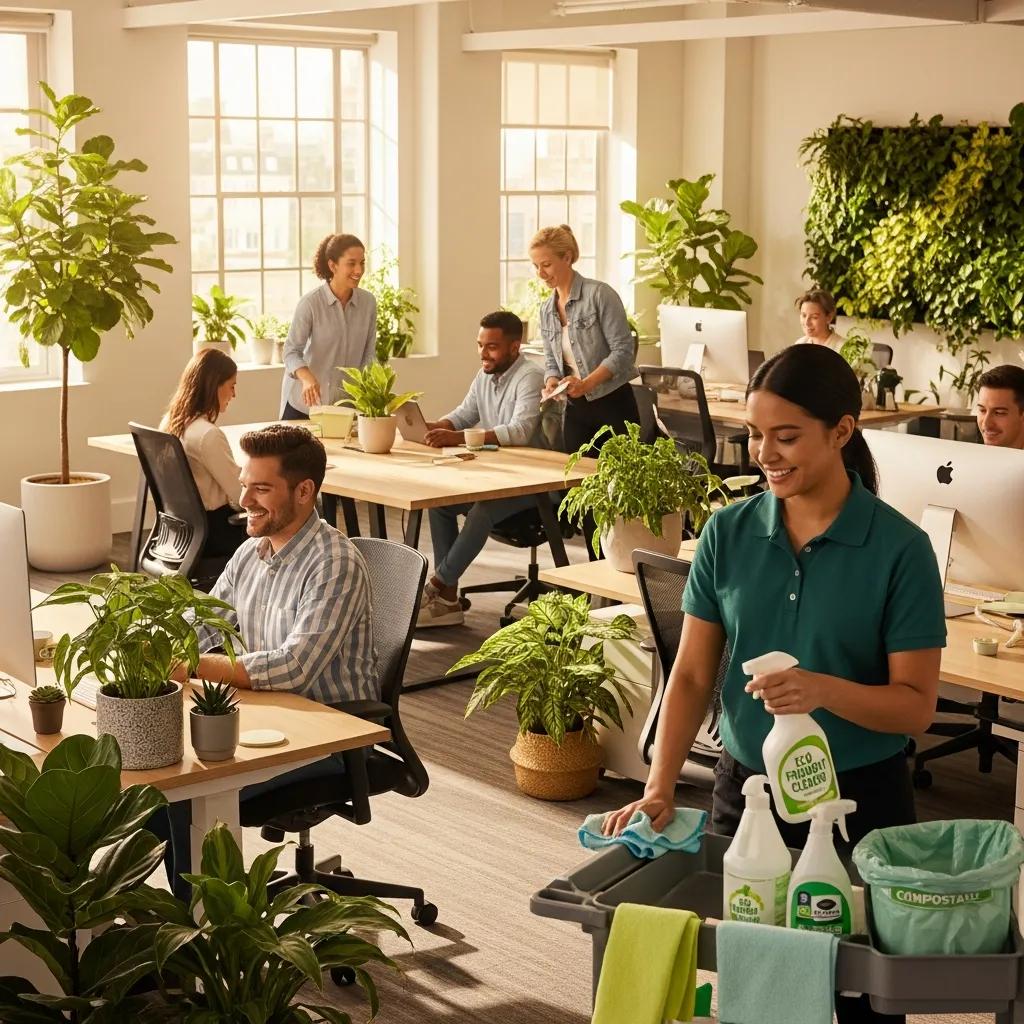
Green commercial cleaning supports employee wellness by reducing indoor irritants and allergens, often resulting in fewer respiratory complaints and better focus during the workday. That can mean lower absenteeism and tangible productivity gains. Environmentally, biodegradable agents and correct waste handling reduce harmful runoff and landfill pressure, matching local expectations for stewardship. Using certified, low-risk chemistries also simplifies compliance with occupational health and safety rules. These benefits help managers make targeted investments — for example, enzyme cleaners for grease control or microfiber systems for particulate capture — that deliver measurable improvements.
From there, it’s useful to look at how sustainable office cleaning directly supports workplace wellness and daily performance.
How Does Sustainable Office Cleaning Improve Workplace Wellness and Productivity?
Sustainable office cleaning reduces VOCs and surface residues that can cause headaches, allergies and irritation, creating a healthier baseline for daily work. Cleaner air and surfaces lower the spread of common illnesses, which reduces short-term absences and keeps operations running smoothly. Visible sustainability measures — fresh, well-ventilated spaces and clearly labelled non-toxic products — also lift staff morale and help with retention. Practical steps such as after-hours cleaning, increasing ventilation during and after cleaning, and focused disinfection of high-touch areas balance hygiene with minimal exposure. These choices also make it easier to adapt protocols for sectors with stricter hygiene needs, which we cover next.
If you want help implementing these measures, local providers serving Booroobin, the Sunshine Coast and Brisbane can translate principles into site-specific schedules and plans.
How Does Divine Commercial Cleaning Stand Out with Eco-Friendly Practices?
Divine Commercial Cleaning combines eco-focused product choices, hands-on staff training and operational practices that cut water and energy use while keeping high hygiene standards. Key differences include the use of non-toxic, biodegradable cleaners; HEPA and low-emission vacuums; microfiber systems for better particulate capture; documented training on safe eco-handling; and quality checks that track both cleanliness and environmental performance.
To help you compare products, the table below summarises common product classes, their eco attributes and where they’re most useful so facility managers can match solutions to surface types and risk profiles.
| Product Class | Eco Attribute | Appropriate Use |
|---|---|---|
| Non-toxic surface cleaners | Low VOCs, biodegradable | Daily surface cleaning — offices, retail, strata |
| Biodegradable detergents | Rapid biodegradability, phosphate-free | Floor care and kitchen cleaning in shopping centres |
| Enzyme-based cleaners | Break down organic soils | Grease and organic matter removal in gyms and food-prep areas |
| Green disinfection protocols | Regulated or low-tox alternatives | Targeted clinical use for high-touch, high-risk zones |
This comparison shows why choosing the right product class matters: mild cleaners protect finishes, enzymes tackle organic soils without harsh solvents, and disinfection is reserved for situations that require it. The next section explains how staff training and QA support these technical choices.
What Non-Toxic and Certified Green Products Does Divine Use in Booroobin?
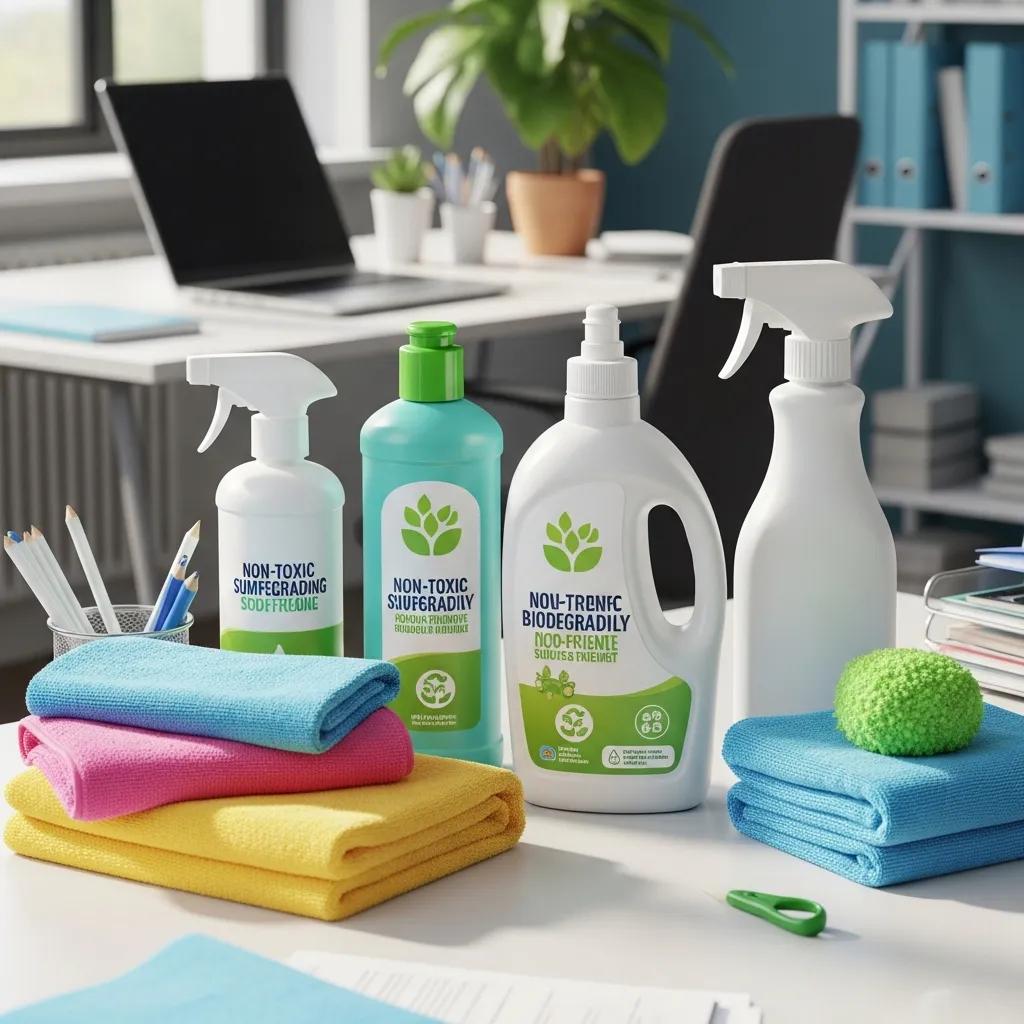
We focus on product categories — non-toxic surface cleaners, biodegradable detergents and enzyme-based formulations — rather than naming brands, because these classes deliver the health and environmental benefits most facilities need. Non-toxic surface cleaners cut VOC emissions and leave low-residue finishes that extend the life of carpets and upholstery, while enzyme products remove organic soils in kitchens and fitness centres without aggressive solvents.
Look for certification marks or review product safety data sheets (SDS) to verify biodegradability and low-tox claims. Facility managers should request documentation that shows product properties and recommended uses to ensure safety and performance.
Understanding these product classes helps organisations balance everyday cleaning needs with higher-level disinfection choices in clinical or regulated environments.
How Are Sustainable Cleaning Methods and Staff Training Implemented for Quality and Safety?
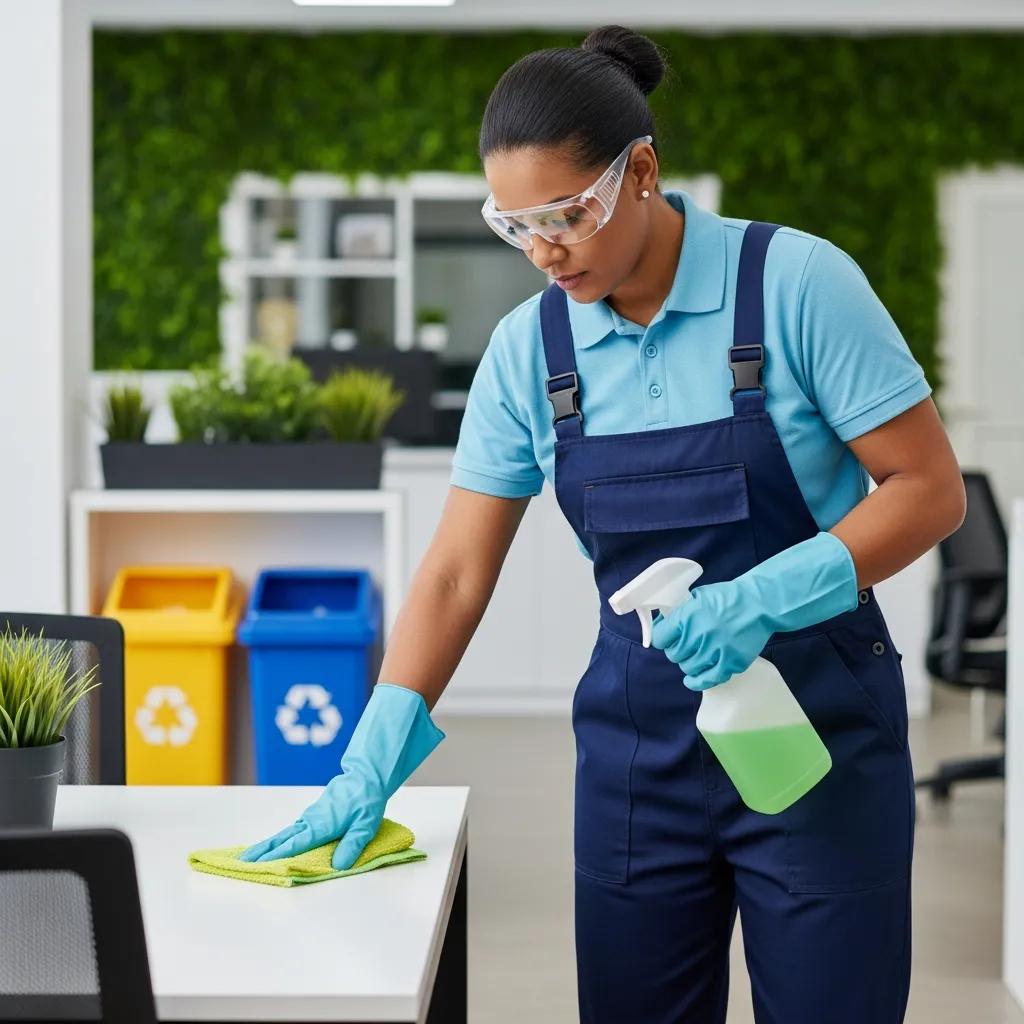
Practical implementation starts with structured training that covers correct dilution, contact times, application methods and PPE for eco-friendly products, backed by clear checklists for routine and deep clean tasks. Onboarding usually includes hands-on demonstrations, documented procedures for special-risk zones (labs, x-ray rooms, daycares) and periodic competency checks linked to quality inspections.
Routine QA uses simple, measurable checks — visual audits, surface swabs where needed and documented checklists — to verify protocols and drive continuous improvement. Typical workflows begin with a site risk assessment, then product selection matched to surfaces and exposure risk, staff training and scheduled audit cycles with feedback. This procedural backbone helps sustainable methods deliver safe, consistent results without reverting to harsher chemistries.
These operational practices are adjusted for industry-specific needs; the next section maps eco approaches to Booroobin’s main sectors.
Which Tailored Eco-Friendly Cleaning Solutions Serve Booroobin’s Diverse Industries?
Tailored programmes adapt product choice, cleaning frequency and technique to each sector’s priorities — sterilisation for medical centres, child-safety for daycares, and frequent sanitation for shopping centres and gyms.
The table below links industry concerns to eco solutions and likely outcomes so decision-makers can identify priority interventions and realistic performance targets.
| Industry | Primary Concern | Eco Solution & Outcome |
|---|---|---|
| Medical centres & x-ray centres | Sterilisation, patient safety | Risk-based disinfection with clinical agents where required; low-residue cleaning for admin areas |
| Daycares & schools | Child-safety, allergen reduction | Non-toxic, low-residue products; after-hours cleaning and ventilation to minimise exposure |
| Offices & strata | Indoor air quality, surface longevity | Microfiber systems, low-VOC cleaners and scheduled deep cleans to protect assets |
| Gyms & shopping centres | High-traffic sanitation | Enzyme cleaners for organic soils and frequent touch-point management with biodegradable agents |
This matrix shows that eco-friendly methods aren’t one-size-fits-all; they require risk assessment and tailored frequencies to meet each sector’s hygiene needs while reducing chemical load. The next subsections describe clinical and child-focused applications in more detail.
How Are Medical Centres and X-ray Facilities Cleaned Sustainably to Ensure Sterilisation?
Medical and imaging facilities use a risk-based approach that separates routine cleaning from clinical disinfection. Low-risk surfaces are maintained with non-toxic, low-residue cleaners, while clinical zones and equipment receive targeted disinfection that meets sterilisation standards. Decision rules prioritise patient safety: clinical disinfectants are used only where required, and eco alternatives are applied in administrative or non-clinical areas to limit unnecessary chemical exposure. Staff receive clinical-hygiene training covering safe handling of both eco and clinical agents, and documentation provides traceability of disinfection tasks. This balance keeps clinical compliance while reducing environmental impact through selective use and waste minimisation.
Next we explain how these principles are adapted for child-centred sites.
What Child-Safe Cleaning Practices Are Used for Daycares and Schools in Booroobin?
Child-safe cleaning uses non-toxic, low-odour, low-residue chemistries combined with timing strategies — cleaning high-touch areas after hours or during low occupancy — to minimise exposure for children and staff. Ventilation is used alongside cleaning so airborne traces are diluted after product application, and allergen-reduction focuses on HEPA vacuuming and damp-dusting rather than dry sweeping. Staff are trained in safe storage, clear product labelling and using the mildest effective formulations on toys and surfaces that contact children. These practices protect vulnerable groups while keeping hygiene effective and chemical loads low.
Tailored programmes like these deliver measurable environmental and community benefits locally, which we explore next.
What Environmental and Community Impacts Result from Choosing Sustainable Cleaning in Booroobin?
Choosing sustainable cleaning reduces local environmental burdens — less hazardous waste, fewer volatile emissions and lower risk of contaminating runoff — while supporting community health through better indoor air quality. Practical initiatives that drive these results include optimised routes to cut travel emissions, low-water cleaning equipment and buying biodegradable consumables, all of which shrink a provider’s carbon footprint and waste streams. Visible sustainability commitments also strengthen local partnerships and CSR efforts, for example by aligning procurement with regional sustainability goals. The table below outlines key initiatives and expected local outcomes so managers can identify quick wins and longer-term targets.
| Initiative | Attribute | Local Outcome |
|---|---|---|
| Route optimisation | Shorter travel distances | Lower transport emissions across the Sunshine Coast and Booroobin |
| Low-water equipment | Reduced water use | Less pressure on local water resources |
| Waste segregation & recycling | Diverted materials | Fewer items sent to landfill and lower disposal costs |
These initiatives are measurable levers organisations and suppliers can use to shrink environmental impacts while keeping service quality high. The next section explains how a local provider puts these ideas into practice and evaluates results.
How Does Divine Commercial Cleaning Reduce Carbon Footprint and Waste Locally?
Divine Commercial Cleaning reduces emissions and waste by planning efficient routes, consolidating deliveries, using low-water cleaning machines and segregating waste on site. Where practical, we buy consumables locally to shorten supply chains and support community businesses while cutting transport emissions. We track simple metrics — for example, volumes diverted from landfill — so clients can see progress and we can report improvements. These operational steps link environmental responsibility with reliable service delivery, creating verifiable reductions in carbon footprint and material waste for local clients.
Recording outcomes and sharing case summaries helps prospective clients assess impact; the next section shows what evidence is typically available and how to request it.
What Testimonials and Case Studies Highlight Booroobin Businesses’ Success with Green Cleaning?
Local case materials usually outline scope, approach and observed outcomes — for example, improved indoor air quality readings, fewer cleaning-related complaints, or reduced waste volumes — and provide useful evidence for decision-makers. Divine Commercial Cleaning serves Booroobin, the Sunshine Coast and Brisbane with tailored solutions for medical centres, daycares, offices and strata, and can supply concise case summaries on request to show typical results and process improvements. Prospective clients are encouraged to ask for site-specific examples and performance summaries to see how similar changes might work for their facilities. These summaries support transparent expectations around timing and outcomes.
Next we look at the business case: cost-effectiveness and long-term savings.
How Do Eco-Friendly Cleaning Solutions Offer Cost-Effectiveness and Long-Term Savings?
Eco-friendly cleaning can be cost-effective through direct and indirect savings: lower replacement and maintenance costs for carpets and finishes, reduced absenteeism from healthier workplaces, and potential cuts to hazardous waste disposal fees. The financial case is best viewed as a lifecycle comparison rather than simply upfront price: slightly higher product costs can be offset by longer asset life, lower insurance or compliance risk and productivity gains. The table below outlines common cost categories and likely impacts to help finance and facilities teams evaluate ROI without relying on speculative local figures.
| Cost Category | Traditional Cleaning | Eco-Friendly Approach |
|---|---|---|
| Upfront product cost | Often lower per unit but harsher chemistries | May be slightly higher but safer and gentler |
| Maintenance & asset longevity | More wear and earlier replacements | Longer surface and equipment life, fewer repairs |
| Health-related costs | Higher indirect absenteeism | Fewer sick days and improved productivity |
| Hazardous waste disposal | Potentially higher with stronger chemicals | Lower disposal costs with biodegradable products |
This comparison shows why decision-makers should weigh total cost of ownership and productivity impacts rather than focusing only on per-clean prices. The following sections outline typical financial benefits and how green cleaning supports reputation.
What Are the Financial Advantages of Switching to Sustainable Commercial Cleaning?
Financial advantages include lower long-term maintenance costs because non-abrasive, low-residue cleaners protect floor finishes, carpet fibres and building materials, reducing replacement and repair spend. Health-related savings appear through fewer short-term absences and less productivity disruption — important for high-contact workplaces. Waste-disposal savings can apply to businesses that previously paid for hazardous chemical disposal, and consolidating deliveries with local suppliers can reduce logistics costs. Evaluating ROI works best by modelling lifecycle scenarios for reduced downtime and extended asset life rather than comparing line-item product prices alone.
Communicating these savings internally and externally also multiplies value by strengthening brand and client perception, which we cover next.
How Does Green Cleaning Enhance Brand Reputation and Client Perception in Booroobin?
Green cleaning strengthens reputation by giving businesses concrete sustainability actions they can share — on-site signage, sustainability statements or procurement notes — that demonstrate environmental care aligned with local values. This CSR focus can attract environmentally minded clients, boost tenant satisfaction in strata and help retain customers by differentiating your service on values as well as quality. Practical communication steps include clear claims about non-toxic products, waste-reduction measures and local service focus, backed by documented procedures and measurable targets. When sustainability messaging pairs with consistent service, it builds trust that supports long-term client relationships.
Together, these reputation and financial benefits show that eco-friendly cleaning is a health measure, an environmental choice and a smart business decision.
Frequently Asked Questions
1. What types of eco-friendly cleaning products are most effective for commercial use?
The most effective commercial eco-products are non-toxic surface cleaners, biodegradable detergents and enzyme-based cleaners. Non-toxic surface cleaners reduce VOCs and leave low residues, protecting carpets and upholstery. Biodegradable detergents work well for floors and kitchens, and enzyme cleaners break down organic soils in gyms and food-prep areas. Choose the product class that matches the surface type and the specific cleaning challenge.
2. How can businesses measure the effectiveness of their eco-friendly cleaning practices?
Measure effectiveness with indoor air quality checks, periodic surface swabs where relevant, visual audits and staff feedback. Tracking employee absenteeism and productivity can also reveal links between cleaner environments and workforce health. A documented quality-assurance programme with checklists and scheduled reviews keeps improvement on track.
3. Are there specific training requirements for staff using eco-friendly cleaning products?
Yes. Staff should be trained in correct product handling, dilution ratios, application methods and PPE. Training should cover environmental benefits and safe procedures for special-risk areas. Regular competency checks and refresher sessions help maintain standards and ensure effective, safe use of eco products.
4. How do eco-friendly cleaning solutions impact employee morale and retention?
Cleaner, healthier workplaces reduce chemical-related complaints and help staff feel better at work, which supports morale and retention. Visible sustainability efforts can also create pride and alignment with company values, improving engagement and reducing turnover over time.
5. What are the long-term financial benefits of adopting eco-friendly cleaning practices?
Long-term benefits include lower maintenance and replacement costs for flooring and furnishings, reduced health-related productivity losses, and possible savings on hazardous waste disposal. While some eco products cost a bit more upfront, lifecycle savings from longer asset life and fewer disruptions often offset initial expenses.
6. How can businesses ensure compliance with health and safety regulations when using eco-friendly products?
Use certified products and keep product safety data sheets on file. Train staff on correct use and handling, document cleaning protocols and maintain compliance records. Regular audits and risk assessments help ensure practices meet occupational health and safety standards.
7. What role does community engagement play in the success of eco-friendly cleaning initiatives?
Community engagement builds local support and can open partnerships with environmental groups and suppliers. Showing commitment to sustainability strengthens reputation, attracts like-minded clients and helps align cleaning procurement with regional sustainability targets.
Switching to eco-friendly commercial cleaning improves workplace health, supports your sustainability goals and often lowers lifecycle costs. By prioritising non-toxic, biodegradable products and tailored cleaning protocols, your organisation can see measurable gains in air quality and staff productivity. Partnering with a local provider such as Divine Commercial Cleaning ensures practical, site-specific programs that meet both environmental and operational standards. Contact us to find out how our customised cleaning programmes can strengthen your business’s commitment to sustainability.

Dianne, originally from Rockhampton, hails from a business-oriented family, with her father owning electrical stores and her uncle serving as Mayor. Moving to the Sunshine Coast at 13, she later pursued a rewarding real estate career and raised three children. As a single mom, she balanced university studies with domestic cleaning work. Armed with a Bachelor’s Degree in Business, majoring in Supply Chain Management, Dianne founded and grew Divine Commercial Cleaning into a thriving company. Her success is rooted in strong family mentorship, a positive attitude, and a solution-oriented approach, offering tailored cleaning services with integrity and strategic insight.