Caloundra Office Cleaning: Practical Best Practices for Pristine, Professional Workplaces
A clean, well-kept office in Caloundra protects your team’s health, leaves a strong impression on visitors, and prevents unexpected interruptions from hygiene issues. This guide lays out practical office cleaning best practices for Caloundra and the Sunshine Coast, explains why certain methods matter for local conditions, and gives clear schedules and protocols you can use in offices of any size. We address common challenges—balancing daily upkeep with deep sanitation and protecting staff—and offer step-by-step routines, advanced techniques, and eco-friendly options suited to commercial settings. You’ll get easy daily, weekly and monthly checklists, high-touch disinfection protocols, guidance on steam and UV‑C integration, and tips for switching to greener products without losing effectiveness. The sections below cover core practices, disinfection routines, advanced tools, sustainable choices, and when to bring in a professional partner to keep your workplace consistently clean.
This resource is written with Caloundra and the Sunshine Coast in mind and applies to typical commercial areas such as reception, open-plan workstations, meeting rooms, restrooms, and staff kitchens. You’ll find checklist-style steps for quick implementation, practical comparison tables to aid decisions, and priority actions that target both visible dirt and pathogens. The guidance balances in‑house routines with options for professional support so facility managers and business owners can pick the right mix for their traffic levels and compliance needs. By the end of this guide you’ll have a practical cleaning blueprint and clear criteria to decide between in‑house care and professional services.
What Are the Essential Office Cleaning Practices in Caloundra?
Effective office cleaning combines reliable daily tasks with planned deep cleans and focused sanitation to keep workplaces healthy and well presented. Daily work removes visible soil and controls contaminants; scheduled deep sanitation tackles accumulated dust, biofilm and pathogens that routine wiping can miss. Together they protect indoor air quality and lower infection risk. A structured program that clarifies responsibilities, sets frequencies by area, and uses the right tools (microfiber cloths, HEPA vacuums, EPA‑registered disinfectants) gives measurable improvements in cleanliness and staff wellbeing. Below are the core practices that form the backbone of Caloundra office hygiene and how to prioritise them by traffic level.
Strong hygiene routines are an effective way to reduce illness and limit pathogen spread in shared workplaces.
Workplace Hygiene: Reducing Illness & Pathogen Spread
When people share close spaces—offices, kitchens and break rooms—and common equipment like keyboards, photocopiers and sinks, infectious agents can move between colleagues, clients and customers [3]. Simple hygiene steps—handwashing, using sanitiser and disinfecting shared surfaces—have been shown to cut pathogen spread [4,5] and reduce workplace illness [3], and are often easier to adopt than other measures such as mask mandates [6].
Office Workers’ Views About the Uses, Concerns, and
Acceptance of Hand Hygiene Data Collected From Smart Sanitisers: Exploratory Qualitative Interview Study, S Rutter, 2024
Core tasks for Caloundra offices include daily waste removal, focused high‑touch surface disinfection, microfiber dusting, HEPA‑filtered vacuuming, restroom sanitation, breakroom appliance cleaning and scheduled care for carpets and hard floors. These steps scale with occupancy and include protocols for rapid deep sanitation during outbreaks. Local professional providers can complement in‑house teams for periodic deep cleans, specialised equipment and compliance documentation; businesses often ask for quotes to evaluate a blended in‑house plus professional program.
| Area | Recommended Frequency | Responsible Party |
|---|---|---|
| Reception / Lobby | Daily: wipe surfaces, empty bins; Weekly: deeper wipe-down | In‑house daily; professional weekly or as needed |
| Workstations / Open-plan Desks | Daily: high‑touch wipe; Weekly: dust and vacuum | Staff-level daily; professional weekly or deep clean |
| Meeting Rooms | Daily: tidy & disinfect surfaces; Monthly: deep clean | In‑house regular; professional monthly deep clean |
| Restrooms | Multiple times daily: sanitation & restock; Weekly: grout/vent care | Professional or dedicated facilities staff |
| Breakrooms / Kitchens | Daily: appliance wipe & sink clean; Weekly: fridge interior | In‑house daily; professional for hygiene audits |
This frequency table helps managers allocate cleaning ownership and balance cost with risk. Moving from area-based schedules to specific task lists tailored to office size and traffic makes the program simpler to manage.
How to Tailor Cleaning Plans for Different Caloundra Business Types
Tailoring plans starts with assessing foot traffic, contamination risk and business function—medical centres and childcares need more frequent sanitation than typical corporate offices. Group sites into risk tiers—low, medium, high—based on visitor numbers and activities, then scale task frequency and disinfectant intensity accordingly. For example, clinics need more frequent surface disinfection, stricter waste handling and possibly specialist agents, while small professional offices often focus on daily desk hygiene and weekly carpet care.
Short, industry-specific checklists make risk-based scaling practical. A retail-facing office should boost high-touch cleaning during peak hours and schedule after-hours deep cleans; childcare settings require toy and surface sanitation between sessions and more frequent deep cleans. In most cases, in‑house staff can handle daily touch-ups while professional teams are best for regulated deep sanitation and specialist equipment deployment.
What Are Recommended Daily, Weekly, and Monthly Cleaning Schedules?
A clear frequency matrix links tasks to traffic levels so nothing gets missed. Daily work covers visible cleaning and high-touch disinfection; weekly work addresses hidden soils and HVAC checks; monthly work includes deep sanitation like steam cleaning carpets and interior window cleaning. A consistent schedule reduces reactive cleaning and keeps a steady standard of hygiene and appearance.
- Daily tasks for most offices:Empty bins and sanitise lids and handles.Wipe high‑touch points (door handles, switches, shared kit).Clean and restock restrooms; spot‑clean floors.
- Weekly tasks:Dust high and low surfaces; vacuum carpets with HEPA vacuums.Deep‑clean breakroom appliances; clean glass and mirrors.Inspect and clean HVAC vents where needed.
- Monthly tasks:Steam clean carpets and upholstery.Clean interior windows and window sills.Carry out a scheduled deep sanitation sweep.
Use this schedule as a repeatable framework to assign tasks and track completion. Increase frequencies during peak seasons or after a reported illness until risk returns to normal.
How to Effectively Disinfect and Maintain High-Touch Surfaces in Caloundra Offices?
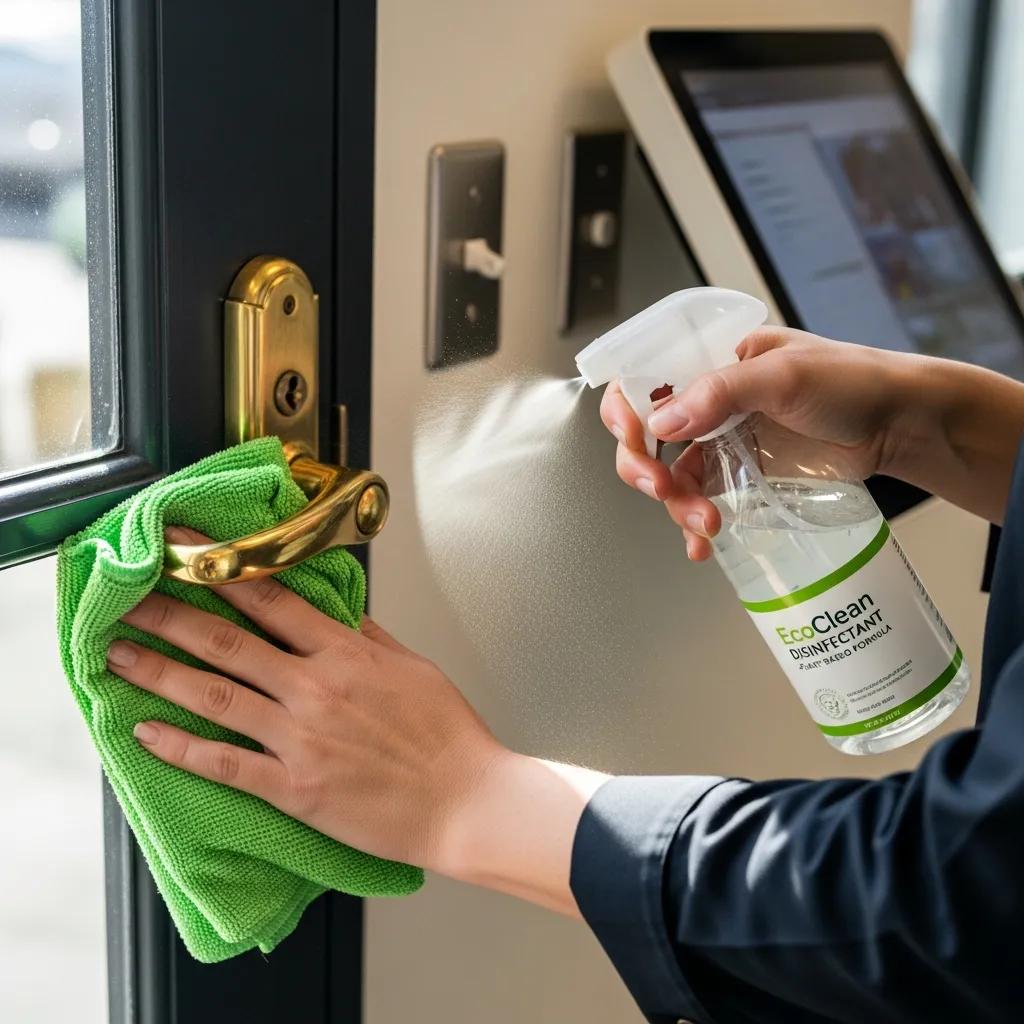
Effective disinfection begins with identifying high‑contact points, choosing the right products and applying them consistently to interrupt transmission paths. High‑touch protocols work because they remove microbes before they spread. Use disinfectants that are proven for appropriate contact times against viruses and bacteria, and train staff to follow dwell‑time instructions and safe application methods. Clear, documented protocols and visible checklists build consistency and accountability—vital for workplaces focused on staff health and regulatory compliance.
Prioritise surfaces by contact frequency and risk, and combine staff-level wipe downs with professional‑grade disinfection during off hours for deeper sanitisation. The simple step-by-step routine below is practical for daily operations and for elevated response situations.
- Create and maintain a master checklist of all high‑touch surfaces.
- Choose disinfectants with proven efficacy and follow manufacturer contact‑time directions.
- Clean first to remove visible soil, then apply disinfectant.
- Use microfiber cloths and single‑use wipes to avoid cross‑contamination; launder reusable textiles at recommended temperatures.
- Log completed tasks and increase frequency during outbreaks or high‑occupancy events.
Following these steps reduces transmission risk while protecting surface finishes and employee safety. Regular training and audits help make the routine standard practice rather than an ad‑hoc effort.
Which Surfaces Require Frequent Disinfection for Spotless Spaces?
High‑touch items include door handles, light switches, lift buttons, shared phones, touchscreens, communal keyboards and mice, conference tables and appliance handles. Targeting these spots reduces cross‑contact transmission. Adjust frequency by traffic: disinfect reception areas at least twice daily in busy sites, while low‑traffic back offices may be cleaned once daily. During outbreaks increase to hourly cleaning for the highest‑contact zones and consider electrostatic or professional interventions after hours.
Given how often these surfaces are touched, giving them focused attention is one of the most effective steps you can take.
Office Desk & Shared Workspace Sanitation Guide
Desks, keyboards and shared surfaces are touched frequently and can become hotspots for bacteria and viruses. Left unchecked, this raises absenteeism and lowers productivity. Regular, proper sanitation keeps workspaces safe and supports a healthier, more reliable workplace.
How to Properly Sanitise Office Desks and Shared Workspaces
Recommended tools include alcohol wipes for electronics, EPA‑registered sprays for hard surfaces and microfiber cloths to trap soil. Train staff to clean top‑to‑bottom and to use single‑direction wipes to avoid re‑depositing contaminants. Clear signage and checklists increase compliance and help facilities managers spot patterns that need schedule changes.
What Techniques Ensure Thorough Dusting and Vacuuming with HEPA Filters?
Good dust control depends on sequence and equipment: dust high‑to‑low so settled dust moves to the floor, then vacuum with a HEPA‑filtered unit to capture fine particulates and allergens. HEPA vacuums reduce airborne re‑release compared with standard machines and are particularly useful in open‑plan areas and carpeted spaces. Maintain and replace HEPA filters on a plan and use vacuums with sealed systems for maximum capture.
Microfiber cloths and anti‑static tools capture dust on surfaces without re‑aerosolising it. For best results dust before vacuuming, use adjustable suction for upholstery and crevice tools for edges. Routine equipment maintenance and recorded filter changes protect performance and indoor air quality over time.
What Are Advanced Cleaning Techniques Enhancing Office Hygiene in Caloundra?
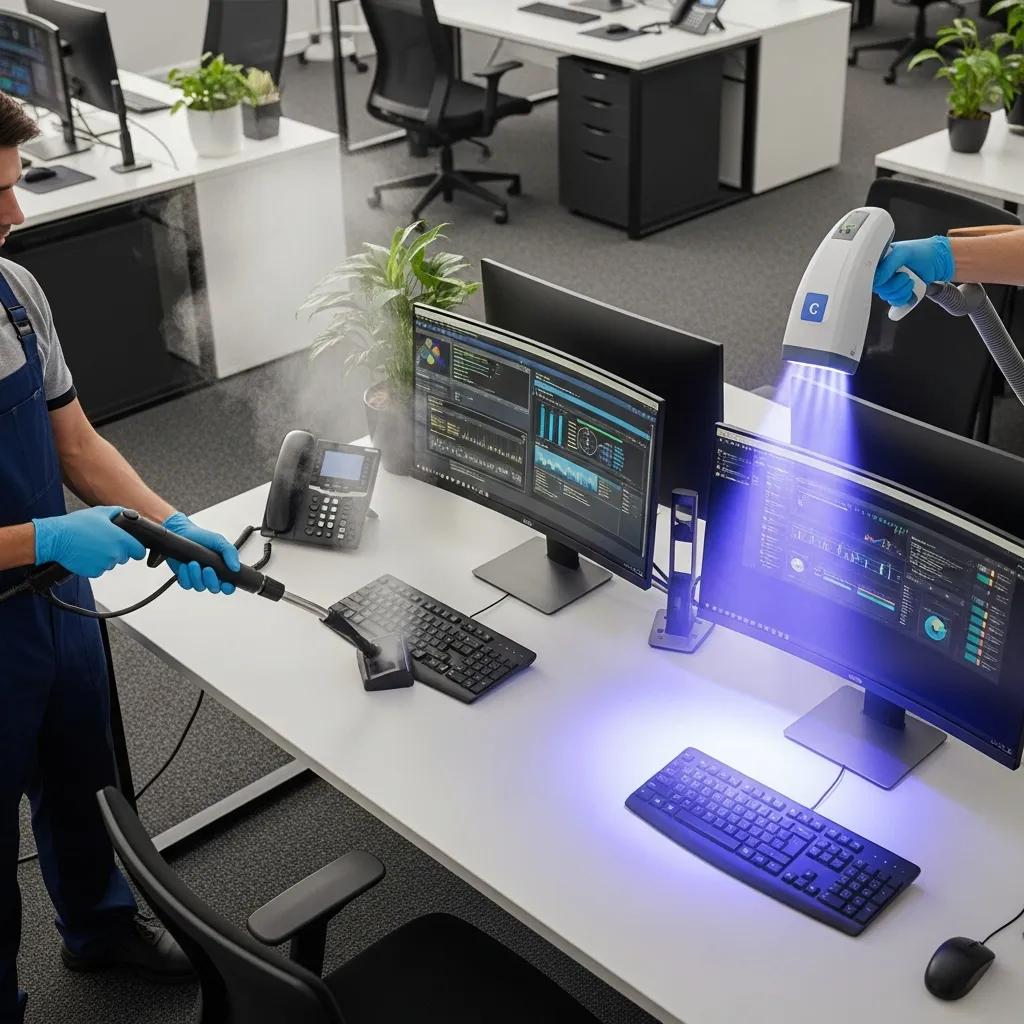
Advanced options—steam cleaning, UV‑C disinfection and electrostatic spraying—deliver measurable hygiene gains when used alongside routine cleaning, not instead of it. Each method has a role: steam loosens soils and inactivates microbes on porous surfaces; UV‑C provides germicidal radiation for line‑of‑sight disinfection in unoccupied areas; electrostatic sprayers apply charged droplets for rapid, even coverage of complex surfaces. Using these methods with manual cleaning maximises pathogen reduction and compensates for any single technique’s limits.
Choose the right advanced tool based on surface type, occupancy and turnaround needs—steam for carpets and upholstery, UV‑C for after‑hours terminal disinfection. Observe safety rules: avoid exposing people to UV‑C, and allow steam‑treated areas to dry properly. The comparison table below outlines mechanisms, typical use cases and benefits to help facilities teams decide.
| Technique | Action Mechanism | Typical Use-Case |
|---|---|---|
| Steam Cleaning | High‑temperature vapour loosens soils and inactivates microbes | Deep cleaning carpets, upholstery and hard floors; stain removal |
| UV-C Disinfection | Germicidal ultraviolet radiation inactivates microorganisms on exposed surfaces | After‑hours terminal disinfection of rooms and higher‑risk zones |
| Electrostatic Spraying | Charged droplets uniformly coat surfaces, reaching nooks and crannies | Rapid whole‑room disinfectant application between shifts |
This comparison helps facilities teams balance efficacy, speed and safety when adding advanced techniques to a regular hygiene program. Proper training and scheduling make sure these tools supplement daily maintenance without disrupting operations.
How Does Steam Cleaning Deeply Sanitise Office Environments?
Steam cleaning applies hot vapour that dissolves grease and loosens embedded soils while heat helps inactivate many common microbes. It works especially well on porous surfaces—carpets and upholstery—where surface wipes can’t reach deeper fibers. For carpets, using typical steam temperatures and extraction procedures reduces soil and can lower microbial loads when paired with pre‑vacuuming using HEPA vacuums.
Plan steam cleaning during low‑occupancy periods, allow adequate drying time and avoid steam on heat‑sensitive laminates or electronics. Regular scheduling—monthly or quarterly depending on traffic—prevents soil buildup that harms indoor air quality and helps extend the life of carpets and soft furnishings.
What Are the Benefits of UV-C Light Disinfection Technology?
UV‑C disinfection uses shortwave ultraviolet radiation to inactivate microbial DNA and RNA, providing a chemical‑free way to reduce viruses and bacteria on exposed surfaces. Its benefits include fast, room‑scale disinfection without chemical residues and reduced reliance on traditional disinfectants for terminal cleans. UV‑C works best after manual cleaning because shaded or covered areas won’t receive direct radiation.
Interest in non‑chemical disinfection like UV‑C is growing, partly because of concerns around the toxicity and environmental persistence of some traditional disinfectants.
UV-C Disinfection: Non-Chemical Pathogen Control for Commercial Spaces
Surface disinfection is a key part of infection prevention in healthcare, commercial and residential settings. Chemical disinfectants such as quaternary ammonium compounds (QACs) have been widely used, but concerns over toxicity, environmental persistence and inconsistent application have driven interest in alternatives. Ultraviolet‑C light offers a residue‑free method for inactivating pathogens, though device performance varies depending on design, output and user practice.
Comparative evaluation of contemporary ultraviolet-C disinfection technologies: UVCeed as a benchmark for smart, portable, and effective pathogen control, MK Ng, 2025
Follow safety and operational limits: use UV‑C only in unoccupied spaces, apply shielding where needed and follow manufacturer dosage and exposure guidance to meet target reductions. Typical office use cases include after‑hours room disinfection, high‑risk zone sanitisation and periodic deep cleans when you want to limit chemical use. Combining UV‑C with manual cleaning gives the most reliable results.
How Can Caloundra Offices Embrace Eco-Friendly Cleaning Practices?
Green cleaning cuts VOCs, reduces environmental runoff and improves indoor air quality without giving up performance when products are selected and used correctly. Commercial‑grade biodegradable and non‑toxic cleaners remove soil and disinfect while lowering staff exposure to harsh chemicals. Paired with efficient methods—microfiber, dilution control and targeted application—green cleaning supports employee wellbeing and sustainability goals.
Sustainable routines also include equipment choices such as low‑water extractors, HEPA vacuums and concentrated systems that reduce plastic waste. Adopt green purchasing policies that reference trusted eco labels and train staff on correct dilution and application to keep performance consistent. The table below highlights common green methods and their workplace benefits.
| Product/Method | Environmental Attribute | Business Benefit |
|---|---|---|
| Biodegradable cleaners | Break down readily in wastewater | Lower environmental impact and reduced regulatory risk |
| Low-VOC solutions | Fewer volatile organic compound emissions | Improved indoor air quality and staff comfort |
| HEPA vacuums & low-water extractors | Energy and water efficient; capture fine particulates | Better IAQ, lower utility costs and longer asset life |
These choices translate to tangible workplace improvements and support broader corporate sustainability commitments. Green cleaning often brings secondary benefits like higher staff satisfaction and potentially less absenteeism.
What Are the Advantages of Using Biodegradable and Non-Toxic Cleaning Products?
Biodegradable, non‑toxic products reduce exposure to harsh chemicals that can irritate skin, eyes and lungs and lower persistent environmental residues. Many have lower VOCs and—when used with correct contact times—can meet the same sanitation goals as stronger chemistries. Any performance gaps can be addressed by choosing professional‑grade green formulations designed for commercial use.
Operational tips: use microfiber to boost efficiency, adopt dilution control systems, and validate results with spot ATP testing or visual audits. Train staff to follow manufacturer contact‑time guidance so green products perform as intended. Over time these measures support healthier indoor environments and feed into sustainability reporting.
How Does Divine Commercial Cleaning Implement Sustainable Cleaning Solutions?
Divine Commercial Cleaning serves Caloundra and the Sunshine Coast and focuses on tailored cleaning plans, experienced teams, advanced techniques (steam and UV disinfection), eco‑friendly products and flexible scheduling. We prioritise biodegradable and non‑toxic products and use advanced methods when they reduce chemical use while preserving hygiene standards. These choices support client sustainability targets and help keep workplaces healthier through better indoor air quality and responsible product selection.
Why Choose Professional Office Cleaning Services in Caloundra?
Professional cleaning brings consistency and measurable results that in‑house teams sometimes struggle to sustain because of time, training or equipment gaps. Professionals provide advanced equipment, standardised protocols and trained personnel able to perform deep sanitation, specialist carpet and upholstery care, and scheduled UV or steam treatments. Partnering with a pro improves appearance, supports regulated environments and reduces management time with documented schedules and quality checks.
Key reasons to consider a professional provider include tailored cleaning plans for your industry, experienced teams, flexible scheduling (after‑hours and weekends) and access to advanced tools like steam, UV‑C and HEPA filtration. These features minimise disruption while delivering higher hygiene standards. Here are the core business benefits of working with a professional service.
- Consistent Quality: Standard processes and training deliver repeatable results.
- Operational Flexibility: After‑hours and weekend options reduce impact on your operations.
- Specialised Equipment: Steam, UV‑C and HEPA filtration improve outcomes.
- Tailored Plans: Custom programmes ensure the right frequency and scope for your site.
Those benefits lead to better employee wellbeing, stronger client impressions and easier facilities management. For many Caloundra businesses a mix of in‑house daily care and periodic professional services is the most cost‑effective approach.
Lead Generation, Information Hub
What Unique Benefits Do Divine Commercial Cleaning’s Tailored Plans Offer?
Our tailored plans adjust frequency and scope to each client’s needs across Caloundra and the Sunshine Coast, using risk assessments to set tasks and schedules. Plans can include after‑hours cleaning, industry‑specific sanitation (medical centres, daycares) and periodic advanced techniques like steam or UV‑C to address deep soil and pathogen concerns. This approach minimises disruption while ensuring high‑touch and high‑traffic areas get the attention they need.
Examples of customisation: increasing restroom servicing at busy sites, scheduling weekend deep cleans for retail clients, or adding quarterly carpet steam cycles for heavily used areas. The result is a program that aligns cleaning spend with risk and presentation targets, producing measurable improvements in hygiene and client satisfaction.
How Does Flexible Scheduling Support Caloundra Businesses’ Needs?
Flexible scheduling lets cleaning fit around business hours, shift patterns and peak customer times so work isn’t interrupted. Options commonly include after‑hours daily maintenance, weekend deep cleans and staggered windows for disruptive tasks like carpet extraction or UV‑C cycles.
This flexibility is valuable for 24/7 operations, multi‑shift workplaces and customer‑facing businesses. To change a schedule, managers review the plan, pick preferred windows and confirm arrangements with their provider to formalise the cadence.
Flexible scheduling keeps business running while ensuring thorough cleaning and deep sanitation occur at the most convenient times.
For enquiries or a tailored quote, contact Divine Commercial Cleaning to discuss office cleaning, deep sanitation, strata cleaning, daycare and medical centre cleaning, carpet care and flexible schedules across Caloundra and the Sunshine Coast.
Frequently Asked Questions
What are the key differences between in-house and professional office cleaning services?
In‑house cleaning often relies on existing staff to carry out routine tasks and may lack specialist training or equipment needed for deep cleaning. Professional services bring trained teams, industry‑grade tools and standardised procedures that ensure a higher level of cleanliness. Professionals can also design tailored plans to suit specific business needs, which is especially useful in high‑traffic or regulated environments.
How can businesses assess their cleaning needs based on foot traffic?
Assess cleaning needs by categorising foot traffic as low, medium or high, and consider number of visitors, the types of activities and the surfaces present. High‑traffic areas like receptions and meeting rooms need more frequent cleaning and disinfection than back offices. Regularly review traffic patterns and adjust schedules so hygiene levels stay optimal and contamination risk is minimised.
What are the benefits of using eco-friendly cleaning products in the workplace?
Eco‑friendly products reduce VOCs and harmful residues, improving indoor air quality and reducing environmental impact. They’re often biodegradable and less toxic, which lowers staff exposure while maintaining cleaning performance when used correctly. Adopting green practices can boost employee wellbeing, support sustainability goals and potentially reduce absenteeism.
How often should deep cleaning be scheduled in an office environment?
Deep cleaning frequency depends on office size, traffic and specific needs. Generally, high‑traffic areas may need monthly deep cleaning while lower‑traffic spaces can be serviced quarterly. After any outbreak or during busy seasons, increase deep cleaning frequency until the risk subsides. A regular schedule ensures accumulated dirt and pathogens are managed effectively.
What role does employee training play in maintaining office cleanliness?
Training is essential to ensure staff know correct cleaning procedures, safe use of products and how to avoid cross‑contamination. Good training promotes consistency and adherence to hygiene standards, which helps reduce pathogen spread. Regular refresher sessions keep teams up to date on techniques and products, building a culture of cleanliness and responsibility.
How can technology enhance office cleaning practices?
Technology improves cleaning through HEPA‑filter vacuums, electrostatic sprayers and UV‑C systems that increase efficiency and effectiveness. Cleaning management software helps track schedules, monitor compliance and deliver analytics to optimise operations. Together, these tools help maintain consistent hygiene standards and simplify management.
What should businesses consider when choosing a professional cleaning service?
When choosing a service consider the provider’s experience, reputation and service range. Check their ability to customise plans for your industry and compliance needs, ask about eco‑friendly products and advanced techniques, and review client testimonials. Request a detailed quote so you can ensure the provider matches your hygiene goals and budget.
Good office cleaning in Caloundra does more than tidy a space—it protects health, boosts morale and strengthens client impressions. By using tailored schedules and proven techniques you can reduce illness risk and keep your workplace looking and feeling professional. If you’d like help building a cleaning program that fits your site and goals, contact us to discuss how we can support your specific needs.

Dianne, originally from Rockhampton, hails from a business-oriented family, with her father owning electrical stores and her uncle serving as Mayor. Moving to the Sunshine Coast at 13, she later pursued a rewarding real estate career and raised three children. As a single mom, she balanced university studies with domestic cleaning work. Armed with a Bachelor’s Degree in Business, majoring in Supply Chain Management, Dianne founded and grew Divine Commercial Cleaning into a thriving company. Her success is rooted in strong family mentorship, a positive attitude, and a solution-oriented approach, offering tailored cleaning services with integrity and strategic insight.