Reliable Cleaning in Buddina: Practical Quality Assurance for Consistent Service
When cleaning is inconsistent it disrupts operations, weakens customer confidence and raises compliance risks for Buddina businesses. This guide explains the problem plainly and shows how repeatable quality systems remove those risks. You’ll learn what “quality” and “consistency” mean for local commercial cleaning, which measurable indicators to track, and the practical tools — training, SOPs, inspections, technology and local know‑how — that turn plans into dependable daily results. We cover staff competency, checklist strategies, and how eco‑friendly equipment plus digital supervision reduce variation while lifting hygiene outcomes. Along the way, local examples and the role of an established provider — Divine Commercial Cleaning — show how tailored plans and skilled teams deliver steady results for offices, medical centres, childcare, strata and retail across the Sunshine Coast. By the end you’ll have clear KPIs, an operational checklist to use with vendors, and practical steps for choosing a cleaner that reliably meets your standards.
What Counts as Quality and Consistency for Buddina Commercial Cleaning?
Quality means a hygienic, compliant and presentable space you can verify — achieved with the right methods, products and checks. Consistency means those standards are met predictably across shifts and sites, with little variance. Measurable KPIs like inspection pass rates, SLA compliance and client satisfaction make those ideas concrete so facilities teams and cleaners can track performance and act when needed.
To avoid confusion, operational quality for Buddina sites should include clear expectations around cleanliness levels, infection‑control measures, documented procedures, punctuality and responsiveness.
Key measurable attributes indicating both quality and consistency locally include:
- Inspection pass rate — the percentage of scheduled checks meeting your standard.
- SLA adherence — arriving and completing work as agreed.
- Rework rate — visits needing corrective cleaning within 24–48 hours.
- Client satisfaction score — regular survey or NPS results.
- Hygiene compliance — documented adherence to relevant regulations and infection‑control protocols.
These metrics set day‑to‑day priorities for cleaning teams and form the basis for vendor selection and continuous improvement plans. Next, we look at how a provider takes ownership of quality and reduces variability across different site types.
How We (Divine Commercial Cleaning) Build Service Reliability

At Divine Commercial Cleaning we create reliability through clear management accountability, documented procedures and service plans tailored to each client across Buddina and the Sunshine Coast. A single point of responsibility for QA means inspection results and client feedback feed into fast corrective‑action cycles that reduce repeat problems. Site‑specific SOPs, agreed frequencies and verification steps limit variation between environments — for example, medical centres versus retail — and produce predictable outcomes: steady inspection pass rates, fewer reworks and defined escalation paths when standards slip.
A strong quality system, backed by trained staff and clear procedures, is the foundation of dependable service.
Essential Quality Systems for Reliable Service & Competent Staff
Poor procedures, untrained staff or incorrect protocols can lead to unreliable results. Quality systems — combining control and assurance — make reports timely and accurate. This section highlights the core components of a functioning quality system: clear procedures, staff competence and ongoing verification.
Those high‑level practices lead directly into hands‑on QA elements such as staff training, enforceable SOPs and consistent checklist use — the tools that make theory repeatable in everyday work.
Core Principles That Support Consistent Cleaning Quality
Consistent cleaning comes from a small set of practical principles applied every day. First, recruit and verify staff competency so frontline teams can perform required tasks. Second, use precise SOPs and structured checklists to remove ambiguity. Third, apply measurable supervision and digital inspections with clear pass/fail thresholds to catch drift early. Fourth, close the loop with client feedback and continuous improvement so inspection data drives training and SOP updates. Together these principles create a verification loop from specification to delivery, reducing variation and keeping standards high.
These principles are the backbone of a quality assurance program frontline teams follow daily.
How Our Quality Assurance Program Works
We break principles into a repeatable schedule: onboarding and certification, SOP rollout, digital checklists, regular inspections, KPI reporting and corrective actions. The cadence is consistent so each site sees the same control points: trained staff complete work to SOPs, supervisors audit with digital checklists, and management reviews KPI dashboards weekly to prioritise fixes. We track measurable outcomes — inspection pass rate, rework rate, SLA fulfilment — and use those numbers to target retraining or update processes. That clarity reduces subjective judgment and makes quality auditable and scalable across Buddina locations.
Below is a practical breakdown of primary QA components and how often they typically happen in a steady program.
| QA Component | Frequency | Typical Topics / Outcomes |
|---|---|---|
| Training | Onboarding + monthly refreshers | Infection control, equipment use, safety, chemical dosing |
| SOPs & Checklists | Updated quarterly or as needed | Task steps, materials, time allocation, verification method |
| Inspections | Weekly frontline / Monthly management | Scoring, pass thresholds, corrective action assignment |
| KPI Reporting | Weekly dashboard / Monthly review | Inspection pass rate, rework incidents, SLA compliance |
When training, SOPs and inspections are aligned on cadence and measurable outcomes, performance becomes steadier and easier to manage.
Providers also need clear engagement and escalation paths. For Buddina organisations wanting measurable cleaning plans, Divine Commercial Cleaning offers structured service models and management ownership that turn QA components into predictable site results. That operational bridge means local businesses don’t need to micromanage to get consistent outcomes.
Staff Training and Certification That Reduce Variation
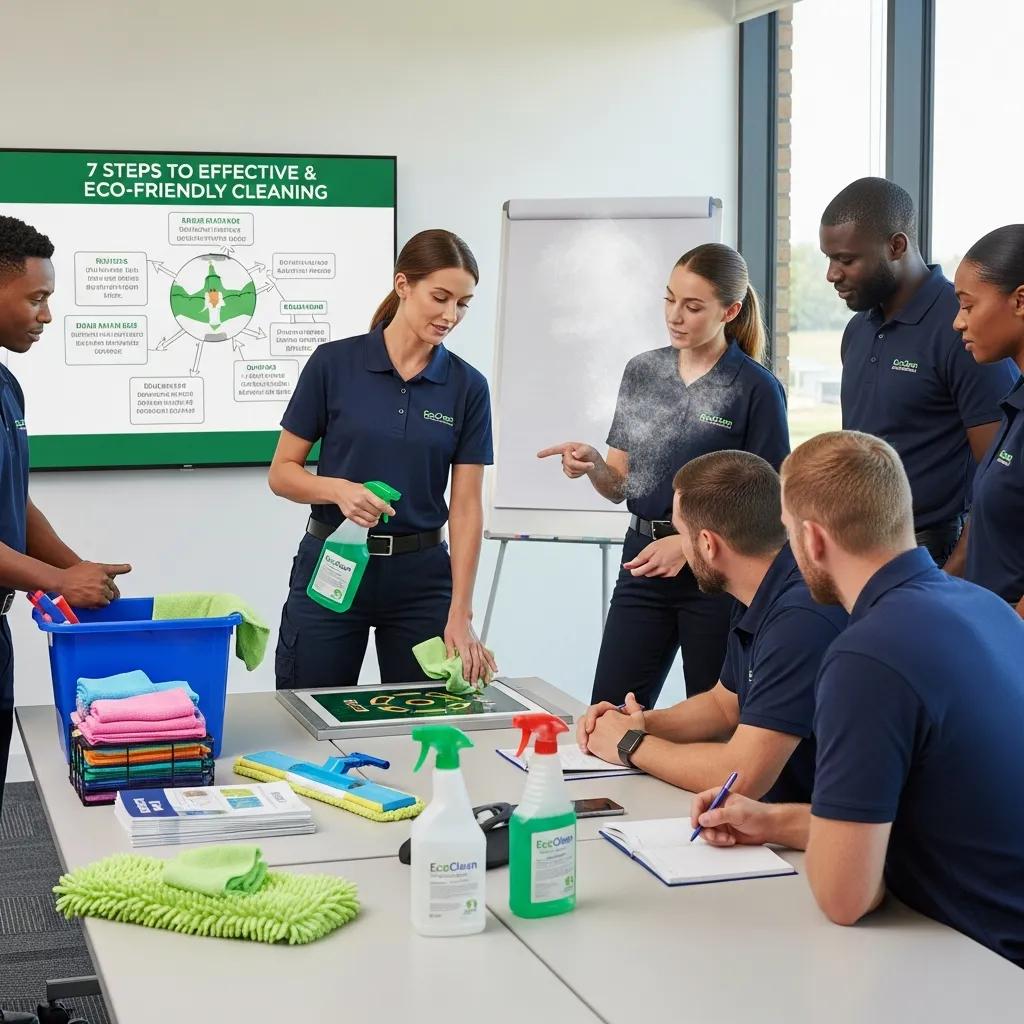
Effective training combines a competency check at onboarding, role‑specific modules and regular refreshers. We verify core skills — correct chemical handling, equipment use and hygiene protocols — with practical demonstrations and recorded sign‑offs. Role‑based certification ensures specialised tasks (medical centre procedures, childcare hygiene) are assessed on schedule. Monthly toolbox sessions address gaps found in inspections and roll out any SOP updates or regulatory changes, turning improvements into everyday habits.
Documented competency records and predictable training cycles reduce drift and give you an audit trail linking performance to workforce development.
How Checklists and SOPs Make Work Repeatable
Well‑written SOPs and checklists translate quality goals into clear steps staff can follow every time. SOPs spell out sequence, materials, dwell times and verification methods; checklists break work into sign‑off items for each visit. Digital checklists add reliability by time‑stamping completions and letting supervisors audit remotely, while version control ensures teams always use the latest procedures. Enforcement follows a simple loop: task completion → inspection → corrective action → retraining when required. That loop keeps small deviations from becoming systemic problems.
Clear, written procedures are widely recognised as essential to maintaining consistent hygiene standards.
Implementing SSOPs for Commercial Cleaning Consistency
Sanitation Standard Operating Procedures (SSOPs) lay out what to clean, how to clean it, how often, and the records used to monitor the work. SSOPs cover both direct contact surfaces and non‑contact surfaces like doors, walls, floors and drains, giving teams a reliable framework for consistent cleaning.
The table below shows how common checklist tasks map to expected outcomes and simple verification methods.
| Task Category | Expected Outcome | Verification Method |
|---|---|---|
| High-touch disinfection | Lower surface contamination | Spot ATP/visual inspection & sign-off |
| Floor cleaning | Even appearance, no residue | Supervisor walk‑through & photo log |
| Restroom hygiene | No odour, stocked consumables | Checklist sign‑off & inspection score |
| Equipment maintenance | Reliable operation | Maintenance log and calibration checks |
Technologies & Eco Practices That Improve Reliability
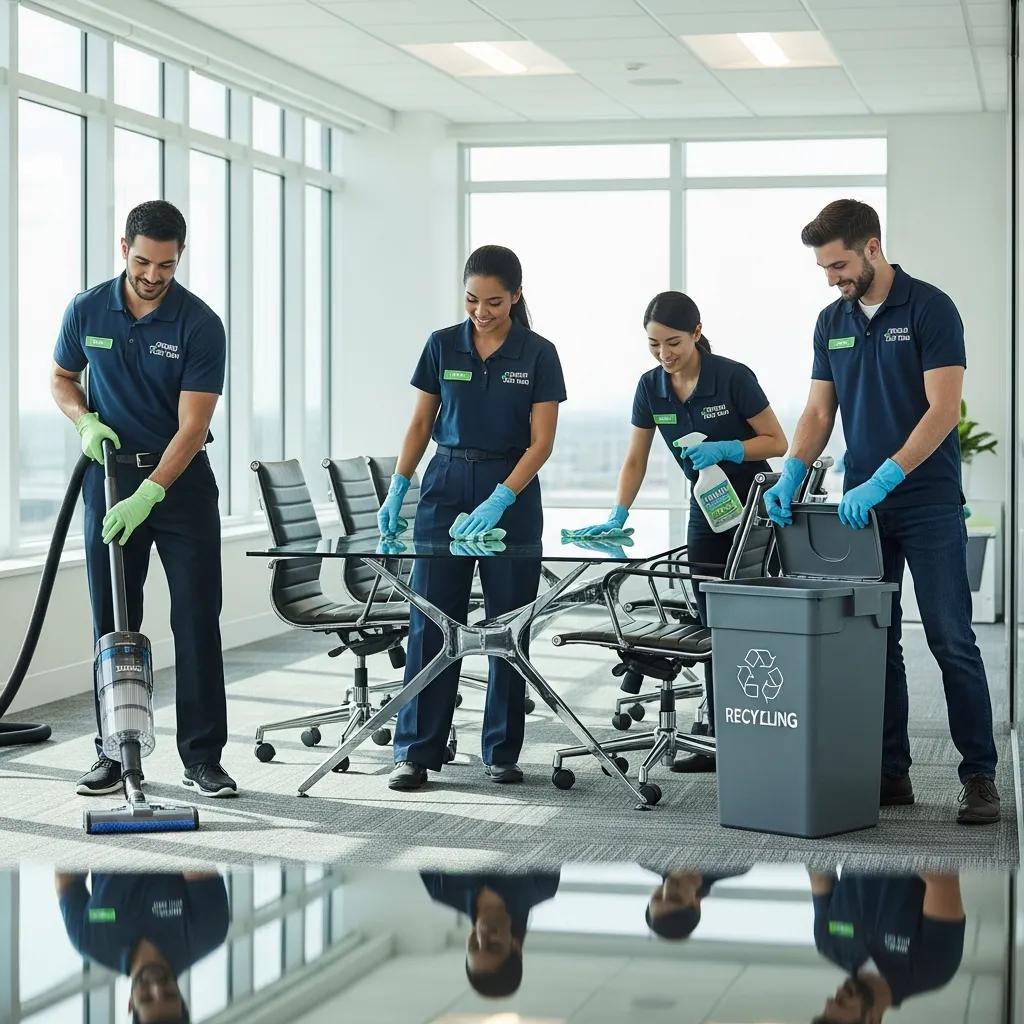
Modern equipment and greener products reduce variability and support measurable hygiene gains. Calibrated dosing systems, HEPA vacuums, electrostatic sprayers and digital inspection platforms standardise coverage and application rates. Eco‑labelled, low‑residue products lower chemical exposure while keeping antimicrobial performance. Data capture — photos, timestamps and KPI dashboards — adds transparency. Together these tools cut human error, speed turnaround and make compliance easier to demonstrate in regulated settings like medical centres and childcare.
Technology only helps if it’s tied into SOPs and staff training so it supports consistent processes rather than creating ad‑hoc shortcuts.
Equipment and Sustainable Products We Use
We choose equipment and green products that balance performance, safety and repeatability. Core items include HEPA‑filtration vacuums for fine particulates, calibrated dosing dispensers for consistent chemical strength, and touchpoint disinfection tools for uniform coverage. Product choices favour eco‑labelled, low‑residue agents that meet hygiene needs while reducing volatile compounds and waste. Selecting the right tool for each environment shortens training time and lowers the chance of inconsistent application across teams and shifts.
The table below links equipment and product categories to the reliability benefits they deliver and metrics to monitor.
| Equipment / Product Category | Primary Benefit | Consistency Metric |
|---|---|---|
| HEPA-filter vacuums | Consistent removal of fine particulates | Particle reduction % per inspection |
| Calibrated dosing dispensers | Repeatable chemical concentration | Dosing accuracy logs |
| Electrostatic sprayers | Uniform surface coverage | Coverage verification photos |
| Eco-labelled detergents | Lower residue & safer handling | Residue testing / employee incident rate |
Each technology and product category supports measurable, repeatable improvements in cleaning performance for commercial sites.
How Technology Reduces Variation
Technology cuts variability by automating repeatable steps and supplying objective data for corrections. Calibrated dosing removes guesswork in mixing, reducing rework tied to incorrect concentrations. Digital inspection platforms capture time‑stamped evidence that links staff activity to KPI trends. HEPA filtration improves baseline air cleanliness in dust‑prone areas, lowering downstream cleaning needs. When tech is integrated with SOPs and training it becomes an enabler of consistency, freeing supervisors to focus on improvements rather than daily firefighting.
Emerging technologies are becoming essential tools for verifiable, consistent cleaning quality.
AI & Automation for Consistent Commercial Cleaning Quality
Autonomous machines, smart sensors and AI‑driven quality systems are reshaping cleaning. These tools let businesses monitor cleanliness in near real‑time, automate repetitive chores and keep standards consistently high.
Those improvements lead to measurable outcomes: fewer corrective actions, higher inspection pass rates and faster client issue resolution because evidence is available immediately.
Supervision and Client Communication: How We Keep Standards Steady
Consistency depends on disciplined supervision, scheduled inspections, transparent reporting and a closed feedback loop that drives real change. Supervisors enforce SOPs with planned and ad‑hoc checks; inspection data feeds KPI dashboards that management reviews regularly. Client communication — scheduled account reviews, quick digital feedback and rapid response procedures — ensures issues are captured and resolved within agreed SLAs. This mix of objective data and structured engagement creates the evidence needed for continuous improvement and reassures facility managers and compliance officers.
Documented escalation paths and recorded outcomes turn client feedback into training or SOP updates so the organisation learns and reduces repeat issues.
The Role of Regular Inspections and Proactive Supervision
Inspections convert SOP compliance into measurable outcomes, with frequency set by site risk: medical centres and childcare get more frequent checks than low‑risk offices. Supervisors conduct weekly frontline audits and monthly management reviews against defined scoring thresholds; failures trigger corrective actions with assigned owners and verification steps. Digital tools capture scores, photos and timestamps so trends are easy to spot. This proactive model detects drift early, assigns responsibility, and verifies remediation—keeping service consistent over time.
Regular inspection cadence and documented verification close the loop between detection and correction, preventing small issues from becoming systemic.
How Client Feedback Becomes Action
We collect client feedback through scheduled account reviews, short post‑visit surveys and direct reports to account managers, with clear SLAs for response and resolution. Every piece of feedback becomes a ticket that’s triaged, investigated and resolved with documented outcomes. Recurring issues are analysed for trends and may trigger SOP changes or targeted retraining. We track KPIs like resolution time, repeat complaint rate and NPS to measure the effectiveness of corrective steps. Closing the loop by reporting outcomes back to clients builds trust and shows feedback leads to real improvements.
This feedback→action pathway helps clients see tangible change and lets providers refine processes based on real performance data.
Why Local Knowledge Matters in Buddina and the Sunshine Coast
Local expertise matters because Buddina and the wider Sunshine Coast have seasonal patterns, property types and regulatory details that affect cleaning needs and response times. Local providers know peak traffic times, common client types — offices, medical centres, childcare and retail — and can adapt schedules and staffing accordingly. Familiarity with local suppliers and logistics speeds mobilisation after incidents and lets teams tweak materials or frequencies when seasonal conditions change. That regional understanding reduces downtime and keeps cleaning standards aligned with client expectations and regulations.
Local knowledge therefore directly supports reliability by matching operational plans to the realities of the area.
How We Tailor Services to Buddina’s Needs
We adapt service delivery to local conditions by adjusting shift patterns, increasing frequencies for high‑traffic retail or medical sites, and applying industry‑specific SOPs where required. For offices we schedule most work after hours to minimise disruption; medical centres get infection‑control‑focused protocols and documented verification. Retail and strata clients benefit from flexible mobilisation during seasonal peaks on the Sunshine Coast, with extra resourcing scheduled proactively. That tailored approach ensures the right resources, timing and procedures for each site type and reduces variability.
Local responsiveness and careful planning shorten response times and help keep standards consistent across Buddina’s diverse facilities.
What Client Feedback Tells Us About Consistency
Clients regularly point to punctuality, repeatable standards and clear communication as the most visible signs of a reliable provider. Reliable vendors earn praise for on‑time performance, consistent cleaning across visits, fast issue response and transparent reporting that proves standards are met. These themes underscore the value of documented SOPs, measurable inspections and an active feedback loop. When evaluating providers, prioritise those whose reviews and local reputation repeatedly mention these reliability traits.
- Key takeaway: Consistency is demonstrated by evidence — inspection scores, resolution times and repeatable SOPs.
- What to ask prospective providers: Request sample SOPs, inspection scoring methods and KPI reports.
- What to measure locally: Inspection pass rate, rework incidents, SLA adherence and client satisfaction trends.
Use these checklist items to evaluate potential providers and hold incumbent vendors accountable with measurable expectations.
- Operational checklist: SOPs, training records, inspection cadence and KPI dashboard access.
- Contractual checklist: Defined SLAs for response and resolution; measurable inspection thresholds.
- Continuous improvement checklist: Evidence of trend analysis, retraining outcomes and documented SOP updates.
These lists give decision‑makers actionable criteria for choosing a reliable commercial cleaning partner in Buddina and the Sunshine Coast.
| QA Element | Purpose | Sample KPI |
|---|---|---|
| Inspection pass rate | Measure adherence to standard | ≥ 95% weekly pass rate |
| Rework incidents | Track corrective actions required | < 2% of visits |
| Resolution time | Client issue responsiveness | < 48 hours average |
These sample metrics help organisations set realistic expectations and monitor performance for ongoing reliability.
For Buddina facilities needing tailored, measurable cleaning plans delivered by experienced local teams, Divine Commercial Cleaning offers a results‑focused service across offices, medical centres, childcare, strata and retail. Our approach emphasises tailored plans, trained teams and health‑and‑safety focused processes to deliver consistent, auditable cleaning outcomes you can rely on.
Frequently Asked Questions
What are the benefits of using eco-friendly cleaning products in commercial cleaning?
Eco‑friendly products reduce chemical exposure for staff and building users, improve indoor air quality and lower environmental impact. Many are biodegradable and non‑toxic, making them suitable for sensitive spaces like medical centres and childcare. Using greener products can also support your sustainability goals and appeal to environmentally conscious clients, all while maintaining cleaning effectiveness.
How can businesses measure the effectiveness of their cleaning service?
Use key performance indicators (KPIs) such as inspection pass rates, client satisfaction scores and rework incidents. Regular surveys, routine inspections and SLA compliance checks give both quantitative and qualitative insight. Tracking these metrics over time highlights trends and helps target improvements where they’ll make the biggest difference.
What should clients look for when selecting a commercial cleaning provider?
Look for experience, local reputation and clear quality assurance practices. Ask to see SOP examples, training records and inspection processes to make sure they match your needs. Inquire about eco‑friendly products and technology use, and check testimonials or references to confirm consistency and responsiveness.
How often should commercial cleaning services be scheduled?
Frequency depends on facility type and usage. High‑traffic medical centres and retail spaces often need daily cleaning, while offices may be fine with weekly or bi‑weekly visits. Seasonal demand and events will also influence schedules. A customised plan based on your site’s usage patterns delivers the best results.
What role does technology play in enhancing cleaning consistency?
Technology automates repeatable tasks and provides real‑time verification. Digital checklists, automated dosing systems and inspection software help ensure accuracy and compliance with SOPs, reduce human error, and make performance data easy to track. Properly integrated, tech raises standards and makes consistency easier to prove.
How can client feedback improve cleaning services?
Client feedback highlights real issues and improvement opportunities. Structured channels — surveys, account reviews and direct reporting — let providers track and resolve problems. When feedback is logged, triaged and used to update training or SOPs, it becomes a powerful tool for continuous improvement and keeps clients confident that their concerns lead to action.
What are the key components of a successful quality assurance program in cleaning?
A strong QA program combines thorough staff training, clear SOPs, regular inspections and measurable metrics. Training equips staff with the right skills, SOPs provide consistency, inspections verify compliance and KPIs such as inspection pass rates and client satisfaction guide ongoing improvement.
Reliable commercial cleaning in Buddina protects hygiene, compliance and client trust. With measurable QA practices, tailored service plans and local experience, providers like Divine Commercial Cleaning deliver consistent results across offices, medical centres, childcare, strata and retail. Choosing a partner that prioritises these elements improves operational efficiency and peace of mind. Find out how our team can meet your cleaning needs — explore our services today.

Dianne, originally from Rockhampton, hails from a business-oriented family, with her father owning electrical stores and her uncle serving as Mayor. Moving to the Sunshine Coast at 13, she later pursued a rewarding real estate career and raised three children. As a single mom, she balanced university studies with domestic cleaning work. Armed with a Bachelor’s Degree in Business, majoring in Supply Chain Management, Dianne founded and grew Divine Commercial Cleaning into a thriving company. Her success is rooted in strong family mentorship, a positive attitude, and a solution-oriented approach, offering tailored cleaning services with integrity and strategic insight.