Chermside Commercial Cleaning Pricing: A Clear, Practical Guide to Local Rates and Value
Prices for commercial cleaning in Chermside can vary a lot. This guide cuts through the noise so you can request clear quotes and choose the best value for your business. You’ll get the main cost drivers, how different service types change estimates, which line items to compare when normalising quotes, and how reputable suppliers balance price and risk. Our goal is practical: explain price-per-hour and price-per-square-metre signals, show how to compare local competitors fairly, and outline what to expect from a trustworthy provider. The article steps through the core cost factors, pricing models and transparency practices, compares Divine Commercial Cleaning’s approach with common local options, lists the questions to ask when getting quotes, answers frequent pricing FAQs, and finishes with a simple process for requesting a transparent quote.
Transparent pricing — where providers show how costs are allocated — helps customers compare offers and make informed choices.
Understanding Transparent Pricing Strategies
Many retail and service markets display opaque pricing: a single number with no detail on how revenue is split among the parties involved. Transparent pricing is an alternative approach that reveals allocation and makes comparisons easier for buyers.
Transparent pricing: theory, tests, and implications for marketing practice, RE Carter, 2010
What Factors Influence Commercial Cleaning Pricing in Chermside?
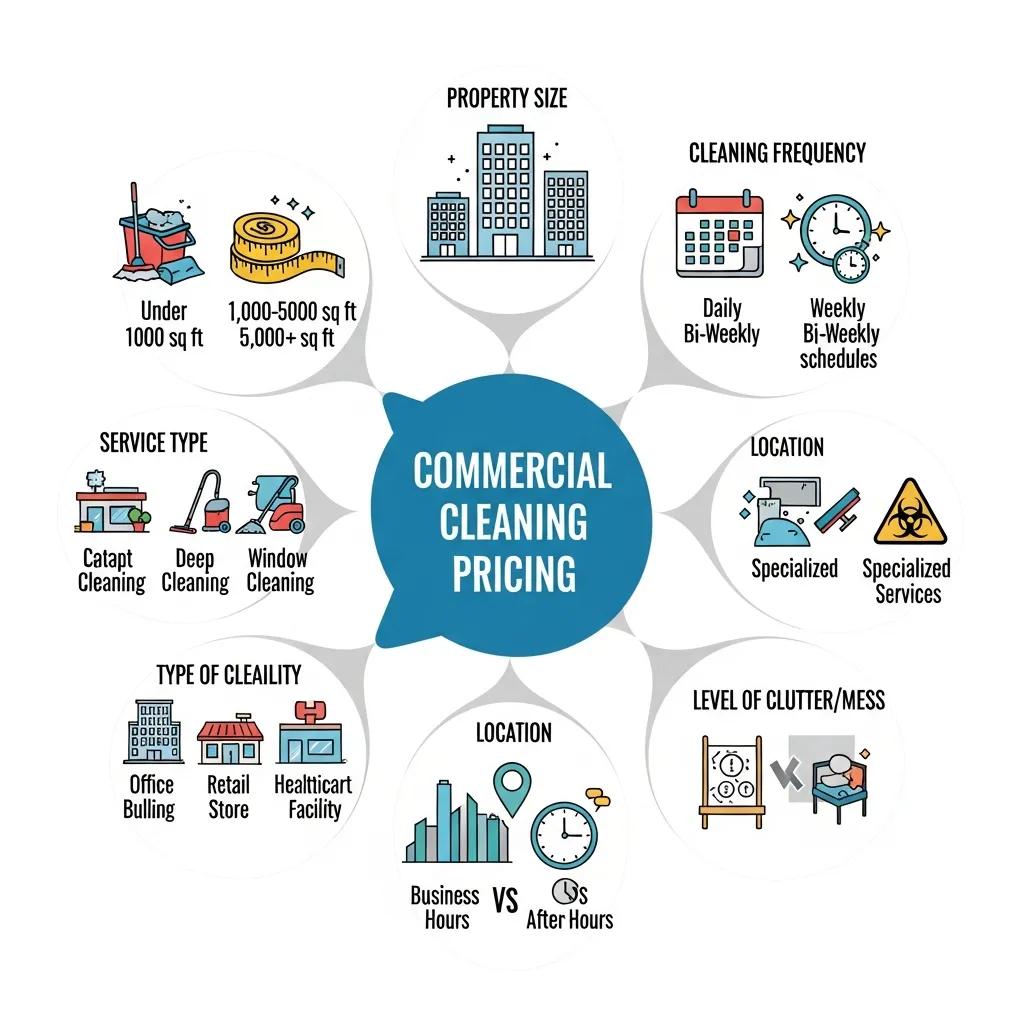
Commercial cleaning costs in Chermside come down to a handful of predictable factors that combine to form a final quote. Some are measurable — square metres and expected labour hours — and others are categorical — service type or required certifications. Scope and frequency usually have the largest impact: bigger spaces and more intensive tasks increase labour and supply needs, while travel, access and timing (after-hours work) can add premiums. Understanding these elements lets you normalise competing quotes into comparable units like $/sqm or a monthly total. Below is a quick, scannable list of the main factors to watch when comparing Chermside commercial cleaning cost breakdowns.
Knowing which elements drive cost helps businesses plan budgets — cleaning operations can be a significant ongoing expense in many sectors.
Factors Influencing Cleaning Service Costs
Research has shown cleaning can be a major operational expense. Studies that examine cleaning processes highlight which activities and inputs most influence total cost.
What makes cleaning a costly operation in remanufacturing, JR Gamage, 2015
Top factors that commonly drive quotes:
- Property size and usable square metres — they set baseline labour time and usually determine whether pricing is quoted per hour or per square metre.
- Cleaning frequency — more frequent visits often lower the per-visit unit rate through efficiency, though they increase the monthly spend.
- Service type — office, medical, retail or industrial work can add complexity when specialised protocols, equipment or certifications are required.
- Supplies, consumables and disposal — these may be included in the quote or billed as pass-through costs depending on the provider.
- Access, hours and logistics — parking, lift access, travel time or after-hours windows can trigger surcharges or minimum-callout fees.
This table shows how each factor typically maps to quoting units and the usual direction of cost impact, so you can compare proposals quickly.
| Factor | Typical unit used in quotes | Expected cost impact |
|---|---|---|
| Property size | Square metres (sqm) | Higher total cost for larger areas; per‑sqm rates may fall as size increases |
| Cleaning frequency | Visits per week/month | More frequent visits lower per‑visit rates but raise the monthly total |
| Service type | Task list / scope | Specialist tasks (e.g., medical disinfection) command higher rates |
| Supplies & consumables | Per month or per visit | Included packages reduce surprises; pass‑through billing increases variability |
Translating quotes into a consistent metric (for example $/sqm or a monthly total) makes it much easier to spot real value. The next sections explain how size and frequency interact and how different service types change scope and price.
How Do Property Size and Cleaning Frequency Affect Costs?
Size and frequency are the backbone of most commercial cleaning quotes because they directly determine labour and scheduling. Providers typically use two models: per‑hour quotes (estimated hours × hourly rate) or per‑square‑metre quotes ($/sqm × area). Frequency creates economies of scale — daily or multiple‑weekly visits often shorten routine task times and lower the per‑visit unit cost. For example, a small 120 sqm office cleaned twice weekly might be quoted per visit, while a multi‑floor tenancy is usually priced per sqm with discounts for regular contracts. A simple way to model cost is: estimated hours × hourly rate × visits per period, or square metres × $/sqm × visits per period. Running both approaches side‑by‑side helps normalise competitor quotes and avoid surprise charges. Use this understanding to question assumed hours and task lists when you request proposals.
Which Service Types Impact Pricing: Office, Medical, Retail, and Industrial Cleaning?
Service type changes protocols, equipment and liability requirements, and that affects pricing. Office cleaning is typically routine — vacuuming, sanitising touchpoints and emptying bins — and is generally less complex. Medical or clinical cleaning requires documented disinfection protocols, certified products and extra staff training, which increases labour and compliance costs. Retail cleaning often needs after‑hours work, window or floor care, and coordination with trading hours and security. Industrial cleaning can involve heavy‑duty degreasing, specialised waste disposal and large equipment hires. Each sector brings a specific cost driver: medical centres need traceable disinfectant logs, retail sites need flexible scheduling, and industrial sites may need hazardous‑waste handling. When comparing quotes, make sure suppliers price the actual requirements rather than a generic office clean.
How Does Divine Commercial Cleaning’s Pricing Model Offer Transparency and Value?
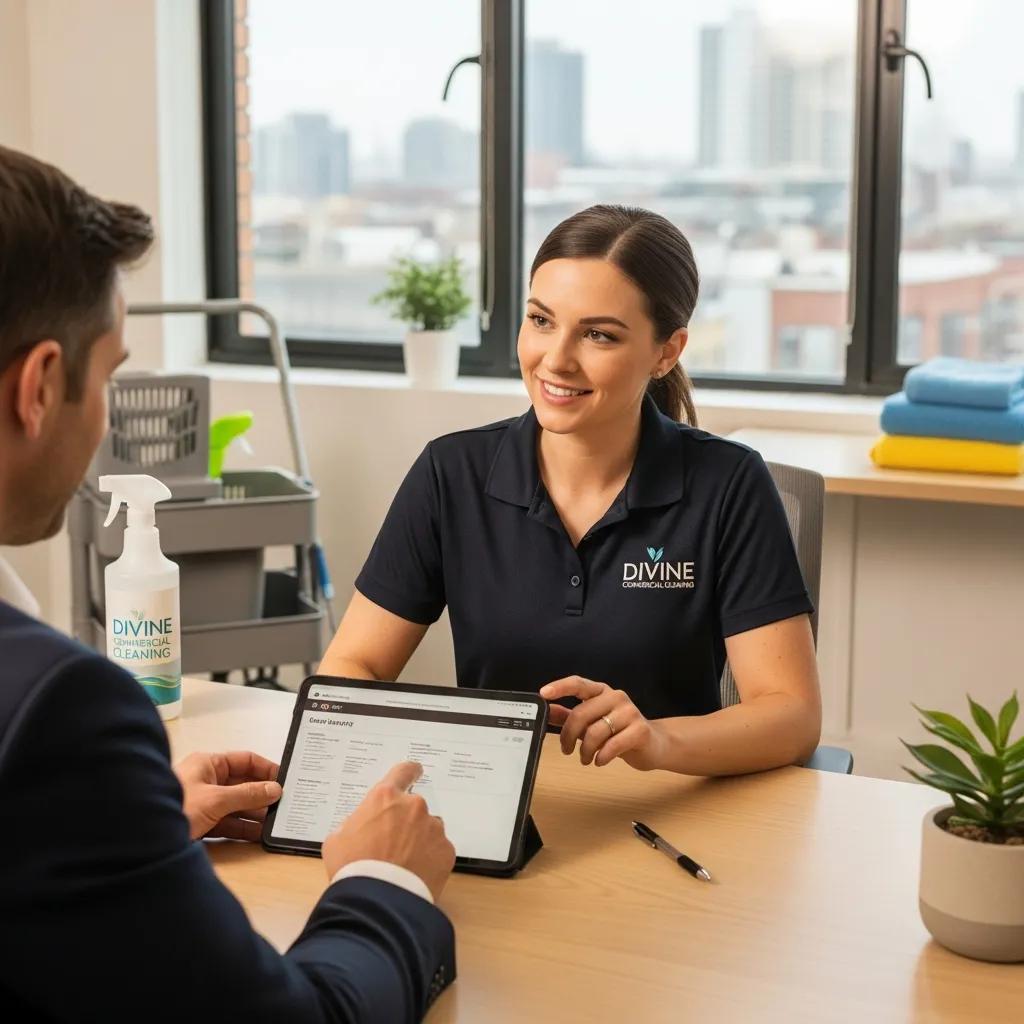
At Divine Commercial Cleaning we prioritise clarity and long‑term value over simply offering the lowest headline rate. Our quotes are customised to the property size, service type and cleaning frequency you need, and each proposal includes a written scope listing inclusions and exclusions. Value drivers include eco‑friendly products, police‑checked staff, comprehensive insurance and a satisfaction guarantee — all of which reduce your risk and can lower total cost of ownership through fewer call‑backs and more reliable service. For businesses in Chermside comparing local offers, our transparency features make apples‑to‑apples comparisons straightforward and show where a slightly higher per‑visit rate can deliver better value over time. The table below links Divine’s features to the client benefits that justify price differences.
This table summarises how Divine ties pricing features to customer benefits and what you can expect to receive.
| Feature | Attribute explained | Divine’s approach / offer |
|---|---|---|
| Customised quotes | Scope‑based pricing | Written proposals that list inclusions and exclusions tailored to sqm, frequency and tasks |
| Eco-friendly practices | Product & method selection | Uses greener consumables and methods to lower environmental impact |
| Staff vetting | Trust & security | Police‑checked team members to reduce client risk |
| Insurance & guarantee | Risk mitigation | Full insurance coverage and a satisfaction guarantee to protect clients |
Documented scopes, vetted staff and green practices support a pricing structure where clients trade a lower headline rate for measured reliability and reduced management overhead. The sections below explain our quote workflow and how eco choices and experienced staff affect cost.
What Are Divine’s Customized Quote Process and No Hidden Fees Policy?
Our process is straightforward: you tell us the basics — square metres, frequency and tasks — then we confirm details via a virtual assessment or site visit to check access, storage and any special needs. We then issue a written proposal that lists inclusions, exclusions and any expected surcharges. Our no‑hidden‑fees approach flags pass‑through items (for example specialty consumables or hazardous waste disposal) and shows which items are optional add‑ons. You can request clarifications or scope changes before accepting the quote so the proposal matches your budget and expectations. This workflow helps you compare our offer with other Chermside commercial cleaning quotes without encountering unexpected line items after the contract starts.
How Do Eco-Friendly Practices and Experienced Staff Justify Divine’s Pricing?
Green products and experienced teams can add a small upfront cost but deliver measurable long‑term benefits. Eco‑friendly chemicals may be more expensive per litre, but they reduce VOC exposure and can be gentler on surfaces, lowering maintenance costs over time. Skilled, trained teams work more efficiently and consistently, reducing rework and management time. Our police‑checked staff and full insurance also lower client risk — a key consideration for medical, retail and childcare settings. Framing price as the total cost of ownership (monthly spend, reliability and risk transfer) rather than just the hourly rate helps explain why a transparent, slightly higher initial quote often provides better value.
How Does Divine Commercial Cleaning Compare to Local Chermside Competitors?
When you compare Divine with other Chermside providers, focus on tangible features — scope clarity, staff vetting, eco options, contract terms and guarantees — rather than headline price alone. Different business models produce different pricing signals: low‑cost providers may exclude supplies or pass them through, while mid‑market or premium providers bundle consumables and compliance features. The table below outlines key feature differences to help you normalise quotes and evaluate true value.
Use this feature comparison to assess value‑for‑money without relying solely on price points.
| Provider | Key features | Pricing signals and what to watch for |
|---|---|---|
| Divine Commercial Cleaning | Customised quotes, eco practices, police‑checked staff, full insurance, satisfaction guarantee, no lock‑in contracts | Mid‑market, value‑focused — check for documented inclusions and risk transfer |
| Typical small local company | Basic checklist services, variable vetting, may pass through supplies | Lower headline rates but possible exclusions for supplies, insurance or training |
| National franchise / low-cost bidder | Standardised packages, limited flexibility, potential contract lock‑ins | Promotional pricing with stricter scope and possible long‑term price increases |
This comparison highlights that the cheapest quote may omit insurance, vetting or eco options. Normalise quotes by scope and risk coverage before deciding. The subsections that follow explain why insurance and contract terms change value.
What Are the Key Differences in Pricing and Service Features?
Common differences that affect price and perceived value include pricing model (hourly vs per‑sqm vs bundled packages), whether supplies are included, compliance documentation and contract flexibility. Hourly models can hide the total monthly cost if hours are underestimated, while per‑sqm quotes are simpler to compare when the scope is identical. Bundles that include consumables and routine tasks often carry higher upfront rates but reduce surprise invoices. Look for hidden‑cost risks — travel surcharges, after‑hours premiums and missed‑task penalties — and normalise quotes by extracting those line items and converting everything into a monthly total or $/sqm × visits so you can compare fairly.
How Do Insurance, Police Checks, and Contract Flexibility Affect Value?
Insurance, staff vetting and contract terms materially affect client risk and therefore change what represents true value. Public liability and professional indemnity insurance protect against damage or liability that could be costly if uninsured, while police checks lower the chance of security incidents — crucial for retail, medical and childcare sites. Contract flexibility (no lock‑in) lets you trial a provider or renegotiate easily; fixed‑term contracts may offer lower rates in return for commitment. When evaluating quotes, weigh whether savings from a locked contract justify reduced flexibility and whether a lack of insurance or vetting is an unacceptable risk for your business. Often, paying a little more for comprehensive coverage and transparency is the smarter choice.
What Questions Should Businesses Ask When Requesting Commercial Cleaning Quotes in Chermside?
Asking the right questions upfront ensures transparent, comparable quotes from Chermside providers. Use the checklist below when you request proposals so each supplier returns a meaningful, normalisable offer rather than an optimistic headline rate.
When preparing to request quotes, ask suppliers the following core questions:
- Exactly what is included in the scope of work, and what is explicitly excluded?
- Are supplies, consumables and equipment included in the price or billed separately?
- What insurance and staff vetting (for example police checks) do you hold, and can you show evidence?
- How do you price changes in frequency and after‑hours or emergency work?
- What are the contract terms, notice periods and any cancellation or variation fees?
- Do you offer a satisfaction guarantee or clear remediation policy for missed standards?
These questions help make each quote directly comparable. The two subsections below expand on the specific line items and green claims you should verify.
Which Pricing and Service Details Ensure Transparency and Fair Comparison?
Transparent quotes should list hourly rates and estimated hours or $/sqm, supply costs, travel/time surcharges and GST treatment. Ask for a scope‑of‑work statement that defines tasks per visit (floors, bathrooms, high‑touch sanitisation), frequency and approximate time allocation — this lets you recalculate monthly totals if a competitor uses a different billing unit. Request optional extras separately (deep cleans, carpet treatments, specialised disinfection) so you can compare base service costs. A written scope reduces scope creep and disputes, and it’s the key to comparing different pricing models fairly.
How to Evaluate Eco-Friendly Options and Contract Terms Effectively?
If a supplier claims eco‑friendly practices, ask for a product list or certification details and whether green methods change labour or downtime. Look for measurable outcomes such as low‑VOC products, microfibre systems that cut chemical use, or documented waste‑reduction steps. For contract terms, review notice periods, automatic renewals, price escalation clauses and trial or exit options. A no‑lock‑in contract gives flexibility but may cost more per visit, while fixed terms can lower rates in exchange for commitment. Ask for a short trial or satisfaction guarantee to test quality before signing a long‑term agreement.
What Are the Common FAQs About Commercial Cleaning Pricing in Chermside?
Below are concise answers to the most frequent pricing questions so you can quickly scope budgets and trade‑offs. The quick Q&A format is designed for rapid decision‑making.
- What is the average cost of office cleaning in Chermside?Ranges vary by scope and frequency; a common Queensland guideline is roughly $30–$80 per hour or about $2–$3 per sqm for routine office cleaning. Medical or industrial services typically cost more because of specialist protocols. Use these figures for budgeting only — custom quotes are needed for exact pricing.
- Are eco-friendly cleaning options available and how do they affect pricing?Yes — eco options are common and usually carry a modest premium, though they can reduce long‑term wear and improve indoor air quality. Ask for product lists and any task changes to understand the true cost difference.
- How does one-off deep cleaning differ from contract pricing?One‑off or deep cleans are usually billed at higher per‑visit rates because they require extra labour and specialised equipment. Contract pricing spreads routine tasks across visits and typically lowers the per‑visit unit rate.
- Should supplies be included in the base quote?Ideally, yes — a quote should state whether consumables are included or invoiced separately. Inclusion simplifies budgeting and reduces the risk of surprise invoices.
What Is the Average Cost of Office Cleaning in Chermside?
Costs depend on size, frequency and scope. As a local guideline, routine office cleaning can sit around $30–$80 per hour or $2–$3 per square metre for standard daytime cleaning in Queensland markets. Factors such as after‑hours service, specialised disinfection or daily versus weekly schedules will change pricing, so treat these figures as a budgetary starting point. Request standardised quotes that specify hours, tasks and consumables so you can convert proposals to a consistent monthly total. Then compare what’s actually delivered per visit and the supplier’s risk protections (insurance, vetting) included in the price.
Are Eco-Friendly Cleaning Options Available and How Do They Affect Pricing?
Many providers offer eco‑friendly options that focus on occupant health and sustainability. Typical measures include low‑VOC detergents, concentrated dosing systems, microfibre cloths and methods that reduce water and chemical use. These choices can mildly increase supply costs but often bring benefits like reduced odour, lower allergen exposure and longer surface life. To measure cost impact, ask for a product list and whether the green method changes labour time or frequency — some eco methods are as efficient as standard approaches, producing little or no price difference. Document these details in the quote so you can compare true costs and outcomes.
How Can Businesses Request a Transparent Commercial Cleaning Quote from Divine in Chermside?
If you’re in Chermside and want a transparent quote, Divine Commercial Cleaning follows a simple, customer‑focused process to gather accurate inputs and deliver a clear written proposal. We operate across the Sunshine Coast and Brisbane regions from our Maroochydore base. Our proposal features are designed to make comparison easy: customised quotes, eco options, police‑checked staff, full insurance and a satisfaction guarantee with no lock‑in contracts.
Before you request a quote from Divine, gather this information:
- Square metres of the area to be cleaned and a short description of the layout.
- Desired cleaning frequency (daily, weekly, fortnightly) and preferred service hours.
- Specific service types needed (standard office, medical disinfection, retail after‑hours, industrial tasks).
- Any access notes, security procedures or special compliance requirements.
These details let us prepare a tailored, no‑obligation written proposal that lists inclusions, optional extras and any pass‑through costs.
What Is the Process for Obtaining a Customized, No-Obligation Quote?
The quote process starts with an initial enquiry where you provide property size, frequency and special needs. We follow up with a virtual assessment or site visit to confirm access and task details, then supply a written proposal outlining scope, inclusions, exclusions and optional add‑ons. The proposal is formatted so you can compare it directly with other Chermside offers by converting everything into the same unit (monthly total or $/sqm). Clients can request clarifications or adjustments before acceptance, and our flexible options — including no lock‑in arrangements — let you trial the service or change frequency without long‑term penalties. This structure is designed to minimise hidden fees and give you a clear baseline for service delivery.
How Does Divine Ensure Satisfaction and Value Through Its Guarantee?
Our satisfaction guarantee, together with police‑checked staff and full insurance, shifts risk from you to us — a major part of the value beyond headline price. If standards aren’t met, document the issue and we’ll rectify it promptly under the guarantee; our remediation approach focuses on fixing or redoing the work to restore standards quickly rather than issuing immediate refunds. Police‑checked personnel reduce security risk at customer‑facing sites, and our insurance covers accidental damage or liability that could otherwise expose your business financially. These protections explain why a transparent quote that may be a little higher upfront often delivers lower operational and reputational risk over time.
Frequently Asked Questions
What should I consider when comparing commercial cleaning quotes?
Focus on the scope of work and the listed inclusions and exclusions. Make sure each quote states whether supplies and consumables are included or charged separately. Check insurance coverage, staff vetting and any extra fees for after‑hours or emergency work. Also consider the cleaning frequency and how it affects pricing. Normalising these items will let you choose the service that offers the best overall value for your needs.
How can I ensure the cleaning service meets my specific needs?
Give suppliers detailed information about your space and requirements when requesting quotes. Specify the type of cleaning (office, medical, industrial), area size and any compliance or access constraints. Ask about their experience with similar sites and how they tailor plans. Clear instructions and a written scope increase the chance the service will meet your expectations.
What are the benefits of eco-friendly cleaning products?
Eco‑friendly products reduce exposure to harsh chemicals, improve indoor air quality and lower environmental impact. They often contain fewer VOCs, which benefits staff and visitors. Green methods can also extend the life of surfaces and fittings, saving on repairs. When evaluating quotes, ask for the exact products used and how those choices affect cleaning effectiveness and cost.
How often should I schedule commercial cleaning services?
Frequency depends on your business type, foot traffic and hygiene standards. Offices commonly schedule weekly or bi‑weekly cleans; medical facilities usually require daily cleaning due to strict protocols; retail sites often need after‑hours work to avoid disruption. Discuss your needs with providers to find a schedule that balances cleanliness and cost.
What are the risks of choosing the lowest-priced cleaning service?
Lowest‑priced providers can present risks such as inconsistent quality, hidden fees and inadequate insurance or vetting. They may cut corners on supplies or staffing, leading to poor results or liabilities. Evaluate overall value — reliability, transparency and staff quality — rather than price alone.
Can I request a trial period for cleaning services?
Yes. Many companies, including Divine Commercial Cleaning, offer trial periods or flexible contract terms. A short trial lets you assess service quality, responsiveness and whether the team meets your specific requirements before committing to a longer contract. Ask about trial options when you request quotes.
Understanding how commercial cleaning pricing works in Chermside helps you balance cost and quality. By insisting on transparent quotes and checking what’s included, you’ll find the supplier that best matches your needs and risk tolerance. When you’re ready, request a customised quote from Divine Commercial Cleaning and see how clarity, reliability and proper risk protection make a measurable difference for your workplace.

Dianne, originally from Rockhampton, hails from a business-oriented family, with her father owning electrical stores and her uncle serving as Mayor. Moving to the Sunshine Coast at 13, she later pursued a rewarding real estate career and raised three children. As a single mom, she balanced university studies with domestic cleaning work. Armed with a Bachelor’s Degree in Business, majoring in Supply Chain Management, Dianne founded and grew Divine Commercial Cleaning into a thriving company. Her success is rooted in strong family mentorship, a positive attitude, and a solution-oriented approach, offering tailored cleaning services with integrity and strategic insight.