Allied Health Facility Cleaning and Hygiene Standards: Comprehensive Guide to Infection Control and Compliance
Allied health facility cleaning refers to targeted environmental and equipment hygiene practices designed to minimise infection risk in outpatient clinical settings, protect patients and staff, and maintain regulatory compliance. This guide explains why rigorous cleaning protocols matter in physiotherapy, dental, podiatry, chiropractic and medical imaging environments, outlining standards, operational procedures and practical controls that reduce healthcare-associated infections. Readers will learn which Australian standards govern clinic cleaning, how to map those requirements to daily and terminal cleaning tasks, and how to design a documented protocol that supports audits and patient safety. The article also describes a proven six-step cleaning process, approaches to prevent cross-contamination, and facility-specific actions for high-risk areas such as X-ray rooms and operatories. Practical lists, evidence-mapped tables and supplier selection criteria are included so facility managers and clinicians can convert standards into reliable routines. Current research and national guidance are referenced conceptually to ground recommendations in contemporary infection-control thinking, and the next section begins by defining the essential hygiene standards that apply to allied health practices.
What Are the Essential Hygiene Standards for Allied Health Facilities in Australia?
Essential hygiene standards for allied health facilities combine national infection-control guidance, device reprocessing rules where applicable, and local health directives that together set expectations for cleaning frequency, staff training and documentation. These standards exist to reduce transmission of pathogens, ensure safe reuse of any clinical devices, and provide audit trails showing who cleaned what and when. Facilities must implement risk-based cleaning schedules, maintain records of training and cleaning, and use appropriate disinfectants and PPE for tasks that involve body fluids or invasive procedures. The following quick-reference table maps the primary standards to clinic-level implications so managers can compare obligations and practical actions.
The table below summarises standards and clinic implications for easy comparison.
| Standard / Guidance | Clinic Requirement | Practical Implication |
|---|---|---|
| Australian Guidelines for the Prevention and Control of Infection in Healthcare | Risk assessment, policies, surveillance | Written infection-control policy, incident reporting, regular audits |
| AS/NZS 4187 (where applicable) | Reprocessing of reusable medical devices | Segregated sterile processing or outsourced reprocessing; documented SOPs |
| Queensland Health (state-level) directives | Local reporting and outbreak responses | Follow state guidance during outbreaks; update cleaning schedules |
| TGA-relevant product guidance | Use of approved disinfectants and PPE | Select hospital-grade disinfectants and maintain SDS records |
This mapping shows that clinics must convert high-level standards into daily practices such as documented cleaning logs, risk-based schedules and staff competency checks. Understanding these connections prepares a clinic to implement specific protocols, which the next subsection identifies by name and scope.
Which Australian Guidelines Govern Infection Control in Medical Clinics?
Several national and state documents define infection-control expectations for outpatient clinical settings, and clinic managers should be familiar with those that most directly affect allied health practice. The Australian Guidelines for the Prevention and Control of Infection in Healthcare sets broad principles for surveillance, standard and transmission-based precautions, and risk assessment that clinics must interpret for their service mix. State health department guidance supplements these national standards with reporting processes and outbreak management steps that clinics need to follow locally. Translating these guidelines into clinic procedures typically involves drafting a cleaning and PPE policy, scheduling regular staff training, and keeping incident and cleaning logs to demonstrate compliance during audits.
These guideline frameworks require clinics to document who is responsible for each task and to maintain records of any training or incidents, which supports continuous improvement and audit preparedness. The next subsection explains how AS/NZS 4187 applies to specific device reprocessing and where environmental cleaning dovetails with those requirements.
How Do AS/NZS 4187 Standards Ensure Cleaning Compliance?
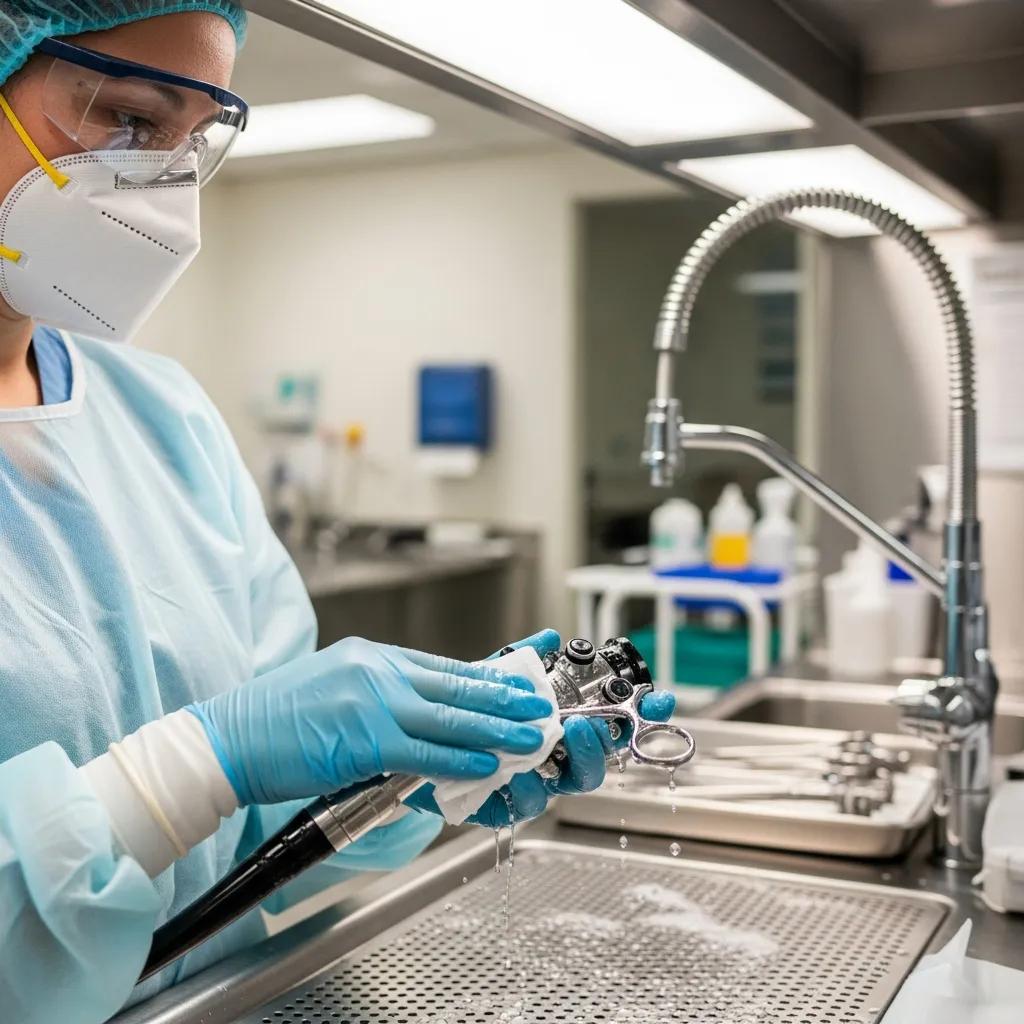
AS/NZS 4187 specifically targets reprocessing of reusable medical devices in health facilities and sets criteria for cleaning, disinfection, sterilisation, and documentation where devices pose infection risks. In allied health contexts this standard is most relevant for clinics that reuse devices that contact mucous membranes or sterile tissue, or that perform minor procedures; it distinguishes device reprocessing from routine environmental cleaning while still requiring coordination between both functions. Practical mappings include separating soiled and clean zones, validated cleaning processes for device components, and written records of reprocessing cycles that can be audited.
Implementing AS/NZS 4187 elements in clinics means establishing SOPs for device handling, designating a responsible staff member for reprocessing oversight, and ensuring environmental cleaning supports sterile workflows by preventing cross-contamination. With those systems in place, clinics can meet both device safety expectations and broader infection-control goals, and the next H2 shows how specialist cleaning providers operationalise these standards.
How Does Divine Commercial Cleaning Deliver Specialised Allied Health Cleaning Services?
Divine Commercial Cleaning provides specialised allied health cleaning tailored to clinic risk profiles, offering services for medical and health centres including X-ray and imaging rooms across the Sunshine Coast and Brisbane. Their approach adapts national guideline requirements into customised cleaning schedules, ensures staff are police-checked and insured, and emphasises continuity by assigning the same cleaner where possible. Divine positions its service offering around no lock-in contracts and a money-back guarantee, and it stresses environmentally conscious product choices and documented cleaning procedures to support clinic audits and patient safety.
Key service features include targeted disinfection of treatment areas, management of high-touch surfaces, and protocols for imaging rooms that respect equipment sensitivity while ensuring infection control. Divine’s operational model supports documentation, with cleaning logs and inspection records held to assist clinics with compliance and incident traceability. Facility managers looking for a tailored quote are encouraged to request an assessment to align cleaning frequency and scope with their specific allied health risks, which is followed by a short explanation of typical clinic-specific offerings below.
What Customised Cleaning Solutions Are Offered for Physiotherapy and Dental Clinics?
Customised cleaning for physiotherapy and dental settings addresses the distinct equipment and workflow risks each clinic type presents, with physiotherapy services focusing on rehabilitation equipment, mats and treatment tables, and dental services emphasising operatories, suction and handpiece zones. For physiotherapy clinics, Divine’s task list typically includes hygienic wiping of therapy equipment between uses, disinfecting non-porous treatment surfaces, and scheduled deep cleaning of exercise mats and communal gear. Dental cleaning protocols prioritise operatory surface disinfection after aerosol-generating procedures, careful handling of suction areas, and coordination with instrument reprocessing workflows to keep clinical zones safe.
Scheduling is risk-adjusted: high-turnover treatment rooms receive increased cleaning frequency, while routine environmental cleaning supports daily clinic flow; each action is documented to demonstrate compliance. These clinic-specific measures ensure that cleaning interventions match how care is delivered and that staff and patients are protected during routine operations.
How Does Divine Ensure Trust, Safety, and Environmental Responsibility?
Trust and safety measures centre on verified staff and transparent guarantees: Divine deploys police-checked staff, carries insurance to cover services, and offers a money-back guarantee to reinforce service reliability. The company emphasises continuity by assigning the same cleaner where practicable, which builds staff familiarity with clinical layouts and bespoke cleaning needs, and this consistency helps maintain audit-ready documentation. Environmental responsibility is addressed through selection of eco-conscious disinfectants and cleaning products that balance efficacy with reduced environmental impact, alongside staff training on correct dilution and contact times to preserve both safety and sustainability.
These trust signals combine with documented SOPs and inspection checklists to give clinic managers confidence that cleaning meets regulatory expectations. The next major section outlines a proven cleaning process that maps operational steps to measurable outcomes and compliance links.
What Is the Proven Cleaning Process for Maintaining Medical Clinic Hygiene?
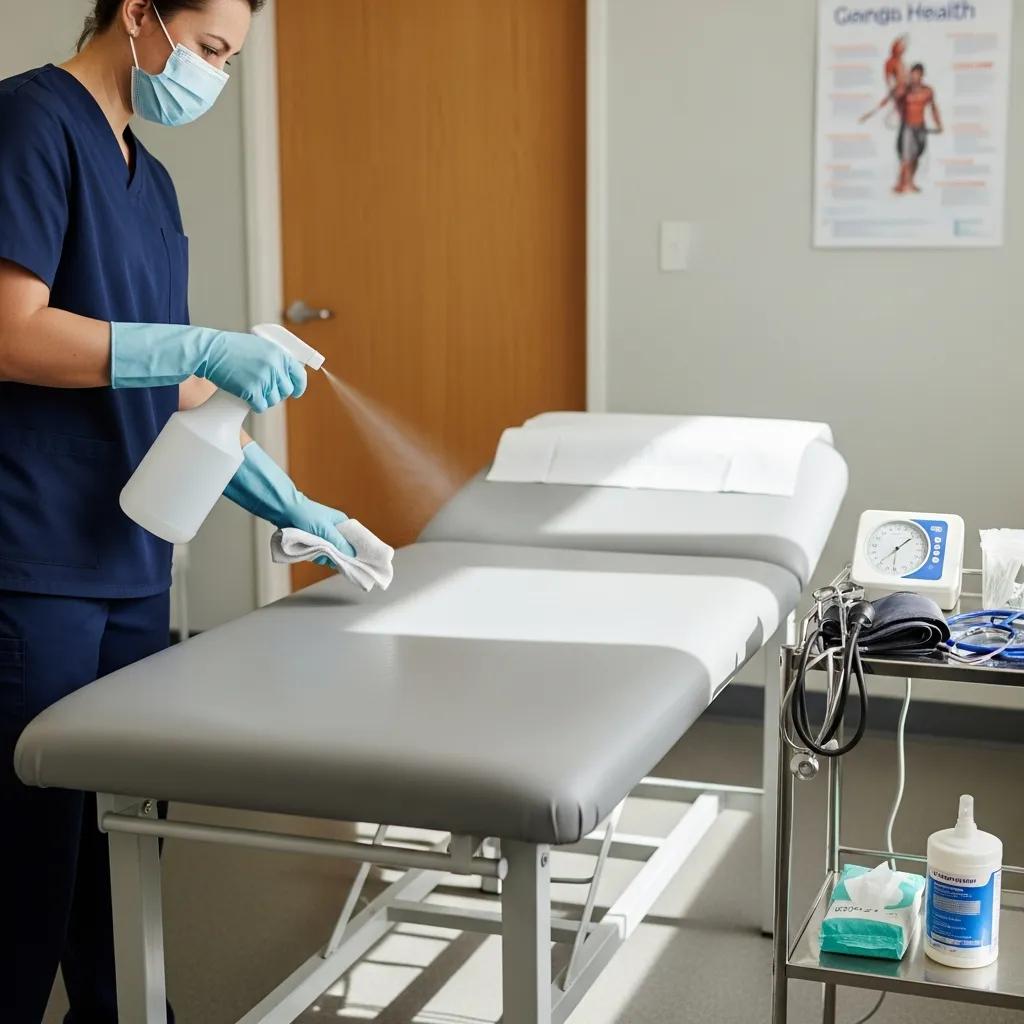
A structured, stepwise cleaning protocol translates infection-control standards into repeatable actions that clinics can audit and improve; the following process combines risk assessment, preparation, targeted cleaning, disinfection, inspection and documentation into a cohesive workflow. This approach begins with a formal risk assessment that identifies patient flow, aerosol risks and device reprocessing needs, then moves to preparing appropriate PPE and segregated tools before executing cleaning from clean-to-dirty areas. Effective protocols specify hospital-grade disinfectants with documented contact times, include biohazard handling for spills or contaminated materials, and end with inspection and written records that support both quality control and external audits.
| Step | Action | Expected Outcome / Compliance Link |
|---|---|---|
| Risk assessment | Identify high-risk areas and procedures | Targeted schedule; aligns with national guideline risk-based approach |
| Preparation | PPE, color-coded tools, signage | Reduces exposure and cross-zone contamination |
| Cleaning | Remove soil and organic material | Enables disinfectant efficacy per AS/NZS 4187 principles |
| Disinfection | Apply hospital-grade disinfectant with contact time | Kills pathogens and reduces HAIs; document contact times |
| Inspection | Visual and ATP or audit checks | Ensures tasks meet standards and highlights corrective actions |
| Documentation | Log actions, incidents, and training | Provides traceability for audits and continuous improvement |
This mapping clarifies how each step delivers a compliance outcome and establishes the foundation for the detailed six-step list that follows in the next subsection.
What Are the Six Steps in Divine's Infection Control Cleaning Protocol?
A concise six-step protocol provides a reproducible sequence that aligns with regulatory expectations and practical clinic workflows. The six steps begin with a thorough risk assessment to map patient flows and identify aerosol or invasive procedures, followed by preparation including PPE selection, tool segregation and setting up barriers. Cleaning then targets visible soil removal and detergent-based cleaning to enable subsequent disinfection, which uses hospital-grade disinfectants applied with the correct contact times documented. After disinfection, a formal inspection verifies surface readiness and identifies any gaps, and the final step completes documentation of the activity, including who performed the work and any corrective actions taken.
This numbered protocol ensures consistent practice across shifts and supports auditability by embedding inspection and record-keeping into each cleaning cycle. The following subsection explains product selection and biohazard handling that underpin the disinfection and waste steps.
How Are Hospital-Grade Disinfectants and Biohazard Management Applied?
Selecting hospital-grade disinfectants depends on the clinic’s risk profile and target organisms; facilities should choose products with appropriate claims (e.g., broad-spectrum virucidal and bactericidal activity) and follow manufacturer-recommended contact times to achieve efficacy. Staff must be trained in safe handling, dilution and PPE use for each product, and safety data sheets should be accessible at point of use to inform emergency procedures. Biohazard management requires immediate isolation of spills, use of absorbent materials and double-bagging of contaminated waste followed by safe storage and disposal according to local health regulations and clinic policy.
Documenting disinfectant batch, dilution, contact time and disposal actions completes the chain of custody for infection-control activities and provides evidence during audits. With these operational controls in place, the next H2 covers cross-contamination prevention strategies that further reduce HAIs.
How Do Allied Health Cleaning Services Prevent Cross-Contamination and Healthcare-Associated Infections?
Preventing cross-contamination relies on layering controls: cleaning order (clean-to-dirty), color-coded tools to separate zones, focused attention on high-touch surfaces, and staff training with regular competency checks. These measures interrupt common transmission routes in clinics where multiple patients and shared equipment increase exposure risk. A practical checklist helps staff operationalise these concepts during routine and terminal cleaning to reduce the likelihood of healthcare-associated infections and provide clarity during audits and inspections.
- Use color-coded cloths and mops to separate clinical, non-clinical and high-risk zones.
- Clean from cleanest to dirtiest surfaces to avoid recontamination.
- Prioritise high-touch surfaces for increased frequency and documented checks.
- Apply validated disinfectants with full contact time and record each application.
These checklist items make abstract standards actionable and create observable behaviours for staff to follow; the following subsections examine high-touch surfaces and the training systems that support them.
What Role Do High-Touch Surfaces and Terminal Cleaning Play?
High-touch surfaces are frequent transmission points in allied health clinics and include door handles, reception desks, light switches, treatment tables, exercise equipment and shared devices like tablets or pens. Terminal cleaning refers to a thorough disinfecting routine performed at the end of the day or after a high-risk event, ensuring that all high-touch and near-patient zones receive focused attention with validated disinfectants and documented inspection. Implementing a terminal cleaning checklist reduces residual pathogen loads and provides a recorded assurance of readiness for the next day’s clinical activities.
High-touch and terminal cleaning schedules should be risk-adjusted based on patient turnover and procedure types, with more frequent terminal cycles for clinics performing aerosol-generating or minor invasive procedures. Effective terminal cleaning ties directly into staff training and quality checks addressed in the next subsection.
How Are Color-Coded Tools and Staff Training Used to Enhance Safety?
Color-coded tools create an immediate visual control to prevent cross-use between zones: for example, red for high-risk procedure areas, yellow for general clinical surfaces and green for non-clinical spaces. This system reduces errors and simplifies compliance monitoring during audits, particularly when combined with tool-specific storage and labeling. Staff training should cover proper use of color-coded equipment, PPE protocols, disinfectant selection and contact times, as well as documentation practices; training is reinforced through competency assessments, periodic refresher sessions and spot inspections.
Verification methods such as checklists, supervisor sign-off and random audits ensure that training translates into reliable performance, and continuous feedback loops allow clinics to adjust training content based on incident reports or audit findings. With these operational safeguards, the next H2 clarifies which facility types most benefit from specialised cleaning strategies.
Which Allied Health Facilities Benefit from Specialised Cleaning on the Sunshine Coast and Brisbane?
A range of allied health facilities require specialised cleaning approaches because of their varied equipment, patient interactions and procedure risks; targeted cleaning reduces infection risk and protects sensitive devices in these environments. Typical facility types include physiotherapy and rehabilitation centres, dental practices, chiropractic clinics, podiatry suites and medical imaging or X-ray rooms, each with distinct high-risk areas and cleaning priorities. The table below maps facility types to their high-risk zones and recommended cleaning actions so local clinic managers can prioritise interventions.
| Facility Type | High-Risk Areas | Recommended Cleaning Actions |
|---|---|---|
| Physiotherapy | Treatment tables, exercise equipment, mats | Clean between patients, deep clean mats regularly, disinfect equipment handles |
| Dental | Operatories, suction and handpiece zones, chair controls | Increase operatory disinfection after aerosol procedures, coordinate with instrument reprocessing |
| Chiropractic | Adjustment tables, waiting area devices | Wipe down tables after each patient, disinfect shared devices frequently |
| Podiatry | Foot baths, instruments, treatment chairs | Sterilise instruments, use disposable liners, disinfect foot baths between patients |
| Medical imaging/X-ray | Control consoles, patient support surfaces, positioning aids | Use non-abrasive disinfectants, avoid liquid ingress into equipment, document cleaning around electronics |
This table clarifies how cleaning tasks should vary by facility type to manage the unique risks each environment presents, and the following subsections give practical checklists and constraints for common clinic types.
What Are the Cleaning Standards for Physiotherapy, Dental, and Chiropractic Clinics?
Physiotherapy clinics should prioritise disinfection of therapy equipment, hand contact points and communal mats, with cleaning between patients and scheduled deep cleans for shared gear. Dental practices require rigorous operatory protocols that include immediate post-procedure surface disinfection, management of aerosols through suction and air-handling coordination, and strict instrument reprocessing workflows. Chiropractic clinics focus on sanitising adjustment tables and shared equipment between patients and ensuring waiting room surfaces are cleaned frequently to reduce cross-contamination risks.
Each clinic type adjusts frequency and product selection based on patient turnover and procedure risk, with comprehensive records kept to demonstrate compliance during inspections and to allow continuous improvement of cleaning regimes. The next subsection explains constraints and methods for imaging and podiatry settings.
How Are Medical Imaging Centres and Podiatry Clinics Maintained Hygienically?
Medical imaging rooms require cleaning approaches that protect sensitive equipment while achieving effective disinfection: non-abrasive, non-corrosive agents are used and liquid exposure to electronics is minimised by following manufacturer recommendations and documented procedures. Podiatry clinics must control fungal and bacterial transmission through sterilisation of instruments, use of single-use barriers where appropriate, and rigorous cleaning of foot baths and treatment chairs between patients. Both settings demand staff who understand equipment constraints, validated product choices and records that capture when and how cleaning around delicate devices occurred.
Adapting cleaning protocols to equipment manuals and device vendor guidance reduces the risk of damage while maintaining infection-control efficacy, and these precautions should be integrated into scheduled cleaning SOPs and audit documentation. The final H2 addresses common practical questions clinicians and managers ask about frequency and disinfectant necessity.
What Are Common Questions About Allied Health Facility Cleaning and Hygiene Standards?
Clinic managers frequently ask about baseline cleaning frequencies, the role of hospital-grade disinfectants, and how to balance environmental impact with efficacy; concise, actionable answers help translate guidance into everyday practice. The sections below provide snippet-style responses that facilities can adopt as baseline standards while recognising that risk assessments may demand increased frequency during outbreaks or in high-turnover clinics. These answers emphasise documentation and training as foundational elements that make any cleaning frequency meaningful for compliance.
How Often Should Medical Clinics Be Cleaned to Meet Compliance?
Baseline frequencies typically include cleaning high-touch surfaces multiple times per day, disinfecting treatment rooms between patients, and performing terminal cleans daily or after a high-risk event; waiting areas should receive at least daily cleaning with more frequent wiping of touchpoints. Treatment rooms with high patient turnover or aerosol-generating procedures require cleaning between each patient and documentation of each cycle to demonstrate compliance. Risk-based factors such as local infection outbreaks, patient acuity and procedure types should increase frequency, and audit cycles should verify both frequency and efficacy through inspections and record reviews.
These baseline frequencies provide a practical starting point, but clinics must adapt schedules based on their specific risk assessments and maintain cleaning logs to prove adherence during inspections or incident investigations.
Why Are Hospital-Grade Disinfectants Crucial in Healthcare Cleaning?
Hospital-grade disinfectants are formulated and tested to achieve broader antimicrobial claims and proven contact times that reduce viable pathogen loads on clinical surfaces, making them essential for lowering the risk of healthcare-associated infections. Using products with validated claims, following manufacturer contact times, and documenting application are all necessary to ensure efficacy; improper dilution or premature wiping can render a product ineffective. Safety procedures and SDS availability are also crucial because stronger disinfectants may require PPE and specific handling to protect staff and patients.
Choosing the right disinfectant balances efficacy, material compatibility and environmental considerations, and clinics should record product selection, dilution and contact-time verification as part of their infection-control documentation.
Divine Commercial Cleaning provides tailored quoting and assessment for allied health clinics seeking compliant cleaning solutions, and clinics may contact the company for an on-site evaluation or tailored plan. Divine Commercial Cleaning is based at 5 Bluff St, Birtinya, QLD 4575 and operates across the Sunshine Coast and Brisbane; interested clinics can request a quote by emailing info@divinecleaning.com.au or calling 0459 949 969. The company emphasises customised schedules, police-checked staff, no lock-in contracts and a money-back guarantee as part of its local service offering, and managers can use these features to align outsourced services with their compliance needs.

Dianne, originally from Rockhampton, hails from a business-oriented family, with her father owning electrical stores and her uncle serving as Mayor. Moving to the Sunshine Coast at 13, she later pursued a rewarding real estate career and raised three children. As a single mom, she balanced university studies with domestic cleaning work. Armed with a Bachelor’s Degree in Business, majoring in Supply Chain Management, Dianne founded and grew Divine Commercial Cleaning into a thriving company. Her success is rooted in strong family mentorship, a positive attitude, and a solution-oriented approach, offering tailored cleaning services with integrity and strategic insight.