Buderim medical centre cleaning — safe, compliant and clinic-friendly
Specialised medical-centre cleaning in Buderim focuses on targeted disinfection, proper clinical waste handling and reliable hygiene routines to lower infection risk for patients and staff. This article explains how medical cleaning differs from general commercial work, which infection-control practices produce measurable safety outcomes, and how clinic managers can align cleaning programs with Queensland Health expectations. You’ll find practical steps to prevent cross-contamination, how facility type affects scope of work, and what to expect from trained cleaning teams. We also outline how local providers deliver audit-ready records, equipment choices and eco-aware options without sacrificing effectiveness. Finally, we explain how Buderim practices can request a bespoke cleaning quote and which operational assurances to ask for when hiring a service provider.
Why is specialised medical cleaning essential for Buderim clinics?
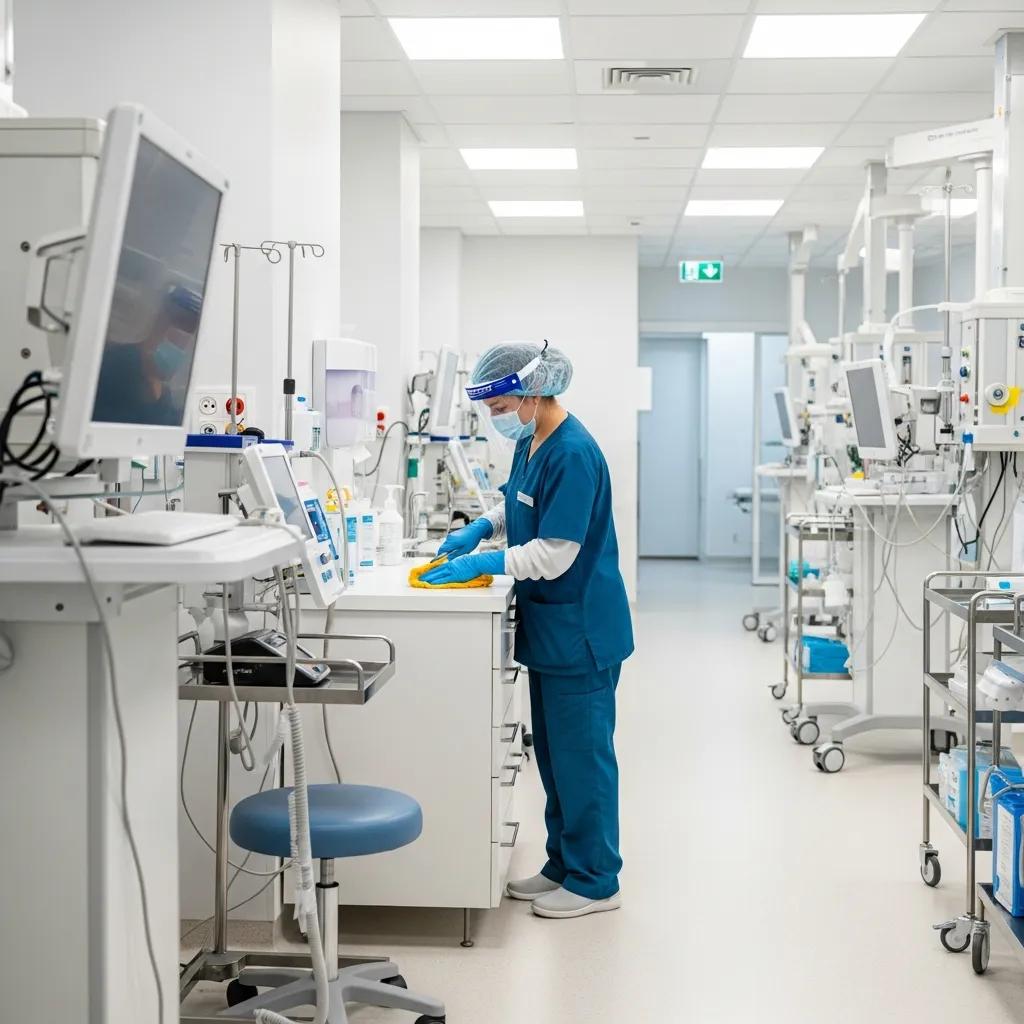
Specialised medical cleaning is a purpose-built discipline centred on pathogen control, surface decontamination and process-driven hygiene to prevent healthcare-associated infections (HAIs). Put simply: methodical cleaning removes reservoirs of microbes on high-touch surfaces and in clinical zones, cutting the chance of transmission and protecting vulnerable patients. That practical difference delivers clear benefits for patient safety, staff wellbeing, regulatory compliance and clinic reputation. Below are the main reasons clinics should make medical-grade cleaning a priority.
- Reduces exposure to pathogens for patients and staff through systematic surface and zone cleaning.
- Supports audit readiness with documented procedures and reliable record-keeping.
- Helps maintain operations by lowering staff sickness and appointment cancellations during outbreaks.
- Builds patient confidence through visible, consistent hygiene standards.
Specialised cleaning is preventative work that feeds directly into operational planning and risk reduction for clinic teams.
How does medical cleaning affect patient and staff safety?
Medical cleaning lowers infection risk by removing and inactivating microbes from surfaces, equipment surrounds and high-touch points like door handles, reception desks and treatment chairs. It pairs mechanical cleaning with chemical disinfection to break the chain of transmission that leads to HAIs. Industry data show that focused high-touch disinfection and scheduled deep cleans reduce surface bioburden and are linked with fewer infection incidents in ambulatory settings. Routine cleaning also cuts staff exposure to contaminated surfaces and bodily-fluid residues, reducing workplace illness and absenteeism. That’s why cleaning frequency, method and documentation matter for effective infection control.
What local health regulations apply to Buderim medical facilities?
Queensland Health guidance and national standards set expectations for disinfectant selection, clinical waste handling and record-keeping so clinics stay audit-ready and protect patients. Key themes include using approved disinfectants with validated contact times, secure segregation and handling of medical waste, and keeping cleaning logs or checklists for traceability. Clinics should be able to show staff training, documented procedures and supervision evidence during audits or accreditation reviews. Meeting these requirements supports clinical governance and reduces legal and reputational risk for Buderim practices.
What infection-control protocols does Divine Commercial Cleaning follow?
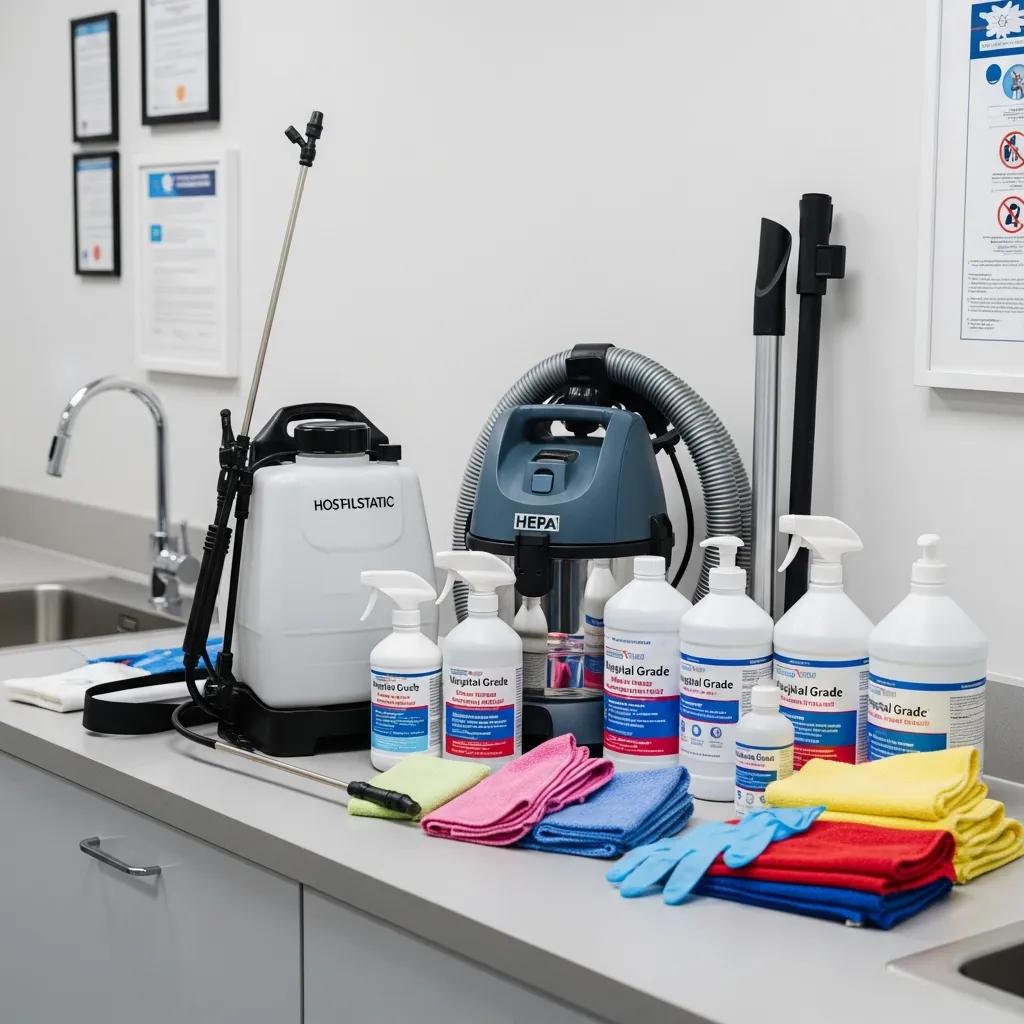
Effective medical cleaning blends sequential steps, high-touch prioritisation and quality checks to deliver consistent infection-control results across clinical settings. At the heart of our approach is a two-pass method—first remove soil, then apply targeted disinfection—to reduce microbial load and prevent cross-contamination. We also use complementary technologies, such as electrostatic sprayers and HEPA-equipped vacuums, selectively to improve coverage and particulate control where it’s appropriate. Quality control depends on supervisory audits, checklists and documented handovers so every task meets clinical standards and remains traceable.
Divine Commercial Cleaning applies these evidence-based practices in Buderim clinics through documented SOPs emphasising two-pass cleaning, high-touch focus and scheduled deep cleans. We combine proven application methods and equipment — using electrostatic sprayers for broad coverage in outbreak scenarios and HEPA filtration vacuums to manage particulates in treatment areas. Supervisory audits and checklists create a clear record of work and support audit-readiness, while communication protocols keep clinic managers informed of any incidents. For Buderim medical centres seeking a safety-focused provider, we offer tailored site assessments and a simple path to request a customised cleaning proposal.
The common infection-control protocols include:
- Two-pass cleaning: remove visible debris, then apply disinfectant to inactivate pathogens.
- High-touch prioritisation: frequent disinfection of patient chairs, switches, handles and reception surfaces.
- Periodic deep cleans and adjunct technologies such as electrostatic spraying for broad-surface coverage when needed.
These protocols underpin operational checklists and guide when advanced technologies are justified.
Introductory comparison of protocols and when to use each method follows in the table below.
| Protocol | Key Steps | Purpose / When to Use |
|---|---|---|
| Two-pass cleaning | Remove visible soil, then apply disinfectant with correct contact time | Routine daily cleaning and between patient appointments |
| Electrostatic spraying | Apply charged disinfectant mist for uniform surface coverage | Rapid decontamination of large or high-turnover areas during outbreaks |
| Manual high-touch wipe-downs | Targeted wiping of handles, switches, chairs with validated disinfectant | Continuous infection control in consult and treatment rooms |
| HEPA vacuuming | HEPA-equipped vacuuming of soft surfaces and particulate removal | Areas with aerosol-generating procedures or heavy particulate load |
Below is a focused comparison of disinfectant categories to help with product selection in clinical settings.
| Disinfectant Type | Efficacy (pathogens targeted) | Eco-friendly trade-offs |
|---|---|---|
| Hospital-grade (broad-spectrum) | Effective against bacteria, viruses and many spores when used per label | High efficacy; some formulations have stronger environmental impact or irritancy |
| Quaternary ammonium compounds | Effective against many bacteria and enveloped viruses | Lower environmental toxicity; limited sporicidal activity |
| Hydrogen peroxide-based | Broad-spectrum with good material compatibility | Biodegradable breakdown; slightly higher cost in some formulations |
| Eco-certified cleaners | Effective for low–medium risk areas; variable pathogen range | Lower environmental footprint but may need complementary hospital-grade use in sterile zones |
Which disinfection strategies prevent cross‑contamination in medical centres?
Preventing cross-contamination relies on clear zoning, correct sequencing and strict tool management so contaminants aren’t carried between clean and dirty areas. Zoning means starting in lower-risk public spaces and finishing in high-risk clinical zones; sequencing follows a one-way workflow from clean to dirty to reduce transfer. Colour-coded tools, single-use wipes in critical zones and correctly diluted disinfectant solutions with validated contact times further limit cross-transfer. Daily checklists and staff training reinforce these measures, and methods like electrostatic spraying are reserved for rapid, large-area disinfection when standard approaches aren’t enough. A layered approach like this produces predictable results and aligns cleaning with clinical risk.
- Zoning and sequencing prevent contaminants moving from high-risk to low-risk areas.
- Colour-coded equipment and single-use disposables limit pathogen carriage between zones.
- Correct disinfectant dilution and adherence to contact times ensure products work as intended.
- Routine supervision and documentation keep standards consistent and reveal deviations early.
These procedural controls lead naturally to questions about disinfectant choice and the balance between hospital-grade and eco-friendlier options.
How are hospital‑grade and eco‑friendly disinfectants used in Buderim clinics?
Disinfectant choice depends on risk level, surface compatibility and regulatory guidance. Hospital-grade agents are preferred in sterile or high-risk zones, while eco-certified options work well in public areas and for routine maintenance. Hospital-grade products give broad-spectrum activity needed near procedure areas but may have stronger odours or material considerations. Eco-certified cleaners reduce environmental impact and staff exposure and suit waiting rooms, admin areas and low-risk surfaces when used alongside documented protocols. Whichever product is chosen, recording the choice, safe handling steps and labelled contact times is essential for efficacy and Queensland Health compliance.
| Disinfectant Type | Common Use Case | Key Considerations |
|---|---|---|
| Hospital-grade broad-spectrum | Procedure rooms, instrument surrounds | Ensure material compatibility and staff PPE when used |
| Eco-certified formulations | Waiting areas, reception, public toilets | Use where pathogen risk is lower and follow with periodic hospital-grade deep cleans |
| Hydrogen peroxide systems | Mixed-use areas requiring material-safe options | Balances efficacy and environmental breakdown |
| Quats (when appropriate) | High-touch surfaces in clinical areas | Monitor for residue and ensure correct contact time |
How are cleaning services tailored for different Buderim medical facilities?
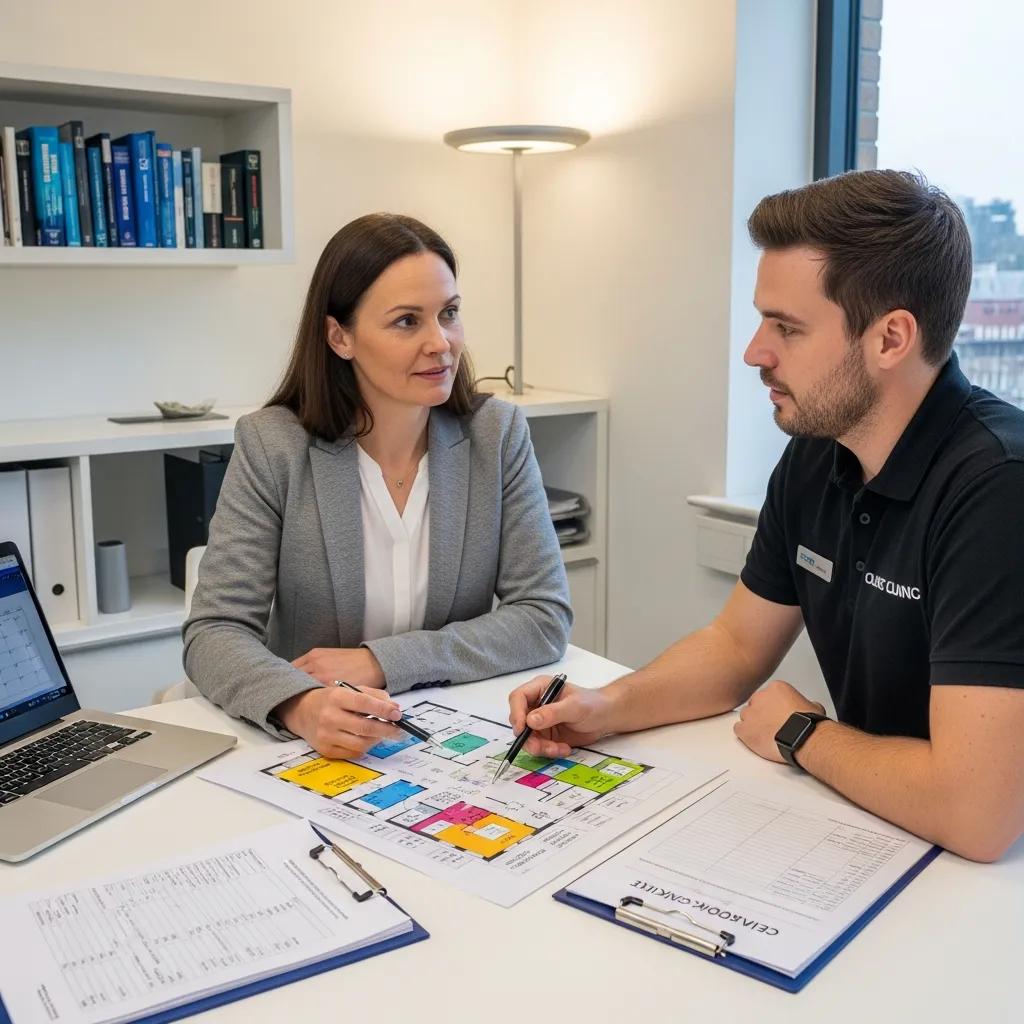
Customised cleaning plans match tasks, frequency and special requirements to each facility’s patient flow, clinical risk and equipment needs. Tailoring starts with a site assessment to identify high-touch zones, aerosol‑generating areas and clinical waste streams, then defines daily, weekly and periodic deep‑clean schedules. Staffing and process controls are adjusted to support between‑appointment cleans or after‑hours deep cleans depending on throughput. The outcome is a documented schedule that balances effectiveness, clinic operations and patient safety across different medical environments.
| Facility Type | Typical Cleaning Tasks | Frequency / Special Requirements |
|---|---|---|
| Doctors’ offices / GP clinics | Reception disinfection, consult room wipe‑downs, toilet sanitation | Daily high-touch cleans; between-appointment spot cleaning |
| Dental clinics | Operatory surface cleaning, suction and floor sanitation, aerosol control | Enhanced environmental cleaning around instrument areas; aligned with sterilisation workflows |
| Urgent care / After-hours clinics | Rapid turnover cleaning, waiting area management | Short turnaround processes and on-call cleaning capacity |
| Physiotherapy / Allied health | Mat and equipment sanitation, shower/toilet cleaning | Equipment wipe‑downs after each use; periodic deep cleans |
| Pathology centres | Counter and specimen-handling area cleaning | Strict surface disinfection protocols and immediate spill response procedures |
What are the cleaning needs of doctors' offices and GP clinics?
GP clinics need regular cleaning of reception, waiting areas and consult rooms to cope with patient turnover and maintain visible hygiene. High-touch points like check-in counters, tabletops, chairs and door handles require multiple daily wipe‑downs, and consult rooms are often cleaned between appointments. Weekly tasks include deeper floor work and upholstery attention, with periodic deep cleans to address hidden reservoirs. Scheduling between‑appointment cleans and using documented checklists keeps patient flow moving without compromising infection control.
How does dental clinic cleaning support sterilisation and hygiene?
Dental environmental cleaning supports—but does not replace—clinical instrument sterilisation. Teams focus on operatories, dental-chair surrounds and aerosol-prone surfaces to limit environmental contamination. Cleaning staff coordinate with clinicians to keep instrument-processing areas separate and avoid interfering with sterilisation procedures. Aerosol management includes frequent surface disinfection, timing to allow settling, and using HEPA‑equipped vacuums or air-handling controls where available. Clear role boundaries and close coordination ensure environmental cleaning complements instrument reprocessing without overlap.
What training and certifications do Divine Commercial Cleaning professionals have?
Reliable medical cleaning depends on ongoing staff training in infection control, correct PPE use, chemical handling and spill response to protect cleaners and clinical teams. Training covers two-pass cleaning, contact-time adherence, zoning and cross-contamination prevention, with competency checks and refresher modules to keep skills sharp. Supervisory audits and documented competency records support continuous improvement and provide evidence for client audits. A focus on training builds a safety-first culture where cleaning teams understand clinical priorities and adapt procedures to support patient care.
- Infection-control procedures and high-touch disinfection techniques.
- Correct PPE selection and donning/doffing procedures.
- Chemical safety, dilution control and contact-time compliance.
- Spill and biohazard response with clear escalation protocols.
These competencies produce measurable safety benefits and give clinics confidence in cleaning outcomes.
How does staff training improve biohazard handling and safety?
Scenario-based training prepares staff to handle biohazards correctly—spills, containment, safe disposal and escalation to clinical teams when needed. Drills and competency checks ensure cleaners can don PPE, isolate affected areas and follow documented spill protocols while minimising exposure. Regular refresher training keeps skills current and ensures new product label instructions or procedural updates are applied in daily work. Documented competency results and refresher schedules create an audit trail clinics can rely on during compliance reviews and help maintain a consistently safe environment.
Why is certification important for medical cleaning in Buderim?
Certifications vary by jurisdiction, but documented, industry-recognised training demonstrates a provider’s ability to meet clinical expectations and support procurement or tender processes. Certification reassures clinic managers that staff training is formalised and reviewed, boosting confidence during audits and tenders. It also promotes standardised procedures, periodic reassessment and external validation where appropriate. For Buderim clinics, working with a provider that records training and competency supports governance and reduces procurement friction.
Why choose Divine Commercial Cleaning for Buderim medical centre hygiene?
Choosing a local, healthcare-focused provider delivers practical benefits: knowledge of regional guidance, faster response times and scheduling that minimises clinic disruption. Divine Commercial Cleaning is family-owned and based in Maroochydore, QLD, offering commercial cleaning across the Sunshine Coast and Brisbane, plus specialised Medical/Health Centre cleaning for Buderim. We focus on quality, customer satisfaction and experienced cleaners, offering tailored solutions without lock-in contracts and with a satisfaction guarantee. Our eco-conscious choices are balanced with evidence-based methods so clinics get both sustainability and clinical effectiveness.
- Local presence for faster on-site response and familiarity with Queensland Health expectations.
- Customised services with no lock-in contracts to suit changing patient volumes.
- Satisfaction guarantee and experienced cleaners for consistent delivery.
- Eco-conscious methods used where appropriate to reduce environmental impact without compromising safety.
These strengths help clinic managers choose a reliable, compliant cleaning partner and lead into practical scheduling and reporting options.
How does local expertise improve cleaning reliability and compliance?
Local expertise means teams understand regional regulatory expectations and common clinic layouts on the Sunshine Coast, allowing more accurate scoping and faster audit responses. Familiarity with local suppliers reduces downtime for replacements or specialised products, and a nearby presence improves responsiveness for urgent cleaning. Providers with regional experience can offer better audit support, documentation and process tweaks that reflect current Queensland Health guidance. That local knowledge translates into dependable, compliant cleaning services for medical centres.
What flexible scheduling and communication options are available?
Flexible scheduling covers after‑hours deep cleans, between‑appointment rapid sanitisation and on‑call response for incident cleans, so clinics can balance throughput with hygiene needs. Communication options include daily checklists, digital reporting for audit trails and supervisor sign-offs to provide transparency. Emergency protocols and escalation pathways ensure urgent decontamination is handled quickly and communicated to clinic managers. These scheduling and reporting choices let clinics pick a model that matches their size, patient flow and risk profile.
How can Buderim medical centres request a customised cleaning quote?
Requesting a customised cleaning quote is a simple three-step process that aligns scope with clinical risk and operational needs. First, share basic clinic details and contact information so we can prepare an initial scope. Second, schedule a site assessment—on-site or remote—to review floorplans, patient flow and high-risk zones for an evidence-based proposal. Third, receive a tailored quote that outlines scope, recommended frequency, compliance notes and a proposed start timeline.
- Contact: Share clinic details and cleaning priorities to start the scoping process.
- Site Assessment: Arrange an on-site or remote assessment to identify risks and tailor the proposal.
- Quote & Start Plan: Receive a detailed proposal with scope, frequency, compliance considerations and scheduling options.
This clear pathway moves clinics from enquiry to an operational cleaning program with documented expectations and timelines.
What is the process for getting a free quote from Divine Commercial Cleaning?
To request a customised proposal, start by contacting us with basic operational details and objectives so we can scope your needs. We’ll then arrange a site assessment—either in person or via floorplan review—to evaluate patient flow, high-touch zones and waste handling. After assessment, Divine Commercial Cleaning prepares a tailored proposal outlining service scope, recommended frequencies and compliance documentation to support audit readiness. Clinics review the proposal and schedule service commencement based on agreed timelines and any special requirements.
Which FAQs address common concerns about medical cleaning services?
- How often should high-touch surfaces be disinfected in a GP clinic? High-touch surfaces should be disinfected several times a day, with extra wipe‑downs between appointments during busy periods. This keeps surface bioburden low and supports patient safety.
- Are eco-friendly disinfectants adequate for clinical areas? Eco-friendly disinfectants are suitable for low- to medium-risk zones like waiting rooms, but hospital-grade agents are recommended for procedure rooms and areas near instrument processing. Use a documented mix of products where needed.
- How is medical waste handled during cleaning visits? Cleaning teams follow clinic procedures for segregation and temporary containment; final disposal is managed according to clinical waste policies. Clear boundaries between cleaning and clinical disposal tasks are essential.
- What happens during an urgent or outbreak clean? Providers use rapid-response protocols—zoning, intensified disinfection such as electrostatic spraying, and thorough documentation—to restore safe operations and keep clinic managers informed.
Frequently Asked Questions
What are the benefits of using eco-friendly cleaning products in medical facilities?
Eco-friendly cleaners reduce environmental impact and lower exposure risks for staff and patients. They’re often gentler than some traditional disinfectants, which can be helpful around vulnerable people. Using eco-certified products can also enhance a clinic’s community reputation. It’s important, however, to confirm their effectiveness for the pathogens present in clinical settings—often a combination of eco-friendly and hospital-grade products gives the best overall protection.
How can clinics ensure compliance with cleaning protocols?
Clinics ensure compliance by running regular training for cleaning staff, keeping detailed records of cleaning activities and performing routine audits. Clear standard operating procedures (SOPs) that spell out tasks, frequencies and methods are essential. Encouraging a culture of accountability—where staff understand why procedures matter—and providing regular feedback helps maintain high standards and meet health regulations.
What role does technology play in modern medical cleaning services?
Technology improves both effectiveness and efficiency. Electrostatic sprayers help deliver even disinfectant coverage; HEPA vacuums manage airborne particulates in high-risk areas; and digital tools track schedules and document compliance. Together, these technologies support better infection control and make operations easier to monitor and report.
How often should deep cleaning be performed in medical facilities?
Deep-clean frequency depends on the facility type, patient volume and infection risk. High-traffic and higher-risk areas typically need a deep clean at least monthly, but frequency should increase during outbreaks or after specific incidents. Regular reviews of cleaning effectiveness and patient-safety metrics help set the right schedule for each clinic.
What should clinics look for when choosing a cleaning service provider?
When choosing a provider, look for medical-cleaning experience and an understanding of healthcare regulations. Ask for evidence of staff training and certifications, details of cleaning protocols and the disinfectants and equipment used. Check reputation via reviews or references, and confirm flexible scheduling that fits clinic operations.
How can clinics effectively manage cleaning during high patient turnover periods?
Manage high turnover by scheduling frequent wipe‑downs of high-touch points between appointments, using dedicated cleaning staff during peak times and considering rapid-response methods like electrostatic spraying for larger areas. Clear communication between clinical and cleaning teams ensures cleaning tasks don’t disrupt patient flow while keeping the environment safe.
Specialised medical cleaning in Buderim is essential for patient safety, regulatory compliance and smooth clinic operations. Tailored cleaning protocols reduce infection risk and improve the hygiene environment. If you’re looking for reliable, effective cleaning solutions, Divine Commercial Cleaning provides customised plans to meet your clinic’s needs. Contact us today to discuss how we can support your medical facility’s cleaning requirements.

Dianne, originally from Rockhampton, hails from a business-oriented family, with her father owning electrical stores and her uncle serving as Mayor. Moving to the Sunshine Coast at 13, she later pursued a rewarding real estate career and raised three children. As a single mom, she balanced university studies with domestic cleaning work. Armed with a Bachelor’s Degree in Business, majoring in Supply Chain Management, Dianne founded and grew Divine Commercial Cleaning into a thriving company. Her success is rooted in strong family mentorship, a positive attitude, and a solution-oriented approach, offering tailored cleaning services with integrity and strategic insight.