Professional Commercial Carpet Cleaning for Office Spaces in Brisbane and Sunshine Coast
Professional commercial carpet cleaning for office spaces removes deep-seated soils and allergens while restoring appearance and supporting a healthier workplace; this service improves indoor air quality, reduces replacement costs, and presents a more professional image for clients and staff. This article explains what office carpet cleaning involves, why it matters for workplace health and brand perception, how modern commercial methods differ, and how a tailored program can reduce downtime for busy Brisbane and Sunshine Coast offices. Readers will learn about advanced methods such as hot water extraction and low-moisture systems, when each is appropriate, practical scheduling and quality-assurance steps, and the main cost drivers that determine quotes. For organisations seeking an efficient, reliable partner, Divine Commercial Cleaning provides local, customised commercial carpet cleaning add-ons designed to support facility maintenance and employee wellbeing. The following sections map benefits, methods, customisation, step-by-step workflow, pricing considerations, and common buyer questions so facility managers can make informed decisions about corporate carpet care.
Why Is Professional Office Carpet Cleaning Essential for Your Business?
Professional office carpet cleaning is a specialised facility maintenance service that removes embedded dust, allergens, oils and microbial growth from carpet fibres, improving indoor air quality and prolonging carpet lifespan. Effective cleaning works by combining mechanical agitation, targeted pre-treatment agents, and extraction to lift soils the vacuum cannot remove, which reduces allergen load and lowers airborne particulate counts in occupied spaces. Investing in professional commercial carpet cleaning yields measurable benefits for employee health, client impressions and total cost of ownership by reducing replacement needs and supporting compliance with workplace hygiene standards. This section summarises evidence-based benefits and provides a semantic triple table to clarify how cleaning actions translate to outcomes for businesses. Understanding these direct links helps procurement and facilities teams prioritise scheduled maintenance and select appropriate methods for traffic zones.
Office carpet cleaning impacts three primary business concerns: health, image, and operating cost. The next paragraphs break these benefits into actionable points and evidence-backed mechanisms to guide decision-making for corporate cleaning programs.
Different stakeholders experience distinct advantages from professional cleaning:
- Improved indoor air quality: Professional cleaning removes trapped allergens and particulates, reducing respiratory irritants for employees.
- Enhanced professional appearance: Clean carpets present a polished image in reception and meeting rooms, influencing client perception.
- Extended asset life: Regular deep cleaning slows fibre breakdown and delays costly carpet replacement.
- Reduced sick days and higher productivity: Lower allergen loads correlate with fewer symptom days for sensitive staff.
These benefits point directly to implementation choices—next we detail how carpet cleaning removes pollutants and impacts health in practice.
| Entity | Attribute | Benefit |
|---|---|---|
| Commercial carpet cleaning | Removes allergens and dust | Improves indoor air quality and reduces respiratory irritants |
| Deep-extraction cleaning | Extracts oils and soils from fibres | Extends carpet lifespan and delays replacement costs |
| Scheduled maintenance program | Regular cleaning intervals | Preserves appearance and supports professional image |
This table clarifies how specific cleaning actions translate into operational benefits for offices. The relationships above show why cleaning is a cost-effective part of facility maintenance and lead naturally into how cleaning reduces airborne contaminants and supports employee health.
How Does Carpet Cleaning Improve Indoor Air Quality and Employee Health?
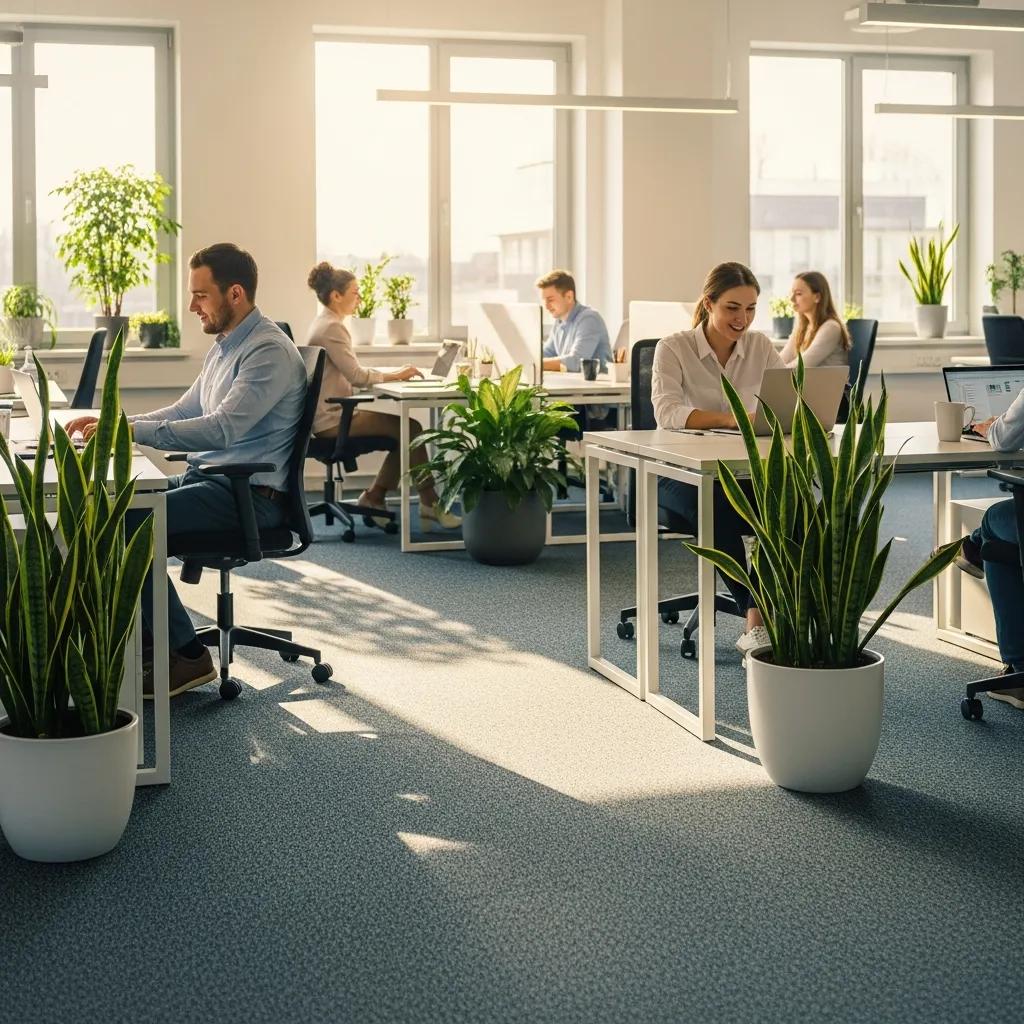
Carpets trap dust, pollen, skin cells and microscopic particulates that become respirable when disturbed, which increases occupant exposure to allergens and irritants. Professional deep cleaning removes a large proportion of these trapped particles by using targeted pre-treatments and mechanical extraction, which reduces the reservoir of allergens that re-enter the air during daily activity. Reduced allergen load can lower the frequency and severity of symptoms for sensitive employees, contributing to fewer sick days and improved productivity; current research supports links between improved indoor air quality and reduced absenteeism in commercial settings. Implementing a regular cleaning schedule tailored to traffic levels helps maintain lower particulate levels over time and supports a healthier indoor environment.
Understanding how cleaning affects air quality leads to considering how visual cleanliness also shapes client and staff perceptions in the workplace.
In What Ways Does Clean Carpets Enhance Your Office's Professional Image?
Clean carpets create an immediate visual cue of care and professionalism in client-facing areas such as reception, meeting rooms and collaboration spaces, directly influencing first impressions and perceived service quality. Stains, matting and visible wear undermine brand confidence and can suggest neglect, while well-maintained flooring reinforces organisational standards and supports brand presentation during meetings. Beyond visual cues, maintained carpets support staff morale by creating a more pleasant and comfortable workspace, which indirectly affects employee retention and daily performance. For facility managers, aligning cleaning schedules with client events and peak business hours ensures the premises consistently reflect brand values and operational excellence.
Transitioning from appearance to method, the next section explains the advanced cleaning methods used in commercial settings and how each fits specific office needs.
What Advanced Commercial Carpet Cleaning Methods Do We Use?
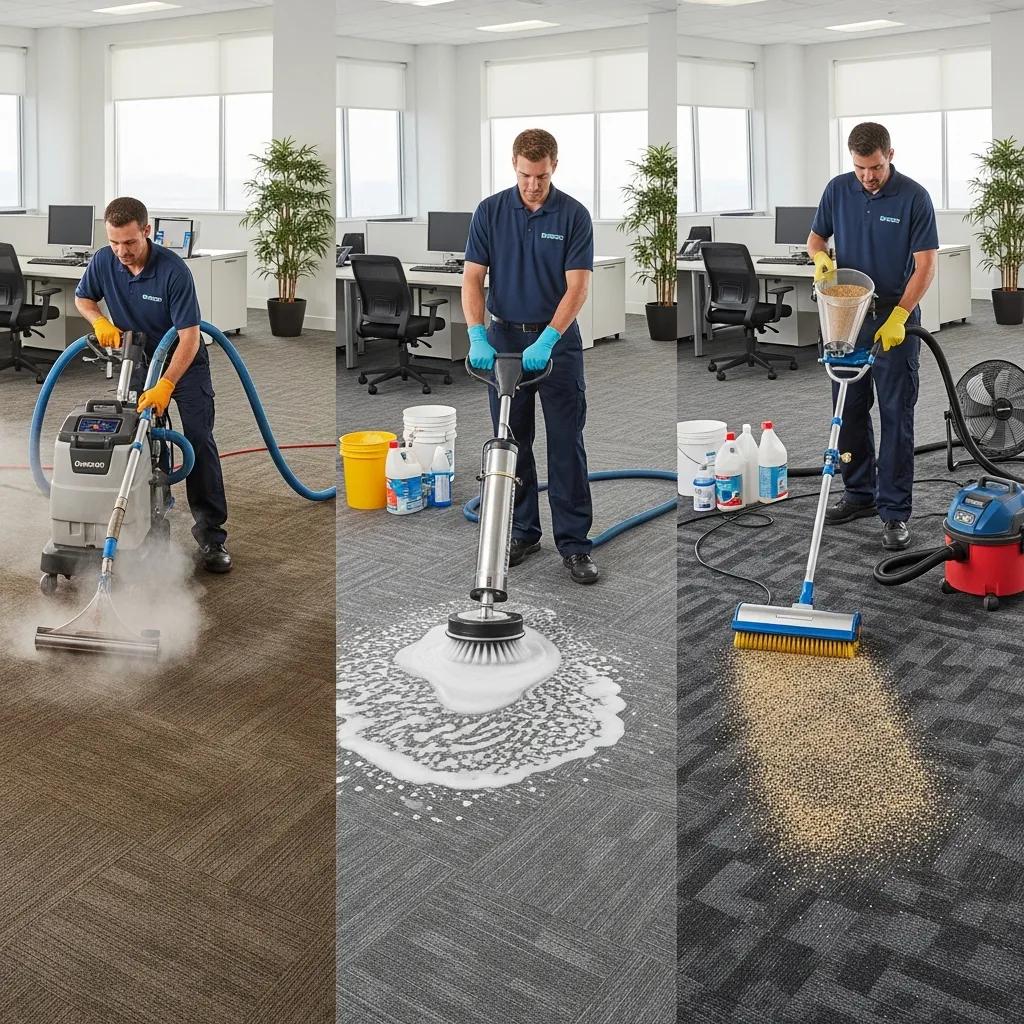
Advanced commercial carpet cleaning methods balance cleaning power, drying time and environmental impact to suit different office contexts, ranging from closed meeting spaces to busy open-plan areas. The main approaches include hot water extraction (steam cleaning) for deep soil removal, low-moisture systems for rapid turnaround, and dry cleaning options for delicate fibres or sensitive environments. Choosing the right method requires assessing fibre type, soil load, occupancy patterns and access constraints; matching method to situation reduces downtime while maximising soil removal and odour neutralisation. Below is a comparative table to help facility managers weigh typical use-cases, drying time and suitability so they can select an approach that aligns with operational needs.
Commercial carpet cleaners often combine methods—using low-moisture for quick touch-ups and hot water extraction for periodic deep cleans—to create a balanced maintenance program that minimises disruption.
| Method | Typical Use-case | Drying Time | Best For |
|---|---|---|---|
| Hot water extraction (steam) | Deep periodic cleaning of high-traffic areas | 6–12 hours (dependent on ventilation) | Heavily soiled carpets, allergen reduction |
| Low-moisture cleaning | Same-day service for operational areas | 30 minutes–2 hours | Busy offices, multi-shift operations |
| Dry cleaning (encapsulation) | Light maintenance and quick service | <1 hour | Sensitive equipment rooms, rapid turnaround needs |
This table outlines practical trade-offs and clarifies why method selection is a core decision for facility maintenance strategies. With method choices clear, the following subsections explain the mechanics and benefits of steam and low-moisture approaches in more detail.
How Does Steam Carpet Cleaning Deeply Refresh Office Carpets?
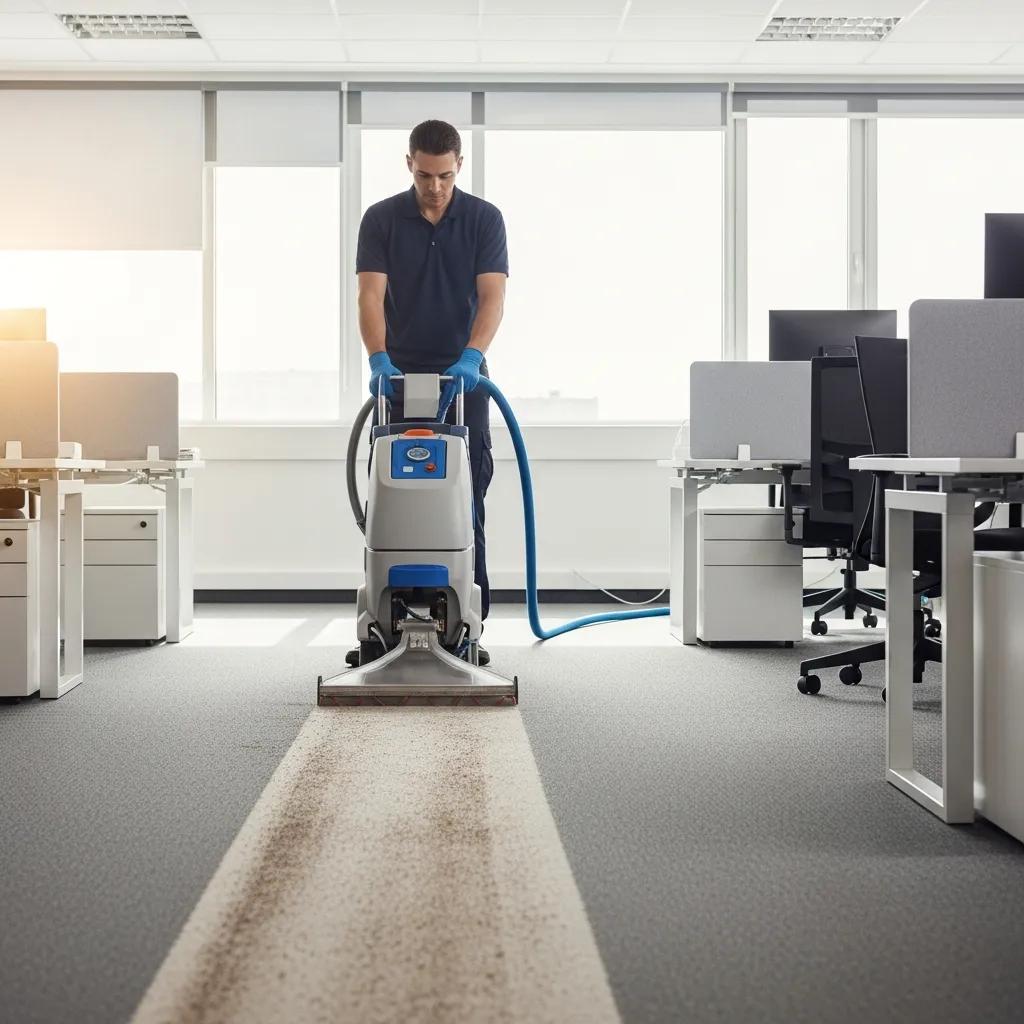
Hot water extraction—commonly called steam cleaning—works by applying hot water and approved cleaning solution under pressure to loosen soils, then extracting the suspension with high-powered extractors to remove contaminants from the pile. This mechanised process reaches deep into carpet fibres and backing, dissolving oils and lifting particulates that vacuuming cannot address, making it effective for restorative cleaning cycles. Typical drying times are longer than low-moisture options, often six to twelve hours, so scheduling after-hours or on low-occupancy days minimises disruption. Best-practice includes pre-inspection, targeted pre-treatment of stains, and post-cleaning inspection to verify soil removal and advise on maintenance intervals.
Having examined deep extraction, it’s important to compare that approach with faster, eco-friendly methods that suit busy workplaces.
What Are the Benefits of Low-Moisture and Eco-Friendly Cleaning Techniques?
Low-moisture cleaning methods use minimal water and encapsulating agents or specialised pads to remove surface soils quickly and allow near-immediate reoccupation of areas, making them ideal for busy offices and multi-shift facilities. These techniques consume less water, produce lower wastewater and reduce energy associated with drying, aligning with eco-friendly practices and local environmental expectations for Brisbane and Sunshine Coast operations. While low-moisture systems are faster, they are most effective for maintenance cleaning and light to moderate soiling rather than deeply embedded contamination, so pairing them with periodic hot water extraction delivers comprehensive results. Selecting certified low-VOC products and proper application protocols ensures safety for sensitive environments like medical centres and childcare areas.
The method selection above informs how a customised service plan should be structured—next we explain how Divine Commercial Cleaning personalises carpet programs for offices.
How Does Divine Commercial Cleaning Customise Office Carpet Cleaning Services?
Divine Commercial Cleaning builds customised commercial carpet cleaning plans that balance cleaning method, frequency and scheduling to match office traffic patterns, operational constraints and environmental preferences. Customisation begins with a targeted assessment of high-traffic zones, fibre types and stain history, then recommends a mix of low-moisture maintenance and periodic hot water extraction where necessary to control allergens while minimising downtime. As a family-owned, locally focused provider serving Brisbane and the Sunshine Coast, Divine Commercial Cleaning emphasises consistent staffing (same cleaner for continuity), police-checked professionals, full insurance and no lock-in contracts to give businesses flexibility and trust in service delivery. These trust signals and the company’s money-back guarantee support reliable outcomes and make it straightforward for facility managers to trial or adjust programs.
For organisations ready to convert assessment into action, the next paragraphs describe reliability features and eco-friendly tailoring in more detail, while showing how to request a tailored quote.
The following list highlights differentiators Divine Commercial Cleaning uses to tailor services:
- Family-owned and operated: Personalised attention and responsiveness to local business needs.
- Same cleaner policy: Consistency of technicians for predictable quality and relationship.
- No lock-in contracts and money-back guarantee: Flexibility and client protection for service satisfaction.
These differentiators underpin customised plans and lead naturally into the reliability measures the company uses in the field.
What Makes Our Experienced and Police-Checked Professionals Reliable?
Reliability begins with careful vetting: all technicians undergo police checks and are covered by commercial insurance, ensuring safe access to client premises and protecting workplaces during service. Staff receive ongoing training on modern cleaning equipment—extractors, truck-mount systems and low-moisture applicators—and on eco-friendly product use to ensure effective and compliant application across different office environments. The same-cleaner policy maintains continuity so technicians familiarise themselves with site-specific risks, traffic patterns and stain histories, enabling faster, more consistent results on repeat visits. Regular performance reviews, documented service records and client walkthroughs further support consistent outcomes and quick remediation when necessary.
These personnel and training practices support environmentally conscious service choices tailored to local conditions, which we outline next.
How Do We Tailor Eco-Friendly Solutions for Brisbane and Sunshine Coast Offices?
Tailoring eco-friendly solutions involves selecting low-VOC, non-toxic cleaning agents, using low-moisture techniques when appropriate, and scheduling work to reduce energy use and water consumption in line with regional priorities. For coastal and subtropical climates, timing extraction to avoid humid peak hours improves drying times and reduces microbial risk, while using encapsulation for quick-turn areas reduces water and wastewater. The company avoids harsh chemistries, favouring biodegradable agents that neutralise odours without leaving residues that attract soils, which benefits medical centres, schools and childcare facilities with higher sensitivity to residues. Communicating environmental choices and providing documentation on products used helps procurement teams demonstrate environmental stewardship.
These customisation elements lead into the operational workflow: the step-by-step process used from consultation to quality assurance.
What Is the Step-by-Step Process for Commercial Carpet Cleaning in Offices?
A structured four-step process ensures predictable outcomes for commercial carpet programs: consultation and assessment, tailored plan development, methodical execution, and post-service quality assurance with follow-up scheduling. The initial assessment documents traffic zones, materials and stains, and informs whether low-moisture maintenance or hot water extraction (or a hybrid) is most appropriate for each area. Execution uses trained technicians and appropriate equipment with safety and access protocols to minimise disruption, followed by documented inspection and client walkthrough to confirm results and schedule the next maintenance window. This clear workflow aligns expectations, helps control costs over the asset lifecycle and supports continuous improvement based on documented outcomes.
Below is a numbered list that lays out the operational steps in an actionable format.
- Initial consultation and site survey to document traffic patterns, carpet types and stain history.
- Custom plan development that specifies methods, frequency and scheduling to match operations.
- Execution by trained technicians using the selected methods, plus targeted stain and odour treatment.
- Post-service inspection, client walkthrough, documentation and scheduling of follow-up maintenance.
This stepwise approach makes it easier for facility managers to plan around business hours and ensures the next topic—how assessments are conducted—follows naturally.
How Do We Conduct Initial Consultation and Assessment?
Consultations begin with an on-site survey that maps square metres, identifies heavy-traffic zones and records visible stains and potential access constraints, forming a baseline for customised proposals. Technicians note fibre types, underlay conditions and any special requirements—such as after-hours access or proximity to sensitive equipment—and discuss preferred scheduling windows to reduce operational impact. Photographic documentation and basic floorplans speed quote generation and improve accuracy for larger sites, while sample test cleans may be recommended for older or heavily soiled carpets to validate method selection. Typical lead times for scheduling vary by workload and access needs, but providing floorplans and photos upfront accelerates the quoting process.
A clear assessment informs quality assurance measures that confirm results and preserve service standards.
What Quality Assurance Measures Ensure Excellent Cleaning Results?
Quality assurance begins with a documented inspection checklist used before and after cleaning to validate compliance with the agreed plan and to capture any rework needs, ensuring transparency for facility managers. Post-clean walkthroughs allow clients to confirm areas of concern and to sign off on work or request remediation under the rework policy, which is supported by the company’s satisfaction and money-back guarantees. Technicians record services performed, chemicals applied and any recommendations for interim maintenance, providing a service history that supports long-term budgeting and lifecycle planning. Rapid response to any issues and scheduled follow-ups maintain consistent standards and reduce the risk of recurring problems.
These QA steps naturally tie into cost considerations, which determine how programs are priced and quoted for Brisbane-area offices.
How Much Does Commercial Carpet Cleaning Cost for Office Spaces in Brisbane?
Commercial carpet cleaning pricing is influenced by square metres cleaned, traffic level and soil complexity, access and logistics, and requested scheduling (standard hours vs after-hours). Typical indicative ranges depend on method and scale—low-moisture maintenance for moderate traffic is priced differently than a full hot water extraction of a high-traffic open-plan area—so facility managers should expect quotes that reflect both area and complexity. Transparent communication of pricing drivers helps buyers compare proposals and align budgets with outcomes; below is a table explaining common cost factors and their typical price impacts to demystify quotes. For a free, no-obligation quote, Divine Commercial Cleaning accepts requests by phone, email or local business profile and asks for square metres, photos/floorplans and preferred access windows to speed the process.
Understanding these factors helps organisations anticipate budget needs and choose the most cost-effective mix of maintenance and restorative cleaning.
| Factor | What It Means | Typical Impact on Price |
|---|---|---|
| Square metres | Total area to be cleaned | Directly proportional to labour and materials |
| Traffic level | Low, medium, high usage zones | Higher traffic increases labour and method intensity |
| Stain complexity | Presence of set-in stains/odours | Requires extra pre-treatment and time, raising costs |
| Access & scheduling | After-hours or difficult access | May add labour premiums or logistics charges |
This EAV table clarifies why two seemingly similar offices can receive different quotes; next we unpack specific pricing factors with examples and then explain how to request a free quote.
What Factors Influence Pricing for Office Carpet Cleaning Services?
Square metres and layout complexity determine baseline time and materials; an open-plan office allows continuous workflows, whereas many small rooms increase setup time per room and therefore cost. Levels of soiling and stain complexity require stronger pre-treatment and possibly multiple passes, increasing labour and chemical use; older or neglected carpets often need restorative extraction that carries higher one-off costs. Access constraints—such as parking, equipment lift access or after-hours requirements—add logistical complexity and potential surcharge. Choosing a method appropriate to traffic and schedule (e.g., low-moisture for same-day occupancy vs hot water extraction for deep cleaning) also influences the final quote and should be discussed during the assessment.
These pricing dynamics determine why providing specific site information speeds up accurate quoting—details on how to request that quote follow next.
How Can You Get a Free Quote from Divine Commercial Cleaning?
To obtain a free quote, provide a few key details: approximate square metres, photos or a simple floorplan highlighting high-traffic zones, preferred days/times for service and any after-hours access needs; these items allow a prompt, tailored estimate. Contact options include telephone or the company email address to initiate a site assessment request, and technicians will follow up to confirm availability and next steps; expect a timely response when full site information is supplied. Including notes on desired frequency (one-off deep clean vs recurring maintenance) and any special concerns—like odour issues or medical-suite requirements—helps align the proposal with operational priorities. The free-quote process aims to minimise back-and-forth and produce an accurate scope so facilities teams can make budgeted decisions quickly.
Providing clear information up-front reduces estimate variability and speeds scheduling, which leads sensibly into answering common operational questions facility managers ask.
What Are the Most Common Questions About Office Carpet Cleaning?
Facility managers frequently ask about cleaning frequency, stain and odour removal expectations, and the safety of cleaning agents for sensitive environments; providing concise, actionable answers helps set realistic expectations and plan maintenance. This section addresses those core questions with practical guidance that aligns with current industry practice and offers maintenance tips to extend results between professional visits. Clear answers reduce scope creep and help procurement compare bids on equivalent specifications rather than price alone. The following FAQ-style subsections present direct recommendations for scheduling and realistic outcomes for stain and odour remediation.
The first question concerns how frequently offices should schedule professional cleaning, which depends on traffic and industry-specific hygiene needs.
How Often Should Office Carpets Be Professionally Cleaned?
Recommended cleaning intervals vary by traffic: low-traffic offices may follow an annual deep-clean cycle while medium-traffic corporate spaces often benefit from six- to twelve-month cleaning, and high-traffic areas or regulated sectors (medical centres, childcare facilities) may require quarterly or more frequent maintenance. Between professional visits, regular vacuuming with commercial-grade vacuums and spot-treatment protocols extend carpet life and maintain appearance. Seasonal considerations—such as peak pollen periods or post-event cleanups—may prompt ad-hoc service to protect indoor air quality and client-facing presentation. Establishing a traffic-based maintenance plan reduces long-term costs by preventing severe soil accumulation that demands restorative treatments.
Clear scheduling guidance supports procurement planning and transitions into realistic expectations for stain and odour removal outcomes.
Do Commercial Carpet Cleaners Remove All Stains and Odors?
While professional cleaners significantly improve most stains and odours, complete removal depends on factors such as stain age, chemical composition, prior treatments and fibre degradation; some set-in stains or long-standing odours may require multiple interventions or partial remediation. Technicians assess stain chemistry (protein, dye, oil-based) and choose targeted pre-treatments combined with extraction or enzymatic neutralisers to maximise success, and they will document expected outcomes during the quote. In cases of irreversible fibre damage or deeply embedded contamination, remediation advice may include spot replacement or more intensive restorative work; preventive maintenance and prompt spot response are the best strategies to avoid irreversible staining. Clear communication about realistic expectations and documented results helps clients decide between remediation and replacement.
These practical expectations round out the primary concerns facility managers have when planning commercial carpet care and complete the article’s coverage.

Dianne, originally from Rockhampton, hails from a business-oriented family, with her father owning electrical stores and her uncle serving as Mayor. Moving to the Sunshine Coast at 13, she later pursued a rewarding real estate career and raised three children. As a single mom, she balanced university studies with domestic cleaning work. Armed with a Bachelor’s Degree in Business, majoring in Supply Chain Management, Dianne founded and grew Divine Commercial Cleaning into a thriving company. Her success is rooted in strong family mentorship, a positive attitude, and a solution-oriented approach, offering tailored cleaning services with integrity and strategic insight.