Comprehensive Commercial Office Cleaning Checklist and Standards for Australian Businesses
A commercial office cleaning checklist is a structured set of tasks and standards that keeps workplaces safe, hygienic and compliant with Australian workplace requirements. This guide explains what a robust office cleaning checklist looks like, why it matters for health and productivity, and how to implement standards that align with WHS obligations and contemporary commercial cleaning quality assurance. Many businesses struggle to balance daily hygiene routines with less-frequent deep-clean activities while maintaining records for audits and employee safety; a practical checklist closes that gap and reduces infection risk, absenteeism and reputational harm. In the sections that follow we define essential daily, weekly and monthly tasks, map WHS obligations to actionable cleaning controls, outline disinfection protocols for high-touch surfaces, show how to customise checklists by sector and present quality assurance processes that sustain consistent standards. Local operators such as Divine Commercial Cleaning provide downloadable checklist templates, client-portal delivery of post-clean records and tailored cleaning scopes for Sunshine Coast and Brisbane clients, offering a practical pathway from checklist design to verified delivery.
What Are the Essential Tasks in a Commercial Office Cleaning Checklist?
An essential commercial office cleaning checklist groups tasks by frequency and area to maintain hygiene, appearance and regulatory compliance. The checklist translates risk into repeatable actions—daily sanitisation of high-touch zones reduces transmission risk, weekly maintenance stops accumulation of dirt and allergens, and monthly deep cleans protect long-term assets like carpets and sealed floors. A practical checklist also assigns responsibility, recommends products and documents completion to create an audit trail that supports WHS reporting and operational continuity. Below we break down the core daily tasks and then outline the deeper weekly and monthly activities that protect staff health and infrastructure while preserving brand presentation.
Which Daily Cleaning Tasks Ensure Workplace Hygiene and Safety?
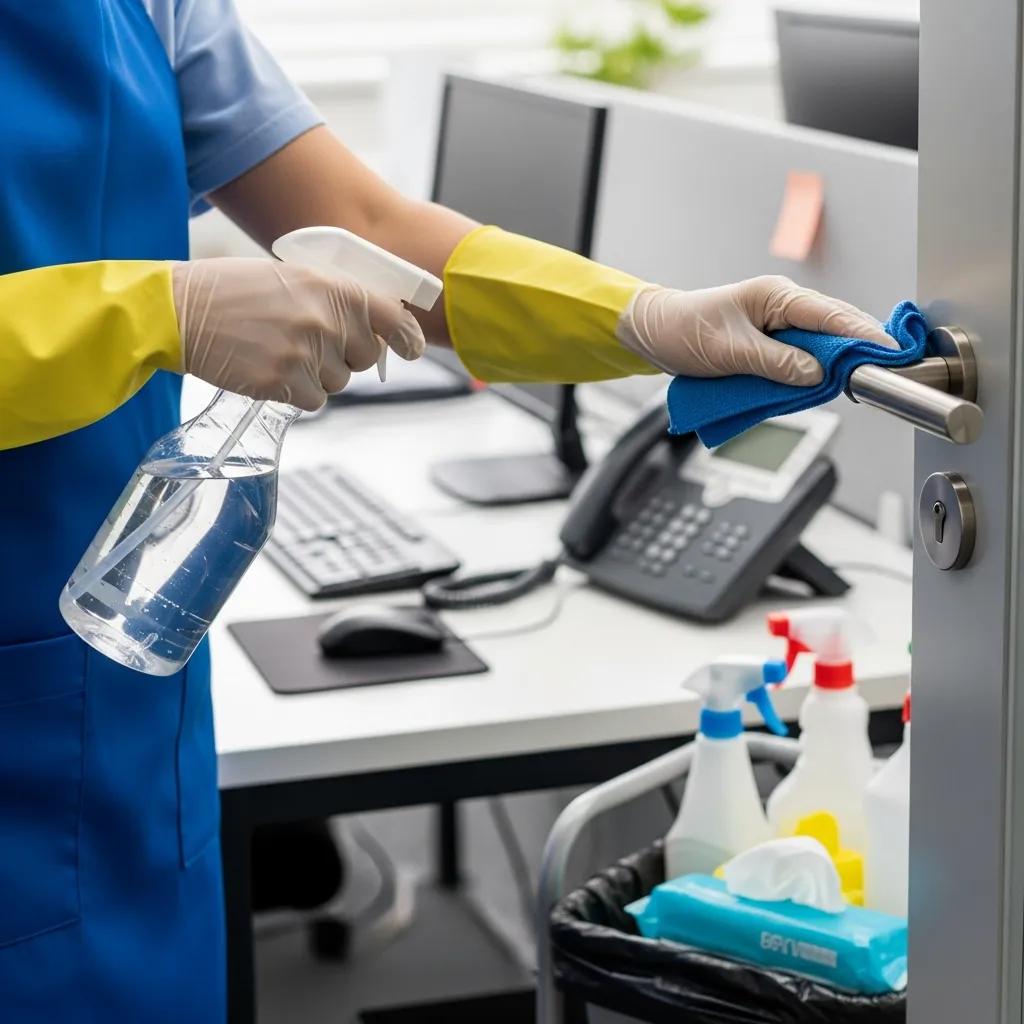
Daily cleaning focuses on preventing transmission and keeping communal areas functional through consistent, short-duration tasks. High-priority items include disinfecting high-touch surfaces such as door handles and shared devices, emptying and sanitising bins, wiping and sanitising kitchen and pantry surfaces, and quick desk tidies where appropriate; these control reservoirs for pathogens and minimise cross-contamination. Daily floor care—sweeping, vacuuming with HEPA-filtered vacuums in carpeted areas and damp-mopping hard floors—reduces particulates that affect indoor air quality and staff comfort. Cleaning staff should also replenish consumables (hand soap, paper towels), check sanitary bins in restrooms and report any maintenance issues like leaks or damaged seals that impact hygiene. After-hours scheduling is recommended for disruptive tasks to avoid interrupting business operations while maintaining consistent daytime standards.
Daily hygiene tasks include these practical activities:
- Disinfect high-touch surfaces such as handles, switches and shared screens at least once per business day.
- Empty and sanitise bins; replace liners and ensure waste streams are separated according to site policy.
- Wipe and sanitise kitchen benches, sinks and shared appliances after peak use periods.
- Vacuum or sweep and damp-mop floors to remove debris and reduce airborne particulates.
Daily routines control immediate hygiene risks and set the stage for weekly maintenance and monthly deep-clean activities.
Intro to the compact task-frequency reference table and how to use it: the table below lists the most common cleaning tasks, a recommended frequency, and a simple standard or product recommendation plus a suggested responsible party. Use this as a scannable checklist for daily operational planning or to seed a downloadable template.
| Task | Frequency | Standard / Product / Responsible |
|---|---|---|
| High-touch disinfection (handles, switches, phones) | Daily (multiple times if high traffic) | Australian-registered disinfectant or eco alternative; contracted cleaner or trained staff |
| Waste management (bins, recycling) | Daily | Liners replaced; waste segregation per site policy; cleaning contractor or facilities staff |
| Kitchen/pantry sanitisation | Daily | Non-toxic surface disinfectant; sanitise sinks and benches; cleaner or office steward |
| Floor care (vacuum/damp mop) | Daily | HEPA-filtered vacuum for carpets; pH-neutral cleaner for hard floors; cleaning contractor |
| Restroom sanitation (surfaces, sanitary bins) | Daily (check multiple times) | Approved sanitiser, signage for out-of-order; contractor or site services |
| Spot-cleaning (spills, stains) | As-needed | Prompt response with appropriate cleaners; facilities or contractor |
This task table provides a quick reference for operationalising an office cleaning checklist and can be adapted into a downloadable template to assign responsibilities and logging fields for each task.
What Weekly and Monthly Deep Cleaning Activities Maintain Office Standards?
Weekly and monthly tasks restore condition and prevent chronic hygiene issues through deeper maintenance actions that daily cleaning cannot achieve. Weekly items include comprehensive vacuuming of all carpeted zones, sanitising of staff kitchen appliances, dusting high surfaces and accessible HVAC grilles, and a focused restroom deep clean that includes descaling and grout attention. Monthly activities reach further: professional carpet cleaning on high-traffic areas, window washing (internal and scheduled external), vent and duct checks, strip-and-seal floor maintenance where tiled or sealed surfaces require preservation, and periodic high-pressure cleaning of external walkways. Implementing scheduled deep clean windows helps detect when asset restoration is needed and prevents progressive deterioration that leads to higher costs.
Signs that trigger ad-hoc deep cleans include persistent odours, visible staining, post-event residue, water ingress, or spikes in staff illness; documenting these instances in the cleaning log supports timely responses. Use the client portal or checklist template to mark completed deep-clean tasks and attach photographic evidence for auditability. Scheduling these activities outside core business hours reduces disruption and ensures staff safety during chemical-intensive processes.
How Do Australian Commercial Cleaning Standards and WHS Regulations Impact Office Cleaning?
Australian WHS obligations require employers to provide a safe working environment, and that duty extends to maintaining reasonable cleanliness levels and managing hazards related to sanitation and infection control. Translating legislation into practice means risk assessing workplace hygiene hazards, implementing control measures such as cleaning schedules and PPE for cleaners, and keeping records of cleaning activities and incidents to demonstrate due diligence. Contemporary commercial cleaning standards intersect with facility management best practices and require documentation, training, and continuous review to remain compliant and protective of staff and visitors. Below is a practical mapping of legislative requirements to specific cleaning actions to help operationalise compliance.
Intro to the regulatory-to-action EAV table: the following table links WHS expectations to direct cleaning actions so businesses can convert legal duty into everyday checklist items and evidence for inspectors.
| Regulatory Requirement | What this means for cleaning | Practical action / checklist item |
|---|---|---|
| Employer duty of care under WHS Act | Maintain a hygienic, safe workplace | Documented cleaning schedules, risk assessments and records of completed tasks |
| Hazard identification and risk control | Identify sanitation hazards and apply controls | Implement PPE for staff; colour-coded cloth systems to avoid cross-contamination |
| Training and supervision obligations | Ensure cleaning staff understand safe handling and chemical use | Maintain training records and toolbox talks; include cleaning protocol in induction |
| Incident reporting and records | Provide traceable evidence of controls and responses | Use post-clean checklists, photographic evidence and client portal logs |
What Are the Key Requirements of the Work Health and Safety Act for Office Cleanliness?
The Work Health and Safety Act requires employers to proactively manage risks to health and safety, which encompasses hygiene, infection control and the safe use of cleaning chemicals. Practically, this requires documented cleaning procedures, risk assessments for tasks involving chemicals or height, provision of appropriate PPE for cleaners, and systems for reporting hazards or incidents related to sanitation. Training and supervision must be evident—cleaners need instruction on safe dilution, correct disinfectant dwell times and the use of equipment such as HEPA vacuums to control airborne particulates. Cross-contamination prevention measures like colour-coded cloth systems and separate mops for restrooms and kitchens reduce transmission risk and are an expected control approach.
Maintaining cleaning logs, photographic post-clean records and periodic audits demonstrates that controls are actively managed and provides evidence for regulatory inspections. These records also support continuous improvement by highlighting recurring issues and informing adjustments to cleaning frequency or product selection.
How Does Compliance with Australian Workplace Cleanliness Guidelines Protect Employees?
Compliance reduces the incidence of workplace-acquired illness, supports faster recovery when incidents occur and lowers absenteeism—benefits that translate directly to productivity and morale. Clean workspaces reduce pathogen reservoirs, lower allergen loads and create a safer environment for staff with respiratory sensitivities. Documented cleaning policies also reduce legal and reputational risk by showing proactive control measures and a clear response plan for spills, outbreaks or contamination events. Employers that maintain records and provide transparent communication about cleaning protocols foster employee confidence and can more readily demonstrate due diligence in the event of a workplace health incident.
From an operational perspective, compliance also aids in business continuity planning; consistent cleaning standards reduce the probability of outbreak-related shutdowns and make recovery faster by ensuring areas can be rapidly sanitised to re-open safely. This protective function underscores why hygiene protocols should be integrated into broader WHS systems and regularly reviewed.
Why Is Professional Office Cleaning Important for Business Productivity and Brand Image?
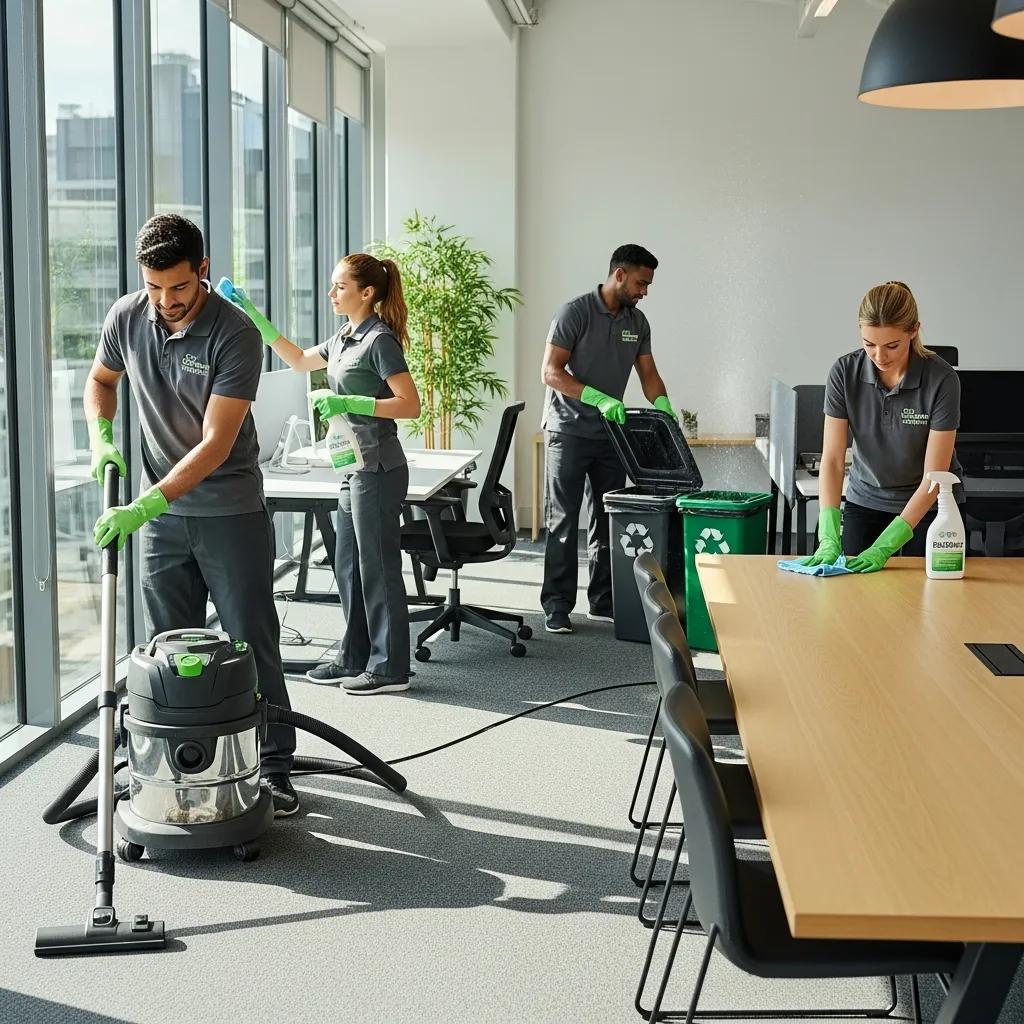
Professional office cleaning protects both operational performance and external perceptions by ensuring workplaces function well and present a professional environment to clients and staff. Consistent professional cleaning reduces absenteeism linked to preventable infections, improves employee concentration by maintaining air quality, and instils confidence in clients who assess hygiene as part of vendor selection and partnership decisions. For customer-facing zones like receptions and meeting rooms, a maintained environment signals organisational competence and attention to detail—factors that influence trust and commercial opportunities. Investing in professional cleaning is therefore an investment in both workforce health and market reputation.
Professional services bring standardised processes, trained staff and tools such as HEPA-filtered vacuums and colour-coded systems that lower cross-contamination risk and support regulatory compliance. Many businesses find that outsourcing cleaning tasks to reputable providers yields more consistent outcomes and frees internal teams to focus on core operations. The next section examines how cleanliness translates into measurable gains for employees and client perception.
How Does a Clean Office Environment Boost Employee Health and Productivity?
A clean office environment reduces microbial load and allergen levels, which lowers rates of respiratory symptoms and short-term illnesses that drive absenteeism. Improved air quality and regular surface disinfection reduce cognitive distractions caused by discomfort or illness, enabling sustained focus and higher productivity. Practical measures—such as daily disinfection of workstations, regular HVAC maintenance, and accessible hand hygiene stations—are correlated with fewer sick days and improved staff wellbeing. Employers should track absenteeism trends and correlate them with cleaning interventions to quantify ROI on enhanced cleaning regimens and justify adjustments to scope or frequency.
Routine checks and staff awareness campaigns amplify the impact of cleaning by encouraging responsible behaviours such as prompt spill reporting and personal desk decluttering, which support overall hygiene efforts and make the workplace safer for everyone.
In What Ways Does Office Cleanliness Influence Client Perception and Brand Reputation?
Client-facing areas form immediate impressions; reception zones, meeting rooms and restrooms are interpreted as proxies for organisational standards. Clean, well-maintained spaces convey professionalism, attention to detail and respect for visitors, which can influence contract negotiations and client confidence. Conversely, visible neglect in hygiene can undermine brand credibility and lead to lost opportunities. Operationally, preparing spaces for client visits via a short, targeted checklist ensures key touchpoints meet presentation standards and reduces last-minute scrambling.
Checklist items for client visits typically include wiping reception counters, sanitising meeting-room tables and chairs, ensuring restrooms are freshly serviced and confirming visible signage is clean—simple tasks that have outsized impact on perceived quality and trust.
What Are the Best Practices for Disinfecting High-Touch Surfaces in Commercial Offices?
Effective disinfection of high-touch surfaces follows a clear protocol: identify and prioritise surfaces, select appropriate disinfectants, follow label instructions and dwell times, use correct application methods and log the activity for traceability. Prioritisation is based on contact volume—shared devices, door handles, lift buttons and communal kitchenware rank highly—so focus resources where transmission potential is greatest. Product selection should favour Australian-registered disinfectants or locally recognised equivalents and consider eco-friendly options where sustainability goals apply. Proper PPE, safe storage and staff training on dilution and dwell time reduce chemical risks and ensure consistent pathogen reduction.
A stepwise disinfection protocol is easy to train and audit, which improves adherence and creates reliable record-keeping for WHS compliance and outbreak response.
The procedural steps for best-practice disinfection:
- Identify priority surfaces: Create a ranked list of high-touch hotspots to target.
- Select approved product: Use registered disinfectants and eco alternatives when required.
- Apply and respect dwell time: Follow label instructions to ensure microbial neutralisation.
- Document the action: Log surface, time, product and responsible person in the cleaning record.
Following these steps helps contain infection risk and provides an auditable approach that aligns with workplace safety expectations.
Which Surfaces Are Considered High-Touch and Require Frequent Disinfection?
High-touch surfaces are those with frequent contact by multiple people and therefore carry higher cross-contamination risk; examples include door and drawer handles, light switches, lift buttons, shared keyboards and printers, and kitchen appliance handles. Prioritise these hotspots with multiple daily clean cycles in areas of heavy traffic like receptions and shared meeting rooms. Recommended cleaning frequency varies by use intensity—receptions and pantries may need hourly attention during peak times while less-used conference rooms might be serviced daily. Implementing policies for shared-device use, such as disinfecting between users or providing single-user peripherals, reduces transmission vectors and complements routine disinfection protocols.
Operationally, map the site to quantify touchpoints and assign cleaning frequency in the checklist to ensure consistent coverage.What Disinfection Protocols and Products Are Recommended for Effective Germ Control?
Choose disinfectants registered for use in Australia or those meeting recognised efficacy claims for enveloped viruses and bacterial pathogens, ensuring staff follow label dilution and dwell-time instructions exactly. Where possible, use microfiber cloths to pick up soils and reduce cross-contamination; dispose of or launder cleaning materials per manufacturer guidance. Require PPE for staff when handling concentrated chemicals, provide secure storage for hazardous products and document safe handling procedures in training records. Eco-friendly alternatives can be employed for frequent-touch cleaning if they meet efficacy requirements, balancing sustainability with infection control.
Reading product labels as part of procurement and training helps cleaning teams select the right agent for each surface type and ensures safe, effective application across the workplace.
How Can Businesses Customize Their Office Cleaning Checklist to Meet Specific Needs?
Customising a cleaning checklist starts with a site assessment to identify high-risk zones, traffic patterns and sector-specific requirements, then prioritises actions, assigns responsibilities and schedules tasks around operations. The process follows four steps: assess the environment, prioritise tasks by risk and visibility, set frequency and responsibilities, and document expectations with measurable deliverables. Sector-specific tweaks matter—for example, medical reception areas require stricter infection-control measures while retail back offices may need flexible after-hours cleaning. A digital checklist template that includes fields for evidence (photos, timestamps) and integrates with a client portal improves transparency and makes bespoke adjustments easier to manage.
Using a modular template allows businesses to add sector-specific blocks such as childcare sanitisation or imaging-centre protocols and to scale frequency according to occupancy patterns.
What Tailored Cleaning Solutions Does Divine Commercial Cleaning Offer for Different Sectors?
Divine Commercial Cleaning serves a wide range of commercial sectors and adapts scope and frequency to meet sector-specific hygiene needs, offering tailored protocols rather than one-size-fits-all approaches. For medical and health centres, cleaning focuses on infection-control measures, strict surface disinfection and documentation suitable for clinical settings. For daycares and schools, emphasis is on safe, non-toxic products and frequent sanitisation of play areas and shared toys. Retail and strata clients receive flexible after-hours programs and add-on services such as carpet cleaning or strip-and-seal to protect high-traffic surfaces. These examples show how a provider can calibrate methods and products to sector risk profiles without sacrificing compliance or presentation.
Divine delivers customised checklist templates and can integrate post-clean checklists into a client portal for transparent delivery and review.
How Can Businesses Access and Use a Professional Office Cleaning Checklist Template?
A professional checklist template should be downloadable, editable and structured by area, task, frequency and responsible party, with fields for comments and photographic evidence to support audits. Customise templates by conducting a walkthrough to tag high-touch zones, assign staff or contractor responsibilities and set realistic frequencies based on occupancy and operational constraints. Implement the checklist via paper or digital client-portal delivery to capture timestamps and post-clean verification; regular review cycles ensure the template evolves with changing business needs. Training staff on how to use and complete the checklist closes the loop between planning and consistent execution.
Using a portal-enabled checklist makes it easy to track compliance, escalate issues and provide an audit trail that supports WHS obligations and continuous improvement.
What Quality Assurance Processes Ensure Consistent Commercial Office Cleaning Standards?
Quality assurance (QA) ensures cleaning is delivered consistently to the defined standard through structured steps: initial assessment, custom scoping, cleaner induction, scheduled inspections, post-clean verification and regular review cycles. QA integrates objective evidence—completed checklists, photos, inspection logs—and client feedback to maintain standards and respond to performance issues. A robust QA framework includes training, documented procedures, and periodic reviews that align cleaning delivery with evolving site needs and regulatory expectations. The table below maps QA steps to their purpose and the tangible deliverables a business should expect when contracting a quality-minded provider.
Intro to the QA EAV table: the following table links QA steps to their purpose and concrete evidence that should be produced to demonstrate consistent cleaning delivery.
| QA Step | Purpose | Deliverable / Evidence |
|---|---|---|
| Initial site visit & assessment | Define scope and identify site risks | Written scope document and customised checklist |
| Cleaner induction & training | Ensure consistent task execution | Training records and competency checks |
| Scheduled cleaning & post-clean checklist | Deliver and verify work completed | Client portal checklist entries and timestamps |
| Periodic inspections & audits | Monitor standards and identify gaps | Inspection reports with photos and corrective actions |
| Client feedback loop | Capture satisfaction and adjust scope | Logged feedback, service adjustments and emails |
| 90-day review & continuous improvement | Validate ongoing suitability of scope | Formal review report and updated cleaning plan |
How Does Divine Commercial Cleaning’s 6-Step Quality Assurance Process Maintain High Standards?
Divine Commercial Cleaning follows a six-step QA process designed to ensure clarity, consistency and continuous improvement across contracts. The six steps are: initial site visit to create a customised scope; development of a written cleaning plan and checklist; induction and assignment of a consistent cleaner where possible; delivery of scheduled cleaning with post-clean checklist completion; upload of post-clean evidence into a client-accessible portal; and a 90-day review to align service delivery with evolving client needs. Each step feeds evidence into a transparent system so clients can monitor performance, review photographic records and request adjustments as required. This structured approach reduces variability in service delivery and provides a clear escalation path for issues.
| QA Step | Purpose | Value / Evidence |
|---|---|---|
| Site visit & scope | Define needs and risks | Written scope document |
| Custom checklist | Standardise tasks | Template with frequencies |
| Cleaner induction | Ensure skills & consistency | Training records |
| Post-clean checklist | Verify completion | Portal entries and photos |
| Inspections | Maintain standards | Inspection reports |
| 90-day review | Optimise scope | Review notes and agreed changes |
What Role Do Police-Checked Professionals and Eco-Friendly Products Play in Service Excellence?
Police-checked professionals and eco-friendly product options contribute to trust, safety and alignment with client sustainability objectives, which are key factors in service excellence. Background checks reassure clients about personnel security and access to sensitive areas, while offering non-toxic, biodegradable cleaning agents helps organisations meet environmental policies without compromising hygiene outcomes. Combining vetted staff with documented QA processes and alternative product choices enables providers to deliver both safe and sustainable services that fit client values. Clients benefit from this approach because it reduces personnel risk, supports workplace safety goals and offers choices that align with corporate responsibility targets.
For businesses seeking tailored cleaning services, these elements—vetted personnel, documented QA and eco options—form part of a transparent offering that can be adapted to site policies and stakeholder expectations. Divine Commercial Cleaning is available to discuss customised scopes, provide a downloadable checklist template and arrange a quote by contacting the team by phone at 0459 949 969 or by email at info@divinecleaning.com.au; their local presence supports clients across Sunshine Coast and Brisbane.

Dianne, originally from Rockhampton, hails from a business-oriented family, with her father owning electrical stores and her uncle serving as Mayor. Moving to the Sunshine Coast at 13, she later pursued a rewarding real estate career and raised three children. As a single mom, she balanced university studies with domestic cleaning work. Armed with a Bachelor’s Degree in Business, majoring in Supply Chain Management, Dianne founded and grew Divine Commercial Cleaning into a thriving company. Her success is rooted in strong family mentorship, a positive attitude, and a solution-oriented approach, offering tailored cleaning services with integrity and strategic insight.