Little Mountain vs Brisbane: How Commercial Cleaners Really Compare
Choosing a commercial cleaner is about more than price — it’s about scope, transparency, hygiene standards and how services are reported. This guide compares commercial cleaning options in Little Mountain with leading providers in Brisbane so facility managers and business owners can ask the right questions, get accurate quotes and select a supplier that meets operational and compliance needs. Our aim is practical: help you compare local and metropolitan offerings, understand cost drivers, and use clear criteria when requesting quotes for medical centres, childcare, strata and other sites. Read on for checklists, comparison snapshots and usable criteria to make quoting straightforward.
What makes commercial cleaning in Little Mountain different?
Little Mountain’s commercial mix — small offices, retail, medical practices and local services — calls for flexible schedules and targeted hygiene routines. Shorter travel distances mean quicker responses for spills or after-hours work, and local cleaners often combine routine office tasks with specialist jobs like carpet shampooing or tile and grout restoration as bundled services. Those local dynamics affect pricing and delivery, so understanding them helps you compare “commercial cleaning Little Mountain vs Brisbane” on equal terms.
Key local factors that shape expectations and delivery in Little Mountain include:
- Client mix: small offices, medical centres, strata complexes, gyms and retail businesses.
- Logistics: shorter travel times and varying demand for after-hours work.
- Service expectations: preference for consistent teams and personalised schedules.
- Regulatory requirements: healthcare and childcare sites need stricter hygiene controls.
Keeping these factors in mind makes it easier to assess how different providers structure their services and manage responsiveness.
How Divine Commercial Cleaning supports Little Mountain businesses
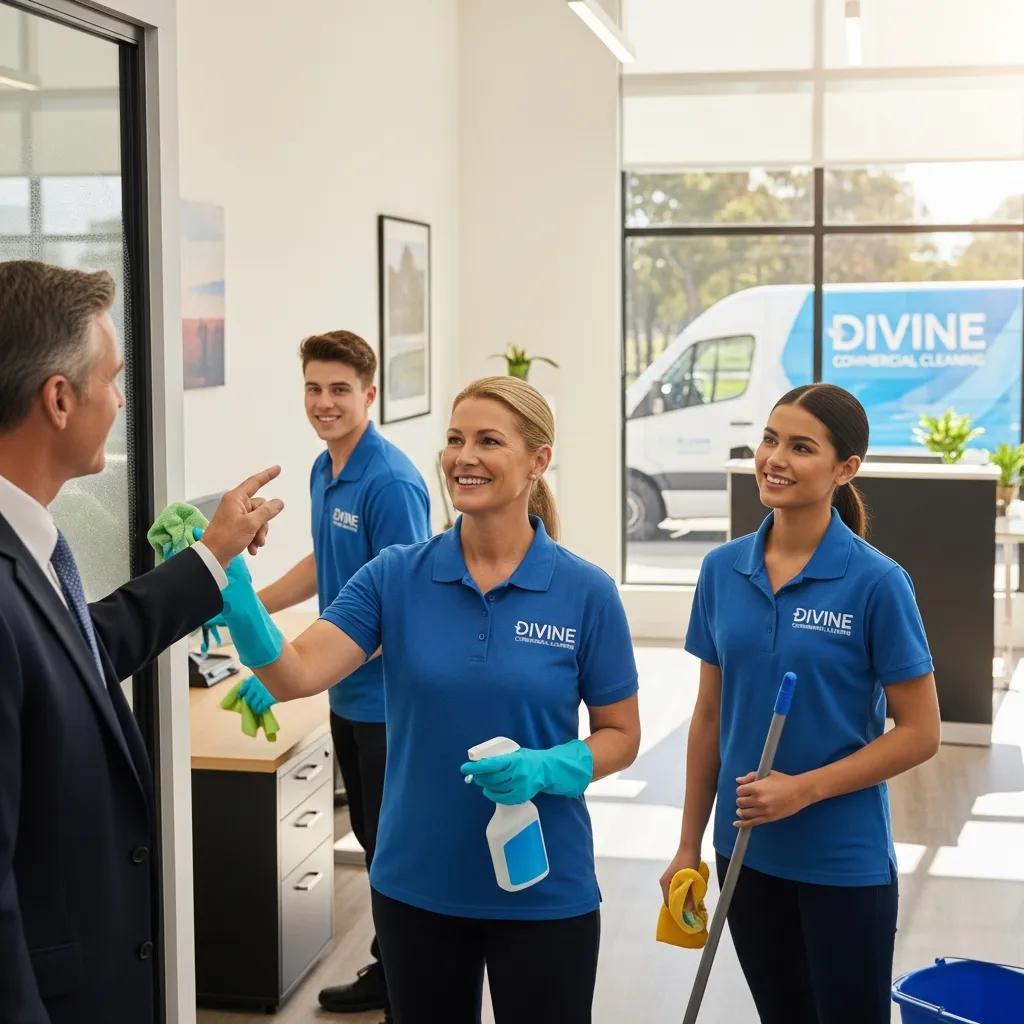
At Divine Commercial Cleaning we focus on practical, local service: customised schedules, consistent teams and clear communication. Based on the Sunshine Coast and serving parts of Brisbane, we operate as a family-run team that prioritises close client relationships and fast local response. Where possible we assign the same crew to a site so staff know the site’s quirks, and we offer add-ons like carpet cleaning, window washing and high-pressure work for one-off or scheduled needs. Our local staffing and scheduling approach reduces handover time and helps deliver predictable results for operations managers.
Those operational choices underline why staffing consistency and tailored scopes matter when comparing providers, and they lead into the key attributes you should use to compare local and metropolitan suppliers.
How Divine stacks up against Brisbane’s larger providers
Comparing Little Mountain suppliers with Brisbane’s big players comes down to contract terms, staff vetting, insurance, customisation and reporting tools. Big metropolitan providers bring scale, standard procedures and tech platforms for reporting; local operators typically offer more flexibility, faster onsite response and a closer working relationship. Important criteria for buyers include contract length and lock-in terms, police checks and screening, insurance cover, ability to customise cleaning plans and guarantees or remediation policies. Evaluating these objectively will show whether local responsiveness or metropolitan scale better fits your site.
Below is a compact comparison that maps typical provider traits to contract and service characteristics so you can see where Divine sits in the market.
Different providers structure contracts and screening in different ways — this table summarises the usual trade-offs.
| Provider Type | Contract Type | Typical Value/Impact |
|---|---|---|
| Local operator (example: Divine Commercial Cleaning) | No lock-in contracts / flexible terms | Easy to change scope, good for sites needing variable schedules and fast response |
| Large metropolitan provider | Fixed-term contracts / franchise terms | Predictable pricing and standardised processes; scalable but less flexible |
| National chain | Long-term agreements with bundled services | Wide service menu and tech platforms; may be pricier for tailored local needs |
This shows local teams and flexible terms favour adaptability, while larger providers trade flexibility for scale and standard reporting. Next, the specific value points Divine emphasises and how they relate to procurement priorities.
What value does Divine bring?
Divine Commercial Cleaning focuses on the practical benefits procurement and facilities teams care about: flexible terms, verified staff, clear environmental practices and simple remediation options. Presenting these as straightforward buyer benefits makes it easier to compare promises against operational needs rather than marketing copy.
- No lock-in contracts — scale services up or down without long penalties.
- Consistent cleaners — repeat teams mean fewer oversights and better ongoing results.
- Police-checked staff and full insurance — lower risk and greater peace of mind on site.
- Money-back guarantee and eco-conscious cleaning — clear remediation and sustainable options where clients want them.
These points explain how Divine aligns with buyer priorities and lead into the cost and quoting practices that often decide procurement outcomes.
How commercial cleaning is priced in Little Mountain and Brisbane
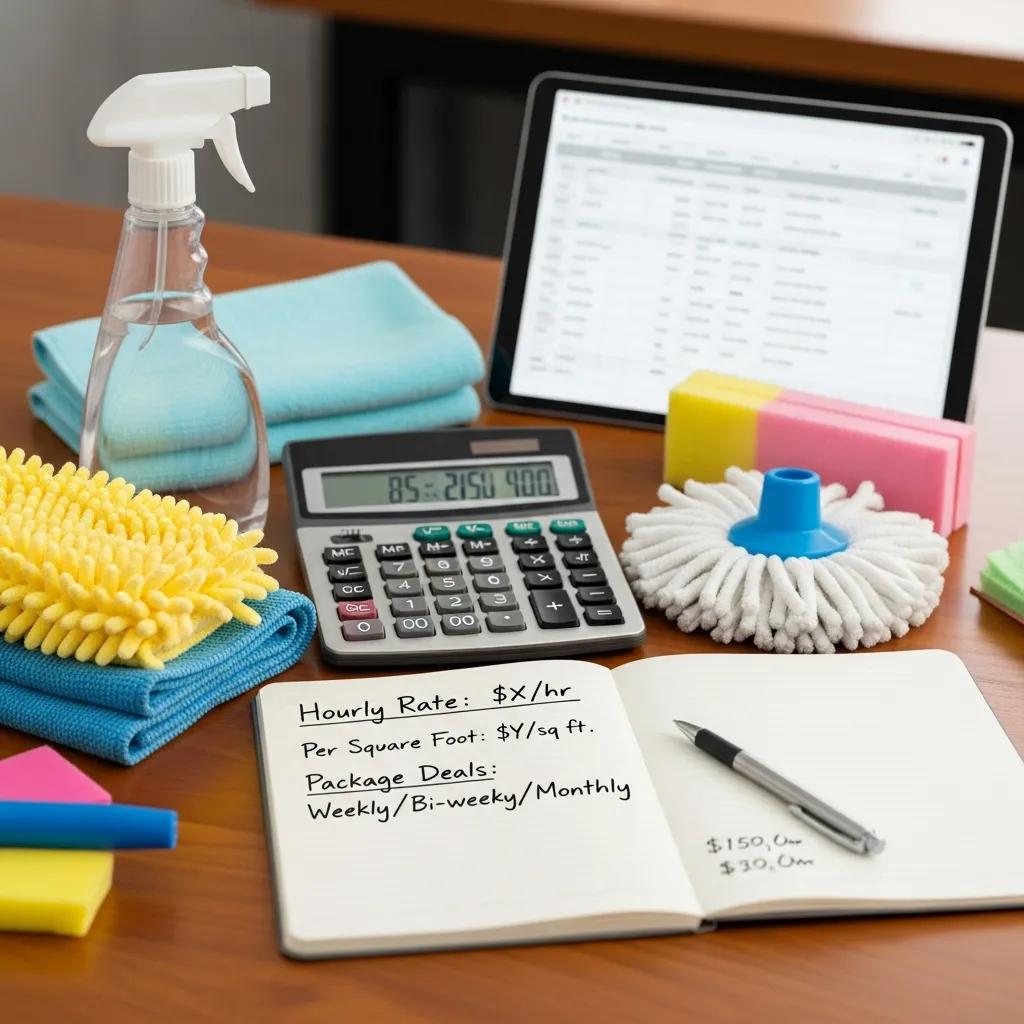
Pricing depends on frequency, site size, task complexity, industry hygiene needs, consumables and travel. Common models are hourly rates, per-visit flat fees, per-square-metre pricing and subscription-style contracts that bundle routine cleans with periodic deep cleans. Hourly rates offer flexibility but can vary, per-square-metre gives predictability for consistent scopes, and bundled contracts usually lower per-service cost while locking in a schedule. When comparing Little Mountain with Brisbane, consider travel time, crew size and common add-ons like flood restoration or strip and seal that drive one-off costs.
The table below breaks down cost drivers and what they typically cover to help you evaluate quotes and compare line items.
| Cost Factor | What it Covers | Typical Value/Impact |
|---|---|---|
| Frequency | How often services are performed (daily/weekly/nightly) | Higher frequency reduces per-visit price but raises total monthly spend |
| Scope/Complexity | Routine cleans vs deep cleans and specialist services | Deep cleans and specialist tasks raise per-visit costs significantly |
| Industry requirements | Medical or childcare hygiene and documentation | Requires more time, PPE and record-keeping; increases costs |
| Travel & logistics | Distance, access and after-hours work | Higher for remote sites or time-sensitive visits |
Knowing these drivers helps you ask for transparent, comparable quotes. Next we explain how Divine structures cost-effective offers for local customers.
How Divine helps control cleaning costs
We give transparent quotes and bundle services to lower unit costs without cutting quality — especially for small to mid-sized sites in Little Mountain and the Sunshine Coast. Consistent crews reduce inefficiencies and our bundled approach (for example, regular office cleans plus scheduled carpet or tile work) delivers savings over ad-hoc purchases. Quotes clearly show cost drivers and line items so clients can see where adjustments — changing frequency or consolidating tasks — produce savings.
Practical savings include optimised scheduling to cut travel, discounted pricing for bundled add-ons, and consistent staffing to reduce onsite orientation time. These options help local buyers balance budget and service quality and frame the right questions to ask during quoting.
Which specialised services does Divine provide for different industries?
Commercial cleaning covers office cleaning, medical centre cleaning, childcare, strata, carpet care and window cleaning — each needs different protocols and measures. Providers should tailor scope, equipment and consumables for each industry: gyms need odour and sweat management, shopping centres require fast surface recovery for high traffic, and clinics need strict disinfection routines. Understanding service fit and compliance needs helps you match a provider to your site’s risk profile.
The table below summarises common industry needs, typical services and the core protocols you should expect when assessing capability.
| Industry (Entity) | Service Type (Attribute) | Key Protocols / Benefits (Value) |
|---|---|---|
| Medical centres | Disinfection, surface sanitisation, waste handling | Use of hospital-grade disinfectants, correct dwell times, PPE and documented audits |
| Daycare / Schools | Frequent touchpoint cleaning, nappy-area procedures | Child-safe products, scheduled timing and record-keeping |
| Offices / Professional | Daily cleaning, carpet maintenance, window cleaning | Consistent crew assignments, planned deep cleans and minimal disruption |
| Strata / Body Corporate | Common-area cleaning, floor maintenance | Strip-and-seal, tile and grout care, coordinated access planning |
These mappings show how tailored service design keeps spaces hygienic and operational across sectors. Below we outline the stricter controls required for medical environments.
How Divine maintains hygiene and safety in medical centres
Medical cleaning focuses on disinfection, trained staff and dependable documentation to lower infection risk and meet safety expectations. Effective protocols include pre-clean checklists, hospital-grade disinfectants used with correct dwell times, PPE for higher-risk tasks and routine audit reporting. Thorough staff vetting — including police checks — and site-specific inductions build trust with clinical teams and reduce onsite risk.
Given the stakes, research highlights the clear link between janitorial quality control and facility health and safety.
Janitorial Quality Control: Health, Safety & Standards
Strong quality control in cleaning directly influences the health, safety and reputation of any facility. From corporate offices to healthcare and education, consistent, measurable cleaning standards support occupant wellbeing and help meet regulatory expectations.
Our model for medical sites includes written procedures, trained staff and audit reporting so clinical managers can see compliance in practice. Those measures also guide the evidence you should request when choosing a supplier.
How to choose the right commercial cleaning provider in Queensland
Selecting a cleaner needs a simple, balanced checklist that weighs risk, quality and cost. Must-haves include insurance, police checks, visible QA and reporting, references, clear contract terms (including lock-in clauses) and the flexibility to customise services. Also look for tech-enabled transparency — photo reports and digital checklists — which provide proof of service and help track KPIs. A checklist keeps the procurement process objective and makes comparing Little Mountain and Brisbane options straightforward.
A structured approach to selecting service providers is a common recommendation across industries.
Service Provider Selection Criteria Framework
Choosing a service provider is a widely studied topic. While there isn’t one universal model, clear selection criteria are essential because the service sector dominates many developed economies and affects large parts of the workforce.
Use this practical checklist when vetting quotes and providers:
- Confirm the provider carries full liability insurance and can provide proof in writing.
- Check staff screening policies, including police checks and site induction procedures.
- Ask for documented QA processes and sample reports or checklists.
- Clarify contract terms, cancellation rights and whether there are lock-in clauses.
- Request itemised quotes that show cost drivers and optional add-ons.
Applying these filters narrows the field to providers who meet basic safety and transparency standards, and it highlights the role of testimonials and guarantees in risk reduction.
How testimonials and guarantees build confidence
Testimonials and guarantees reduce perceived risk by showing past results and offering remediation if standards aren’t met. The most useful testimonials are specific — they describe scope, outcomes and timeframe. Guarantees, like a money-back promise, shift some performance risk back to the provider and indicate confidence in delivery. Treat guarantees as part of negotiation, not a substitute for documented QA and references.
Look for testimonials that cite metrics and for guarantees that are supported by clear QA processes — those are the strongest proof points in procurement.
How Divine delivers consistent, clean commercial spaces
Our delivery process is straightforward and designed to remove friction for clients. We start with an on-site assessment to scope work, follow with a clear, itemised proposal, then onboard with site induction and assignment of a regular crew where possible. Ongoing QA uses checklists and periodic audits to spot improvements and maintain hygiene standards.
The steps below outline what you can expect when working with us or comparing providers:
- Site assessment and risk mapping to set tasks and frequency.
- Custom proposal with an itemised quote and recommended schedule.
- Onboarding and assignment of consistent cleaning teams plus site induction.
- Scheduled cleaning, periodic deep cleans and documented QA reporting.
These practical steps set service expectations and prepare the ground for technology that adds transparency and accountability.
How technology improves service transparency
Digital tools support delivery with audit trails, photo reports, digital checklists and scheduling systems that prove work was done. Checklists capture completed tasks and timestamps; photos document before-and-after states for deep cleans; and client portals consolidate reports and invoices for easy review. Together these tools create a searchable performance history — who did what, when — that helps facility managers track KPIs and resolve disputes quickly.
Research shows digitised checklists improve data management and productivity across teams.
Digital Checklists for Cleaning Productivity
Digitising work instructions and checklists improves data management and team productivity. Storing completed digital checklists in a central database makes audits simpler and supports continuous improvement.
Using these technologies increases visibility and accountability, so clients can measure outcomes and request corrective action if KPIs aren’t met. This transparency also helps procurement verify service delivery and reduces disagreements about scope or quality.
Divine Commercial Cleaning is available for site assessments and transparent quotes — businesses in Little Mountain and Brisbane can arrange an initial discussion at 5 Bluff St, Birtinya, QLD 4575 or by calling 0459 949 969. Procurement teams preparing a shortlist can use the checklists and tables in this guide to ensure quotes are truly comparable.
Frequently asked questions
What should I consider when comparing commercial cleaning providers?
Compare flexibility, contract terms and industry experience. Look for transparent pricing with no hidden fees, strong customer service and proof of insurance. Check staff vetting procedures and whether the provider uses technology for reporting and accountability. A consistent checklist helps you evaluate each bidder fairly.
How can I ensure the cleaning service meets my specific industry needs?
Be clear about your requirements during the first consultation. Ask for experience in similar sites, request case studies or references, and review their protocols for high-risk environments like medical or childcare facilities. A reputable cleaner will adapt their scope and provide documentation to meet your compliance needs.
What are the benefits of using a local cleaning service versus a national chain?
Local services offer personalised attention, faster response times and a better understanding of regional needs. They tend to be more flexible with scheduling. National chains offer standardisation and broader resources but may be less flexible for local, bespoke needs. Choose based on your priorities: custom service and speed, or scale and consistency.
How can technology improve the cleaning service experience?
Technology provides real-time tracking, digital checklists and photo evidence of completed tasks. These tools create transparency, letting you monitor quality and ensure work meets agreed standards. Client portals make communication and reporting easier, so issues are resolved faster.
What should I look for in a cleaning service's quality assurance processes?
Look for written QA procedures, regular audits, checklists and feedback systems. Ask about staff training and how compliance is maintained for industry-specific protocols. A reliable provider will have a clear process for handling concerns and applying corrective actions.
How do I assess the environmental practices of a cleaning service?
Ask which products they use and whether they are eco-certified or low-toxicity. Check waste disposal practices and any formal sustainability policies or certifications. A provider committed to sustainability will be able to explain practical steps they take to reduce environmental impact.
What are the typical contract terms I should expect from a cleaning service?
Contracts usually specify the agreement length, cancellation terms and any lock-in clauses. Look for flexibility to adjust services, clear scope and pricing, and any guarantees offered. A transparent contract reduces surprises and sets clear expectations for both parties.
Picking the right commercial cleaning partner improves efficiency and keeps your space healthy. By understanding local dynamics, service options and pricing drivers, you can choose a provider that fits your needs. If you’d like a tailored quote or a site assessment, contact Divine Commercial Cleaning — we’ll help you find a cleaning program that works for your business.

Dianne, originally from Rockhampton, hails from a business-oriented family, with her father owning electrical stores and her uncle serving as Mayor. Moving to the Sunshine Coast at 13, she later pursued a rewarding real estate career and raised three children. As a single mom, she balanced university studies with domestic cleaning work. Armed with a Bachelor’s Degree in Business, majoring in Supply Chain Management, Dianne founded and grew Divine Commercial Cleaning into a thriving company. Her success is rooted in strong family mentorship, a positive attitude, and a solution-oriented approach, offering tailored cleaning services with integrity and strategic insight.