
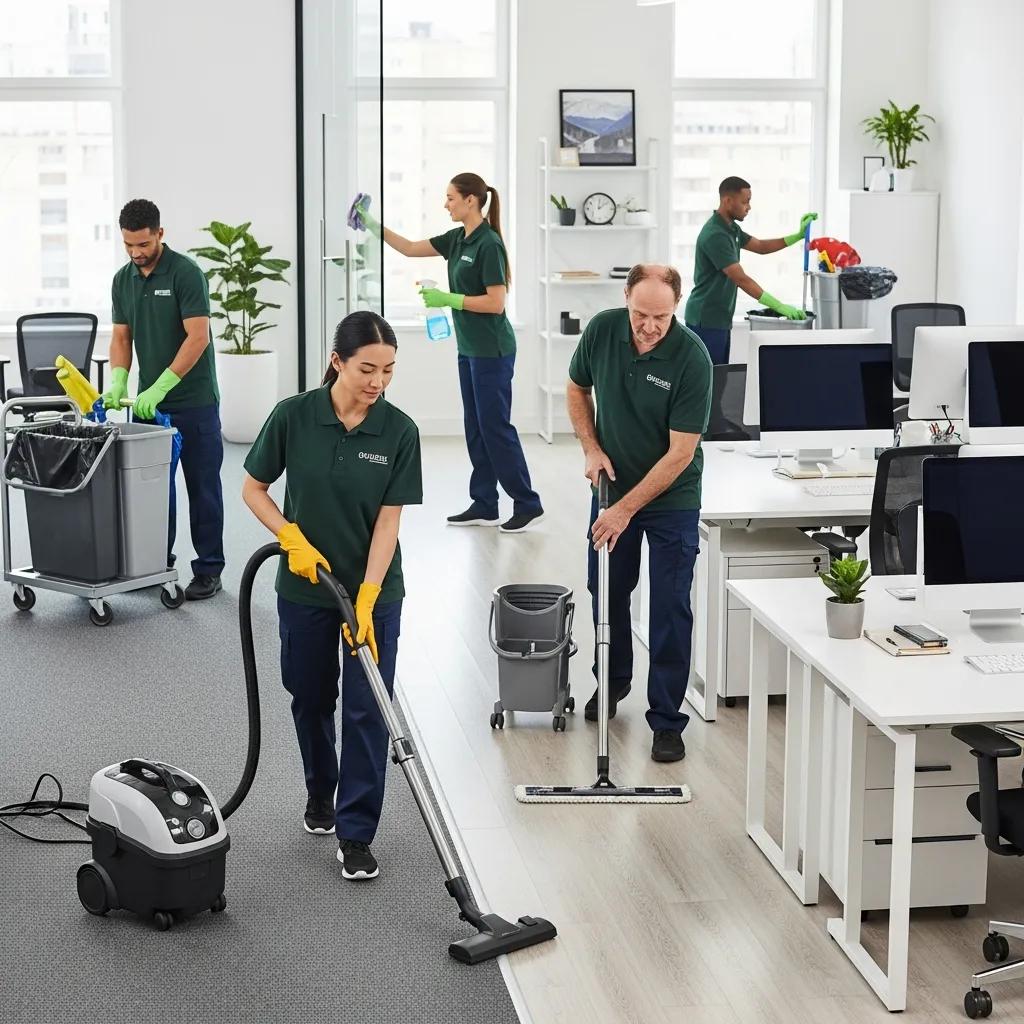
Commercial cleaning pricing & quality: how Divine Commercial Cleaning compares to Mons and other local providers
When organisations buy commercial cleaning they usually ask two simple questions: how much will ongoing cleaning cost, and how steady will the quality be? This guide gives facility managers and procurement teams a practical comparison framework to evaluate pricing drivers and measurable quality across local suppliers, with specific context for the Sunshine Coast and Brisbane. You’ll learn the main factors that shape quotes, how quality assurance practices differ between companies, and straightforward ways to check claims using case metrics and testimonials. Our aim is to leave you with clear criteria—price transparency, defined scope, service reliability and measurable QA—that reduce procurement risk and avoid surprise charges. Below we cover: pricing drivers and example ranges; quality standards and inspections; customer outcomes and case examples; how to request clear, tailored quotes; and the key differences that matter when choosing a local provider.
Divine Commercial Cleaning is a local commercial cleaning company serving the Sunshine Coast and Brisbane. We’re included here as a practical comparator to show how transparency and local knowledge improve procurement outcomes. In short: Divine focuses on clear, itemised pricing and local operating efficiencies — and we invite businesses to request a tailored quote so offers can be compared fairly. Later in the article you’ll find a step-by-step quote checklist that explains what to prepare and what a transparent proposal should include. The rest of this piece stays focused on pricing drivers and quality assessment, using Divine as an example of how local expertise and openness are applied in practice.
What are the key pricing factors for commercial cleaning on the Sunshine Coast and Brisbane?
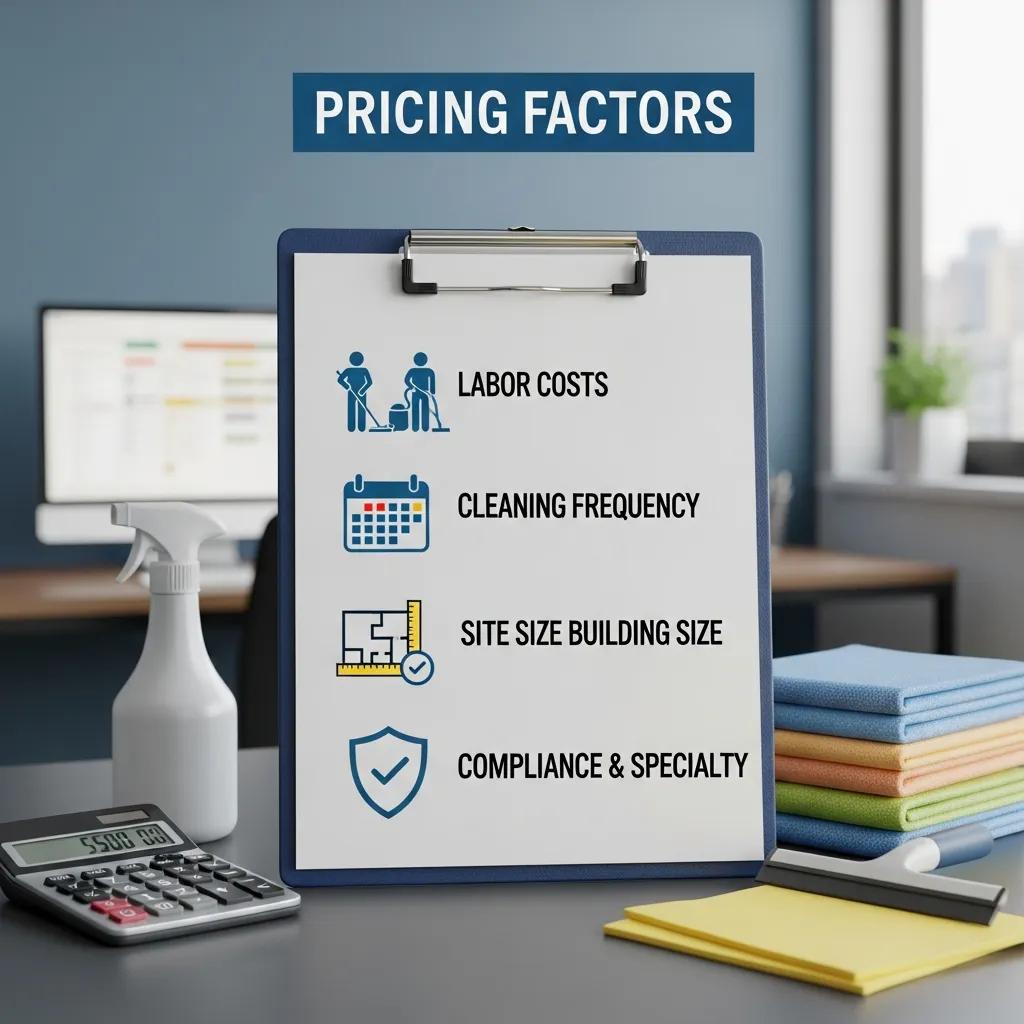
Quotes for commercial cleaning come from a few repeatable drivers that combine into a final price. The main inputs are labour (staff and wages), service frequency, site size and layout (square metres and configuration), scope or task complexity (for example, medical centres versus standard offices), and consumables or specialised chemicals. Understanding these drivers helps procurement predict cost sensitivity and negotiate sensible trade-offs between frequency, scope and price. Regional factors — travel time, local wage differences between Brisbane and the Sunshine Coast, and regulatory or compliance needs (such as infection control in medical centres) — also shift pricing. The short table below shows how each driver typically affects an estimate in practice.
This table summarises common pricing drivers and typical examples used in quotes.
| Service Type | Pricing Driver | Typical Range / Example |
|---|---|---|
| Office cleaning | Frequency (weekly vs daily) | Weekly: lower unit cost; Daily: higher total cost but lower per-visit markup |
| Retail cleaning | Site complexity (floor types, public areas) | Complex retail: +15–30% due to varied surfaces and access needs |
| Medical centre cleaning | Compliance & supplies | Additional charge for clinical-grade disinfectants and documentation |
| General commercial (sqm) | Site size | Price per m² declines as size increases; small sites have minimum call-out fees |
Put simply: frequency, scope and any compliance requirements add up to the total quote — not a single per-hour figure. Knowing these components helps you compare like-for-like proposals instead of chasing the lowest headline price.
How does Divine Commercial Cleaning’s pricing stack up against Mons and other local companies?
When you compare pricing objectively, focus on what’s included, how itemised the quote is and whether there are likely extras. Some providers give a bundled monthly fee while others provide an itemised schedule showing labour, consumables and one-off tasks. Divine Commercial Cleaning prioritises clear, itemised quotes that spell out exclusions so there are fewer surprises during the contract. For example, in a 500 m² office on a weekly schedule you’ll want to see line items for window cleaning, carpet maintenance and consumable replenishment. Always ask for labour, consumables and any access or out-of-hours charges so you can make an apples-to-apples comparison.
This EAV-style comparison table summarises typical provider offers and transparency notes.
| Provider | Typical Offer | Price Range / Transparency Notes |
|---|---|---|
| Provider A (bundled) | Single monthly fee | Lower visibility on line items; potential add-ons for specialised tasks |
| Provider B (itemised) | Labour + consumables + optional extras | Clearer basis for negotiation; easier to benchmark |
| Divine Commercial Cleaning | Itemised core services + transparent exclusions | Emphasises clarity in proposals and local scheduling efficiencies |
In practice, itemised proposals give procurement teams better control. Clear exclusions are the single best signal of pricing transparency.
What influences commercial cleaning costs in Brisbane and the Sunshine Coast?
Local details change base costs: travel time, local wages and supplier pricing for consumables all matter. Brisbane’s larger labour market can deliver scale benefits for frequent contracts, while Sunshine Coast operators often save time on travel but may face different supplier or wage structures. Specialist services — clinical cleaning, advanced floor care or high-access window work — attract premiums because of skill, equipment and insurance needs. Contract length and service frequency also move effective hourly rates: longer agreements and bundled scopes usually lower per-visit costs because scheduling becomes more efficient. Model total annual cost across frequencies (weekly vs fortnightly) instead of comparing single visits to understand real value.
Ask suppliers for scenario pricing — the same scope at weekly, fortnightly and monthly frequencies — to see marginal cost changes and scheduling efficiencies. That exposes when a low headline rate hides extra charges for consumables or out-of-hours work.
How do quality standards differ among local commercial cleaning companies?
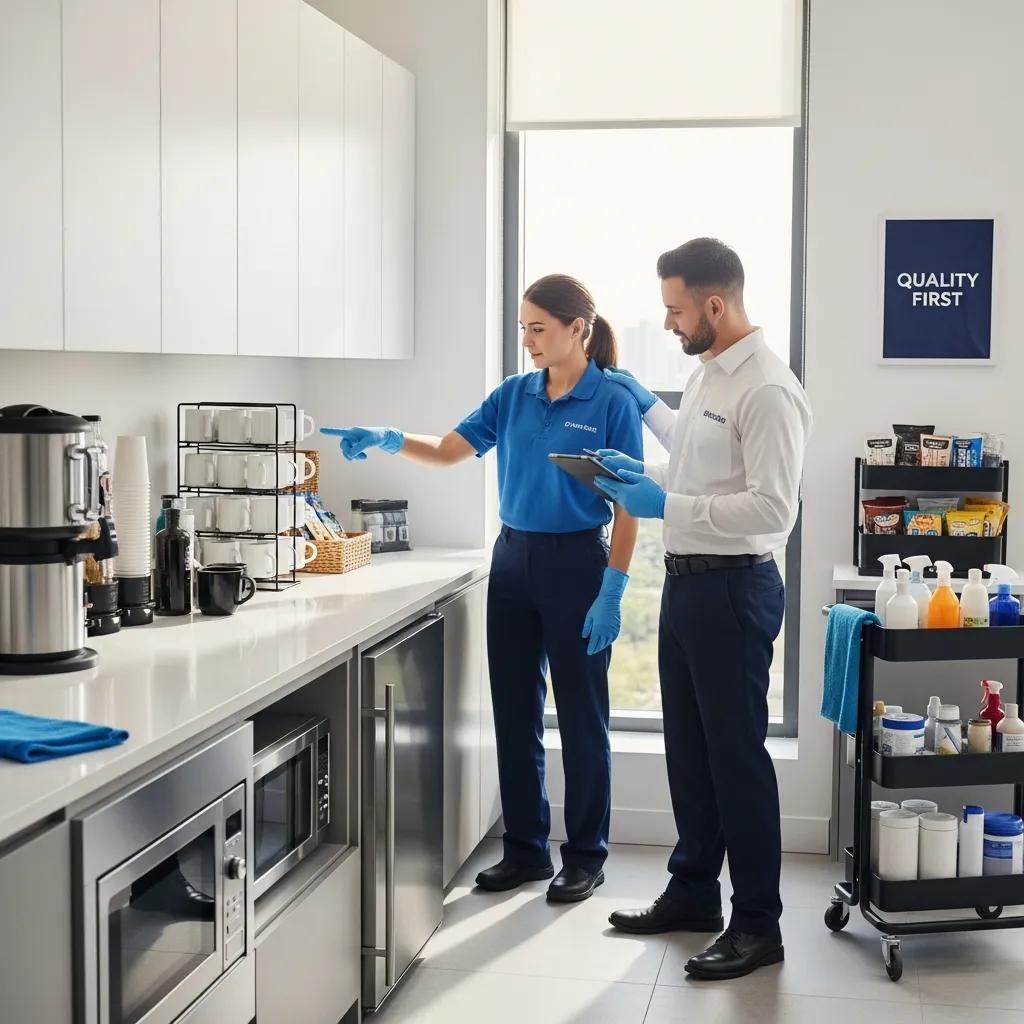
Quality is built from measurable processes: inspection schedules, staff training and certification, documented cleaning checklists, and service-level agreements (SLAs) with clear KPIs. Useful QA metrics include inspection pass rates, on-time performance, missed-cleaning incidents and recorded corrective actions. Providers that back these processes with digital reporting, scheduled audits and trained supervisors deliver more consistent results and quicker fixes. Evaluating these measurable elements helps buyers move beyond impressions and quantify supplier performance. The table below contrasts common QA elements and the outcomes you can expect.
This table outlines quality assurance components and expected outcome metrics.
| QA Element | Measurement / Process | Outcome Metric |
|---|---|---|
| Inspections | Scheduled audits with reports | Inspection pass-rate (% of sites passing standard) |
| Training | Induction + ongoing upskilling | Competency checklist completion rate |
| Supervision | Supervisor site visits, random checks | Missed-cleaning incidents per month |
| Reporting | Digital job reporting + corrective actions | Average response time to issues (hours/days) |
Map these QA elements into your contract SLAs and you’ll see the differences that matter day to day and over the long run.
What quality assurance processes does Divine Commercial Cleaning implement?
Divine uses scheduled inspections, standardised site checklists and ongoing staff training to keep service levels steady across the Sunshine Coast and Brisbane. Supervisors follow documented, site-specific checklists during audits and log any corrective actions that require follow-up and client sign-off. Staff training targets task-specific skills — floor care, high-touch surface disinfection for medical centres, and safe chemical handling — so work is safe and compliant. Our reporting produces clear pass/fail results and trend data clients can review, supporting continuous improvement and preventing quality backsliding.
Those processes translate into contract-ready metrics you can require, such as a maximum missed-cleaning rate and defined timelines for corrective action.
How does service reliability affect customer satisfaction compared with Mons?
Reliability — measured by on-time completion, consistent task coverage and responsiveness — directly ties to customer satisfaction and renewal rates. Suppliers with strong on-time records get fewer complaints because predictable scheduling reduces disruption for tenants and staff. Useful comparators include missed-cleaning incidents per 1,000 visits and average response time to client queries (hours). Putting reliability KPIs into contracts, with penalties or service credits, helps keep providers accountable.
Prioritise suppliers that can share historical reliability data or that have clear exception-handling processes; those systems cut downtime and improve client experience.
What are the customer experiences and reviews for Divine Commercial Cleaning versus Mons?
Assess customer experience by looking for patterns in feedback — consistency, specificity and measurable outcomes — and by reviewing anonymised case examples that show real improvements in cleanliness scores, fewer incidents or faster response times. Testimonials that reference specific operational gains (for example, fewer hygiene incidents after a new checklist) are more valuable than broad praise. Case studies that include baseline metrics and post-engagement results give procurement teams verifiable evidence. Below are short anonymised examples that illustrate the kinds of outcomes you should ask potential suppliers to demonstrate.
These case studies show typical measurable outcomes from provider interventions.
| Client Type | Problem | Measured Outcome |
|---|---|---|
| Medium office | Inconsistent cleaning & missed tasks | 85% reduction in missed tasks within 3 months |
| Medical centre | Compliance documentation gaps | Full audit-ready documentation and 100% pass rate |
| Retail outlet | High footfall floor wear | Reduced complaints and improved floor appearance scores |
When you review testimonials and case studies, favour those that show before-and-after metrics, clear timeframes and the methods used to achieve improvements.
Which case studies demonstrate Divine Commercial Cleaning’s measurable outcomes?
Divine’s case work highlights measurable gains in reliability and documentation for offices and medical centres in the region. Typical projects start with a baseline audit, followed by custom checklists and scheduled supervisory inspections that reduce missed-cleaning incidents and speed corrective actions. For procurement, the most useful case evidence spells out the baseline issue, the specific actions taken (checklists, supervisor visits, training) and quantified outcomes — for example, fewer incidents or improved inspection pass rates. Results like that show how process changes deliver tangible operational benefits.
When comparing providers, prioritise case studies with explicit metrics and timelines that show sustained improvement rather than isolated anecdotes.
How do customer testimonials reflect service quality and trust?
Strong testimonials highlight specific strengths — punctuality, responsiveness, clear reporting and measurable quality gains — rather than vague praise. Look for themes of consistency (repeatable results across sites), transparency (clear invoicing and scope) and responsiveness (fast corrective actions). Be wary of testimonials that lack detail or measurable outcomes; they’re less useful for procurement decisions. Combine testimonial themes with case-study metrics to build a rounded view of a provider’s capability.
Use testimonial analysis to validate proposal claims and to cross-check references during supplier due diligence.
How can businesses request customised quotes and services from Divine Commercial Cleaning?
To get a transparent, tailored quote, prepare concise site and scope details so providers can produce comparable offers. Key information to provide: site size (square metres), site type (office, retail, medical), service frequency (daily/weekly/fortnightly), special tasks (carpet cleaning, high-level dusting, window cleaning), access constraints (after-hours access, security) and any compliance needs (clinical cleaning protocols). Ask for an itemised proposal that separates labour, consumables and one-off tasks so you can spot hidden costs. The short process below summarises what procurement teams should expect when requesting clear, tailored pricing.
- Provide site details: size, layout, special features and access constraints.
- Specify scope and frequency: standard tasks plus any specialised services required.
- Request an itemised quote: labour, consumables, equipment and one-off items listed separately.
- Ask for proposed SLAs: inspection frequency, response time and corrective action processes.
- Compare scenario pricing: weekly versus fortnightly and optional add-ons.
Following these steps reduces variance between quotes and makes it easier to compare real value instead of headline price alone.
What is the process to obtain transparent pricing and tailored cleaning plans?
A transparent quote process starts with a site assessment and a scoping conversation, then a written proposal with itemised line items and clear exclusions. The provider should document the proposed schedule, frequency and deliverables for each visit, list which consumables are included in the base price and note chargeable extras, and provide sample SLA wording for inspections and response times. Typical timelines: initial site review, draft proposal within a few business days, and contract finalisation once scope is agreed. Onboarding usually includes an induction visit, an initial supervisory audit and a short settling-in period to confirm checklists and reporting formats.
Requesting a sample quote template or a scenario-based proposal makes it easier to evaluate offers consistently and see which items are negotiable.
How does Divine Commercial Cleaning keep offers competitive against Mons?
Divine stays competitive through clear breakdowns, flexible contract terms and local efficiencies that cut travel and scheduling overhead. By itemising labour and consumables, we let clients choose which optional services to include — often lowering total cost compared with opaque bundled proposals. Local scheduling advantages in the Sunshine Coast and Brisbane reduce travel time and improve resource use, which can translate into more competitive per-visit pricing for regular contracts. In short: transparency, flexible scope and local optimisation create offers based on predictable total cost, not just the lowest headline rate.
When you compare offers, prioritise suppliers that provide scenario-based itemised pricing and clear SLA commitments over single-line bundled fees.
Why choose Divine Commercial Cleaning over Mons and other local competitors?
Picking a cleaning provider should be an evidence-based choice that balances transparent pricing, measurable quality assurance and local operational capability. Divine Commercial Cleaning positions itself on clear pricing, Sunshine Coast and Brisbane expertise, and a customer-first approach that focuses on measurable outcomes and direct quote requests. These differences tackle common procurement pain points: hidden charges, uneven quality and slow responses. Below are the key differentiators and the practical value they deliver for procurement teams.
- Transparent pricing and itemisation: Clear line items reduce billing surprises and simplify benchmarking.
- Local Sunshine Coast and Brisbane expertise: Local operations deliver better scheduling and faster responses.
- Customer-focused quality assurance: Documented checklists, supervisory audits and corrective action processes deliver measurable improvements.
These attributes align with procurement priorities — cost predictability, operational reliability and measurable quality — and help teams choose based on facts, not marketing claims.
What unique value propositions does Divine Commercial Cleaning offer?
Divine’s local value proposition centres on transparency, local knowledge and customer satisfaction. Transparent pricing means proposals list labour, consumables and optional services separately so clients can adjust scope without hidden fees. Local expertise in the Sunshine Coast and Brisbane enables faster response times and scheduling that reduces travel overheads, benefiting regular contracts. Our focus on satisfaction and trust shows up in documented QA processes and open reporting that procurement teams can include in SLAs to protect service quality.
These features reduce procurement risk by tying contract terms to measurable operational commitments, not vague promises.
How does local expertise improve service quality and customer trust?
Local providers benefit from proximity, local supplier relationships and knowledge of regional demand patterns that improve scheduling and responsiveness. Faster on-site response and familiarity with region-specific needs — like seasonal footfall changes or local compliance nuances — reduce complaint resolution times. Having established local references and repeatable results in the Sunshine Coast and Brisbane builds trust because the provider can show proven outcomes in the same operating environment. For procurement teams, these local advantages mean better SLA adherence and more predictable annual costs.
Choosing a provider with clear local presence and experience therefore improves both reliability and trust.
Frequently Asked Questions
What types of commercial cleaning services does Divine Commercial Cleaning offer?
We offer a broad range of services tailored to different sectors: office cleaning, retail cleaning and specialist medical centre cleaning. Each service is designed to meet sector needs — for example, compliance-ready cleaning for medical facilities or high-standards work for retail. We also provide add-ons like carpet cleaning, window washing and high-level dusting so clients can build a package that matches their requirements and day-to-day operations.
How can businesses assess the quality of a commercial cleaning provider?
Look for measurable QA metrics: inspection pass rates, response times to issues and documented staff training. Ask for case studies that show measurable improvements and testimonials that highlight operational strengths. Check the provider’s SLAs and corrective-action processes to understand how they keep standards consistent. Those elements give a clear picture of performance beyond advertising language.
What should businesses include in their request for a tailored cleaning quote?
Provide site size, layout and any special features, plus the desired frequency of service and the full scope of tasks. Note any compliance needs and access constraints. Ask for an itemised quote that breaks out labour, consumables and one-off tasks so you can compare providers on the same basis. The more detail you give, the more accurate and comparable the quotes will be.
How does Divine Commercial Cleaning ensure compliance with health and safety standards?
We maintain robust training programs covering safe chemical handling, infection control and task-specific competencies. Our teams use documented checklists and undergo regular audits to verify compliance. We also keep clear communication with clients about any regulatory or site-specific requirements, so cleaning practices meet local standards and industry best practice — especially in sensitive settings like medical centres.
What are the benefits of choosing a local commercial cleaning provider?
Local providers deliver faster response times and a better understanding of regional cleaning needs. They can optimise schedules to reduce travel time, often saving costs and improving reliability. Local supplier relationships can also improve service quality and help ensure compliance with regional rules. That proximity makes communication easier and builds accountability.
How can businesses evaluate the transparency of a cleaning service’s pricing?
Ask for a detailed, itemised quote that lists labour, consumables and any extra charges for specialised tasks. A transparent provider will spell out what’s included in the base price and what’s chargeable. Request pricing across different service frequencies to understand total costs and spot hidden fees. Clear line items and scenario pricing are the best indicators of pricing transparency.
Choosing the right commercial cleaning partner affects both day-to-day operations and your budget. Divine Commercial Cleaning stands out for transparent pricing, local Sunshine Coast and Brisbane expertise, and a commitment to measurable quality. Prioritise those factors and you’ll make procurement choices based on evidence, not promises. Request a tailored quote today to see how clear pricing and local service make a practical difference.

Dianne, originally from Rockhampton, hails from a business-oriented family, with her father owning electrical stores and her uncle serving as Mayor. Moving to the Sunshine Coast at 13, she later pursued a rewarding real estate career and raised three children. As a single mom, she balanced university studies with domestic cleaning work. Armed with a Bachelor’s Degree in Business, majoring in Supply Chain Management, Dianne founded and grew Divine Commercial Cleaning into a thriving company. Her success is rooted in strong family mentorship, a positive attitude, and a solution-oriented approach, offering tailored cleaning services with integrity and strategic insight.