
Comparing Pricing: Chevallum Commercial Cleaning vs. Competitors in Sunshine Coast and Brisbane
Commercial cleaning costs can look very different across Chevallum, the Sunshine Coast and Brisbane. This guide lays out the typical price ranges, the common pricing models and the main reasons rates change so you can choose a supplier that’s affordable and fit for purpose. You’ll find clear example ranges and sample quote scenarios for common business types, plus a straightforward explanation of hourly, fixed and per-square-metre approaches and how specialised work (medical, industrial, post-construction) affects budgets. We focus on practical decision criteria—predictability, value and compliance—so facility managers can compare quotes on an apples-to-apples basis, and we highlight where a Maroochydore-based provider like Divine Commercial Cleaning sits in the local market. The article maps local averages, weighs the pros and cons of each model, lists the factors that push rates up or down, and gives location-specific examples for Chevallum, Sunshine Coast and Brisbane. Target phrases such as “commercial cleaning pricing Chevallum”, “hourly rates commercial cleaning Brisbane” and “commercial cleaning cost per square meter Sunshine Coast” appear naturally to help with discoverability and to make it easier to request accurate, comparable quotes.
What Are the Average Commercial Cleaning Costs in Chevallum, Sunshine Coast, and Brisbane?
Average costs are the typical ranges you’ll see charged per hour, per clean or per square metre in each area. Those ranges reflect local labour rates, travel time and market demand. In Brisbane you’ll usually find higher baseline hourly rates because wages and overheads are larger; the Sunshine Coast shows more variation depending on proximity to towns; and Chevallum jobs can include travel premiums for remote locations. Below are example scenarios to illustrate how those drivers show up in real quotes.
- Small office (up to 100 sqm): Typical per-visit range for light daily or weekly cleaning.
- Medium retail outlet (100–300 sqm): Per-visit or weekly package ranges for public-facing spaces.
- Medical suite (regulated cleaning): Higher per-visit ranges that reflect compliance and consumables.
Quick reference: hourly rates in Brisbane generally sit above Sunshine Coast levels, and Chevallum examples often include travel or minimum-visit fees. Always check what’s included and how often a clean is scheduled when comparing prices. That understanding leads directly to the next topic: the pricing models suppliers use.
How Do Commercial Cleaning Rates Vary by Location?
Location affects price mostly through labour costs, travel time and local demand. Urban areas tend to have higher hourly rates while outer suburbs or rural sites add travel premiums or minimum fees. In Brisbane expect higher labour overheads and more competition among large providers, which pushes contract and hourly rates up; on the Sunshine Coast rates are competitive but can vary by town. Chevallum — being further from major hubs — either attracts small local suppliers with lower base rates or urban companies that add mileage and minimum-visit surcharges, increasing the effective per-clean cost.
A study on service supply chains explains how geography and operational expenses are reflected in pricing strategies.
Location-Based Pricing & Operational Costs in Service Supply Chains
This paper develops a unified modelling approach that incorporates customer locations, logistics and operational costs into a service provider’s pricing and customers’ channel choice decisions.
Location-based pricing and channel selection in a supply chain: a case study from the food retail industry, S Asian, 2020
Practical tip: when you request quotes, ask for a line-by-line breakdown showing hourly rate, cleaning scope, whether supplies are included, and any travel or minimum fees. That makes it easy to compare true cost-per-service rather than confusing headline numbers. Next we look at the pricing models you’re likely to see.
Which Pricing Models Do Commercial Cleaning Companies Use?
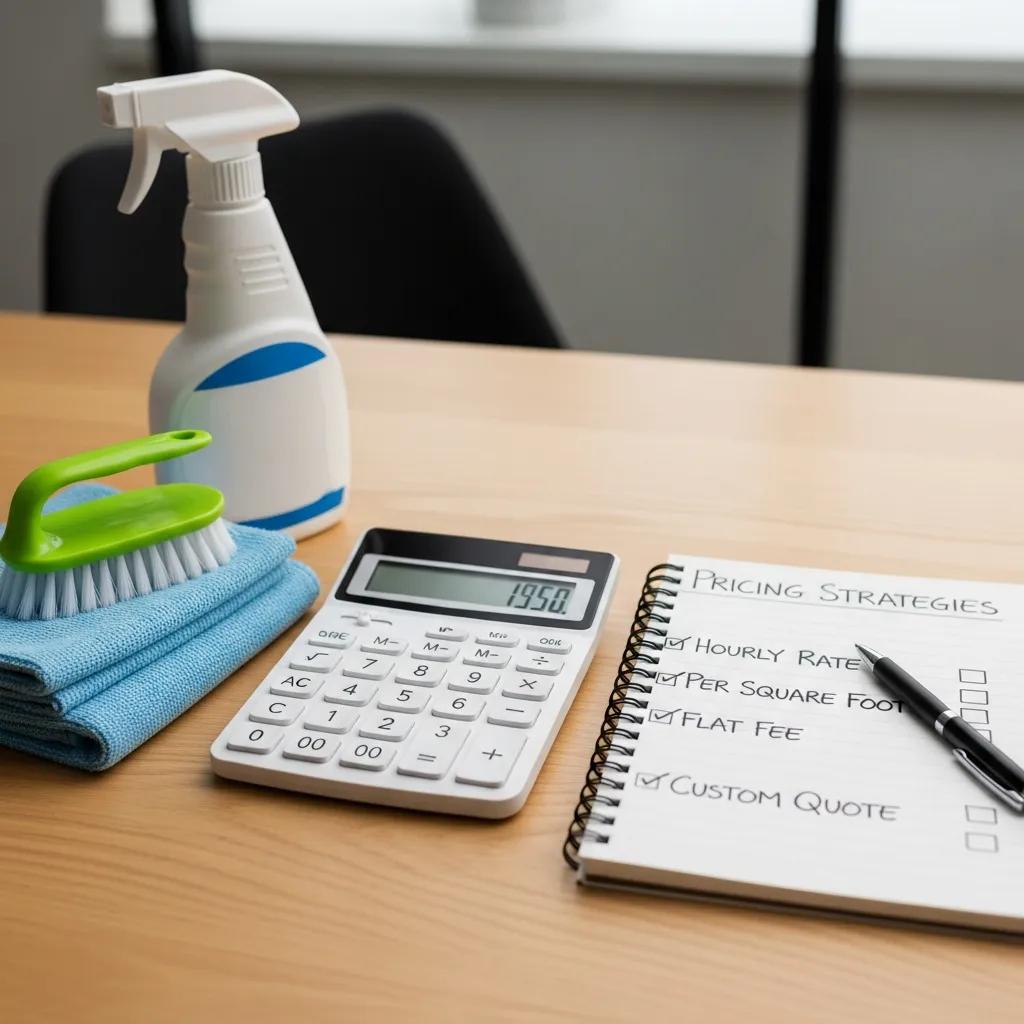
Providers charge in a few standard ways: hourly, fixed-rate contracts, per-square-metre or packaged pricing. Each model balances predictability, flexibility and fairness differently depending on the facility. Hourly suits irregular or changing jobs; fixed-rate contracts give predictable periodic fees for routine cleaning; per-square-metre pricing is handy for large, uniform spaces; and packages bundle standard and extra tasks for simple procurement. Knowing which model a supplier uses will help you compare quotes and pick the approach that matches your site.
Common pricing models include:
- Hourly pricing: Billed by time worked, with a variable final cost.
- Fixed-rate contracts: Regular, predictable fees that cover an agreed scope.
- Per-square-metre pricing: A standard rate linked to facility size.
- Package pricing: Bundled services with one price for clarity.
The table below shows how each model is charged and which situations each typically suits.
| Pricing Model | How it’s charged | Typical ranges / Best-for scenarios |
|---|---|---|
| Hourly | Charged per labour hour, often with a minimum call-out | Best for ad-hoc or variable-scope jobs; totals vary with time taken |
| Fixed-rate contract | Agreed periodic fee (weekly/fortnightly/monthly) covering a defined scope | Best for regular office or retail cleaning that needs predictability |
| Per-square-metre | Flat rate per sqm for standard tasks | Best for warehouses or large open-plan spaces with consistent tasks |
| Package pricing | Single price for grouped tasks and optional add-ons | Best for clients who want a clear, bundled offering |
That table makes it easier to budget and compare providers; next we cover the pros and cons of the two most common approaches: hourly and fixed-rate pricing.
What Are the Pros and Cons of Hourly and Fixed-Rate Pricing?
Hourly pricing is flexible and can save money when tasks are small or vary, but it can make budgeting unpredictable and may incentivise faster (not always more thorough) work if the scope isn’t clearly defined. Fixed-rate pricing gives predictable invoices and simpler administration, but contracts often include clauses for out-of-scope tasks that can lead to extra charges if your needs change. Watch for hidden cost categories like travel time, supplies, deep-clean surcharges and minimum attendance fees — they can materially change the final bill.
Match the model to your facility: small offices with variable foot traffic may prefer hourly arrangements, while larger sites with steady cleaning schedules usually benefit from fixed-rate contracts. Clear scope definitions and measurable KPIs in the contract reduce disputes and make cost comparisons far clearer.
How Does Divine Commercial Cleaning Structure Its Pricing?
At Divine Commercial Cleaning (based in Maroochydore, QLD) we centre our pricing on transparency and tailored quotes. We prepare customised proposals that reflect frequency, scope and any specialised service requirements. We offer eco-friendly product options and flexible scheduling — both of which can affect price, since greener consumables or off-peak hours change labour and supply costs. We also provide a satisfaction guarantee and no lock-in contracts, which helps reduce long-term commitment risk for clients.
In practice we itemise labour, supplies and travel in our quotes and present optional eco-upgrades and scheduling alternatives so you can see exactly what you’re paying for. That clarity helps buyers decide whether headline price or included value better suits their operations.
What Factors Influence Commercial Cleaning Prices in These Regions?
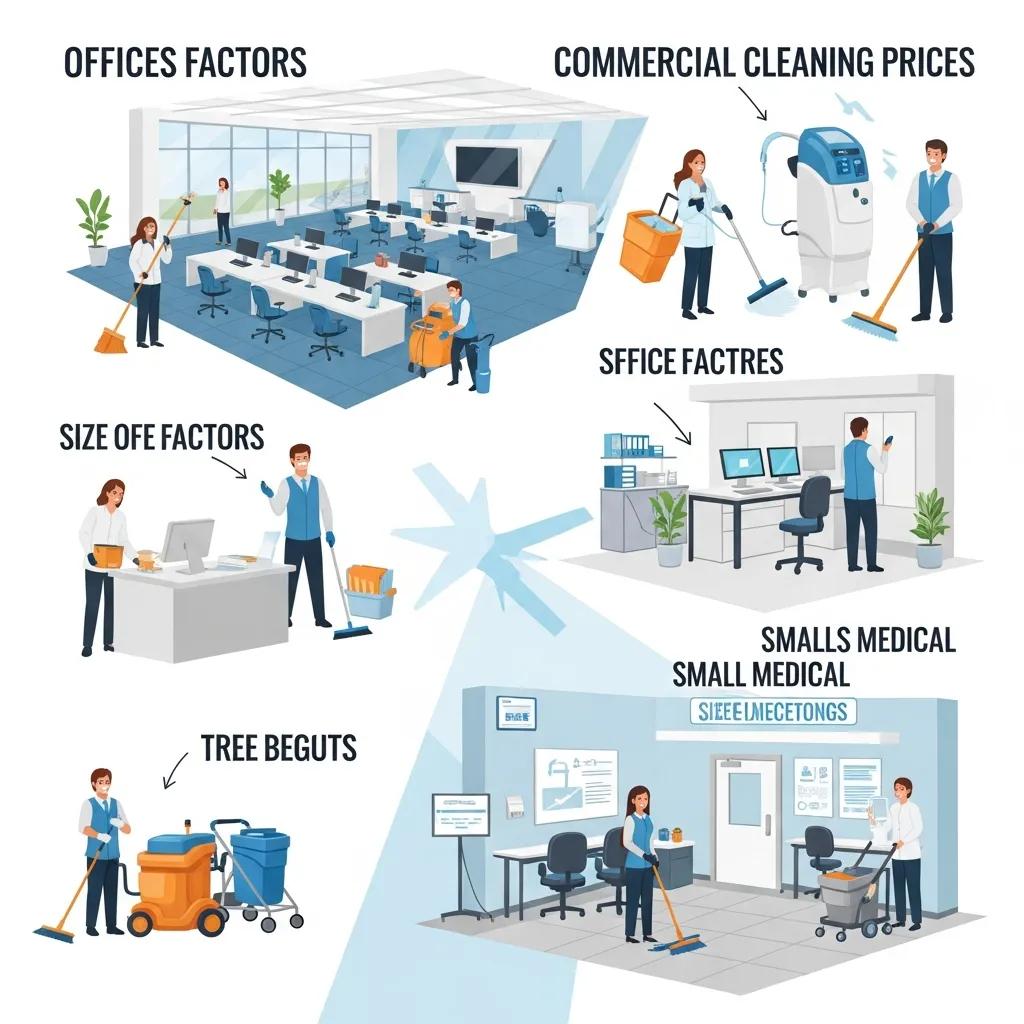
Several core factors drive commercial cleaning prices: property size and layout, cleaning frequency, specialised services or compliance needs, and local operational costs like travel and wages. Some factors scale linearly (size), while others add step changes (specialised sanitisation or regulated medical cleaning). Knowing these drivers lets managers predict how quotes will move and ask providers for cost-saving options such as bundled frequency discounts or scheduled off-peak cleans.
Key factors include:
- Property size and layout: Bigger or more complex layouts increase time per visit.
- Frequency and scope: More frequent visits lower the per-clean cost; infrequent deep cleans cost more.
- Specialised services: Medical or industrial cleans require PPE, consumables and trained staff.
- Location and travel: Remote sites may incur travel fees or minimum charges.
Below is a table summarising each factor’s impact and offering example guidance on expected cost deltas for budgeting.
| Factor | Impact on price | Example cost delta / Guidance |
|---|---|---|
| Property size/layout | More sqm or complex zones increase time | Expect 10–30% higher for segmented layouts versus open-plan |
| Frequency/scope | Regular visits reduce per-visit cost | Weekly contracts often cheaper per clean than fortnightly |
| Specialised services | Regulatory compliance raises rates | Medical cleaning premiums can be significant due to consumables |
| Travel/location | Remote access adds surcharges or minimums | Add a fixed travel fee or per-km surcharge for remote sites |
This table helps forecast how quotes can change; the sections that follow quantify size/frequency effects and specialised-service premiums in practical terms.
How Do Property Size and Cleaning Frequency Affect Costs?
Costs normally scale with square metres and the intensity of tasks. Per-square-metre pricing simplifies budgeting for uniform spaces, while hourly billing reflects layout complexity and the actual labour required. For rough budgeting, estimate a baseline cost per clean then apply frequency multipliers — weekly cleans typically qualify for lower per-visit rates, while monthly deep cleans carry premiums for extra time and consumables. Example: a 200 sqm office often gets a per-visit fixed fee that can drop 15–25% if moved to a weekly schedule instead of monthly.
When requesting quotes, share accurate floor plans and a clear task list so providers can recommend the best pricing model. That keeps quotes comparable and helps avoid hidden surcharges.
What Role Do Specialised Services Play in Pricing?
Specialised services — medical centre cleaning, industrial degreasing, or post-construction cleans — need extra training, equipment and consumables. That increases hourly rates or appears as specific line items in fixed contracts. Regulated environments often require documented procedures and certified staff, so providers add premiums to cover risk management and consumable use. These are usually quoted as percentage uplifts or per-task surcharges because they differ from standard janitorial work.
Specialist premiums range from modest uplifts for heavy equipment to substantial increases for regulated sterilisation. Always ask for a clear breakdown of specialised line items and compliance documents when comparing quotes so you assess price and risk mitigation together.
How Does Divine Commercial Cleaning Compare to Competitors in Pricing and Value?
When you compare Divine Commercial Cleaning to market averages, focus on value rather than just headline rates. We emphasise tailored quotes, eco-friendly options, flexible scheduling and a satisfaction guarantee — positioning us as a value-focused local provider for Sunshine Coast clients. Exact prices depend on the job, but our transparency — itemising labour, supplies and travel — helps you compare total cost of ownership instead of just hourly numbers. The list below summarises our key value points and how each contributes to overall value for money.
- Eco-friendly products and practices: Reduce environmental impact and limit harsh chemicals.
- Experienced and certified team: Cuts rework risk and improves consistency.
- Flexible scheduling: Off-peak work can reduce labour premiums.
- Competitive pricing with quality outcomes: We balance cost and standards.
- Satisfaction guarantee with no lock-in contracts: Lowers procurement risk for clients.
The table below puts those differentiators against common competitor approaches so you can see where transparency and flexible terms add value.
| Feature | Divine Commercial Cleaning (stated) | Typical competitor approach |
|---|---|---|
| Customised quotes | Emphasised, with transparent breakdowns | Varies; sometimes templated |
| Eco-friendly products | Offered as an option | Often standard or limited |
| Scheduling flexibility | Adaptable to client needs | May require fixed windows |
| Contract terms | No lock-in and satisfaction guarantee | Many use fixed-term contracts |
This comparison highlights where clarity and flexible terms can justify a price difference. If you want to benchmark precisely, ask for a site-specific, itemised quote so you’re comparing like-for-like offerings.
What Unique Value Propositions Does Divine Offer?
Our UVPs focus on measurable client benefits: eco-friendly cleaning reduces environmental impact and occupant exposure; an experienced, certified team lowers rework risk; flexible scheduling helps avoid peak-hour premiums; and a satisfaction guarantee with no lock-in contracts reduces procurement risk. Each of these translates into operational value — fewer issues, clearer compliance and better workplace outcomes.
For buyers, that means weigh included services and guarantees along with price. A slightly higher rate can deliver net savings through better results and fewer interruptions.
How Do Divine’s Prices Align with Market Averages?
We position our pricing as competitive and customised rather than simply the cheapest. Our quotes show exactly what’s included so clients can compare like-for-like. Where hourly or per-sqm ranges vary across providers, our tailored approach helps you see whether eco-upgrades, scheduling choices or a satisfaction guarantee justify the quoted figure. Typically a site-specific quote from Divine will fall within local market ranges while offering optional value elements some competitors omit or charge extra for.
If you need precise benchmarking, request a site visit and an itemised quote so you can compare Divine’s total package to other local providers — that ensures you judge pricing by value, not just the headline number.
What Are the Location-Specific Pricing Insights for Chevallum, Sunshine Coast, and Brisbane?
Location-specific insights show how local wages, demand and travel shape quotes and where you can negotiate or adjust scope to reduce cost. Chevallum often carries travel or minimum-visit fees for urban firms; Sunshine Coast pricing shifts with proximity to towns and seasonal demand; Brisbane’s urban market typically has higher baseline labour and overheads. The compact table below summarises typical drivers and guidance for each location.
| Location | Typical rate drivers | Typical quote examples / Guidance |
|---|---|---|
| Chevallum | Remote access, travel time, limited local supplier pool | Expect travel surcharges or minimum visit fees; request itemised travel costs |
| Sunshine Coast | Local demand variability, proximity to coastal towns | Variable rates — closer to Maroochydore tends to be more competitive |
| Brisbane | Urban wage levels, larger providers, higher overheads | Higher baseline hourly rates; negotiate scope for savings |
These insights help you prepare accurate site information and compare quotes effectively. The next sections give Chevallum-specific examples and a direct Sunshine Coast versus Brisbane comparison.
What Are Typical Commercial Cleaning Quotes in Chevallum?
Chevallum quotes reflect travel factors and the local supplier mix. Small offices are often quoted per visit and may include a travel or minimum fee; medium retail sites commonly receive weekly-package pricing that accounts for travel. Expect small office per-visit fixed fees to be slightly higher than nearby coastal towns because of travel, and medium retail weekly packages may include a travel surcharge when providers travel from Maroochydore or farther. Provide exact location details, frequency and a clear scope so suppliers can factor travel properly rather than inflating hourly rates.
Asking for on-site assessments or virtual walkthroughs helps suppliers estimate travel and time precisely and reduces the chance of surprise fees in remote-area quotes.
How Do Sunshine Coast and Brisbane Pricing Trends Differ?
Sunshine Coast pricing is locality-driven: areas near Maroochydore and other towns have competitive rates and a healthy supplier pool, while more remote coastal or hinterland suburbs often attract travel fees. Brisbane’s market has higher baseline hourly rates because of wage structures and larger overheads, but it also offers greater supplier density and more specialised options. So, Brisbane quotes may be higher per hour but can include packaged or economy options for big facilities. Sunshine Coast buyers should prioritise local suppliers to avoid travel premiums.
Knowing these trends helps you choose the right pricing model and supplier for your budget and service expectations — always compare fully itemised quotes before deciding.
What Are the Most Common Questions About Commercial Cleaning Pricing?
Buyers often ask short, action-focused questions about office and medical cleaning costs. Clear answers with example ranges and practical guidance help with budgeting and procurement. Below are common questions and quick pointers to help you prepare for quote requests and next steps.
- How to compare quotes: Ask for itemised lists showing labour, supplies, travel and specialised items.
- Which pricing model suits my business: Match the model to your facility size and predictability needs.
- How to verify compliance: Request documentation and examples of experience for regulated work.
These pointers help managers form the right brief for suppliers and prepare comparable tender documents. Below we answer two high-demand local questions about office and medical cleaning costs in Brisbane.
How Much Does Office Cleaning Cost in Brisbane?
Office cleaning costs in Brisbane depend on size, frequency and scope. Urban hourly rates tend to be higher than peri-urban areas, and contract packages usually give better per-clean value for regular schedules. Small offices often get per-visit fixed fees or hourly quotes that rise with additional tasks; larger open-plan offices may be quoted per-square-metre or as a weekly package. When comparing quotes, normalise by asking for a cost-per-week or cost-per-month for the same scope and frequency so you can compare total recurring spend rather than differing hourly or per-visit figures.
For accurate comparisons, provide a layout plan, frequency needs and any specialised tasks so suppliers can deliver like-for-like quotes.
What Are the Average Medical Centre Cleaning Rates in Brisbane?
Medical centre cleaning in Brisbane carries premiums for regulatory compliance, consumables and trained staff, so rates are higher than standard office cleaning. Providers typically itemise PPE, sanitisation chemicals and documented procedures as separate line items. As a rule, medical cleans attract a percentage uplift over standard cleaning to reflect extra time and consumables, and are commonly quoted per-visit for clinics or per-shift for larger facilities. Choose a provider with documented medical experience and clear compliance procedures to reduce risk and support predictable budgeting.
Because of the regulatory implications, always request evidence of procedures and staff training and ask for a sample scope-of-work to confirm quotes include the necessary compliance measures.
Divine Commercial Cleaning offers customised quotes, eco-friendly options, flexible scheduling and a satisfaction guarantee for Sunshine Coast and nearby clients. If you’d like a tailored proposal that itemises labour, supplies, travel and specialised service costs, contact our Maroochydore office to request a site-specific quote and a comparative breakdown.
Frequently Asked Questions
What should I consider when choosing a commercial cleaning service?
Consider the company’s reputation, experience and service range. Look for providers who understand your industry — especially if you need regulated work like medical cleaning. Check pricing models and insist on transparent quotes that list all costs, including travel or specialised service surcharges. Customer reviews and case studies give useful insight into reliability and quality.
How can I ensure the cleaning service meets my specific needs?
Be clear about your requirements during the first consultation. Share your facility size, layout and any specialised cleaning needs. Ask for a customised cleaning plan that sets out scope, frequency and any preferred products or methods. Also check staff training and qualifications to make sure the team can handle your specific tasks.
Are there any hidden costs I should be aware of?
Yes — common hidden fees include travel surcharges for remote locations, minimum visit charges and extra costs for specialised supplies or services. To avoid surprises, ask for a detailed breakdown of costs in the quote and clarify how out-of-scope work is handled.
How often should I schedule cleaning services for my business?
Frequency depends on business type, foot traffic and cleanliness standards. High-traffic retail or medical sites often need daily or weekly cleaning. Low-traffic offices may be fine with bi-weekly or monthly visits. Discuss your needs with a provider to find a schedule that balances cleanliness and cost.
What are the benefits of using eco-friendly cleaning products?
Eco-friendly products reduce environmental impact and improve indoor air quality. They’re gentler on staff and occupants and effective at cleaning without harsh chemicals. Choosing a provider that prioritises eco-friendly options also supports sustainability goals and can look good to customers and staff.
How can I compare quotes from different cleaning services effectively?
Make sure each quote includes a detailed breakdown of labour, supplies and any extra fees. Standardise the scope across quotes so you’re comparing the same services. Look for transparency and ask about ambiguous charges. Consider overall value — flexibility, customer service and eco-options — not just the lowest price.
What should I do if I am not satisfied with the cleaning service?
Raise your concerns with the provider first — good companies will have a process to resolve issues and may re-clean at no charge. If problems continue, review your contract and any satisfaction guarantees. If needed, document issues and consider switching providers, using your experience to brief the next supplier more effectively.
Knowing how commercial cleaning pricing works in Chevallum, the Sunshine Coast and Brisbane helps you make choices that fit your budget and standards. Compare pricing models, understand the cost drivers and seek fully itemised quotes so you can judge real value. When you’re ready, request tailored proposals from local providers to find the best service for your needs — and don’t hesitate to ask for breakdowns so you can compare like for like.

Dianne, originally from Rockhampton, hails from a business-oriented family, with her father owning electrical stores and her uncle serving as Mayor. Moving to the Sunshine Coast at 13, she later pursued a rewarding real estate career and raised three children. As a single mom, she balanced university studies with domestic cleaning work. Armed with a Bachelor’s Degree in Business, majoring in Supply Chain Management, Dianne founded and grew Divine Commercial Cleaning into a thriving company. Her success is rooted in strong family mentorship, a positive attitude, and a solution-oriented approach, offering tailored cleaning services with integrity and strategic insight.