
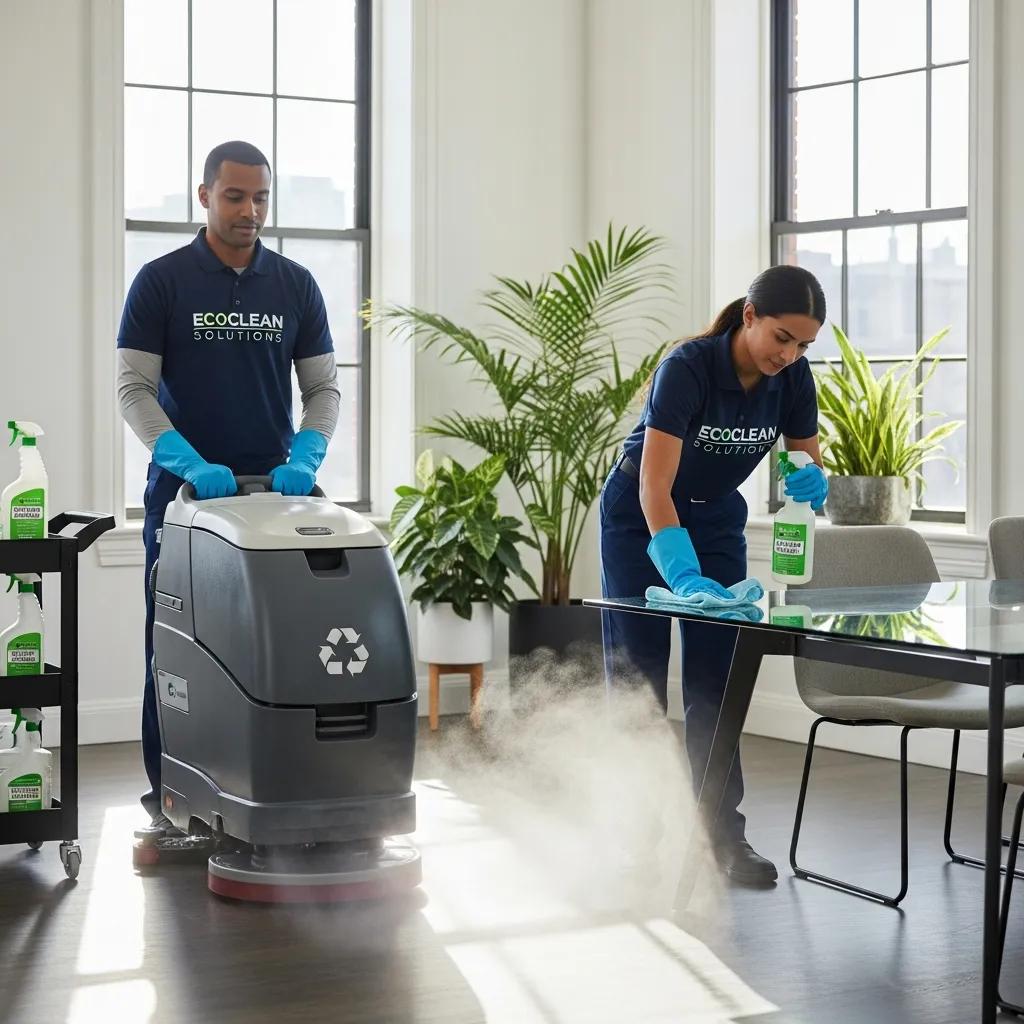
Currimundi commercial cleaning pricing explained — how Divine gives you clearer value than the rest
Pricing for commercial cleaning in Currimundi can feel confusing. This guide breaks down the common charging models, the main cost drivers, and how to compare true value between local providers. You’ll see how per-square-metre, hourly and fixed contract rates are calculated, what typically pushes a quote up or down, and how specialist work — like medical-centre cleaning or carpet extraction — changes the budget. We also compare typical market approaches with Divine Commercial Cleaning’s value signals and explain how eco-friendly choices and modern equipment affect total cost and long‑term return. If you manage an office, retail outlet, strata, or childcare centre on the Sunshine Coast, this page links pricing mechanics to practical decisions: choosing a model, asking for a transparent quote, and understanding what delivers the best cost of ownership. By the end you’ll be ready to request tailored quotes, compare line‑by‑line bids, and pick the mix of frequency, scope and add‑ons that fits your business.
Divine Commercial Cleaning also serves businesses across the Sunshine Coast. For example, organisations in Kings Beach QLD can access the same tailored cleaning solutions and transparent quoting.
Common commercial cleaning pricing models in Currimundi
Most Currimundi commercial cleaning is priced one of three ways: per square metre, hourly, or a fixed monthly contract. Each model offers a different balance of predictability and flexibility. Per‑m² works well for large, uniform floor areas with a standard scope; hourly suits variable tasks and one‑off callouts; fixed contracts bundle routine visits into a steady monthly cost. Understanding these options helps you match budgeting needs to operational realities and compare suppliers on equivalent terms. Below we define each model, show quick example calculations, and list the pros and cons so you can choose the option that fits your site and cashflow.
The table below summarises the three models with example scenarios and practical pros and cons to help you compare options quickly.
| Pricing model | How it’s calculated | Example scenario / Pros & Cons |
|---|---|---|
| Per square metre | Flat rate × cleaned m² (may include modifiers) | Small office 200 m² at $0.80/m² = $160 per visit; best for consistent layouts, sensitive to floor type and access |
| Hourly rate | Cleaner hours × hourly rate (+ materials) | Ad‑hoc 3 hours at $45/hr = $135; flexible for irregular tasks, price can change each visit |
| Fixed contract | Agreed monthly fee for set scope/frequency | Monthly package for daily cleaning: $1,200/month; predictable budgeting, may exclude special deep cleans |
In short: per‑m² suits standardised spaces, hourly is best for variable duty cycles, and fixed contracts give budget certainty for recurring needs. Picking the right model for your site and schedule reduces the chance of mismatched quotes and surprise charges.
How per‑square‑metre pricing works for commercial cleaning
Per‑m² pricing applies a base rate to each square metre cleaned, with adjustments for floor type, heavy traffic zones and access complexity. Calculation is simple: base rate × total cleaned area plus any specialised task add‑ons — for example, a 120 m² office at $0.90/m² equals $108 before extras. Factors that raise the per‑m² rate include heavy soiling, textured or specialist flooring and restricted access that adds setup time. This model suits clients with predictable layouts because it scales with area and makes benchmarking across vendors straightforward.
Per‑m² pricing also gives clear unit economics — facilities managers can test the impact of changing frequency or scope. Compare it alongside hourly and fixed options to see which delivers the best cost per visit and overall monthly spend for your needs.
Benefits of hourly and fixed contract rates
Hourly rates offer flexibility and transparency when cleaning needs fluctuate — you pay for the time booked and can prioritise tasks each visit. They’re ideal for irregular schedules or occasional specialist jobs like event cleanups or deep cleans, since there’s no long‑term commitment. Fixed contracts provide predictable monthly costs and often include discounts for regular frequencies, easing procurement approvals and budgeting. The trade‑offs: fixed contracts can exclude one‑off services or charge extra for specialised work, while hourly billing can become expensive if the cleaning is regular and frequent.
To choose, model projected monthly hours under an hourly setup against a fixed fee and factor in the administrative convenience of a single invoice. The next section looks at which site and scheduling factors most influence these decisions and how frequency affects per‑visit pricing.
Key factors that influence commercial cleaning costs in Currimundi
Quotes in Currimundi are driven by several variables: total area, cleaning frequency, task complexity and access or security requirements. Site features such as flooring type, number of bathrooms, commercial kitchens and after‑hours access increase labour and equipment needs, which raises prices. Frequency matters — more frequent visits usually lower the per‑visit cost through efficiency and amortised setup time, while irregular schedules or emergency callouts attract premiums. Knowing these levers helps you forecast budgets and request line‑item quotes that isolate the variable drivers.
| Cost factor | Why it affects price | Mitigation / Typical price impact |
|---|---|---|
| Business size (m²) | More area = more time and materials | Use per‑m² pricing; economies of scale often reduce unit cost |
| Cleaning frequency | More frequent visits lower per‑visit setup costs | Weekly → daily can reduce per‑visit rate by ~10–30% (typical) |
| Specialised tasks | Requires equipment/training (carpets, tiles) | Bundle as add‑on or schedule periodic deep cleans |
| Access/security | After‑hours or locked sites add time | Premium for after‑hours or escorted access |
Square footage sets the baseline, but frequency and special requirements usually create the biggest quote variations. The following sections unpack how frequency and add‑ons change pricing.
How business size and cleaning frequency affect pricing
Size determines the baseline labour and consumable needs — a 50 m² boutique will cost far less than a 2,000 m² retail store because cleaning time scales with area. Frequency changes unit economics: regular visits reduce set‑up time, let teams standardise tasks, and spread overheads, so providers commonly offer discounts for daily or multiple weekly visits. Infrequent cleans include larger setup and deep‑clean premiums to restore standards. Contracts can also include minimum call‑out fees or setup charges that disproportionately affect small, one‑off jobs.
Use these relationships to model monthly spend: area × per‑m², or hourly rate × expected hours, then apply frequency discounts and minimum fees so you can compare providers on an apples‑to‑apples basis. The next subsection shows how add‑ons further affect costs.
What role do specialised services and add‑ons play in pricing?
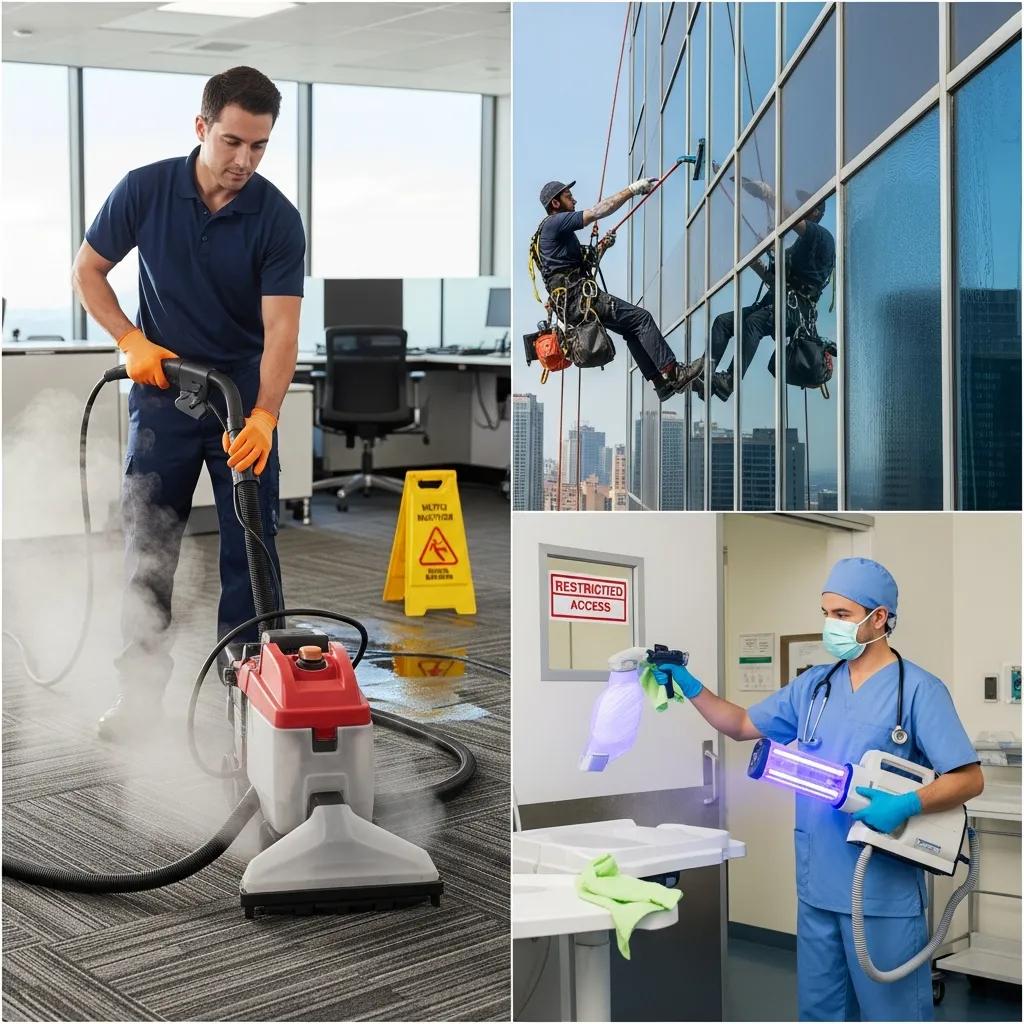
Specialised services — carpet cleaning, window washing, high‑pressure exterior work, tile & grout restoration and flood restoration — require different equipment, chemicals and training, so they’re priced separately from routine cleaning. These add‑ons are usually quoted per job or scheduled periodically; for example, carpet extraction may be charged per room or per m² on a quarterly basis. Bundling specialist tasks into a recurring contract often secures discounts versus ad‑hoc pricing, while emergency restoration carries a premium for rapid response and specialist resources.
Common drivers for add‑on costs include equipment hire, dry time and certifications for sensitive environments. Request itemised add‑on rates to avoid surprises and make direct comparisons between bids. Bundling options lets you design a package that balances day‑to‑day coverage with planned specialist care.
How Divine Commercial Cleaning’s pricing compares to competitors in Currimundi
We price with a focus on tailored solutions and transparent line items that reflect the market’s common models, aiming to balance cost with lasting value for Currimundi businesses. Where many competitors push the lowest headline price, Divine highlights operational assurances — consistent cleaner assignment, no lock‑in contracts, full insurance and a money‑back guarantee — which shift the decision from short‑term price to total, risk‑adjusted value. Below we compare typical competitor inclusions with Divine’s value adds so procurement teams can weigh short‑term savings against ongoing reliability and reduced management overhead.
| Feature / Inclusion | Typical local provider | Divine Commercial Cleaning (value signals) |
|---|---|---|
| Contract flexibility | Often 12‑month minimums | No lock‑in contracts |
| Cleaner consistency | Variable staff rotation | Same cleaner every time (where possible) |
| Insurance & checks | Varies | Full insurance; police checks where required |
| Satisfaction promise | Limited | Money‑back guarantee |
This comparison shows why Divine’s pricing should be judged on both line‑items and the risk and management burden it removes. For procurement teams, transparent itemisation makes side‑by‑side comparisons easy and highlights where a slightly higher unit price can lower total ownership cost.
What unique value propositions set Divine apart?
Divine Commercial Cleaning is family‑owned and locally focused, with experienced, professional cleaners, no lock‑in contracts, consistent cleaner allocation where possible, full insurance and police checks, eco‑conscious practices and a money‑back guarantee. Each of these reduces client risk in tangible ways: the same cleaner builds site knowledge and speed, flexible contracts let you change course, and insurance/police checks limit liability. These practical benefits often outweigh small price differences by cutting rework, complaints and administrative overhead.
Our website is designed to help you quickly enquire and get a tailored proposal — we make it simple to move from evaluation to a customised quote.
How transparent pricing builds trust and makes customisation easier
Transparent pricing means itemised quotes that separate labour, consumables and add‑ons so you can see exactly what you’re paying for and where savings are possible. A clear line‑item quote will list base labour (hourly or per‑m²), materials, scheduled specialist services and any after‑hours or access premiums, allowing direct vendor comparisons and scoped negotiation. Transparency also supports custom packages: trade frequency for deeper periodic cleans or add carpet extraction as a quarterly line item rather than an ongoing inclusion. For procurement teams, itemised quotes speed evaluation and reduce post‑contract disputes about scope creep or unexpected fees.
When assessing trust, ask providers for sample line‑item quotes and clarifications on exclusions so you can compare total costs fairly and avoid surprises during contract execution.
Pricing considerations for specialised commercial cleaning services in Currimundi
Different sectors change price drivers because of regulation, risk and required expertise. Offices, retail spaces, strata and gyms have varied hygiene needs and footfall patterns, while medical centres and daycares require stricter infection control, specialised chemicals and staff training that lift costs. Pricing for each vertical reflects both task complexity and the risk‑mitigation measures needed. The table below outlines typical inclusions and sample price drivers to help you predict budgets.
| Service type | Typical inclusions | Pricing driver / Sample band |
|---|---|---|
| Office cleaning | Workstations, meeting rooms, communal areas | Labour per visit + frequency discounts; per‑visit $80–$250 depending on size |
| Medical centre cleaning | Infection control, specialised chemicals, staff protocols | Higher hourly rates + certification costs; premium 15–40% |
| Retail cleaning | Floor care, displays, waste management | Peak‑hour cleaning and high‑traffic floor maintenance |
| Strata cleaning | Common areas, lifts, corridors | Access scheduling and communal area complexity |
| Gym & daycare | Equipment sanitation, floor hygiene | Extra chemicals and shorter turnaround times |
This mapping helps you decide which specialist services to include in a base contract and which to schedule as periodic add‑ons, improving budget predictability and compliance with sector standards.
How office cleaning is priced to support productivity and professionalism
Office pricing reflects the number of workstations, communal areas and meeting rooms plus any specialist needs such as kitchens or polished receptions. Typical inclusions are dusting, vacuuming, waste removal, restroom sanitation and surface disinfection; pricing is usually per‑visit or monthly with discounts for multiple weekly visits. Cleaner workplaces improve staff wellbeing and client impressions, which can deliver measurable productivity and brand benefits that outweigh modest cleaning costs. For many businesses, a small increase in cleaning frequency reduces sick days and lifts client experience.
When comparing quotes, ask for a checklist of included tasks and standardised scope definitions so you can tie each line item to productivity outcomes and justify the spend to stakeholders.
Why medical centre cleaning is an investment in hygiene and safety
Medical centre cleaning follows stricter infection‑control protocols, uses hospital‑grade disinfectants, requires specialised equipment and trained staff who follow defined regimens for clinical areas. These factors increase labour time, mandate specific consumables and often include auditing and documentation costs, which raise pricing compared with standard office cleaning. The extra investment reduces cross‑contamination risk and supports patient safety — outcomes that are often mandated and central to clinical accreditation.
Budgeting for medical cleaning should include higher per‑visit labour, scheduled deep cleans for high‑touch areas and documented processes so you can compare providers on both cost and compliance.
How eco‑friendly practices affect commercial cleaning pricing in Currimundi
Green cleaning typically uses certified products, low‑water or low‑chemical systems and HEPA vacuums, which can change material and equipment costs but deliver long‑term benefits. While green consumables sometimes carry a small premium, efficiencies such as reduced water use, longer equipment life and improved indoor air quality can offset the extra cost and lower absenteeism and maintenance expenses. Visible sustainability practices also meet tenant and customer expectations, adding reputational value beyond immediate cost considerations. The next sections cover whether eco options cost more and the technologies that improve value.
Are eco‑friendly cleaning options more expensive?
They can be, but not necessarily. Eco‑friendly choices may carry a modest upfront premium for certified products or specialised equipment, yet they’re often cost‑neutral or cost‑saving over time when you account for lower water use, less chemical damage to surfaces and better indoor air quality that can reduce sick days. Many clients see the price gap under 10% when switching from conventional to green alternatives, while gaining non‑monetary benefits like healthier workspaces and stronger brand alignment. When comparing options, request line items for product costs and expected lifecycle or efficiency gains so you can quantify net value rather than just the headline price.
What advanced technologies does Divine use to enhance value?
Divine Commercial Cleaning uses environmentally conscious practices and professional equipment designed to improve efficiency and outcomes — for example, HEPA‑filter vacuums to reduce airborne particulates and low‑water systems for exterior or pressure cleaning. These tools cut labour time, improve cleanliness and lower secondary maintenance costs — gentle tile restoration, for instance, can extend surface life and delay replacement. Modern equipment also helps meet indoor air quality targets and reduce heavier chemical use, aligning with sustainability and staff health goals.
Equipment‑led efficiency can reduce total labour hours per visit and the frequency needed for deep cleaning, turning the investment in modern methods into a contributor to long‑term cost reduction rather than a permanent premium.
How Currimundi businesses can get tailored cleaning quotes from Divine Commercial Cleaning
To get an accurate quote, provide a clear scope, basic site details and the frequency and specialist needs you expect. A typical process is a short enquiry with premises type and area, a site visit or virtual assessment, and then a detailed, itemised quotation that separates base cleaning, add‑ons and recommended frequencies. Our site is set up to help you move from enquiry to a customised proposal with minimal fuss.
Here’s a simple 3‑step process to secure a no‑obligation, tailored quote you can use to compare providers and plan budgets.
- Share basic site details: premises type, approximate m², number of washrooms and desired frequency.
- Book a site visit or virtual assessment so we can confirm access, high‑traffic areas and any specialised tasks.
- Receive an itemised quote listing labour, materials, scheduled add‑ons and optional services for side‑by‑side comparison.
What’s included in a standard commercial cleaning quote?
A typical quote lists base labour charges (per visit or monthly), consumables and materials, scheduled specialised services (carpet, window, pressure cleaning) and any premiums for after‑hours or secure‑access work. It should also note exclusions such as pest control, structural repairs or hazardous waste removal and specify frequency, tasks per visit and any minimum visit requirements. Itemised quotes let you repackage services — trading frequency for periodic deep cleans or removing add‑ons — so clear line items are essential for accurate comparisons.
When you receive quotes, compare like‑for‑like scopes and ask for clarifications on any ambiguous items to avoid hidden costs after signing.
How to request a customised, no‑obligation cleaning quote
Follow this straightforward workflow to get a reliable, custom quote that reflects your site and enables fair comparisons. First, prepare key details: premises type, approximate floor area, desired cleaning frequency and any specialised services. Second, arrange an on‑site inspection or virtual walkthrough so the estimator can confirm access, high‑traffic zones and storage for equipment. Third, request an itemised quote with timelines, recommended frequency and defined exclusions; ask for service examples and references to insurance and police checks to confirm risk management practices.
This three‑step approach reduces ambiguity and shortens decision cycles, letting managers secure comparable offers quickly and move from evaluation to implementation with confidence.
Frequently asked questions
1. What should I consider when choosing a commercial cleaning service?
Look at reputation, experience and the range of services offered. Ask for transparent, itemised quotes that show exactly what’s included. Check contract flexibility, staff consistency, eco‑friendly practices, insurance and relevant certifications. Customer reviews and testimonials also help you assess reliability and service quality.
2. How can I ensure I receive a fair quote for cleaning services?
Give providers clear information about your premises — size, type and specific needs — and request itemised quotes that break down labour, materials and specialised services. This makes comparison easier. Ask for references or case studies from similar clients, and be explicit about frequency and scope to avoid hidden costs later.
3. Are there any hidden costs I should be aware of in cleaning contracts?
Hidden costs can include fees for specialised services not in the base quote, after‑hours premiums, or extra charges for high‑traffic areas. To avoid surprises, have the contract clearly list included services and potential add‑ons, and ask about minimum visit requirements or cancellation fees. A transparent provider will outline all likely costs up front.
4. How often should I schedule cleaning services for my business?
Frequency depends on business type, foot traffic and hygiene standards. High‑traffic retail or medical facilities may need daily or multiple weekly visits; offices with lower use might be fine weekly or bi‑weekly. Discuss your needs with providers to find the schedule that balances cleanliness and budget.
5. What are the benefits of using eco‑friendly cleaning products?
Eco products improve indoor air quality, reduce chemical exposure for staff and customers, and lower environmental impact. They can also support your brand’s sustainability goals. While there may be a small upfront cost increase, long‑term savings from reduced health issues and maintenance often offset this. Many customers also prefer businesses that prioritise sustainability.
6. How can I assess the quality of a cleaning service before hiring?
Check online reviews and testimonials for feedback on reliability and thoroughness. Ask for references and follow up with them. Consider a trial clean or walkthrough to evaluate attention to detail. Look for staff training, certifications and proof of insurance as indicators of high standards.
7. What specialised cleaning services might my business need?
Depending on your sector, you may need carpet cleaning, window washing, or deep sanitisation for medical facilities. Retail spaces often require regular floor maintenance and display cleaning, while gyms and daycares need thorough sanitation. Knowing your specific needs helps you brief providers and get a comprehensive package.
Knowing how commercial cleaning pricing works in Currimundi helps you make choices that fit your operational needs and budget. Compare pricing models, prioritise the specialist services you need, and ask for itemised quotes so you can judge true value — not just the headline price. When you’re ready, request a customised quote from Divine Commercial Cleaning and see how transparent pricing and dependable service can simplify your facility management.

Dianne, originally from Rockhampton, hails from a business-oriented family, with her father owning electrical stores and her uncle serving as Mayor. Moving to the Sunshine Coast at 13, she later pursued a rewarding real estate career and raised three children. As a single mom, she balanced university studies with domestic cleaning work. Armed with a Bachelor’s Degree in Business, majoring in Supply Chain Management, Dianne founded and grew Divine Commercial Cleaning into a thriving company. Her success is rooted in strong family mentorship, a positive attitude, and a solution-oriented approach, offering tailored cleaning services with integrity and strategic insight.