Dental Office Cleaning Services and Infection Prevention: Comprehensive Solutions for Safe and Hygienic Dental Practices
Dental office cleaning and infection prevention combines targeted surface disinfection, device-compatible cleaning, air and aerosol controls, and rigorous workflow practices to reduce pathogen load and protect patients and staff. Professional cleaning reduces reservoirs of bacteria and viruses on dental chairs, operatories, reception areas, and sterilisation rooms by using medical-grade disinfectants, validated contact times, and sequence-driven cleaning to limit cross-contamination. This article explains practical cleaning protocols (daily, weekly, monthly), high-touch surface priorities, specialised treatment- and sterilisation-area procedures, and how those practices lower healthcare-associated infection risks while supporting regulatory compliance. It also maps Australian standards—such as AS 5369:2022 and relevant Australian Dental Association guidance—to operational actions clinics can implement. Briefly, Divine Commercial Cleaning, a family-owned provider based in Maroochydore, QLD, delivers customised medical/health centre cleaning across the Sunshine Coast and Brisbane to help dental practices meet these expectations. Read on for step-by-step checklists, comparison tables, disinfectant selection guidance, and clear local next steps to request an assessment.
What Are the Essential Dental Office Cleaning Protocols for Infection Control?
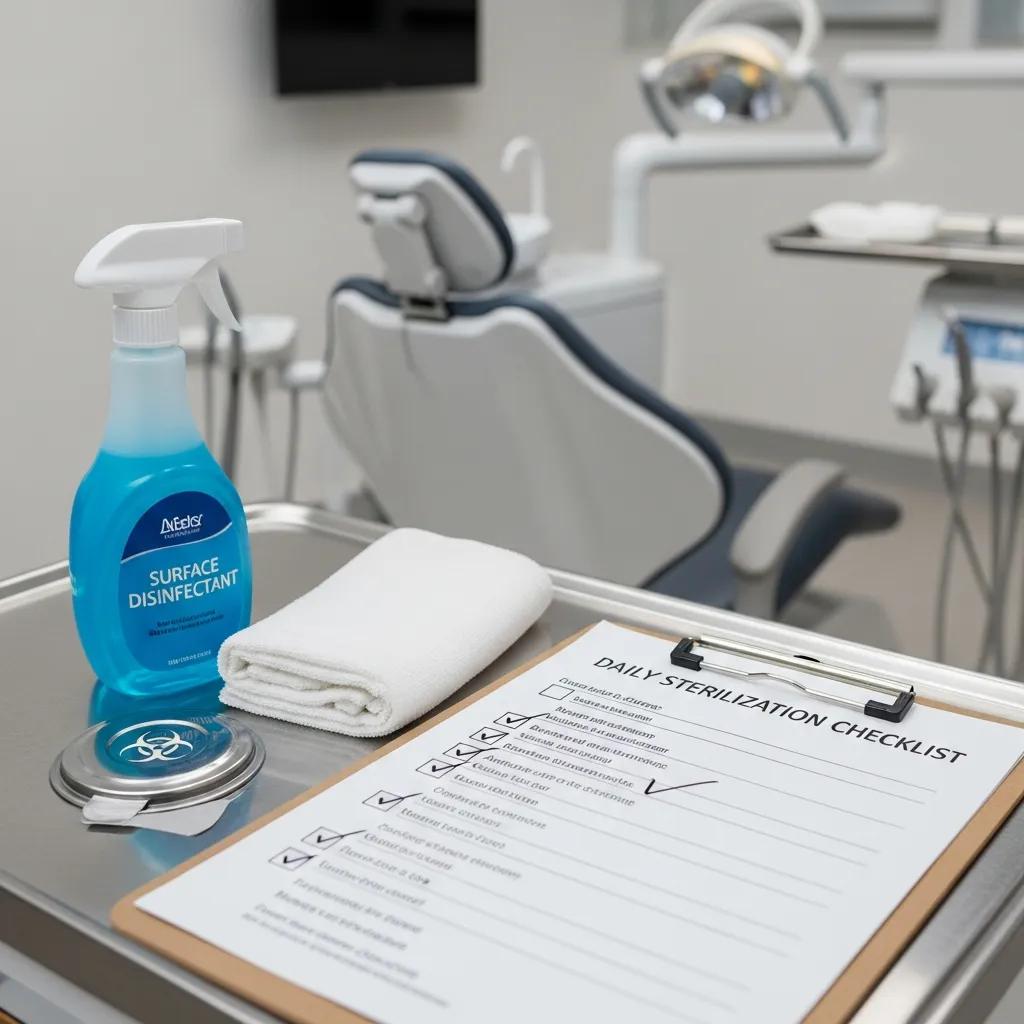
Essential dental office cleaning protocols are structured around frequency-based categories—daily, weekly, and monthly—that define scope, method, and verification to prevent pathogen transmission. Each category aligns a specific mechanism (routine surface disinfection, deep cleaning, environmental checks) with a measurable benefit such as reduced surface bioburden, verified ventilation, and audit-ready documentation. Implementing these protocols requires clear assignment of roles, PPE standards, approved disinfectants with documented contact times, and sequencing that moves from clean-to-dirty to avoid cross-contamination. A practical approach ensures operatories are disinfected between patients, public areas are sanitised multiple times daily, and sterilisation zones receive specialised procedures with strict separation from clinical waste. The following checklist and table give clinic managers an actionable framework to operationalise these protocols and prepare for regulatory review.
Daily, weekly, and monthly tasks for infection control in dental offices are summarised below to aid quick adoption and featured-snippet style reference.
- Daily clinical cleaning: Disinfect operatories and high-touch surfaces after each patient using approved disinfectants with manufacturer contact times.
- Daily front-of-house hygiene: Wipe reception counters, door handles, and waiting-area chairs several times daily to reduce cross-traffic transmission.
- Weekly deep cleaning: Conduct thorough cleaning of non-clinical areas, floor edges, and equipment exteriors beyond routine wipe-downs.
- Monthly systems checks: Verify ventilation, suction performance, and review cleaning logs and infection-control documentation.
These checklist items form the baseline for an infection prevention program and should be supported by training and audit records to ensure consistent execution.
Intro to the cleaning frequency table: the following table maps typical entities in a dental clinic to recommended frequency and method to provide a quick-reference implementation tool.
| Area / Item | Recommended Frequency | Method / Key Parameter |
|---|---|---|
| Operatories (chairs, light handles) | After every patient | Wipe pre-clean → apply hospital-grade disinfectant; follow contact time |
| Reception desks & door handles | Multiple times daily | Surface-compatible disinfectant; microfiber cloths; focus on high-touch zones |
| Sterilisation room surfaces | Daily and during cycles | Segregated workflow, non-spray methods for equipment; validation records |
| X-ray equipment & monitors | Daily | Use low-moisture disinfectants; avoid direct fluid ingress |
This table provides a compact operational reference to assign tasks and check compliance, and it supports staff training and audit readiness.
How to Implement Daily, Weekly, and Monthly Cleaning Checklists in Dental Clinics
Effective implementation of daily, weekly, and monthly cleaning checklists begins with defining responsibility, timing, and documentation so that cleaning becomes a reproducible workflow rather than an ad hoc task. A daily checklist should list patient-to-patient operatory actions, PPE requirements, and the exact disinfectant and contact time to use, and it should record the cleaner and time completed to create an audit trail. Weekly and monthly checklists expand scope to include deep-clean tasks, filter and ventilation checks, inventory of disinfectants and PPE, and review of staff training and competency records to ensure continuous improvement. To embed the practice, assign shifts, build the checklist into routine handovers, and perform weekly supervisory spot audits with corrective actions logged; this creates a cycle of verification that feeds into regulatory readiness. Clear documentation also enables trend analysis to identify recurring trouble spots and to adjust cleaning frequency where patient flow or case mix increases risk.
Which High-Touch Surfaces Require Special Disinfection Attention in Dental Practices?
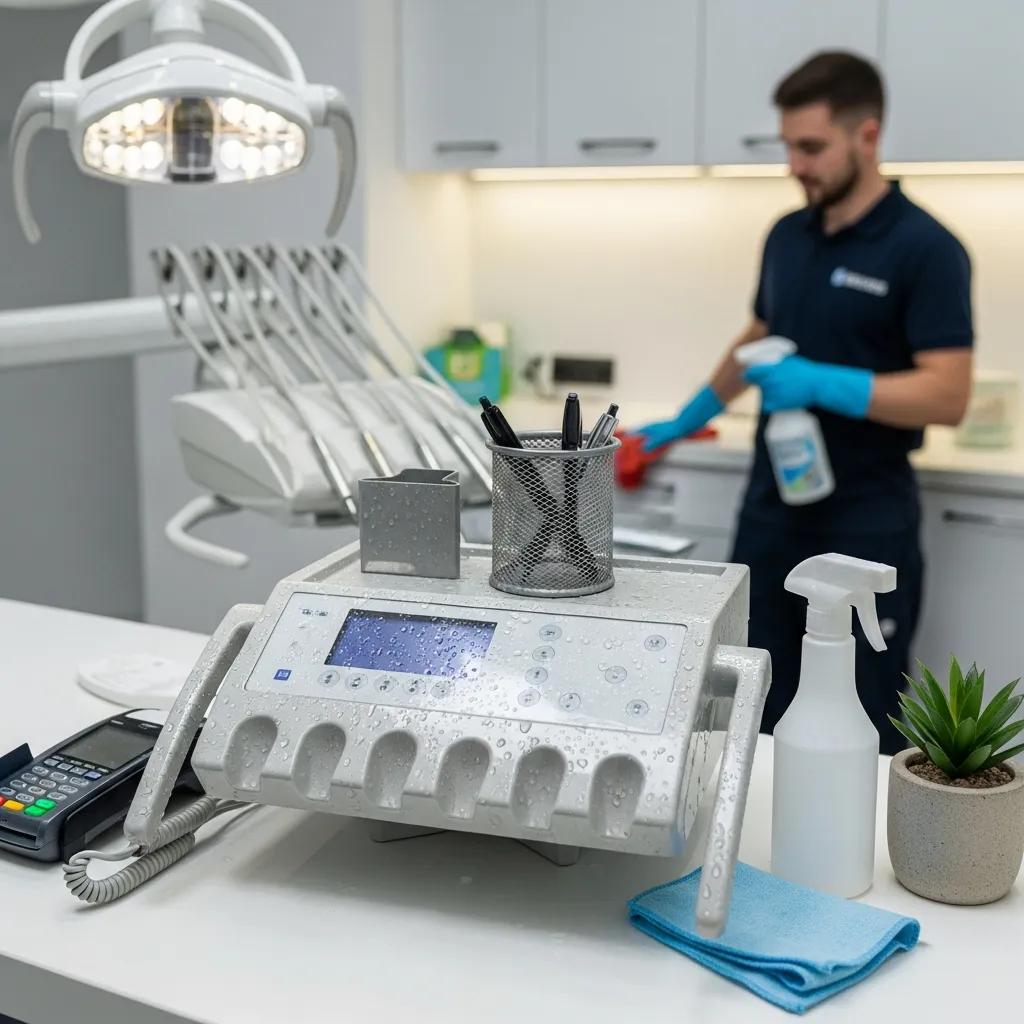
High-touch surfaces in dental settings concentrate transmission risk because they are contacted frequently by staff, patients, and instruments, and therefore require prioritised disinfection to break transmission chains. Core high-touch items include dental chairs (armrests and controls), clinician light handles and delivery system touchpoints, intraoral imaging controls, computer keyboards and mice at reception and clinician stations, door handles, and reception desks; each surface needs an appropriate disinfectant and verified contact time to be effective. Selection of wipe vs. spray, and disinfectant chemistry, depends on surface compatibility—some electronics require low-moisture wipes—while sequencing should always proceed from cleaner zones to dirtier areas to avoid dragging contaminants. Prioritising these surfaces reduces the chance that aerosols, splatter, or contaminated gloved hands will seed environmental reservoirs between cleanings. The next section outlines how to choose disinfectants and implement environmental sequencing to minimise equipment damage while ensuring efficacy.
Recommended prioritised high-touch list with rationale:
- Dental chair controls and upholstery: Direct patient contact; use compatible disinfectants and follow manufacturer guidance.
- Light handles and delivery systems: Frequent clinician contact during procedures; disinfect between patients.
- Reception touchpoints (desk, pens, card terminals): High patient turnover; sanitize multiple times daily.
- Electronic controls and keyboards: Use low-moisture wipes to prevent equipment damage while achieving disinfection.
How Does Divine Commercial Cleaning Ensure Compliance with Australian Dental Infection Control Standards?
Divine Commercial Cleaning aligns cleaning operations with Australian dental infection control expectations by translating standards into documented actions, staff training, and verifiable audit trails that clinics can rely on for compliance and patient safety. The company applies the principles of AS 5369:2022 and Australian Dental Association guidance through practical measures: tailored checklists, training modules for cleaners on PPE and safe sequencing, routine supervisory audits, and documented cleaning logs that clinics can retain for regulatory inspections. Divine’s approach emphasizes customised solutions for each practice’s layout and patient flow—designing cleaning schedules that integrate with clinic hours to minimise disruption while maintaining rigorous medical-grade disinfection protocols. As a family-owned provider based in Maroochydore, QLD with service across the Sunshine Coast and Brisbane, Divine prioritises responsiveness, environmentally conscious product options, and a satisfaction guarantee to support local dental practices in meeting standards.
The following table maps standards to concrete compliance actions that Divine recommends or implements to ensure clinics meet their obligations.
| Standard / Guidance | Practical Action | Compliance Outcome |
|---|---|---|
| AS 5369:2022 | Implement documented cleaning & reprocessing steps; maintain records | Verifiable device handling and surface sanitation records |
| Australian Dental Association guidance | Staff training, SOPs for AGPs, PPE protocols | Aligns clinic practice with ADA recommendations |
| Dental Board of Australia expectations | Audit-ready logs and incident procedures | Demonstrable regulatory readiness and patient safety |
This standards-to-action mapping helps clinic managers see the direct link between regulatory texts and everyday cleaning activities, enabling them to maintain both patient safety and evidential documentation for audits.
What Are the Key Australian Standards and Guidelines for Dental Infection Prevention?
Key Australian references for dental infection prevention include AS 5369:2022 for reprocessing and related cleaning, Australian Dental Association guidance on infection control and aerosol-generating procedures, and Dental Board of Australia expectations for safe practice oversight; each document informs required behaviours in a clinic. AS 5369:2022 focuses on device handling, reprocessing protocols, and documentation that supports safe reuse of equipment. ADA guidance provides practical recommendations for PPE, environmental cleaning, and steps for aerosol control during clinical care. Dental Board expectations emphasise governance, incident reporting, and maintaining standards through staff training and documented procedures. Clinics should maintain accessible SOPs that reference these sources and translate their high-level requirements into routine checklists to ensure consistent execution and auditability. With that foundation, the next section explains how compliance enhances patient safety and operational performance.
How Does Compliance with AS 5369:2022 and ADA Guidelines Enhance Patient Safety?
Compliance with AS 5369:2022 and ADA guidance reduces infection risk by standardising reprocessing, defining acceptable cleaning outcomes, and establishing traceable records that demonstrate adherence to best practice. Following these standards ensures that instruments and surfaces undergo validated cleaning and disinfection cycles, that staff are trained to execute those processes safely, and that clinics can show audit evidence in the event of inspection or incident. Evidence from infection prevention literature indicates that structured environmental cleaning programs with verification reduce surface contamination and associated healthcare-associated infections; translating standards into daily practices therefore yields measurable safety benefits and improves patient confidence. Beyond reduced infection rates, compliance supports operational resilience by minimising downtime from contamination events and by preserving the integrity of sensitive equipment through correct cleaning methods. The next section outlines specialized services and equipment-focused procedures that operationalize these standards.
What Specialised Cleaning Services Are Offered for Dental Treatment and Sterilisation Areas?
Specialised cleaning services for dental treatment and sterilisation areas focus on equipment-safe methods, segregated workflows, and verification steps that go beyond routine surface wiping to protect instruments and maintain sterile zones. These services typically include pre-cleaning to remove gross contamination, device-compatible disinfection for chairs and delivery units, careful exterior cleaning of X-ray and digital imaging equipment with low-moisture wipes, and controlled cleaning protocols in sterilization rooms that preserve sterile processing integrity. Verification measures—such as supervised checklists, photographic records, and routine audits—ensure cleaning outcomes meet required standards. Divine Commercial Cleaning integrates these specialized procedures into tailored service plans that respect manufacturer recommendations, provide environmentally conscious product options, and schedule work to avoid disruption to clinical hours while delivering quality assurance checks. The following table compares typical procedural approaches for key entities in treatment and sterilization zones.
This table outlines recommended procedures and expected outcomes for core dental entities to guide service scoping and QA.
| Entity | Typical Procedure | Typical Outcome |
|---|---|---|
| Dental chair surfaces | Pre-clean gross soiling, apply compatible disinfectant, allow contact time | Effective bioburden reduction without upholstery damage |
| X-ray and imaging units | Use low-moisture, non-abrasive wipes and approved disinfectants | Clean surfaces preserved; no equipment moisture ingress |
| Sterilization room | Segregated cleaning, non-spray methods near instruments, record cycles | Maintained sterile processing integrity and audit trail |
How Are Dental Chairs, X-Ray Equipment, and Sterilisation Rooms Professionally Cleaned?
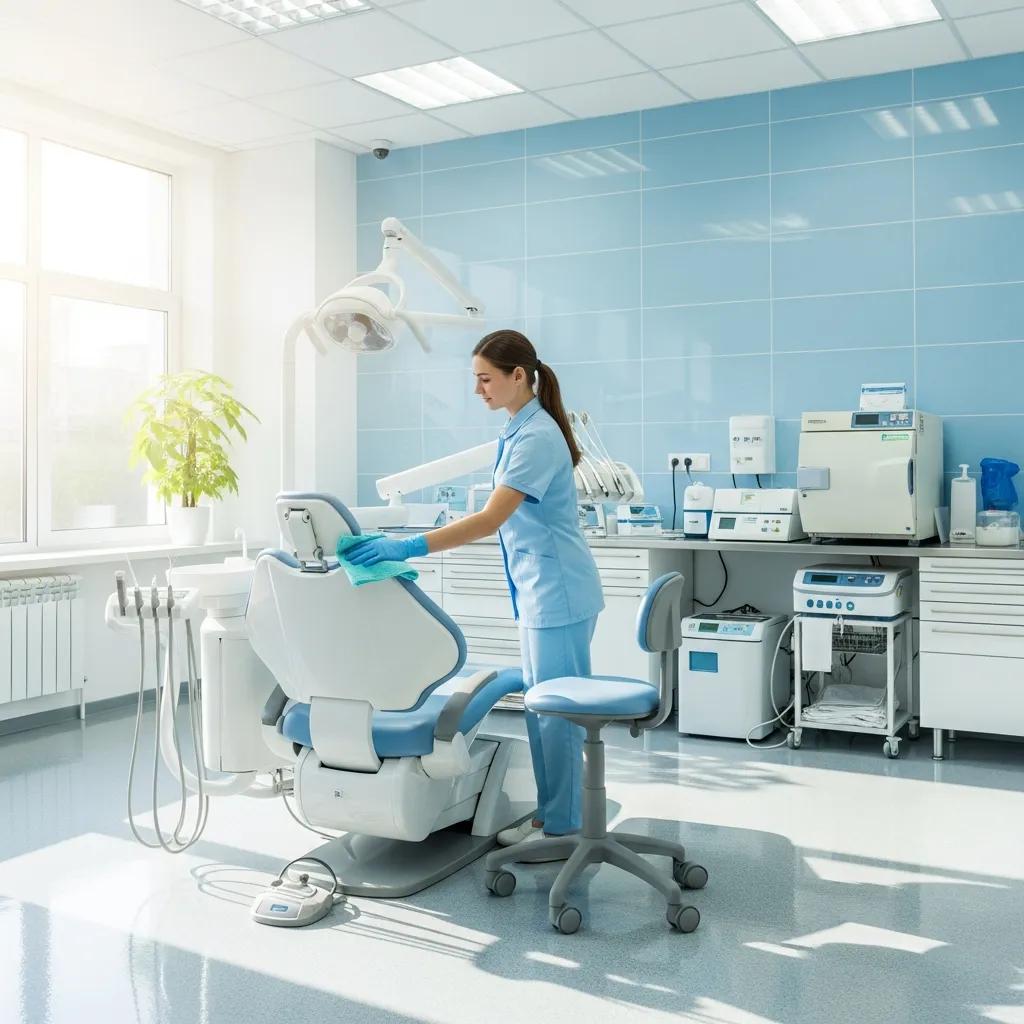
Professional cleaning of dental chairs begins with a pre-clean to remove organic material, followed by application of a surface-compatible disinfectant and adherence to the manufacturer’s contact-time guidance to ensure efficacy without damaging upholstery or controls. X-ray and imaging equipment require low-moisture methods and non-abrasive wipes to prevent ingress of liquids that could harm electronics; cleaning protocols specify which disinfectants are suitable and which areas to avoid. Sterilisation rooms demand strict separation of clean and dirty zones, non-spray cleaning techniques around processing equipment, and documentation of cleaning cycles and maintenance tasks to maintain traceability. These stepwise procedures protect equipment longevity while ensuring clinical areas meet reprocessing and surface disinfection expectations. The next subsection discusses disinfectant selection and environmental considerations that underpin these practices.
What Role Do EPA-Approved Disinfectants Play in Dental Practice Sanitation?
Although EPA registration is a U.S. designation, the equivalent principle in Australia—using registered, hospital-grade disinfectants with validated contact times and efficacy against relevant pathogens—is central to dental sanitation. Selecting disinfectants requires balancing three factors: proven efficacy for relevant organisms, compatibility with equipment and surfaces, and acceptable environmental and occupational safety profiles. Clinics should prioritise products that list contact times practical for clinical workflows and that are suitable for use on electronics where applicable. Environmentally conscious or low-toxicity options can reduce staff exposure while maintaining efficacy, but selection must never compromise microbiological performance. Decision-making should be guided by efficacy data and manufacturer instructions, and products should be used exactly as labelled; the following sections address how these choices intersect with aerosol and bloodborne pathogen controls.
How Can Infection Prevention in Dental Clinics Mitigate Healthcare-Associated Infections?
Infection prevention in dental clinics mitigates healthcare-associated infections (HAIs) by interrupting the transmission pathways that allow pathogens to move from patients and procedures into the environment and onto other people or surfaces. Core mechanisms include source control (PPE and patient screening), engineering and administrative controls (ventilation, suction, scheduling), and environmental cleaning that removes or inactivates pathogens on surfaces and equipment. By combining these layers, a clinic reduces the probability that aerosols, splatter, or contaminated hands will seed new infections. Professional cleaning services add value by providing validated disinfection practices, trained staff who execute clean-to-dirty workflows, and audit documentation that confirms consistent implementation. This layering of controls also enables clinics to scale cleaning intensity to procedural risk, which reduces HAI likelihood while conserving resources for highest-risk moments.
Practical aerosol and bloodborne pathogen mitigations include suction strategies, high-efficiency filtration, and adapted cleaning post-AGP.
- Suction and evacuation: Use high-volume suction to capture aerosols at the source during AGPs.
- Ventilation and filtration: Enhance air exchange and consider HEPA filtration for treatment rooms.
- Targeted post-AGP cleaning: Increase surface disinfection frequency and ensure PPE changes after high-risk procedures.
What Are Bloodborne Pathogens and Aerosol Control Measures in Dentistry?
Bloodborne pathogens relevant to dental practice include hepatitis B (HBV), hepatitis C (HCV), and HIV, which can be transmitted via percutaneous injuries or contaminated instruments; aerosol control addresses droplet and aerosolised particles produced during procedures. Control measures for bloodborne pathogens center on safe instrument reprocessing, sharps handling, and immediate surface decontamination after exposure incidents. Aerosol controls emphasize high-volume evacuation, pre-procedural mouth rinses where appropriate, enhanced ventilation, and targeted surface cleaning after aerosol-generating procedures (AGPs). Clinics should escalate cleaning frequency and PPE requirements during AGPs and document these adaptations as part of the infection-control plan. Understanding these risks enables clinics to match cleaning intensity to procedural hazards and to protect both staff and patients effectively.
How Does Professional Cleaning Reduce Cross-Contamination Risks in Dental Settings?
Professional cleaners reduce cross-contamination by following sequencing rules (clean-to-dirty), using single-use consumables where appropriate, and implementing barrier protections to prevent spread between zones and patients. Standard operating procedures include changing gloves between tasks, using colour-coded cloths or disposable wipes for different zones, and avoiding movement patterns that carry contaminants from dirty to clean areas. Verification methods—such as ATP testing, supervisory audits, and photographic records—provide objective confirmation that cleaning achieves the intended outcomes. Staff training ensures that cleaners understand the rationale behind sequencing and barrier methods, which improves adherence and reduces human error. These layered practices create operational resilience and make cross-contamination events less likely, supporting both safety and clinic reputation.
Why Is Patient Safety and Trust Enhanced by Professional Dental Office Cleaning Services?
Professional dental office cleaning enhances patient safety and trust by producing consistent, verifiable cleanliness that patients perceive as a signal of clinical competence and care. A visibly clean environment—supported by documented cleaning schedules and staff professionalism—reduces patient anxiety and communicates commitment to infection prevention, which in turn supports retention and positive reviews. Operationally, professional cleaning reduces downtime from contamination-related incidents, helps practices remain audit-ready, and allows clinical staff to focus on patient care rather than environmental maintenance. Customised cleaning plans that align with patient flow and clinic hours also minimise disruption while targeting the areas of greatest infection risk, delivering both safety and efficiency. The next subsections explore how perception links to behaviour and the concrete benefits of tailored cleaning solutions.
Ways professional cleaning improves patient experience and operations.
- Visible hygiene practices: Demonstrates active infection-prevention measures to patients.
- Reduced procedural downtime: Speeds turnover by ensuring operatories are reliably ready between patients.
- Audit and compliance support: Provides documented evidence for regulators and insurers.
- Targeted resource use: Allocates cleaning effort where infection risk is highest.
How Does a Spotless Dental Environment Impact Patient Perception and Confidence?
A spotless dental environment functions as a trust signal that reassures patients about clinical safety and professionalism; when surfaces are visibly tidy and staff follow clear hygiene routines, patients infer that infection prevention is taken seriously. Visible cues—such as clean reception areas, organised operatories, professional uniforms, and visible cleaning schedules or certificates—improve perceived safety even before clinical interventions begin. This positive perception encourages patient retention and word-of-mouth referrals, and it reduces no-shows driven by infection concerns. Communicating cleaning practices transparently, without oversharing operational detail, further reinforces trust while maintaining professional boundaries. The next subsection outlines the operational advantages of customised cleaning plans that deliver these visible and practical benefits.
What Are the Benefits of Customised Cleaning Solutions for Dental Practices?
Customised cleaning solutions align cleaning frequency, methods, and verification to a practice’s patient volume, treatment mix, and physical layout, which reduces unnecessary interventions while focusing resources on critical control points. Tailored plans minimise clinical disruption by scheduling deep cleaning outside patient hours, target high-touch and high-risk areas based on case mix, and enable cost transparency through scoped services rather than blanket packages. These plans also provide flexibility for seasonal adjustments—such as increased cleaning during respiratory virus season—and incorporate clinic preferences for greener products or additional verification steps. Clinics that adopt customized plans typically see improved cleanliness outcomes, better staff cooperation, and more predictable costs, creating operational stability and supporting long-term patient trust.
Where Are Divine Commercial Cleaning’s Dental Office Cleaning Services Available in Australia?
Divine Commercial Cleaning provides medical and dental cleaning services with local presence across the Sunshine Coast and Brisbane, including service availability in Pacific Paradise and surrounding communities, enabling rapid response and tailored scheduling for nearby dental practices. As a family-owned provider based in Maroochydore, QLD, Divine emphasizes local knowledge, environmentally conscious product options, and customised solutions that align with clinic hours and patient flow. Clinics preparing for a quote should gather basic information—clinic size, number of operatories, approximate patient volume, and preferred service windows—to enable a fast, accurate assessment. Divine offers consultations and on-site scoping to design cleaning plans that meet AS 5369:2022 alignment and ADA guidance, supporting both compliance and day-to-day infection prevention.
Service area details and next-step checklist for requesting a quote:
- Sunshine Coast coverage, including Maroochydore and Pacific Paradise.
- Greater Brisbane servicing to accommodate clinics within the metropolitan area.
- Local responsiveness for scheduling, scoping visits, and tailored cleaning plans.
What Are the Service Areas on the Sunshine Coast and Brisbane for Dental Practice Cleaning?
Divine Commercial Cleaning explicitly serves the Sunshine Coast and Brisbane regions and lists Pacific Paradise among its referenced service areas, reflecting a regional focus that supports rapid engagement and local knowledge of clinic needs. Local presence enables timely site visits for scoping, better alignment of cleaning schedules with clinic operating hours, and quicker responses to emergent cleaning needs or post-incident remediation. Emphasising regional coverage also facilitates relationships with suppliers of environmentally conscious disinfectants and allows for consistency in service teams allocated to specific clusters of clinics. For clinics in these areas, local service translates into predictable scheduling and an opportunity to build long-term partnership arrangements that prioritise infection control and audit readiness.
How to Request a Quote or Consultation for Dental Office Cleaning Services?
To request a quote or consultation, clinics should prepare basic details to expedite scoping: approximate floor area, number of operatories, daily patient volume or appointment load, preferred cleaning windows, and any specialty equipment that requires manufacturer-compatible cleaning methods. An on-site assessment is often recommended to validate access, workflow, and equipment needs; this assessment informs a tailored service proposal with recommended frequencies, verification steps, and any specialised sterilization-area procedures. Divine Commercial Cleaning accepts quote requests through its online presence or its business listing and typically follows up to schedule a scoping visit and deliver a customised proposal. Preparing the requested clinic details in advance speeds the quotation process and ensures the resulting plan fits both infection-control goals and operational constraints.

Dianne, originally from Rockhampton, hails from a business-oriented family, with her father owning electrical stores and her uncle serving as Mayor. Moving to the Sunshine Coast at 13, she later pursued a rewarding real estate career and raised three children. As a single mom, she balanced university studies with domestic cleaning work. Armed with a Bachelor’s Degree in Business, majoring in Supply Chain Management, Dianne founded and grew Divine Commercial Cleaning into a thriving company. Her success is rooted in strong family mentorship, a positive attitude, and a solution-oriented approach, offering tailored cleaning services with integrity and strategic insight.