
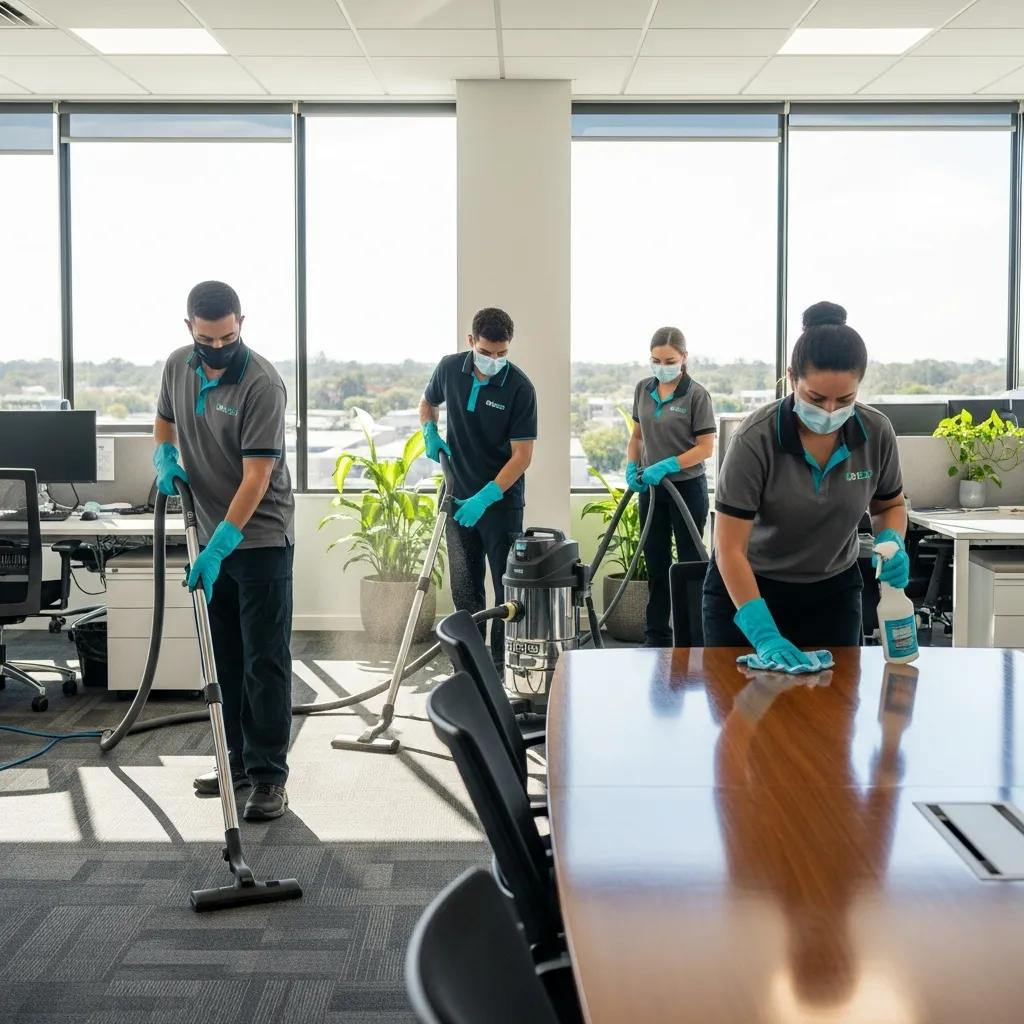
How Booroobin commercial cleaning delivers consistent quality and reliable service for your business
Consistent, dependable commercial cleaning in Booroobin means clean, hygienic spaces delivered on schedule with clear processes that minimise disruption and protect the people who use your facility. This guide explains what quality and dependability look like for local businesses, the systems that make them repeatable, and the measurable controls that turn cleaning into a reliable facility service. If you’re comparing providers, we outline the concrete signals to watch for—training, checklists, inspections and scheduling—and how they reduce complaints, improve compliance and strengthen customer perception. The sections below define those concepts, map a practical quality assurance framework, cover operational reliability, compare industry standards, explain sustainable choices, and summarise the performance evidence you should expect. Keywords such as consistent commercial cleaning Booroobin, commercial cleaning quality assurance Booroobin, and reliable office cleaning Sunshine Coast are included to help with procurement and vendor evaluation.
What makes commercial cleaning in Booroobin “quality” and “dependable”?
Quality and dependability come from repeatable, measurable processes. Quality covers hygiene, attention to detail and regulatory compliance. Dependability means punctuality, consistent teams and responsive communication. Together, solid procedures create predictable results and reduce risk for your business. Managers can assess providers using clear indicators: checklist completion, inspection scores, documented corrective actions and client satisfaction data. Regularly tracking these metrics turns impressions into evidence and drives continuous improvement. The next section shows the operational measures—training, product choice and supervision—that deliver those outcomes.
Below is a practical checklist of the primary indicators to request when you evaluate cleaning providers.
- Inspection scores: Regular audited scores that check agreed tasks.
- Checklist completion rates: Proof daily/weekly tasks were done as scheduled.
- Response time metrics: Logged times for reporting and resolving issues.
- Client satisfaction measures: Periodic surveys or sign-offs confirming acceptance.
These indicators create a shared language between facilities teams and providers, making expectations and corrective actions clear. Next, we look closer at the operational controls that produce those scores and completion rates.
How Divine Commercial Cleaning maintains high cleaning standards
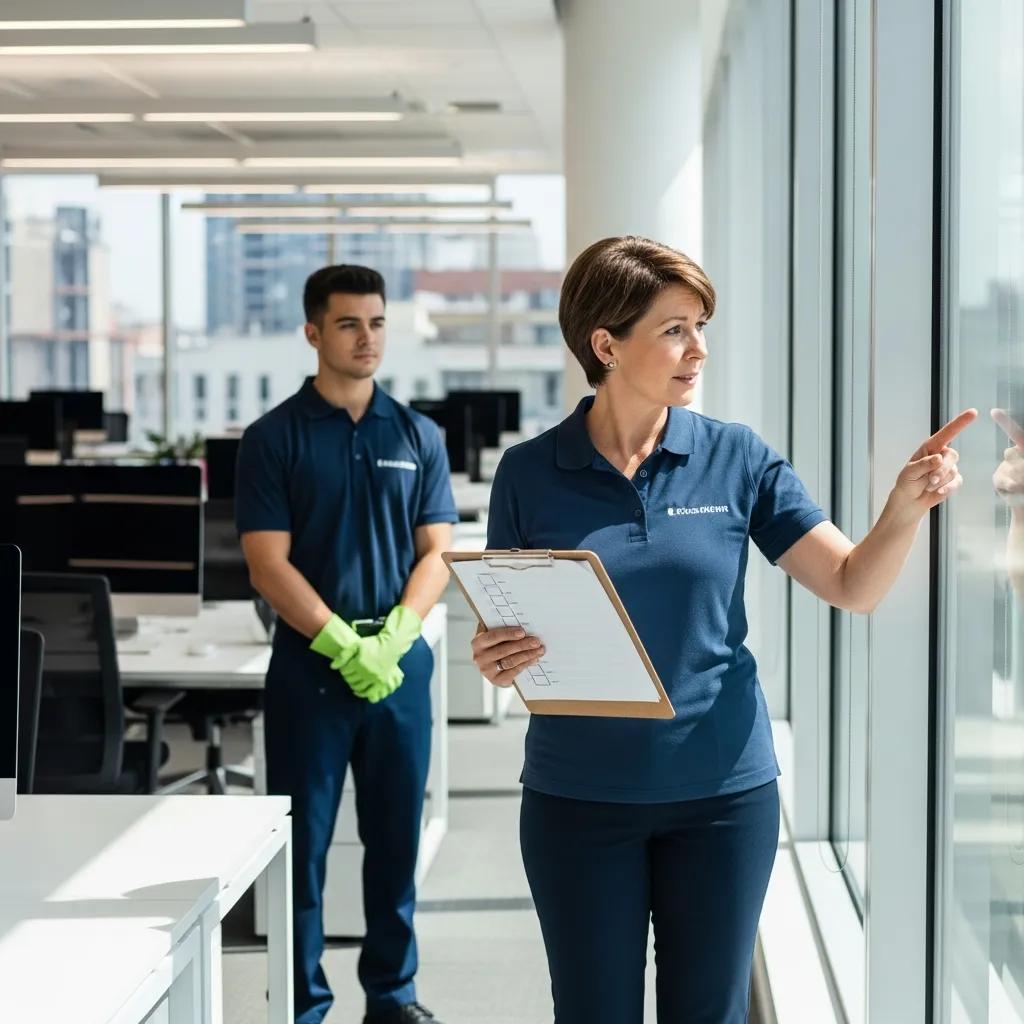
High standards depend on structured training, the right products and consistent supervision so procedures become predictable results. Our staff complete defined onboarding that covers hygiene, cross-contamination prevention, equipment use and safety, with regular refreshers to keep techniques current. We choose products for both safety and effectiveness—disinfectants with proven dwell times and microfibre systems that remove dirt rather than spread it—so work is done properly the first time. Supervisory spot checks and documented audits create quick feedback loops to correct issues and reinforce best practice, which raises inspection scores over time. The next section explains why consistency matters for both operations and reputation.
Why consistency matters for Booroobin businesses
Consistency removes uncertainty: the same tasks performed reliably across shifts reduce health risks and protect your brand. Inconsistent cleaning can mean missed tasks, temporary closures, higher staff sickness or visible problems that hurt customer trust. Reliable, repeatable processes support regulatory compliance, cut complaints and lower unplanned fixes that add cost. For businesses focused on infection control or customer presentation, consistency directly affects operational risk and revenue protection. This leads naturally to our quality assurance framework.
How Divine Commercial Cleaning applies its quality assurance framework
A practical quality assurance framework turns standards into auditable steps: defined training, task-level checklists, scheduled inspections, corrective-action workflows and regular reporting. Each step lists responsibility, frequency and acceptance criteria so outcomes are measurable instead of vague. Documentation—signed checklists, inspection reports and client sign-offs—creates an audit trail that verifies performance and supports steady improvement. Client feedback becomes targeted retraining or process updates so the system adapts to each site. The table below breaks QA components into clear parts so facilities managers can quickly evaluate a provider’s controls.
This EAV table shows how QA elements are organised into auditable components for clarity during procurement.
| QA Component | Attribute | Typical Value |
|---|---|---|
| Staff Training | Frequency | Onboarding + monthly refresher |
| Cleaning Checklists | Granularity | Task-level: daily / weekly / monthly |
| Site Inspections | Scoring | Numeric audit score with pass/fail threshold |
| Corrective Action | Response Time | Documented within 24–48 hours |
This structure helps buyers compare providers by seeing who documents frequencies, scores and response commitments. Next we cover how to request assessments, quotes or tailored proposals from cleaning partners.
Divine Commercial Cleaning serves Booroobin, the Sunshine Coast and Brisbane and offers site-tailored commercial cleaning assessments and quotes. To request a site-specific quote or cleaning assessment, call 0459 949 969 or email info@divinecleaning.com.au. We provide a brief site review and a documented proposal that aligns services with your QA requirements. The following subsection explains the staff training that supports consistent delivery.
What training and certification keep standards high?
Training focuses on solid onboarding, regular refreshers and role-specific modules so teams perform consistently across different site types. Onboarding covers PPE, hazard spotting, safe chemical handling and infection-prevention techniques. Monthly refreshers address updates and observed gaps, while role-specific modules provide the detail needed for medical centres, offices or strata properties. Competence is verified through assessments, supervised shadowing and documented sign-offs—evidence we keep on file. Those verification steps feed into inspection scores and continuous improvement cycles that close the quality loop.
Commercial cleaning spans many environments, so it helps to understand the different methods, techniques and safety protocols used across industrial and commercial settings.
Commercial cleaning methods, techniques & safety
This overview covers hundreds of service types across agricultural, marine, industrial and commercial sectors and highlights how high-pressure water and other tools are applied safely and effectively. It maps industry-specific uses, safety requirements and the technical background that supports equipment and product choices for 24 commercial-industrial sectors.
Introduction: Succeed in Residential, Commercial and Industrial Environments, 2012
How do checklists and site inspections keep standards consistent?
Task-level checklists turn standards into daily actions: they list exact tasks, frequencies and acceptance criteria so frontline teams know what “done” looks like. Managers use scheduled inspections and spot checks to score performance; low scores trigger retraining or process change while high scores prove compliance. Escalation pathways document persistent issues and photographic, timestamped checklists offer objective records for client review. Linking checklists to inspection scoring and corrective actions creates an auditable system that relies on process, not memory. The next section covers staffing, scheduling and communication practices that support consistent delivery.
How Divine Commercial Cleaning builds reliability and consistency
Reliability comes from operational controls: dedicated teams, solid scheduling systems and clear communication with escalation paths. Dedicated teams learn a site’s layout and habits, speeding work and cutting handover errors. Scheduling systems put services into micro-windows that minimise disruption. Clear reporting channels let issues be raised and resolved quickly, while contingency plans—like stand-by staff—cover unexpected absences. Measuring on-time performance and repeat-visit rates turns reliability into procurement data. The lists below show how teams and schedules support dependable delivery.
Key reliability measures to look for when assessing providers:
- Dedicated teams: The same staff on the same sites to build knowledge and accountability.
- Scheduling flexibility: After-hours and micro-window options to fit site operations.
- Communication protocols: Clear reporting lines and response-time commitments.
Together these measures reduce disruption and protect business continuity. The next sections explain the specific benefits of dedicated teams and flexible schedules.
How do dedicated teams improve dependability?
Dedicated teams create consistent routines and site knowledge that speed service and reduce errors. Familiar crews understand client preferences, spot recurring issues quickly and manage supplies efficiently because they know the site. Accountability improves when teams are measured on site-specific metrics and supervisors keep stable rosters recognised by clients. Familiarity also boosts safety: teams who know a site spot hazards sooner and act to prevent incidents. The following subsection explains the scheduling flexibility that supports these gains.
What flexible scheduling options support business operations?
Flexible scheduling includes after-hours, weekend and micro-window cleaning that minimises interference with day-to-day business while keeping cleaning frequent where it matters. Micro-window scheduling targets short, high-impact tasks during low-traffic moments; after-hours work covers deep cleans that can’t happen during business hours. Contingency scheduling and urgent-response protocols ensure critical tasks are handled quickly. Coordination procedures outline how cleaning aligns with client activities and site managers to avoid double-booking and keep operations running smoothly. This lays the groundwork for how we apply industry standards in Booroobin settings.
How industry-specific cleaning standards apply to Booroobin businesses
Industry-specific standards adapt general QA controls to the needs of medical centres, offices, strata properties and other facilities so cleaning meets both regulatory and practical requirements. Medical sites need clinical-grade disinfection and strict cross-contamination controls; offices focus on productivity-friendly schedules and high-touch surface care; strata services require scalable rotations and tenant communication for shared areas. The table below compares industries, key standards and typical practices to help procurement teams pick a fit-for-purpose approach.
The comparison clarifies how core standards change by industry to deliver consistent results.
| Industry | Key Standard | Typical Practice |
|---|---|---|
| Medical centres | Infection-control protocols | TGA‑approved disinfectants and documented dwell times |
| Offices | High-touch surface management | Daily sanitisation of shared equipment and workstations |
| Strata / common areas | Scalable scheduled rotation | Shared-area checklists and tenant communication logs |
Use this comparison to choose a provider that meets both regulatory and operational needs. The next subsections detail medical-specific controls and how office/strata services are tailored for consistency.
What quality measures apply to medical centre cleaning?
Medical cleaning focuses on clinical-grade disinfection, correct dwell times and strict cross-contamination controls to minimise infection risk and meet regulations. Controls include approved disinfectants, correct dilution and application, and recorded contact times. Staff follow enhanced PPE protocols and aseptic techniques to avoid cross-contamination between zones. Audit trails—checklists, swab results and inspection reports—provide compliance evidence and support clinical governance reviews. These clinical measures feed into broader QA systems to keep the site safe and operational.
How are office and strata services tailored for consistency?
Office and strata cleaning emphasise predictable routines, prioritisation of high-traffic zones and effective tenant or employee communication. Scheduling templates define daily, weekly and monthly tasks with clear ownership so high-touch surfaces and shared facilities get consistent attention. Rotation plans manage wear in lobbies, lifts and amenities while tenant notifications reduce surprises. These tailored approaches create reliable patterns that protect productivity and resident satisfaction, and they connect directly to the sustainable practices described next.
What sustainable, eco-friendly practices does Divine Commercial Cleaning follow?

Sustainable cleaning combines smart product choice, waste reduction and efficient equipment to lower environmental impact while protecting occupant health. Biodegradable, low‑VOC and fragrance‑free formulations reduce airborne irritants; microfibre systems cut chemical use and improve soil removal. Refillable dispensers and concentrated solutions reduce packaging waste and transport emissions, while HEPA‑grade vacuums improve indoor air quality. These practices support corporate responsibility goals and often boost occupant wellbeing by reducing chemical exposure. The table below summarises common products and methods and their environmental or health benefits to help procurement decisions.
This table presents sustainable products and methods and their measurable benefits to health and the environment.
| Product / Method | Environmental / Health Benefit | Example / Metric |
|---|---|---|
| Biodegradable cleaners | Lower aquatic toxicity | Fewer persistent chemical residues |
| Microfibre systems | Reduced chemical use, improved soil removal | Fewer rework cycles; lower chemical consumption |
| Refillable dispensers | Less plastic waste | Fewer single‑use containers |
Making sustainability benefits visible helps organisations balance health, compliance and ESG goals. The next subsections outline product choices and the client health benefits that follow.
Which eco-friendly products and methods are used in Booroobin cleaning?
Eco-friendly choices prioritise proven efficacy and lower environmental impact: biodegradable cleaners, microfibre tools and concentrated refills that cut waste and chemical volumes. We select products based on safety profiles, third‑party certifications where available, and real-world performance such as dwell time or removal rates. Application methods—targeted dosing, spray‑and‑wipe for spot treatment and scheduled deep cleans instead of excessive daily chemical use—preserve both cleanliness and environmental credentials. For sensitive environments we use fragrance‑free options and avoid aerosolised products to limit occupant irritation. These choices directly support better occupant health.
How do sustainable practices improve client health and the environment?
Sustainable practices reduce exposure to irritants and lower VOC emissions, which can ease allergy and asthma triggers and improve indoor air quality. Smaller chemical footprints and reduced waste streams lower facility-level environmental impact and support sustainability reporting. From a business standpoint, these practices can improve staff wellbeing, reduce absenteeism and strengthen your brand with eco-conscious customers and tenants. Showing environmental benefits alongside hygiene outcomes helps facilities teams balance compliance, health and ESG priorities during procurement.
What do clients say about Divine Commercial Cleaning’s quality and reliability?
Client feedback and case outcomes commonly highlight consistent teams, fast communication and better inspection results—practical proof that processes deliver reliability. Public references often note improved audit compliance, fewer complaints and the value of predictable rosters that limit disruption. Case studies usually follow a Problem → Approach → Outcome format to show how QA frameworks and operational changes produced measurable benefits. Below we summarise testimonial themes and the types of outcomes you should request when evaluating provider claims.
Common testimonial themes facilities managers see when providers deliver consistent performance:
- On‑time, consistent teams: Clients value stable crews who know the site.
- Responsive communication: Rapid issue resolution and clear reporting.
- Improved audit outcomes: Fewer deviations and stronger inspection results after process changes.
These themes point to the evidence facilities managers should request—inspection reports, completion logs and response‑time records—rather than relying on unverified praise. The next subsection explains how case studies typically present impact without inventing specifics.
Which client feedback highlights consistent cleaning excellence?
Rather than listing individual quotes, common client feedback stresses dependable schedules, consistent teams and clear reporting that simplifies oversight. Clients often cite fewer operational interruptions and fewer cleaning‑related complaints as the most tangible benefits. When you ask for references, request documents such as scorecards or before/after audit reports that substantiate those claims—objective artefacts are far more useful for procurement than standalone praise. The next subsection describes how case studies show measurable benefits using a problem→solution→outcome structure.
How do case studies show Divine’s impact on Booroobin businesses?
Case studies typically present a clear operational problem—variable cleaning quality or scheduling conflicts—then describe a tailored approach using QA frameworks, dedicated teams and revised schedules, and finish with documented outcomes like improved audit consistency and fewer complaints. Strong case studies include baseline measurements, the interventions applied (training, checklists, scheduling changes) and the post‑intervention results. When evaluating providers, ask for case studies that include inspection score comparisons, completion logs and response records so you can verify claims. That documentation helps move decisions from anecdote to measurable proof.
For procurement or to arrange a tailored proposal and site assessment, contact Divine Commercial Cleaning at 0459 949 969 or info@divinecleaning.com.au. We provide on‑site evaluations and documented quotes for Booroobin, Sunshine Coast and Brisbane businesses.
Frequently Asked Questions
What types of businesses can benefit from commercial cleaning services in Booroobin?
Commercial cleaning in Booroobin covers offices, medical centres, retail sites, strata buildings and more. Each setting has different needs—infection control for medical spaces, high‑touch surface management for offices, and scalable rotations for strata. Tailored services mean every business can maintain a clean, safe environment that supports staff health and improves customer experience.
How can businesses assess the effectiveness of their cleaning provider?
Track key performance indicators like inspection scores, checklist completion rates and client satisfaction. Regular audits and feedback loops reveal improvement areas. Ask for documentation—signed checklists, inspection reports and scorecards—to ensure transparency and accountability in service delivery.
What are the benefits of using eco-friendly cleaning products?
Eco-friendly products reduce exposure to harmful chemicals, improve indoor air quality and lower environmental impact. Biodegradable and low‑VOC options cut irritants and allergens, creating a healthier workspace. Adopting sustainable practices also supports corporate responsibility goals and appeals to environmentally conscious customers and tenants.
How often should businesses schedule cleaning services?
Frequency depends on the business type and usage. High‑traffic areas like offices and retail spaces often need daily attention; less used areas may be weekly or monthly. Consider peak hours and occupancy to choose a schedule that keeps the site clean without disrupting operations.
What role does staff training play in maintaining cleaning quality?
Training is essential. It ensures staff understand best practices, safety protocols and correct use of equipment and chemicals. Ongoing refreshers help teams stay current with standards and techniques, which directly affects consistency and client satisfaction.
How can businesses ensure their cleaning provider is compliant with industry standards?
Request evidence of tailored protocols for your sector—medical, commercial or strata—and ask for training records, inspection reports and compliance audits. Regular communication and documented feedback help keep services aligned with industry requirements and address issues promptly.
What should businesses look for in a cleaning contract?
Look for clear terms on service frequency, scope of work, pricing and performance metrics. Ensure the contract includes quality assurance elements like inspection schedules and response times for resolving issues. Also confirm it allows flexibility to adjust services as your needs change.
Choosing Divine Commercial Cleaning gives your business consistent, dependable cleaning tailored to your needs. Our structured approach and measurable indicators deliver a clean, hygienic environment that supports staff wellbeing and leaves a better impression on customers. By prioritising eco‑friendly practices we protect both your space and the environment. Contact us to arrange a tailored cleaning assessment and see the difference for yourself.

Dianne, originally from Rockhampton, hails from a business-oriented family, with her father owning electrical stores and her uncle serving as Mayor. Moving to the Sunshine Coast at 13, she later pursued a rewarding real estate career and raised three children. As a single mom, she balanced university studies with domestic cleaning work. Armed with a Bachelor’s Degree in Business, majoring in Supply Chain Management, Dianne founded and grew Divine Commercial Cleaning into a thriving company. Her success is rooted in strong family mentorship, a positive attitude, and a solution-oriented approach, offering tailored cleaning services with integrity and strategic insight.