Eco-friendly Commercial Cleaning in Newmarket — Sustainable Solutions for Your Business
Eco-friendly commercial cleaning in Newmarket means choosing non-toxic products, sustainable practices and operating procedures that protect people and the environment. This page explains why green cleaning matters for workplaces around Newmarket — from offices and retail stores to medical centres and shopping centres — and how it delivers health, safety, regulatory and reputational benefits.
You’ll find a clear rundown of the services available, which product types and certifications to look for, how pricing and quoting typically work, and what local clients report after switching to greener cleaning. Practical decision criteria — product safety, scheduling, customised plans and measurable results — are highlighted so facility managers and business owners can compare providers with confidence.
We reference delivery patterns across Queensland, including Sunshine Coast and Brisbane, to show how eco-friendly cleaning applies to Newmarket operations and procurement choices. The sections that follow cover benefits, services, product and certification comparisons, pricing and quotes, client feedback themes and common questions to help you make a sustainable procurement decision.
What Are the Benefits of Eco-Friendly Commercial Cleaning in Newmarket?
Green commercial cleaning pairs non-toxic formulations with sustainable procedures to make indoor spaces healthier, reduce environmental impact and support broader corporate sustainability goals. By cutting exposure to harsh chemicals and volatile organic compounds (VOCs) businesses can reduce respiratory irritation and absenteeism while meeting their sustainability commitments. Visible green practices also improve reputation with customers and staff, and gentler cleaning can extend the life of fixtures and finishes. Those practical advantages translate into fewer complaints, better compliance for sensitive sites and a healthier workplace that supports productivity. Understanding these benefits leads naturally into the specific health and environmental mechanisms behind green cleaning.
Eco-friendly cleaning improves workplace health and safety by limiting pollutant sources and using techniques that control pathogens without leaving harmful residues. Lowering VOC emissions and switching to biodegradable detergents improves indoor air quality and reduces common allergy triggers, which can cut short-term sick leave and chronic irritation for sensitive occupants. Green protocols emphasise tools and methods — microfibre cloths, HEPA-filtered vacuums and focused touch-point cleaning — that reduce cross-contamination while avoiding overuse of chemicals. These practical mechanisms explain why green cleaning is especially useful in higher-occupancy spaces in Newmarket and help you choose the right providers and products.
With that local perspective in mind, the next section explains how sustainable cleaning supports wider environmental and community goals.
How Does Green Cleaning Improve Workplace Health and Safety?
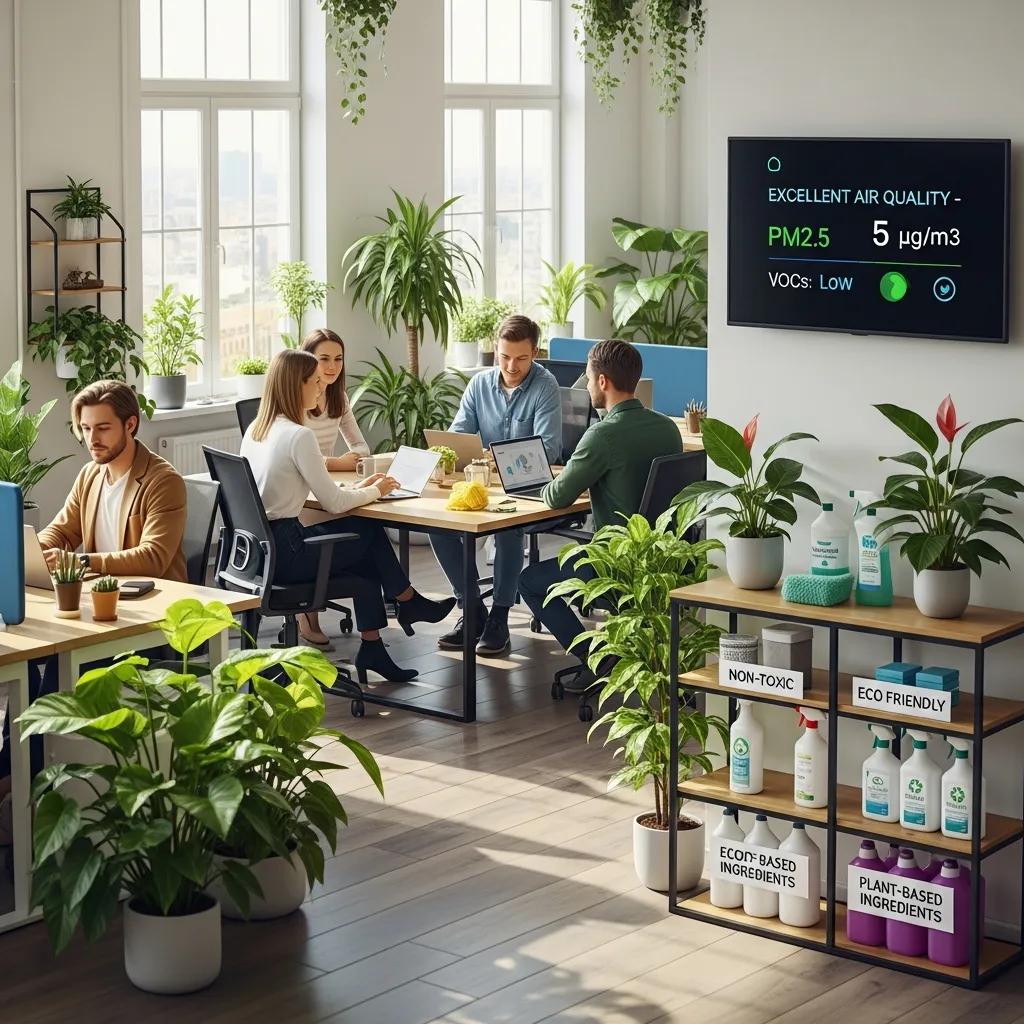
Green cleaning improves workplace safety by replacing harsh solvents with low-VOC, non-toxic cleaners and by following procedures that reduce exposure and cross-contamination. Lower VOCs lead to measurable improvements in indoor air quality and fewer reports of headaches, eye irritation and respiratory symptoms among occupants. Targeted protocols for high-touch surfaces and structured sanitation schedules reduce pathogen levels without leaving harmful residues that can affect sensitive people. Together, these practices help lower absenteeism, meet occupational health expectations and create a safer environment for staff and visitors — particularly in shared or busy areas.
That practical explanation lays out the environmental reasons many businesses choose sustainable cleaning and the broader benefits for communities and corporate goals.
Why Choose Sustainable Cleaning to Support Environmental Responsibility?
Choosing sustainable cleaning reduces waste, avoids persistent pollutants and prioritises biodegradable formulations and minimal packaging — all of which shrink a facility’s environmental footprint. Businesses that adopt green cleaning protect local water quality by using phosphate-free, readily biodegradable detergents that break down quickly and reduce downstream impact. Sustainable practices also support circular-economy goals when suppliers cut single-use plastics and offer refill or bulk supply options. These outcomes matter to employees, customers and regulators, who increasingly expect local businesses in Newmarket and across Queensland to demonstrate real environmental stewardship.
This environmental framing leads into a practical overview of the eco-friendly services available to businesses in Newmarket.
Which Eco-Friendly Commercial Cleaning Services Does Divine Commercial Cleaning Offer in Newmarket?
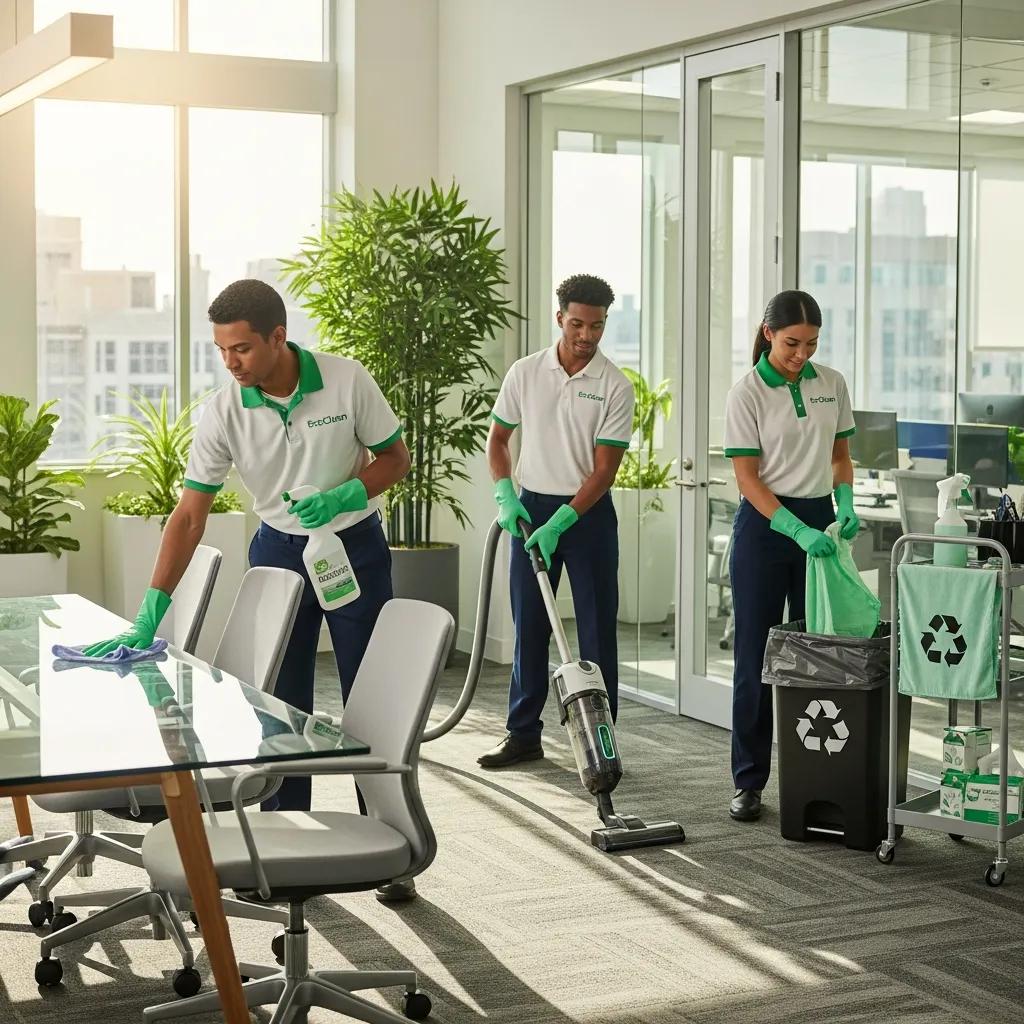
Eco-friendly commercial cleaning covers routine janitorial work, scheduled deep cleans, specialist medical-centre protocols and retail or centre maintenance designed around sustainability. Typical services include daily office cleaning, retail floor and display care, medical centre cleaning with enhanced hygiene protocols, and shopping centre janitorial services for high-footfall areas. Key attributes are non-toxic products, trained staff versed in green protocols and flexible scheduling that reduces disruption to your operations. Below is a simple mapping that links common service types to frequency, scope and business suitability so decision-makers can quickly see what fits their premises.
The table below organises service types, typical delivery frequency and sustainability attributes with example business suitability.
| Service Type | Typical Frequency & Scope | Eco-Attributes & Example Use-case |
|---|---|---|
| Daily Office Cleaning | Daily or several times per week; desks, kitchens, bathrooms, common areas | Low-VOC cleaners and microfibre systems; ideal for corporate offices to support staff wellbeing |
| Medical Centre Cleaning | Daily with extra between-patient touch-point sanitisation; clinical-grade scope | Non-toxic sanitisers chosen for infection-control compatibility; suited to clinics and allied-health spaces |
| Retail & Shopping Centre Cleaning | Daily to weekly; floors, displays and high-traffic touchpoints | Biodegradable detergents and waste-reduction practices are perfect for customer-facing environments |
This mapping shows how green service types apply across business verticals and prepares procurement teams for the next step: matching services to specific business needs and tailoring cleaning plans.
What Types of Businesses Benefit from Our Green Cleaning Solutions?
Different businesses gain distinct advantages from green cleaning: offices see improvements in air quality and staff productivity, medical centres gain safe, low-residue infection-control products, and retail and shopping centres enhance customer perception while reducing environmental impact. Offices most often prioritise air quality and allergen reduction, which low-VOC products and HEPA-filtered vacuums support. Medical environments require protocols that balance effective disinfection with minimal residue—product selection and documented methods are essential for compliance and patient safety. Retail operators use visible green practices as part of their customer experience and brand positioning, reinforcing environmental messaging to visitors.
These vertical-specific benefits inform how customised cleaning plans should be designed to align with each business’s operational rhythms and risk profile.
How Are Customised Cleaning Plans Designed to Fit Your Business Needs?
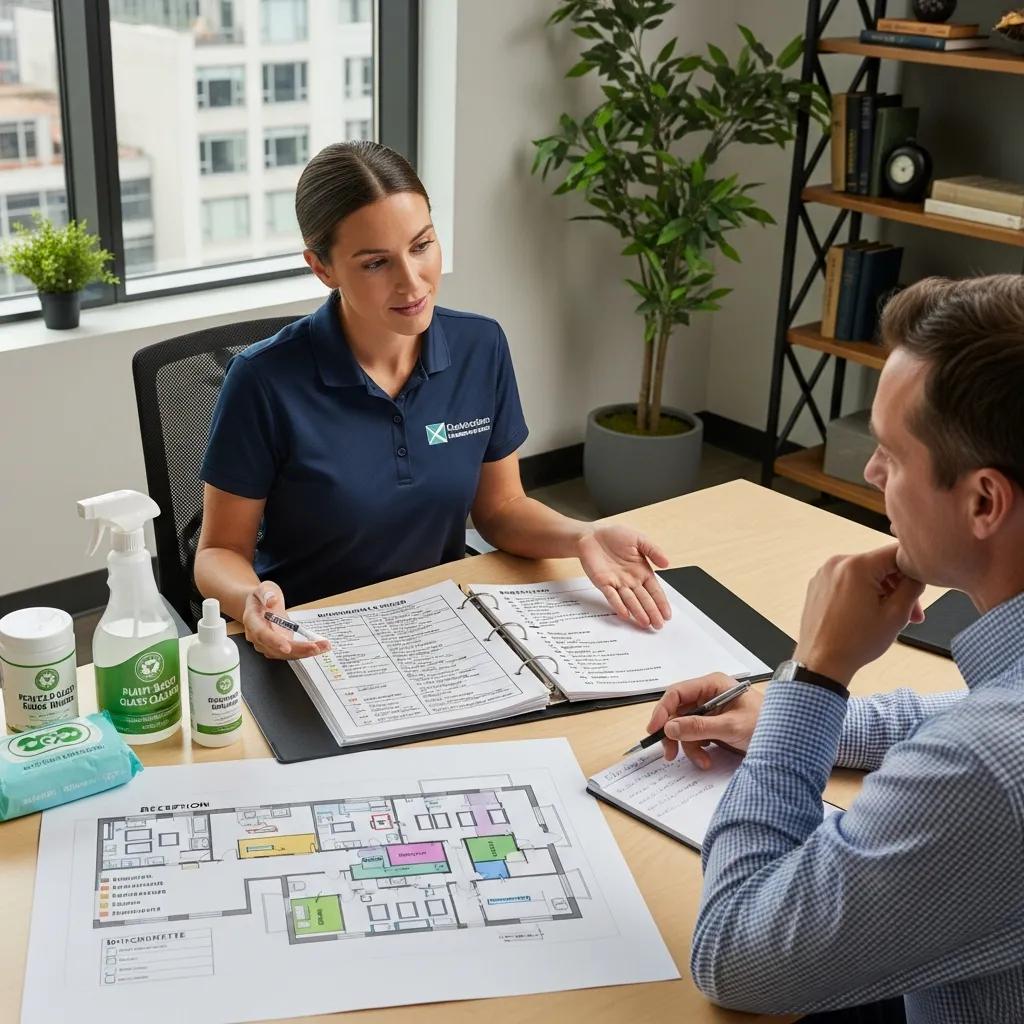
Customised cleaning plans start with an on-site needs assessment that identifies high-risk areas, occupancy patterns and your sustainability goals to define scope and frequency. From there we outline tasks, recommend appropriate eco-friendly products and propose a schedule that keeps disruption to a minimum while meeting hygiene requirements. Flexible options — after-hours work, staggered shifts or daytime touch-ups — let operations continue smoothly and accommodate busy periods or clinical appointments. Ongoing communication and periodic reviews allow the plan to be adjusted based on feedback, incidents or changing regulations, creating a continuous-improvement approach.
Explaining these steps makes it easier to evaluate pricing transparency and request quotes from providers who prioritise sustainable, accountable service models.
What Eco-Friendly Cleaning Products and Certifications Ensure Safe Commercial Cleaning?
Picking the right products and recognising credible certifications helps businesses balance environmental and health safety. Important product categories include low-VOC all-purpose cleaners, biodegradable floor detergents, enzyme-based stain removers and low-toxicity sanitisers suitable for sensitive areas. Third‑party eco-labels and certifications indicate ingredient transparency, biodegradability and reduced environmental impact, giving buyers an objective way to compare claims. The table below summarises common product types and certification categories, what they mean and where they’re most useful.
The following table compares product types and certification categories to help procurement teams assess suitability for offices, medical centres and retail spaces.
| Product / Certification Category | Key Attribute | Practical Benefit / Use-case |
|---|---|---|
| Low-VOC Cleaners | Lower volatile emissions | Improves indoor air quality in offices and meeting rooms |
| Biodegradable Detergents | Breaks down readily in wastewater | Protects local waterways after discharge from large facilities |
| Enzyme-based Cleaners | Targets organic soils without harsh solvents | Great for carpet and upholstery stain removal in hospitality or retail |
| Eco-labels & Third-party Certifications | Ingredient transparency and environmental criteria | Helps verify sustainability claims for procurement decisions |
This comparison clarifies why certain products and certification cues matter, and leads into a closer look at specific product categories used in safe commercial cleaning.
Which Non-Toxic and Environmentally Safe Products Are Used?
Common non-toxic products in green commercial cleaning include low-VOC all-purpose cleaners, biodegradable floor detergents, enzyme stain removers and sanitisers formulated to balance effectiveness with low residue. These products handle core cleaning tasks while reducing harmful exposure and limiting ecological persistence in wastewater. Selection is area-specific — enzyme cleaners for carpets in retail zones, low-residue sanitisers for clinical touch-points — so facilities get the right balance of hygiene and safety. Knowing these roles helps facility managers specify materials that meet both cleanliness and sustainability goals.
This practical product overview sets the stage for how certifications and verification support confident procurement decisions.
What Certifications Validate Our Sustainable Cleaning Practices?
Certifications and eco-labels give independent verification of product attributes such as biodegradability, low toxicity and reduced environmental impact, which makes them useful filters for procurement teams. Typical certification categories cover ingredient transparency, absence of certain hazardous chemicals and ecological manufacturing practices — review each certification’s scope to ensure it matches your needs. For higher-risk environments, you should also request evidence of efficacy, such as technical data sheets and validated sanitiser performance data, to reconcile green claims with infection-control requirements. Checking certifications, product documentation and independent test results helps you make safe, informed choices without compromising performance.
With certifications explained, the next section covers how pricing is calculated and how to request transparent quotes for green cleaning services.
How Does Pricing and Quote Request Process Work for Eco-Friendly Cleaning in Newmarket?
Pricing for eco-friendly commercial cleaning is driven by clear, measurable factors — facility size, cleaning frequency, scope complexity and any specialised protocols for medical or high-traffic retail spaces. Transparent pricing models itemise those drivers so you can see what affects the quote, such as trained staff, certified products or after-hours scheduling. A straightforward quote request asks for basic facility details, activity schedules and special requirements so providers can prepare a fair, line-itemed estimate. The table below summarises common service packages, typical pricing characteristics and the main factors that cause cost variations for green cleaning engagements.
This pricing summary helps procurement teams prepare the information needed before asking for a formal quote.
| Service Package | Pricing Model & What’s Included | Typical Cost Drivers / Contact Action |
|---|---|---|
| Standard Office Package | Flat-rate or per-visit pricing; covers daily tasks and routine supplies | Drivers: square metres, frequency and staffing; provide building size and schedule for an accurate quote |
| Clinical Cleaning Package | Scope-based pricing with documented protocols and specialised products | Drivers: infection-control needs and patient throughput; list clinical spaces and required protocols |
| Retail & Centre Package | Tailored quotes for high-traffic areas with waste-management options | Drivers: operating hours, footfall and waste handling; share peak times and layout details |
With cost drivers clarified, the next section outlines typical cost scenarios and the simple steps businesses use to request transparent quotes.
What Are the Typical Costs of Green Commercial Cleaning Services?
Costs for green commercial cleaning follow the same basic factors as conventional cleaning, but may include a premium for certified products, trained staff and waste-reduction logistics. Higher-frequency services, specialised medical protocols or large shopping-centre sites increase labour and product needs and therefore the price. Predictable schedules, consolidated service windows and standardised scopes help control costs through efficiency. Understanding these drivers helps you balance sustainability priorities with budget limits and focus on services that deliver the most operational value.
This cost discussion leads to a practical checklist for requesting clear quotes from providers.
How Can Businesses Request Transparent Quotes Easily?
A simple quote process asks for a few key details — floor plans or approximate square metres, desired frequency, special requirements and preferred timing — so providers can prepare an itemised response. Providers typically follow with a remote or on-site assessment, propose a tailored scope with product choices and frequencies, and deliver an itemised quote separating labour, materials and any one-off setup costs. Ask for clarity on product types (low-VOC, biodegradable), staff training standards and any performance guarantees to compare bids on an even footing. Providers that prioritise transparent pricing usually offer clear steps and checklists to speed procurement decisions.
That procedural clarity points to how local clients rate service quality and the outcomes they experience from green cleaning engagements.
What Do Newmarket Clients Say About Divine Commercial Cleaning’s Eco-Friendly Services?
Local clients often report greener cleaning outcomes, including improved indoor comfort, fewer complaints about odors or sensitivities, and appreciation for visible sustainability efforts in public areas. Organisations across Queensland, including Sunshine Coast and Brisbane, report smoother stakeholder conversations and stronger alignment with corporate sustainability targets after adopting green cleaning. While individual experiences vary, common themes are reliability of trained staff, the benefit of flexible scheduling that limits disruption, and the perceived value of transparent pricing. These client insights help new customers set realistic expectations for service quality and environmental performance when evaluating providers.
Summarising client feedback sets the stage for practical project examples and measurable outcomes to look for in sustainable cleaning projects.
Which Case Studies Highlight Successful Sustainable Cleaning Projects?
Regional case studies typically follow challenge, green solution and measured outcome — examples include improving indoor-air quality in an office, implementing clinic infection-control without harsh residues, or cutting cleaning waste in a retail precinct. In each case providers used low-VOC products, microfibre and HEPA equipment and tailored schedules to deliver measurable improvements like fewer occupant complaints or more efficient cleaning cycles. Outcome metrics can include reduced absenteeism, lower chemical use and better stakeholder feedback — results depend on baseline conditions and monitoring methods — but these stories show how green cleaning works in Queensland settings.
How Do Client Testimonials Reflect Service Quality and Environmental Commitment?
Testimonials commonly highlight punctuality, thoroughness and visible sustainability practices — such as using certified products and reducing waste — which build trust. Recurring comments praise trained staff who understand hygiene and environmental protocols and providers who communicate clearly about product choices and scheduling. This kind of feedback helps prospective clients judge whether a provider can deliver both operational reliability and measurable sustainability outcomes. Together, these testimonial themes form practical selection criteria for businesses seeking a green cleaning partner.
What Are Common Questions About Eco-Friendly Commercial Cleaning in Newmarket?
Facility managers often ask about recommended cleaning frequencies, product safety in sensitive environments and what documentation to request to validate green claims. Simple answers focus on tailoring frequency to occupancy and risk, verifying product technical and safety data and ensuring providers supply transparent, scope-detailed quotes. Below are concise Q&A items addressing common procurement and safety concerns to help teams prepare requirements and evaluate bids effectively.
- How often should spaces be cleaned?: It depends on use and occupancy — high-traffic areas usually need daily attention while low-use zones can be scheduled for weekly deep cleans.
- Are green products effective for disinfection?: Many low-toxicity sanitisers meet recognised efficacy standards; always choose products with verified performance data for clinical settings.
- What documentation should buyers request?: Ask for product technical data sheets, safety data sheets and a line-item quote showing labour and product costs.
These Q&A points guide prospective buyers toward informed decisions and set up more detailed frequency and safety discussions below.
How Often Should Offices and Medical Centers Be Professionally Cleaned?
Recommended frequency varies by space: offices typically benefit from daily general cleaning with additional nightly or daytime touch-ups for high-touch areas, while medical centres usually require more frequent, protocol-driven cleaning between patient interactions. High-occupancy offices, shared facilities or client-facing spaces may need daily cleaning plus interim touch-point sanitising to manage infection risk. Medical settings follow stricter schedules, combining routine cleaning with targeted sanitisation after procedures or patient visits, and prioritise products that balance efficacy with low residue. Aligning frequency with occupancy and risk keeps costs reasonable while maintaining safety.
This frequency guidance leads into the final practical question about product safety in sensitive environments.
Are Green Cleaning Products Safe for Sensitive Environments Like Medical Centers?
Green cleaning products can be safe for sensitive environments when chosen for verified efficacy, low-residue profiles and compatibility with clinical protocols — however, not every green cleaner is suitable for all medical uses. Distinguish between general-purpose green cleaners and hospital-grade disinfectants that carry validated kill claims for specific pathogens; in some cases a combination approach is needed to balance sustainability and strict infection-control requirements. Providers should be ready to show technical data sheets, independent test reports and documented cleaning protocols that prove both safety and performance. With careful selection and clear documentation, sensitive environments can benefit from green cleaning without compromising clinical safety.
This final safety discussion completes the guide and equips readers to evaluate eco-friendly commercial cleaning options for Newmarket facilities.
Frequently Asked Questions
What should businesses consider when choosing an eco-friendly cleaning service?
When choosing an eco-friendly cleaning service, look for a clear commitment to certified green products and measurable sustainability practices. Check that cleaning protocols are transparent and staff are trained to your standards. Consider scheduling flexibility to minimise workplace disruption and review case studies or testimonials to confirm reliability. Finally, make sure the service aligns with your specific cleaning needs and sustainability targets.
How can eco-friendly cleaning impact employee productivity?
Eco-friendly cleaning can boost productivity by improving indoor air quality and reducing exposure to irritating chemicals. Fewer health complaints — like headaches or respiratory issues — often translate to less absenteeism. A clean, fresh workplace also supports morale and focus. Investing in green cleaning shows staff you value their wellbeing, which can help retention and performance.
What are the long-term cost benefits of eco-friendly cleaning?
While upfront costs for green cleaning can be higher, long-term savings are common. Sustainable products tend to be gentler on surfaces and furnishings, extending their lifespan. Better indoor air quality can reduce health-related absenteeism and related costs. Reduced chemical use and packaging may also lower waste-disposal and procurement expenses over time. Overall, green cleaning can deliver both financial and environmental returns.
How do eco-friendly cleaning products compare to traditional cleaners in effectiveness?
Many eco-friendly products match the effectiveness of traditional cleaners, including for disinfection and stain removal, when chosen correctly. Modern green formulations and application techniques deliver strong performance without harsh chemicals. For sensitive or clinical settings, select products with verified performance data to ensure they meet required standards.
What role do certifications play in selecting eco-friendly cleaning products?
Certifications give third-party validation of environmental claims, making them a practical filter when selecting products. Recognised eco-labels indicate standards for biodegradability, toxicity and ingredient transparency. Use certifications alongside technical data to ensure products meet both sustainability goals and operational needs.
How can businesses measure the effectiveness of their eco-friendly cleaning program?
Measure effectiveness with clear KPIs such as employee health metrics, absenteeism rates and client feedback on cleanliness. Regular inspections and audits, plus a feedback loop between cleaning staff and facility managers, uncover improvement opportunities. Set measurable goals and review them periodically to track the impact of your green cleaning program.
Adopting eco-friendly commercial cleaning in Newmarket improves workplace health and safety while supporting your sustainability commitments. Green cleaning can raise indoor air quality, reduce environmental impact and build a positive reputation with staff and customers. Knowing the benefits, service options and procurement steps empowers facility managers to choose solutions that balance operational needs and environmental responsibility.
Explore our tailored cleaning services to see how we can support your business’s specific needs and sustainability goals.

Dianne, originally from Rockhampton, hails from a business-oriented family, with her father owning electrical stores and her uncle serving as Mayor. Moving to the Sunshine Coast at 13, she later pursued a rewarding real estate career and raised three children. As a single mom, she balanced university studies with domestic cleaning work. Armed with a Bachelor’s Degree in Business, majoring in Supply Chain Management, Dianne founded and grew Divine Commercial Cleaning into a thriving company. Her success is rooted in strong family mentorship, a positive attitude, and a solution-oriented approach, offering tailored cleaning services with integrity and strategic insight.