
Top office cleaning strategies to impress clients in Everton Hills
A tidy, well-maintained office is one of the clearest ways to show competence and care — and it directly shapes how clients see your business in Everton Hills. This guide sets out practical, evidence-informed cleaning strategies local businesses can use to create better first impressions, cut illness-related downtime and strengthen brand trust. You’ll find why cleanliness matters for reputation, which high-traffic zones to prioritise, best-practice disinfection steps, and how eco-friendly and modern techniques lift results while supporting sustainability goals. We also cover everyday staff habits to keep standards between professional visits and explain how tailored commercial plans — built on consistency, vetted staff and clear guarantees — improve client-facing outcomes. Expect actionable checklists, comparison tables for common tasks and technologies, plus a brief overview of how a local provider customises plans for Everton Hills workplaces.
Why a clean office matters for client impressions in Everton Hills
First impressions start the moment a client walks through the door — and a clean office signals attention to detail, operational standards and reliability. When reception areas are uncluttered and surfaces are fresh, clients instinctively view your team as professional and trustworthy; a tidy environment also reduces distractions so people can focus on your message. Beyond perception, cleaner workplaces deliver measurable benefits: fewer staff sick days, better productivity and stronger client retention. In the Everton Hills context, visible cleanliness helps local reputation-building in a competitive Brisbane market and appeals to clients who value both professionalism and environmental responsibility. The sections that follow unpack how reputation forms and the psychological reasons a neat workspace supports better business outcomes.
How office cleanliness shapes business reputation
Cleanliness affects the stories clients tell about your business and the level of trust they give in early interactions. Consistently well-kept reception areas, meeting rooms and client-facing spaces create an impression of reliability that can influence purchasing decisions and referrals. Research and workplace studies show people link cleanliness with professionalism — which often boosts perceived value and shortens sales cycles. For example, a small Everton Hills consultancy that introduced daily reception upkeep reported noticeably better feedback during pitches, showing how environmental cues support reputation. That’s why cleaning should be strategic, not occasional.
Psychological effects of a tidy workspace on clients
A tidy workspace lowers cognitive load, helping clients absorb information and stay focused during conversations or presentations. Orderly environments provoke calm, confidence and a greater willingness to engage — all of which improve rapport and perceived service quality. Environmental psychology finds that visual order signals organisational competence, increasing trust and the chance of favourable outcomes like repeat business. Because these effects are direct and measurable, operational cleaning plans should prioritise visible, client-facing areas.
Essential office cleaning best practices for Brisbane
Best-practice office cleaning in Brisbane centres on frequency, technique and attention to high-use, client-facing spaces. Prioritise reception and meeting rooms with daily cleaning and increase disinfection of shared surfaces where needed; schedule floor, carpet and glass care to balance appearance with hygiene. Effective protocols combine the right cleaning agents and correct contact/dwell times for disinfectants with trained staff using consistent checklists to deliver repeatable results. Below is a practical list of priority tasks and an easy reference table comparing common activities and recommended approaches for Brisbane offices.
- Daily reception care: Wipe surfaces, tidy literature and ensure floors look presentable each morning.
- Frequent high-touch disinfection: Disinfect door handles, lifts, shared equipment and reception counters several times a day.
- Scheduled deep cleaning: Arrange weekly or fortnightly deep cleans for carpets, upholstery and ventilation grilles.
- Glass and window care: Keep client-facing glass and internal partitions clean to maintain light and transparency.
- Restroom protocols: Conduct hourly checks where feasible and daily sanitation with documented logs.
These practices form the backbone of a client-ready environment; the table below clarifies recommended frequencies and suggested methods for key activities.
Different cleaning activities need tailored methods and frequencies to protect both appearance and hygiene.
| Area / Activity | Recommended Frequency | Suggested Methods / Products |
|---|---|---|
| High-touch surfaces (handles, counters) | Multiple times per day | EPA-registered disinfectant or eco-friendly alternative; observe correct dwell time |
| Reception floors and entryway | Daily | Dry vacuuming or microfiber mopping; periodic wet cleaning for stubborn residues |
| Meeting rooms and shared equipment | After each client use or daily | Surface wipe-down with low-VOC disinfectants; use alcohol wipes for screens and remotes |
| Restrooms | Hourly checks, daily sanitisation | Enzyme cleaners for drains and hospital-grade cleaners for fixtures where required |
| Carpets & upholstery | Weekly to monthly depending on traffic | Hot-water extraction or low‑moisture methods for stain control |
This comparison helps managers direct resources where they deliver the largest impression and hygiene benefits. Next we explain which high-traffic zones need extra attention.
Which high-traffic areas need special attention?
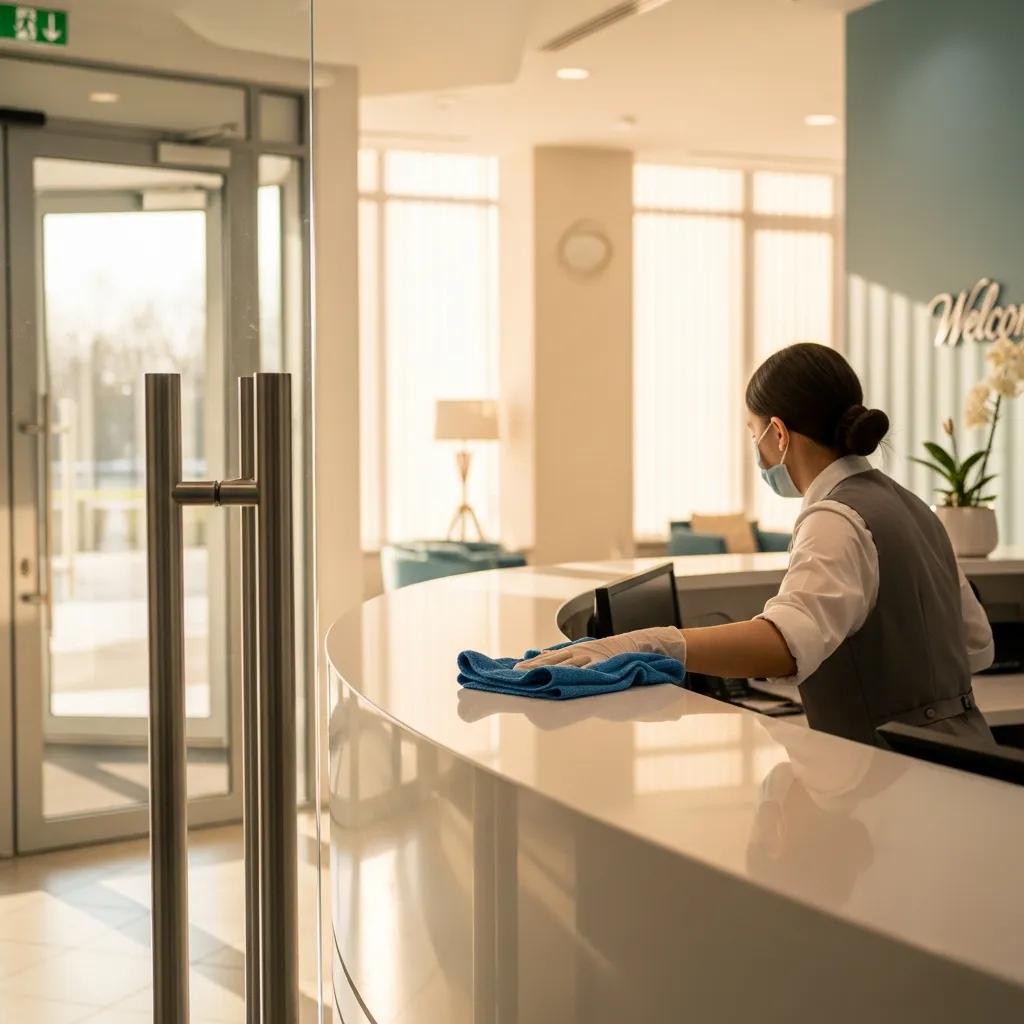
High-traffic and client-facing zones — reception, entryways, meeting rooms, kitchenettes and restrooms — shape first impressions and concentrate contaminants, so they need targeted care. Reception should receive daily styling and surface disinfection; meeting rooms should be cleaned after each client session or at least wiped daily. Kitchenettes and communal tea points are cross-contamination hotspots and benefit from multiple daily cleans and clear staff routines for dishes and surface wipes. Entryway floors and carpets collect outdoor debris and need regular extraction to preserve appearance and indoor air quality. Systematically addressing these areas reduces visible wear, limits pathogen spread and keeps a professional look that supports client confidence.
How to disinfect high-touch surfaces effectively
Effective disinfection starts with the right product and correct contact (dwell) time — a disinfectant must remain wet on the surface for the manufacturer’s recommended period to work. Use microfiber cloths and follow clean-to-dirty sequencing plus colour-coded equipment to avoid cross-contamination. Reserve hospital-grade disinfectants for outbreak response; for routine daily use, choose eco-friendlier alternatives to reduce VOC exposure and improve comfort. Ensure good ventilation when applying chemicals and train staff on dilution ratios, basic PPE and safe storage. These operational steps deliver consistent disinfection while protecting clients and employees.
How advanced and eco-friendly techniques can enhance your Everton Hills office
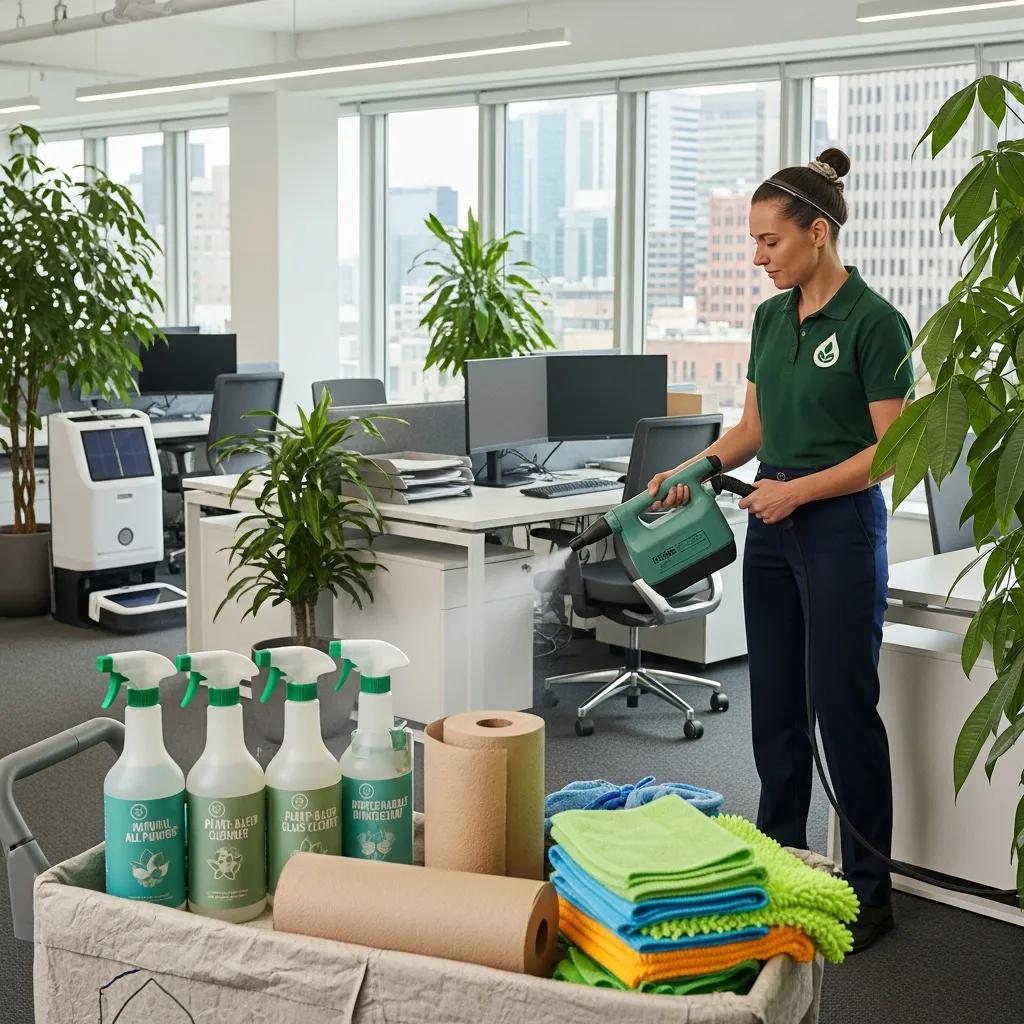
Advanced and eco-friendly approaches boost cleaning coverage, lower chemical exposure and align your practices with the sustainability values many Brisbane clients expect. Electrostatic spraying improves surface coverage by applying charged droplets that cling to surfaces; UV‑C can inactivate pathogens on exposed areas when used safely and intermittently. Green cleaning products reduce VOCs and improve indoor air quality, supporting staff wellbeing and signalling environmental responsibility to clients. The table below compares common technologies and sustainable options so you can weigh effectiveness, cost and suitability for Everton Hills workplaces.
| Technique | Effectiveness | Suitability / Cost Consideration |
|---|---|---|
| Electrostatic spraying | High for surface coverage and speed | Cost-effective for periodic deep disinfection; best scheduled outside business hours |
| UV-C disinfection | High for exposed-surface pathogen inactivation | Suitable for targeted use; requires trained operators and strict safety protocols |
| Green cleaning products | Moderate to high for routine cleaning | Low VOCs and better air quality; slightly higher product cost but strong staff/client acceptance |
| Microfiber systems | High for dirt and microbe removal | Low cost per use; reduces reliance on chemicals |
| Robotic floor cleaners | Consistent floor maintenance | Works well in large open-plan areas; requires upfront investment |
This comparison shows when each method is most useful, balancing efficiency with safety. The following sections cover health and branding benefits of green cleaning and how electrostatic spraying works in practice.
Benefits of green cleaning solutions for offices
Green cleaning reduces indoor pollutants and limits staff and client exposure to harsh chemicals, improving comfort and perceived workplace health. Certified low‑VOC products plus microfiber tools keep spaces looking good while supporting better air quality and fewer odour complaints. Choosing eco-friendly options also signals sustainability to clients and stakeholders — a useful differentiator in markets like Brisbane and the Sunshine Coast. Operationally, green programs usually include staff training on dilution and application, which improves consistency and reduces waste. Together, these benefits make green cleaning a strategic choice for offices that value health and a modern, responsible image.
How electrostatic spraying improves cleaning efficiency
Electrostatic spraying charges disinfectant droplets so they wrap around and cling to surfaces, improving coverage speed and consistency compared with manual spraying. It’s especially useful for complex shapes — chairs, keyboards and partition edges — where manual methods often miss contact points. For periodic deep cleans or outbreak responses, electrostatic application cuts labour time and creates more uniform disinfectant distribution. Schedule it to avoid client disruption and pair it with appropriate PPE and ventilation. Combined with routine manual cleaning and microfiber wiping, electrostatic spraying raises overall hygiene while optimising time and resources.
How Divine Commercial Cleaning customises office plans for Everton Hills businesses
At Divine Commercial Cleaning we build tailored commercial cleaning plans that focus on consistency, local responsiveness and trust for Everton Hills businesses. We design schedules around your business type and client-facing priorities and, where possible, assign the same cleaner to a site so standards and rapport are maintained. Our core commitments include being family‑owned, fully insured, police‑checked staff, a money‑back guarantee and no lock‑in contracts — all aimed at reducing procurement risk and keeping arrangements flexible. We follow a structured onboarding and quality process that includes a 90‑day review to make sure the plan is delivering.
What Everton Hills clients can expect from Divine Commercial Cleaning:
- Family-owned and operated: personalised service with local accountability.
- Same cleaner for consistency: builds rapport and reduces rework.
- Police checks and fully insured staff: addresses security and liability concerns.
- No lock-in contracts and money-back guarantee: flexible arrangements and clear quality assurance.
Our six-step process to onboard and maintain service quality:
- Initial contact and site assessment to identify priorities.
- Custom plan proposal outlining frequencies and materials.
- Scheduling and cleaner assignment with police‑checked personnel.
- Service delivery guided by checklists.
- Regular quality checks and documentation.
- 90‑day review to fine-tune the plan based on feedback.
This client‑first process makes sure cleaning supports first impressions and daily operations while giving local businesses control and peace of mind. The next sections explain how consistency and our guarantees turn into real value for clients.
Why consistency and no lock-in contracts matter for clients
Consistent staffing — for example, the same cleaner assigned to your premises — shortens onboarding, improves attention to site-specific details and builds accountability, which raises reliability and visible quality. For clients, steady staffing means fewer missed cues, faster detection of issues and stronger working relationships that help preserve the look you want to present to visitors. No lock‑in contracts give you procurement flexibility and reduce vendor risk, letting you trial services without a long-term commitment. Together, continuity and contract flexibility build trust and let managers focus on outcomes rather than paperwork.
How police checks and money-back guarantees build trust
Police checks help address security concerns by confirming staff are suitable to work on client sites, particularly where after-hours access or sensitive information is involved. Full insurance protects businesses from accidental damage or incidents during cleaning, providing a clear risk‑management benefit. Our money‑back guarantee signals confidence in our work and gives you a simple remedy if standards are not met. These safeguards make it easier for Everton Hills organisations to engage professional cleaning while protecting people and assets.
Local success stories that show effective office cleaning in Everton Hills
Local case examples demonstrate how consistent, targeted cleaning improves client impressions, reduces complaints and supports operational goals across sectors like professional services, retail and medical centres. Anonymous summaries from Everton Hills clients report outcomes such as fewer presentation complaints, higher reception appearance scores and measurable drops in staff sick days after introducing scheduled disinfection and upgraded restroom protocols. These results show that cleaning investments deliver both perceptual and operational returns when they’re planned around client-facing priorities. The examples below outline typical sectors served and the improvements they often see.
Which Everton Hills businesses benefit most from professional cleaning?
Professional service firms, small retail outlets and medical centres — businesses that rely on client trust and visible professionalism — gain the most. For example, a local professional office lifted client feedback by prioritising daily reception upkeep and meeting-room sanitisation; a retail outlet improved storefront presentation and reduced customer complaints with regular window and floor maintenance. Medical centres rely on strict disinfection schedules to reduce cross-contamination risk. Each sector needs tailored frequencies and methods to meet client expectations.
How office cleaning improves client impressions and productivity
Better cleaning protocols are linked to fewer staff sick days, higher employee focus and more positive client feedback — all outcomes that support productivity and revenue. For instance, regular disinfecting of high-touch equipment reduced reported staff illnesses, cutting temporary staffing costs and improving service continuity for clients. Cleaner meeting rooms and receptions also led some Everton Hills firms to see higher conversion rates in pitches, underscoring the link between environment and business results. These examples show a clear line from cleaning practices to operational performance and client perceptions.
How to maintain office cleanliness between professional visits
Keeping your office presentable between professional cleans comes down to simple daily habits, clear staff responsibilities and easy access to supplies for quick touch-ups. Adopt short routines like decluttering desks each evening, wiping shared surfaces after use and emptying communal bins regularly to prevent odours and visible mess. Provide staff with microfiber cloths, disinfectant wipes and signage for shared areas so small issues are handled quickly; consistent micro‑habits preserve the impression created by professional cleans. The checklist below gives practical rhythms that protect client impressions and share ownership of workspace standards.
Daily maintenance tasks and a short checklist reduce pressure on professional cleans and keep your office client-ready.
- End-of-day declutter: Tidy desks and remove visible personal items from reception.
- Wipe shared surfaces: Clean meeting tables, communal keyboards and touch screens after use.
- Empty bins: Remove rubbish daily and clean liners weekly to prevent odours.
- Refill supplies: Keep hand sanitiser and soap dispensers topped up and visible.
- Spot-clean spills immediately: Treat stains on carpets or upholstery as they occur.
These simple routines prevent deterioration between professional visits and reduce the need for emergency deep cleans. The final sections give more detail on daily habits and frequency guidance for high-touch disinfection.
Daily habits that support a clean, inviting workspace
Small daily habits make a big difference: a five‑minute reception tidy each morning, clearing meeting-room surfaces straight after use and decluttering personal desks at the end of the day. Short staff training on quick wipe techniques and correct use of disinfectant wipes keeps hygiene steady without disrupting workflows. Encourage staff to report maintenance issues — stained carpets, faulty dispensers — so small problems are fixed before they affect client impressions. These habits build a culture where cleanliness is a shared responsibility, keeping your workplace consistently welcoming between professional visits.
How often should staff disinfect high-touch surfaces?
Disinfect high-touch surfaces multiple times per day in reception and communal areas, after each client interaction in meeting rooms when feasible, and at least once daily for shared equipment like printers and kettles. During seasonal illness peaks or outbreak periods, increase frequency and consider scheduled electrostatic or professional deep disinfection as an escalation. Staff should focus on visibly used surfaces and follow product contact-time instructions to ensure effectiveness. Clear frequency ranges — multiple times/day, after use, daily — help staff act consistently and keep the office reliably client-ready.
Frequently asked questions
What are the benefits of maintaining a clean office environment for employee morale?
A clean office lifts morale by creating a healthier, more comfortable place to work. Employees in tidy, organised spaces are generally more focused and motivated, with fewer distractions and less stress. A well-maintained workplace also encourages better teamwork and communication — people are more willing to engage when the environment feels cared for. Overall, cleanliness supports productivity and a positive workplace culture.
How can businesses measure the effectiveness of their office cleaning strategies?
Measure effectiveness with a mix of direct and indirect indicators: employee and client feedback, cleanliness audits, and absenteeism rates. Use checklists and periodic inspections to track standards, and log maintenance issues to spot trends. Over time, look for improvements in productivity, fewer complaints and lower sick leave as signs your cleaning strategy is working.
What role does staff training play in maintaining office cleanliness?
Staff training is essential. It ensures employees know correct cleaning techniques, safe use of products and why their role matters for client impressions. Regular refresher training on dilution, contact times and quick‑clean routines improves consistency and helps staff feel confident in maintaining standards between professional visits.
How can eco-friendly cleaning products impact client perceptions?
Using eco-friendly products signals a commitment to health and sustainability — qualities many clients value. Green products tend to improve indoor air quality and reduce strong chemical odours, which clients and staff notice. Showcasing sustainable practices can strengthen your brand and appeal to environmentally conscious customers.
What are some common mistakes businesses make in their cleaning routines?
Common mistakes include overlooking high-touch surfaces, having inconsistent schedules and using inappropriate chemicals. Skipping frequent disinfection of shared areas can increase illness spread, while irregular cleaning lets dirt and clutter build up, harming presentation. Harsh chemicals can also create indoor air issues. Addressing these gaps keeps your workplace healthier and more inviting.
How can businesses ensure their cleaning service meets their specific needs?
Be clear about expectations during onboarding: flag high-traffic zones, special requirements and preferred frequencies. Ask for a tailored plan, regular feedback sessions and documented quality checks. Open communication and a willingness to adjust the plan ensure the service stays aligned with your needs as they evolve.
Consistent, well-planned office cleaning makes a visible difference to client impressions and workplace performance in Everton Hills. Prioritising cleanliness reduces absenteeism, boosts productivity and builds trust with clients — all while supporting sustainability goals when you choose eco-friendly options. If you want a tailored plan that keeps your office looking and performing its best, speak with our local team to see how we can help.

Dianne, originally from Rockhampton, hails from a business-oriented family, with her father owning electrical stores and her uncle serving as Mayor. Moving to the Sunshine Coast at 13, she later pursued a rewarding real estate career and raised three children. As a single mom, she balanced university studies with domestic cleaning work. Armed with a Bachelor’s Degree in Business, majoring in Supply Chain Management, Dianne founded and grew Divine Commercial Cleaning into a thriving company. Her success is rooted in strong family mentorship, a positive attitude, and a solution-oriented approach, offering tailored cleaning services with integrity and strategic insight.