How Currimundi Commercial Cleaning Keeps Your Business Safe, Healthy and Compliant
A clean, healthy business in Currimundi means limiting infection risk, improving indoor air quality and meeting hygiene obligations so staff stay well and customers feel confident. This page explains the practical steps—surface disinfection, targeted sanitisation routines and better ventilation with HEPA filtration—that reduce pathogens and support workplace wellbeing. You’ll find why hygiene matters for compliance and reputation, which methods most effectively cut transmission, how protocols vary by sector, and the measurable benefits for productivity and trust. We also include examples for offices, retail, schools, daycares and medical centres, plus how a
commercial cleaner can tailor a plan for your site.
Why maintaining a safe, healthy workplace matters for Currimundi businesses
Keeping your workplace safe protects people, keeps operations running and preserves reputation. Practical actions—regular removal of contaminants from high-touch surfaces, scheduled deep cleans for communal spaces and air-quality improvements where aerosols are a concern—interrupt transmission routes and reduce the chance of outbreaks. In short: cut the environmental reservoirs of microbes, reduce exposure time and limit events that cause staff shortages or inspection problems. A consistently healthy environment helps maintain business continuity and avoids visible hygiene lapses that damage trust.
Currimundi businesses gain three clear advantages from better workplace health:
- Reduced staff illness: regular cleaning and sanitisation lower spread of respiratory and gastrointestinal bugs.
- Regulatory compliance: documented procedures and records align with Work Health and Safety requirements.
- Customer confidence: visible, consistent hygiene boosts professionalism and trust.
These priorities lead into the specific hygiene practices that protect staff and visitors, explained below.
How workplace hygiene protects employees and customers in Currimundi
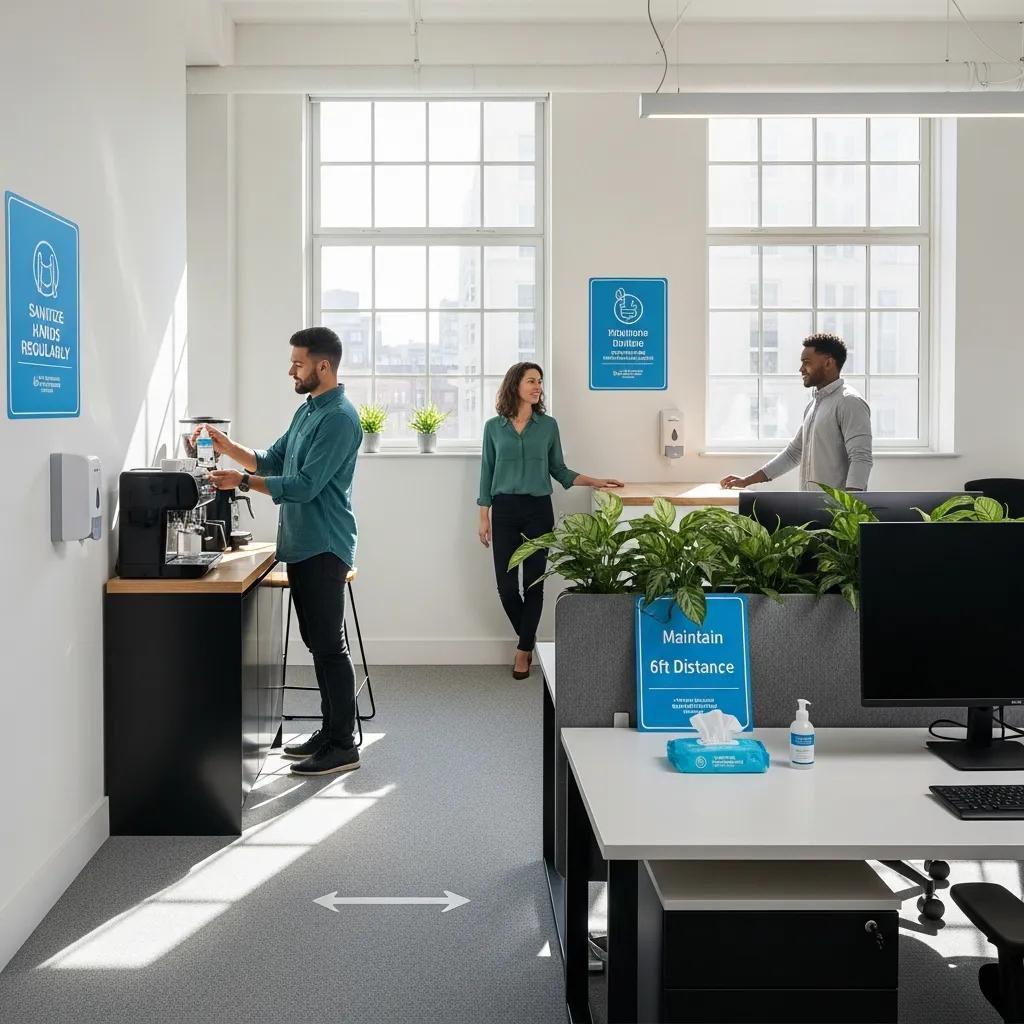
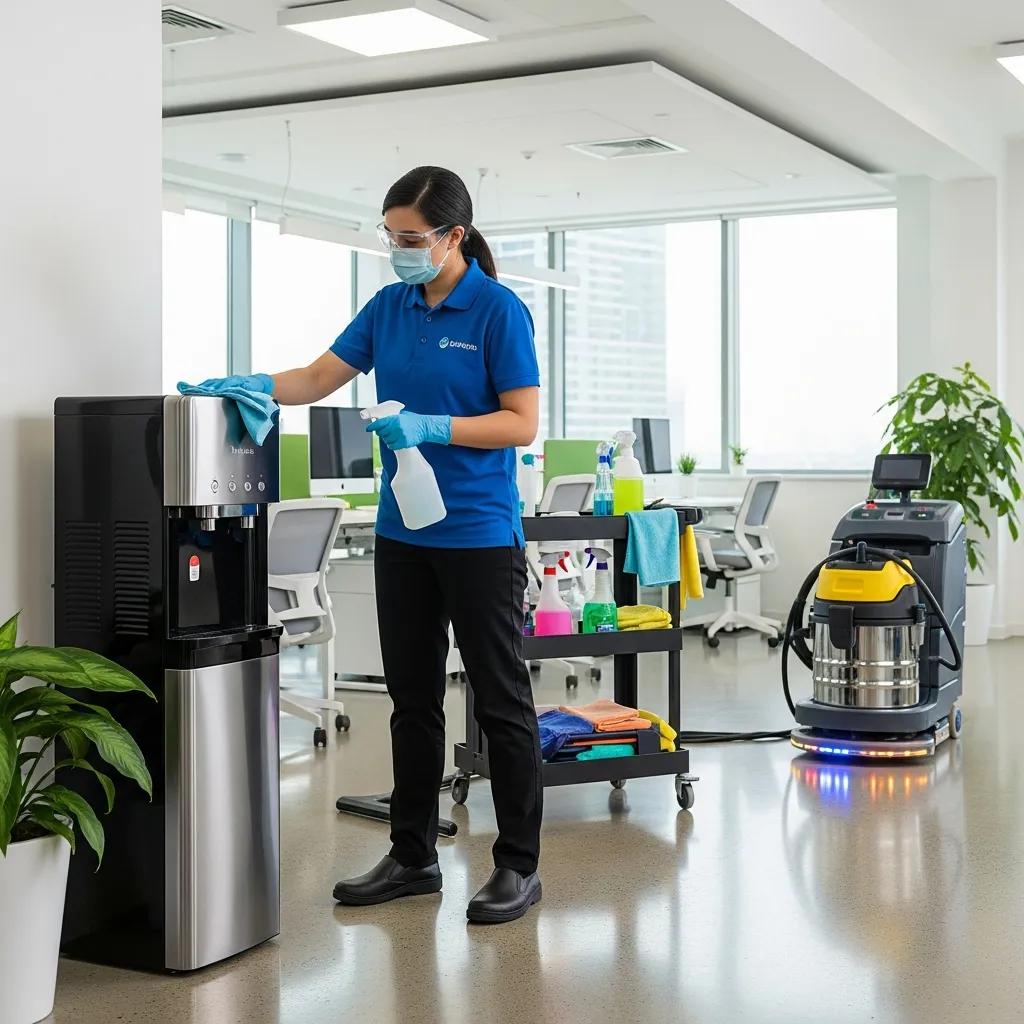
Workplace hygiene removes or inactivates microbes on surfaces and in the air, interrupting common transmission routes such as touch, droplets and shared equipment. High-touch cleaning targets door handles, light switches, phones and communal touchscreens where transfer risk concentrates. Daily sanitisation lowers overall microbial load while scheduled disinfection is used after incidents or during outbreaks. Practical steps include frequent wipe-downs of shared gear, hand-hygiene stations and clear cleaning schedules so staff and visitors know what to expect. Together, these actions reduce immediate risk and create a baseline that helps control outbreaks faster when they occur.
Evidence consistently shows that focusing on high-touch surfaces is a key part of preventing pathogen spread and reducing healthcare-associated infections.
High-Touch Surface Disinfection: Preventing Pathogen Transmission
Research highlights that healthcare-associated infections remain a significant concern and that frequently touched items and surfaces are important links in transmission. Improving cleaning and disinfection of these high-touch areas reduces infection rates, and both manual and automated cleaning approaches can play a role. The paper also discusses trends such as antimicrobial surfaces as part of broader prevention strategies.
What Australian WHS and Queensland Health standards mean for Currimundi businesses
The national WHS framework and Queensland Health guidance require employers to manage risks to worker health using the hierarchy of controls—elimination, substitution, engineering, administration and PPE. Businesses should maintain safe systems of work, keep records such as Safety Data Sheets (SDS) and train staff in cleaning procedures and PPE where needed. Industry-specific guidance for medical, education and food-handling settings sets higher expectations for disinfectant selection, contact times and waste handling. Documented cleaning schedules, training logs and incident records support compliance and demonstrate due diligence during inspections.
These obligations reflect wider environmental infection-control guidance that emphasises correct cleaning, disinfection and ventilation to protect health.
Environmental Infection Control: Cleaners, Disinfectants & Ventilation Standards
Environmental controls and engineering measures reduce the risk of exposure to environmental and airborne pathogens, particularly for vulnerable patients and staff. Key prevention steps include using appropriate cleaners and disinfectants, maintaining medical equipment, following water-quality and ventilation standards for specialised areas, and managing water intrusion promptly. These combined measures help minimise healthcare-associated infections and related incidents.
Advanced cleaning methods Divine Commercial Cleaning uses in Currimundi
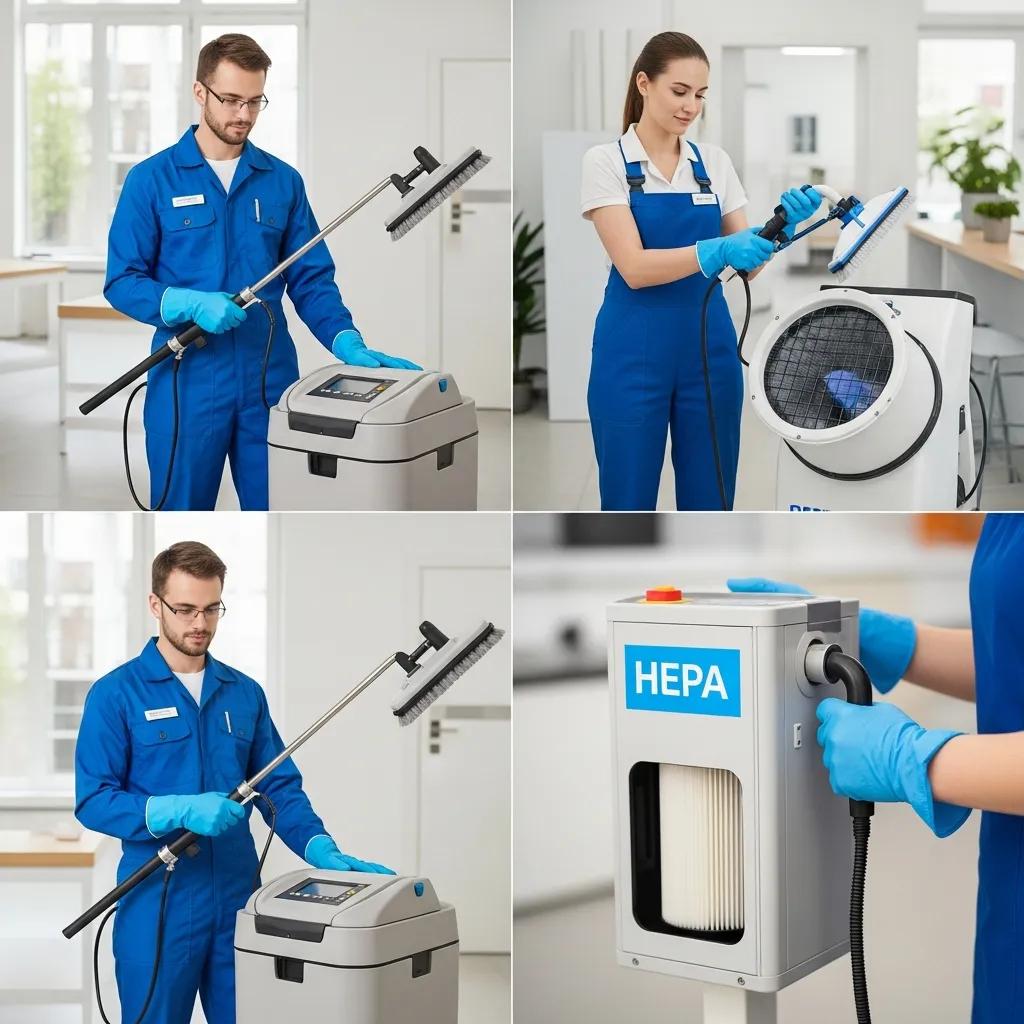
Advanced commercial cleaning blends targeted surface disinfection, enhanced air filtration and careful product selection to reduce pathogens and improve occupant health. Disinfection protocols use validated contact times and may rotate agents when appropriate; HEPA filtration lowers airborne particulates and aerosols; eco-friendlier options reduce chemical exposure while retaining effectiveness. Used together, these methods address both fomite and airborne pathways, support compliance and improve comfort. The table below summaries common advanced approaches, their targets and business benefits to help managers prioritise investment.
Different technologies deliver complementary advantages for workplace safety and health:
| Method | Target / Mechanism | Business Benefit |
|---|---|---|
| Electrostatic disinfection | Even coating of disinfectant on complex surfaces | Faster, more consistent coverage of high-touch zones; reduced labour time |
| Manual targeted sanitisation | Focused wiping of high-touch areas with hospital-grade or EPA-equivalent agents | Immediate reduction of fomite risk between shifts |
| HEPA filtration (portable/HVAC) | Captures fine particulates and aerosols | Lowers airborne transmission risk and improves occupant comfort |
These methods are commonly combined: manual sanitisation for daily maintenance, electrostatic disinfection for periodic deep cleans and HEPA filtration for ongoing air-quality support. The sections that follow explain how disinfection and HEPA strategies reduce spread.
How disinfection and sanitisation protocols reduce pathogen spread
Cleaning, sanitising and disinfecting are distinct but linked steps. Cleaning removes soils and reduces organic matter so disinfectants can work. Sanitisation lowers microbial counts to acceptable levels on surfaces, while disinfection inactivates or kills a broader range of pathogens when used with correct agents and contact times. Effective programmes start with cleaning, then apply the chosen sanitiser or disinfectant per manufacturer instructions. Routine schedules—daily sanitisation of communal areas and periodic deep disinfection after incidents—create layered protection that lowers pathogen load and gives managers predictable control over environmental risk.
How HEPA filtration improves indoor air quality and workplace safety
HEPA filters capture particles down to 0.3 microns with high efficiency, removing many aerosolised respiratory droplets that can carry viruses and bacteria. Practical deployments include portable HEPA units in meeting rooms, integrating higher-grade filtration into HVAC where feasible, and scheduled filter maintenance to preserve performance. Better air quality reduces respiratory symptoms, increases comfort and can lower transmission risk in close-contact settings. For businesses, improved air often correlates with fewer sick days and higher productivity—making HEPA a cost-effective option for offices, gyms and clinical reception areas.
How commercial cleaning protocols are tailored for different Currimundi businesses
We adapt cleaning protocols to each sector by assessing risk profile, regulatory requirements and occupant patterns, then specifying frequency, products and equipment to match. Medical centres need higher-grade disinfectants and stricter waste handling; schools prioritise child-safe products and toy hygiene; retail often requires fast-turnaround cleaning during trading hours; offices benefit from daily cleans plus targeted midday sanitisation. The table below summarises tailored approaches across common Currimundi sectors to help decision-makers match scope to risk.
Tailoring ensures compliance and operational practicality:
| Business Type | Key Risk / Requirement | Tailored Protocol |
|---|---|---|
| Medical / Health centres | Clinical contamination, clinical waste | Hospital-grade disinfectants, frequent high-touch disinfection, PPE and waste segregation |
| Offices | Shared equipment, desks | Daily cleaning, midday sanitisation of shared zones, optional HEPA in meeting rooms |
| Schools & Daycares | Child safety, shared toys | Child-safe products, daily surface sanitisation, targeted deep cleans during breaks |
| Retail | High customer turnover | Rapid-turnover surface wipes, tills and EFTPOS sanitisation, end-of-day deep clean |
Tailored protocols cut unnecessary chemical use and focus resources on the highest-risk areas. The next sections look at clinical infection control and non-clinical adaptations in more detail.
Infection control measures used in medical and health centres
In medical settings we use validated disinfectants with documented contact times, strict single-use consumable policies where needed, and careful handling of clinical waste. Cleaning frequency is higher in clinical zones with scheduled disinfection of treatment chairs, exam tables and waiting-area touchpoints. Staff training covers cross-contamination prevention, correct donning and doffing of PPE, and SDS awareness for chemical safety. These measures reduce cross-infection risk and support compliance with Queensland Health expectations.
How cleaning practices support safety in offices, retail, schools and daycares
Non-clinical sectors take practical, sector-appropriate steps: offices focus on desk hygiene, keyboard and phone sanitisation and optional HEPA support for meeting rooms; retail prioritises quick-turnover techniques for tills and displays to avoid disruption; schools and daycares use child-safe formulations and concentrate on toys and play areas alongside hand-hygiene education. Typical frequencies include daily communal-area cleaning, peak-time wipe-downs in retail and weekly deep cleans scheduled outside operating hours. These practices keep environments safe while fitting each sector’s day-to-day rhythm.
The benefits of professional commercial cleaning for Currimundi businesses
Professional cleaning delivers measurable results: fewer illness-related absences, stronger client perceptions of professionalism and robust records that help with inspections. Trained teams follow validated procedures, use appropriate products for each setting and document work so businesses can demonstrate due diligence. The table below links benefits to the mechanisms that produce measurable outcomes, helping decision-makers see how cleaning investment translates to business value.
Framing benefits as mechanism → outcome helps justify cleaning investments:
| Benefit | Mechanism | Outcome / Metric |
|---|---|---|
| Reduced absenteeism | Lower environmental pathogen load through routine sanitisation | Fewer sick days; improved staffing reliability |
| Improved client trust | Consistent visible cleanliness and documented protocols | Higher customer satisfaction and repeat business |
| Regulatory readiness | Records, SDS, trained staff | Smoother inspections and lower compliance risk |
These connections show why consistent professional cleaning is an investment in continuity and reputation, not just a cost. The sections below explain how cleanliness affects productivity and client trust in practical terms.
How a clean environment boosts productivity and reduces absenteeism
Cleaner workplaces reduce exposure to respiratory and gastrointestinal pathogens, which cuts illness-related absences. Beyond infection control, better air quality and an orderly environment improve concentration, morale and a sense of employer support—factors that reduce presenteeism and improve performance. Results vary by sector, but many managers see drops in short-term sick leave and steadier day-to-day productivity after introducing rigorous cleaning plus air-quality measures. Targeted cleans during low-occupancy periods and HEPA filtration where needed translate hygiene into measurable workforce stability.
How professional cleaning enhances client trust and reputation
Visible, consistent cleaning signals care for customer safety and gives a professional first impression that influences purchasing decisions and referrals. Certification-style practices—documented schedules, staff training records and clear signage about hygiene measures—reinforce client confidence and reduce reputational risk after inspections or complaints. For customer-facing businesses, a dependable cleaning programme becomes part of the brand promise and can be highlighted in communications to reassure visitors, supporting long-term reputation and repeat business.
How Divine Commercial Cleaning shows commitment to safety and trust in Currimundi
Divine Commercial Cleaning supports local businesses with practical safeguards and service features that prioritise safety while making contracting simple. Our approach focuses on reliable staffing practices and client-friendly contract terms, offering tailored solutions that match sector risks. Key trust points include staff vetting, insurance protections and client-centred guarantees that reduce procurement risk. The list below highlights core features we use to reassure local businesses when choosing a cleaning partner.
- Police checks for staff: vetted personnel for secure premises access.
- Fully-insured services: protection against accidental damage or liability.
- No lock-in contracts and money-back guarantee: flexible terms that build client confidence.
These elements lower procurement friction and support long-term partnerships; detailed staff qualifications and protocols explain how safety is maintained on the job.
Qualifications and safety protocols followed by Divine's cleaners
Our cleaners are experienced and receive role-specific training; all team members are subject to police checks to ensure trustworthy access to client sites. We maintain full insurance and train staff in correct PPE use, SDS handling and validated cleaning techniques tailored to each sector. Operational practices—such as assigning the same cleaner where feasible and documenting completed tasks—support consistency and accountability. These measures combine to reduce on-site risk and deliver a predictable, auditable cleaning service for Currimundi businesses.
What Currimundi clients say about Divine Commercial Cleaning's impact
Local clients report smoother inspections and clearer hygiene communication to customers and staff after adopting consistent cleaning and documented protocols. While individual testimonials are typically shown on business listings, aggregated outcomes include fewer disruptions from symptomatic staff and reduced cleaning-related complaints. Businesses that adopt tailored cleaning plans often see better customer feedback about cleanliness. When available, Currimundi-specific stories further illustrate local impact and build credibility.
How Currimundi businesses can get a customised quote for safe, healthy cleaning
Getting a customised cleaning quote is a simple three-step process designed to assess your site, match services to risk and deliver a clear proposal that fits your operations and budget. We prioritise quick initial contact, an on-site or virtual assessment to identify high-risk zones and scheduling needs, and a tailored proposal outlining scope, frequency and optional extras such as HEPA units or eco-friendly products. Below is a short step-by-step guide you can use to start the quote process.
Follow these three simple steps to request a customised quote:
- Request
: Contact us by phone or email and describe your premises and cleaning needs. - Assess
: Arrange an on-site or virtual walkthrough to map high-risk areas and scheduling windows. - Quote
: Receive a tailored proposal with scope, frequency and pricing options.
This process ensures proposals reflect real risk profiles and operational realities. Expect a prompt turnaround and be ready to share floor plans, peak hours and any specific compliance concerns to speed accurate quoting.
How to request a free quote from Divine Commercial Cleaning
To request a free quote, contact Divine Commercial Cleaning by phone or email and give basic details about premises size, sector and preferred cleaning windows—these details help us focus the assessment. We then complete an on-site or virtual walkthrough to confirm high-touch zones, ventilation needs and any clinical or child-safety requirements so the proposal matches regulatory and operational needs. The custom proposal outlines recommended cleaning frequency, chosen methods (for example routine sanitisation plus periodic electrostatic disinfection), optional HEPA support and clear pricing. Clients can confirm scope, ask follow-up questions and schedule a start date once they accept the proposal.
How Divine ensures reliable, tailored cleaning for Currimundi clients
Frequently Asked Questions
We maintain consistency by assigning the same cleaner where feasible, creating customised plans that reflect sector requirements and offering contract terms with no lock-in obligations. These practices reduce variability in service delivery and help build trust between our team and on-site staff. Combined with police-checked personnel, full insurance and a money-back guarantee, our approach lowers procurement risk and aligns service delivery with the safety and compliance needs of Currimundi businesses. To start the quote process, contact Divine Commercial Cleaning on 0459 949 969 or info@divinecleaning.com.au. Our local office is at 5 Bluff St, Birtinya, QLD 4575.
What types of businesses benefit most from professional commercial cleaning in Currimundi?
Professional commercial cleaning benefits many sectors, especially healthcare, education, retail and hospitality. Healthcare settings need strict hygiene to prevent infections; schools and daycares require child-safe products; retail spaces rely on quick-turnaround cleaning to keep customers confident; and offices need regular sanitisation to support staff health. Professional services tailor plans to each sector’s specific needs, ensuring safety and compliance.
How often should businesses in Currimundi schedule cleaning services?
Cleaning frequency depends on business type and traffic. High-traffic sites like retail stores and medical facilities often need daily cleaning and sanitisation, while offices may combine daily maintenance with weekly or monthly deep cleans. Schools and daycares usually require daily cleaning plus targeted deep cleans during breaks. We recommend tailoring schedules to your operations and peak periods.
What are the environmental benefits of using eco-friendly cleaning products?
Eco-friendly products reduce chemical exposure for staff and visitors and lessen environmental impact. They’re often biodegradable and avoid harsh VOCs, which helps local ecosystems and improves indoor air quality. Businesses that adopt green cleaning can also boost their reputation with customers who value sustainability—an added commercial benefit.
How can businesses measure the effectiveness of their cleaning protocols?
Effectiveness can be tracked by monitoring absenteeism rates, conducting regular inspections, collecting employee and customer feedback and keeping documented cleaning records. Surface testing kits can check microbial contamination where needed. Together, these measures show whether hygiene standards are being met and where adjustments are required.
What role does staff training play in maintaining cleaning standards?
Staff training is essential. Proper training ensures cleaners understand correct product use, equipment operation and safety protocols, which reduces cross-contamination and improves results. Training also builds a workplace culture of cleanliness; regular refreshers keep teams up to date with new products and any regulatory changes.
What should businesses consider when choosing a commercial cleaning service?
When choosing a provider, consider experience, local reputation and compliance with health regulations. Check the range of services offered, sector expertise and staff training. Ask about eco-friendly options, insurance and contract flexibility. Clear communication and the ability to customise plans are also important for a successful long-term partnership.
Effective commercial cleaning in Currimundi enhances workplace safety, supports employee productivity and strengthens customer confidence. By prioritising hygiene through tailored protocols and appropriate technologies, businesses can reduce illness-related absences and meet regulatory expectations. Professional cleaning is a practical investment in continuity and reputation. Contact Divine Commercial Cleaning today to explore a customised solution that matches your needs.

Dianne, originally from Rockhampton, hails from a business-oriented family, with her father owning electrical stores and her uncle serving as Mayor. Moving to the Sunshine Coast at 13, she later pursued a rewarding real estate career and raised three children. As a single mom, she balanced university studies with domestic cleaning work. Armed with a Bachelor’s Degree in Business, majoring in Supply Chain Management, Dianne founded and grew Divine Commercial Cleaning into a thriving company. Her success is rooted in strong family mentorship, a positive attitude, and a solution-oriented approach, offering tailored cleaning services with integrity and strategic insight.