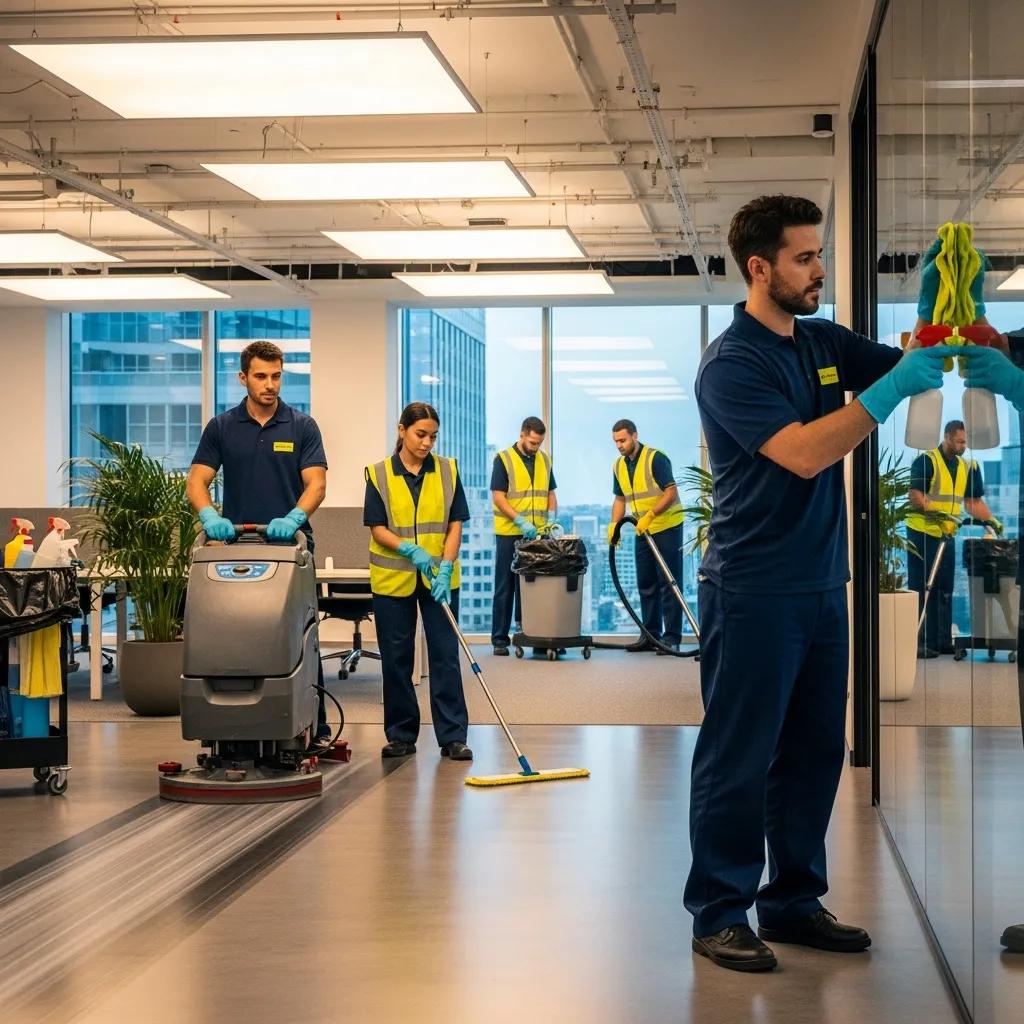
Same‑day emergency cleaning in Minyama — quick, professional responses when time matters
Urgent commercial cleaning in Minyama covers fast, priority interventions that get your business back to work — from spills and contamination to biohazards and deep disinfection. A clear triage‑to‑dispatch process drives rapid response: we log the report, confirm scope and risk, send the right crew with the correct equipment, then clear and certify the area for safe use. The immediate benefits are real: less downtime, maintained customer confidence and lower regulatory or reputational risk when same‑day availability is needed. This guide outlines typical response times, the urgent services suitable for offices, retail, medical centres and shopping centres, how providers vary methods by sector, and practical steps to request same‑day cleaning in Minyama. Read on to learn the stages of emergency cleaning, which service fits your situation, how to get a quick quote and what review signals show a dependable rapid‑response provider.
Typical response times for urgent commercial cleaning in Minyama
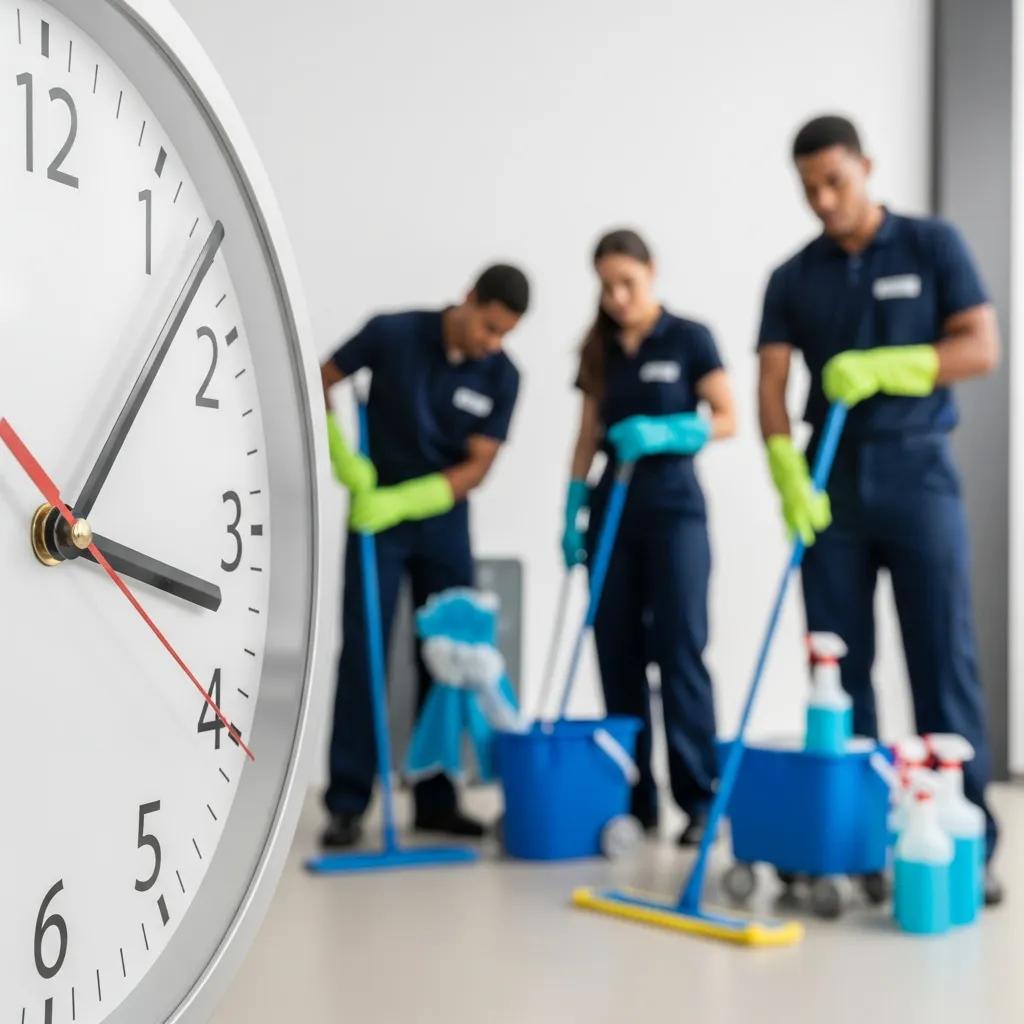
Response time measures the period from your first contact to the arrival of a trained cleaning team. It includes triage, risk confirmation and mobilisation. Providers shorten that window by prioritising urgent calls, staging equipment, and using local crews — the goal is to get specialists on‑site quickly to limit exposure and restore operations. Because jobs range in complexity and equipment needs, response times are usually given as ranges rather than exact guarantees. Below are the common stages that determine how fast a provider can respond and what to expect during each step.
Several factors commonly affect urgent response time:
- Job Complexity: Complex tasks like biohazard mitigation or full deep disinfection require extra preparation and may extend mobilisation time.
- Specialist Equipment: Fogging machines, containment gear or medical‑grade disinfectants take longer to stage.
- Crew Availability: Local, on‑call teams shorten response windows compared with distant dispatch.
- Time of Day: Peak hours or after‑hours requests change prioritisation and possible arrival windows.
Because of these variables, providers usually offer response windows rather than fixed arrival times. The operational models below show how companies speed up emergency cleaning.
Different urgent service types have predictable response windows based on scope and risk; the table below summarises common categories and expected timings.
This quick comparison helps you match incident type with likely response time.
| Service Type | Typical Response Window | When to Expect This |
|---|---|---|
| Spill & Surface Cleanup | Within hours to same day | Small spills and fast surface restoration |
| Same‑day Deep Disinfection | Same day when staged; usually within business hours | Suspected contamination or post‑exposure cleaning |
| Biohazard & Bloodborne Pathogen Response | Several hours to next available on‑call team | Medical incidents or regulated biohazards |
| Post‑event / After‑hours Cleanup | Same day or next business day depending on notice | Event clearances or late incidents needing restoration |
How Divine Commercial Cleaning delivers fast emergency response
We use a regional readiness model that pairs clear triage steps with on‑call crews and pre‑staged equipment to cut mobilisation time. Calls or online enquiries are assessed to determine risk level, PPE needs and whether containment or specialist disinfectants are required; that assessment decides which vehicle and team are sent. With local crews across the Sunshine Coast and Brisbane, travel times are shorter than single‑depot models, which supports same‑day availability in many cases. We also provide an ETA and scope confirmation so you can plan a safe partial reopening while full remediation finishes. That transparency reflects how industry standards shape realistic response expectations.
Industry standards for emergency office cleaning response
Industry norms frame emergency cleaning as ranges: same‑day dispatch for moderate incidents, within‑hours responses for high‑priority exposures, and next‑business‑day for low‑risk restoration. Many providers use service‑level agreements or urgency tiers — for example, triage‑to‑dispatch within a few hours for high priority incidents and scheduling within 24 hours for less urgent work. Factors such as crew size, specialist equipment and regulatory handling for biohazards justify variation from benchmarks. Ask for clear SLAs so you can compare providers on documented response policies rather than marketing claims.
Which urgent cleaning services are available for businesses in Minyama?
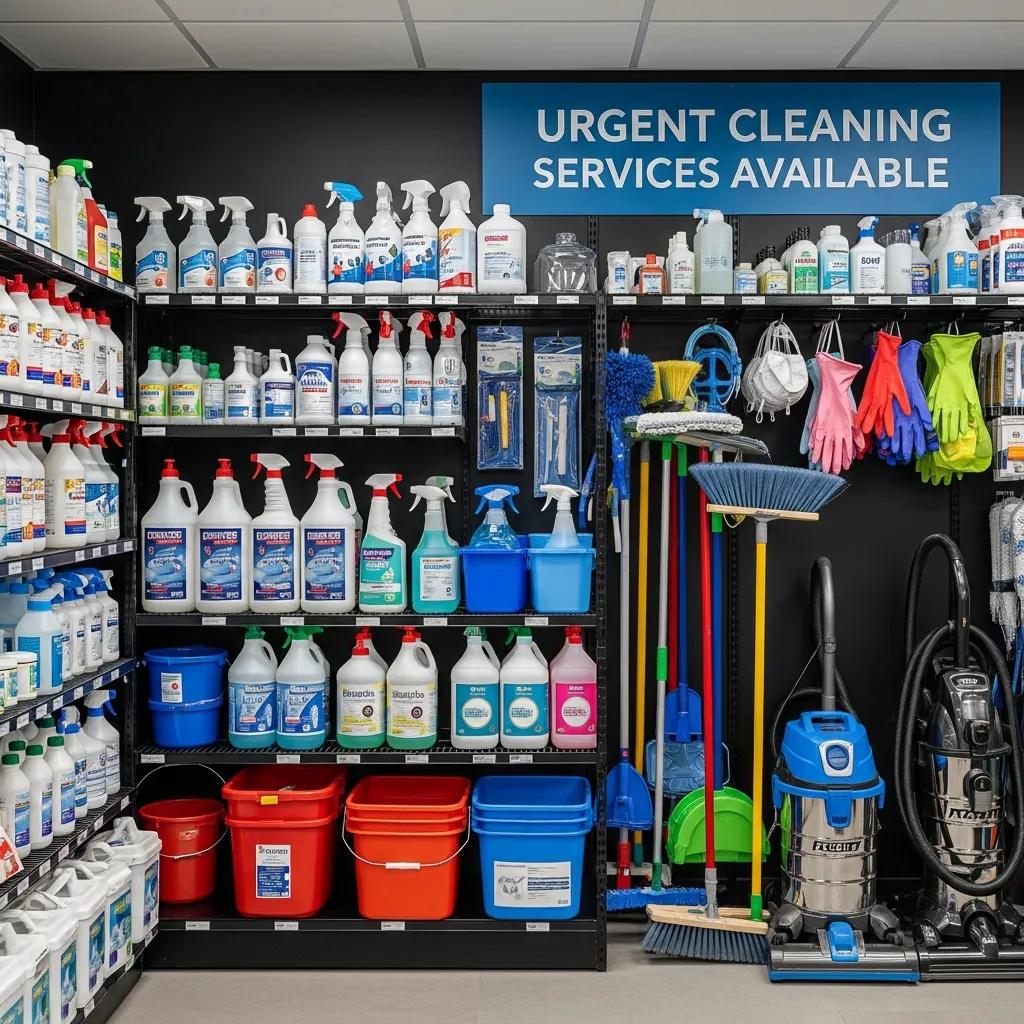
Urgent commercial cleaning covers a range of fast interventions designed to restore safety and functionality — from spill remediation and same‑day disinfection to biohazard containment and post‑event recovery. Each service uses different PPE, agents and equipment — for example, fogging or electrostatic sprayers for wider disinfection versus targeted surface cleanup for spills — and the main aim is to minimise disruption. Below are the core urgent service categories and guidance on when each is appropriate.
Key urgent service types include spill response, same‑day disinfection, biohazard remediation, post‑event cleanup and rapid restroom sanitisation.
- Spill Response: Fast containment and removal of liquids or debris to make spaces safe again.
- Same‑day Disinfection: Targeted deep cleaning and sanitisation after suspected contamination.
- Biohazard Remediation: Licensed handling and disposal of regulated or bloodborne waste.
- Post‑event Recovery: Quick turnover cleaning after functions so retail or hospitality areas can reopen.
- Rapid Restroom Sanitisation: Intensive sanitation to address outbreaks or severe hygiene issues.
These descriptions help you choose the right urgent response. The table below clarifies scope and use cases.
| Service Name | Scope | When to Use |
|---|---|---|
| Spill Response | Containment, removal and surface restoration | Immediate slips or hazardous spills |
| Same‑day Disinfection | Deep cleaning, fogging or electrostatic application | After suspected contamination or a positive case |
| Biohazard Cleanup | Isolation, regulated waste handling and decontamination | Medical incidents or bodily‑fluid exposure |
| Post‑event Cleanup | Waste removal, surface sanitisation and floor restoration | After events with heavy foot traffic |
Divine Commercial Cleaning provides tailored urgent service access across the Sunshine Coast and Brisbane. You can request quotes or check same‑day availability through our online quote form or Google Business Profile — have incident details and urgency ready when you contact us to speed triage and dispatch.
What rapid cleaning services does Divine Commercial Cleaning offer?
We offer same‑day disinfection, spill response, urgent restroom sanitisation and post‑event recovery specifically scoped for commercial sites. Each job is tailored to the site type: a medical centre disinfection focuses on medical‑grade agents and documentation, while a retail post‑event cleanup emphasises floor restoration and customer areas. When you request service, tell us the environment, number of affected zones and any regulatory needs so we can assign the right team and equipment quickly. That clarity helps produce faster quotes and faster dispatch.
How cleaning plans are customised for different commercial environments
Custom plans depend on risk profile, foot traffic, surface types and regulatory obligations. Offices typically need targeted high‑touch cleaning and quick floor drying; retail spaces require fast aisle and display restoration; medical centres demand compliance‑focused disinfection with paperwork; shopping centres may need multi‑team coordination for large areas. Providers assess traffic patterns, infection risk and materials, then choose agents and equipment that deliver quick results without damaging finishes or disrupting occupants. This tailored approach keeps interventions effective and reduces collateral disruption.
How Minyama commercial cleaning supports different business types
Support combines sector‑specific protocols with flexible deployment so offices, retail, medical centres and shopping centres get the right urgency and technical response. The process is straightforward: classify the incident by industry risk, send a team with relevant expertise and equipment, and execute a remediation plan to return the area to compliant operation as quickly as possible. Each sector gains a specific benefit — offices regain productivity, retail preserves customer flow, medical centres maintain patient safety and shopping centres limit revenue loss by reopening areas fast. The sections below outline priorities and examples by business type.
Urgent cleaning priorities focus on the most critical tasks to restore safe operation quickly:
- Offices: High‑touch surface disinfection, workstation sanitisation and fast floor drying to reopen work areas.
- Retail: Aisle clearance, point‑of‑sale sanitisation and spill removal to protect customers and transactions.
- Medical Centres: Infection control, regulated waste handling and documentation to meet health standards.
- Shopping Centres: Zonal containment, crowd‑area disinfection and coordinated multi‑team logistics for large spaces.
Those priorities guide equipment choice, crew size and scheduling — which is why tailored rapid cleaning plans matter for each sector.
Specific cleaning needs for offices, retail, medical and shopping centres
Offices usually need fast high‑touch surface disinfection and workstation readiness to minimise productivity loss. Retail sites require quick floor cleanup, display sanitisation and checkout area cleaning to protect revenue. Medical centres demand strict decontamination, correct waste handling and traceable documentation to meet regulations. Shopping centres often need simultaneous attention across multiple zones because of high footfall. Knowing these needs determines crew composition — for example whether a biohazard‑trained technician is required — and the equipment used, helping businesses request the correct urgent service fast.
How rapid cleaning improves operational hygiene across industries
Rapid cleaning lowers infection risk, shortens downtime and preserves customer or patient confidence by restoring visibly clean, safe environments quickly. Operationally, prompt interventions limit revenue loss from closures, reduce secondary contamination risk and support compliance with health and safety expectations. Outcomes are often measured with simple KPIs such as time‑to‑reopen, customer flow restoration and recorded clearance of contaminated zones. These metrics help managers assess the business impact of a rapid‑response arrangement and justify the investment.
How to request and access same‑day commercial cleaning in Minyama
Requesting same‑day cleaning follows a clear, predictable workflow: initial contact with incident details, rapid triage and scope confirmation, a quick quote if needed, then dispatch confirmation with an estimated arrival window. Clear, concise information — location, incident type, area size and urgency — lets the provider match crew capability and equipment immediately. That reduces back‑and‑forth and speeds mobilisation. Below is a simple process to follow and an availability table to help choose the fastest contact route.
Follow these four steps to get a quick and accurate urgent cleaning quote:
- Provide incident details: Tell us the type of incident, which areas are affected and any hazards.
- State timing: Let us know if you need same‑day response and any opening constraints.
- Share access info: Give entry points, security details or after‑hours access instructions.
- Confirm a contact: Provide one onsite contact for ETA updates and handover.
Following these steps reduces uncertainty and helps providers triage and dispatch faster.
The table below shows common request methods, typical availability and expected follow‑up times.
| Request Method | Availability Window | Expected Follow‑up Time |
|---|---|---|
| Phone or Direct Call | Same‑day prioritisation possible during business hours | Triage and ETA within minutes to an hour |
| Online Quote Form | Fast during working hours; useful for detailed scopes | Response within 1–4 hours depending on workload |
| Google Business Profile Message | Good for quick enquiries and after‑hours flags | Follow‑up within hours or by the next business window |
Divine Commercial Cleaning accepts urgent enquiries via our online quote form and Google Business Profile messaging. Provide incident scope and urgency when you contact us to speed triage and dispatch.
How to request a quote for urgent cleaning services
When requesting an urgent quote, give concise details: incident type, approximate square metres or affected zones, whether biohazard handling is needed, and any access constraints. After you submit, expect a rapid triage call or message to confirm risk and scope, followed by a short estimate and an arrival window if same‑day service is possible. Photos and exact site details speed the process and reduce uncertainty when we stage teams and supplies. Clear expectations about follow‑up and mobilisation smooth the path from request to on‑site remediation.
Are after‑hours and weekend emergency cleaning services available?
Many providers run on‑call systems or offer after‑hours and weekend emergency responses for true urgent needs, though availability can depend on crew schedules and equipment requirements. Typical models include an on‑call technician for high‑priority incidents or a next‑business‑day response for lower‑risk jobs requested off‑hours. Ask about out‑of‑hours fees and arrival windows when you make the request. To secure after‑hours coverage, supply clear access instructions and an onsite contact so the crew can arrive and begin work without delay.
What do customers say about rapid response and quality in Minyama commercial cleaning?
Customer feedback on urgent cleaning often centres on speed, professionalism and follow‑through: happy clients note quick arrival, clear communication and thorough remediation. Reviews commonly mention whether the provider met the expected window, restored normal operations quickly and communicated safety measures effectively. Look for consistency in those themes across multiple reviews rather than single anecdotes — recurring praise for prompt, documented outcomes is the best indicator of reliable rapid‑response capability. The summary below outlines common testimonial themes and how to interpret them.
Common testimonial themes show what to expect from reputable rapid‑response cleaners and how to validate their claims:
- Prompt Arrival: Repeated mentions of timely arrival suggest dependable triage and local readiness.
- Professional Execution: Notes about crew professionalism and thoroughness indicate strong training and procedures.
- Clear Communication: Reports of ETA updates and scope confirmation show effective client communication.
Which testimonials highlight Divine Commercial Cleaning’s fast, reliable service?
Public reviews typically cluster around providers with a local presence, fast triage and reliable follow‑up — traits that match our approach on the Sunshine Coast and Brisbane. Prioritise aggregated indicators like repeated use of “prompt”, “same‑day” or “professional”, and ask for case references or documented outcomes for similar incidents to validate claims. Requesting sample scopes or examples for retail, medical or large‑footprint sites will confirm whether a provider’s rapid‑response process scales to your business needs.
How do customer reviews reflect satisfaction with emergency cleaning response times?
Satisfied clients often use specific timing language — for example noting an arrival window or same‑day resolution — and mention follow‑through such as clearance documentation or a formal handover. When reading reviews, give more weight to consistent timing details and scope resolution. Vague praise without timing or outcome details is less useful for assessing urgent response capability. Combine review sentiment with direct questions about protocols and evidence of local crew readiness for the best validation.
Why rapid commercial cleaning matters more now on the Sunshine Coast
Rapid commercial cleaning matters more today because customers expect visible, timely responses to hygiene incidents, tourism and after‑hours commerce have increased foot traffic, and procurement buyers increasingly demand documented response times. The result is that same‑day cleaning availability protects reputation and reduces operational risk, making reliable rapid‑response partners a standard element of facility risk management. The trends below explain why urgent services are now essential.
Key industry drivers for same‑day and emergency cleaning include higher hygiene expectations, growth in after‑hours commerce and procurement standards that favour rapid‑response clauses.
- Heightened Hygiene Expectations: Customers expect visible, effective cleaning before they return.
- After‑hours & Event Economy: Evening and weekend activity increases incidents needing out‑of‑hours responses.
- Procurement Standards: Buyers increasingly require documented response times and compliance from contractors.
What industry trends are increasing demand for same‑day cleaning?
Recent shifts through 2023–2025 show rising demand for same‑day cleaning driven by stronger public expectations for sanitation, tighter regulatory scrutiny in healthcare and growth in late‑night retail and hospitality that need fast recovery. Environmental and health‑conscious procurement is also pushing providers toward efficient, lower‑impact rapid disinfection methods that meet performance and sustainability goals. Providers are responding by refining triage workflows, expanding on‑call coverage and investing in equipment that delivers fast, effective results.
How do health and safety regulations shape urgent cleaning requirements?
Regulations make some urgent cleaning tasks compliance‑driven rather than optional — for example, handling bloodborne pathogens or meeting documented disinfection protocols in healthcare. Responding providers must follow prescribed procedures, use proper PPE, manage waste correctly and often supply remediation evidence. These requirements can lengthen preparation time for some jobs but ensure legal and safety obligations are met. Knowing the regulatory drivers helps you request an appropriately scoped urgent service and ensures remediation satisfies safety and compliance needs.
Frequently Asked Questions
1. What should businesses do to prepare for a same‑day cleaning service request?
Gather clear incident information: type of cleaning needed, affected areas, any hazards and how urgent the situation is. Have access details ready — entry points, security codes or after‑hours instructions — and assign a single onsite contact. This helps the provider assess the job quickly and dispatch the right team and equipment.
2. Are there specific cleaning protocols for different types of businesses?
Yes. Medical facilities follow strict health regulations and documentation, retail focuses on high‑traffic and customer areas, offices prioritise high‑touch surfaces and quick floor drying, and shopping centres need coordinated cleaning across zones. Matching protocols to your business type ensures the right methods and compliance are applied.
3. How can businesses ensure they choose a reliable cleaning service provider?
Check reviews and testimonials that mention consistent response times and documented outcomes. Ask for case studies or references for similar incidents, verify certifications and compliance, and agree SLAs before work starts. Clear communication about expectations builds trust from the outset.
4. What are the potential costs associated with urgent cleaning services?
Costs vary by job complexity, cleaning type and time of day. After‑hours or weekend work may carry surcharges. Ask for a detailed quote that itemises potential charges, including any specialist equipment or materials, so there are no surprises.
5. How do cleaning providers handle hazardous materials during urgent cleaning?
Providers follow strict safety protocols: appropriate PPE, containment and disposal procedures, and trained personnel manage the cleanup. For biohazards, providers must comply with local health regulations and may provide documentation or reporting. Confirm the provider’s certifications and experience handling hazardous materials.
6. What role does communication play in the effectiveness of urgent cleaning services?
Clear, timely communication is essential. It ensures the provider understands the incident and can triage correctly, gives you an accurate ETA, and keeps you informed of scope and safety measures. Good communication helps with partial reopenings and smooth handovers.
7. Can urgent cleaning services be scheduled in advance for known events?
Yes. You can pre‑book urgent cleaning for planned events or after‑hours operations. Pre‑scheduling lets providers allocate resources and equipment so the space is ready quickly after the event. Share your needs and timelines when booking.
Urgent commercial cleaning in Minyama gives businesses fast, practical solutions that reduce downtime and restore safe operations. By understanding the needs of different industries and choosing a provider with local readiness and clear SLAs, you protect customers, staff and reputation. If you need same‑day cleaning, contact a trusted local provider today and have incident details ready to speed the response.

Dianne, originally from Rockhampton, hails from a business-oriented family, with her father owning electrical stores and her uncle serving as Mayor. Moving to the Sunshine Coast at 13, she later pursued a rewarding real estate career and raised three children. As a single mom, she balanced university studies with domestic cleaning work. Armed with a Bachelor’s Degree in Business, majoring in Supply Chain Management, Dianne founded and grew Divine Commercial Cleaning into a thriving company. Her success is rooted in strong family mentorship, a positive attitude, and a solution-oriented approach, offering tailored cleaning services with integrity and strategic insight.