How to Evaluate Buderim Commercial Cleaning for Dependable, Consistent Service
Finding a dependable commercial cleaner in Buderim shouldn’t be a guessing game. Your business needs consistent standards to protect staff and clients, but uneven service from some providers can interrupt operations and harm your reputation. This guide walks you through practical checks for reliability—what to look for in staff training, quality control, communications, contracts, sustainability and specialised services for offices, medical centres, daycares, gyms and strata sites. You’ll get a compact evaluation checklist, tips for reading inspection and training evidence, the insurance and contract items to request, and how to match service packages to hybrid or changing occupancy. Each H2 section gives clear, usable checks you can use today in the Sunshine Coast and wider QLD. We also include a local, family-owned example so you finish ready to compare providers, request proof, and set expectations for steady, trustworthy cleaning.
What Are the Key Criteria to Evaluate Reliable Commercial Cleaning Services in Buderim?
A dependable commercial cleaner combines trained people, documented quality-control processes, consistent team assignments, a transparent scope of work, and verified insurance and compliance. These five elements work together: skilled staff deliver the work, QA systems catch and fix drift, consistent teams reduce disruption, clear scopes stop scope creep, and proper insurance protects your business. Use the short checklist below when you call or ask for proposals from Sunshine Coast providers. After the checklist we unpack staff training and QA so you can ask for real evidence instead of vague promises.
- Staff quality and training: request police checks, induction records and infection-control training summaries.
- Quality control & inspection protocols: ask for documented checklists and sample digital QA reports.
- Team consistency and low turnover: confirm assigned-team commitments or rotation policies.
- Clear scope-of-work and task checklists: get itemised duties with cadence (daily/weekly/monthly).
- Insurance, licensing and regulatory compliance: verify current public liability and workers’ compensation certificates.
These five focus areas form the backbone of a strong provider evaluation and lead directly into the first operational domain to inspect: staff quality and training.
How Does Staff Quality and Training Impact Cleaning Consistency?
Consistent training is what makes cleaning repeatable. When staff are vetted, inducted and kept up to date with infection-control modules, the day-to-day result is predictable rather than hit-or-miss. Supervision and regular spot checks reinforce those standards, and refresher training fixes gaps or responds to new rules. Reviewing police checks, induction checklists and supervisor visit logs gives a reliable signal of whether a provider treats consistency as a priority or an afterthought.
To compare staffing features across providers, the table below shows common attributes and realistic standards you should expect when vetting cleaners in Buderim.
| Provider Profile | Staffing Attribute | Expected Standard |
|---|---|---|
| Local specialist | Police checks and vetting | All frontline staff police-checked and documented |
| Large national provider | Training frequency | Formal induction plus biannual refresher modules |
| Divine Commercial Cleaning | Infection-control and equipment training | Documented infection-control training and modern equipment use |
Use these records and sample training modules to judge how seriously a provider invests in consistent performance.
What Role Do Quality Control and Inspection Protocols Play in Service Reliability?
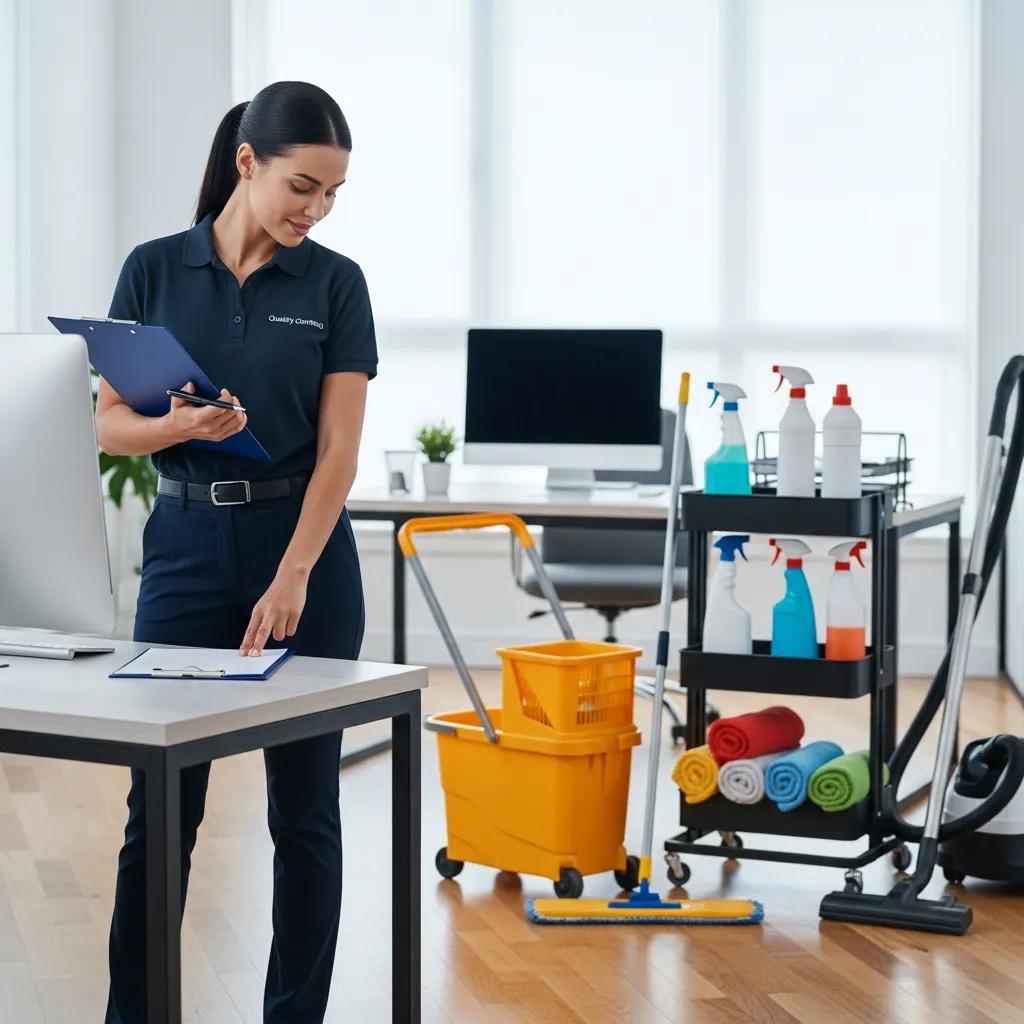
Quality-control protocols turn individual tasks into a reliable service by defining standards, tracking performance and triggering corrective actions. Regular inspections tied to documented checklists, digital reporting and client feedback loops help catch drift early. Providers using digital QA tools or photo-verified checklists give you an audit trail that shows adherence and supports ongoing improvement. When vetting, ask for a sample inspection checklist, how often audits happen, what corrective actions are logged, and how client feedback is used to adjust the service.
A short sample inspection checklist helps set clear expectations:
- High-touch surfaces: disinfected and dry, no visible residue.
- Floors: vacuumed/mopped with correct chemical dosing.
- Restrooms: stocked, sanitised and odour-free.
Confirming frequency and documentation of these checks tells you whether a provider can sustain steady service and resolve issues quickly.
How Can Businesses Assess Communication and Responsiveness of Buderim Cleaning Providers?
Good communication is an early sign of long-term reliability. It affects how quickly issues are resolved, how schedules are adjusted, and whether expectations stay aligned. Assess communication by checking available channels, whether there’s an account manager or escalation path, and what SLAs exist for response and rectification. Providers who proactively report performance and schedule changes build trust; poor communication often comes before slipped standards. Below are practical tests and indicators to evaluate responsiveness during the selection process.
- Ask for named contact points and typical response-time SLAs.
- Verify channels: phone, email, SMS and a client portal or digital reporting option.
- Test responsiveness with a staged enquiry and measure actual response against the SLA.
What Communication Channels Ensure Effective Client Support?
Effective support uses multiple, redundant channels and a clear escalation path so urgent issues are handled promptly regardless of time or staff changes. Minimum recommended channels include a direct phone line for emergencies, a named account manager for routine coordination, email for documentation, and a client portal or reporting tool for transparency. During vetting, send an email and an SMS, note response times, and ask how after-hours escalation and urgent requests are prioritised. Providers with formal helpdesk procedures and consistent account management are more likely to deliver steady service.
- Ask for named contact points and typical response-time SLAs.
- Verify channels: phone, email, SMS and a client portal or digital reporting option.
- Test responsiveness with a staged enquiry and measure actual response against the SLA.
Testing channels and escalation procedures gives measurable evidence to compare providers and moves the discussion from promises to verifiable responsiveness.
How Does Responsiveness Influence Trust and Service Dependability?
Responsiveness builds trust because quicker fixes mean less operational impact and more confidence in the relationship. Ask for KPIs such as initial response time and rectification time (business-hour SLAs) and the percentage of issues closed within agreed windows. When providers hit these KPIs consistently, staff and customers notice fewer interruptions and cleaner environments remain steady. Slow response times often correlate with creeping declines in service and frustrated teams.
Request specific KPIs and monitor them in the early months—this signals that responsiveness matters and lays the groundwork for a dependable partnership.
Why Are Licensing, Insurance, and Transparent Contracts Essential for Buderim Commercial Cleaning?
Licensing and insurance protect your organisation financially and legally, while clear contracts set operational expectations that prevent disputes and service breakdowns. Public liability and workers’ compensation protect you from third‑party claims; contract clauses should define scope, termination rights, price-variation processes and subcontracting rules. Without current certificates and transparent contract language, you risk gaps that can cause liability or unexpected interruptions. The checklist below shows the specific documents and contract elements to request and verify before you sign.
- Request current public liability and workers’ compensation certificates.
- Verify business licences and local registrations relevant to cleaning operations.
- Ensure contract clarity on scope, termination notice periods and price-variation clauses.
Use the practical comparison table below to guide what to request and check during procurement meetings.
| Provider Type | Document | What to Verify |
|---|---|---|
| Local specialist | Public liability certificate | Policy limits and current effective date |
| Any provider | Workers’ compensation | Coverage for all staff and subcontractors |
| Service proposal | Contract clauses | Clear scope, termination and variation terms |
Validating these documents and clauses reduces risk and supports steady service by ensuring financial and operational accountability is in place before work starts.
What Insurance and Licensing Should Reliable Cleaning Companies Provide?
Ask for up-to-date public liability insurance with adequate limits, workers’ compensation that covers their staff, and any local business licences required in QLD. Request copies of certificates and check dates and policy limits; confirm whether subcontractors are covered under the same policies. Verifying these documents avoids surprises, protects your organisation, and shows the provider is committed to compliant, dependable operations.
Knowing what to request and how to validate it helps you pick a provider that can deliver steady service without exposing your business to unnecessary risk.
How to Understand and Evaluate Commercial Cleaning Contract Terms?
Focus on scope clarity, termination and notice periods, and change-management clauses for schedule or volume changes. Look for explicit task lists, frequencies and performance measures in the scope-of-work—avoid vague wording that leaves everything to the provider’s discretion. Watch for long lock-in clauses or unclear price-variation terms; negotiate review points and service-level credits if possible. A balanced contract with regular review meetings supports a stable, ongoing relationship.
Ask for sample contracts and negotiate performance-linked clauses to turn a proposal into an agreement that sustains dependable cleaning over time.
How Do Eco-Friendly Practices and Specialised Services Enhance Commercial Cleaning Quality in Buderim?

Eco-friendly methods and specialised services are strong signals of a modern, capable provider—and they support steadier outcomes. Low-toxicity products, microfibre systems and measured dosing reduce indoor-air impacts and chemical overuse; appropriate equipment and infection-control protocols show competence in higher-risk settings like medical centres and daycares. Providers who can explain both environmental practices and tailored workflows for gyms, schools and strata demonstrate operational maturity and adaptability. Below are the green products and targeted services you should expect from a quality provider.
- Biodegradable or low‑VOC cleaning solutions with dosing systems.
- Microfibre cloths and HEPA-filter vacuums for better particulate removal.
- Waste-reduction practices and supply management to minimise disruption.
Adopting these practices improves health outcomes and reduces variability across site types, supporting dependable service.
What Eco-Friendly Products and Methods Should Businesses Expect?
Expect providers to use biodegradable or low‑VOC cleaners, dosing systems to control chemical use, and microfibre technology that captures contaminants more effectively than traditional cloths. Certifications or product data sheets can confirm environmental claims—ask for them. These methods reduce chemical exposure, improve indoor air quality, and make cleaning more consistent because dosing and microfibre lower operator-dependent variability.
Request product specifics and examples of consistent application so eco claims become verifiable outcomes, not just marketing language.
How Do Specialised Services Cater to Medical Centers, Daycares, and Gyms?
Specialised services need protocols and equipment that match the site risk. Medical centres require infection-control-grade disinfection and trained staff; daycares need non-toxic products and strict surface routines; gyms need methods that remove sweat and biofilm without damaging equipment. Providers experienced in these sectors should share protocols, training modules and sample workflows. Asking for experience summaries and protocol outlines clarifies whether a provider can meet sector-specific demands reliably.
Request process documents and training evidence to ensure a provider can maintain steady standards in high-risk or high-traffic environments.
What Makes Divine Commercial Cleaning a Dependable Choice for Buderim Businesses?
Divine Commercial Cleaning is a family-owned operator based in Maroochydore serving the Sunshine Coast and Brisbane, including Buderim. They emphasise reliability and tailored solutions: experienced cleaners, infection-control training, modern equipment, eco-friendly practices, and a satisfaction guarantee with no lock-in contracts. These strengths align directly with the evaluation criteria above. For businesses wanting a local team with documented processes, Divine is a regional example of how training, QA and flexible terms can produce steady service—ask them for training summaries, QA reports and a tailored proposal to compare against other bidders.
How Does Divine’s Staff Training and Quality Assurance Ensure Consistent Service?
Divine reports experienced cleaners and infection-control-focused training supported by modern equipment, which promotes repeatable outcomes across different sites. Training that emphasises infection control, clear task checklists and correct equipment use reduces variability between shifts, while documented QA processes enable supervisors to spot and correct issues. When vetting Divine or any local provider, request training outlines, infection-control evidence and QA samples to confirm these practices are active, not just promotional copy. Clear training and QA evidence translates into fewer service gaps and steadier day-to-day performance.
Verifying these items confirms whether a provider’s claims translate into dependable service that fits your operational needs.
What Do Client Testimonials and Case Studies Reveal About Divine’s Service Dependability?
Useful testimonials and case studies describe recurring service, prompt issue resolution and measurable cleanliness improvements. For Divine, ask for short case-study snippets—challenge, solution, outcome—so you can judge dependability in context, for example how they handled infection-control at a medical centre or adjusted schedules for strata clients. When reviewing feedback, prioritise specifics like response times, corrective actions and ongoing review meetings rather than vague praise.
Request structured case summaries and check review platforms for documented client feedback to validate claims and compare dependability across proposals.
How Can Buderim Businesses Customise Cleaning Services for Flexible and Steady Support?
Tailoring cleaning to your operational rhythm keeps spaces clean and controls cost. Flexible models include variable frequency plans, targeted zone cleaning, after-hours or weekend work, and on-demand top-up cleans tied to occupancy. Transparent pricing and regular service reviews keep expectations aligned, while scheduled performance meetings allow continuous improvement and adaptation to hybrid work and fluctuating use. The mapping below shows common packages, the flexibility feature to request, and the business benefit you should expect when negotiating steady support.
| Service Package | Flexibility Feature | Business Benefit |
|---|---|---|
| Standard daytime cleaning | Variable frequency options | Scales with occupancy and reduces unnecessary visits |
| After-hours deep clean | Weekend/after-hours scheduling | Minimises disruption to operations |
| On-demand top-up cleans | Short-notice booking | Handles unexpected events and peak usage |
This table helps match your needs to practical service options; the following subsections explain scheduling and pricing transparency so you get steady delivery.
What Flexible Scheduling Options Accommodate Hybrid Work Models?
Scheduling for hybrid workplaces can include reduced daily cleans focused on high-traffic zones, targeted zone cleaning for intermittently used areas, split shifts for peak windows, and on-call deep cleans after events. Build SLAs for response time to on-demand requests and set scheduled review points so reliability remains when occupancy changes. Asking for a written scheduling plan and guaranteed response windows during negotiation turns flexibility into dependable support.
Pairing flexible schedules with measurable SLAs preserves cleanliness while adapting to shifting occupancy and business needs.
How Does Transparent Pricing Support Long-Term Business Relationships?
Transparent pricing prevents disputes and supports steady partnerships by itemising scope, frequencies and line-items like consumables, deep cleans and equipment passes so both parties know what’s included. Ask for itemised proposals with clear variation clauses, volume discounts and review intervals tied to performance. Clear change-management terms and no hidden fees make it easier to scale or adapt services without interrupting delivery, sustaining long-term relationships.
When providers present itemised pricing and agree to regular reviews, your organisation gains financial predictability and a stable baseline to measure and maintain cleaning performance.
For local enquiries or to request a tailored proposal reflecting these options, Divine Commercial Cleaning can be contacted by phone at 0459 949 969 or by email at info@divinecleaning.com.au.
Frequently Asked Questions
What should I look for in a commercial cleaning contract?
Look for a clear scope of work with specific tasks and frequencies, fair termination clauses, and transparent price‑variation processes. Include performance metrics to measure service quality and provisions for regular reviews so the agreement can adapt to your needs. A clear contract reduces surprises and supports a steady relationship.
How can I ensure the cleaning provider uses eco-friendly products?
Ask for product data sheets, safety information and any certifications. Check their policies on low‑VOC or biodegradable options, dosing systems and the use of microfibre or HEPA‑filtered equipment. A reputable provider will share documentation showing their environmental practices in practice, not just in marketing copy.
What are the benefits of having a dedicated account manager?
A dedicated account manager gives you a single point of contact for scheduling, issue resolution and regular performance updates. They smooth coordination, speed up responses and organise review meetings—helping keep the service reliable and aligned with your changing needs.
How can I assess the cleaning provider's responsiveness?
Run a staged enquiry across channels (email, phone, SMS) and record response times. Ask about SLAs for initial response and rectification. Providers that respond promptly and follow documented escalation paths are more likely to maintain service standards.
What specialised training should cleaning staff have for high-risk environments?
Staff in medical centres or daycares should have infection‑control training, correct PPE use and protocols for hazardous materials. Training should also cover specific surface and equipment cleaning. Request training records and certifications to confirm staff are prepared for these environments.
How can I customise cleaning services to fit my business needs?
Discuss frequency, high-priority areas and any special requirements (deep cleans, post-event work). Negotiate flexible options like after-hours service or on-demand cleans and set regular reviews to ensure the service adapts as your needs change.
What are the signs of a reliable commercial cleaning provider?
Look for consistent client testimonials, documented quality-control processes, transparent communication and detailed proposals with pricing and KPIs. A commitment to staff training and eco-friendly practices, plus regular performance reviews, are strong indicators of a dependable partner.
Choosing a reliable commercial cleaning service in Buderim protects your people, supports your reputation and removes an operational headache. Focus on staff training, quality control, clear communication and solid contracts to make informed decisions that deliver steady results. If you’d like a tailored proposal that reflects the checks in this guide, reach out—local providers like Divine Commercial Cleaning can help you set clear expectations and sustain dependable service.

Dianne, originally from Rockhampton, hails from a business-oriented family, with her father owning electrical stores and her uncle serving as Mayor. Moving to the Sunshine Coast at 13, she later pursued a rewarding real estate career and raised three children. As a single mom, she balanced university studies with domestic cleaning work. Armed with a Bachelor’s Degree in Business, majoring in Supply Chain Management, Dianne founded and grew Divine Commercial Cleaning into a thriving company. Her success is rooted in strong family mentorship, a positive attitude, and a solution-oriented approach, offering tailored cleaning services with integrity and strategic insight.