Industry-Specific Office Cleaning Solutions: Tailored Commercial Cleaning Services for Diverse Business Types
Industry-specific cleaning means designing cleaning and disinfection protocols to match the risks, surfaces, equipment and regulatory needs of each business type. This approach works by aligning cleaning frequency, product choice and procedures with the facility’s operational patterns and risk profile, which reduces infection, protects sensitive equipment and improves public perception. In this article you will learn why bespoke commercial cleaning matters for industries such as medical clinics, daycares, retail, corporate offices, strata properties, gyms and imaging centres, and how tailored protocols deliver measurable hygiene and productivity gains. We explain unique challenges for healthcare and childcare environments, outline practical service options for offices and retail settings, and map environmental and safety benefits of eco-friendly methods. The article also shows how businesses can request customised cleaning plans, what to expect during onboarding, and common scheduling and technique questions to inform procurement decisions. Throughout, keywords like industry specific cleaning, medical facility cleaning, daycare centre cleaning, corporate office janitorial services and eco-friendly commercial cleaning are used to connect practical advice to search intent and buyer needs.
Why Do Different Business Types Require Specialised Office Cleaning Services?
Industry-specific cleaning is necessary because different workplaces face distinct risks, materials and compliance requirements that standard janitorial services do not address. The mechanism is straightforward: businesses with clinical procedures, young children, food service or heavy footfall require different disinfectants, dwell times and access schedules to reduce hazards and meet stakeholder expectations. Tailored cleaning improves safety outcomes, regulatory alignment and customer confidence while optimising operational disruption and cost-effectiveness. Below are the primary reasons that justify specialised approaches for varied business types.
- Regulatory and compliance differences require specific methods and documentation to meet industry standards.
- Surface types and equipment variance (e.g., imaging devices, play mats, retail flooring) demand compatible cleaning agents and handling protocols.
- Risk profile and user vulnerability (patients, children, shoppers) necessitate targeted disinfection and safety controls.
- Operational constraints such as trading hours and shift patterns require flexible scheduling to maintain service continuity.
Understanding these drivers helps purchasers choose services that balance efficacy, safety and business continuity; the next section examines healthcare and childcare specifics where those concerns are most acute.
What Unique Cleaning Challenges Do Medical and Healthcare Facilities Face?
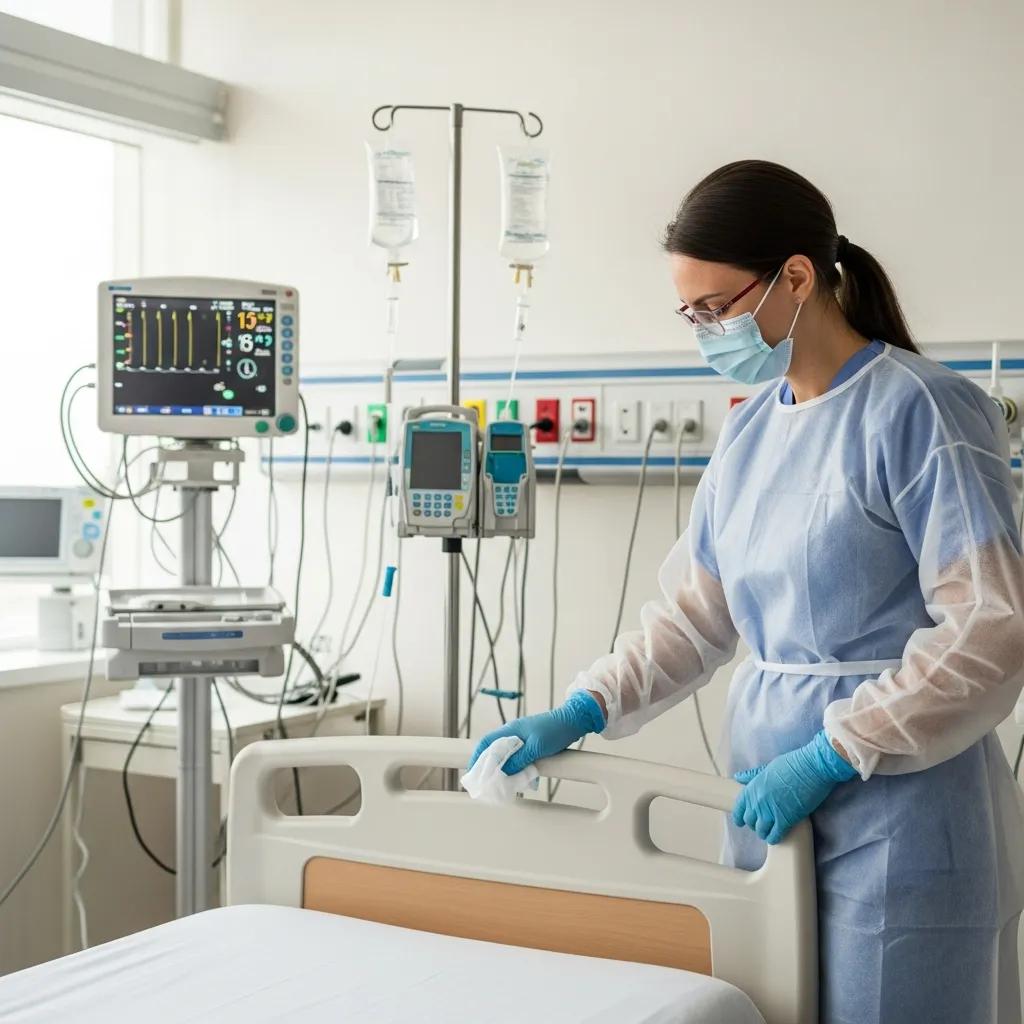
Medical and healthcare facility cleaning focuses on infection prevention, controlled handling of potential biohazards, and careful cleaning around sensitive diagnostic equipment. Effective protocols include hospital-grade disinfection of high-touch surfaces, correct contact/dwell times for disinfectants, and procedures to prevent cross-contamination between treatment areas and public spaces. Cleaning teams must also be trained to work near imaging devices and clinical instruments without compromising equipment function or patient safety. For example, waiting rooms need frequent sanitization during high-traffic periods, while treatment rooms require thorough terminal cleaning after procedures to reduce pathogen transmission risks.
These measures rely on documented workflows, appropriate product selection and scheduling that minimises exposure; the next subsection explains how childcare settings apply similar principles with child-safe considerations.
How Do Daycare and Educational Centers Benefit from Tailored Cleaning Protocols?
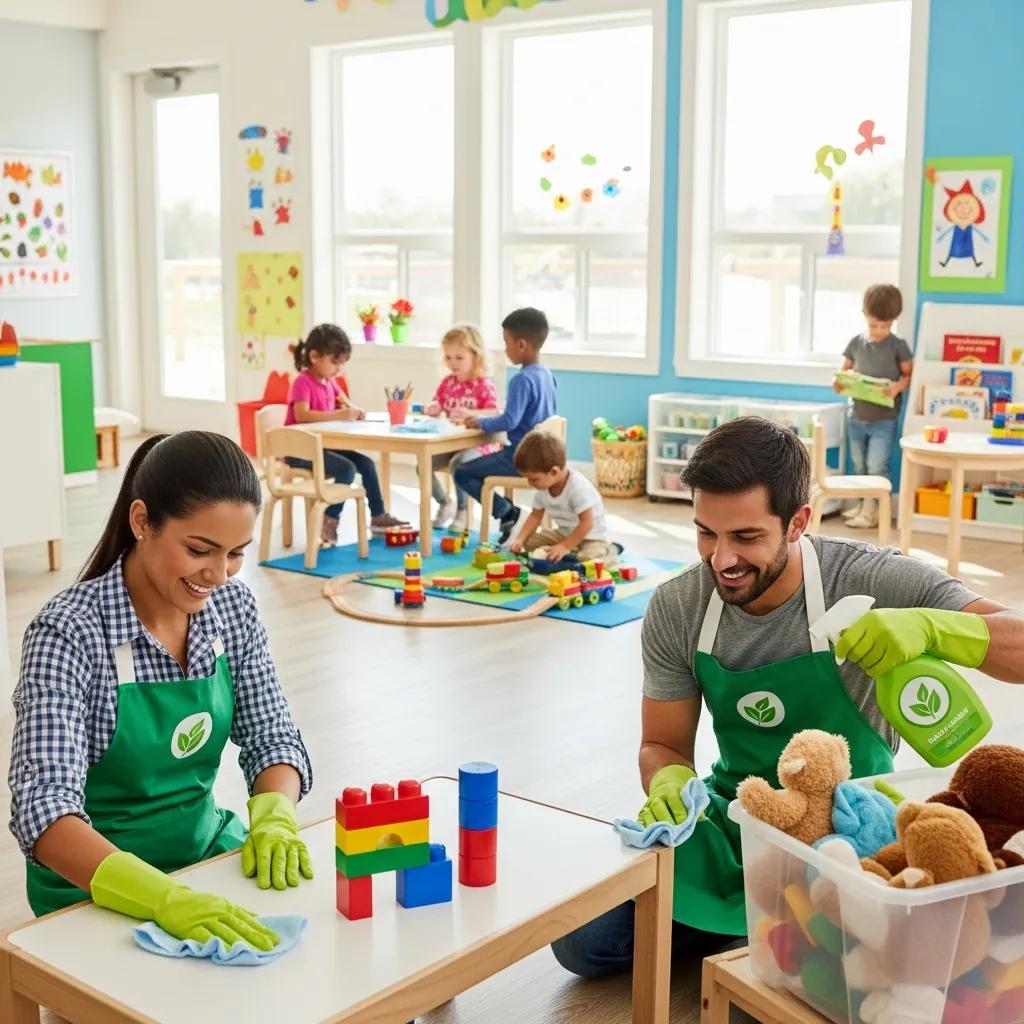
Daycare and educational cleaning emphasises low-toxicity products, frequent attention to high-touch items and soft-surface management to keep children healthy and attendance high. Protocols typically combine daily sanitization of tables, door handles and teaching aids with weekly deep cleaning of carpets, nap mats and toys using safe, non-irritant solutions. Toy and soft-surface handling may include rotation and laundering procedures, while ventilation and surface-friendly disinfectants reduce chemical exposure for young occupants. These steps reduce illness spread, lower absenteeism and create a safer learning environment that supports educational outcomes.
Matching product choice and frequency to the age group and facility layout ensures cleaning is effective without introducing unnecessary chemical risks; the following section lists specific services offered across industries and provides a compact checklist for procurement.
What Specialised Cleaning Services Does Divine Commercial Cleaning Offer for Various Industries?
Specialised commercial cleaning services align tasks to industry needs, covering disinfection, floor care, waste management and equipment-safe cleaning procedures. Core services often include high-touch surface sanitization, restroom hygiene, carpet and hard-floor maintenance, scheduled deep cleans, spill and stain response, and bespoke handling for sensitive equipment. Below is a concise service checklist showing typical tasks by industry to guide scope development and tendering.
The following table summarises common industry service items and typical frequency or notes to inform a customised scope.
| Industry | Key Task | Typical Frequency / Notes |
|---|---|---|
| Medical Clinic | High-touch disinfection; treatment room terminal clean | Daily or after procedures; hospital-grade disinfectants |
| Daycare / School | Toy sanitization; table and mat cleaning | Daily sanitise; weekly deep clean of soft surfaces |
| Professional Office | Desk, common area cleaning; carpet and upholstery care | Multiple weekly cleans; monthly deep-clean options |
| Retail / Shopping Centre | Entry floor care; spill response; restroom upkeep | Daily high-traffic maintenance; event/peak cleaning |
| Gym / Dance Studio | Equipment sanitization; sweat-prone surface treatment | Daily sanitisation; immediate spill response |
| X-ray & Imaging Centre | Equipment-safe cleaning; controlled area protocols | Trained staff using compatible agents; scheduled deep cleans |
This checklist helps buyers compare providers and tailor scopes; next is a short summary of how Divine Commercial Cleaning positions its services to meet these industry needs.
Divine Commercial Cleaning, based in Maroochydore, QLD, provides industry-specific solutions across the Sunshine Coast and Brisbane and offers insured, police-checked staff, same cleaner continuity and no lock-in contracts to support consistent service delivery. As a family-owned and operated firm, Divine emphasises environmentally conscious methods and a satisfaction guarantee, which can be integrated into customised service proposals to meet regulatory and workplace expectations.
How Are Professional Office and Corporate Cleaning Services Customised?
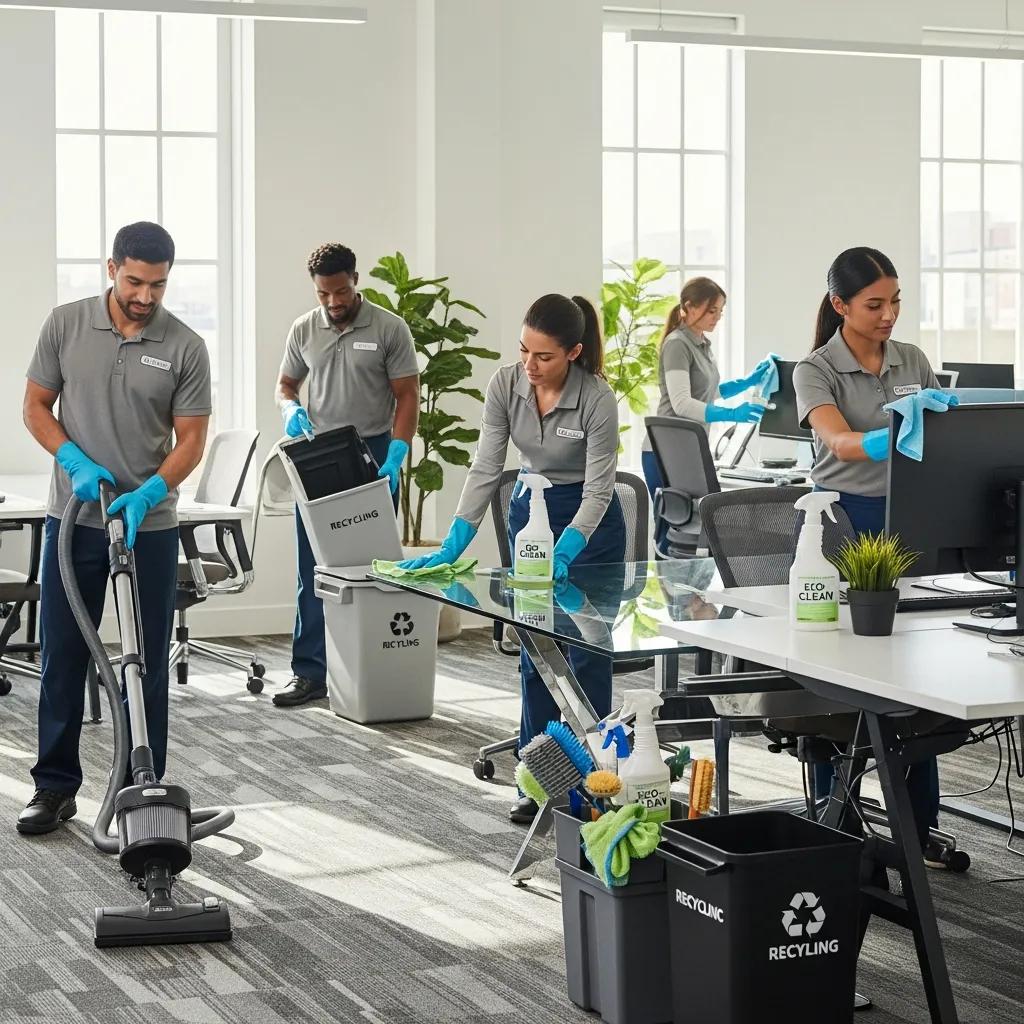
Corporate cleaning is customised by adjusting frequency, access hours, confidentiality safeguards and add-on tasks like carpet extraction or window cleaning. Customisations typically include options for daily daytime cleaning in open-plan offices, after-hours cleans for executive suites, secure-key handling for sensitive areas and staggered schedules for co-working spaces. Providers work with clients to define scope documents that list excluded areas, authorised staff, and escalation procedures for incidents. Security measures and privacy awareness are especially important where sensitive documents or client information are present.
Designing the cleaning plan begins with an assessment of space, staff patterns and confidentiality needs to ensure cleaning work is both effective and unobtrusive; the next subsection explores retail and shopping centre specifics that prioritise presentation and safety.
What Are the Key Features of Retail and Shopping Centre Cleaning Solutions?
Retail and shopping centres demand rapid, visible cleanliness focused on floors, entrances and public restrooms to protect customer experience and reduce slip hazards. Effective retail cleaning uses frequent floor maintenance, immediate spill response teams, scheduled restroom checks and merchandising-area touch-ups during operating hours. Special event periods and peak trading times require flexible staffing and quick-turn cleaning protocols to maintain presentation without disturbing customers. Waste handling and fast-response spill procedures also minimise business interruptions and liability risks.
A retail cleaning plan balances discrete maintenance during trading hours with deeper overnight work to preserve presentation and safety; next we explain how tailored cleaning translates into measurable hygiene and productivity improvements.
How Does Industry-Specific Cleaning Enhance Workplace Hygiene and Productivity?
Industry-specific cleaning enhances hygiene by targeting the highest infection and contamination risks, and it improves productivity by reducing absenteeism and improving user perception of the workplace. Mechanistically, targeted disinfection of high-touch zones and scheduled deep cleans lower pathogen reservoirs, while tailored scheduling reduces operational interruptions and maintains workforce morale. Businesses that invest in customised cleaning often report better customer impressions and fewer hygiene-related service disruptions. The following table links typical outcomes to measurable attributes to help decision-makers quantify benefits.
| Outcome | Measured Attribute | Example / Impact |
|---|---|---|
| Reduced infection spread | Lower reported sick days | Clinics/childcare see immediate reductions in absenteeism after enhanced protocols |
| Improved customer perception | Higher satisfaction scores | Clean retail environments correlate with increased dwell time and sales potential |
| Enhanced productivity | Fewer workflow disruptions | Clean, organised workspaces reduce cognitive distractions and complaint incidents |
These mappings show how hygiene investments translate into business metrics that justify ongoing cleaning budgets; the next subsection illustrates infection prevention in medical settings.
In What Ways Does Medical Facility Cleaning Prevent Infection Spread?
Medical facility cleaning prevents infection by combining targeted disinfection of patient-contact surfaces with proper product selection and controlled workflows to avoid cross-contamination. Key practices include disinfectant use with validated contact times, segregation of clean and dirty zones, and terminal cleaning protocols after procedures. Staff follow stepwise cleaning sequences that prioritise high-risk areas first, and documentation of cleaning rounds supports traceability and compliance. For example, an exam room workflow might begin with high-touch surface disinfection, proceed to equipment-safe cleaning, and finish with floor and waste handling to minimise pathogen transfer.
Following structured procedures and training ensures consistent outcomes and reduces the likelihood of facility-acquired infections; the following subsection describes productivity benefits in offices.
How Does Cleanliness Improve Employee Productivity in Office Environments?
Clean workplaces improve productivity by lowering illness-related absenteeism, reducing distractions from clutter or stains, and enhancing employee satisfaction and retention. Cleaner environments reduce microbial loads and allergens that contribute to short-term sick leave, while ergonomic cleanliness—clear desks, maintained communal areas—supports concentration and efficient workflows. Employers can track KPIs such as sick-day trends, workspace complaint rates and employee satisfaction scores to measure impact. A routine cleaning schedule that includes periodic deep cleans and targeted spot cleaning supports steady productivity gains over time.
Monitoring these metrics alongside cleaning interventions creates a feedback loop that optimises schedules and scope for maximal return on investment; next we examine environmental and safety benefits tied to tailored cleaning approaches.
What Are the Environmental and Safety Benefits of Tailored Commercial Cleaning?
Tailored commercial cleaning reduces chemical exposure, improves indoor air quality, and lowers environmental footprint by selecting appropriate products and methods for each industry. The mechanism is choosing low-toxicity or biodegradable cleaners for sensitive settings, using microfibre systems to capture more dirt with less chemical, and employing dilution-control systems to reduce waste.
Safety benefits include reduced slips, better waste handling and the assurance of vetted staff to protect assets and occupants. Below is a comparison table contrasting conventional approaches with eco-friendly alternatives and their impacts.
| Approach | Environmental Impact | Safety / Occupant Benefit |
|---|---|---|
| Conventional chemicals | Higher toxicity, increased VOCs | Potential respiratory irritation for occupants |
| Eco-friendly products | Reduced chemical runoff and VOCs | Safer for children and patients; improved IAQ |
| Microfibre & dilution systems | Less water and chemical usage | Effective soil removal with lower exposure risk |
This comparison illustrates how sustainable choices deliver both environmental and occupational health benefits; the next subsection explains how Divine implements eco practices as part of industry-specific plans.
Divine Commercial Cleaning integrates environmentally conscious practices by matching low-toxicity products and microfibre systems to client needs, which reduces chemical waste and improves indoor air quality in sensitive settings such as daycares and medical centres. The company’s approach emphasises minimal-impact solutions tailored by industry—child-safe detergents for childcare, equipment-compatible agents for imaging centres—and includes fully-insured, police-checked staff to support safe on-site operations. These practices align sustainability with safety and regulatory awareness while maintaining service reliability.
How Does Divine Commercial Cleaning Implement Eco-Friendly and Sustainable Practices?
Eco-implementation centers on product selection, waste reduction and method efficiency to meet the needs of different business types without compromising cleanliness. Practical steps include using certified low-toxicity detergents where occupant sensitivity matters, deploying microfibre cloths to reduce chemical volumes, and applying calibrated dilution systems to prevent overuse.
Waste-reduction measures include recycling segregation and minimised single-use plastics in cleaning operations. Matching these practices to industry requirements—such as low-VOC products for clinics and child-safe agents for daycares—ensures both environmental and occupant safety benefits.
Adopting these practices lowers environmental impact while maintaining the disinfectant efficacy required by sensitive industries; the next subsection explains why staff vetting and insurance are essential for risk mitigation.
Why Are Police-Checked and Insured Staff Important for Business Cleaning Services?
Police-checked and insured staff reduce organisational risk by providing accountability, protecting assets and supporting compliance for sensitive industries such as schools and medical facilities. Vetted personnel build client trust, especially where access to secure areas or handling of confidential materials is necessary. Insurance coverage transfers liability risk and provides recourse in the event of accidental damage or incidents during cleaning operations. Businesses should request documentation of police checks and insurance certificates as part of procurement due diligence.
Ensuring staff vetting and appropriate insurance aligns operational safety with client governance; next we outline how businesses can request customised cleaning solutions and what to expect during onboarding.
How Can Businesses Request Customised Cleaning Solutions from Divine Commercial Cleaning?
Businesses request customised cleaning by providing basic site information, agreeing a site assessment and receiving a written proposal outlining scope, frequency and guarantees. The process is designed to rapidly match industry-specific requirements to service options, enabling transparent timelines and easy onboarding. Divine Commercial Cleaning offers no lock-in contracts and a satisfaction guarantee, which simplifies trial engagements and provides assurance during the initial service period.
The numbered steps below provide a featured-snippet style guide to requesting a free quote and starting service.
- Provide basic details about your business type, size, operating hours and key risk areas for an initial scope estimate.
- Arrange a site visit or virtual assessment so the provider can inspect surfaces, equipment and access requirements.
- Receive a written proposal with recommended tasks, frequency, product choices and pricing options.
- Agree service terms and onboarding date; expect initial quality checks and a transition plan including assigned cleaners.
This stepwise process clarifies expectations and speeds procurement; the next subsection gives a fuller breakdown of what to include when requesting a quote.
What Is the Process to Get a Free Quote for Industry-Specific Cleaning Needs?
To obtain an accurate free quote, prepare information on business type, floor area, peak footfall, required cleaning frequency and any sensitive equipment or regulatory constraints. During the site assessment, the provider will note high-touch zones, material types, storage needs and access windows to build a tailored scope. Proposals typically specify routine and deep-clean tasks, recommended disinfectants, responsibilities for waste removal and timelines for trial periods. Clear documentation of these elements enables predictable pricing and measurable service levels.
Providing precise, industry-specific details at the outset reduces scope changes later and helps align the proposal to operational realities; the next subsection explains how service consistency is maintained.
How Does Divine Commercial Cleaning Ensure Reliable and Consistent Service Delivery?
Service consistency is achieved through assigned cleaners or teams, documented quality audits and responsive customer feedback channels that address issues promptly. Where possible, Divine assigns the same cleaner to a site to build familiarity with client-specific procedures and preferences, while regular supervisory checks and scheduled quality reviews capture performance data. Clear service agreements outline scope, escalation procedures and satisfaction guarantees to reduce ambiguity. These systems work together to maintain reliability and evolve the service as client needs change.
Consistent staffing and measurable quality controls help ensure long-term client satisfaction while allowing flexibility to adjust scope as operations evolve; the next section answers common scheduling and technique questions buyers ask.
What Are Common Questions About Industry-Specific Office Cleaning Solutions?
Procurement teams commonly ask about recommended cleaning frequency, specialised techniques for sensitive settings, and contract terms that affect flexibility and cost. Short, focused answers help buyers make choices aligned with risk tolerance and budget while ensuring compliance and occupant safety. The lists below summarise practical frequency guidance and key specialised techniques used in high-risk facilities.
Recommended scheduling for different business types:
- High-risk or high-traffic sites (medical clinics, busy retail, daycare) should schedule daily cleaning with additional spot-sanitisation during peak hours.
- Standard corporate offices typically benefit from multiple weekly cleans combined with monthly deep-clean cycles and periodic carpet or upholstery maintenance.
- Low-traffic or appointment-only facilities can adopt tailored on-demand schedules with routine weekly maintenance and event-triggered deep cleans.
How Often Should Different Business Types Schedule Professional Cleaning?
Frequency depends on traffic, vulnerability of occupants and regulatory obligations; daily cleaning is common in clinics, daycares and high-footfall retail, while small professional offices may use 2–3 weekly visits plus quarterly deep cleans. Event-driven cleaning or post-incident deep-cleaning should be part of any plan for resilience. Factors such as seasonal illness spikes, major events and internal absenteeism trends may also justify frequency increases. Monitoring KPI trends—sick days, customer complaints, slip incidents—helps refine schedules over time.
Dynamic scheduling tied to measurable outcomes provides the best balance of cost and hygiene performance; the final subsection lists specialised techniques used in sensitive environments.
What Specialised Techniques Are Used in Medical and Childcare Facility Cleaning?
Specialised techniques include using disinfectants with validated contact times, wearing appropriate PPE during cleaning of clinical areas, segregating cleaning equipment to avoid cross-contamination and applying steam or laundering protocols for soft surfaces. Toy sanitization in childcare often uses low-toxicity disinfectants and rotation/immersion methods, while imaging centres require equipment-safe agents and non-abrasive cleaning methods. Documentation of product compatibility with equipment and adherence to dwell times ensures both efficacy and safety.
Applying these techniques consistently with trained staff and clear SOPs ensures that sensitive environments remain safe and operationally compliant.

Dianne, originally from Rockhampton, hails from a business-oriented family, with her father owning electrical stores and her uncle serving as Mayor. Moving to the Sunshine Coast at 13, she later pursued a rewarding real estate career and raised three children. As a single mom, she balanced university studies with domestic cleaning work. Armed with a Bachelor’s Degree in Business, majoring in Supply Chain Management, Dianne founded and grew Divine Commercial Cleaning into a thriving company. Her success is rooted in strong family mentorship, a positive attitude, and a solution-oriented approach, offering tailored cleaning services with integrity and strategic insight.