Marcoola Medical Centre Cleaning: Expert Infection Control and Clinical Hygiene
Specialised medical-centre cleaning in Marcoola means targeted sanitation and disinfection designed to control infection, protect patients and staff, and keep clinics compliant with healthcare hygiene standards.
This guide explains how medical-grade cleaning differs from general commercial cleaning, lays out step-by-step protocols and equipment choices, and shows practical methods for patient rooms, clinical spaces, waiting areas and restrooms. You’ll find recommended cleaning frequencies, the role of TGA-approved disinfectants and HEPA-filtered equipment, and how documented procedures cut cross-contamination risk in Sunshine Coast clinics. We also cover training expectations for cleaning teams, measurable benefits for clinical managers, and answers to common questions about cost, customisation and next steps when choosing a medical cleaning partner in Marcoola.
Why specialised medical-centre cleaning matters in Marcoola
Specialised medical cleaning combines infection-control science with disciplined procedures to prevent healthcare-associated infections and protect patient safety. The process removes organic soil, then applies hospital-grade disinfectants with verified contact times and validated techniques to inactivate pathogens on surfaces and equipment. That approach measurably reduces cross-contamination risk and improves safety for patients and staff—essential for Marcoola practices managing mixed outpatient and community caseloads. Recognising the unique risks of healthcare settings explains why clinics need trained protocols rather than standard janitorial routines.
What can go wrong without proper healthcare cleaning?
Poor cleaning lets pathogens survive on high-touch surfaces, raising the chance of healthcare-associated infections (HAIs) and outbreaks among vulnerable patients. Consequences range from higher patient morbidity to operational interruptions during investigations, and reputational harm that erodes community trust. Key risks include:
- Higher HAI rates: Surface contamination increases infections in immunocompromised or post-procedure patients.
- Operational disruption: Outbreaks can force partial closures or reduced services while incidents are managed.
- Regulatory non-compliance: Failing to meet state or national hygiene expectations can trigger sanctions or remediation.
These outcomes underline why robust cleaning protocols are central to clinical governance—what follows are the technical practices that prevent them.
How does proper cleaning protect patients and staff?
Effective medical cleaning lowers pathogen levels, interrupts transmission routes and creates a safer environment that supports clinical outcomes and staff wellbeing. Regular disinfection of high-touch items—door handles, reception counters and clinical devices—reduces cross-infection opportunities and helps drive down incident rates. Staff morale benefits when cleaning schedules are consistent, documented and trusted, which in turn reduces absenteeism and helps retain teams. In short: reliable cleaning supports better care and smoother regulatory reporting.
Core cleaning protocols for Marcoola medical centres
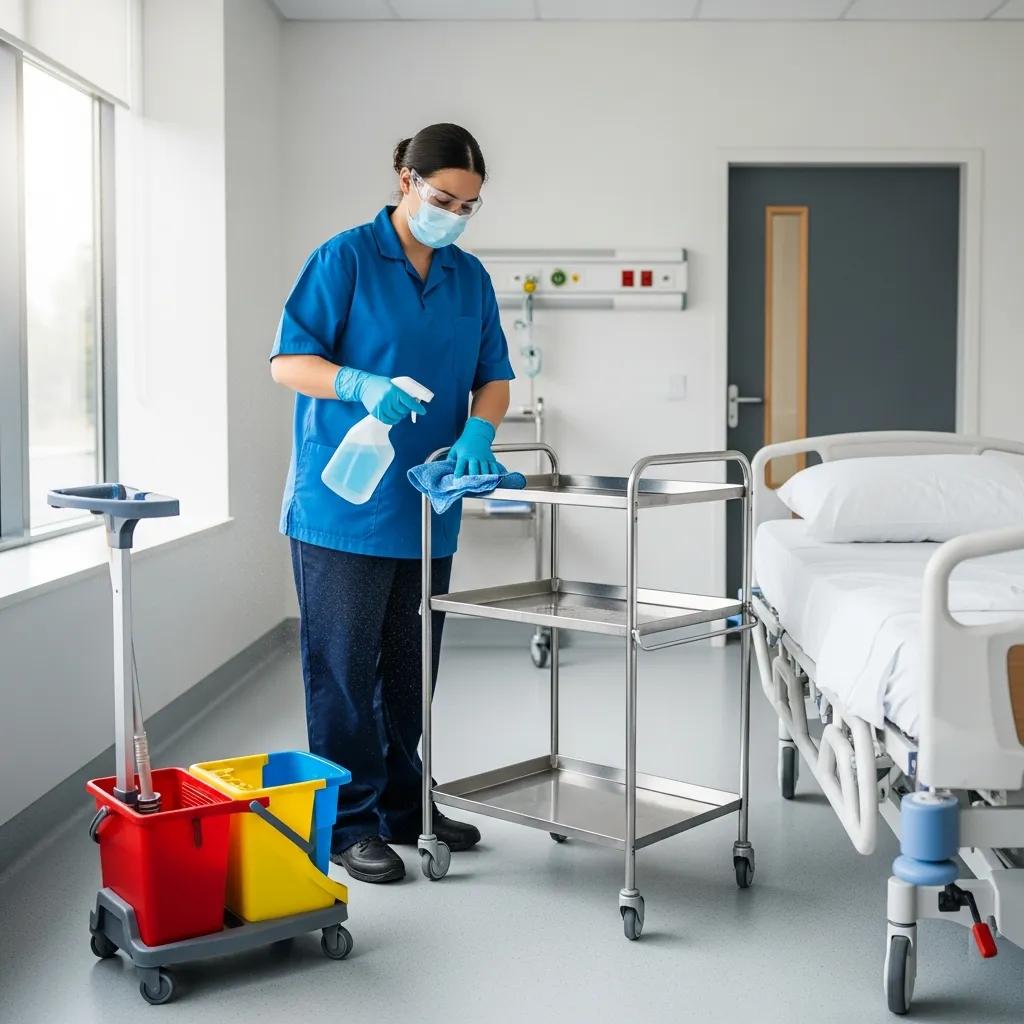
Comprehensive medical cleaning follows a clear, repeatable sequence: pre-clean to remove gross soil, focused surface cleaning, application of an appropriate disinfectant with validated contact time, and verification through inspection or testing. Each phase uses techniques that minimise aerosolisation and cross-contamination—for example, single-direction wiping with colour-coded microfibre systems and, where appropriate, disposable cloths. Equipment choices (HEPA vacuuming for particulate control, low-residue detergents) and correct PPE use are integral to protocol fidelity. Below is an operational outline clinics can adapt to patient flow and risk profile.
- Pre-clean: Remove visible soil and debris with suitable detergents so disinfectants can work effectively.
- Targeted cleaning: Wipe from clean-to-dirty and high-to-low using microfibre to capture contaminants.
- Disinfection: Apply TGA-approved hospital-grade disinfectants for the manufacturer‑specified contact time.
- Verification and documentation: Record actions, times and responsible staff; perform visual audits and ATP checks where applicable.
This stepwise method provides a reliable framework to prevent cross-contamination and guides product and equipment selection described below.
The table that follows summarises common surface types, recommended disinfectant categories and practical contact-time guidance to help clinic managers choose suitable products.
| Surface Type | Disinfectant Category | Typical Contact Time / Note |
|---|---|---|
| Hard non-porous (benchtops, counters) | Hospital-grade quaternary ammonium or accelerated hydrogen peroxide | 1–10 minutes depending on product; follow label |
| Clinical equipment exteriors | Alcohol-based wipes (70% isopropyl) for immediate decontamination | Quick-dry; avoid prolonged soaking of electronics |
| Floors and large surfaces | Neutral detergent followed by peroxide-based disinfectant | Allow manufacturer contact time; rinse if residue risk |
| Soft furnishings and curtains | Steam cleaning or specialist fabric disinfectants | Use heat or validated aerosolised methods for soft surfaces |
Matching disinfectant type to surface and observing contact time reduces risk and supports consistent execution; next we map these practices to Australian hygiene guidance.
How Divine Commercial Cleaning follows Australian hygiene standards
Divine Commercial Cleaning aligns its operational procedures with national and state infection-control guidance by mapping each cleaning step to evidence-based standard operating procedures and keeping records that support audits. Practically, this means following NHMRC principles—clean before disinfecting, use TGA-registered products where required, and perform validation steps such as visual checks and record‑keeping. Staff complete documented checklists and supervisors carry out regular inspections to confirm standards are met; records are retained to support regulatory review. Marcoola clinics benefit because this creates an auditable chain of custody for cleaning activities and lowers the chance of non-conformance during inspections.
These rigorous standards mirror comprehensive guidelines emphasising the role of environmental controls in preventing healthcare-associated infections.
Healthcare Facility Environmental Infection Control Guidelines
Environmental infection-control strategies and engineering controls can effectively prevent these infections. The incidence of health-care–associated infections and pseudo-outbreaks can be minimised by 1) appropriate use of cleaners and disinfectants; 2) appropriate maintenance of medical equipment (e.g., automated endoscope reprocessors or hydrotherapy equipment); 3) adherence to water-quality standards for hemodialysis, and to ventilation standards for specialised care environments (e.g., airborne infection isolation rooms, protective environments, or operating rooms); and 4) prompt management of water intrusion into the facility.
Guidelines for environmental infection control in health-care facilities, MJ Arduino, 2003
Which hospital-grade disinfectants and equipment do we use?
Contemporary clinic cleaning uses TGA-registered accelerated hydrogen peroxide, quaternary ammonium compounds for surface disinfection, and alcohol-based wipes for quick decontamination of small devices. Selection focuses on TGA approval, efficacy against relevant pathogens, material compatibility and correct contact times to reach microbial kill rates. Equipment—HEPA-filtered vacuums to control aerosols, microfibre systems to improve pickup and reduce chemical use, and colour-coded kits to prevent cross-contamination—supports safe and efficient workflows. Safety notes: follow dilution instructions, ensure staff wear appropriate PPE, and consult manufacturers to avoid damage to sensitive clinical equipment.
How we clean different areas in Marcoola medical centres
Area-specific cleaning recognises that patient rooms, procedure areas, waiting rooms and offices each carry different risks and need tailored frequencies and methods. Patient-care and clinical spaces require tighter controls—between-patient wipes, terminal cleans and frequent high-touch disinfection—while lower-risk administrative areas benefit from daily cleaning with targeted sanitisation. The table below summarises recommended frequencies and typical methods to help managers design schedules that balance infection control with day-to-day operations.
| Area | Cleaning Frequency | Method / Equipment |
|---|---|---|
| Patient rooms (between patients) | After each patient & terminal daily | Microfibre wipe-down, alcohol wipes for equipment, floor cleaning |
| Clinical procedure rooms | Between procedures & deep weekly | Detergent pre-clean, hospital-grade disinfectant, HEPA vacuuming |
| Waiting areas | Multiple times daily for high-touch surfaces | Disinfectant wipes for chairs, counters; routine floor cleaning |
| Restrooms | Multiple times daily + deep clean | Disinfectant wash, attention to touchpoints, appropriate waste disposal |
| Administrative offices | Daily general clean; targeted disinfection as needed | Dusting, vacuuming with HEPA, high-touch sanitisation |
The table shows how frequency aligns with risk and why techniques and tools vary across a facility to maintain a consistent hygiene baseline. The sections below expand on patient-room protocols and public-area strategies.
What specialised cleaning happens in patient rooms and clinical spaces?
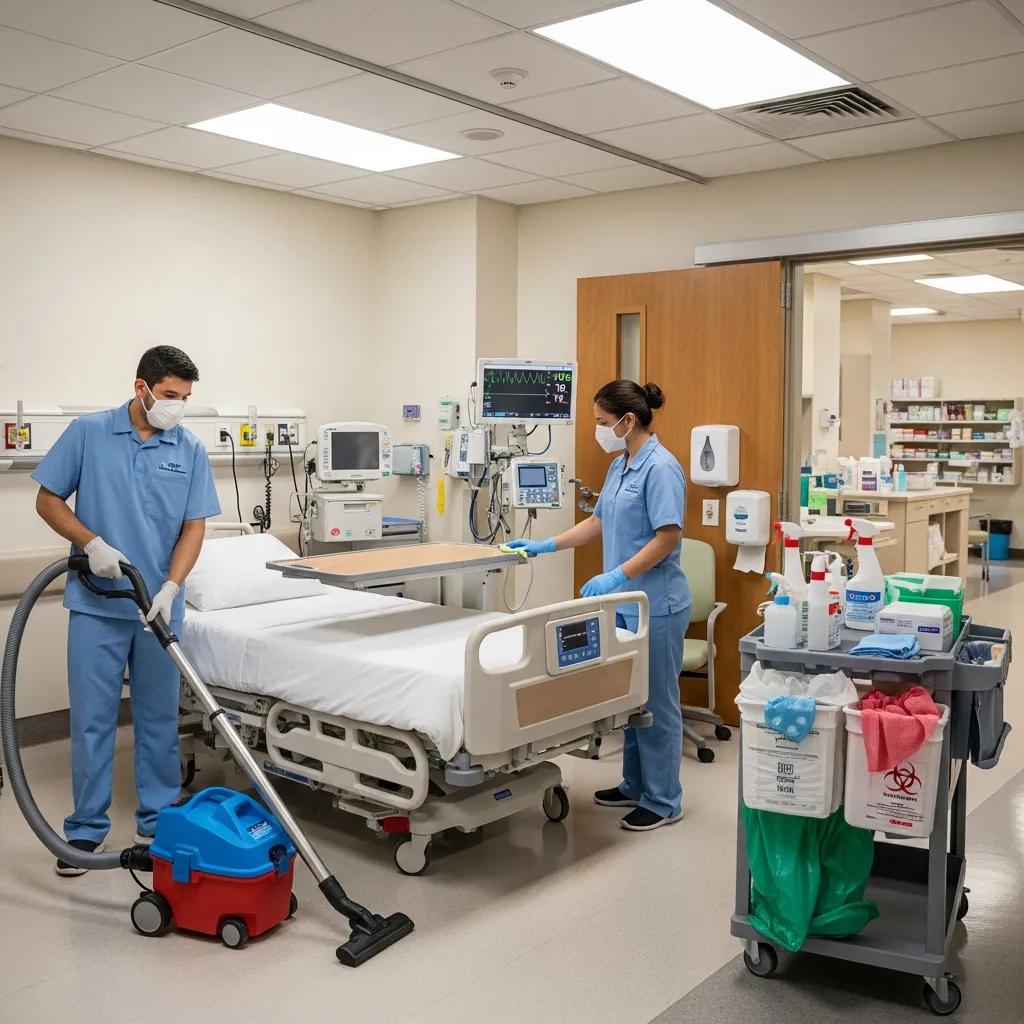
Patient rooms and clinical spaces receive focused cleaning: between‑patient surface disinfection, equipment decontamination and terminal cleans after discharge or aerosol‑generating procedures. Between‑patient cleaning targets high‑touch points—bed rails, infusion poles, bedside tables, monitor controls and call buttons—and uses single‑use or launderable covers where suitable. Terminal cleaning is more thorough: curtain laundering or replacement, mattress and bedding inspection, and a full surface clean, often accompanied by documented sign‑off. These steps reduce pathogen reservoirs and prepare rooms safely for the next patient.
How do we sanitise waiting areas, offices and restrooms differently?
Public and administrative spaces are lower clinical risk but high traffic, so cleaning focuses on frequent disinfection of touchpoints and visible cleanliness to reassure patients. Waiting areas benefit from regular disinfection of armrests, reception counters and payment terminals (and removal of shared items like magazines where appropriate); offices get daily dusting, HEPA vacuuming and sanitisation of phones and keyboards. Restrooms require multiple cleanings per day with disinfectant applied to fixtures, sinks and handles and careful waste management. Tailoring method and frequency to traffic patterns keeps infection risk low while using resources efficiently.
Who performs Marcoola medical-centre cleaning?
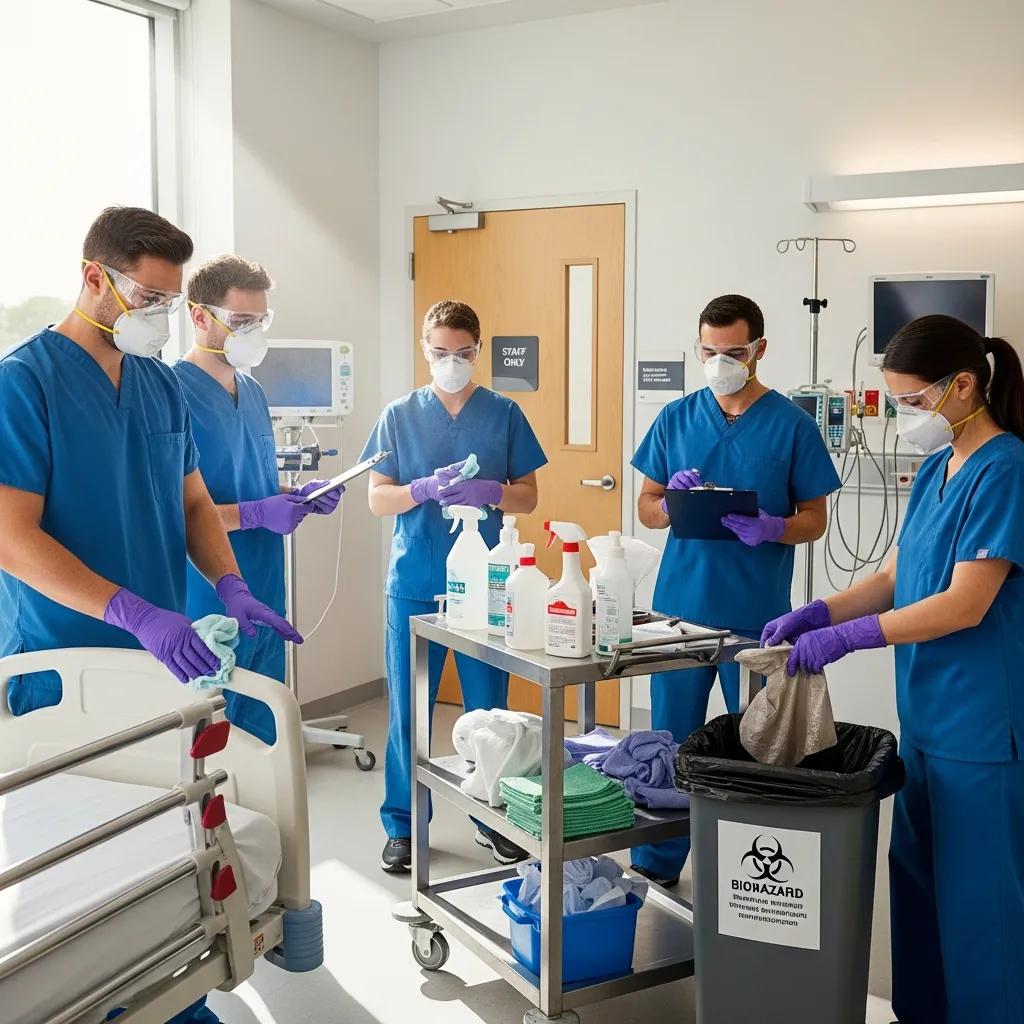
Medical cleaning teams are trained operatives who understand infection-control principles, product safety and clinical protocols. Their role blends practical cleaning skills with strict documentation and audit procedures. Recruitment focuses on background checks and competency in PPE use, safe chemical handling and microfibre techniques, with refresher programs to keep procedures current. Supervision and quality assurance—routine audits and corrective-action plans—ensure reliability and let clinics show compliance during inspections. The next section outlines typical training topics and certification paths our teams complete to meet clinical demands.
Divine Commercial Cleaning provides customised staffing plans for Marcoola clinics that align resources with patient volume and clinical risk, plus options for scheduled audits and competency reporting to support governance and tender requirements.
What infection-control training and certifications do our staff hold?
Our cleaning personnel complete infection‑prevention coursework covering pathogen transmission, chain‑of‑infection concepts, disinfectant selection and contact‑time compliance, plus practical competency assessments in one‑pass microfibre wiping and safe equipment handling. Regular refresher training keeps teams up to date with evolving guidance and product use, and on‑site assessments verify practical competency under supervision. Training also covers clinical waste segregation, PPE donning and doffing, and incident reporting so teams can detect and respond to contamination quickly. These elements form the backbone of a reliable cleaning workforce that supports clinical safety.
How does staff expertise ensure compliance and reliability?
Experienced cleaning teams use structured quality assurance—daily checklists, weekly supervisory audits and periodic third‑party inspections—to make sure tasks meet standards and that deviations are fixed promptly. Incident reporting captures non‑conformance and triggers actions like retraining, product review or process change; this reduces recurrence and builds institutional knowledge. Documented tasks and audit results provide verifiable records for regulatory compliance and reassure stakeholders about environmental safety. In short, staff expertise underpins operational reliability and continuous improvement in hygiene performance.
Why choose Divine Commercial Cleaning for Marcoola medical centres?
Using a specialist provider delivers measurable benefits: consistent compliance with infection‑control expectations, lower environmental pathogen load, improved patient perceptions and fewer disruptions from contamination events. Divine Commercial Cleaning combines clinical cleaning methods, trained staff and documented verification to help clinics meet state and national hygiene standards while clinical teams focus on care. Typical outcomes include clearer audit trails, standardised cleaning schedules matched to patient throughput, and visible presentation improvements that build patient trust. The table below links benefits to measurable outcomes and realistic timeframes to illustrate value.
| Benefit | Measurable Outcome | Timeframe or Example |
|---|---|---|
| Regulatory readiness | Audit‑ready cleaning records and checklists | Implemented within first month of service |
| Reduced infection risk | Lower environmental contamination indicators | Noticeable after consistent protocol use over 4–12 weeks |
| Operational reliability | Fewer ad‑hoc closures or remediation events | Demonstrated across ongoing service contracts |
| Patient confidence | Improved feedback on cleanliness | Evident in reception‑area satisfaction scores |
This mapping shows how professional cleaning converts to operational and reputational advantages for Marcoola clinics and supports managers choosing a reliable service partner.
How does professional cleaning support regulatory compliance and reduce infection risk?
Professional cleaning documents schedules, product use and verification steps that align with guideline requirements, creating evidence for audits and inspections. Choosing TGA‑approved products, following manufacturer contact times and recording staff competencies contribute to demonstrable infection‑risk reduction. Regular environmental monitoring and corrective actions identify trends and enable proactive protocol adjustments, lowering outbreak likelihood and supporting safer patient care.
What effect does expert cleaning have on patient trust and reputation?
Consistent, visible cleanliness and transparent documentation reassure patients and referrers that safety is prioritised, supporting retention and referral relationships. Trained cleaning teams following standard procedures reduce hygiene complaints and help audits run smoothly, strengthening institutional credibility. Over time that credibility becomes a reputational asset influencing patient choice and stakeholder confidence in community healthcare settings. Investing in expert cleaning is therefore both a safety measure and a strategic reputation investment.
Common questions about medical-centre cleaning in Marcoola
Clinic managers regularly ask about recommended frequencies, how product choice affects outcomes, cost drivers, and how to request a tailored proposal. Clear answers help plan budgets and schedules that match patient care. The short FAQs below give practical guidance on cadence, product selection and pricing, followed by next steps for clinics ready to request a quote or discuss a customised plan.
How often should medical centres be cleaned to meet hygiene standards?
Frequency depends on area risk and patient flow: between‑patient disinfection for clinical spaces, daily terminal cleans for rooms, and multiple daily touchpoint cleaning for waiting areas and restrooms. Recommended cadences: wipe high‑touch surfaces after each patient encounter, perform terminal cleans daily for procedure rooms, and check busy reception and restroom areas hourly or several times a day during peak periods. Deep cleaning (weekly or monthly high‑level cleans and quarterly validation testing) complements routine tasks and provides assurance that protocols remain effective. Use these guidelines to prioritise resources where transmission risk is highest.
What do medical clinic cleaning services cost and how can they be customised?
Pricing depends on clinic size, required frequency, clinical complexity and specialised tasks such as ATP monitoring, terminal disinfection after infectious exposures or medical waste handling. Customisation options include visit frequency, weekend or after‑hours cleaning to avoid patient disruption, and bundled verification services for audit readiness. Divine Commercial Cleaning prepares tailored proposals that map scope, frequency and reporting to client needs and offers scalable staffing to meet peak demand—so clinics receive a quote matched to their risk profile and operational schedule.
If you’re ready to explore customised cleaning plans or request a proposal, contacting Divine Commercial Cleaning starts a process to discuss scope, frequency and verification requirements and produce a detailed quote aligned with your clinic’s needs and regulatory expectations.
Frequently Asked Questions
What qualifications should cleaning staff have in medical centres?
Cleaning staff in medical centres should complete specialised training in infection control, safe chemical handling and correct use of personal protective equipment (PPE). Training typically covers pathogen transmission, disinfectant selection and practical competency in cleaning techniques. Regular refresher training keeps teams up to date with evolving guidance and best practice. These qualifications are essential to maintain high hygiene standards and meet regulatory requirements in healthcare settings.
How can clinics ensure the effectiveness of their cleaning protocols?
Clinics ensure effectiveness by implementing structured quality assurance: daily checklists, supervisory audits and periodic third‑party inspections to verify compliance. Recording cleaning activities and audit outcomes creates a verifiable trail for regulators. Continuous monitoring and feedback help identify improvement areas so practices remain effective at reducing infection risk and maintaining a safe environment.
What types of disinfectants are most effective for medical cleaning?
Effective disinfectants include TGA‑registered accelerated hydrogen peroxide solutions and quaternary ammonium compounds for surfaces, chosen for proven efficacy, surface compatibility and appropriate contact times. Alcohol‑based wipes (around 70% isopropyl) are useful for rapid decontamination of small equipment. Selecting the right product and following the label is critical for reliable sanitation and lowering healthcare‑associated infection risk.
How do cleaning protocols differ between high-risk and low-risk areas?
Protocols differ by risk: high‑risk areas (patient rooms, procedure spaces) require stringent measures—between‑patient disinfection and terminal cleans—often on tighter schedules and focusing on high‑touch surfaces. Low‑risk areas (administrative offices) usually need daily cleaning and targeted high‑touch disinfection. Tailoring protocols to an area’s risk profile helps optimise infection control while allocating resources efficiently.
What role does documentation play in medical centre cleaning?
Documentation provides a verifiable record of cleaning activities, protocol compliance and staff training. It includes checklists, schedules and audit results that demonstrate adherence to hygiene standards and support regulatory inspections. Accurate records also reveal trends, measure effectiveness and prompt corrective action when needed—supporting a culture of safety and accountability.
How can clinics improve patient confidence in their cleaning practices?
Clinics can boost patient confidence by maintaining visible cleanliness and being transparent about cleaning routines. Communicating schedules, using high‑quality disinfectants and ensuring trained staff follow standardised processes reassures patients. Sharing documentation of cleaning activity and inviting feedback further strengthens trust in the clinic’s commitment to a safe environment.
Choosing specialised medical‑centre cleaning in Marcoola creates a safer environment for patients and staff and reduces the risk of healthcare‑associated infections. By following rigorous protocols and using hospital‑grade disinfectants, clinics stay compliant with hygiene standards and strengthen patient trust. Partnering with Divine Commercial Cleaning lets healthcare teams focus on care while we manage environmental safety. Contact us to discuss tailored cleaning solutions that meet your clinic’s needs.

Dianne, originally from Rockhampton, hails from a business-oriented family, with her father owning electrical stores and her uncle serving as Mayor. Moving to the Sunshine Coast at 13, she later pursued a rewarding real estate career and raised three children. As a single mom, she balanced university studies with domestic cleaning work. Armed with a Bachelor’s Degree in Business, majoring in Supply Chain Management, Dianne founded and grew Divine Commercial Cleaning into a thriving company. Her success is rooted in strong family mentorship, a positive attitude, and a solution-oriented approach, offering tailored cleaning services with integrity and strategic insight.