Trusted Maroochydore Office Cleaning for Professional Business Spaces
Keeping your Maroochydore office clean and hygienic protects staff health, creates a lasting professional impression and reduces interruptions to daily operations. This guide lays out practical cleaning strategies, suggested schedules, eco-friendly options and current sanitisation practices tailored to Sunshine Coast businesses. You’ll find which commercial cleaning tasks matter most, how to choose appropriate service levels for offices, retail, medical centres and shopping centres, and when to book deep sanitisation.
We cover daily routines, periodic deep cleans, targeted infection-control sanitisation and green cleaning that improves indoor air quality and supports sustainability. The page also summarises our local services and includes easy-to-use comparison tables and checklists so decision-makers can evaluate options quickly and request a tailored quote. Throughout, the focus is on practical, evidence-based advice for Maroochydore businesses seeking reliable commercial cleaning solutions.
What office cleaning services does Divine Commercial Cleaning provide in Maroochydore?
Our Maroochydore office cleaning services include routine maintenance, scheduled deep cleans, specialised surface and floor care, and targeted sanitisation to reduce infection risk. Routine work typically covers rubbish removal, vacuuming, surface wiping, restroom cleaning and light kitchen upkeep — tasks that cut allergens, surface contaminants and visual clutter. Periodic and specialist services such as carpet deep cleaning, high-level dusting, window cleaning and floor restoration protect assets and preserve a professional look, while sanitisation services give focused disinfection for viral and bacterial threats. Below is a concise comparison of core service types to help managers quickly pick the package that matches operational needs and risk levels, bridging daily upkeep and periodic interventions.
Common office and commercial cleaning tasks include:
- Daily cleaning tasks: Rubbish removal, high-touch surface wiping, vacuuming and restroom checks.
- Periodic maintenance: Deep carpet cleaning, high-window cleaning, floor stripping and reseal.
- Sanitisation services: Targeted disinfection of workstations, shared equipment and communal areas.
This service list helps facility managers prioritise routine prevention versus scheduled deep cleaning. For Maroochydore businesses that want an integrated provider, we offer tailored office and commercial cleaning services across the Sunshine Coast and can prepare a custom quote based on your site and frequency preferences — request a quote to align scope with your business priorities.
| Service Category | Typical Tasks Included | Typical Frequency |
|---|---|---|
| Daily Office Cleaning | Rubbish removal, vacuuming, surface wiping, restroom sanitation | Daily or several times per week |
| Deep Carpet & Floor Care | Deep shampooing, stain treatment, floor stripping and reseal | Quarterly to biannual |
| Sanitisation & Disinfection | High-touch disinfection, fogging/electrostatic options, restroom deep clean | As needed or scheduled monthly |
| Window & High-Level Cleaning | Interior/exterior glass, high dusting | Monthly to quarterly |
This table contrasts common services so decision-makers can match tasks to business risk and appearance goals. The next sections explain how these services adapt to different business types and how package choices affect scope.
Comprehensive cleaning for offices, retail, medical and shopping centres
Commercial cleaning is shaped by the environment: foot traffic, operations and hygiene risk differ between offices, retail stores, medical centres and shopping centres. Offices focus on workstation cleaning, shared-surface sanitisation and floor/carpet care to support staff wellbeing and productivity. Retail spaces need frequent floor maintenance, display cleaning and hygiene restocking to protect the customer experience. Medical centres require strict infection-control measures, safe disposal and detailed surface disinfection to meet clinical standards. Shopping centres combine high-footfall maintenance with specialist floor and toilet cleaning regimes to manage large visitor volumes while keeping disruption to tenants minimal.
Aligning cleaning schedules with business rhythms preserves assets and reduces incidents. Understanding how each environment affects cleaning choices leads naturally to decisions about frequency and sanitisation methods, which we cover below in the context of customisable packages.
Customisable cleaning packages tailored to business needs
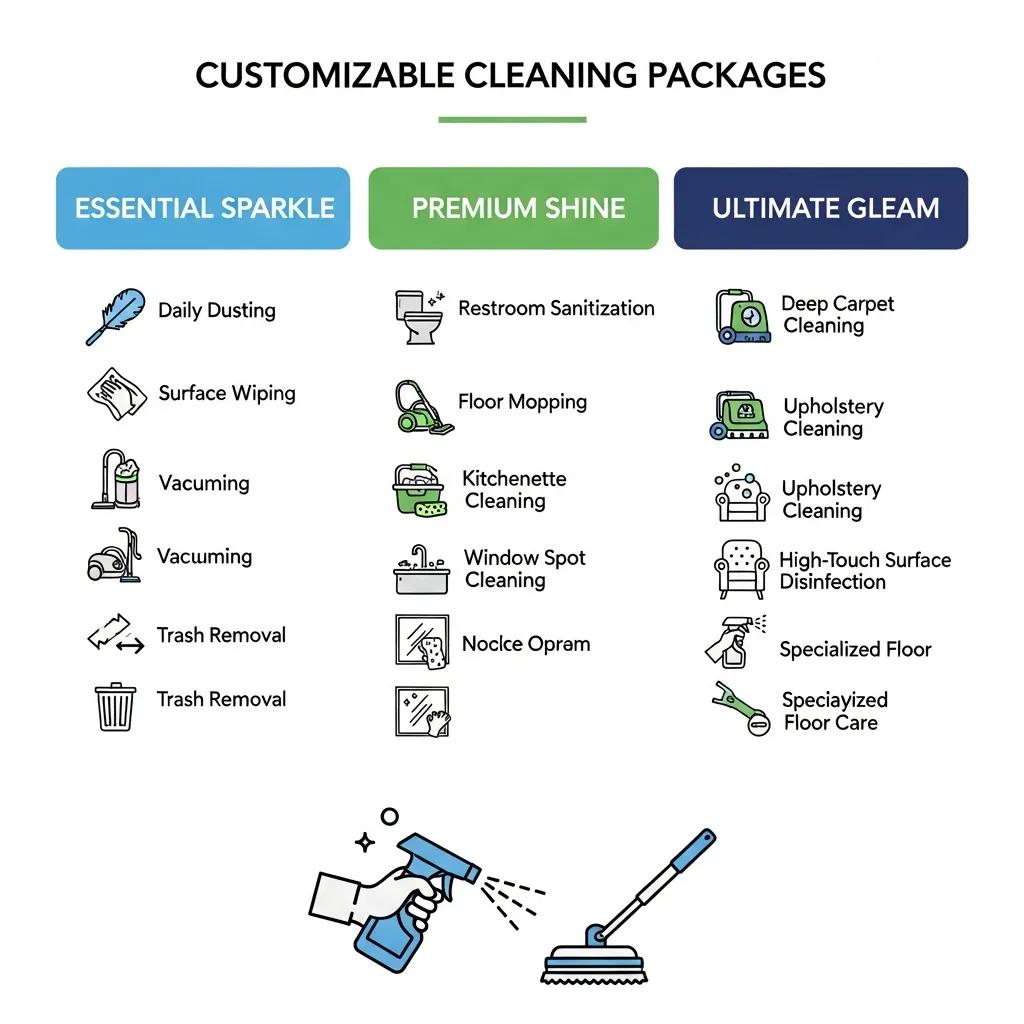
Custom packages let businesses set cleaning frequency, task scope and add‑ons to suit budgets and compliance needs. A basic package covers essentials — rubbish removal, surface wiping and restroom upkeep — while a standard package adds regular floor care and periodic carpet maintenance. Our premium packages combine daily routines with scheduled deep cleans, specialist sanitisation and floor restoration for high-traffic or sensitive sites. Add-ons like after‑hours service, specialist equipment and event or seasonal disinfection can be included to handle peaks or specific risks.
Choosing the right package depends on foot traffic, industry (for example medical versus general office) and your risk tolerance. We recommend evaluating outcome-focused criteria — cleanliness, fewer complaints and asset longevity — when requesting quotes; providers usually tailor proposals after a site inspection and a conversation about priorities and scheduling.
Why choose professional office cleaners in Maroochydore?
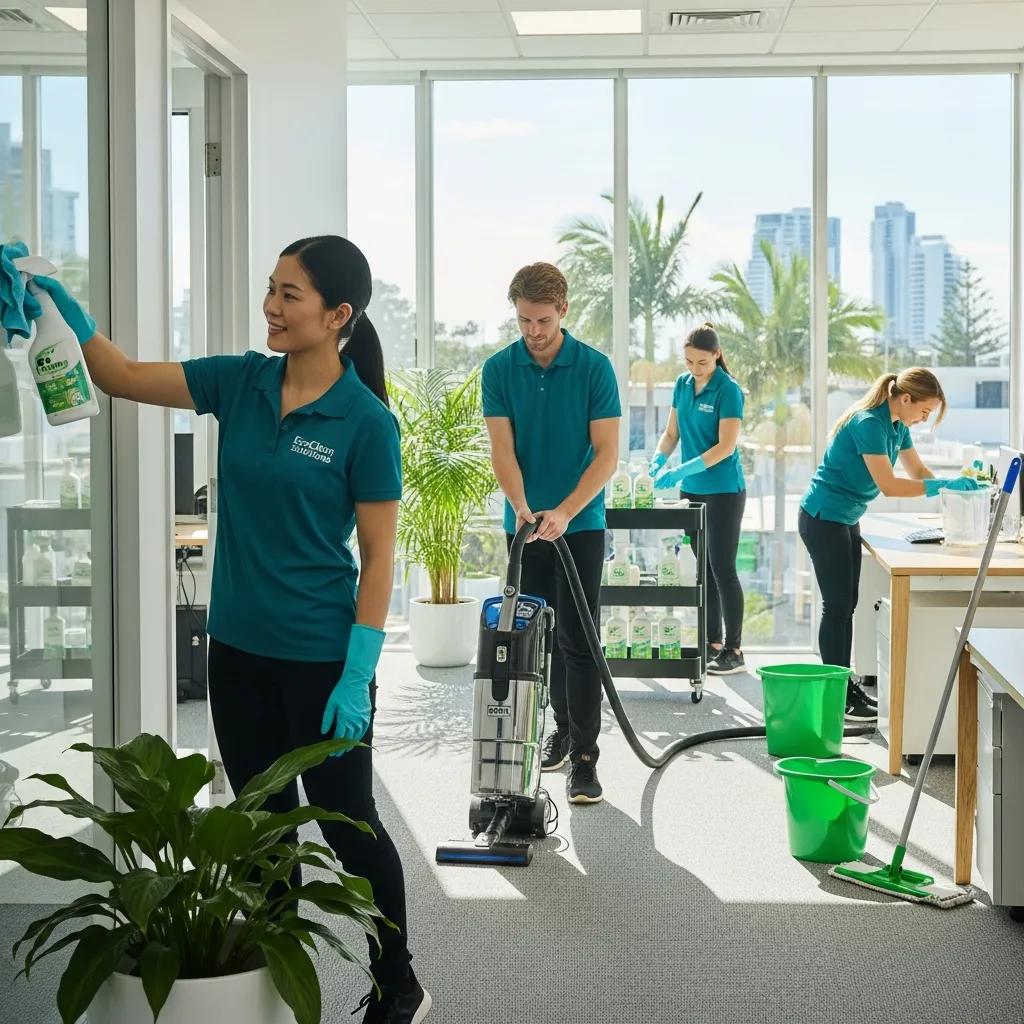
Professional office cleaners deliver consistent results, free your team from day‑to‑day cleaning logistics and help keep staff productive. Trained crews follow standard procedures and use purpose-built equipment that improves cleaning quality while cutting managerial overhead and unexpected downtime. Outsourcing also supports better compliance with workplace hygiene practices and lets business leaders focus on core operations instead of scheduling, supplies or quality checks. Below are the practical benefits decision-makers should weigh when choosing between in-house teams and contracted services.
Key benefits of professional cleaning include:
- Time and cost efficiency: Outsourcing reduces hidden labour and procurement costs while delivering consistent results.
- Improved workplace hygiene: Trained teams use proven techniques and products to reduce contamination and sick days.
- Operational reliability: Established providers use checklists and reporting to maintain service continuity.
When evaluating local providers, prioritise demonstrated reliability, professionalism and a clear service agreement; Divine Commercial Cleaning serves Maroochydore and the wider Sunshine Coast and can provide a tailored service plan and quote on request. The sections below explain trust signals to look for and the protections you should expect.
Ensuring trust, reliability and professionalism in commercial cleaning
Trust and reliability show up in consistent scheduling, clear reporting, visible staff ID and documented quality checks that confirm agreed tasks are completed. Good providers use checklists, supervisor inspections and client reporting to create accountability and smooth communication. Ask potential cleaners about staff screening, ongoing training and escalation steps for missed tasks; request references or examples of client protocols to verify claims. Warning signs include vague contracts, irregular arrival times and missing documentation — these increase the risk of service lapses and hidden fees.
These operational indicators guide procurement decisions and connect directly to insurance and training, which we outline next so you know what protections to verify before contracting services.
Benefits of hiring certified and insured cleaning experts
Certified and insured cleaners give you financial and operational protection and demonstrate minimum training and process standards. Relevant insurance typically includes public liability and workers’ compensation, protecting both client and workforce if incidents occur on site. Certifications and formal training show staff have been taught safe chemical use, equipment handling and infection-control procedures — critical for medical and higher-risk environments. Ask providers for proof of insurance and staff training records or company safety policies to ensure alignment with your organisational and regulatory expectations.
Checking these protections helps avoid unexpected costs and supports steady service quality; the next major section outlines how often different business types should schedule cleaning to maintain optimal hygiene.
How often should your office be cleaned for optimal hygiene?
Cleaning frequency depends on foot traffic, industry risk, occupancy density and surface types; regular cleaning reduces contamination while periodic deep cleans protect assets. High-touch spots like door handles, shared equipment and kitchen areas usually need daily attention, while carpets and hard floors require scheduled deep maintenance to remove embedded soils and preserve appearance. Medical centres and sites with vulnerable occupants demand more frequent sanitisation and stricter disposal protocols than standard offices. The table below gives recommended frequencies for common business types and the reasoning to help you choose a schedule that balances cost and risk.
Recommended cleaning frequencies by business type include:
- Offices: Daily general cleaning with weekly deep tasks; adjust based on occupancy.
- Retail: Multiple daily floor and restroom checks, nightly cleaning and weekly deep cleans.
- Medical centres: Daily cleaning of high‑touch surfaces with scheduled clinical sanitisation.
- Shopping centres: Continuous monitoring, multiple daily maintenance cycles and nightly restorative work.
These guidelines help organisations prioritise tasks and scale services during peak periods or after events. The table below maps business types to suggested schedules and example tasks.
| Business Type | Recommended Frequency | Rationale / Example Tasks |
|---|---|---|
| Office | Daily cleaning; weekly deep tasks | Keep workstations hygienic; reduce allergen buildup |
| Retail | Multiple daily checks; nightly clean | Protect customer experience; manage spills and foot traffic |
| Medical Centre | Daily cleaning; scheduled clinical sanitisation | Safeguard patients; control infection risk |
| Shopping Centre | Multiple daily maintenance; nightly restoration | Handle high footfall while supporting tenants |
This schedule aims to answer “how often” decisions and support quick procurement choices. Next, we explain the difference between cleaning and disinfecting and when sanitisation services are necessary.
Recommended cleaning frequencies for different business types
A clear frequency matrix links tasks to operational risk: offices usually need daily cleaning for shared areas and weekly deep cleans for carpets and upholstery, while medical settings require daily clinical‑level sanitisation and stricter waste handling. Increase frequencies for high-traffic retail and shopping environments where floors and restrooms are used constantly, and bump up cleaning during seasonal peaks, promotions or outbreaks. Watch complaints, absenteeism and visible soil to fine‑tune schedules and add targeted deep cleans when metrics show a decline.
Understanding these patterns helps managers balance budget and safety; the next subsection explains when to deploy sanitisation and disinfection beyond routine cleaning.
Importance of regular sanitisation and disinfection services
Cleaning removes visible dirt and lowers organic load, while disinfection uses approved chemicals or technologies to reduce microbes on surfaces — both are essential for workplace hygiene. Routine cleaning should be paired with scheduled disinfection of high‑touch areas and shared equipment, especially during outbreaks or elevated risk periods. The best method — manual wiping, electrostatic spraying or fogging — depends on surface type, occupancy timing and safety considerations; effective programs also observe correct contact times and ventilation plans. Plan sanitisation frequency from a risk assessment and be ready to escalate to deep disinfection after confirmed exposures or when community transmission is high.
Regular sanitisation lowers transmission risk and supports operational continuity; the next section covers eco-friendly approaches that can improve indoor health while reducing environmental impact.
What are the advantages of eco-friendly commercial cleaning on the Sunshine Coast?
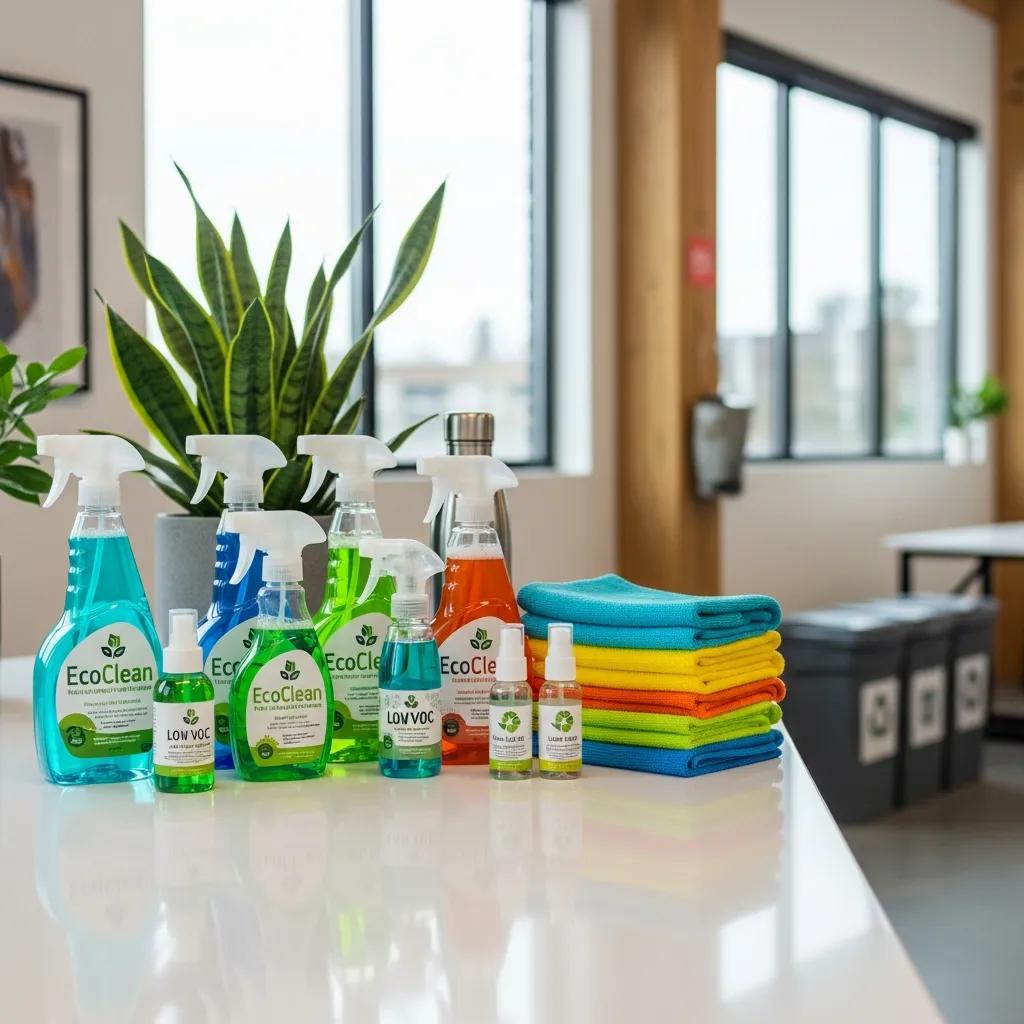
Eco-friendly commercial cleaning improves indoor air quality, reduces exposure to harsh chemicals and supports corporate sustainability goals — all while meeting tenant and customer expectations. Green practices like low‑VOC products, microfibre technology and water‑efficient methods limit harmful emissions and reduce irritants for staff and visitors. These approaches often align with corporate social responsibility targets and can set your business apart by demonstrating environmental care. Below is a short list of practical green strategies that keep cleaning effective while minimising environmental and health impacts.
Practical eco-friendly cleaning strategies include:
- Microfibre cloths and mops: Capture more soil and reduce chemical use.
- Low‑VOC or plant‑based products: Lower indoor air toxins and irritation.
- Water‑efficient methods: Conserve water while maintaining hygiene standards.
The table below maps common sustainable product types to their environmental and health benefits so facility managers can weigh trade-offs when updating specifications.
| Product Type | Environmental / Health Benefit | Practical Impact |
|---|---|---|
| Low‑VOC Cleaners | Reduced volatile chemical emissions | Better indoor air quality; safer for sensitive occupants |
| Biodegradable Formulas | Lower environmental persistence | Easier wastewater handling; reduced ecosystem impact |
| Microfibre Technology | Less chemical usage required | Effective soil removal; faster turnaround times |
This comparison shows how green products deliver both health and sustainability benefits, leading into specific practices and product categories used in commercial programs.
Green cleaning practices and their impact on workplace health
Green cleaning emphasises methods and materials that reduce chemical exposure and improve indoor environmental quality without sacrificing performance. Microfibre systems remove soils and microbes mechanically so you can cut back on detergents, while low‑VOC and plant‑based formulas reduce off‑gassing and respiratory irritation. Using these techniques alongside routine maintenance can lower absenteeism linked to poor indoor air quality and support staff wellbeing. Proper training on dilution, application and product choice keeps green methods safe and effective, reinforcing better workplace health outcomes.
Sustainable cleaning products used by Divine Commercial Cleaning
Forward-looking commercial cleaners commonly use biodegradable detergents, low‑VOC disinfectants and plant‑based surfactants that balance efficacy with a smaller environmental footprint. These categories reduce toxic residues and indoor air concerns, making them suitable for offices, retail and many clinical areas when matched to infection‑control needs. We offer eco‑conscious options within service packages on request, aligning cleaning performance with sustainability goals while maintaining hygiene standards. Specify your sustainability priorities during procurement so product choices meet both health and regulatory needs.
Choosing the right green products requires checking efficacy, safety data and material compatibility; the next section explains how sanitisation protocols for infectious threats are put into practice.
How does Divine Commercial Cleaning manage COVID‑19 sanitisation protocols?
Enhanced sanitisation for COVID‑19 and similar respiratory threats pairs thorough cleaning with targeted disinfection, following current public health guidance and documented procedures. Effective programs prioritise high‑touch disinfection, schedule deep cleans after confirmed exposures and keep records of dates, methods and chemicals used for traceability. The best disinfection method — manual wiping with appropriate contact time, electrostatic application or fogging — depends on surfaces, occupancy windows and safety needs; each approach requires trained application. We include enhanced sanitisation procedures in our Maroochydore service offerings so workplaces can respond quickly to outbreaks while staying operational.
Use this short checklist to decide when to request elevated sanitisation:
- Confirmed exposure: Arrange an immediate deep disinfection of affected areas.
- High community transmission: Increase frequency of high‑touch disinfection.
- Vulnerable populations: Apply stricter sanitisation and monitoring practices.
Following these triggers helps you mount a proportionate response and keep your workplace safe; the next subsections describe common disinfection methods and compliance considerations.
Enhanced disinfection procedures for safe business environments
Enhanced disinfection methods use structured approaches — manual wiping with validated disinfectants, electrostatic spraying for complex surfaces and fogging for large spaces — to reduce viral and bacterial presence on surfaces. Manual wiping is precise for high‑touch zones and ensures correct contact time, electrostatic sprayers increase coverage on irregular surfaces, and fogging treats large volumes when areas are unoccupied and properly ventilated. Each method has trade‑offs around downtime, chemical exposure and material compatibility, so choose based on occupancy schedules and surface types. Our trained technicians follow safety protocols, ventilation plans and contact‑time requirements to maximise effectiveness while minimising disruption.
Compliance with the latest health and safety standards
Staying compliant means documented procedures, current product safety data sheets and recordkeeping that logs dates, methods and responsible staff for sanitisation activities. Ask providers for evidence of safety protocols, training records and method logs to confirm disinfection work meets organisational and local health guidance. Providers typically include compliance details in proposals or contracts; keeping clear records supports audit readiness and demonstrates the response plan used during incidents or inspections.
Frequently Asked Questions
1. How can I determine the right cleaning frequency for my office?
Choose cleaning frequency based on foot traffic, business activity and surface types. High‑touch points such as door handles and shared equipment should be cleaned daily, while carpets and hard floors need periodic deep cleaning. Offices with high occupancy or specific health concerns should increase cleaning and sanitisation to keep the environment safe and reduce illness-related absences.
2. What should I look for in a commercial cleaning service provider?
Look for providers with a proven record of reliability and professionalism: clear service agreements, documented quality checks and positive client feedback. Ask about staff training, insurance coverage and safety procedures. A reputable company will be transparent about processes and willing to customise services to meet your needs.
3. Are eco-friendly cleaning products effective?
Yes — eco‑friendly products can be highly effective while being gentler on people and the environment. Many green cleaners use low‑VOC ingredients and biodegradable formulas that remove dirt and germs without harsh chemicals. They help improve indoor air quality and support sustainability goals, making them a strong option for businesses looking to reduce their environmental impact.
4. How do I know if my cleaning service is compliant with health regulations?
Ask for documented procedures, safety data sheets for products used and staff training records. A reputable provider will follow protocols aligned with local health guidance and offer audits or reporting to verify compliance. Regular reviews and transparent reporting help ensure your workplace stays safe and hygienic for staff and visitors.
5. What are the benefits of using professional cleaners over in-house staff?
Professional cleaners bring specialist training, consistent standards and access to advanced equipment. They manage schedules efficiently so all areas meet high standards without disrupting operations. Outsourcing also frees your team to focus on core business activities and typically improves overall workplace hygiene and productivity.
6. How can I customise my cleaning package to fit my business needs?
Customise your package by assessing foot traffic, surface types and any industry‑specific hygiene needs. Talk through priorities with your provider so they can recommend a mix of daily tasks, periodic deep cleans and specialised sanitisation. Many companies offer flexible packages adjustable for seasonal changes or special events to keep your cleaning strategy effective and cost‑efficient.
7. What should I do if I notice issues with the cleaning service?
If you notice problems, document them and contact your provider promptly. A reputable company will address feedback and resolve issues quickly. If problems persist, review your service agreement to understand escalation steps or contract options. Clear communication is essential to ensure your cleaning requirements are met.
Choosing professional office cleaning in Maroochydore keeps your workplace hygienic and welcoming, improving staff wellbeing and client impressions. With tailored cleaning packages you can manage operational risks while meeting health and sustainability goals. Investing in reliable cleaning protects assets and helps create a healthier workplace culture. Contact Divine Commercial Cleaning today to discuss customised options that suit your business.

Dianne, originally from Rockhampton, hails from a business-oriented family, with her father owning electrical stores and her uncle serving as Mayor. Moving to the Sunshine Coast at 13, she later pursued a rewarding real estate career and raised three children. As a single mom, she balanced university studies with domestic cleaning work. Armed with a Bachelor’s Degree in Business, majoring in Supply Chain Management, Dianne founded and grew Divine Commercial Cleaning into a thriving company. Her success is rooted in strong family mentorship, a positive attitude, and a solution-oriented approach, offering tailored cleaning services with integrity and strategic insight.