Effortless Medical Centre Cleaning Services in Noosaville — Professional commercial solutions for healthcare facilities
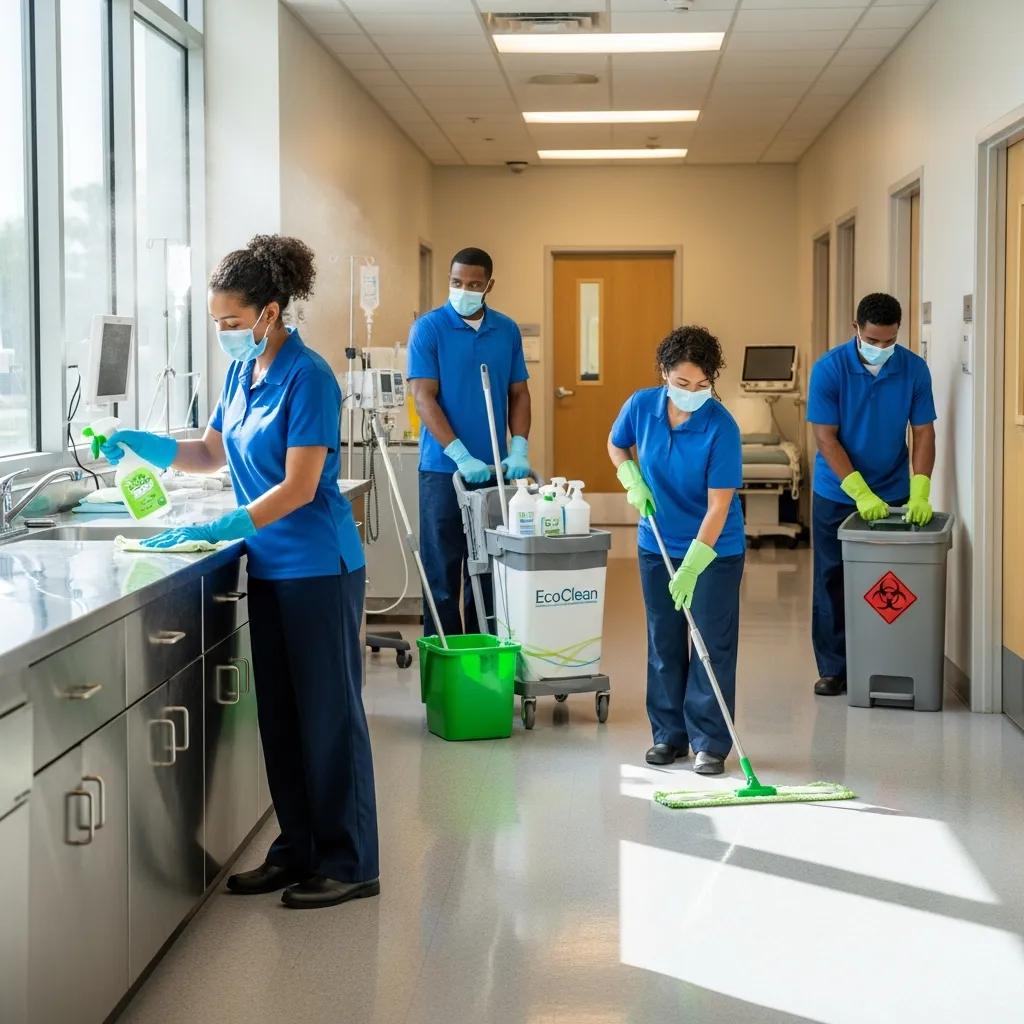
Medical centre cleaning in Noosaville is specialised commercial cleaning designed to reduce infection risk, protect patients and staff, and help facilities meet health‑sector compliance. This guide outlines what medical centre cleaning involves, why strict sanitisation and clear documentation matter, and how a structured cleaning program supports safer patient outcomes across clinics, treatment rooms, waiting areas and administrative spaces. You’ll find the applicable Australian standards, practical sanitisation protocols, recommended cleaning frequencies by area, and how bespoke cleaning plans are tailored to clinical workflows. We also cover disinfectant classes suitable for medical environments, eco‑friendly choices and scheduling models that minimise disruption to care.
Where relevant, we explain how local providers with Sunshine Coast and Brisbane experience deliver tailored plans, industry‑standard agents and transparent communications to make onboarding and quoting straightforward. Start here for a practical blueprint to improve hygiene control in Noosaville medical centres while balancing safety, sustainability, and operational continuity.
What Are the Essential Cleaning Standards for Medical Centres in Noosaville?
Cleaning standards establish baseline procedures and measurable outcomes that facilities must achieve to control cross‑contamination and reduce infection risk. They focus on infection prevention, correct PPE use, validated disinfectant selection and robust record‑keeping so cleaning is repeatable and auditable. Following current Australian health guidance and accreditation expectations means treating high‑risk clinical zones differently from low‑risk administrative zones and applying higher frequencies and stronger disinfectants where patient contact or invasive procedures occur.
Standards also require scheduled deep cleans, surface compatibility checks to protect equipment and finishes, and documented staff training that records competencies. Getting these essentials right makes it easier to build effective sanitisation protocols and area‑based cleaning schedules.
This checklist summarises core standards for easy implementation:
- Infection control: Use validated disinfectants and observe manufacturer contact/dwell times for target pathogens.
- Cross‑contamination control: Segregate cleaning tools and use colour coding where appropriate.
- PPE and staff safety: Require task‑appropriate PPE and provide training on correct donning and doffing.
- Documentation: Maintain signed cleaning logs, incident records and product usage records.
These minimums frame protocol selection and frequency planning for the higher‑risk areas discussed next.
Which Healthcare Sanitisation Protocols Ensure Compliance and Safety?
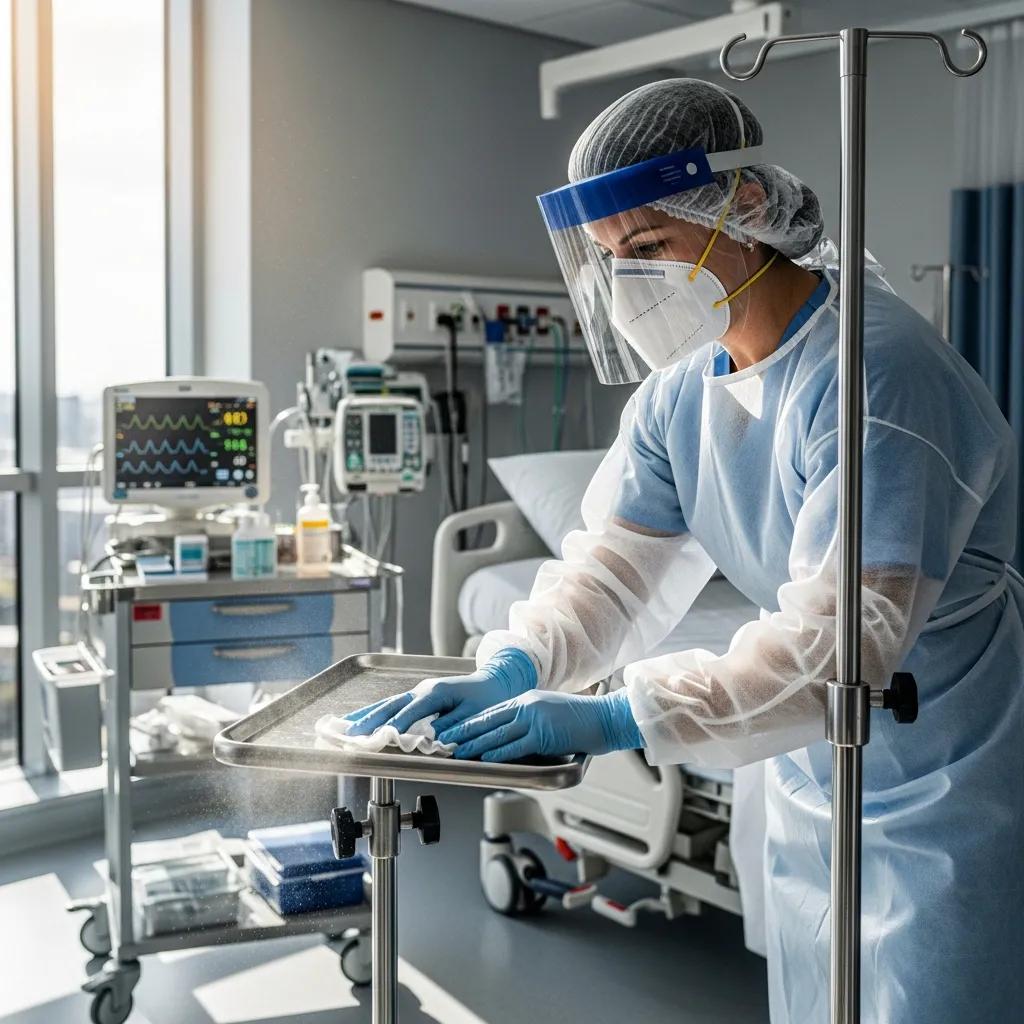
Sanitisation protocols turn standards into repeatable processes that protect patients and staff through consistent execution and verification. A practical protocol specifies surface categories, the approved disinfectant and dilution, required contact time, the compatible application method (wipes, spray, fogging) and post‑clean validation such as ATP swabs or visual checklists. Effective protocols include stepwise SOPs for terminal cleans after procedures, routine wipe‑downs of high‑touch points, and escalation steps during outbreaks — all recorded in daily logs.
Regular training and competency assessments ensure staff follow manufacturer directions and respect material compatibility to avoid equipment damage. These protocols form the operational backbone that informs frequency decisions and quality assurance cycles described in the next section.
How Often Should Medical Facilities Be Cleaned to Meet Health Regulations?
Cleaning frequency should be risk‑based: higher for procedure and treatment rooms, lower for administrative areas, and adjustable during outbreaks or when patient throughput increases. A practical frequency matrix helps facilities allocate resources efficiently while meeting regulatory expectations and infection control goals.
- Operating/treatment rooms: Clean immediately after procedures and perform terminal cleans daily.
- High‑touch areas (doorknobs, reception desks): Clean multiple times per day — ideally every 2–4 hours in busy clinics.
- Waiting rooms and common areas: Clean daily with additional hourly wipe‑downs of seating and counters during peak times.
- Administrative and back‑office spaces: Clean daily or to a schedule matched to staff presence and contact patterns.
This area‑by‑area approach lets facilities escalate frequency during outbreaks so the most vulnerable zones receive the strictest attention and the site remains ready for audits and accreditation reviews.
How Does Divine Commercial Cleaning Customise Medical Centre Cleaning Plans?
Customised cleaning plans begin with a site assessment to identify risk zones, patient flow, equipment sensitivity and scheduling constraints, then translate that profile into a documented scope of work with training and QA checkpoints. The assessment collects data on high‑touch surfaces, clinical procedures and peak patient times to recommend a suitable service tier and frequency aligned with infection control goals. Plans specify staff qualifications, PPE requirements and reporting cadence for logs and corrective actions so facility managers can track compliance and continuous improvement. Customisation prioritises coordination with clinical teams to minimise disruption and to align cleaning with sterilisation cycles and equipment maintenance schedules.
Below is a comparison of typical service tiers to illustrate how scope and frequency differ by package.
Different service packages meet varied clinical needs and compliance targets.
| Service Package | Typical Frequency | Included Tasks | Typical Use‑Case |
|---|---|---|---|
| Standard | Daily or nightly | General cleaning, waste removal, floor care | Small clinics, admin areas |
| Enhanced | Multiple daily visits | High‑touch disinfection, restroom sanitation, documentation | Busy GP clinics, multi‑suite centres |
| Infection Control | On‑demand / scheduled deep cleans | Terminal cleaning, medical‑grade disinfection, outbreak response | Surgical suites, post‑exposure cleanups |
This comparison helps managers select a package that aligns with clinical complexity and audit expectations; the next section explains service options in more practical terms.
When designing customised plans, our local expertise at Divine Commercial Cleaning across the Sunshine Coast and Brisbane enables tailored proposals, clear communication and straightforward quote requests. We emphasise industry‑standard cleaning agents, documented QA processes and a simple online quote pathway to make onboarding easier for Noosaville medical centres.
What Service Options Are Available for Noosaville Healthcare Facilities?
Service options range from routine nightly janitorial services to enhanced daily disinfection cycles and specialised deep cleans for infection control — each designed to match facility size and patient risk. Routine packages cover general cleaning, waste management, floor care and basic restroom sanitation suitable for smaller clinics with lower turnover. Enhanced options add frequent high‑touch surface disinfection, recordable cleaning checklists and increased supervisory inspections for busier sites. Infection control or outbreak response services include terminal cleaning of procedural rooms, targeted surface decontamination with medical‑grade agents and rapid mobilisation for exposure events. Comparing these options helps decision‑makers align service intensity with clinical risk and operating hours.
- Standard cleaning: Regular janitorial maintenance for low‑risk zones.
- Enhanced cleaning: Increased frequency, documented checklists and supervisor audits.
- Infection control cleaning: Deep, validated disinfection for high‑risk areas and outbreaks.
Choosing the right option depends on the facility’s scale, services offered and accreditation needs — the next section shows how plans adapt in practice.
How Do Customised Cleaning Plans Address Specific Medical Centre Needs?
Custom plans adjust scope, timing, and products to suit specialty rooms, patient flow, and the compliance documentation required by clinical managers. A single‑practitioner clinic might prioritise overnight terminal cleans and spot disinfection during the day, while a multi‑suite centre schedules staggered micro‑sessions to clean each suite between appointments. Plans include material‑specific instructions for sensitive equipment, ensuring cleaning agents and methods preserve function while reducing microbial contamination. Coordination protocols set clear handovers with clinical staff to avoid interfering with patient care and to schedule deep cleans outside critical hours. These adaptations optimise resources, reduce disruption and keep audit‑ready records.
This flexible approach supports clinical workflows and helps facilities meet strict hygiene standards without compromising service delivery or equipment safety.
What Cleaning Products Are Used for Medical Centres?
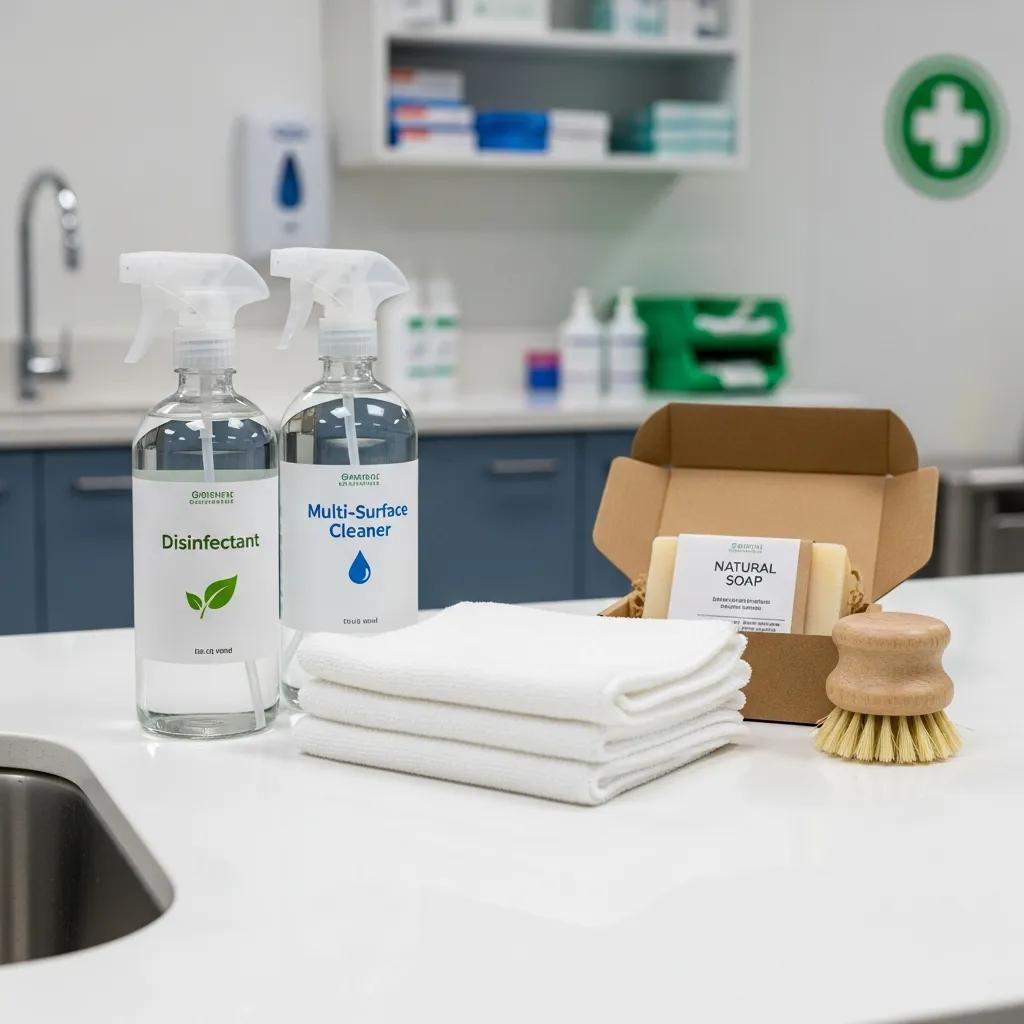
Choosing products for medical centres means balancing antimicrobial efficacy, surface compatibility and environmental and occupational safety. Options should meet infection-control goals while minimizing VOCs and irritants. Common classes include hypochlorite (bleach), hydrogen peroxide formulations and quaternary ammonium compounds — each with defined contact times, material‑compatibility notes and efficacy profiles. Eco‑friendly alternatives often use stabilised hydrogen peroxide, accelerated peroxide or manufacturer‑validated low‑toxicity quats that meet both efficacy and sustainability criteria. Product selection should reference regulatory guidance and manufacturer validation data to ensure pathogen inactivation without compromising equipment or staff health.
The table below summarises common disinfectant classes with practical considerations.
| Disinfectant Class | Active Ingredient / Status | Usage / Benefit / Limitation |
|---|---|---|
| Hypochlorite (bleach) | Sodium hypochlorite; widely accepted | Fast, broad‑spectrum activity; can corrode metals and some plastics — check compatibility. |
| Hydrogen peroxide | Stabilised H2O2; often low‑residue | Effective and compatible with many surfaces; short contact times available for routine use. |
| Quaternary ammonium compounds | QACs; common in healthcare | Good residual activity on surfaces; may be less active against some non‑enveloped viruses and should be validated for use. |
This comparison clarifies when each class is appropriate; the following section outlines safe, evidence‑based use in practice.
At Divine Commercial Cleaning, we integrate industry‑standard and eco‑friendly solutions into service plans where requested, ensuring product choices support compliance and staff/patient safety while offering sustainability benefits for Noosaville and the wider Sunshine Coast area.
Which Disinfectants Are Safe and Effective in Healthcare Environments?
Safe, effective disinfectants are those with documented activity against target organisms, manufacturer‑recommended contact times and proven compatibility with medical equipment and surfaces. Hypochlorite (bleach) gives rapid broad antimicrobial action and is useful for high‑risk bodily fluid spills, though it requires compatibility checks and corrosion controls. Hydrogen peroxide formulations deliver strong activity with low residue and are often preferred for sensitive equipment and high-touch areas. Quaternary ammonium compounds are reliable for routine surface disinfection but should be validated against the facility’s pathogen concerns.
Choosing the right class means matching organism susceptibility, surface material and operational constraints, and training staff on correct dilution and contact time. These product decisions affect both cleaning effectiveness and practical safety for staff and patients, which leads into the eco‑benefits discussion below. How does using eco‑friendly solutions benefit medical centres in Noosaville?
Eco‑friendly solutions reduce staff and patient exposure to harsh VOCs, improve indoor air quality and support facility sustainability goals without sacrificing microbial control when properly selected and validated. Benefits include a lower irritant load for sensitive populations, reduced environmental persistence and reputational gains for facilities that publicly commit to greener practices.
There are limits: some eco‑friendly products require longer contact times or are unsuitable for high‑risk contamination events, so stronger agents remain necessary in specific scenarios. A mixed strategy — using greener agents for routine cleaning and reserving higher‑level disinfectants for terminal or post‑exposure situations — maintains safety while advancing environmental stewardship.
Using validated, eco‑friendly products supports staff well-being and facility sustainability, with clear protocols that define when to escalate to higher‑level disinfectants for infection control.
How Is Scheduling and Flexibility Managed for Medical Centre Cleaning Services?
Scheduling for medical centre cleaning prioritises minimal disruption, alignment with clinical timetables and clear handover procedures to protect cleaners and patients. Common approaches include after‑hours cleaning, between‑appointment micro‑sessions and scheduled deep cleans on low‑traffic days — each with trade‑offs in cost, visibility and infection control coverage.
Coordination requires advance planning with facility managers for access, secure entry and communication protocols so teams can work safely and efficiently. Contingency plans for last‑minute changes, outbreak responses or emergency cleanups are essential to maintain service continuity. The scheduling options table below helps managers pick the best model based on disruption tolerance and clinical hours.
| Scheduling Option | Time Window | Recommended Use‑Case |
|---|---|---|
| After‑hours | Overnight or early morning | Full terminal cleans with minimal patient disruption |
| Micro‑sessions | Between appointments | Targeted high‑touch cleaning for busy clinics |
| Weekend deep‑clean | Weekend daytime | Comprehensive floor and equipment maintenance |
Picking an appropriate schedule ensures effective cleaning while protecting clinical operations and the patient experience. The sections that follow expand on after‑hours feasibility and specific package options.
Our local teams at Divine Commercial Cleaning coordinate schedules to suit Sunshine Coast and Brisbane clinic timetables, offering flexible packages such as after‑hours services and micro‑session visits with clear communication and handover procedures to reduce clinical disruption.
Can Commercial Cleaners Work After Hours to Minimise Disruption?
Yes — after‑hours cleaning is a practical way to minimise interference with patient appointments while allowing thorough terminal cleaning of procedural areas. After‑hours workflows include security escorts, controlled access, adequate lighting, noise‑management and clear checklists so teams can work safely and verify completion before staff return. Staff safety measures typically include communication devices, site induction on protected pathways and secure sign‑in/sign‑out procedures, and facilities often provide access to on‑site supervisors for coordination. After‑hours windows also allow methods like fogging or longer dwell times that are impractical during operating hours. These safeguards make after‑hours work a viable option for many medical centres.
This understanding leads into specific scheduling packages and how to choose one based on facility needs.
What are the available scheduling options for Noosaville medical facilities?
Typical scheduling options include nightly comprehensive cleans, daily micro‑sessions focused on high‑touch zones and weekend deep‑clean packages — each tailored to patient throughput and facility size. Nightly comprehensive cleaning services suit clinics with predictable closure times, offering full-surface disinfection and floor care once patients depart. Micro‑sessions let teams target reception, exam rooms and high‑touch surfaces between appointments to keep operations running while reducing contamination risk. Weekend deep‑cleans handle larger tasks such as carpet cleaning, HVAC filter checks and equipment‑safe maintenance that require longer windows. Choosing the right option depends on clinic hours, appointment density and tolerance for daytime disruption.
A clear selection strategy aligns scheduling with peak patient times and clinical priorities to ensure cleaning coverage where it matters most.
What Do Clients Say About Divine Commercial Cleaning’s Medical Centre Services?
Client feedback and operational outcomes matter when choosing a medical cleaning partner. Decision‑makers prioritise reliability, transparent reporting and measurable QA improvements. Without citing individual testimonials, typical results from professional medical cleaning partnerships include improved audit readiness through documented checklists, fewer service interruptions because of coordinated scheduling, and clear communication channels that simplify quote requests and issue resolution. Prospective clients often favour local expertise and service flexibility, especially providers operating across the Sunshine Coast and Brisbane who understand regional facility needs. To request a quote or site assessment, submit a proposal request via Divine Commercial Cleaning’s online quote form or contact the office using the details on their public business profile.
Summarising client‑facing benefits helps facility managers evaluate providers against operational and compliance priorities, as the next sections explore in more detail.
Which Case Studies Demonstrate Effective Healthcare Facility Cleaning?
Typical case studies follow a problem–action–result pattern: a facility facing audit shortfalls or recurring contamination engages a specialist provider to implement risk‑based cleaning, staff training and QA monitoring. Actions usually include site assessments, adoption of validated disinfectants, increased cleaning frequency for high‑risk zones and documented checklists. Results commonly reported are improved audit scores, fewer cleanliness complaints and faster turnaround for terminal cleans.
Key lessons highlight the value of clear communication with clinical teams, robust documentation and flexible scheduling to maintain care delivery while raising hygiene standards. These examples show how systematic interventions deliver measurable operational improvements and inform procurement decisions.
How Do Testimonials Reflect Trust and Satisfaction in Noosaville?
Trust and satisfaction themes focus on reliability, responsiveness, compliance support and clarity of reporting rather than marketing rhetoric. Clients value predictable attendance, timely escalation of issues and concise cleaning logs that support audits and incident review. They also appreciate providers who adapt to clinical workflows, supply validated product information and maintain transparent pricing and quoting. For Noosaville facilities, these practical trust signals often outweigh general marketing claims and help decision‑makers prioritise performance metrics during selection.
These insights guide procurement conversations and help facilities choose a partner aligned with their operational and compliance needs.
Frequently Asked Questions
What qualifications should cleaning staff have for medical centre cleaning?
Cleaning staff working in medical centres should have targeted training and qualifications to meet health and safety requirements. That includes infection control principles, correct use of personal protective equipment (PPE) and familiarity with the cleaning agents used on site. Regular refresher training keeps teams up to date with best practice and new cleaning technologies. Certifications in hazardous materials handling and prior healthcare experience further strengthen competency and confidence on clinical sites.
How can medical centres ensure the effectiveness of their cleaning protocols?
To ensure protocols work, implement a robust quality assurance framework that includes regular audits, inspections and documented checklists. Use objective tools such as ATP (adenosine triphosphate) testing to measure surface cleanliness and validate disinfectant performance. Ongoing staff training, competency checks and feedback loops help adapt protocols based on results and emerging guidance.
What are the benefits of using eco‑friendly cleaning products in medical centres?
Eco‑friendly products can improve indoor air quality and reduce staff and patient exposure to harsh chemicals. Many have lower volatile organic compound (VOC) levels, which helps sensitive individuals and reduces irritant complaints. When validated for efficacy, greener solutions maintain hygiene standards while supporting sustainability goals and enhancing a facility’s environmental credentials.
How do cleaning schedules adapt during outbreaks or increased patient volumes?
During outbreaks or spikes in patient numbers, cleaning schedules are stepped up to enhance infection control. That usually means more frequent cleaning of high‑touch surfaces and additional deep cleans in high‑risk zones. Facilities may add temporary shifts or extra staff to cope with demand. Close communication with clinical teams ensures cleaning activities support infection control without disrupting patient care.
What role does documentation play in medical centre cleaning services?
Documentation is essential: it records cleaning activities, demonstrates compliance with protocols and creates accountability. Signed cleaning logs, incident reports and product usage records are critical for audits and regulatory review. Good records help track effectiveness, spot trends and provide clear evidence for corrective actions when needed. Documentation also supports communication between cleaning teams and clinical staff.
How can medical centres choose the right cleaning service provider?
Selecting the right provider means assessing healthcare experience, adherence to industry standards and the ability to customise plans to your needs. Check training programmes for staff, product quality and a provider’s commitment to eco‑friendly options if that’s a priority. Look for clear QA processes, transparent pricing and local knowledge. Case studies and client references give insight into reliability and operational performance. Ultimately choose a partner that aligns with your operational goals and compliance requirements.
Professional medical centre cleaning in Noosaville improves patient safety and helps facilities meet health‑sector requirements. With customised plans, validated eco‑friendly options and clear QA, clinics can maintain a hygienic environment that supports staff and patient wellbeing. Working with experienced local providers streamlines onboarding and keeps standards audit‑ready. Explore Divine Commercial Cleaning’s tailored service options to see how we can support your facility’s hygiene and compliance goals.

Dianne, originally from Rockhampton, hails from a business-oriented family, with her father owning electrical stores and her uncle serving as Mayor. Moving to the Sunshine Coast at 13, she later pursued a rewarding real estate career and raised three children. As a single mom, she balanced university studies with domestic cleaning work. Armed with a Bachelor’s Degree in Business, majoring in Supply Chain Management, Dianne founded and grew Divine Commercial Cleaning into a thriving company. Her success is rooted in strong family mentorship, a positive attitude, and a solution-oriented approach, offering tailored cleaning services with integrity and strategic insight.