
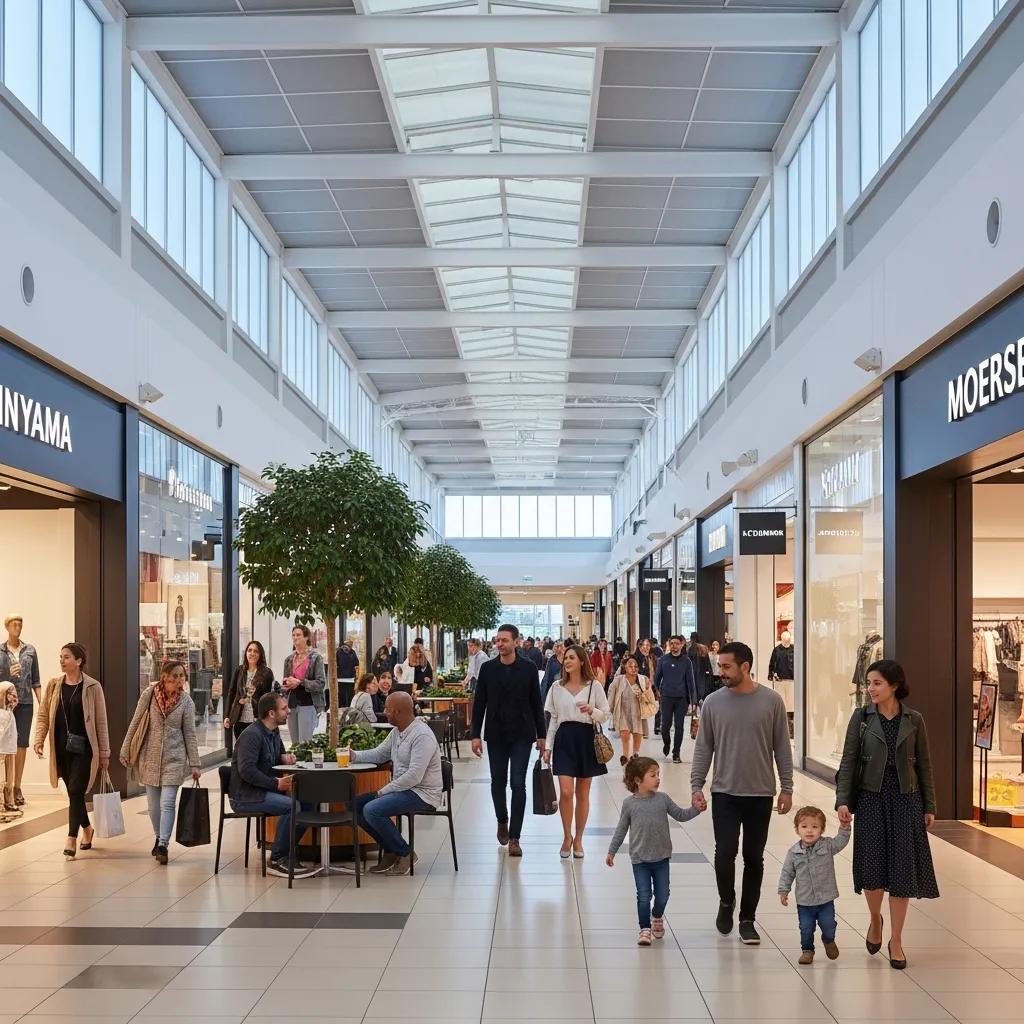
Minyama Shopping Centre Cleaning Services That Shine: Professional Commercial Cleaning Solutions on the Sunshine Coast
Keeping Minyama Shopping Centre clean, safe and welcoming needs a commercial cleaning plan built for heavy foot traffic, varied tenants and 24/7 public access. This guide lays out exactly what professional shopping-centre cleaning looks like: how specialist teams keep concourses, food courts and back-of-house areas in top condition, which scheduling and QA controls deliver consistent results, and how to choose services that reduce risk and improve the visitor experience. You’ll find service types, suggested cleaning frequencies by area, the benefits of eco-friendly methods, and typical package options to help procurement decisions. We start with the service mix relevant to Minyama, then cover quality assurance, green cleaning, pricing frameworks, recommended frequencies and how to request a tailored quote.
What Commercial Cleaning Services Does Divine Offer for Minyama Shopping Centre?
Shopping-centre cleaning spans routine upkeep and specialist interventions to keep public spaces hygienic, attractive and safe. Core tasks include daily floor care, restroom sanitation, waste management, high-touch disinfection, window cleaning and periodic deep cleans or hard-floor maintenance. These activities reduce slip hazards, improve indoor air quality and support tenant satisfaction. We deliver a modular service menu so managers can match scope and frequency to foot traffic, tenant mix and events—focusing resources where they deliver the most value. Below we break down retail-focused services and the different standards needed for office and medical tenancies within the centre.
Comprehensive Retail and Shopping Centre Cleaning Services
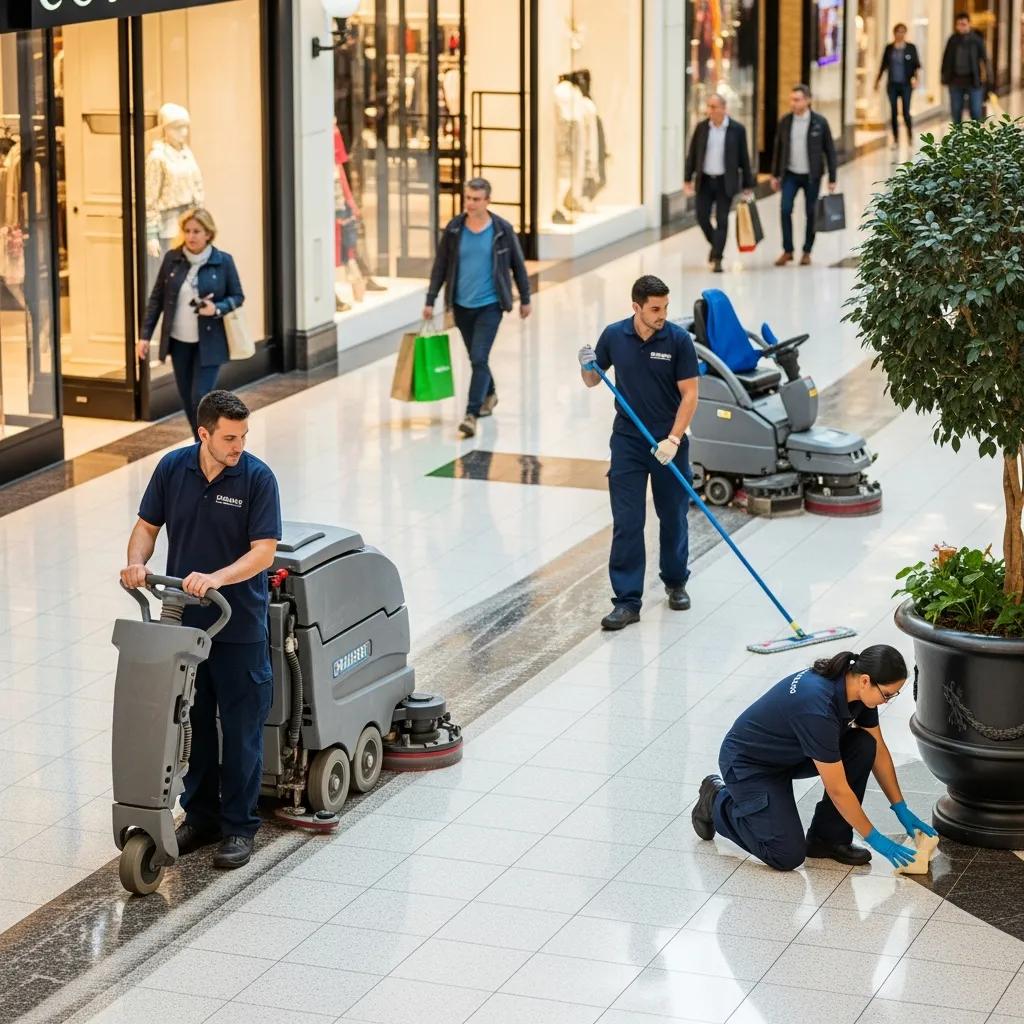
Retail cleaning concentrates on public concourses, food courts, tenancies and shared amenities with workflows designed for high throughput and visible results. Routine work includes sweeping and mechanical scrubbing of hard floors, façade and high-window cleaning as required, litter and recycling collection, wipe-downs of seats and fixtures, targeted high-touch disinfection and immediate spill response to keep access safe. Food-court duties add grease control, sanitising trays and tables between services, floor degreasing and scheduled deep cleans to manage odour and contamination—reducing interruptions for tenants and improving shopper perception. We coordinate closely with tenant hours and have clear response protocols to resolve incidents quickly so centre operations continue without disruption.
The next section explains why office and health-focused spaces in mixed-use centres need different procedures and documentation to manage health risk and compliance.
Specialised Office and Medical Centre Cleaning Solutions
Cleaning for offices and medical suites inside a shopping centre prioritises sanitisation, cross-contamination controls and traceable procedures. Teams use dedicated cleaning kits, single-use consumables where appropriate, PPE for clinical areas and intensified disinfection for high-touch points and shared equipment. We maintain cleaning logs, checklists and scheduled audits to demonstrate compliance and give managers confidence that sanitisation regimes were followed—an important audit trail for tenant trust and incident review. Staff servicing these tenancies receive targeted training and handover protocols so the differences between retail and medical cleaning are respected and consistently applied.
We’re a professional commercial cleaning company servicing the Sunshine Coast and Brisbane regions (including Minyama Shopping Centre). Our core services cover shopping centres, offices, retail outlets and medical centres. Key strengths: experienced staff, flexible scheduling, tailored cleaning plans, reliable delivery and clear communication—backed by local knowledge and regional expertise.
The service descriptions above clarify what’s included; the table below helps compare service types and pick the right frequency and deliverables for each area.
Different service types match recurring tasks and outcomes in ways that help procurement weigh cost against impact.
| Service Type | Recommended Frequency | Typical Tasks and Deliverables |
|---|---|---|
| Retail Floor Care | Daily to multiple times per day (high-footfall) | Mechanical scrubbing, spot cleaning, anti-slip treatments, visible floor finish |
| Food Court Cleaning | Multiple times per day + nightly deep clean | Table and tray sanitation, grease control, floor degreasing, waste sorting |
| Back-of-House Sanitation | Daily + event-driven deep cleaning | Waste consolidation, staff-area cleaning, spill response, odour control |
Use the table to match service intensity to operational risk and the guest experience. The section below explains how we maintain consistent quality and reliability across all services.
How Does Divine Ensure Quality and Reliability in Commercial Cleaning?
Reliable cleaning comes from trained staff, consistent site procedures and measurable inspections. Our quality approach is a closed-loop system: recruit and train, deploy site-specific plans, run regular inspections and audits, then report results and implement corrective actions. This reduces variability and delivers predictable outcomes—consistent cleanliness scores, fewer complaints and faster incident resolution. Below are the core staffing, planning, scheduling and communication practices that support dependable service delivery.
Experienced Staff and Customised Cleaning Plans
Skilled personnel are the foundation of reliable cleaning. We vet and train teams, run competency checks and use shadowing during onboarding so every cleaner understands site protocols and safety requirements for retail and medical areas. A customised cleaning plan begins with a site audit that maps traffic flows, tenant needs and risk zones, then sets frequencies, equipment and KPIs tied to visible outcomes such as floor slip ratings and restroom cleanliness. Plans are reviewed after peak periods or tenant changes to keep services aligned with operational realities and prevent performance drift.
Next we explain how scheduling and communication keep cleaning low-disruption and fully transparent.
Flexible Scheduling and Transparent Communication
Flexible scheduling protects trading hours and visitor experience by using after-hours shifts, staggered teams and quiet windows for noisy tasks. Communication tools—daily shift reports, weekly summary dashboards and incident alerts—give management real-time visibility and speed response for unexpected issues. Best-practice workflows include response-time targets for urgent problems, monthly KPI reviews and an escalation matrix for repeat issues. These practices reduce tenant friction and let centre managers measure their cleaning partner’s reliability against agreed service levels.
- Structured Onboarding: Comprehensive training and competency checks for all cleaners.
- Routine Inspections: Scheduled audits with documented pass/fail KPIs and corrective actions.
- Operational Reporting: Daily shift logs and monthly performance summaries for managers.
These QA measures create transparency and continuous improvement. The next section covers the environmental and operational benefits of green cleaning.
Why Choose Eco-Friendly Cleaning Services for Minyama Shopping Centre?

Eco-friendly cleaning lowers chemical exposure for tenants and visitors and meets growing sustainability expectations from shoppers and corporate tenants. Practical steps include low-VOC detergents, microfibre systems that reduce chemical use and waste-diversion practices that cut landfill. Together these improve indoor air quality and shrink the centre’s operational carbon footprint. For operators, sustainable cleaning supports CSR objectives and can reduce compliance risk around hazardous substances. Below we outline tenant and operational benefits and summarise Divine’s green-cleaning approach.
Benefits of Sustainable Cleaning Practices
Sustainable cleaning delivers real benefits: fewer airborne irritants, reduced chemical waste and a stronger reputation with eco-conscious customers. Microfibre systems and concentrated dosing lower water and chemical use, improving efficiency and cutting supply costs over time. Safer products and fewer VOCs can also reduce staff sick days, which helps tenants and overall centre productivity. These advantages make green cleaning a strategic choice for operators balancing cost, compliance and tenant satisfaction.
Divine’s Commitment to Green Cleaning Solutions
Our regional experience guides practical choices that improve outcomes without compromising hygiene. We combine experienced staff and flexible schedules with green practices like reduced-chemical protocols, microfibre cleaning and robust waste management. These commitments become documented green-cleaning plans detailing product types, dosing and staff training to ensure correct application and measurable environmental gains. Adopting these methods helps centres demonstrate a credible sustainability stance while keeping standards high.
To compare eco-friendly options alongside scope and frequency, the next section explains typical packages and the cost factors to consider.
Green cleaning offers operational savings and tenant-facing benefits that protect long-term facility value and match customer expectations.
What Are the Typical Costs and Service Packages for Shopping Centre Cleaning on the Sunshine Coast?
Understanding cost drivers helps procurement evaluate bids on value rather than price alone. Key factors include centre size, foot traffic, service frequency, specialist tasks (like hard-floor polishing) and after-hours coverage. Pricing is modular: baseline recurring services plus add-on specialist work so managers can scale services with occupancy and events. The table below describes common package tiers, typical inclusions and indicative guidance to help with initial budgeting. After the table we summarise what pushes costs up or down so you can prioritise spend for greatest impact.
Service packages are structured to fit operational needs and budgets while allowing clear upgrades for extra tasks or higher frequencies.
| Service Package | Included Tasks | Typical Price Range / Frequency |
|---|---|---|
| Basic | Daily walkway cleaning, trash removal, restroom refresh | Indicative: lower-frequency; suitable for small centres or limited areas |
| Standard | Daily floor care, multiple daily restroom servicing, food-court mid-shifts | Indicative: moderate-frequency; balances price and coverage |
| Premium | Continuous high-footfall coverage, hard-floor maintenance, specialist deep cleans | Indicative: higher-frequency; for busy centres or premium tenant mixes |
These package outlines show typical procurement options; actual pricing depends on site specifics such as total square metres, tenant requirements and the need for security-cleared after-hours staff. Below are the main factors that influence price and how to evaluate bids for overall value.
Cost drivers often include layout complexity, surface types, required frequencies, and specialist equipment or certifications (for example, medical tenancy cleaning). Those elements determine resource intensity and total cost.
We are a professional commercial cleaning company serving the Sunshine Coast and Brisbane regions (including Minyama Shopping Centre). Our core services cover shopping centres, offices, retail outlets and medical centres. Key strengths: experienced staff, flexible scheduling, tailored cleaning solutions, reliability, transparent communication and regional expertise (see our Mons QLD commercial cleaning page for local references).
The pricing overview above helps managers set realistic expectations. The next section gives recommended cleaning frequencies to support procurement and scheduling.
How Often Should Shopping Centres Like Minyama Be Professionally Cleaned?
Frequency should reflect each area’s function, footfall and tenant needs so hygiene and safety are maintained without overspending. The principle is risk-based allocation of cleaning effort. High-traffic concourses and food courts need multiple daily visits; restrooms require frequent checks for hygiene and supplies, while back-of-house areas benefit from daily attention with weekly deep cleans. The table below gives recommended frequencies and the rationale so managers can build schedules that balance cost and performance. After that we outline practical after-hours options to reduce disruption.
| Area Type | Recommended Frequency | Rationale / Benefits |
|---|---|---|
| Public concourses | Multiple times per day | Maintains appearance, reduces slip hazards, supports positive shopper perception |
| Food courts | Multiple times per day + nightly deep clean | Controls grease/odour, reduces contamination risk, preserves table turnover |
| Restrooms | Hourly to multiple times per day | Protects public health, reduces complaints, improves compliance |
| Back-of-house | Daily + weekly deep clean | Keeps staff areas sanitary, reduces pest risk, supports operations |
These recommendations are a baseline for procurement and scheduling. The next subsection explains practical after-hours options that protect trading hours while allowing intensive cleaning work.
Recommended Cleaning Frequencies for Retail and Office Areas
Retail concourses typically need sweeping and spot cleaning several times daily, with a nightly mechanical scrub and daily visual checks to clear spills quickly. Office and tenancy areas usually require end-of-day cleaning plus daytime trash removal and workstation sanitisation, with weekly deep cleans and periodic carpet extraction as needed. Food service areas require table-turnover cleaning during peak service times and an overnight heavy clean to remove grease and residues. Matching frequencies to peak periods and events concentrates resources where risk is highest and lets centres scale up coverage for predictable surges.
After-Hours Cleaning Services for Minimal Disruption
After-hours work uses staggered shifts, security coordination and low-noise equipment to perform intensive tasks—floor buffing, machine scrubbing and deep sanitation—without affecting trading. Logistics include security escorts for cleaners, lockable equipment staging and pre-authorised tenant access to keep after-hours work safe and traceable. After-hours programs also allow floor refinishing or large waste removal when customers aren’t present, reducing the risk of exposure to chemicals or wet floors. Managers should weigh the extra cost against the operational benefit of cleaner floors and fewer daytime interruptions when setting contract terms.
Balance the incremental cost of after-hours work with the value of uninterrupted trading and improved presentation when specifying contract terms.
Where Can Businesses in Minyama Request a Quote or Learn More About Divine’s Cleaning Services?
A simple, predictable quoting process helps centre managers compare offers and judge vendor fit by scope, frequency and measurable KPIs. Our typical three-step procurement flow is: a site assessment, a written proposal with scope and KPIs, and an onboarding schedule with an initial trial to validate performance. The steps below explain what information speeds up a quote and what to expect after you submit a request.
- Prepare site details: Total floor area, tenant count, operating hours and known problem areas.
- Request a site audit: Schedule a walkthrough to document traffic patterns and service constraints.
- Review proposal: Compare tasks, frequencies, KPIs and escalation procedures before awarding a contract.
These steps make procurement timelines clear and let managers evaluate proposals consistently. The subsection below lists details to include when requesting a quote to speed response times.
Contact Information and Quote Request Process
When requesting a quote, include: gross leasable area, number of restrooms, tenant count, average daily footfall (if available), preferred service windows and any specialist needs such as medical tenancy cleaning or event coverage. After you submit these details we’ll schedule a site visit to confirm assumptions and provide a written proposal that itemises tasks, frequencies, equipment and performance targets. Typical timelines move from proposal acceptance to onboarding and an initial audit period to confirm service levels and make any early adjustments. Providing accurate site information up front reduces revision cycles and speeds accurate pricing.
Client Testimonials and Case Studies from 2024-2025
There were no specific testimonials or case studies available to summarise here. When requesting proposals, ask suppliers for recent, verifiable case studies that include objective metrics—before/after cleanliness scores, inspection pass rates or complaint reductions—and client permission to share those results. Dated examples from 2024–2025 with measurable outcomes give procurement teams stronger evidence to benchmark expected performance. Always validate claims through references where possible.
We are a professional commercial cleaning company serving the Sunshine Coast and Brisbane regions (including Minyama Shopping Centre). Our primary services include commercial cleaning for shopping centres, offices, retail outlets and medical centres. Noted strengths: experienced staff, flexible scheduling, customised solutions, reliability, transparent communication and regional expertise (see our Mons QLD commercial cleaning page for local details).
This guide has covered service breakdowns, quality measures, green cleaning rationale, pricing frameworks and procurement steps to help Minyama Shopping Centre managers choose commercial cleaning services that deliver consistent, measurable results.
Frequently Asked Questions
What are the benefits of hiring a professional cleaning service for shopping centres?
Hiring a professional service improves cleanliness, safety and the overall shopper experience. Trained teams handle high-traffic areas efficiently, keep surfaces sanitised and remove hazards—reducing slips and complaints. A well-maintained centre also supports tenant sales and strengthens the centre’s reputation with visitors.
How can shopping centres ensure compliance with health regulations through cleaning?
Compliance comes from documented cleaning protocols, trained staff and regular audits. Maintain cleaning logs, sanitise high-touch areas and follow industry standards for restrooms and food courts. Using compliant products and keeping audit records helps demonstrate standards during inspections and supports tenant confidence.
What should shopping centre managers look for when selecting a cleaning service?
Look for experience in commercial and retail environments, flexible scheduling, and the ability to tailor services to your needs. Check cleaning methods (including green options), review client case studies and confirm transparent pricing and communication processes. Clear KPIs and reporting are essential for measuring performance.
How do eco-friendly cleaning practices impact shopping centre operations?
Eco-friendly practices reduce chemical exposure, improve indoor air quality and support sustainability goals. They can lower supply and water costs over time and enhance the centre’s appeal to eco-conscious tenants and shoppers—while maintaining hygiene standards when correctly implemented.
What are the common challenges faced in shopping centre cleaning?
Challenges include managing high foot traffic, coordinating around tenant trading hours, and meeting diverse cleaning needs across food courts, restrooms and back-of-house areas. Effective teams use clear schedules, strong tenant coordination and rapid response protocols to keep the centre operating smoothly.
How can shopping centres measure the effectiveness of their cleaning services?
Measure performance with cleanliness inspection scores, customer and tenant feedback, incident reports and adherence to service frequencies. Regular audits, KPI dashboards and direct tenant engagement provide a clear picture of service reliability and where adjustments are needed.
Partnering with a professional cleaning provider ensures Minyama Shopping Centre stays consistently clean, safe and inviting—improving visitor experience and supporting tenant operations. Tailored programs focused on high-traffic areas, backed by QA, transparent reporting and eco-friendly options, deliver measurable results. Contact us today to discuss a customised cleaning plan that meets your centre’s needs.

Dianne, originally from Rockhampton, hails from a business-oriented family, with her father owning electrical stores and her uncle serving as Mayor. Moving to the Sunshine Coast at 13, she later pursued a rewarding real estate career and raised three children. As a single mom, she balanced university studies with domestic cleaning work. Armed with a Bachelor’s Degree in Business, majoring in Supply Chain Management, Dianne founded and grew Divine Commercial Cleaning into a thriving company. Her success is rooted in strong family mentorship, a positive attitude, and a solution-oriented approach, offering tailored cleaning services with integrity and strategic insight.