Eco-friendly Commercial Cleaning in Mooloolaba — A Practical Guide to Green Cleaning Services
Eco-friendly commercial cleaning covers professional janitorial and facility services that favour biodegradable products, low‑VOC formulations and techniques that cut environmental harm while keeping workplaces clean and hygienic in Mooloolaba. This guide outlines why sustainable cleaning matters for Sunshine Coast businesses, how green chemistry and smarter operations lower health risks and ecological damage, which product groups to look for and how certifications back up environmental claims. Many businesses must balance strong hygiene with sustainability goals without raising costs or disrupting day‑to‑day work. Green cleaning answers that need by replacing harsh chemicals with biodegradable detergents and by using targeted protocols that protect indoor air quality.
You’ll find clear explanations of workplace health benefits, the environmental effects avoided, common biodegradable product types, how cleaning plans are tailored for offices, retail and medical centres, which certifications to request, and practical steps to get transparent quotes from local providers. The guide links practices, products and procurement so facility managers and business owners in Mooloolaba can compare suppliers and make decisions that match CSR priorities and regulatory expectations.
What Are the Key Benefits of Eco-Friendly Commercial Cleaning in Mooloolaba?
Eco-friendly commercial cleaning delivers measurable wins across staff health, environmental performance and business reputation. By swapping persistent, toxic chemicals for biodegradable cleaners and low‑VOC disinfectants, businesses reduce airborne and surface chemical residues. That lowers respiratory irritants for employees and visitors and reduces toxic runoff to municipal wastewater and nearby coastal waters—important for the Sunshine Coast. The immediate effect is better indoor air quality and fewer irritation‑related absences; the longer‑term effect is improved alignment with sustainability expectations from customers and partners. Together these outcomes strengthen staff wellbeing, customer perception and procurement competitiveness.
The main benefits at a glance:
- Better workplace health: Fewer VOCs and milder cleaners reduce respiratory irritation and allergy triggers.
- Lower environmental impact: Biodegradable formulas minimise aquatic toxicity and lingering residues.
- Stronger reputation & procurement edge: Clear CSR alignment builds trust and supports tender success.
Those benefits flow through to operational results like reduced sick leave, safer compliance in sensitive sites and a better public image—factors that guide product choices and service design across different facilities.
| Benefit | How it works | What it delivers |
|---|---|---|
| Health & safety | Low‑VOC disinfectants and non‑toxic surfactants cut airborne and surface contaminants | Fewer staff sick days; more comfortable spaces for clients |
| Environmental impact | Faster biodegradation in wastewater reduces aquatic toxicity | Protects nearby waterways and coastal ecosystems |
| Reputation & procurement | Transparent green practices and reporting back CSR claims | Competitive advantage when tendering and partnering |
This table ties each core benefit to its operating mechanism and the tangible value businesses gain, making trade‑offs easier to assess when switching providers or products.
How Does Green Cleaning Improve Workplace Health and Safety?
Green cleaning improves workplace health by cutting exposure to volatile organic compounds, persistent residues and harsh oxidisers that can trigger asthma, allergies and skin irritation. Using low‑VOC disinfectants combined with microfibre systems removes soils mechanically and chemically with a much lower toxic load, easing short‑term symptoms and helping people with respiratory sensitivities. Practical examples include switching to enzyme‑based carpet stain removers to avoid solvent fumes, and using HEPA‑filtered vacuums to trap particulates instead of spreading them—actions that lower allergen levels. These approaches also help meet occupational hygiene expectations in busy commercial sites by providing documented protocols that reduce incident risk and improve safety culture.
The health gains from green cleaning naturally connect to environmental benefits, since the same biodegradable chemistries that are safer for people also lessen downstream ecological harm when wastewater leaves a building.
What Environmental Impacts Are Reduced by Using Biodegradable Products?
Biodegradable cleaning products cut the build‑up of persistent chemicals in soil and waterways, reducing aquatic toxicity and the risk of bioaccumulation in marine life around Sunshine Coast catchments. When surfactants and disinfectants break down quickly under normal treatment‑plant conditions, ecosystems face lower chronic exposure and the pressure on wastewater systems is reduced. Compared with heavy‑duty conventional chemicals, biodegradable formulas often use plant‑derived surfactants and enzyme systems that tackle soils and organic stains without leaving long‑lasting byproducts. The overall effect is a smaller day‑to‑day environmental footprint and less contribution to coastal contamination—especially relevant in a marine‑adjacent area like Mooloolaba.
Lowering environmental impact also connects to procurement and certification, because objective standards and labelling let businesses confirm a provider’s products meet biodegradability and safety criteria.
Which Biodegradable Cleaning Products Are Used by Leading Commercial Cleaners?
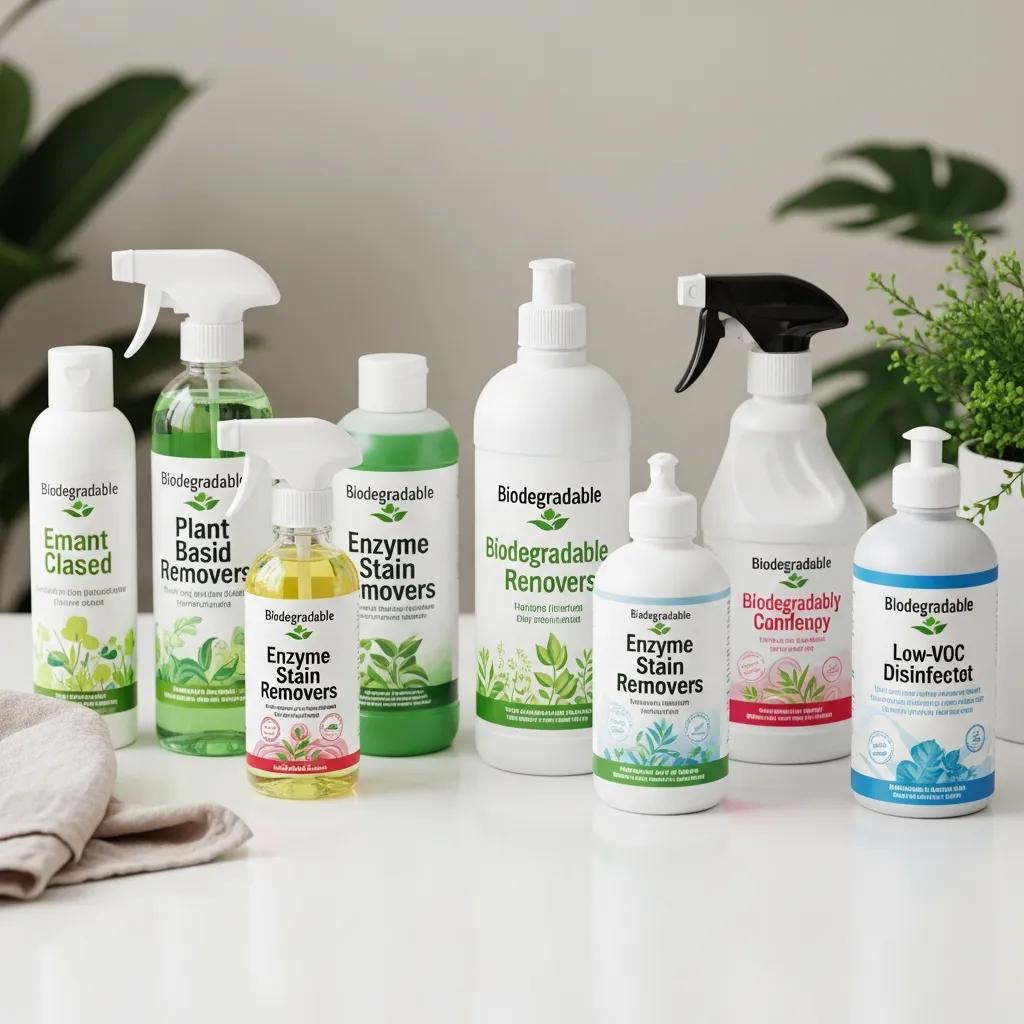
Top commercial cleaners typically use a mix of biodegradable products that cover everyday sanitation while limiting health and environmental impacts. Key categories include plant‑based all‑purpose cleaners, enzyme stain removers, low‑VOC disinfectants and floor‑care systems designed for biodegradability. These products work through enzymatic breakdown of organic soils, surfactant emulsification or low‑toxicity antimicrobial action—delivering effective cleaning without persistent residues. Product selection depends on contamination risk, surface compatibility and required sanitisation levels, so correct matching and dosing are vital to keep both performance and environmental benefits on track.
Common biodegradable product categories include:
- Plant‑based all‑purpose cleaners: Daily surface cleaning with low skin and respiratory irritation.
- Enzyme‑based stain removers: Remove organic stains on carpets and upholstery without solvents.
- Low‑VOC disinfectants: Control microbes at touchpoints and in restrooms with less airborne chemical load.
- Biodegradable floor‑care products: For high‑traffic floors that leave minimal environmental residue.
Here’s a compact comparison of common biodegradable products and where they add the most value.
| Product category | Typical use | Biodegradability / safety |
|---|---|---|
| Plant‑based all‑purpose cleaners | Desks, counters, glass | Break down quickly; low irritation risk |
| Enzyme stain removers | Carpets, upholstery, food spills | Targets organic matter; kinder wastewater profile |
| Low‑VOC disinfectants | Touchpoints, restrooms, shared equipment | Effective microbial control with reduced inhalation risk |
| Biodegradable floor‑care products | Vinyl, tile, sealed concrete | Durable finish; limited environmental persistence |
This table shows which product class suits each application and why biodegradability matters operationally—useful when facility managers balance cleaning performance with sustainability.
What Types of Eco-Friendly Cleaning Agents Are Effective for Offices and Retail Spaces?
Offices and retail spaces do well with plant‑based surfactant cleaners, enzyme spot treatments and microfibre systems paired with HEPA vacuuming to control particulates without spreading chemicals. Plant‑derived surfactants handle fingerprints and general soils on high‑touch surfaces, while enzyme formulas remove organic stains from fabrics and carpets with minimal solvent use. Microfibre and mechanical cleaning improve product efficiency by lifting soils physically, which lowers chemical volumes and occupant exposure. When choosing products, prioritise low‑odour formulas, clear biodegradability claims and compatibility with busy surface materials to avoid damage and keep occupants comfortable.
These choices naturally lead to weighing performance against traditional chemicals and understanding practical trade‑offs.
How Do Biodegradable Products Compare to Traditional Cleaning Chemicals?
For routine cleaning, biodegradable products often match—or come close to—the performance of traditional chemicals while offering clear safety and environmental benefits. In high‑risk medical situations, validated hospital‑grade agents may still be required. Conventional chemicals can deliver fast, broad‑spectrum action but typically bring higher VOCs, persistent residues and greater risk of respiratory irritation for occupants. Biodegradable alternatives reduce these downsides and, with correct protocols and dwell times, achieve equivalent cleanliness for most commercial tasks while cutting ecological impact. When you factor in lifecycle benefits—fewer sick days, lower PPE and compliance costs, and improved client perception—sustainable options often make economic sense despite small price differences.
Understanding these trade‑offs helps decide where biodegradables are suitable and where specialised chemistries remain necessary, shaping tailored cleaning plans for each facility type.
How Are Sustainable Office Cleaning Solutions Tailored for Different Commercial Environments?
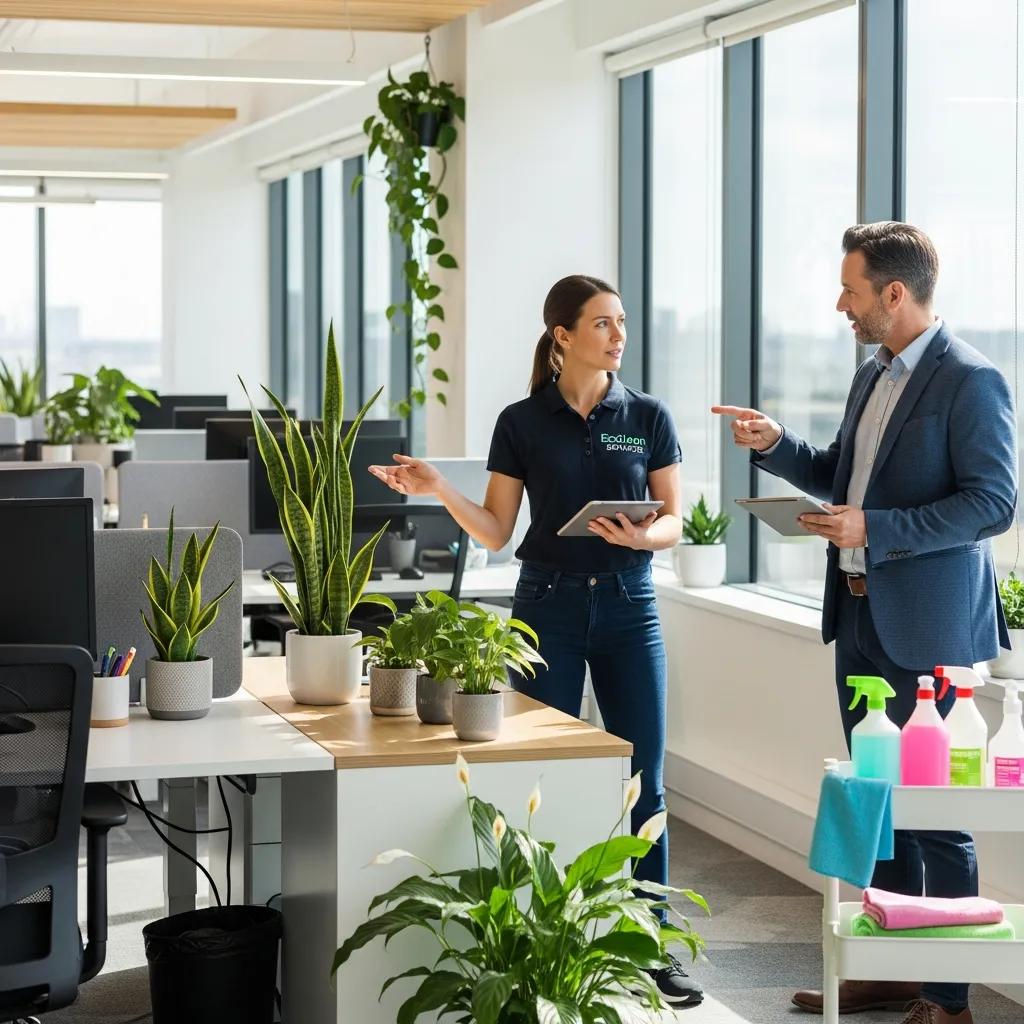
Sustainable cleaning plans start with an on‑site assessment that looks at foot traffic, contamination risk, surface types and occupancy patterns to set product choice, cleaning cadence and equipment needs aligned with environmental goals. Assessment‑driven customisation matches biodegradable agents and cleaning frequency to a facility’s risk profile so unnecessary chemicals are avoided while hygiene standards are met.
Providers usually offer modular options—daily general cleans, periodic deep cleans and event‑specific protocols—each with clear environmental and health benefits for the client.
| Environment type | Key adjustments | Sustainability focus |
|---|---|---|
| Corporate offices | Microfibre systems; low‑VOC daily cleans | Reduce airborne irritants; cut product use |
| Retail stores | Frequent touchpoint cleaning; floor maintenance | Keep appearance with biodegradable floor care |
| Medical centres | Enhanced disinfection cycles; validated procedures | Targeted infection control using appropriate agents |
This tailored framework helps maintain consistent quality while managing environmental impact and sets out how trained staff implement and audit these plans.
What Customised Cleaning Plans Are Offered for Medical Centers and Shopping Centers?
Custom plans for medical centres focus on validated disinfection workflows, more frequent touchpoint cleaning and strict documentation to meet clinical hygiene standards. Shopping centres need scalable high‑frequency cleaning for tills, corridors and amenities to balance appearance and safety. Medical sites use regulated disinfectants where required and pair them with biodegradable cleaners in non‑critical areas to lower overall chemical load. Shopping centres rely on robust floor‑care schedules, rapid stain response teams and frequent touchpoint cycles to manage heavy traffic without defaulting to harsher chemistries. Both plan types include reporting and audit trails to demonstrate compliance and environmental stewardship to stakeholders.
Delivering these specialised plans depends on skilled staff and reliable quality assurance processes to ensure protocols are followed and environmental gains are realised.
How Do Experienced Staff Ensure High Standards in Eco-Friendly Cleaning?
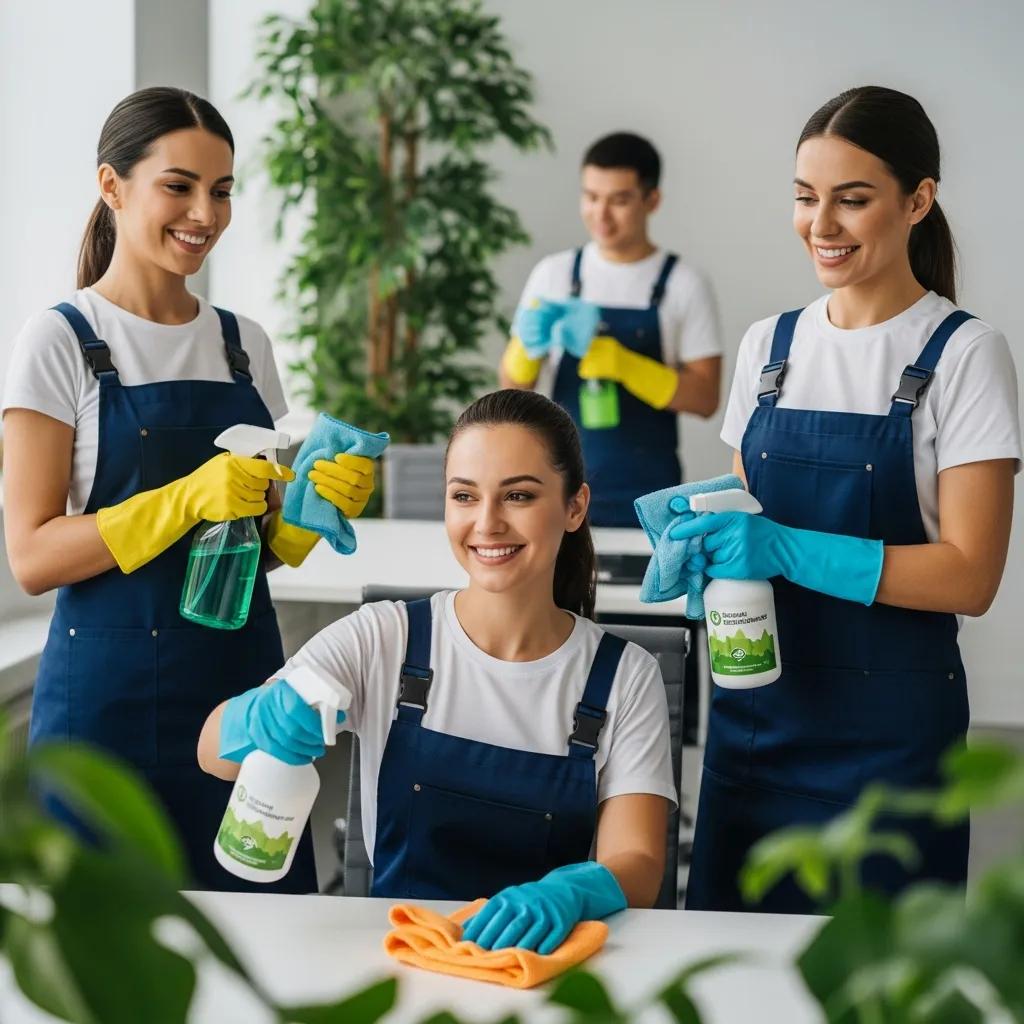
Experienced teams keep green cleaning standards high through thorough training in correct dosing, application, safety and the proper use of microfibre, HEPA vacuuming and eco‑friendly equipment, backed by regular quality audits and client reporting. Training covers the reasons for low‑volume dosing, correct disinfectant dwell times and safe storage to preserve product performance. Supervisors run scheduled inspections and use checklists to record performance metrics and corrective actions, ensuring sustainability measures are consistently applied. That operational discipline builds reliable results and gives clients confidence in their sustainable cleaning programs.
Discipline in training and QA ties directly to certification and verification practices that clients use to confirm green claims.
Local providers often highlight customised plans and trained teams as core strengths when matching services to a client’s sustainability goals.
What Environmental Certifications and Standards Support Green Commercial Cleaning Services?
Environmental certifications and standards give objective benchmarks for product safety, biodegradability and operational practice, helping buyers separate genuine green claims from marketing. Certifications typically cover ingredients, biodegradation testing, VOC emissions and manufacturing transparency—and they matter in procurement where tenders often require documented environmental performance. Standards also guide internal quality controls by setting measurable thresholds and by providing label claims facility managers can check when choosing suppliers. Knowing which certifications are credible and how to verify them is an important step when evaluating eco‑friendly cleaning services.
Below is a short table linking common certification types to what they verify and why that builds client trust.
| Certification / label | What it verifies | Client benefit |
|---|---|---|
| Product biodegradability label | Rapid degradation and low persistence | Reduces risk to aquatic environments |
| Low‑VOC / indoor‑air quality seal | Measured VOC emissions under set limits | Gives reassurance about indoor air quality |
| Green procurement standard | Supply‑chain transparency and verified ingredients | Supports CSR reporting and tender requirements |
This mapping helps procurement teams ask focused questions and request the right documentation to verify a provider’s green claims.
Which Certifications Validate the Use of Environmentally Safe Cleaning Methods?
Certifications that validate environmentally safe cleaning focus on product composition, biodegradability testing, VOC emissions and manufacturing transparency—metrics buyers can check. Validating a certification usually means asking providers for documented test results, batch records or third‑party verification statements and comparing label claims to recognised standards used in procurement. Prioritise certifications with independent testing rather than self‑declared badges; independent verification reduces risk and increases confidence in reported outcomes. Using verified certifications in procurement also smooths the tender process when sustainability criteria are weighted.
Certifications therefore guide product choice and shape contracting expectations for reporting and accountability.
How Do These Standards Influence Client Trust and Service Quality?
Standards act as trust indicators in procurement by lowering uncertainty about product performance and environmental impact, which reduces perceived risk when awarding contracts. Providers who can demonstrate compliance with recognised standards give clients confidence to include sustainability clauses, rely on consistent product performance and compare bids objectively. That reduces disputes over green claims and supports long‑term partnerships because standards enable measurable reporting on environmental KPIs. For businesses, certification‑backed services simplify CSR reporting and strengthen stakeholder assurance around environmental stewardship.
Standards therefore have practical procurement implications, shaping selection and ongoing contract management for sustainable cleaning services.
How Can Businesses Request Quotes and Engage with Eco-Friendly Commercial Cleaners in Mooloolaba?
Requesting quotes from eco‑friendly commercial cleaners works best with a straightforward three‑step approach—Request, Quote, Schedule—so businesses get comparable proposals that reflect sustainability goals. Start by providing facility details (type, area, occupancy and desired frequency). The provider will then do a site assessment or virtual review, produce a tailored proposal listing products and protocols, and explain onboarding and reporting. Agreeing a clear timeline for proposals and onboarding keeps disruption to a minimum and sets expectations for initial performance checks and any adjustments.
The short step‑by‑step process below is designed for quick action:
- Request: Share facility details (size, layout, occupancy, special needs).
- Quote: Receive a detailed proposal with recommended products, frequencies and pricing.
- Schedule: Confirm start date, onboarding steps and QA checks.
For businesses in the Sunshine Coast and Brisbane regions, Divine Commercial Cleaning provides tailored eco‑friendly commercial cleaning plans delivered by trained teams, with clear communication and an easy quote process to produce timely proposals—request a quote to explore options for your Mooloolaba facility.
What Is the Process for Transparent Communication and Easy Quote Requests?
A clear quoting process asks clients for a concise facility brief, allows a site visit or virtual walkthrough and delivers a written proposal within an agreed timeframe—typically a few business days depending on complexity. Accurate quotes need basic inputs: total area, cleaning frequency, high‑risk zones (for example, medical suites), operating hours and any sustainability or certification requirements. Providers should state response times, scope of work, proposed product categories and onboarding steps, and set a schedule for initial quality checks after starting. Predictable communication and timelines reduce ambiguity and speed up decision‑making for busy managers.
Checklist to include with a request:
- Facility square metres and layout
- Daily/weekly cleaning frequency and high‑traffic areas
- Specific disinfection or material compatibility needs
- Any certification or reporting requirements
Clear upfront information makes the path from quote to scheduled service smooth and ensures both parties share expectations about environmental and operational outcomes.
How Do Testimonials and Case Studies Demonstrate Service Success?
Good case studies and testimonials show measurable results—fewer sick days, improved air‑quality readings or documented reductions in chemical use—and give prospective clients real evidence that sustainability goals were met in similar settings. A concise case study includes the initial challenge, the green cleaning approach taken and quantifiable outcomes or client feedback, helping procurement teams assess relevance quickly. Testimonials should call out reliability, responsive communication and verifiable green claims (for example, referencing certification or reporting) rather than vague praise. Including these materials with proposals and audits strengthens buyer confidence and speeds up contracting decisions.
Presenting outcome‑focused evidence helps organisations check a provider’s claims and ensures green cleaning commitments become measurable operational improvements.
Frequently Asked Questions
1. What should businesses consider when choosing an eco-friendly cleaning service?
Look for a supplier who shows a genuine commitment to sustainability: ask what biodegradable products they use, which certifications they hold and how their methods (low‑VOC, non‑toxic agents, microfibre systems) match your needs. Check their industry experience, ability to customise plans and track record for hygiene and environmental responsibility. Clear communication and a transparent quote process are essential to make sure expectations are met.
2. How can businesses ensure the effectiveness of eco-friendly cleaning products?
Choose products that have independent performance testing or recognised certifications and confirm they’re suitable for the surfaces you have. Train staff on correct application and dosing, and carry out regular audits and feedback cycles to measure outcomes and tweak protocols. Proper technique and quality checks are as important as the product itself.
3. Are eco-friendly cleaning products more expensive than traditional options?
Some eco‑friendly products can cost more up front, but the total cost of ownership often favours sustainable options. Lower health risks, fewer sick days, reduced PPE and compliance costs, plus reputation benefits, can offset initial price differences. Consider lifecycle savings and business value, not just sticker price.
4. What role do certifications play in selecting eco-friendly cleaning services?
Certifications provide objective proof of product safety, biodegradability and environmental impact and help distinguish verified claims from marketing. Recognised certifications matter for compliance in sensitive environments and make it easier to include sustainability criteria in tenders. Prioritise third‑party verified labels over self‑declared claims.
5. How can businesses measure the success of their eco-friendly cleaning initiatives?
Measure outcomes such as reduced absenteeism, lower chemical consumption, improved air‑quality data and client satisfaction. Use routine audits, staff feedback and KPI reporting, and document results in case studies or reports to demonstrate value to stakeholders.
6. What are the common misconceptions about eco-friendly cleaning products?
Common myths are that eco‑friendly products don’t work or are always more expensive. In many cases they match conventional performance for routine cleaning and offer significant health and environmental benefits. While some options cost more initially, long‑term savings and improved workplace wellbeing often balance the equation. Education and proper application help overcome these misconceptions.
7. How can businesses engage their employees in eco-friendly cleaning practices?
Start with training and awareness sessions that explain the benefits of biodegradable products and correct techniques. Invite staff feedback and suggestions, recognise contributions to sustainability and create simple procedures that make eco‑friendly choices easy to follow. Small incentives and visible results help build a culture of sustainability.
Switching to eco‑friendly commercial cleaning in Mooloolaba improves workplace health and cuts environmental impact while supporting corporate sustainability goals. Choosing biodegradable products and tailored cleaning plans boosts indoor air quality and strengthens your reputation with clients and stakeholders. Working with certified providers gives you transparency and accountability, making compliance easier. Ready to make the change? Request a quote to see how an eco‑friendly cleaning plan can work for your business.

Dianne, originally from Rockhampton, hails from a business-oriented family, with her father owning electrical stores and her uncle serving as Mayor. Moving to the Sunshine Coast at 13, she later pursued a rewarding real estate career and raised three children. As a single mom, she balanced university studies with domestic cleaning work. Armed with a Bachelor’s Degree in Business, majoring in Supply Chain Management, Dianne founded and grew Divine Commercial Cleaning into a thriving company. Her success is rooted in strong family mentorship, a positive attitude, and a solution-oriented approach, offering tailored cleaning services with integrity and strategic insight.