Comparing Commercial Cleaning in Nambour: What Your Business Needs to Know
Cleaning standards in Nambour touch workplace safety, compliance and how customers perceive your business. This guide shows how to compare local providers so you can choose confidently. You’ll get practical metrics to measure performance, an overview of trends that affect results, how services vary by business type, common pricing and contract approaches, and where to find trustworthy reviews. We focus on observable attributes—training, product standards, scheduling and transparency—so decision-makers can balance risk, cost and operational impact when selecting a cleaner. You’ll also find clear steps to get like‑for‑like quotes, verify claims (including eco certifications and tech use) and draft SLAs that protect your interests. Finally, we highlight the local signals to prioritise when comparing bids across Nambour and the Sunshine Coast.
What Defines Quality in Nambour Commercial Cleaning Services?
Quality means delivering a consistently clean, safe and presentable workplace through trained people, repeatable processes and measurable outcomes. The right measures are objective—inspection scores, SLA compliance and surface tests—so both client and supplier have a clear accountability trail. A defined quality framework helps you compare providers on repeatable criteria and spot those relying on irregular or informal methods. The table below summarises common quality metrics, how they’re measured and practical benchmarks you can use when assessing local suppliers.
| Quality Metric | How it’s measured | Example benchmark |
|---|---|---|
| Cleanliness score | Scheduled inspections using a checklist | ≥90% pass rate on weekly audits |
| SLA compliance rate | Percentage of completed tasks vs agreed scope | ≥95% monthly completion rate |
| Staff competence | Training records and supervised shadow shifts | Verified training for all on‑site staff |
| Product/equipment standard | Inventory of eco‑certified products and equipment | Use of industry‑standard disinfectants and HEPA vacuum cleaners |
Use these benchmarks to turn vague expectations into verifiable requirements you can add to quotes and check on site. From here, it’s straightforward to drill into specific standards and how to operationalise them in contract terms.
Which Standards and Metrics Measure Commercial Cleaning Quality?
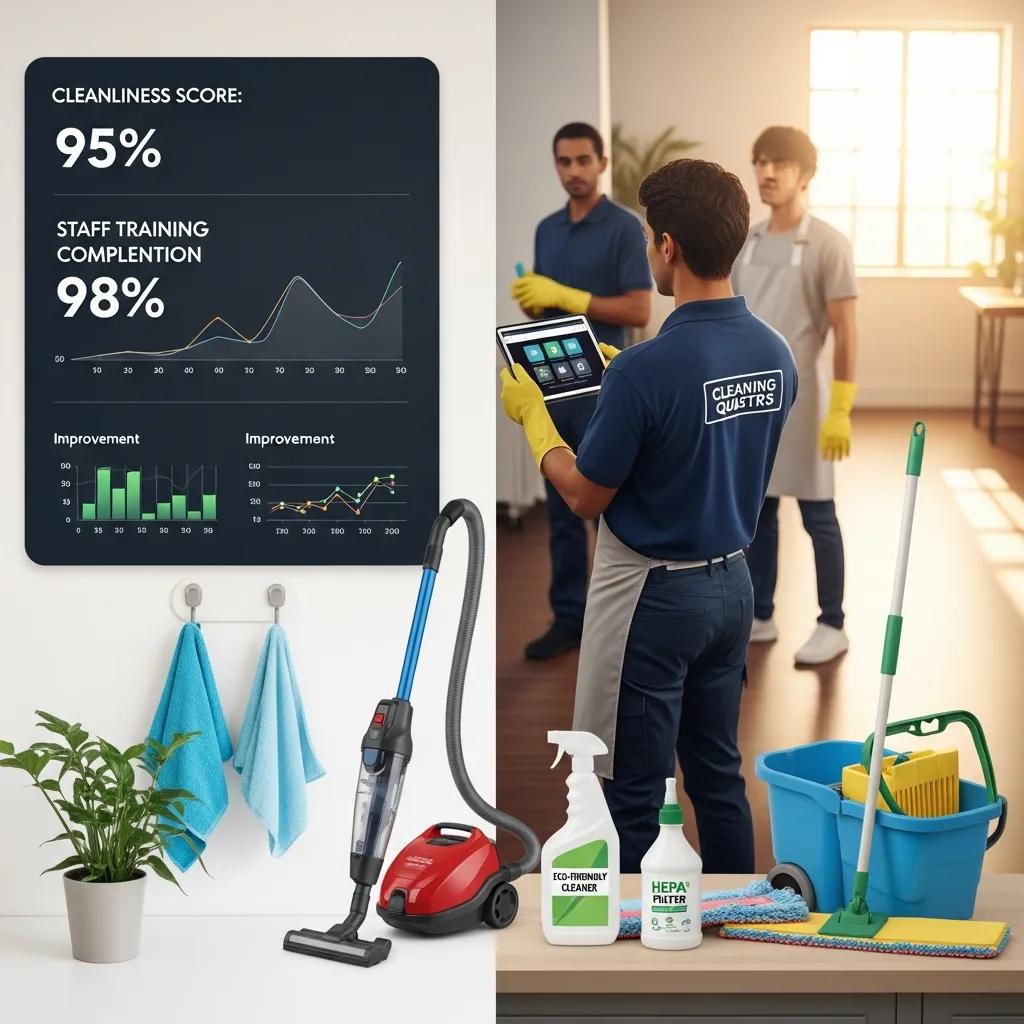
Standards and metrics make quality claims testable by turning tasks into KPIs—inspection pass rates, completion checklists, logged time‑on‑task and corrective‑action records. For higher‑risk areas (medical or food service), surface microbial testing and ATP swabs provide objective data; for offices and retail, routine checklist scores give day‑to‑day assurance. Typical benchmarks to ask for include SLA compliance ≥95%, weekly inspection scores above 90% and corrective actions closed within agreed timeframes. When you shortlist suppliers, request sample inspection reports and an audit schedule—those documents reveal how seriously a provider treats quality and influence product and environmental practice reviews.
How Do Eco-Friendly Practices Impact Cleaning Quality in Nambour?
Green cleaning can improve indoor air quality and reduce chemical residues, but effectiveness depends on the product’s proven performance and proper application—not on marketing claims. Many eco‑labelled products work well for routine cleaning and reduce irritation for occupants, but for critical disinfection you should ask for third‑party certification or efficacy data. Switching to green products can lower odor and sensitivity complaints and support sustainability goals, but procurement must guard against greenwashing by verifying product lists and performance reports. How a supplier documents product standards and staff training during the contract phase indicates whether eco claims are operational or merely promotional.
How Does Divine Commercial Cleaning Compare to Other Local Providers?
A straightforward, attribute‑based comparison helps you see where a provider stands relative to local norms. Focus on staff training, product standards, scheduling flexibility and pricing transparency to judge value and operational risk.
| Attribute | Typical local provider approach | Divine Commercial Cleaning |
|---|---|---|
| Staff training | Variable; much learned on the job | Experienced, trained cleaning teams |
| Cleaning products | Mix of conventional and unverified brands | Eco‑friendly and industry‑standard products |
| Scheduling | Fixed shifts that can disrupt operations | Flexible schedules to minimise business disruption |
| Pricing transparency | Quotes sometimes lack detail | Clear pricing and free, detailed quotes |
That comparison shows simple checks you can make during proposals and walkthroughs. Prioritise the attributes that reduce disruption and make operational performance measurable when you request quotes.
What Unique Value Propositions Does Divine Commercial Cleaning Offer?
Divine Commercial Cleaning highlights several practical strengths you should map to your needs: trained, experienced staff; eco‑friendly, industry‑standard products; flexible scheduling to avoid downtime; transparent pricing with free quotes; and a strong local presence backed by positive client feedback. These translate into buyer outcomes—fewer reworks from better training, balanced cleaning efficacy and occupant health from tested products, less interruption with flexible rosters, and simpler procurement with transparent pricing. Use these as benchmarks when asking providers for training matrices, product lists, scheduling options and sample quotes during shortlisting.
How Do Customer Testimonials Reflect Service Quality in Nambour?

Testimonials provide useful qualitative insights but require context to be actionable. The best feedback cites specific outcomes—fewer complaints, improved inspection scores, reliable night‑shift coverage—rather than generic praise. Dates and setting matter for relevance. Cross‑check testimonials with inspection records, references and KPIs to get a complete picture; recurring themes like punctuality, communication and attention to detail are strong indicators of consistent operations. There’s limited public Nambour‑specific case study material, so always ask shortlisted providers for recent references and recent audit samples to validate claims.
If you want a comparative quote, Divine Commercial Cleaning’s emphasis on transparent pricing and free quotes is a good example of the level of detail to request when evaluating local cleaners.
What Are the Pricing Models and Contract Details Among Nambour Commercial Cleaners?
Pricing usually follows a few standard models and contract formats that affect budget predictability and how easily you can compare bids. Typical frameworks include hourly labour rates, per‑square‑metre fees, flat packages for defined scopes and retainer/SLA arrangements. Contracts commonly cover notice periods, termination terms, scope inclusions/exclusions, insurance and a reporting cadence for inspections and corrective actions. The table below summarises everyday contract items, what’s typical locally and what you should expect to see in a transparent agreement.
| Pricing/Contract Item | Typical local approach | What businesses should expect / sample |
|---|---|---|
| Pricing model | Hourly or ad‑hoc quotes | Clear unit pricing (hour, sqm or package) with defined scope |
| Notice period | Variable; sometimes lengthy | Defined notice and documented handover procedures |
| Reporting | Occasional or informal | Regular inspection reports and corrective action logs |
| Insurance & liability | Often assumed, not shown | Proof of insurance and indemnity clauses in contract |
This contract checklist enables procurement teams to request specific items in bids and benchmark providers against minimum transparency standards. Clear terms reduce disputes and support consistent delivery.
How Transparent Are Pricing and Contracts in Local Commercial Cleaning?
Transparent quotes list the scope of work, unit prices for labour and materials, line‑item inclusions/exclusions and service frequencies—making like‑for‑like comparisons possible and reducing budget surprises. Red flags include vague terms such as “general cleaning” without frequencies, bundled add‑ons with no prices and open‑ended “additional tasks” clauses without rates. Below is a short checklist of what should appear in a clear quote.
- Detailed scope: Tasks and frequencies for every area covered.
- Unit pricing: Hourly rates or per‑square‑metre fees plus any material charges.
- Exclusions and extras: Explicit list of services that cost extra.
- Reporting cadence: How often inspection reports and issue logs are provided.
You can use this checklist to quickly screen proposals and request any missing details before shortlisting. The next step is turning a transparent quote into enforceable SLA terms.
What Should Businesses Expect in Commercial Cleaning Service Agreements?
Good service agreements formalise SLAs with measurable KPIs, inspection schedules, corrective‑action procedures, communication protocols and insurance evidence so performance is auditable and remedies are clear when standards slip. Expect SLA elements that specify frequency (daily/weekly/monthly), scope (areas and tasks), KPIs (inspection pass rates, response times) and reporting format (digital logs or inspection sheets). When negotiating, ask for trial periods with acceptance criteria, remedies for repeated failures and flexibility to adjust scope as your premises change. A short SLA checklist includes task frequency, KPI thresholds, reporting cadence, corrective‑action timelines and proof of insurance—items that make performance objective, not subjective.
Divine Commercial Cleaning highlights transparent pricing and free quotes as part of its approach; use free quoting to request sample SLAs and inspection reports during evaluation.
Which Commercial Cleaning Services Are Available for Different Business Types in Nambour?
Business verticals need tailored cleaning programs because priorities differ—presentation, infection control or throughput guide the specification. Matching services to needs ensures you contract the right capabilities. Below is a quick map of common business types and the services to request in a quote.
- Offices: Regular surface cleaning, waste management, carpet vacuuming, window cleaning and periodic deep cleans to keep presentation and hygiene standards up.
- Retail: Frequent floor care, display dusting, restroom sanitation and quick‑turn cleans during trading hours to protect the customer experience.
- Medical centres: Medical‑grade cleaning, validated disinfection protocols, contamination controls and full documentation to meet infection‑control expectations.
- Shopping centres: High‑traffic floor maintenance, waste logistics, external area cleaning and scheduled deep cleans for food courts and high‑use zones.
How Do Cleaning Needs Differ for Offices, Retail, Medical, and Shopping Centers?
Offices focus on consistent surface hygiene and presentation, with moderate task frequency, to support staff well-being. Retail needs rapid response during trading hours and attention to customer‑facing surfaces to protect brand image. Medical centres require stricter infection control, validated disinfectants and documented procedures—so training and certification are more critical. Shopping centres prioritise high‑footfall durability, efficient waste handling and frequent floor care to reduce slip risks and keep the environment attractive to shoppers. Understanding these differences informs cleaning frequency, product selection and inspection rigour, and leads into the catalogue of specialised services local providers may offer.
What specialised services do local cleaners offer?
Local firms commonly provide specialised services such as deep cleans, biohazard remediation, carpet restoration, high‑level dusting and UV sanitisation for enhanced disinfection in higher‑risk settings. Use deep cleans for re‑opening or seasonal refreshes; engage biohazard teams for regulated waste or contamination incidents; choose carpet restoration for long‑term wear and odour issues; and consider UV sanitisation as a supplement in high‑risk areas when validated protocols exist. For specialised work, ask providers for qualifications, equipment lists, method statements and expected turnaround times so you can verify capability and match outcomes to operational needs.
How Do Local Reviews and Ratings Influence Choosing Commercial Cleaning in Nambour?
Reviews and ratings offer social proof and can reveal recurring strengths or concerns, but treat them as one input alongside operational evidence, such as SLA reports and references. Ratings give a quick snapshot of satisfaction; detailed reviews and client references provide context—mentions of reliability, communication and remediation are especially useful. Cross‑check reviews across platforms and request direct references to reduce the risk of biased or fraudulent feedback. Combining channels gives a stronger basis for choice and points you toward providers with consistent, verifiable performance.
Where Can Businesses Find Reliable Reviews of Nambour Commercial Cleaners?
Good places to look include Google Business Profile listings, industry directories, local business associations and direct client references from providers. Google listings show volume and recency; directories may include verified details or endorsements; local networks and trade groups can provide peer references that are especially relevant in the Nambour context. To validate authenticity, compare themes across sources, check dates and request contactable references when possible. Using multiple channels reduces reliance on any single data point and builds confidence in your selection.
What Role Do Ratings Play in Assessing Cleaning Service Quality?
Ratings give a high‑level confidence signal but are limited without detail. A high average rating with vague comments is less valuable than a lower score supported by detailed, recent testimonials that document measurable outcomes. Combine rating scores with testimonial specificity, audit results and direct reference checks: high rating + specific outcomes + documented evidence = higher confidence. If ratings clash with documentation, prioritise verifiable operational records (inspections, SLAs, insurance) over aggregate stars—ratings should inform, not decide, your choice.
What Industry Trends and Compliance Standards Affect Commercial Cleaning in Nambour?
Key trends include rising demand for eco‑friendly solutions, adoption of technologies such as UV and electrostatic sprayers, and greater expectations for documented compliance and digital QA processes. These shifts require changes in skills, product choices, and how providers prove performance—for example, digital QA apps create auditable inspection trails. At the same time, certain technologies can improve coverage when used correctly. Regulatory and client expectations, especially in medical or food settings, increasingly require documented procedures, training records and proof of insurance. Knowing these trends helps you ask sharper questions in vendor selection and contract talks.
How are health regulations and certifications shaping cleaning services?
Health rules and certification expectations typically require written cleaning procedures, staff training records, infection‑control protocols for high‑risk areas and evidence of appropriate insurance and liability cover. Rather than relying on a single certificate name, look for demonstrable processes: method statements, training matrices and audit trails that show real compliance. Ask for copies of procedure documents, sample training records and recent inspection summaries. This documentation focus narrows the field to providers who operate transparently and reliably.
What New Technologies Are Enhancing Commercial Cleaning Quality?
Technologies such as UV sanitisation, electrostatic sprayers and digital QA/scheduling tools are helping cleaning teams improve coverage, efficiency and traceability—when used correctly. UV can supplement surface disinfection in targeted situations but must be validated for exposure time and safety. Electrostatic sprayers can improve droplet coverage for compatible disinfectants. Digital QA apps produce auditable inspection records that support continuous improvement. Ask vendors how they validate technology effectiveness, maintain equipment and share digital reports with clients.
Reviewing technology claims should lead to supplier verification steps and, near the end of the evaluation, confirmation of local presence and service arrangements.
Divine Commercial Cleaning presents attributes that align with these trends—trained staff, eco‑friendly and industry‑standard products, flexible scheduling, transparent pricing with free quotes, and a strong local presence supported by client feedback. Businesses seeking quotes can use these attributes as a template when shortlisting local providers. Request sample inspection logs, product lists and SLA templates during the free‑quote stage to confirm technology and compliance claims are operational, not just promotional.
What to request during quote stage
- Sample SLA and recent inspection report
- Product list indicating eco‑friendly or industry‑standard items
- Evidence of staff training processes and local client references
These requests turn promotional statements into verifiable selection criteria and help you make a defensible procurement decision.
Frequently Asked Questions
What are the benefits of using eco-friendly cleaning products in commercial cleaning?
Eco‑friendly products can improve indoor air quality and reduce staff and customer exposure to harsh chemicals. They’re often gentler on surfaces, which helps protect furnishings, and they support sustainability goals that matter to staff and clients. Ensure any green product is proven effective for the task—especially when disinfection is required—by requesting certification or efficacy data.
How can businesses ensure they are getting a fair price for cleaning services?
Request detailed, itemised quotes showing scope, task frequency and unit pricing. Compare multiple offers to understand local market rates, and request references and performance metrics to assess value. Knowing whether pricing is hourly, per square metre, or package‑based will help you negotiate terms that match your needs and budget.
What should businesses look for in a cleaning service contract?
Look for a clear scope of work, unit pricing, SLA details, notice and termination terms, insurance coverage and reporting requirements. The contract should specify task frequencies, KPIs and how issues are recorded and resolved. Clear, measurable clauses protect both parties and make performance discussions objective.
How often should commercial cleaning services be scheduled for different business types?
Frequency depends on use: offices generally require weekly or bi‑weekly attention for surfaces and waste; retail often requires daily cleaning during trading hours; medical facilities usually need daily or multiple-daily cleans for infection control; shopping centres benefit from daily maintenance plus periodic deep cleans for high‑use zones.
What role do certifications play in selecting a commercial cleaning provider?
Certifications can signal adherence to industry standards, but they’re most useful when backed by documented procedures and training records. Verify certificates and request supporting documents—method statements, training logs and audit trails—to confirm a provider’s operational capability.
How can businesses assess the effectiveness of a cleaning service?
Use regular inspections and KPI tracking—cleanliness scores, SLA compliance and client feedback—to measure performance. Request inspection reports, corrective‑action logs and periodic audits. Staff feedback on workplace hygiene is also a practical indicator of service effectiveness.
What are the common challenges businesses face when hiring commercial cleaners?
Common issues include vague scopes, hidden fees, inconsistent quality and poor communication. To avoid these, do your research, request detailed proposals, check references, and agree on measurable SLAs. Clear expectations and regular reporting reduce surprises and build a reliable partnership.
Knowing the right metrics and standards makes selecting a commercial cleaner in Nambour far easier. Prioritise verified eco‑friendly products, clear pricing and measurable SLAs to match cleaning services to your operational goals and risks. Working with local providers like Divine Commercial Cleaning can simplify procurement when you use free quotes to collect sample SLAs, inspection logs and product lists. Ready to secure a cleaner, healthier workspace? Request a free quote today.

Dianne, originally from Rockhampton, hails from a business-oriented family, with her father owning electrical stores and her uncle serving as Mayor. Moving to the Sunshine Coast at 13, she later pursued a rewarding real estate career and raised three children. As a single mom, she balanced university studies with domestic cleaning work. Armed with a Bachelor’s Degree in Business, majoring in Supply Chain Management, Dianne founded and grew Divine Commercial Cleaning into a thriving company. Her success is rooted in strong family mentorship, a positive attitude, and a solution-oriented approach, offering tailored cleaning services with integrity and strategic insight.