Post Construction Paint Removal and Debris Cleanup Services for Commercial Sites
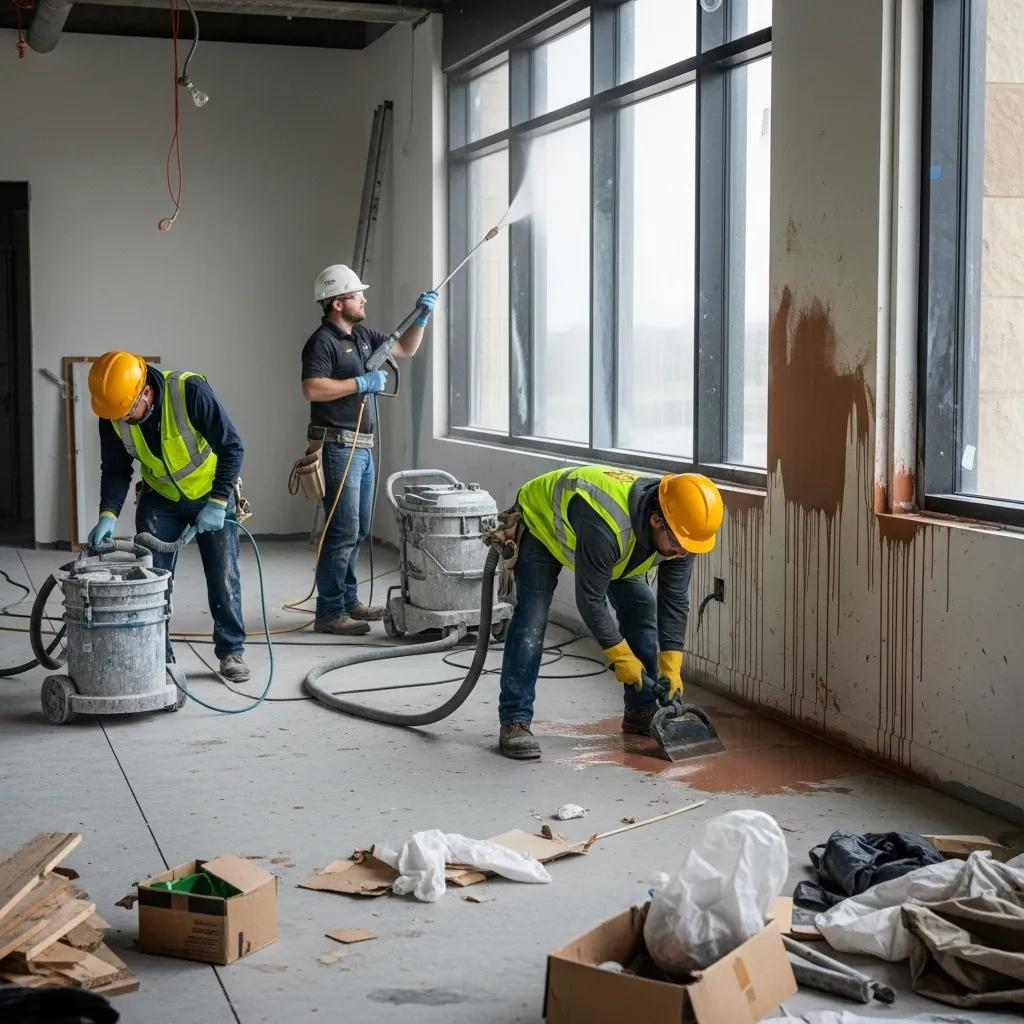
Post construction paint overspray and debris removal are specialised services that restore commercial sites to handover-ready condition by eliminating unintended paint deposits, particulate contamination and construction waste. This article explains the scope of post-construction cleaning, why it differs from routine janitorial work, and how targeted techniques reduce safety risks, prevent surface damage and speed project sign-off. Readers will learn to identify common overspray types and debris categories, assess appropriate removal methods for specific surfaces, and apply on-site waste-management best practices to remain compliant with WHS obligations.
Practical sections cover step-by-step paint removal approaches, eco-conscious solvent and mechanical options, handling of hazardous materials, and a detailed final clean-up checklist that supports inspections and tenant handover. Where relevant, brief references to local commercial cleaning capabilities are provided to illustrate real-world execution and next steps for requesting customised quotes across the Sunshine Coast and Brisbane. Read on for technical guidance, decision tables, and actionable lists you can use to scope, tender or supervise commercial post-construction cleaning.
What Is Post Construction Paint Overspray and Debris Removal?
Post construction paint overspray and debris removal refers to the targeted removal of unintended paint deposits, particulate build-up and leftover materials after construction, refurbishment or fit-out work. These services address airborne spray deposits, paint splatters, protective film residues and construction detritus that standard cleaning misses, and they focus on preventing surface etching, contaminant migration and occupational hazards. Effective removal reduces slip and trip risks, protects finished surfaces like glazing and timber, and shortens defects lists during client inspections. The next sections define common overspray and debris types and explain why specialist equipment and protocols are necessary to achieve a professional handover.
Paint overspray is one visible problem; construction detritus such as packaging and dust is another. Below is a concise checklist of typical included tasks that summarises the remit of post-construction paint and debris removal.
- Remove paint overspray from windows, metalwork and concrete.
- Capture and extract fine drywall and concrete dust from vents and surfaces.
- Segregate, contain and remove construction waste for compliant disposal.
- Final detail cleaning: fixtures, seals, floor edges and sanitary fittings.
These tasks form the operational baseline for final cleans and transition naturally to a discussion on the paint types that commonly create overspray challenges.
Which Types of Paint Overspray Affect Commercial Construction Sites?
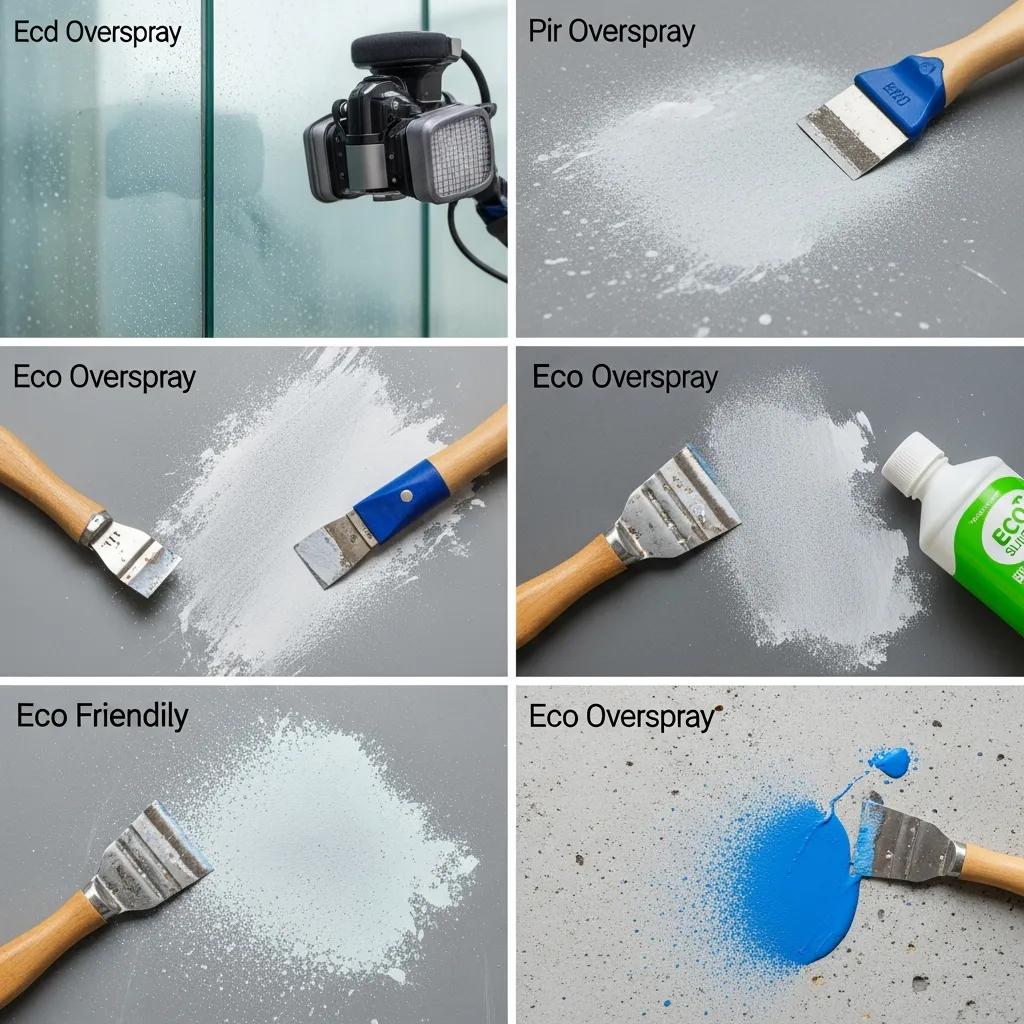
Paint overspray on commercial sites commonly originates from latex (water-based) paints, oil-based enamels, and epoxy coatings used for floors and structural elements. Latex overspray tends to bead on smooth, non-porous surfaces and can often be softened with water-based cleaners or mild solvents, while oil-based and epoxy overspray bond more aggressively and typically require stronger chemical action or mechanical removal. Epoxy residues cure hard and can abrade glazing and polished metal if removed incorrectly, so technicians assess paint chemistry before choosing an approach. Understanding these distinctions helps select whether a mechanical (scalpel, razor, buffing) or chemical (eco-friendly solvent, stripper) strategy is appropriate for each surface.
The following table maps common paint types to the surfaces they affect and recommended removal approaches for technicians and facility managers.
Intro: This table helps maintenance planners and cleaning technicians choose the most appropriate removal approach by paint chemistry and typical surface sensitivity.
| Paint Type | Typical Surface + Challenge | Recommended Removal Method |
|---|---|---|
| Latex (water-based) | Glass, painted metal: beads and film that can smear | Soft mechanical removal + mild detergent and water; follow with industrial glass cleaner |
| Oil-based enamel | Metal trim, joinery: adheres and leaves greasy residue | Low-abrasion solvent wipe with containment; test small area before broader application |
| Epoxy/Polyurethane | Concrete floors, coated surfaces: hard cured residues | Mechanical scraping or light abrasive buffing by specialist crews; chemical softener for small spots |
| Aerosol/Touch-up overspray | Fixtures and glazing: fine particulate layer | Dry extraction with HEPA vacuum then targeted solvent cleaning on test patch |
This mapping clarifies how paint chemistry informs safe removal techniques and prepares teams for surface-specific work that minimises damage and reduces rework risk.
What Kinds of Debris Are Common After Construction Projects?
Construction sites generate a broad range of debris categories that demand different handling and disposal paths, including packaging, offcuts, mortar and concrete fragments, drywall dust, loose fasteners and protective films. Fine dust such as drywall and concrete particles is particularly problematic because it migrates into HVAC systems and onto delicate finishes, requiring HEPA filtration and careful containment. Larger items like timber offcuts, pallets and packaging are recyclable in many cases but should be segregated to maximise diversion from landfill and to meet local waste requirements. Early on-site triage—separating recyclable materials, inert rubble and potential hazardous waste—reduces downstream costs and simplifies transport logistics.
Construction managers should use a simple triage workflow to sort debris quickly:
- Separate inert recyclable materials (metal, cardboard, timber) for recycling pickup.
- Contain and bag fine dust and hazardous-like residues for licensed disposal.
- Haul large inert debris to booked containers to avoid site congestion.
This triage step sets the stage for compliant disposal and efficient site clearance, which will be addressed in the waste-management practices section that follows.
How Does Divine Commercial Cleaning Execute Effective Paint Overspray Removal?
Effective paint overspray removal begins with a structured assessment that identifies paint chemistry, surface substrates and contamination extent before any intervention. Technicians perform small test patches to confirm solvent or mechanical compatibility, then select PPE, containment and extraction equipment to prevent cross-contamination during removal. The process typically uses a combination of dry extraction, controlled solvent application and gentle mechanical action to lift overspray without damaging substrates, followed by neutralisation and final surface protection where required. Results are measured by visual inspection, tactile checks and, when necessary, photographic records to support handover sign-off.
Divine Commercial Cleaning brings local, experienced crews to Sunshine Coast and Brisbane commercial projects and offers site assessments and customised quotes that align with these technical steps. Their family-owned operation emphasises reliability, environmentally conscious methods and tailored solutions without lock-in contracts, enabling clients to access professional overspray removal while maintaining project flexibility. The next subsection explains specific safe and eco-friendly methods used during paint cleanup.
What Safe and Eco-Friendly Methods Are Used for Paint Overspray Cleanup?
Practitioners increasingly prefer low-toxicity solvents, water-based emulsifiers and mechanical options that reduce volatile exposure and minimise solvent-contaminated waste. Eco-conscious solvents and biodegradable detergents can dissolve or soften many latex and light oil residues, while dry extraction and micro-abrasive pads handle particulate and cured spots without excess chemical use. Containment—using drop sheets, negative-pressure extraction and local exhaust ventilation—prevents migration of contaminants and protects adjacent areas and indoor air quality. Proper segregation and licensed disposal of solvent-contaminated waste avoid environmental harm and comply with local disposal protocols.
These methods highlight the trade-off between chemical efficacy and surface safety, which leads directly into surface-specific attention needed during paint spill cleanup.
Which Surfaces Require Special Attention During Paint Spill Cleanup?
Different materials require calibrated responses: glass and polished metals demand non-abrasive solvent wipes and razor-scraping at low angles; sealed timber and composite joinery respond to mild, pH-balanced cleaners and minimal moisture; and concrete may accept mechanical grinding or scabbling for cured films. Delicate fixtures and coated finishes should only be treated by technicians who can demonstrate prior success on similar substrates to avoid costly repairs. Escalation to specialist restoration is recommended where coatings protect heritage elements or where coatings are unknown; documenting before-and-after conditions with images supports claims and handover checks.
Surface-specific tactics ensure that overspray removal preserves finish integrity and reduces the chance of rework, which naturally transitions into site-wide debris management practices.
What Are the Best Practices for Construction Debris Removal and Waste Management?
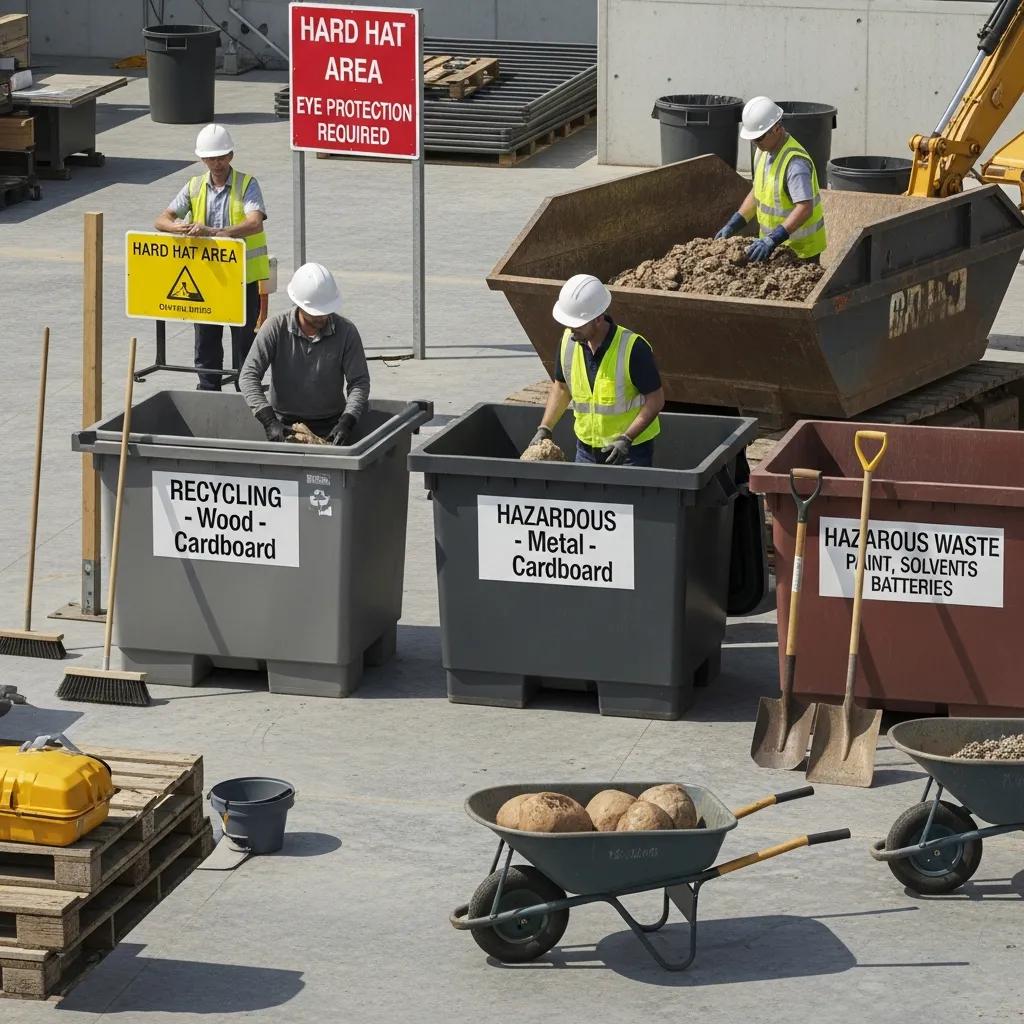
Best-practice debris removal follows a simple hierarchy: avoid, reduce, reuse/recycle and then dispose in licensed facilities when no alternative exists. On-site triage zones should be established early to separate recyclable materials from inert rubble and potential hazardous waste, supported by labelled containers and written handling procedures. Logistic planning—scheduling container deliveries, coordinating haulage windows and ensuring clear access—reduces project delays and keeps crews focused on timely handover. Documentation of disposal manifests and recycling receipts strengthens compliance with WHS and local authority requirements and reduces the risk of regulatory hold-ups.
Below is a practical decision table to help site managers determine handling and disposal methods for common debris types.
Intro: Use this table to guide quick on-site decisions about whether material is recyclable, inert, or requires licensed disposal, and to communicate handling needs to crews.
| Debris Type | Hazard Level / Recyclable? | Handling + Disposal Recommendation |
|---|---|---|
| Cardboard & Plastic Packaging | Low / Recyclable | Flatten and store separately for scheduled recycling pickup |
| Timber Offcuts | Low / Recyclable (if untreated) | Bundle for recycling or reuse; treat as waste if chemically treated |
| Concrete Rubble | Low / Inert | Collect in designated skip and transport to inert waste facility |
| Solvent-Soaked Rags | High / Not recyclable | Double-bag and use licensed hazardous waste contractor for disposal |
| Drywall Dust | Medium / Not recyclable | Contain, HEPA-vacuum and dispose per local guidance; avoid open transfer |
How Is Hazardous Construction Waste Safely Handled and Disposed?
Hazardous construction waste—such as solvent-soaked materials, certain adhesives and contaminated absorbents—requires containment, labelling and engagement of licensed hazardous waste contractors for transport and disposal. Best practice includes segregation at source, use of impermeable containers, clear hazard labelling and delivery to authorised facilities that generate manifests and disposal records. WHS documentation should list the waste stream, containment method and responsible personnel, and teams should consult Safe Work Australia or local authority resources for legal requirements rather than relying on informal guidance. Engaging experienced hazardous waste contractors early avoids delays and reduces compliance risk.
Proper hazardous handling protects health and project timelines, and underlines the operational benefits of hiring professional debris removal services described next.
What Are the Benefits of Professional Debris Removal Services?
Professional debris removal brings operational efficiency, safety controls and predictable outcomes that ad-hoc approaches rarely match. Experienced providers reduce project delays through scheduled crews, appropriate container selection and efficient hauling logistics, and they improve WHS outcomes by enforcing PPE, dust control and safe handling of heavy items. Financially, professional services often offset costs through faster handover, reduced snagging work and potential material recycling value recovery. The predictable documentation and manifesting these contractors supply also supports client audits and regulatory compliance.
Understanding these benefits clarifies why structured cleaning and waste management are integral to construction close-out, leading to an examination of why businesses should choose professional post-construction cleaning services.
Why Choose Professional Commercial Post Construction Cleaning Services?
Professional commercial post-construction cleaning offers specialised equipment, trained staff and quality controls that produce a safe, presentable and inspection-ready building faster than internal teams or ad-hoc vendors. Specialists understand how to protect finishes during aggressive cleaning tasks, how to sequence work to avoid re-soiling, and how to document completion to assist with handover. Predictable scheduling and defined deliverables reduce disputes over scope and quality, and professional crews can adapt to project timelines without creating bottlenecks. These advantages are particularly important for commercial projects where tenant access, safety and tight handover windows matter.
Divine Commercial Cleaning reinforces these points through practical customer-focused policies: the company provides customised cleaning plans without lock-in contracts, employs experienced professional cleaners, and offers a satisfaction guarantee while prioritising environmentally conscious practices on Sunshine Coast and Brisbane projects. The following subsections explain how customised planning works and summarise the company’s local value proposition.
How Does Customised Cleaning Ensure Optimal Results Without Lock-In Contracts?
Customised cleaning scopes start with a site-specific inspection that matches cleaning tasks to the project phase, surface types and client priorities, creating measured deliverables that can be flexed as projects evolve. Flexible scheduling allows clients to book activity-based cleans (for example, after painting or before fit-out handover) rather than committing to long-term contracts that may not align with project duration. Clear inspection checklists and acceptance criteria minimise ambiguity, and transparent pricing tied to scope adjustments keeps budgets predictable. This tailored, no lock-in approach suits commercial projects where timelines and scopes commonly shift.
Flexible scoping increases accountability and reduces wasted spend, which supports local teams and leads to the company’s satisfaction guarantees and response capabilities discussed next.
What Satisfaction Guarantees and Local Expertise Does Divine Commercial Cleaning Offer?
Divine Commercial Cleaning operates as a family-owned business based in Maroochydore, QLD, serving the Sunshine Coast and Brisbane with local crews that understand regional logistics and compliance expectations. The company emphasises reliability, environmentally conscious methods and a satisfaction guarantee that underpins their quality control processes. Local knowledge helps with rapid mobilisation and scheduling in the area, particularly for projects with tight handover windows, and the combination of experience and local presence helps reduce coordination friction. Clients are invited to request site assessments or quotes to confirm exact coverage and service fit.
Local expertise and guarantees provide practical assurance for construction managers and segue naturally into the downloadable-style final clean-up checklist that follows.
What Is Included in a Final Construction Clean-Up Checklist?
A final construction clean-up checklist organises room-by-room tasks, dust control measures, and verification steps required for handover readiness, ensuring nothing is overlooked before client inspection. The checklist covers glazing and window cleaning, floor preparation and sealing, fixture polishing, HVAC vent extraction, sanitaryware sanitisation and final dust wipings, together with photographic sign-off and documentation. Including tools required and frequency notes helps on-site supervisors verify completion and supports claims handling if post-handover issues arise. A concise checklist saves time during snagging inspections and creates a defensible record of completion for all stakeholders.
Below is an actionable room-by-room highlight list that teams can adapt into a downloadable handover checklist.
- Windows & Glazing: Remove overspray, polish seals, and verify no etching.
- Floors: HEPA-vacuum dust, remove paint spots, and prepare for sealing or final finish.
- Fixtures & Joinery: Wipe, polish and verify protective films removed from hardware.
- HVAC & Vents: HEPA extract ducts/vents and replace filters where needed.
- Sanitary & Kitchen Fitouts: Sanitise surfaces and confirm proper waste removal.
This numbered list outlines the core focus areas and introduces the structured table below that details tasks, frequency and tools.
Intro: The following table translates room-level items into actionable tasks with frequency and tools for operational teams and cleaning supervisors.
| Area or Item | Cleaning Task | Frequency / Notes / Tools Required |
|---|---|---|
| Windows & Glazing | Overspray removal, streak-free polish | Single final pass; glass scraper, eco-solvent, lint-free cloths |
| Floors (concrete, tiles) | Dust extraction, paint spot removal, prepare for seal | HEPA vacuum, mechanical scrubbers, solvent pads as needed |
| HVAC & Vents | HEPA vacuuming and surface wipe | Prior to handover; HEPA vacuum, gloves, masks |
| Fixtures & Joinery | Detail cleaning and hardware polish | Final pass; microfibre, mild detergent, touch-up tools |
| Sanitaryware | Disinfection and polish | Final disinfection; approved sanitiser and polishing pads |
Which Areas Are Critical for Dust, Sanitisation, and Surface Cleaning?
Critical zones for dust control include HVAC systems, vents, suspended ceilings and high ledges where dust settles unseen and later migrates during occupancy. Sanitisation focus should prioritise sanitary areas, break rooms and any healthcare or food-prep fitouts where microbial control is required; secondary focus is on touchpoints such as door hardware and access panels. Visual inspection supported by simple checks—wipe tests for dust and a final odour/surface feel test—helps validate cleanliness prior to sign-off. Prioritising these zones prevents allergen transfer and supports indoor air quality metrics that clients increasingly request.
Focusing on these priority areas reduces post-handover defects and leads directly into how final cleaning supports overall handover readiness.
How Does Final Cleaning Prepare Commercial Properties for Handover?
Final cleaning ensures spaces meet inspection standards by eliminating visual defects, reducing snagging, and providing the documentation inspectors expect, such as photographic evidence and signed checklists. Clean finishes and certified disposal manifests reduce client complaints and minimise the time required to achieve practical completion, which also protects tenant fit-out schedules. Completing the checklist with visible sign-off creates a defensible record for the construction team and helps transfer responsibility cleanly to building owners or tenants. Proper final cleaning therefore acts as the operational bridge between construction completion and occupancy, improving client satisfaction and reducing follow-up work.
Clear sign-off procedures and evidence collection create a closed-loop process that supports a smooth transition to the final section on how businesses can request professional removal services.
How Can Businesses Request Post Construction Paint and Debris Removal Services?
Requesting professional post-construction paint and debris removal typically follows a short, predictable process: submit initial project details, arrange a site assessment, receive a tailored quote and schedule the works. Providing location, scope summary, approximate square metres and photographs speeds estimation; site visits allow technicians to sample surfaces and confirm access and containment needs. Quotes should outline scope, scheduling windows, environmental controls, waste handling plans and a clear acceptance checklist to avoid ambiguity. Typical timelines from assessment to execution vary by project size, but providers often offer flexible scheduling to align with final construction milestones.
The next subsection describes a compact, 4-step process for obtaining a customised quote and the information to supply to streamline assessment and scheduling.
What Is the Process for Getting a Customised Quote from Divine Commercial Cleaning?
- Initial enquiry: Provide project location (general area), estimated size and photos of affected areas to enable preliminary scoping and priority identification.
- On-site inspection: A technician visits to assess paint chemistry, surface types and waste volumes, and to confirm access and containment requirements.
- Scope confirmation: The provider issues a detailed scope document outlining tasks, environmental controls, disposal planning and tentative scheduling.
- Quote delivery and scheduling: Receive a transparent quote and agree on scheduling that fits your handover timeline and project milestones.
This stepwise process clarifies expectations at each stage and helps decision-makers plan around handover dates and inspections.
Which Service Areas Are Covered on the Sunshine Coast and Brisbane?
Services are offered across the Sunshine Coast and Brisbane regions with local mobilisation capabilities from a Maroochydore base that enable timely response for commercial projects. Local crews understand regional transport logistics, waste facilities and scheduling patterns, which helps reduce mobilisation time and coordinate container deliveries and licensed-disposal pickups. Exact suburb coverage and response times can be confirmed during the initial enquiry and site inspection to ensure alignment with project timelines. Request a site assessment to verify availability and to receive a customised plan tailored to your handover requirements.

Dianne, originally from Rockhampton, hails from a business-oriented family, with her father owning electrical stores and her uncle serving as Mayor. Moving to the Sunshine Coast at 13, she later pursued a rewarding real estate career and raised three children. As a single mom, she balanced university studies with domestic cleaning work. Armed with a Bachelor’s Degree in Business, majoring in Supply Chain Management, Dianne founded and grew Divine Commercial Cleaning into a thriving company. Her success is rooted in strong family mentorship, a positive attitude, and a solution-oriented approach, offering tailored cleaning services with integrity and strategic insight.